
Question 4(b)(ii)
When potatoes are cut and exposed to the air, the cut surface turns brown.
Potato cells contain colourless chemicals called polyphenols and an enzyme called polyphenol oxidase.
When the polyphenols and polyphenol oxidase enzyme are exposed to oxygen in the air, a reaction occurs between the polyphenols and oxygen. This reaction produces brown-coloured chemicals.
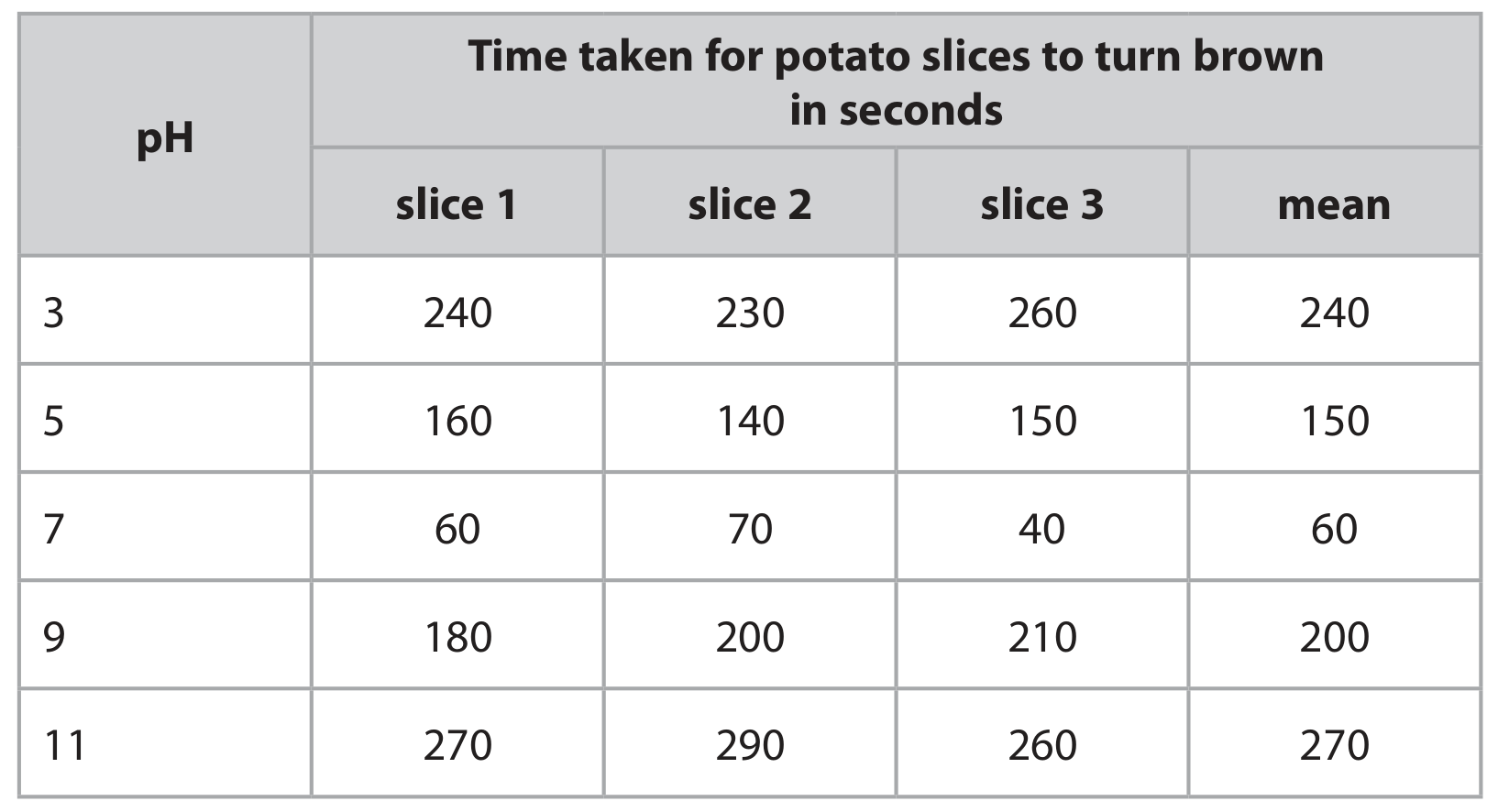
A student uses this method to investigate the effect of changing pH on the time taken for potatoes to turn brown.
- cut three slices of potato and place them into a beaker
- cover the slices in a pH 7 buffer solution to maintain the pH
- after five minutes, remove the pH buffer solution so the potato slices are exposed to the air
- record the time taken for each of the potato slices to turn from white to brown and calculate the mean time
The student repeats the experiment using four different pH buffer solutions.
The table shows the student's results.
Explain how the student could improve the accuracy of the investigation.