EduNinja

IB Business Management HL4.5 The seven Ps of the marketing mixQuestion Bank

Question 1

[Maximum number: 6]

1. EcoCycle
Dan Perdue is a sole trader who sells bicycles. His unique selling point (USP) is bicycles that are made from recycled materials using environmentally friendly processes. Dan's customers are willing to pay high prices for these types of bicycles, and they have a price inelastic demand. Currently Dan purchases the bicycles from GreenRide, a local manufacturer. GreenRide bicycles are well made, rarely have defects, and are well known to environmentally conscious cyclists. The income elasticity of demand for Dan's bicycles is greater than one.
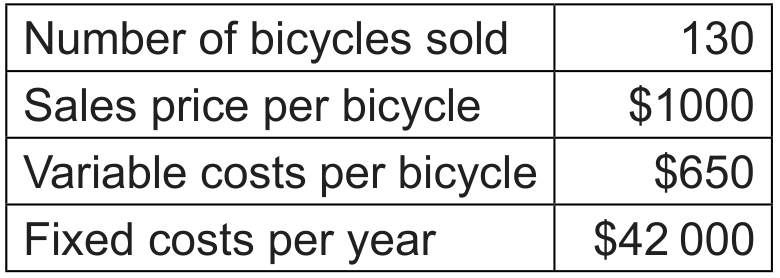
Table 1: financial data for Dan's bicycles, for 2015:

Table 1: financial data for Dan's bicycles, for 2015:

The economy is forecasted to grow in the upcoming years. To take advantage of the growth potential, Dan is considering forming a partnership with David Brown, a skilled mechanic who knows how to manufacture bicycles. Both Dan and David would be equal partners and split the profits. The partnership will begin on 1 January 2016 and would trade under a newly created brand, EcoCycle. Recycled materials and environmentally friendly processes would be used to manufacture all the EcoCycle bicycles.
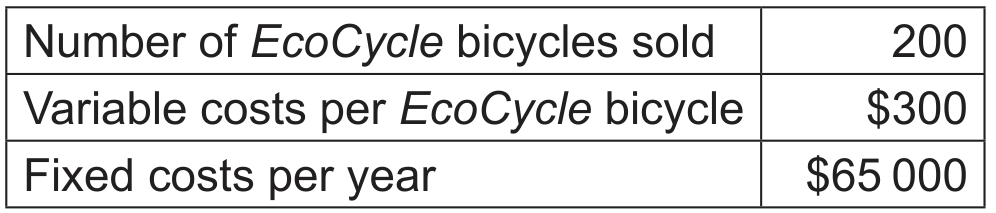
Table 2: forecasted financial data, for EcoCycle bicycles, for 2016:

Table 2: forecasted financial data, for EcoCycle bicycles, for 2016:

Dan, however, conducted primary market research which indicated that respondents were only willing to pay a much lower price for the untested, unknown brand EcoCycle.

Question 1(c)

(a)

Explain one benefit for Dan of the income elasticity of demand for his bicycles being greater than one.

[ 2 ]

Question 1(e)

(b)

Explain two reasons why branding of the new EcoCycle bicycles will be important.
[ 4 ]

Question 1

[Maximum number: 2]

1. The Pie Store (TPS)
The Pie Store (TPS) bakes pies and sells them in its three retail stores. When developing its brand, TPS used the mathematical symbol pi ( π\pi ). In 2020, each store made a profit.

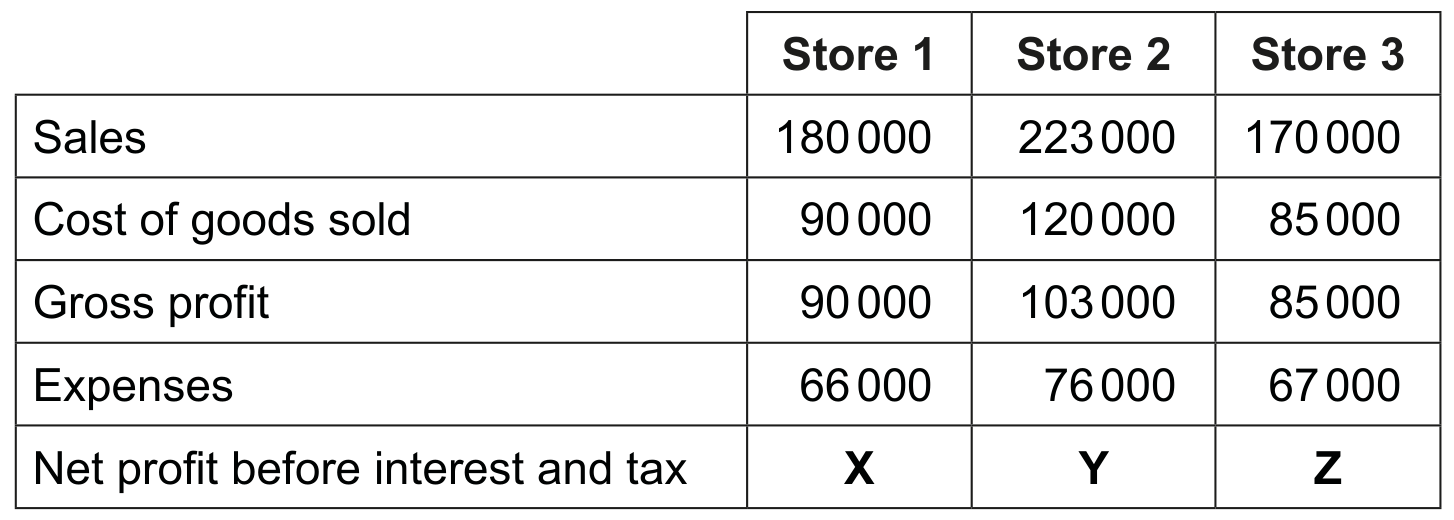
Table 1: Financial information for TPS' three retail stores for 2020 (all figures in \$)

Table 1: Financial information for TPS' three retail stores for 2020 (all figures in \$)

At the end of 2020, the balance sheet for TPS (the three stores combined) showed $ 200000 in assets and $ 120000 in liabilities. $ 50000 of the liabilities was long-term debt.

Question 1(a)

(a)

Describe one step in the development of a brand.

[ 2 ]

Question 1

[Maximum number: 2]

1. Fair Coffee (FC)
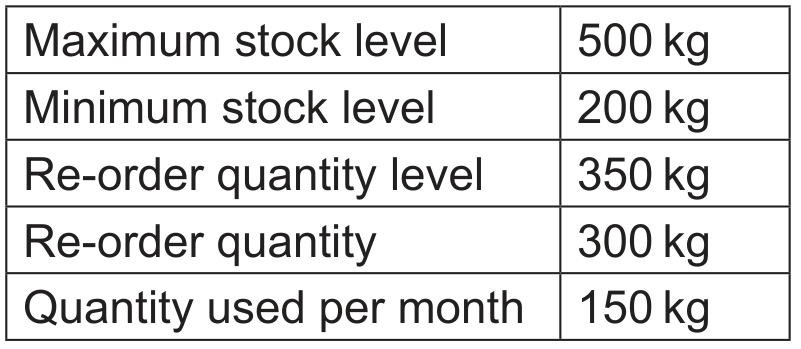
David is about to open a small coffee shop, Fair Coffee (FC), at a central city location. On opening day FC will have a stock level of 500 kg of coffee beans. David estimates that the coffee beans will be used at a constant rate for the first six months of operation.
David's planned stock management figures for the coffee beans are shown below:

Table

Lead time for delivery of the coffee beans: 1 month.

Question 1(a)

(a)

State two elements of the extended marketing mix (seven Ps) for FC.

[ 2 ]

Question 1

[Maximum number: 2]

1. Pelican Pies (PP)
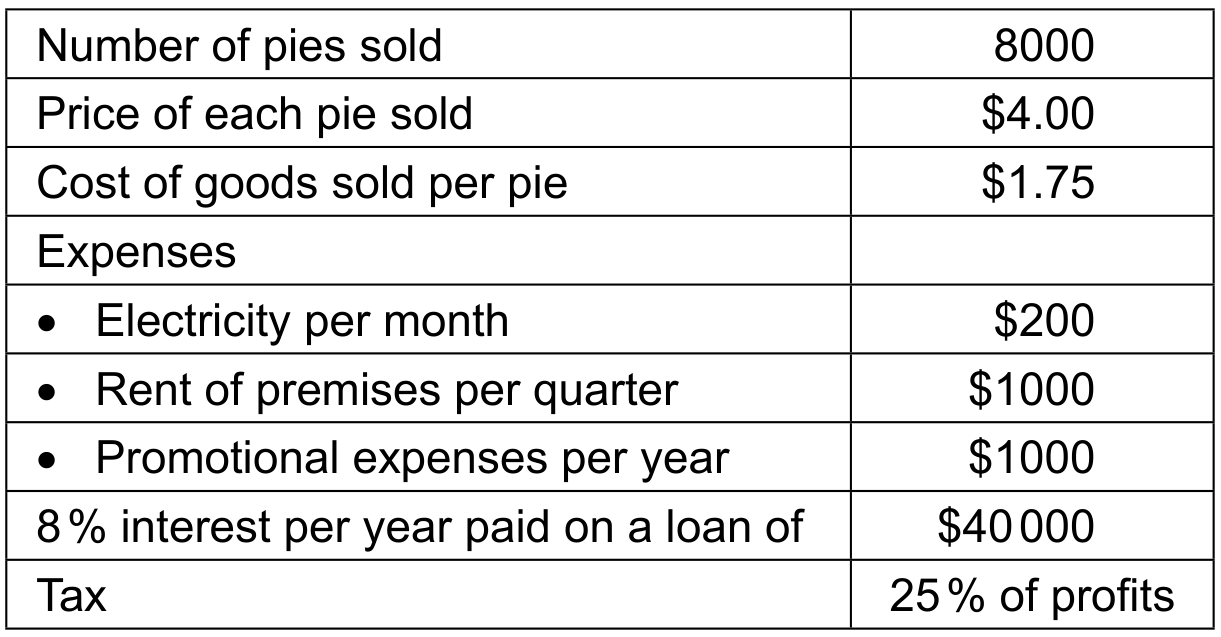
Pelican Pies (PP) produces high-quality pies that have limited brand loyalty outside of their local market. The prices of the pies are higher than those of PP's competitors.

Table 1: Selected financial information for PP for the year ending 30 April 2017.

Table 1: Selected financial information for PP for the year ending 30 April 2017.

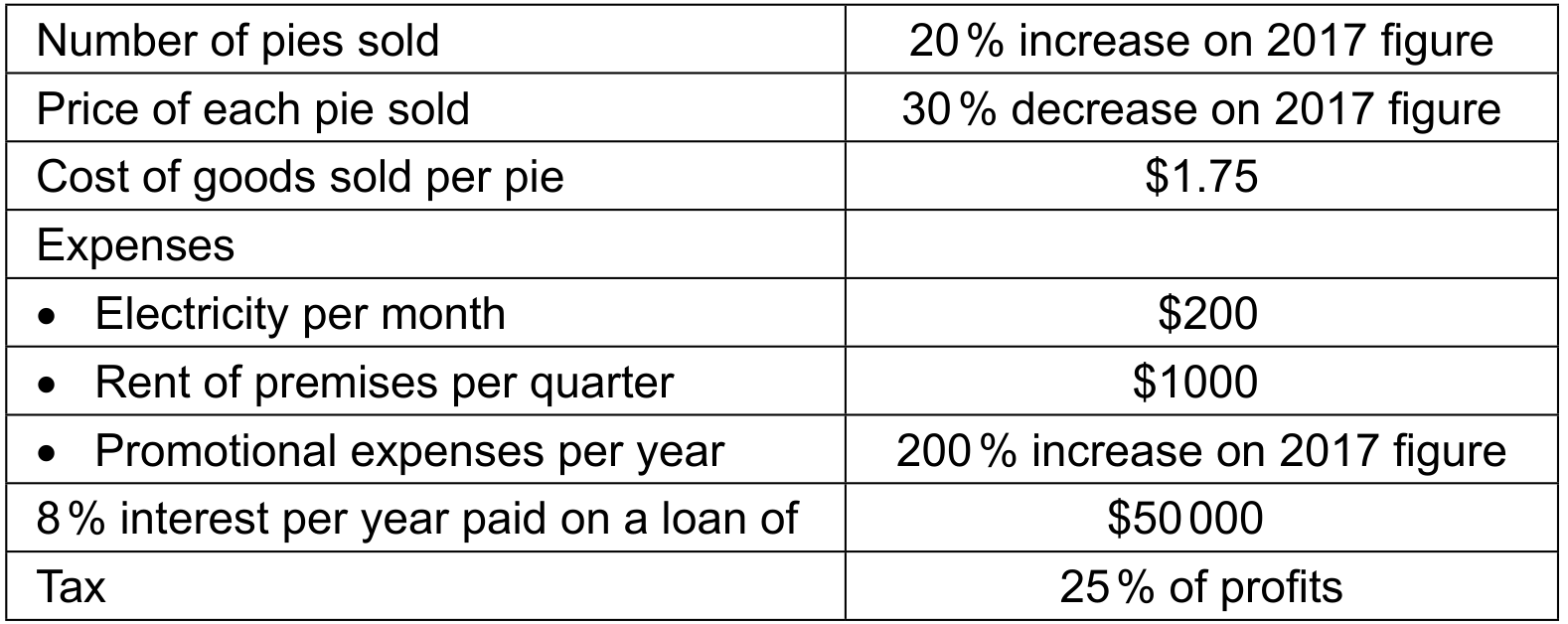
For 2018, PP's owner, Austin, is looking to increase sales beyond the local market by lowering prices and spending a greater proportion of PP's promotional budget on above-the-line methods such as regional newspaper advertisements. To finance this type of promotion, Austin will have to increase his loan amount by $ 10000.

Table 2: Selected financial information for the year ending 30 April 2018.

Table 2: Selected financial information for the year ending 30 April 2018.

Question 1(a)

(a)

Describe one reason why brand loyalty would be important to PP.

[ 2 ]

Question 1

[Maximum number: 8]

1. Creative Toys (CT)
Creative Toys (CT) manufactures toys and markets them business-to-customers (B2C) online only. The business operates in a leased industrial site and relies on word-of-mouth promotion only. To make customers believe that CTs toys are better than its competitors, CT sets prices slightly higher than the competition. Production and sales are mostly between 1 October and 24 December. Most of the employees work on temporary contracts during this busy period. For the remainder of the year, CT operates well below capacity utilization.
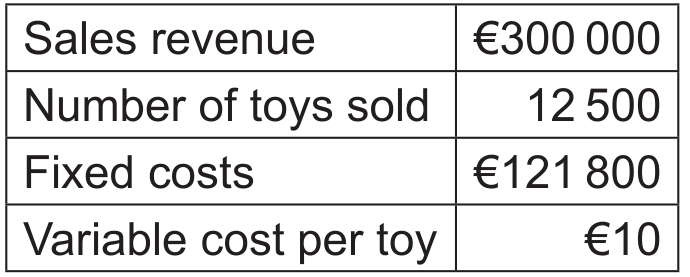
Table 1 contains selected data for CT, for 2014:

Table 1

Table 1

In 2014, the management of CT considered a change of the marketing mix to include above the line promotion, lower prices, and an additional sales method called "toy parties". Toy parties would be hosted by newly recruited CT sales representatives and attended by parents and their children. At the parties parents could see the toys and children could play with them. Sales would be made at the parties by the new sales representatives, who would be paid on a commission-only basis.

Toy parties could be held throughout the year and make CTs total sales less seasonal. Based on market research, management has estimated that the parents' demand for toys is price elastic and is planning to set lower prices for all toys sold online and at toy parties. The management has prepared forecasted financial data for CT, for 2015, based upon the proposed change to the marketing mix, shown in Table 2 below.

Table 2

Table 2

The Finance Manager will carry out a variance analysis in order to determine whether the proposed change to the marketing mix has been successful.

Question 1(a)

(a)

Identify two possible types of above the line promotion that CT could use.

[ 2 ]

Question 1(f)

(b)

Analyse CTs management plan to reduce the price of CTs toys.

[ 6 ]

Question 2

Question 2(b)

(a)

Explain the importance to ELE of e-commerce.

[ 6 ]

Question 2

[Maximum number: 2]

2. GF
Barbara Johnson manages a small business ( G F ) that produces and sells gluten-free* bread. G F has been recognized for meeting national quality standards for gluten-free bread which has helped increase sales. Local supermarkets sell their own label brands of gluten-free bread which do not meet national quality standards at a price 20 % cheaper than G F. Barbara aims to make national quality standard gluten-free bread more affordable and in larger batches.
G F has 21 employees. Four are gluten-sensitive (intolerant) testers who check the quality of the final bread. This traditional method of quality control is important, but takes significant time and resources.
Several hospitals have asked if G F can provide them with an additional 1200 loaves of gluten-free bread every day for the next year. Barbara is keen, however in a small market like this, becoming larger does not automatically result in economies of scale. GF's suppliers cannot provide larger quantities of gluten-free flour without increasing their prices and consequently G F 's costs.
Barbara has two options:
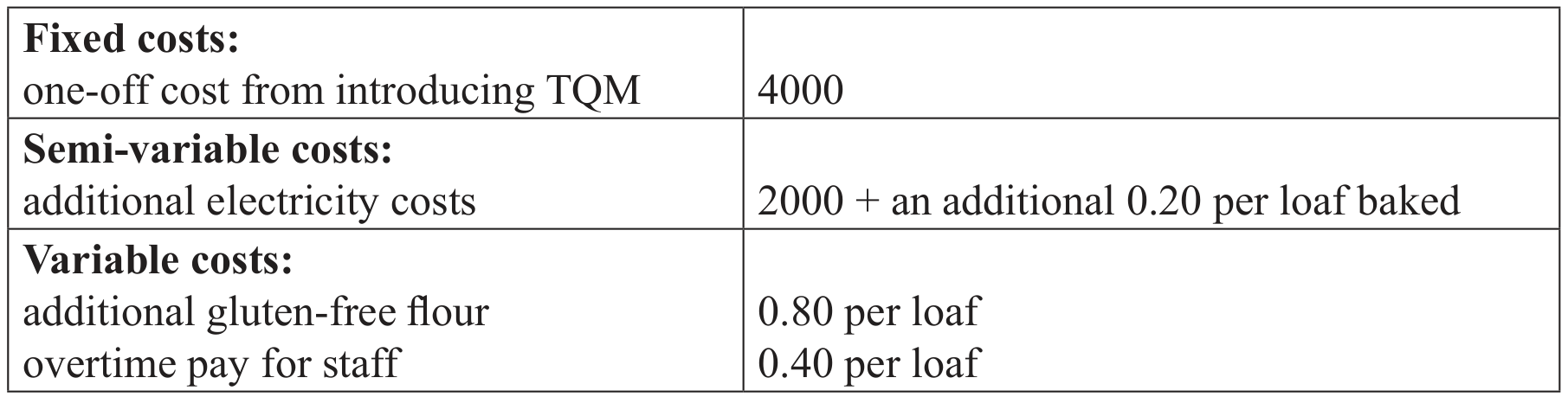
- Option 1: Increase G F 's production of gluten-free bread and maintain national quality standards by introducing total quality management (TQM) control at a one-off cost of $ 4000. This should also speed up the batch production process.
- Option 2: Buy-in the additional 1200 loaves from the company that supplies the local supermarkets and then sell this bread to the hospitals. However this supplier uses flow production and does not meet national quality standards.
The sales price per loaf of G F bread is $ 6.80 regardless of the option chosen.
Barbara prepared the following figures for each option (in $):
Option 1: Increase GF's production to make the additional 1200 loaves.

Table

Option 2: Buy-in the additional 1200 loaves.
Total variable cost of buying in 12007200 loaves from local supermarkets' supplier

\footnotetext{
* gluten: a protein found in wheat (flour) which causes health problems for those who are sensitive (intolerant) to it
}

Question 2(a)

(a)

Identify two features of an own label brand.

[ 2 ]

Question 3

Question 3(a)

(a)

Describe two differences for M M between marketing its minerals (a product) and marketing its hotels (a service).

[ 4 ]

Question 2

[Maximum number: 6]

2. BP and the Gulf of Mexico
In May 2010, the oil company BP suffered a major disaster while drilling for oil off the coast of Louisiana, United States (US) in the Gulf of Mexico. The drilling platform exploded and was destroyed, killing 11 workers. Millions of tonnes of oil spilled out into the sea. This was the worst industrial accident B P had ever faced. Subsequently the price of B P shares fell by 30 %.
It took B P three months to stop the leak in the oil well. The oil spill had a major negative impact on fish, birds and the whole ecosystem. Regional fishermen, seafood restaurants and the tourist industry were the first to suffer from the impact of the pollution and demanded compensation.
This was a public relations (PR) crisis for B P. The US media attacked the company on a daily basis. Environmental pressure groups called for a ban on deep water oil drilling and even the US president got involved, announcing on television that B P would be "made to pay heavily". The perception was that B P 's crisis management was slow, uncaring and inefficient. For example, Tony Hayward, the Chief Executive Officer (CEO) of B P was reported to have said that the oil spill "was tiny" and on another occasion he complained of stress and said he "would like his life back". However, to solve the problem in deep water was a very technical exercise, which had never been attempted before. As a result of this PR crisis, B P decided not to give dividends to its shareholders in 2010.
B P has identified the following as causes of the decline in financial performance:
- the loss of the oil drilling platform
- the cost of stopping the leak 250 metres below the sea
- the cost of the clean-up operations
- the fall in share price
- the loss of brand image and goodwill
- compensation paid to regional businesses
- compensation paid to the families of the workers killed.
Selected items from BP's balance sheet as at 31 December 2009 (US$ millions) (before the disaster).

Table

Question 2(c)

(a)

Explain three possible ways in which B P 's marketing department could have better managed the public relations (PR) crisis, to limit the damage to B P 's reputation.

[ 6 ]

Question 2

[Maximum number: 2]

2. Florian Stones (FS)
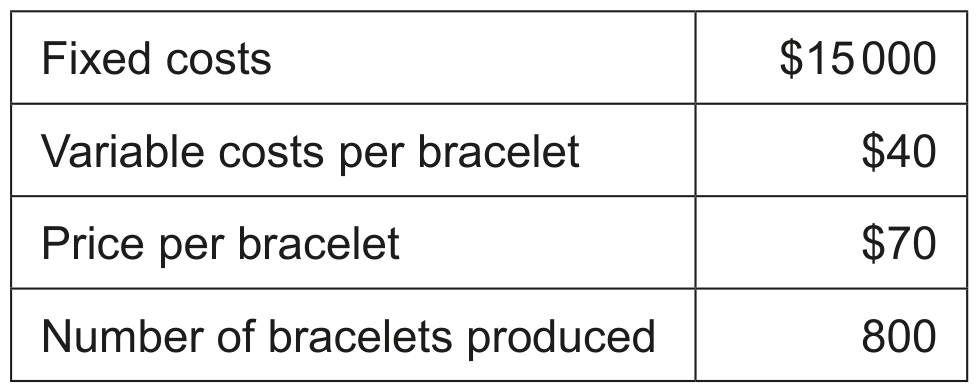
Florian Stones (FS) sells handmade bracelets made from natural stones. FS enjoys strong brand awareness.

Table 3: Forecasted figures for FS for the year ending 31 December 2022

Table 3: Forecasted figures for FS for the year ending 31 December 2022

Question 2(a)

(a)

Define the term brand awareness.

[ 2 ]
0 selected