1. Deep Sea Catch (DSC)
Deep Sea Catch (DSC) operates as a sole trader on an island popular with tourists. DSC specializes in supplying fresh fish to local hotels on a daily basis.
The local government has given D S C a permit to catch a maximum of 70 kilograms of fish per day. However, there has been an increase in illegal fishing (without permits), in addition to overfishing by DSC's other competitors (with permits), which has reduced fish stocks in the area. Given the increasing competition among fish suppliers on the island, hotels will only pay a fixed price of $ 10 per kilogram of fish.
DSC's cost of operation and the quantity of fish caught varies depending on factors such as weather conditions, the availability of fish, and the number of competitors.
Local hotels demand that:
- the fish they buy meet strict national health and safety standards, to ensure the quality of the fish for tourists
- fish are caught ethically without endangering other sea creatures, such as sea turtles or dolphins.
An environmental pressure group is also pressuring the government for:
- more strict regulations on the fishing industries, targeting suppliers without permits
- a reduction in the quantity of fish that each supplier can sell
- new legislation for a compulsory installation of new and sophisticated technological equipment for ethical fishing.
DSC is well known for fishing responsibly and within government legislation. However, the owner is worried about the possible high costs of some of the new legislation.
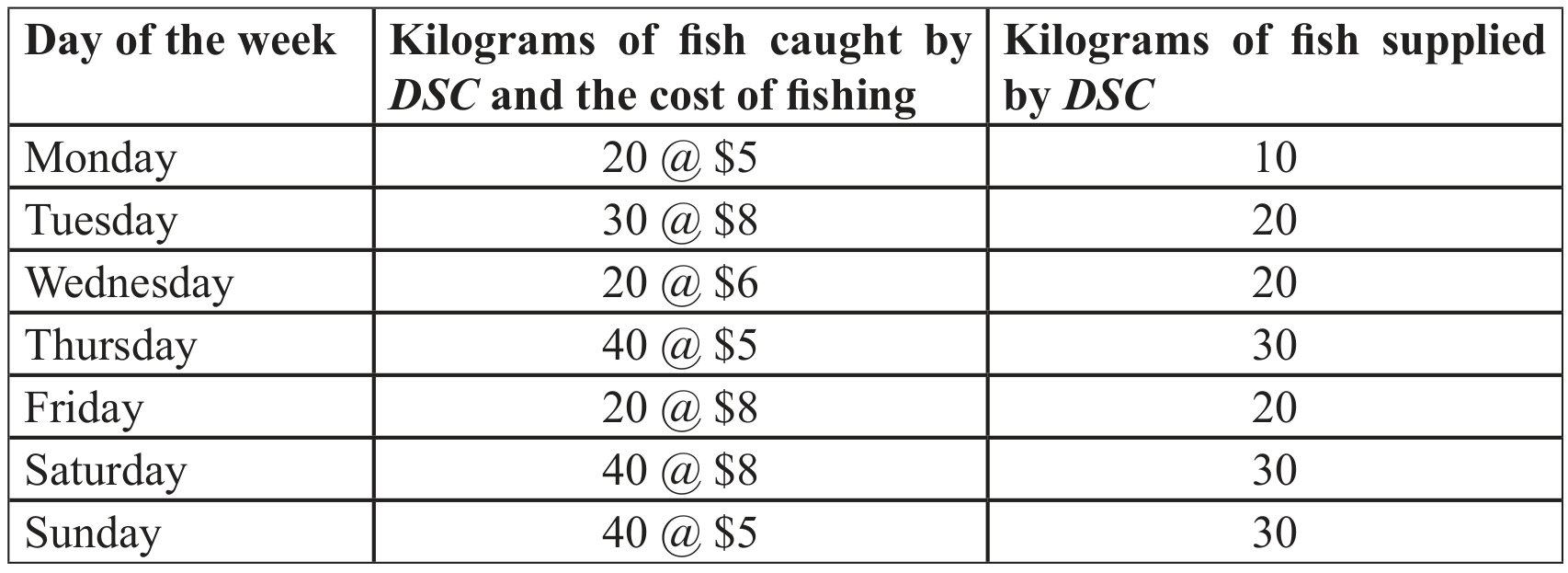
Unsold fish is stored and kept in a refrigerator for up to two days. After two days, the stored fish is sold to a processing factory for $ 4 per kilogram. For example, fish caught on Monday, but still not supplied to the hotels by Tuesday evening, will be sold on Wednesday to the processing factory.
DSC uses the system of last-in-first-out (LIFO) for the stock valuation. The table below shows a typical week's supply of fish at DSC: