EduNinja

IB Business Management HL1.2 Types of business entitiesQuestion Bank

Question 1

[Maximum number: 4]

1. Scoot Fun (SF)
Scoot Fun ( S F ) is a family-owned private limited company specializing in scooter rentals to a student market segment. Most of the scooters will need replacement in January 2014. SF will purchase 20 new scooters at a total cost of $ 80000. They are expected to have a useful life of four years and the total residual value (scrap value) of the 20 scooters is estimated at $ 4000.
SF's Finance Manager currently uses a straight line method of depreciation, but she has now decided to adopt a reducing balance method of depreciation. However, she is still considering the percentage rate at which the assets (scooters) should be depreciated. The Finance Manager is also looking for various sources of finance for the purchase of the new scooters.
S F 's shareholders would like to receive higher dividends in the coming year. One way to do this is to find a legal way to reduce S F 's tax expense in the coming year.

Question 1(a)

(a)

Describe one advantage and one disadvantage of a private limited company.
[ 4 ]

Question 1

[Maximum number: 2]

1. Solar Soccer Academy Ltd. (SSA)
Solar Soccer Academy Ltd. (SSA) is a private limited company set up five years ago by Stephen Murdock. It provides top-quality soccer (football) skills and technique coaching. So far, SSA has been a success, and Stephen is deciding whether to open another academy in a neighbouring city.
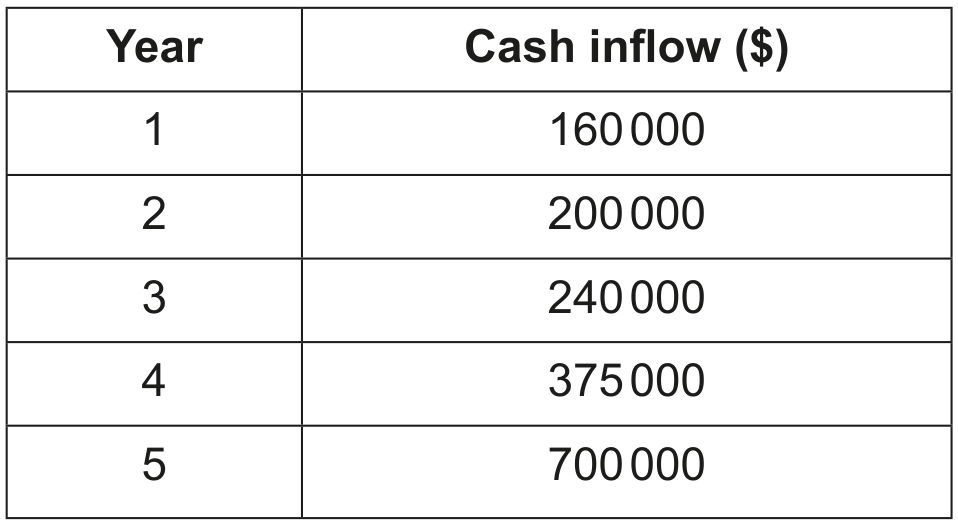
The cost of building a second academy is $ 500000. Stephen has produced forecasted financial information for the second academy's first five years of operation (see Table 1).

Table 1: Forecasted financial information for a second academy

Table 1: Forecasted financial information for a second academy

Stephen estimates cash outflow to be 25 % of the total cash inflow in years 1,2 and 3 and 20 % of the total cash inflow in years 4 and 5.

Question 1(a)

(a)

State two features of a private limited company.

[ 2 ]

Question 1

[Maximum number: 4]

1. Deep Sea Catch (DSC)
Deep Sea Catch (DSC) operates as a sole trader on an island popular with tourists. DSC specializes in supplying fresh fish to local hotels on a daily basis.
The local government has given D S C a permit to catch a maximum of 70 kilograms of fish per day. However, there has been an increase in illegal fishing (without permits), in addition to overfishing by DSC's other competitors (with permits), which has reduced fish stocks in the area. Given the increasing competition among fish suppliers on the island, hotels will only pay a fixed price of $ 10 per kilogram of fish.
DSC's cost of operation and the quantity of fish caught varies depending on factors such as weather conditions, the availability of fish, and the number of competitors.
Local hotels demand that:
- the fish they buy meet strict national health and safety standards, to ensure the quality of the fish for tourists
- fish are caught ethically without endangering other sea creatures, such as sea turtles or dolphins.
An environmental pressure group is also pressuring the government for:
- more strict regulations on the fishing industries, targeting suppliers without permits
- a reduction in the quantity of fish that each supplier can sell
- new legislation for a compulsory installation of new and sophisticated technological equipment for ethical fishing.
DSC is well known for fishing responsibly and within government legislation. However, the owner is worried about the possible high costs of some of the new legislation.
Unsold fish is stored and kept in a refrigerator for up to two days. After two days, the stored fish is sold to a processing factory for $ 4 per kilogram. For example, fish caught on Monday, but still not supplied to the hotels by Tuesday evening, will be sold on Wednesday to the processing factory.
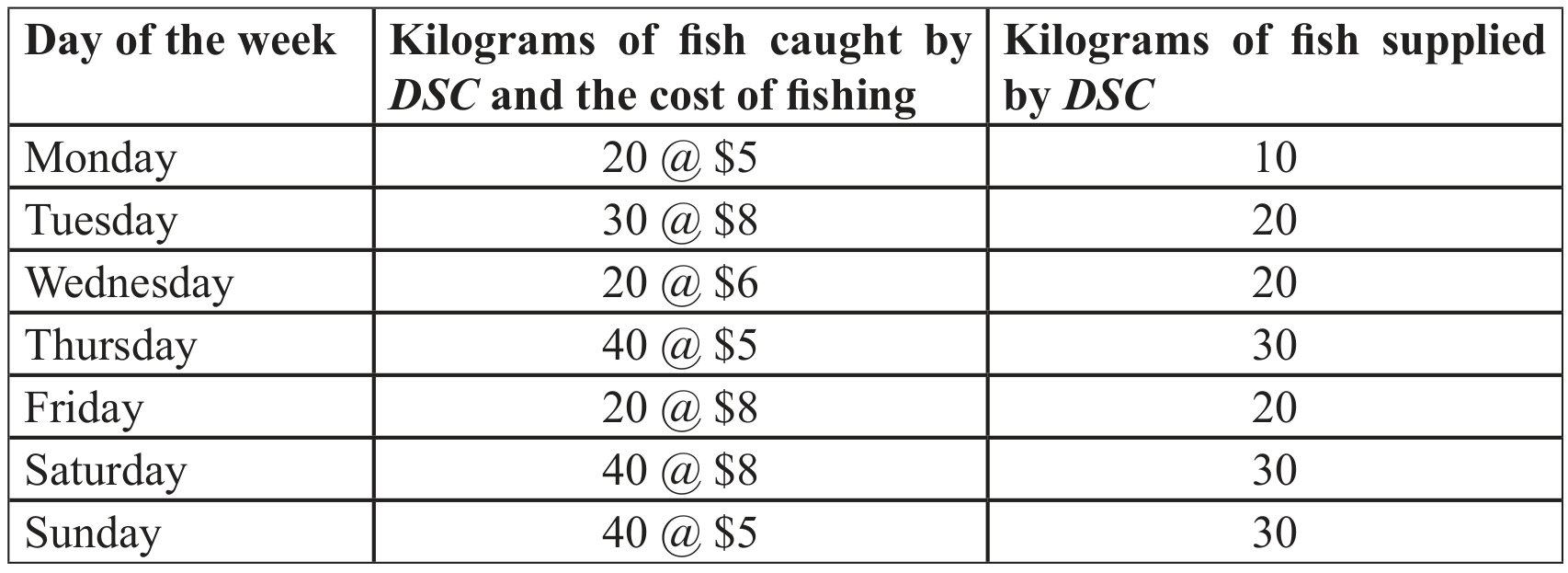
DSC uses the system of last-in-first-out (LIFO) for the stock valuation. The table below shows a typical week's supply of fish at DSC:

Table

Question 1(a)

(a)

Describe two features of a sole trader.

[ 4 ]

Question 1

[Maximum number: 4]

1. Safe Passage (SP)
Trent Peters is one of seven partners at Safe Passage (SP). It provides bodyguard* services to film stars, politicians and other important people in Europe and the Americas. Trent would like to satisfy a growing demand from Asia but has to choose from two options for the recruitment and training of bodyguards. These are:
- offshoring by setting up it's own overseas branch in Asian country X or Y or Z
- subcontracting by using an external agency in Asian country X or Y or Z .
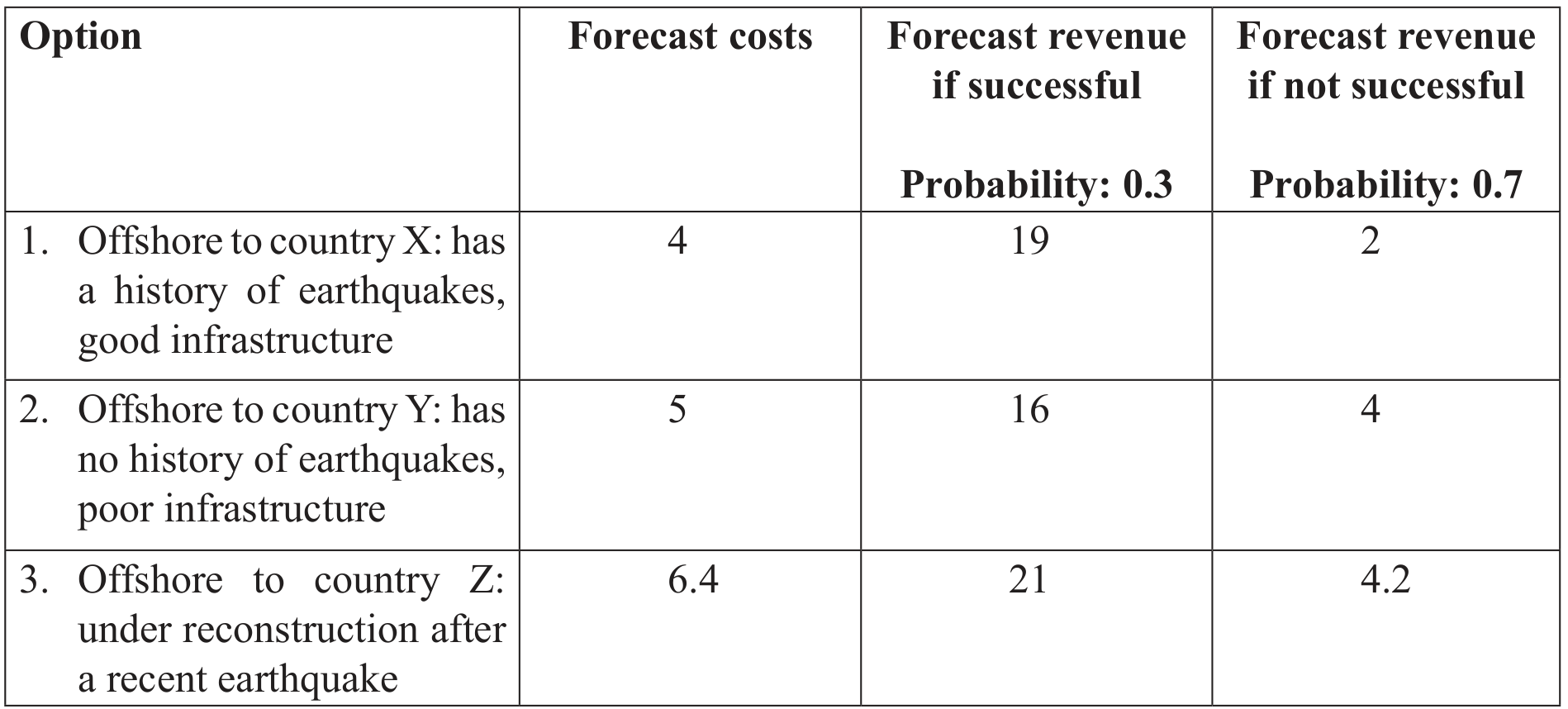
The forecast costs and revenues of offshoring are given below (all figures in US$ millions):

Table

The forecast costs of subcontracting to the same Asian countries are given below:

Country X: US$1.5 million.
Country Y: US$2.8 million.
Country Z: US$4.2 million.

\footnotetext{
* bodyguard: a person who is responsible for protecting a person from harm
}
The three suitable Asian countries are located in earthquake zones. An earthquake expert assured Trent that all three areas are safe. Trent is concerned and decides to prepare a contingency plan for each possible location in Asia.

Control over recruitment and training of bodyguards is vital to S P. Customer service and trust are their unique selling propositions (USP). Clients will pay high fees to ensure their safe transport to concerts, meetings and important events. However, Trent is refusing valuable contracts in Asia due to a lack of suitably trained bodyguards. As a result S P is missing out on large profits.

Trent has mentioned to a previous customer of his plans to subcontract the recruitment and training of bodyguards. She has threatened not to use S P again and would tell her friends if the plans went ahead. Trent is concerned as word-of-mouth promotion is crucial to S P.

He calls a meeting of all the partners. Three partners prefer subcontracting the recruitment and training as it is cheaper, quicker and less risky. The three other partners prefer offshoring. They believe that subcontracting will damage SP's USP. They argue that the higher costs of offshoring will be covered by the forecast high revenue.

Question 1(a)

(a)

Describe two features of a partnership.

[ 4 ]

Question 1

[Maximum number: 2]

S4U

S4U is a private limited company that provides a storage facility to households and small businesses. S4U is considering constructing an additional new warehouse.

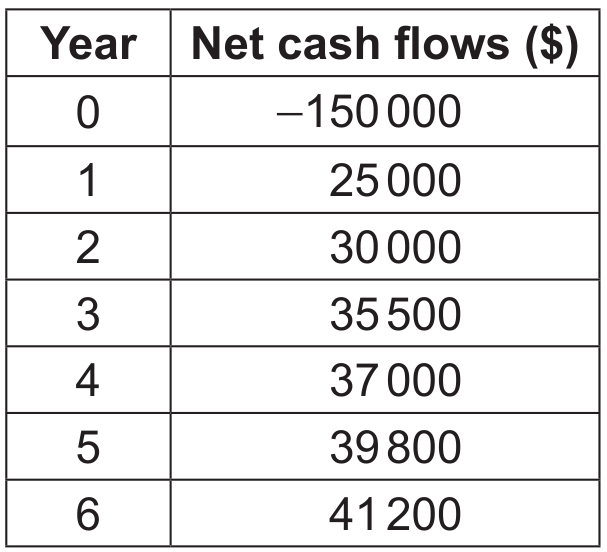
S4U's management has forecasted the following annual net cash flows for the new warehouse:

Table

Question 1(a)

(a)

Describe one feature of a private limited company.

[ 2 ]

Question 1

Question 1(a)

(a)

Describe two advantages to M S S of being a charity (line 14).

[ 4 ]

Question 1

[Maximum number: 6]

1. EcoCycle
Dan Perdue is a sole trader who sells bicycles. His unique selling point (USP) is bicycles that are made from recycled materials using environmentally friendly processes. Dan's customers are willing to pay high prices for these types of bicycles, and they have a price inelastic demand. Currently Dan purchases the bicycles from GreenRide, a local manufacturer. GreenRide bicycles are well made, rarely have defects, and are well known to environmentally conscious cyclists. The income elasticity of demand for Dan's bicycles is greater than one.

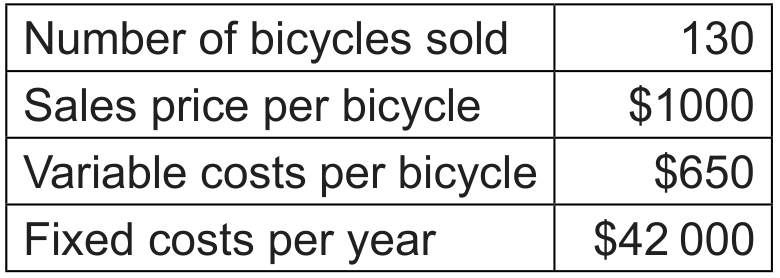
Table 1: financial data for Dan's bicycles, for 2015:

Table 1: financial data for Dan's bicycles, for 2015:

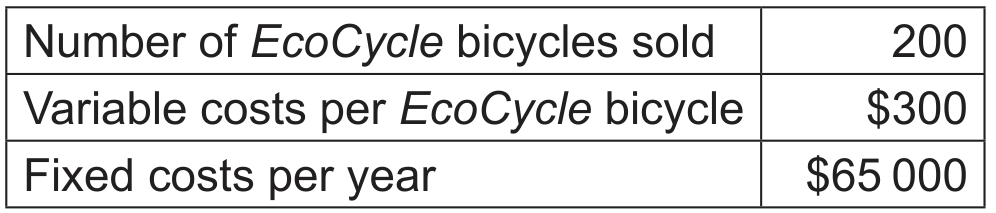
The economy is forecasted to grow in the upcoming years. To take advantage of the growth potential, Dan is considering forming a partnership with David Brown, a skilled mechanic who knows how to manufacture bicycles. Both Dan and David would be equal partners and split the profits. The partnership will begin on 1 January 2016 and would trade under a newly created brand, EcoCycle. Recycled materials and environmentally friendly processes would be used to manufacture all the EcoCycle bicycles.

Table 2: forecasted financial data, for EcoCycle bicycles, for 2016:

Table 2: forecasted financial data, for EcoCycle bicycles, for 2016:

Dan, however, conducted primary market research which indicated that respondents were only willing to pay a much lower price for the untested, unknown brand EcoCycle.

Question 1(f)

(a)

Examine Dan's decision to create a partnership with David to manufacture and sell EcoCycle bicycles.

[ 6 ]

Question 2

[Maximum number: 2]

2. Tasty Cupcake (TC)
Luis and José have set up a partnership, baking and selling cupcakes directly to consumers and supermarkets. They called the business Tasty Cupcake (TC). They used their savings of $ 3000 as starting capital. The partners need an overdraft agreement from the local bank. The bank manager asked for a cash-flow forecast.
Luis has forecasted the following sales and cost figures for the first six months of operation, beginning in January.
Sales
- Average selling price of one cupcake: $ 5.
- Sales of cupcakes: 1300 cupcakes in January and 1700 cupcakes per month from February
- 70 % of customers who purchase cupcakes will pay in cash. The supermarkets will buy the remaining 30 % of cupcakes on credit and pay one month later.
Costs
- Rent: $ 6500, payable at the start of each quarter.
- Labour costs: $750 per month.
- Raw materials: 50 % of sales revenue per month, paid in cash.
- Overheads: $400 per month, paid in cash.

Question 2(a)

(a)

State two features of a partnership.

[ 2 ]

Question 2

[Maximum number: 2]

2. Menlo Seat Covers (MSC)
Menlo Seat Covers (MSC) manufactures car seat covers. The business operates as a private limited company owned 100 % by Tony Mehta, who is also the only employee. MSC sells its products only online. The market is increasingly competitive. Tony will give himself a 16.66 % pay increase starting 1 April 2024.
Tony forecasts the following monthly cash outflows for the first four months of 2024:
- Heating and lighting: $ 3000.
- Salary: $ 6000.
- Packaging: $ 2000.
- Delivery charges: 5 % of sales revenue.
- Purchases: $ 20000.
Additional information:
- Opening balance on 1 January 2024: $ 14000.
- Sales revenue: $ 35000 each month.
- Rent of $ 4500 paid quarterly: first payment in January 2024.
- MSC will receive $ 8000 from the sale of used equipment in March 2024.
Tony would like to expand the business but, lacking sufficient internal sources of finance, must seek external sources.

Question 2(a)

(a)

State two features of a private limited company.

[ 2 ]

Question 3

Question 3(b)

(a)

Explain the advantages for Su of forming A S as a private limited company.

Answer the following question.

[ 6 ]
0 selected