EduNinja

IB Biology HLD2.3 Water potentialQuestion Bank

Question 1

[Maximum number: 5]

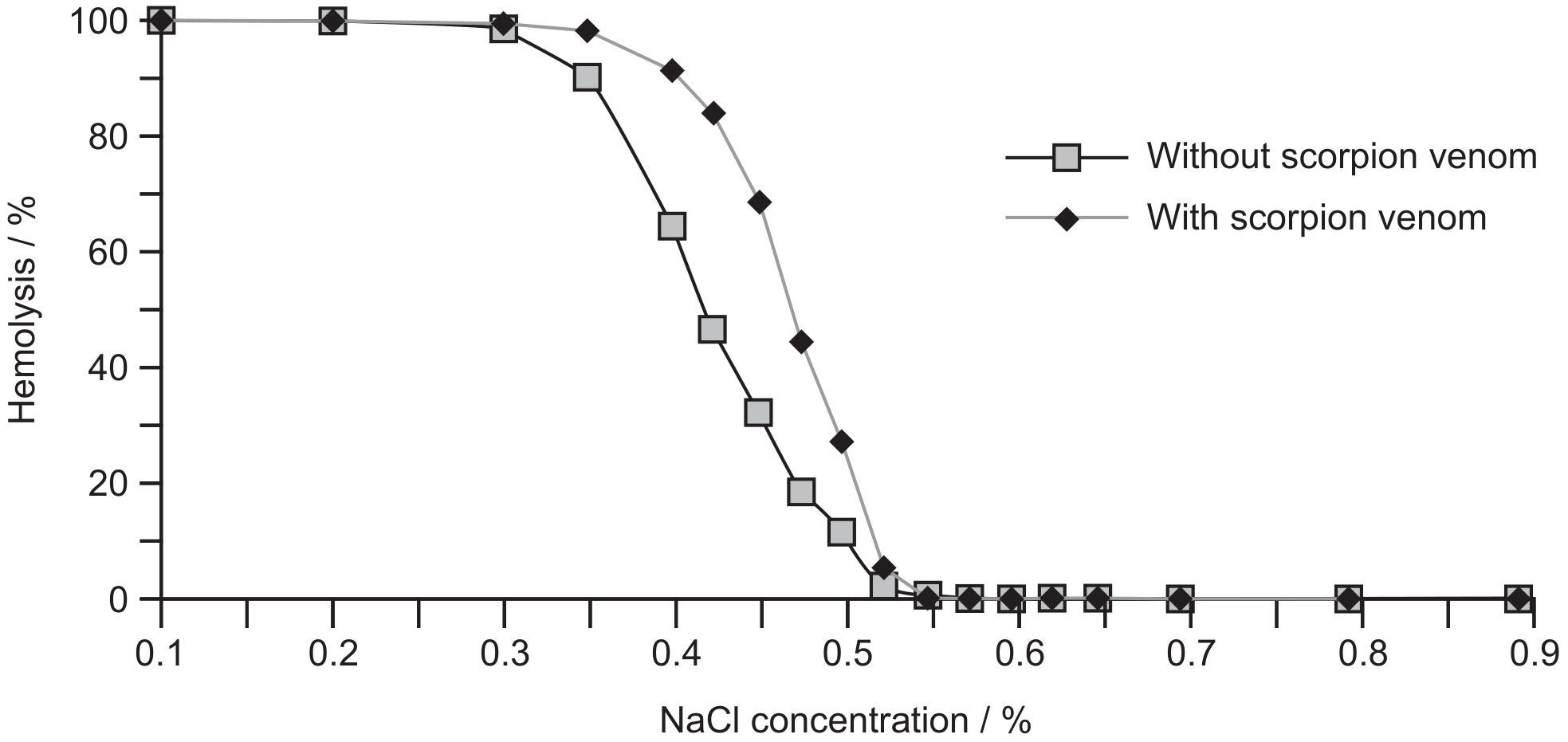
Data was collected on rabbit red blood cells that were exposed to sodium chloride (NaCl) and scorpion venom. Under some osmotic conditions red blood cells swell and burst, releasing hemoglobin (hemolysis). The graph shows the response of red blood cells to different concentrations of sodium chloride, with and without scorpion venom.
Question image

Question 1(a)

(a)

Outline the effect of the venom on the hemolysis of red blood cells.

[ 2 ]

Question 1(b)

(b)

Describe how the variables would be controlled in an experiment to estimate the osmolarity of plant tissue.

[ 3 ]
Question 1

[Maximum number: 2]

The micrograph shows part of a cardiac muscle cell.

Question 1(b)

(a)

Explain the changes that would occur in a cardiac muscle cell placed in a hypotonic solution.

[ 2 ]

Question 2

[Maximum number: 1]

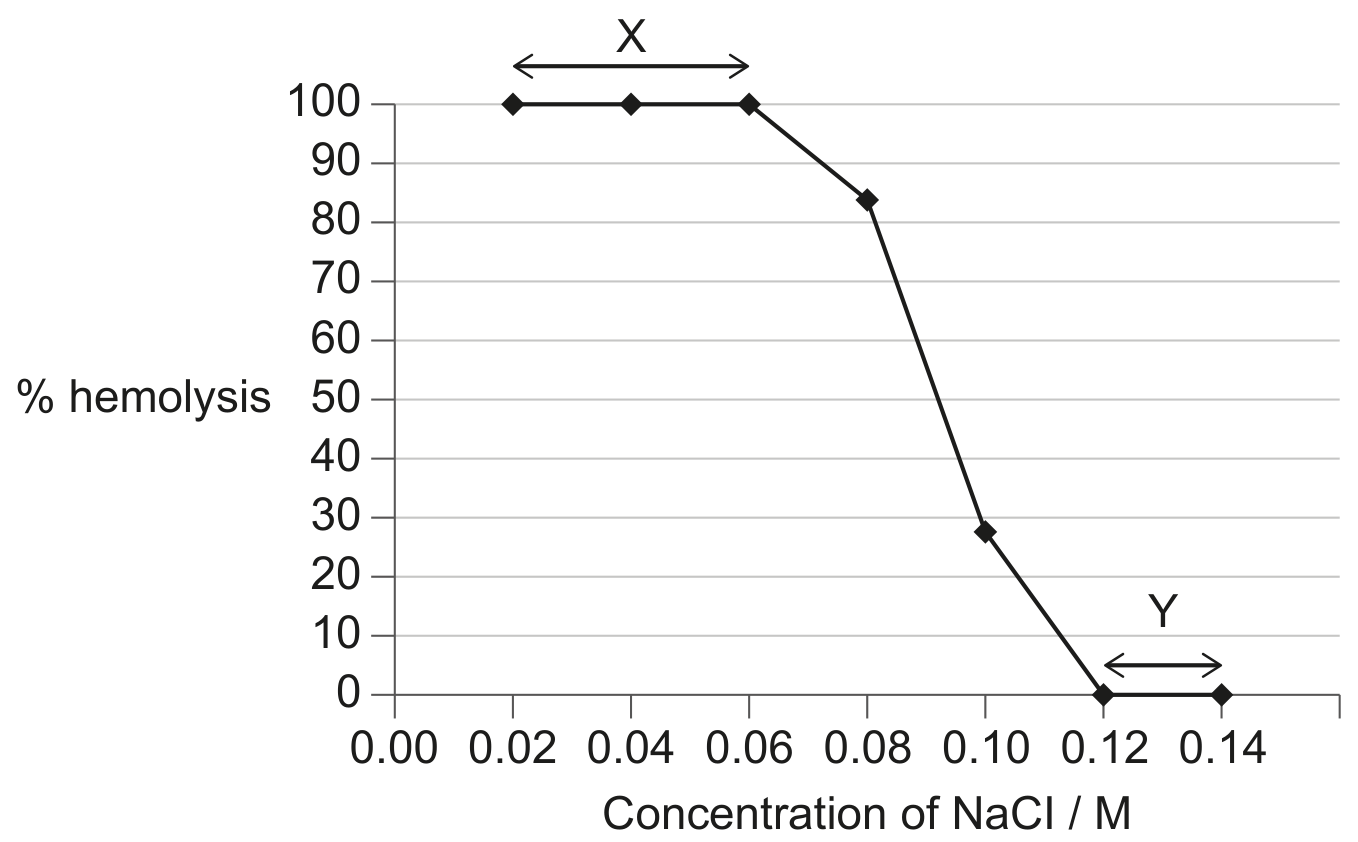
Red blood cells from a small mammal were immersed in NaCl (sodium chloride) solutions of different concentrations for 2 hours. The graph shows the percentage of hemolysed (ruptured) red blood cells at each concentration.

Question image

What can be deduced from the graph?

A

At Y , the net movement of Na ions between red blood cells and the NaCl solutions is zero.

B

At X, Na and Cl ions disrupt the structure of cell membranes.

C

At Y , the hypertonic NaCl solutions diffuse into the red blood cells.

D

At X , water has moved by osmosis into the red blood cells.

Question 2

[Maximum number: 1]

The salt concentration inside the Paramecium is 1.8 %. The salt concentration in the surrounding medium suddenly drops to 0.2 %. What will be the likely response?

A

The cell will lose salt to the medium.

B

The contractile vacuole will expel more water.

C

The cell will swell and eventually burst.

D

The membrane will become more permeable to salt.

Question 3

[Maximum number: 1]

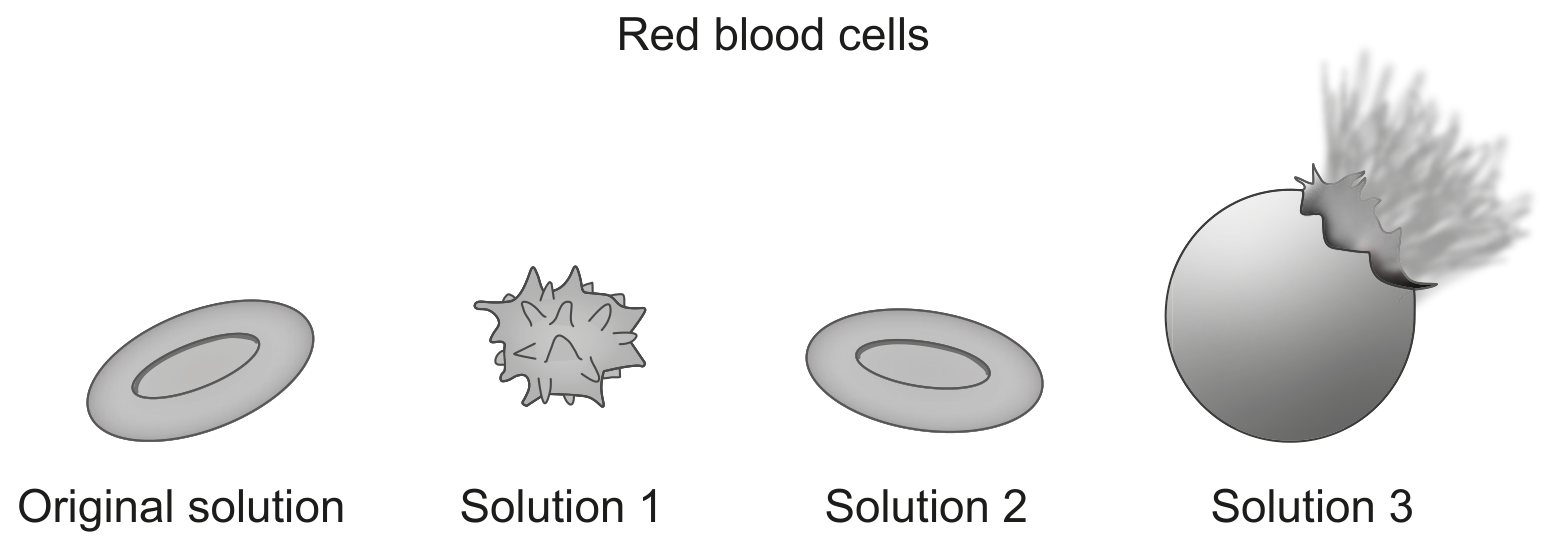
Which solution has the highest salt concentration?

Question image
A

The original solution

B

Solution 1

C

Solution 2

D

Solution 3

Question 3

[Maximum number: 1]

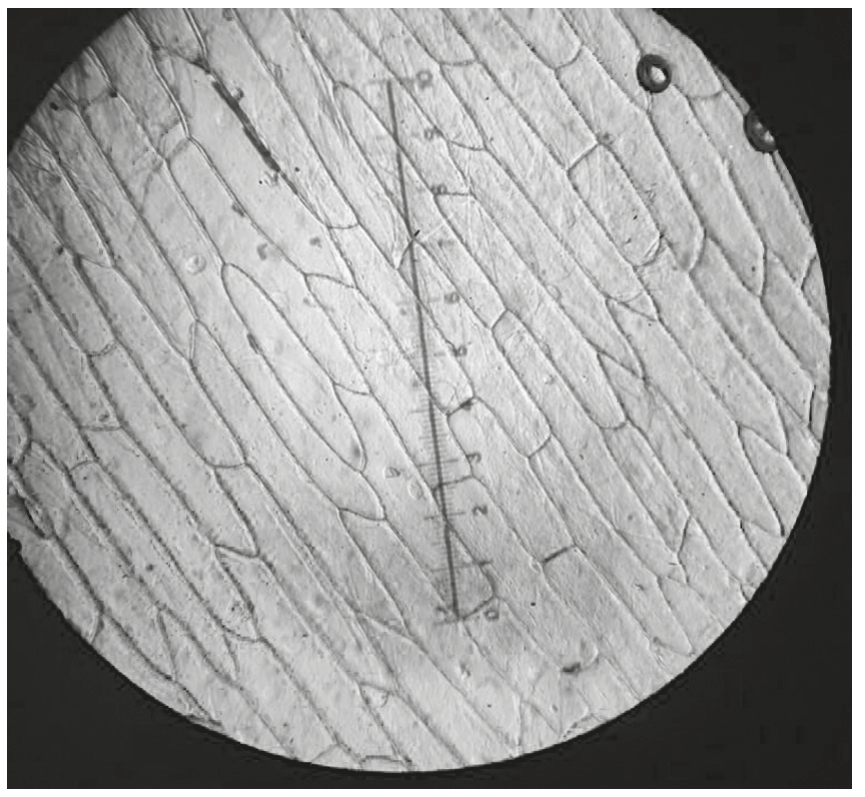
Onion (Allium cepa) epidermis was placed in pure water and observed with a light microscope using high magnification.

Question image

What would happen to these cells if they were transferred to a hypertonic solution?

A

Cells would gain mass.

B

Cells would take in water by osmosis and swell.

C

Cells would burst open, releasing their content.

D

Cell membranes would detach from walls at some points.

Question 2

[Maximum number: 4]

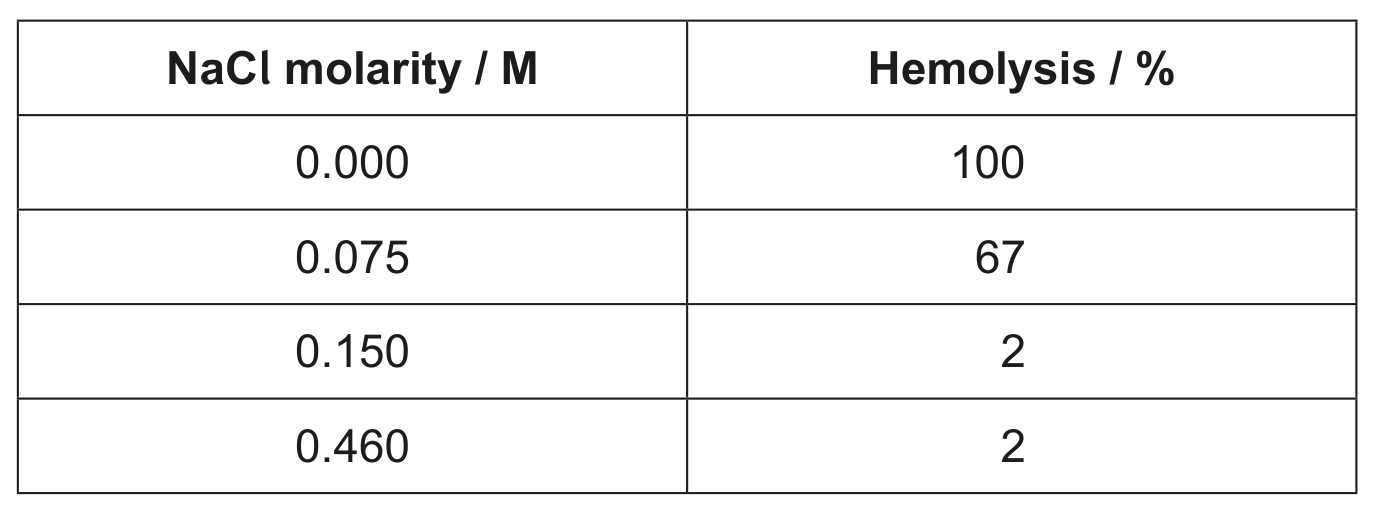
The table shows the percentage of red blood cells that have ruptured (hemolysis) when placed in sodium chloride solutions of different molar concentrations.

Table

Question 2(b)

(a)

Explain the effect of placing red blood cells in distilled water (0.000 M NaCl).

[ 3 ]

Question 2(c)

(b)

Deduce with a reason which sodium chloride concentration shown in the table is closest to the osmolarity of the blood cells.

[ 1 ]

Question 2

[Maximum number: 2]

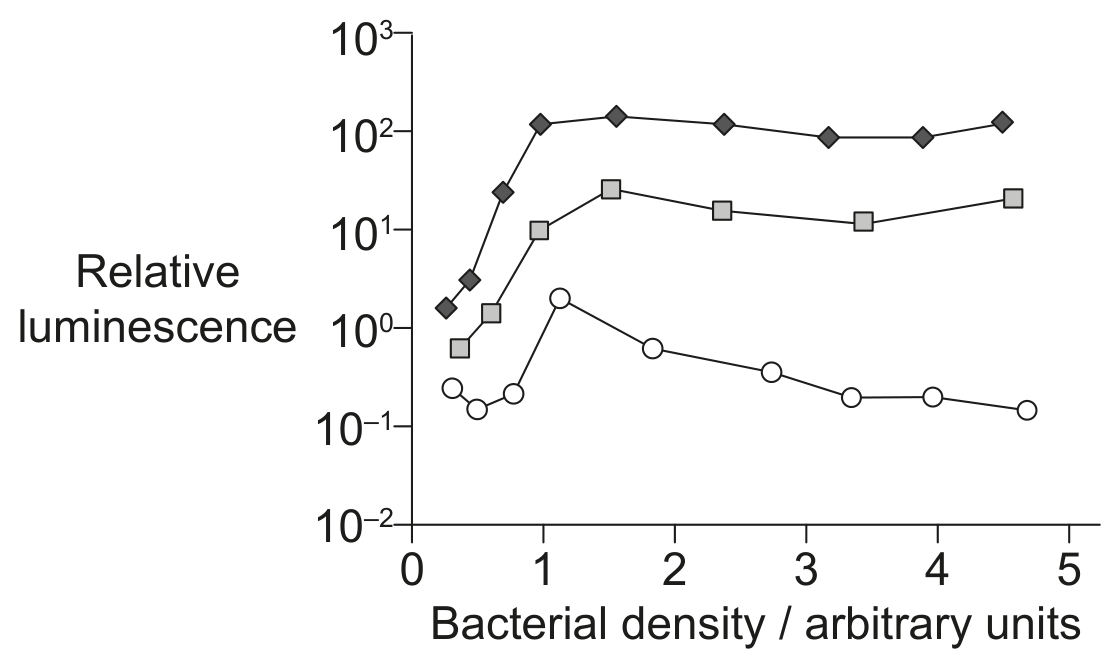
Vibrio fischeri is a bioluminescent (light-producing) bacterium in the Pacific Ocean. V. fischeri grown in the laboratory often has less luminescence. An investigation was carried out to look at the effect of the external osmolarity (in mOsmol) on the bacterium's luminescence, at different densities of bacteria. V. fischeri cultures were grown in three different concentrations of artificial seawater. Relative luminescence is the total luminescence divided by the density of bacteria.

Question image

Key: osmolarity
- 1300 mOsmol
- 810 mOsmol
- 570 mOsmol

Question 2(c)

(a)

Student osmosis experiments often involve putting plant tissue such as potato cylinders in several salt solutions of different concentrations and measuring the mass before and after immersion. Outline how data collected from such an experiment could be used to estimate the osmolarity of the plant tissues.

[ 2 ]

Question 3

[Maximum number: 4]

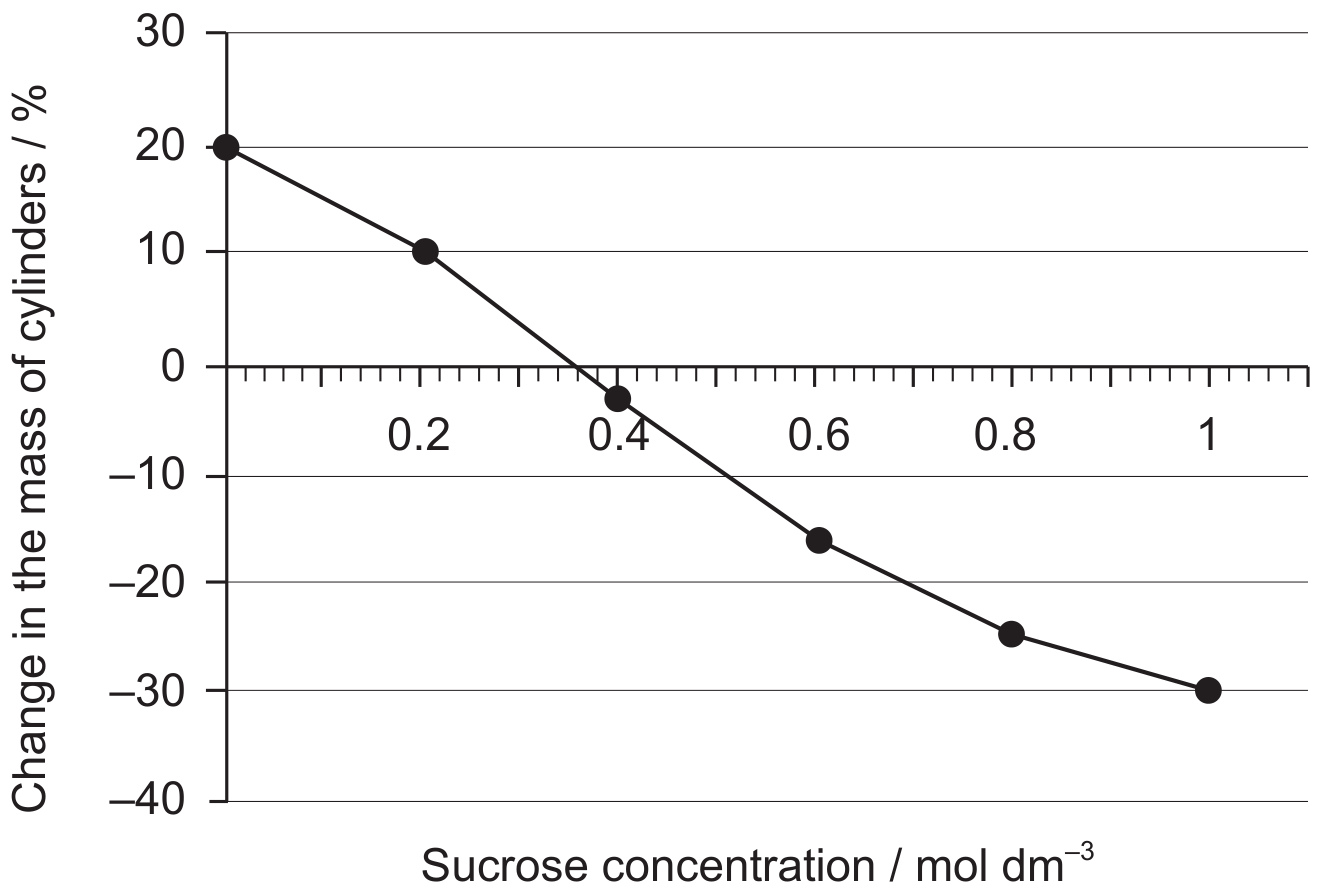
An experiment was carried out to study osmosis in plant cells. Small cylinders of zucchini (Cucurbita pepo) were cut and placed in different sucrose solutions at 25C25^{\circ} \mathrm{C}. The figure shows the percentage changes in mass after 24 hours.

Question image

Question 3(a)

(a)

Estimate the solute concentration of the zucchini cells.

[ 1 ]

Question 3(c)

(b)

Explain one reason for calculating the percentage changes in mass.

[ 2 ]

Question 3(d)

(c)

Predict what would happen to a red blood cell placed in distilled water.

[ 1 ]

Question 3

Question 3(c)

(a)

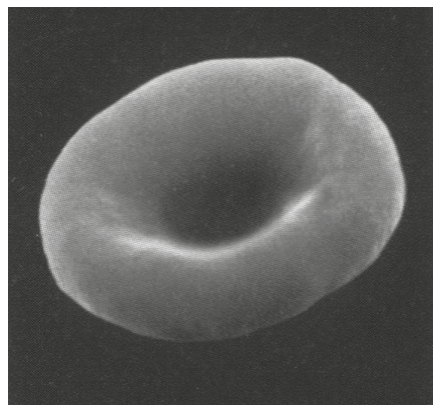
This image shows a normal red blood cell.

Question image

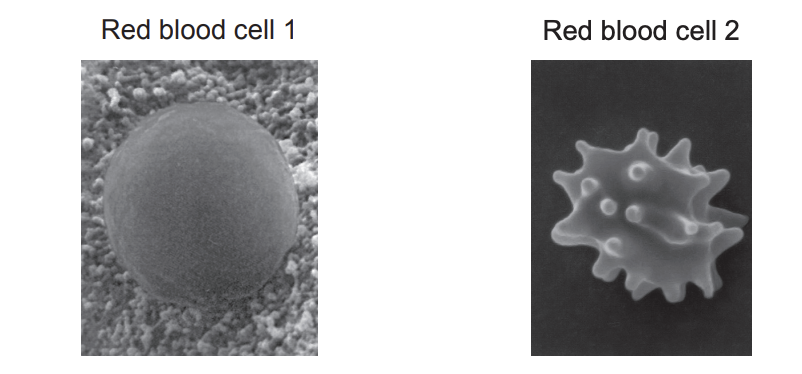
These images show two red blood cells that have been placed in solutions with different concentrations of solutes.

Question image

Deduce, with a reason, which red blood cell has been placed in a hypertonic solution.

[ 1 ]
0 selected