
EduNinja

IB Biology HLD1.3 Mutation and gene editingQuestion Bank

Question 1

[Maximum number: 5]

Tobacco smoke contains a number of mutagens that are known to induce lung tumours in rodents, including NNK, a nitrosamine. The graph shows the relationship between NNK and lung tumour incidence in male rats. NNK was administered by subcutaneous injection for 20 weeks. Data points on the graph show percentage incidence of lung cancer in treatment groups of between 20 and 80 rats.

Graph removed for copyright reasons

Question 1(b)

(a)

Explain the effects of mutagens such as NNK.

[ 2 ]

Question 1(g)

(b)

Evaluate the hypothesis that nicotine is not a mutagen.

[ 3 ]
Question 6

[Maximum number: 1]

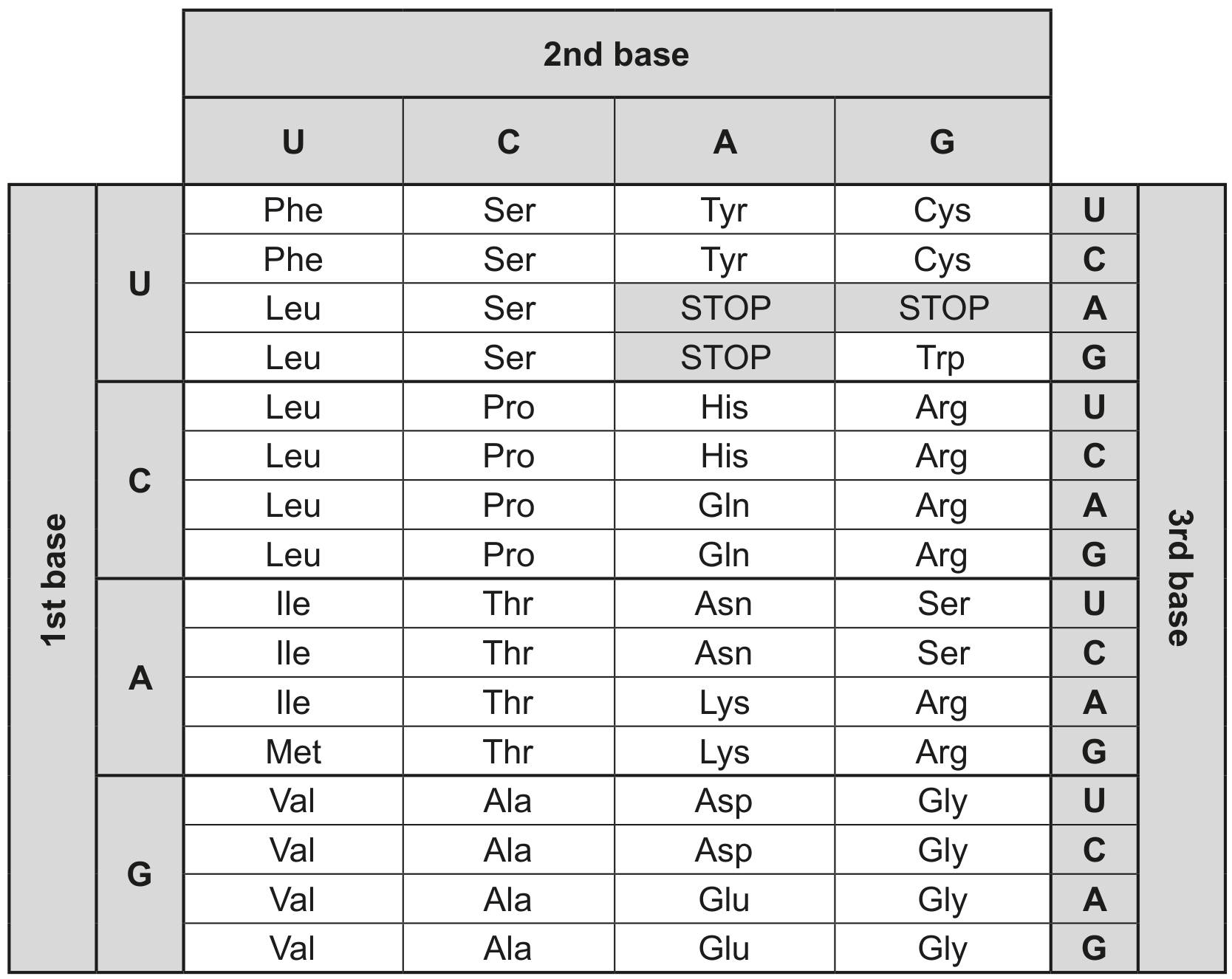
The genetic code is shown.

Table

In a coding gene, the DNA triplet in the transcribed strand is changed from AGG to TCG. What would be the result of this change in the genome?

A

A non-functional protein

B

A different but functional protein

C

No change in the protein

D

Termination of the polypeptide

Question 11

[Maximum number: 1]

What change causes sickle cell anemia?

A

One amino acid less in a polypeptide of hemoglobin

B

A mutation leading to an extra codon in the genome

C

Thymine replacing adenine in DNA

D

Failure of tRNA to correctly transcribe the sequence of codons from mRNA

Question 11

[Maximum number: 1]

A base substitution in a gene has changed a codon. Which of these consequences could result from a base substitution in a codon?

I. Another amino acid will be incorporated in the protein
II. A stop codon is generated
III. The same protein will be synthesized

A

I only

B

I and II only

C

I and III only

D

I, II and III

Question 11

[Maximum number: 1]

Knockout organisms are used as models in research. The p53 knockout mouse is named after p53, a gene which codes for a protein that normally suppresses the growth of cancerous tumours.

How could scientists use p53 knockout mice in cancer research?

A

To extract tumour suppressor protein from p53 knockout mice for cancer treatments

B

To obtain functional copies of the p53 gene to use in gene replacement therapy

C

To investigate the effect of new anti-cancer drugs on mouse tumours

D

To study the effect of mutations on the expression of the p53 gene

Question 11

[Maximum number: 1]

Two DNA sequences are shown.
Sequence 1 CACGTGGACTGAGGACTCCTC \\ Sequence 2 CACGTGGACTGAGGACACCTC
What type of mutation is occurring between sequence 1 and sequence 2 ?

A

Substitution

B

Polyploidy

C

Insertion

D

Deletion

Question 11

[Maximum number: 1]

What is gene knockout used for?

A

Increasing protein production by editing a gene

B

Investigating the function of a gene by replacing it to make it inoperative

C

Identifying the presence of a gene by editing it to produce a different protein

D

Editing a gene to initiate cell death

Question 5

Question 5(a)

(a)

Mutations are the ultimate source of genetic variation and are essential to evolution.

[ 2 ]

Question 5(a)(i)

(i)

State one type of environmental factor that may increase the mutation rate of a gene.

[ 1 ]

Question 5(a)(ii)

(ii)

Identify one type of gene mutation.

[ 1 ]

Question 5

[Maximum number: 2]

Fish are harvested from many estuaries where a river flows into the sea.

Question 5(c)

(a)

Explain how chemical substances can cause cancer.

[ 2 ]

Question 6

Question 6(b)

(a)

Outline the effects of a base substitution mutation in the case of sickle-cell anemia.

[ 5 ]
0 selected