EduNinja

IB Biology HLC2.2 Neural signallingQuestion Bank

Question 1

[Maximum number: 1]

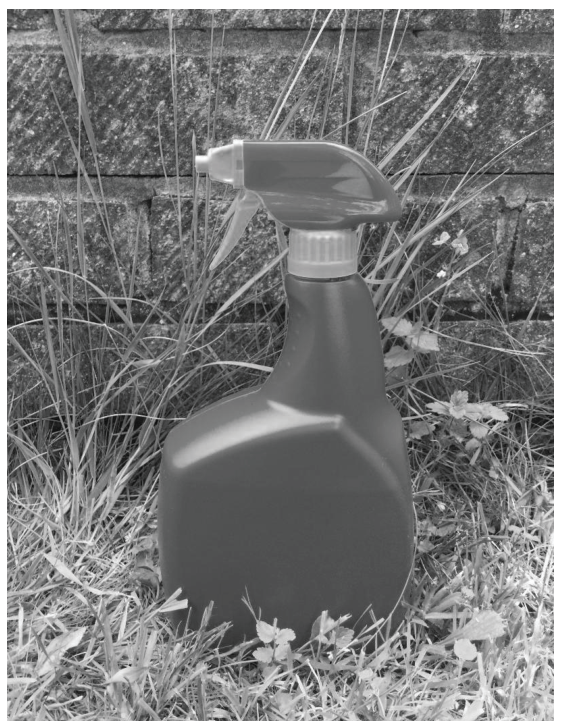
Common pesticides used by gardeners contain neonicotinoids.
Question image

What is the effect of a neonicotinoid pesticide on the transmission of a nerve impulse between neurons in an insect?

A

It prevents the release of acetylcholine from the presynaptic membrane.

B

It widens the synaptic cleft so diffusion of acetylcholine across the gap is slower.

C

It irreversibly binds with acetylcholine receptors on the postsynaptic membrane.

D

It interferes with the enzymatic breakdown of acetylcholine by acetylcholinesterase.
Question 2

[Maximum number: 1]

How does potassium move across the membrane of a neuron during repolarization?

A

Simple diffusion

B

Facilitated diffusion

C

Endocytosis

D

Active transport

Question 2

[Maximum number: 5]

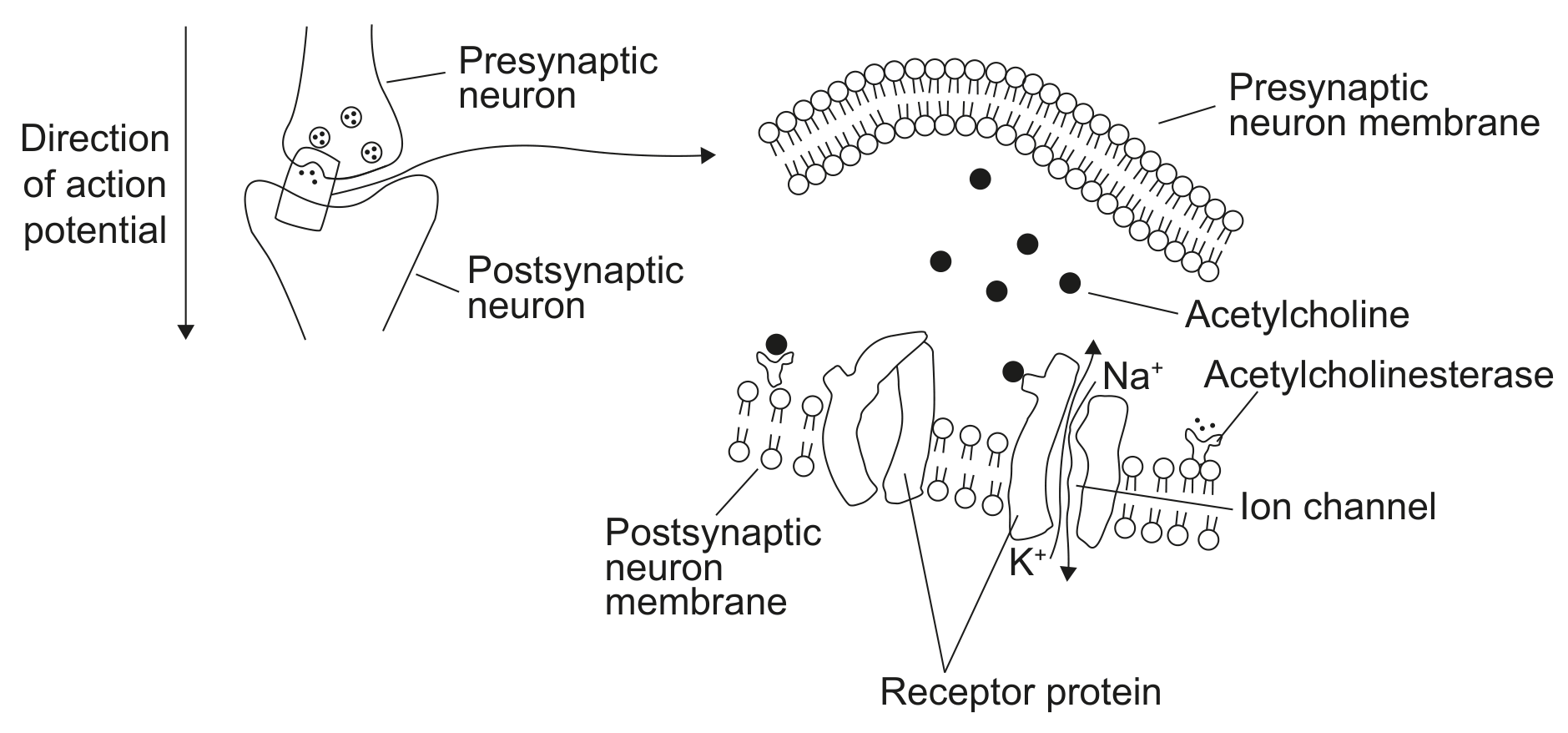
Cholinergic synapses use acetylcholine as their neurotransmitter. They are widespread in the body, passing on signals to muscle cells. These synapses are affected by neonicotinoid pesticides.

The diagrams, which are not drawn to scale, show the synapse between two neurons and a detail of the synaptic cleft.

Question image

Question 2(a)

(a)

On the diagrams, label:

[ 1 ]

Question 2(a)(iii)

(i)

On the diagrams, label with a letter P a location where a neonicotinoid pesticide could bind.

[ 1 ]

Question 2(b)

(b)

Outline how depolarization of the membrane of an axon occurs.

[ 2 ]

Question 2(c)

(c)

Explain how acetylcholine initiates an action potential in a postsynaptic membrane.

[ 2 ]

Question 2

Question 2(c)

(a)

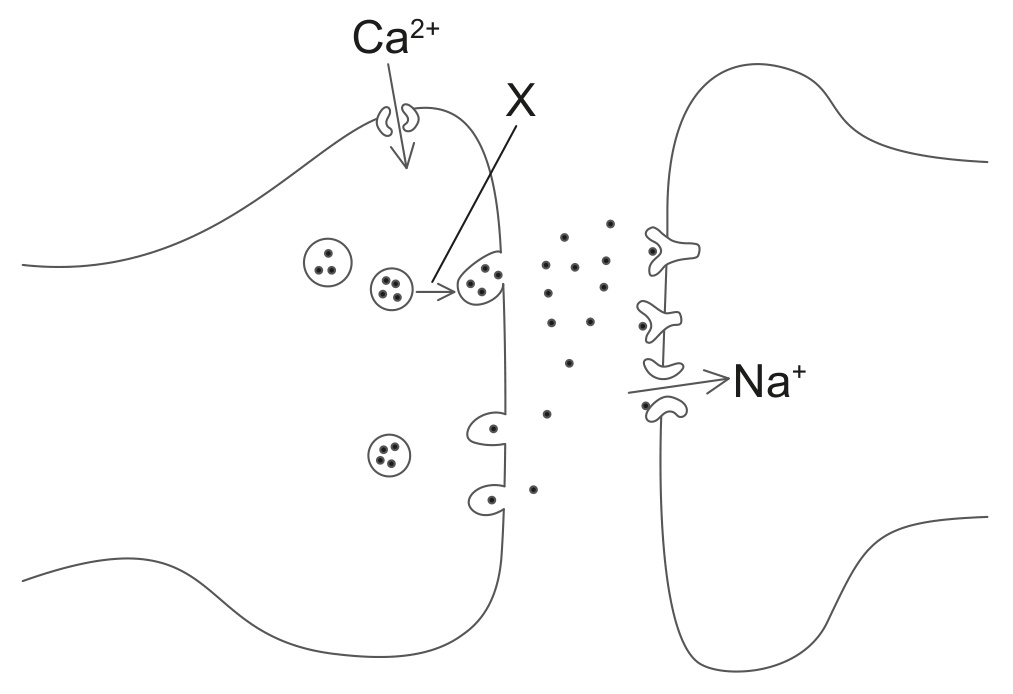
The diagram shows part of two neurons.

Question image
[ 4 ]

Question 2(c)(i)

(i)

State the name of the structure shown.

[ 1 ]

Question 2(c)(ii)

(ii)

X indicates the movement of a structure in the neuron. Explain what events trigger this movement and what happens next.

[ 3 ]

Question 3

[Maximum number: 5]

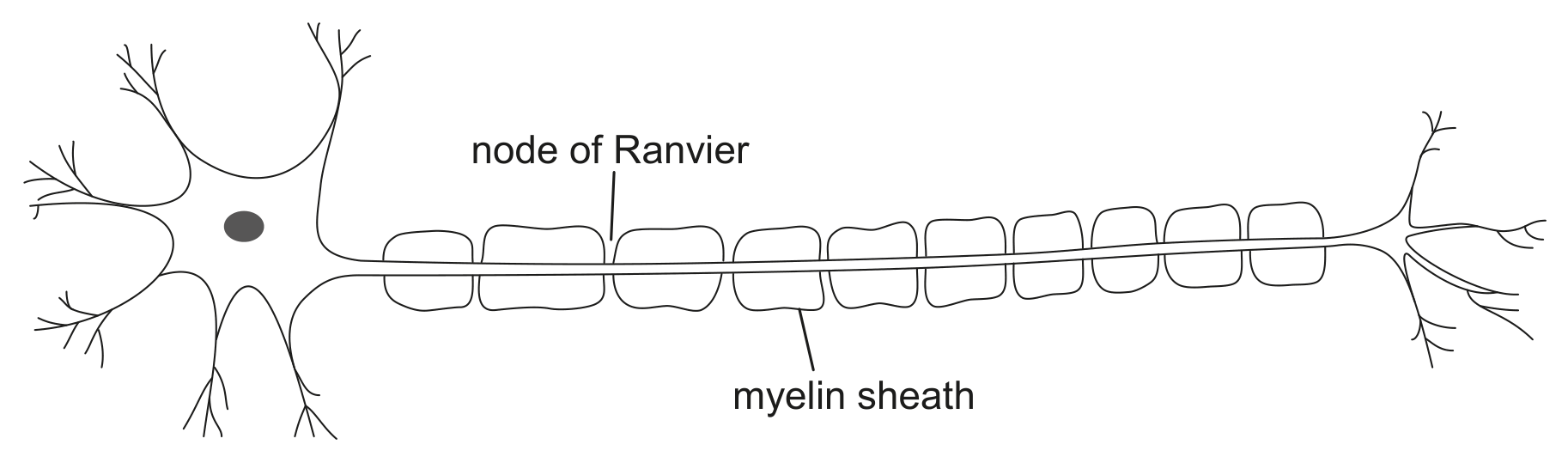
The diagram shows a cell from the nervous system.

Question image

Question 3(a)

(a)

Outline how the myelin sheath and nodes of Ranvier increase the speed of an action potential along a neuron.

[ 2 ]

Question 3(c)

(b)

Describe the effect of neonicotinoid pesticides on synaptic transmission in insects.

[ 3 ]

Question 4

[Maximum number: 1]

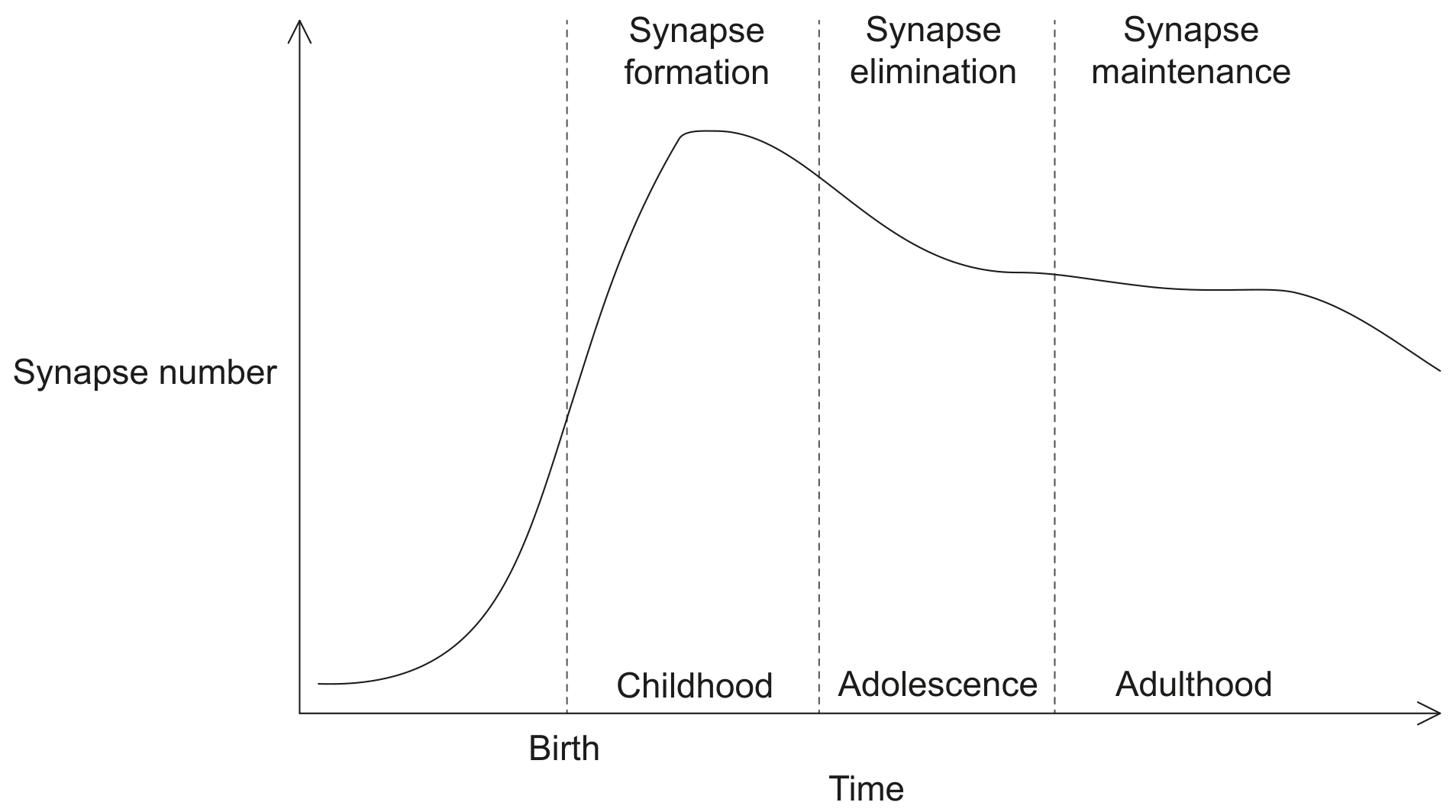
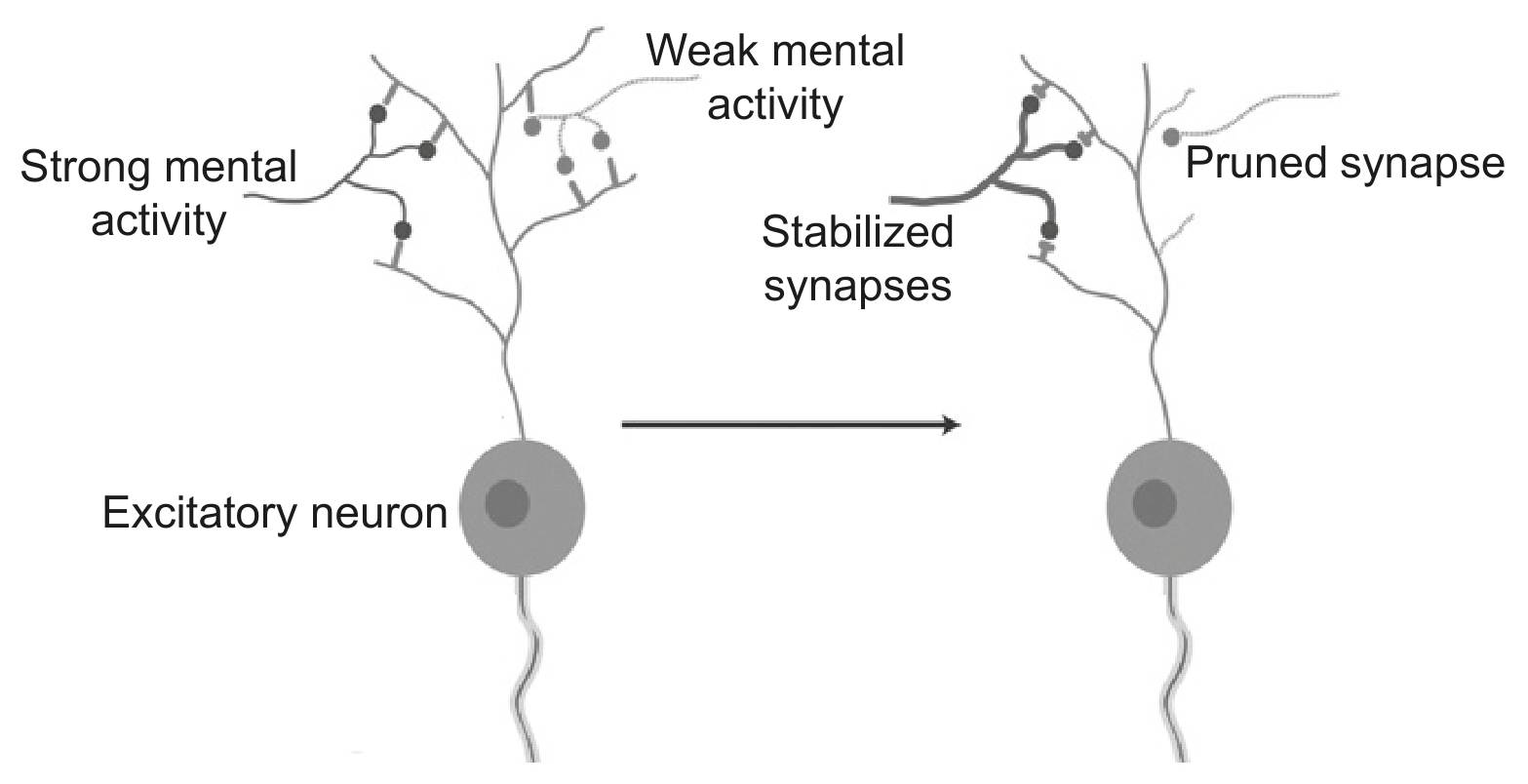
Defects in the formation of synapses could be the cause of neurological disorders such as Alzheimer's disease that affects the ability to think and remember clearly. It is more frequent in people older than 65 years of age. The graph shows the changes in synapse number over time. The diagram shows activity-related neural development.

Question image
Question image

Question 4(a)

(a)

State what happens to unused neurons.

[ 1 ]

Question 3

[Maximum number: 6]

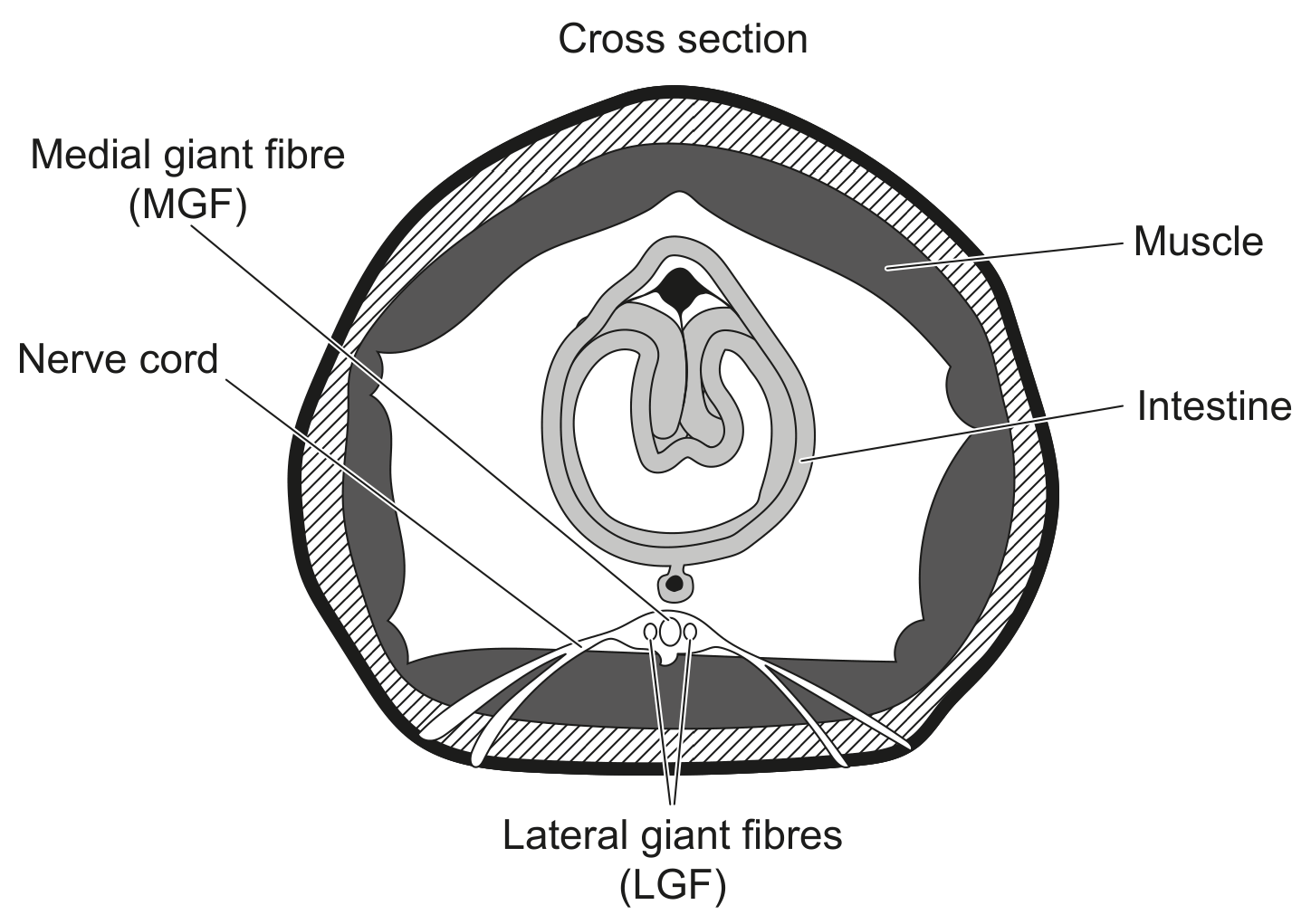
Earthworms (Lumbricus terrestris) have a nerve cord on the ventral (underside) side of their body. It contains three nerve fibres (axons), each with a very large diameter, which extend along the whole length of the nerve cord. There is one medial giant fibre (MGF) and two lateral giant fibres (LGFs). The diameter of the MGF is 1.4 times larger than the LGF.

Scientists developed a non-invasive method to record giant nerve fibre activity. The response from the MGF was measured by the electrical activity produced when touching the front segments of the earthworm while the LGF was measured when touching the back segments.

Question image
Question image

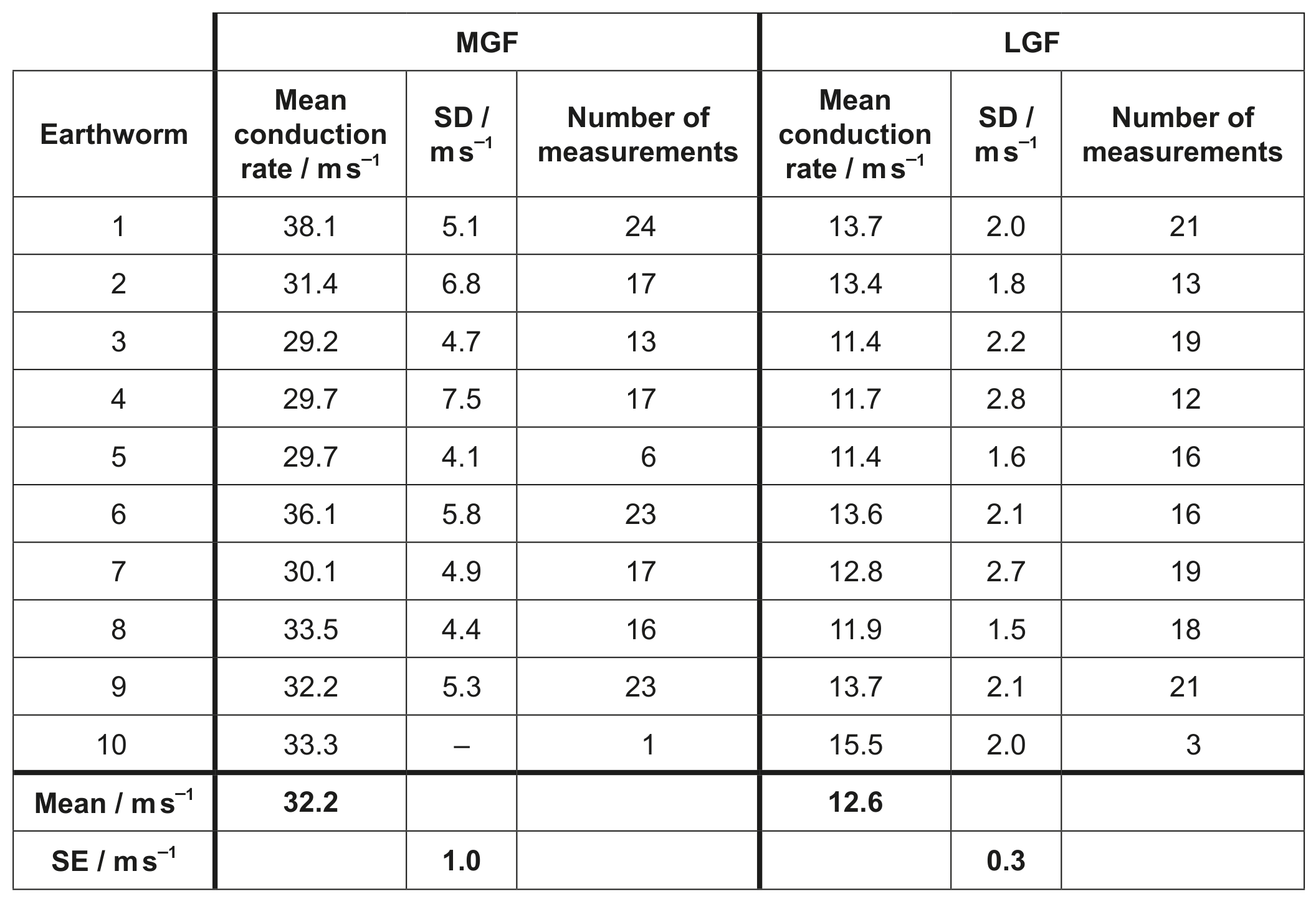
The table shows the mean conduction rates, standard deviation (SD) and number of individual measurements of MGF and LGF action potentials in each earthworm. At the end of the table, the mean and standard error (SE) for 9 of the earthworms are shown.

Table

Question 3(a)

(a)

State the apparatus used to show the resting and action potentials.

[ 1 ]

Question 3(c)

Question 3(c)(i)

(b)
(i)

Calculate how many times faster the mean MGF is compared to the mean LGF.

[ 1 ]

Question 3(c)(ii)

(ii)

Suggest one possible reason that the conduction rate in the MGF is much faster than in the LGF.

[ 1 ]

Question 3(d)

(c)

Explain saltatory conduction.

[ 3 ]

Question E2

Question E2(c)

(a)

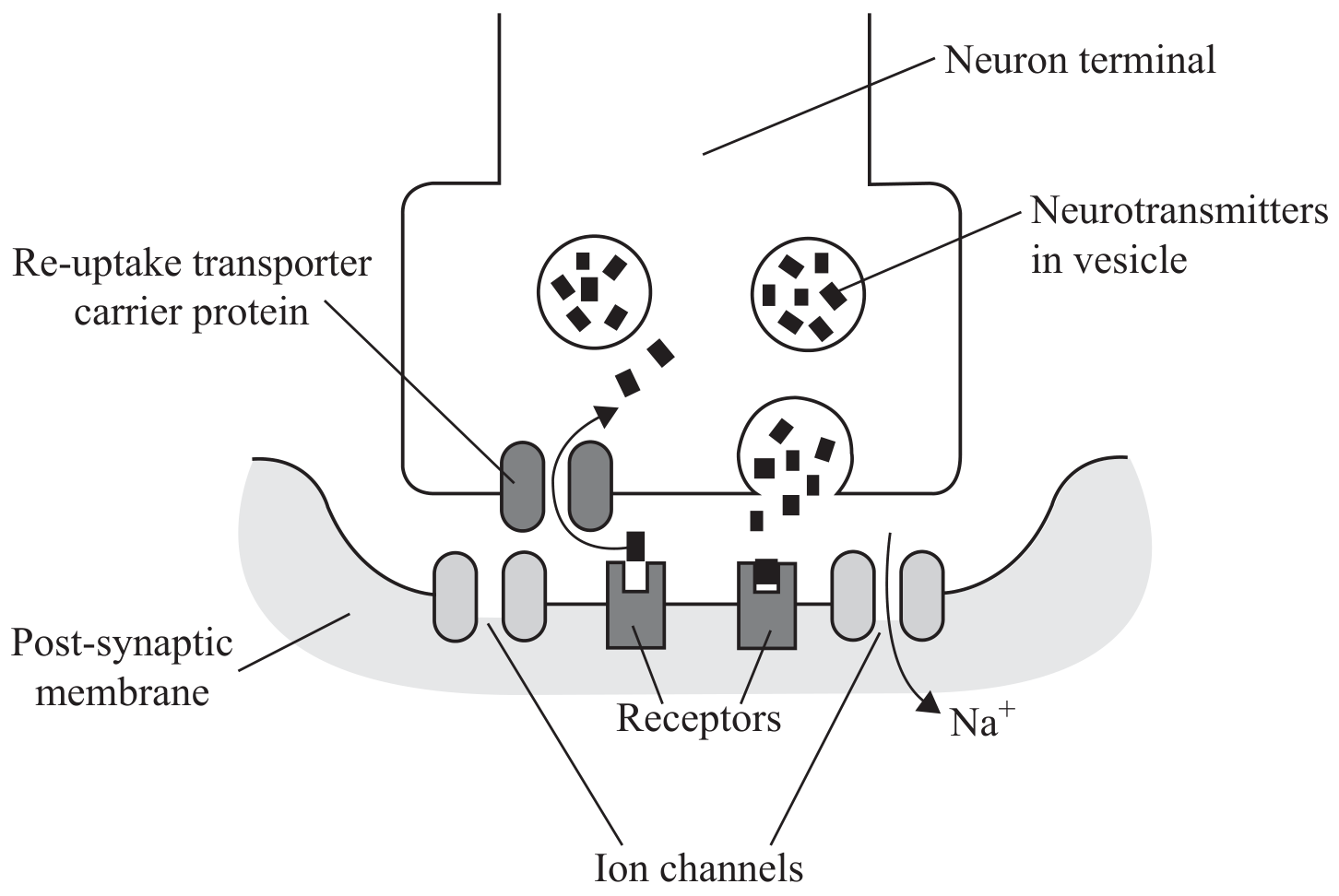
The diagram below shows a synapse where the neurotransmitter is dopamine and some of the processes that take place during nerve transmission.

Question image

Explain the effect of cocaine on neurotransmission at a synapse.

[ 3 ]

Question 17

[Maximum number: 1]

What is the action of neonicotinoids on the synapse of an insect?

A

They prevent the release of acetylcholine from the presynaptic membrane.

B

They increase the permeability of the presynaptic neuron to sodium ions.

C

They bind to the acetylcholine receptor on the postsynaptic neuron.

D

They block the uptake of acetylcholine in vesicles in the presynaptic neuron.

Question 3

[Maximum number: 7]

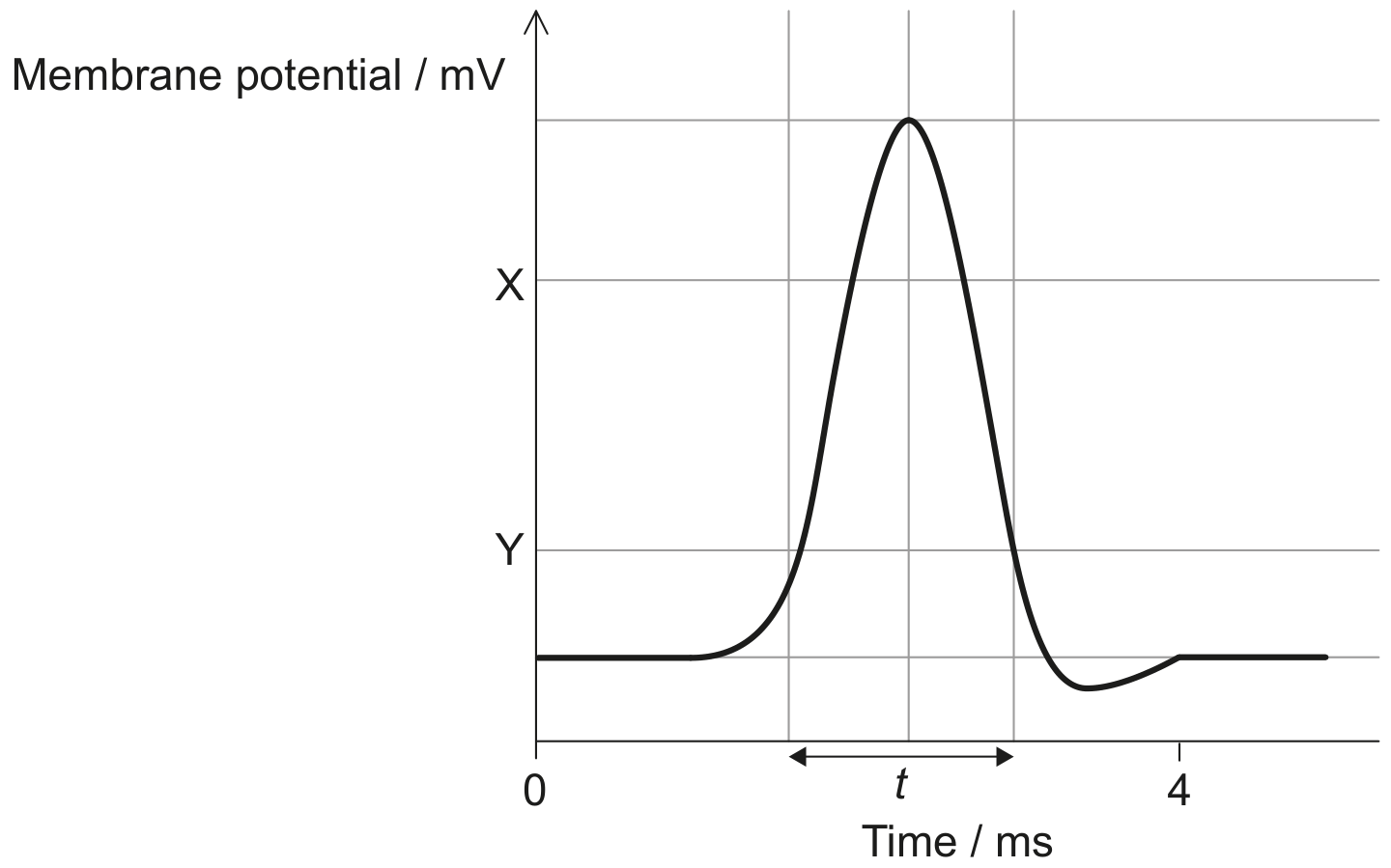
The graph shows the change in the membrane potential of an axon during an action potential.

Question image

Question 3(a)

(a)

State the approximate value of the membrane potential at X .

[ 1 ]

Question 3(b)

(b)

Y is the threshold potential. State what happens when the threshold potential is reached.

[ 1 ]

Question 3(c)

(c)

Describe the movements in ions that occur during time t.

[ 2 ]

Question 3(d)

(d)

Explain how a nerve impulse is passed on to other neurons.

[ 3 ]
0 selected