EduNinja

IB Biology HLC1.1 Enzymes and metabolismQuestion Bank

Question 1

[Maximum number: 4]

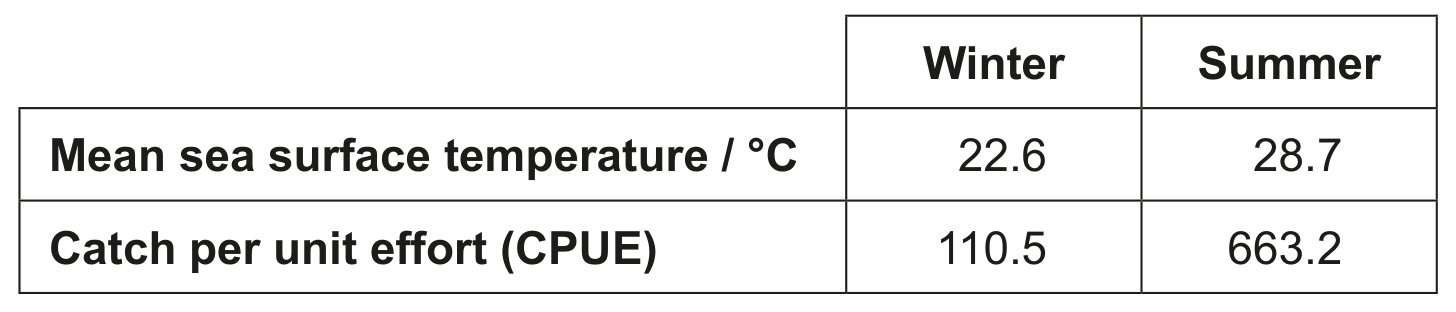
Common bottlenose dolphins, Tursiops truncatus, are marine mammals of temperate and tropical oceans throughout the world, where they feed on fish, squid and crustaceans.

Research has been carried out on a population of these dolphins in Sarasota Bay, Florida. The table shows the mean sea surface temperature in Sarasota Bay and catch per unit effort (CPUE) in winter and summer. A large CPUE indicates it would take little effort for the dolphin to catch a lot of prey.
Table

Question 1(f)

(a)

Explain the differences in BMR between desert and polar mammals up to a mass of 103 g10^{3} \mathrm{~g}.

[ 2 ]

Question 1(g)

(b)

Above a body mass of 10 kg , there is little difference in BMR between desert and polar mammals. Suggest reasons for this.

[ 2 ]
Question 1

[Maximum number: 1]

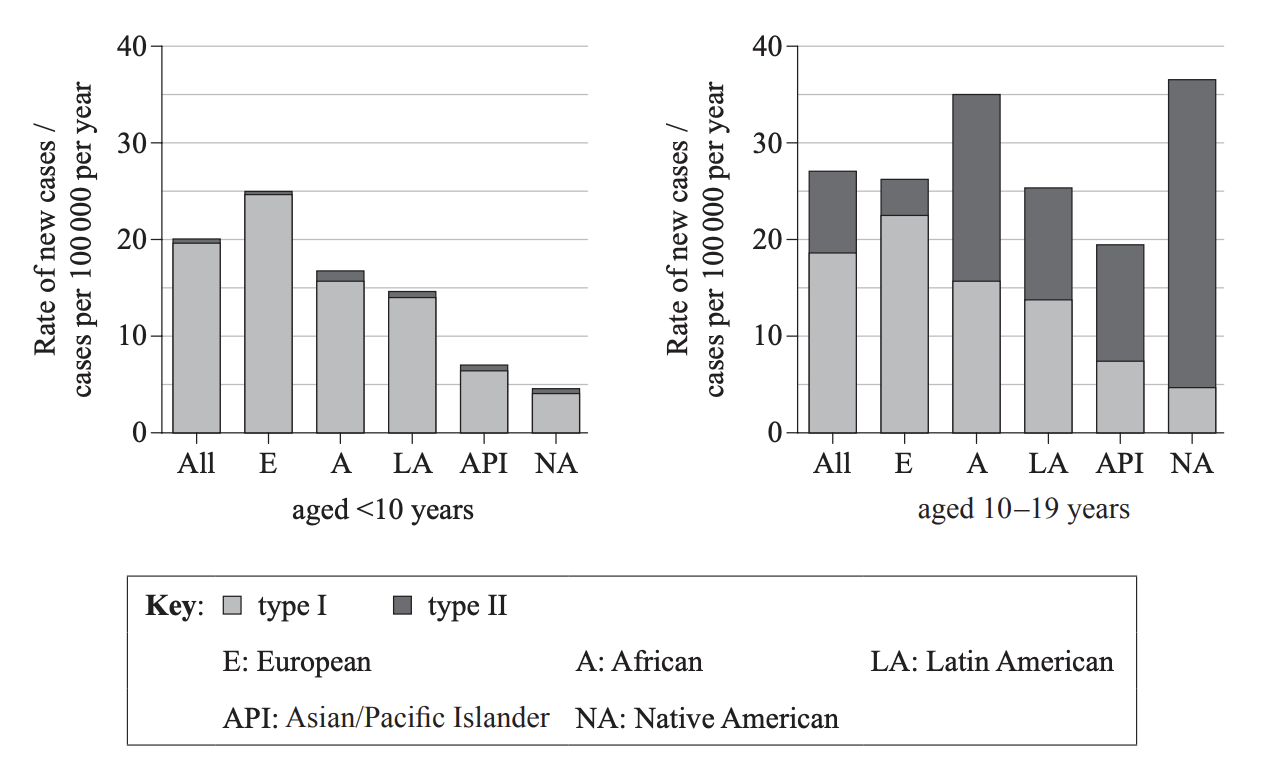
Diabetes in Youth is a study that examined diabetes (type I and type II) among children and adolescents in the United States. The graphs show the rate per year of new cases of type I and type II diabetes among young people (aged less than 20 years) by ethnicity between 2002-2005.

Question image

Question 1(f)

(a)

Calculate the percentage change of enzyme activity after 5 hours exposure to lipids.

[ 1 ]

Question 1

[Maximum number: 5]

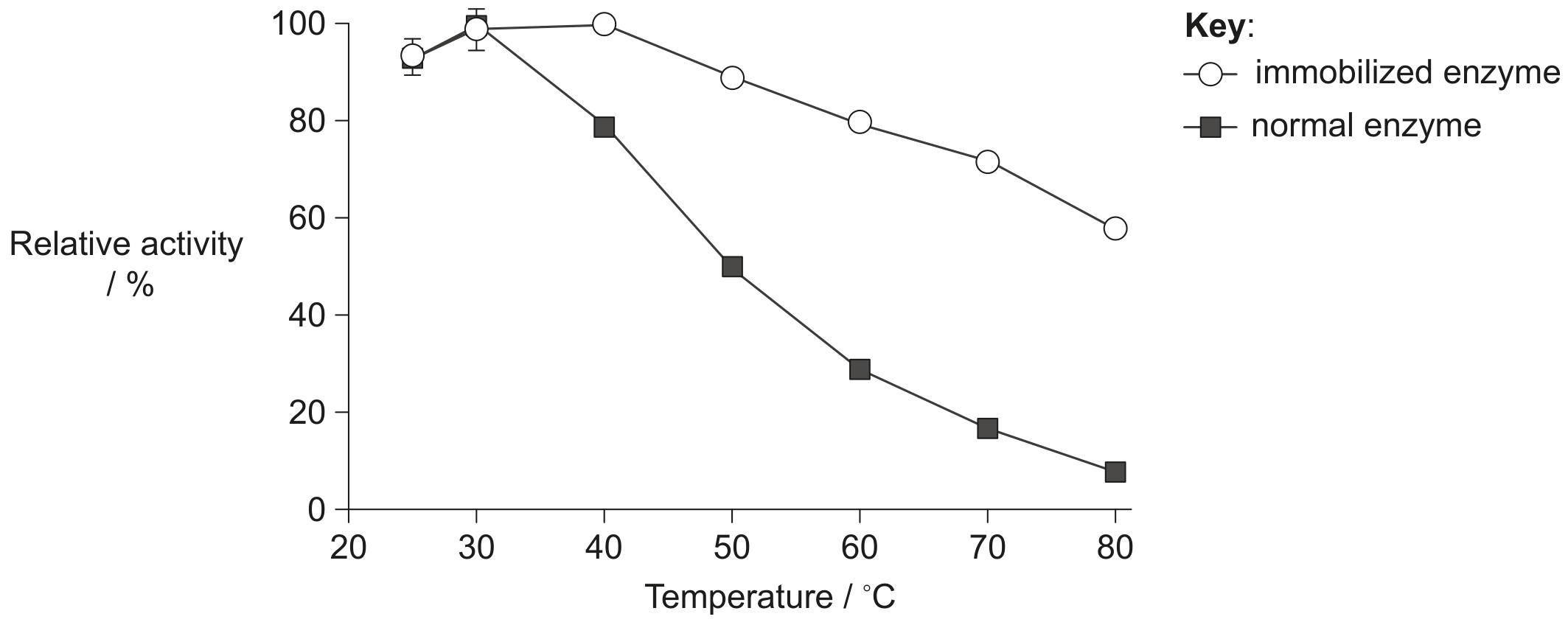
Peroxidase enzyme (HRP) in horseradish (Armoracia rusticana) plants is used to break down hydrogen peroxide into water and oxygen. The extracted enzyme also has industrial uses when immobilized in ferrosoferric oxide (Fe3O4)\left(\mathrm{Fe}_{3} \mathrm{O}_{4}\right) and embedded in a polymer matrix. The graph shows the relative activity of HRP in both its free and immobilized forms at different temperatures. The results are a mean of three trials.

Question image

Question 1(a)

(a)

State the effect that immobilizing the enzyme had on the relative activity of the enzyme.

[ 1 ]

Question 1(b)

(b)

Identify one variable that should be kept constant while measuring enzyme activity at all temperatures.

[ 1 ]

Question 1(c)

(c)

Evaluate the reliability of the results.

[ 1 ]

Question 1(d)

(d)

Using the information in the graph, describe how the experiment could be extended to determine the optimum temperature for immobilized HRP.

[ 2 ]

Question 1

[Maximum number: 1]

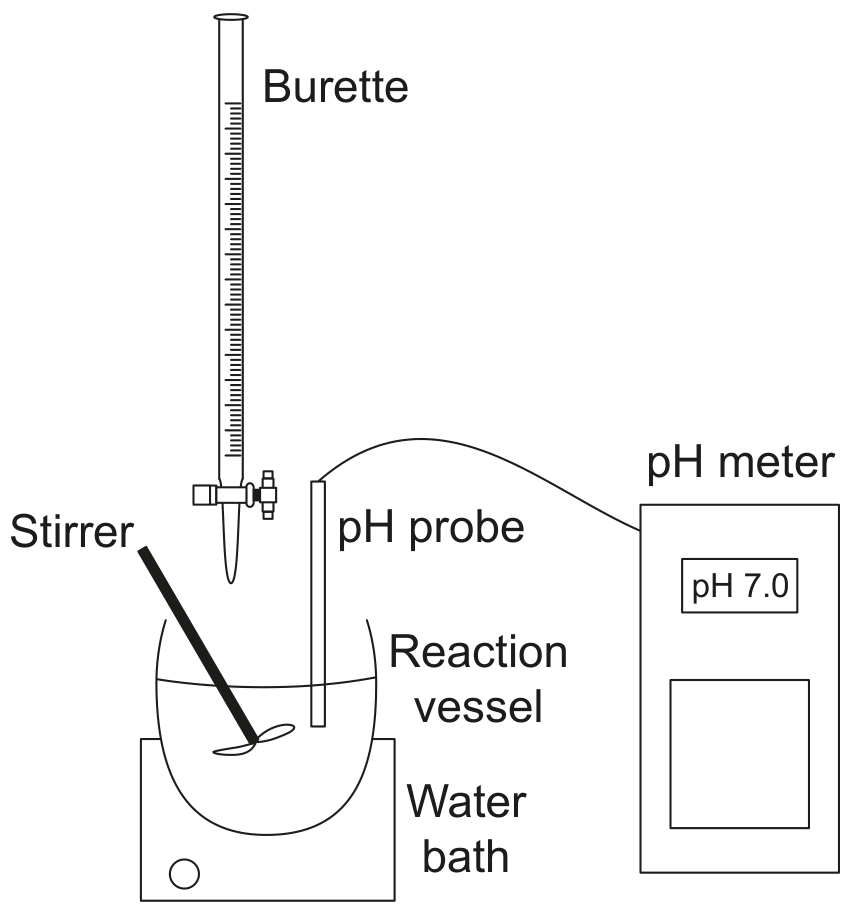
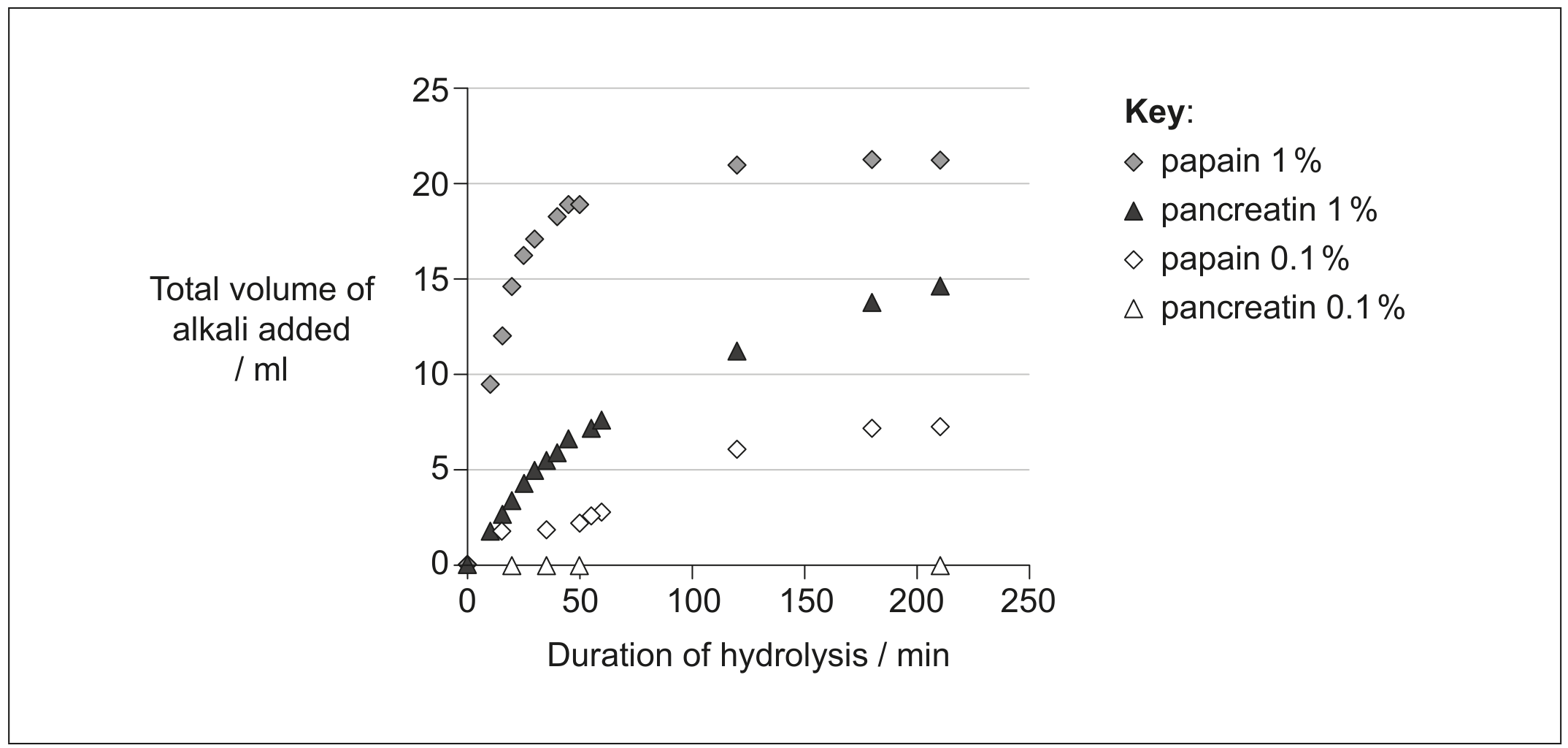
The rate of hydrolysis of fish proteins using the enzymes papain and pancreatin was monitored using the apparatus shown. The pH decreased with the progress of hydrolysis, so alkali in the burette was added as necessary in order for the hydrolysis to proceed at constant pH . The rate of protein hydrolysis was measured as the amount of alkali added. Measurements were taken at constant conditions of temperature and pH for two enzyme concentrations, 1 % and 0.1 %.

Question image
Question image

Question 1(b)

(a)

Sketch on the graph the curve expected if the hydrolysis were performed using papain 0.5 %.

[ 1 ]

Question 1

[Maximum number: 4]

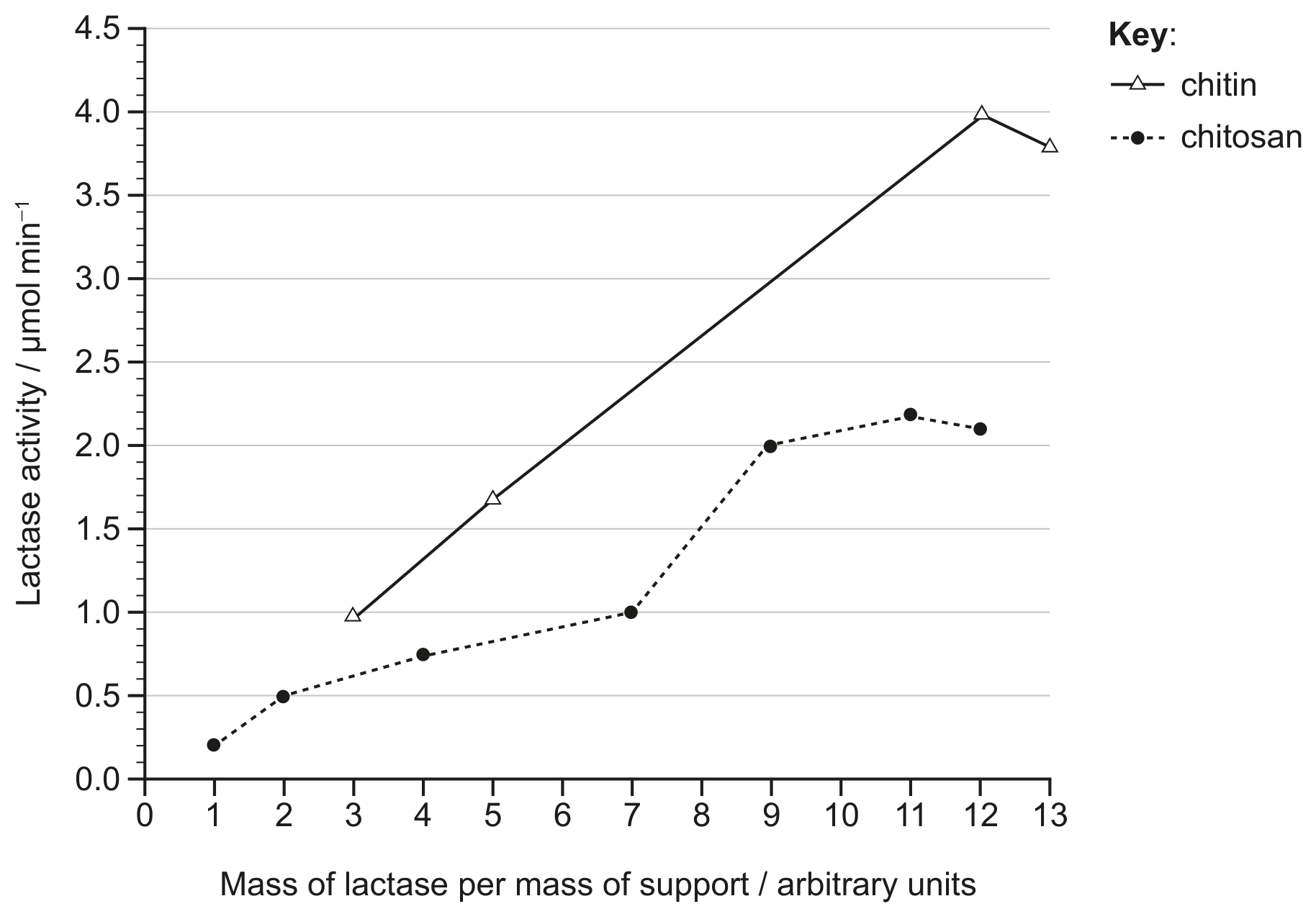
Lactase enzyme from the fungus Aspergillus oryzae was immobilized on two different support materials, chitin and chitosan. The activity of the immobilized enzyme was measured at 55C,pH455^{\circ} \mathrm{C}, \mathrm{pH} 4 and 200gdm3200 \mathrm{gdm}^{-3} of lactose at increasing masses of enzyme per kilogram of either chitin or chitosan as a support.

The graph shows enzyme activity of immobilized lactase at increasing masses of enzyme per mass of support.

Question image

Question 1(a)

(a)

State the dependent variable.

[ 1 ]

Question 1(c)

(b)

Explain reasons for keeping the temperature at 55C55^{\circ} \mathrm{C}.

[ 2 ]

Question 1(d)

(c)

Suggest a variable that could have been measured to determine lactase enzyme activity in this experiment.

[ 1 ]

Question 1

[Maximum number: 4]

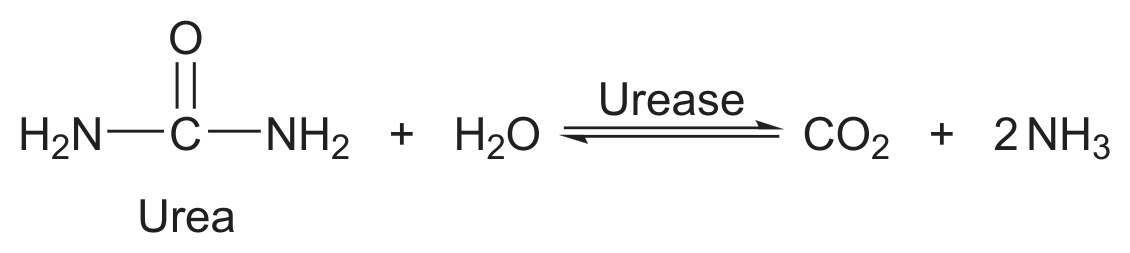
Urease is an enzyme found in soybeans (Glycine max) that catalyses the hydrolysis of urea into ammonia and carbon dioxide. The reaction can be summarized as shown.

Question image

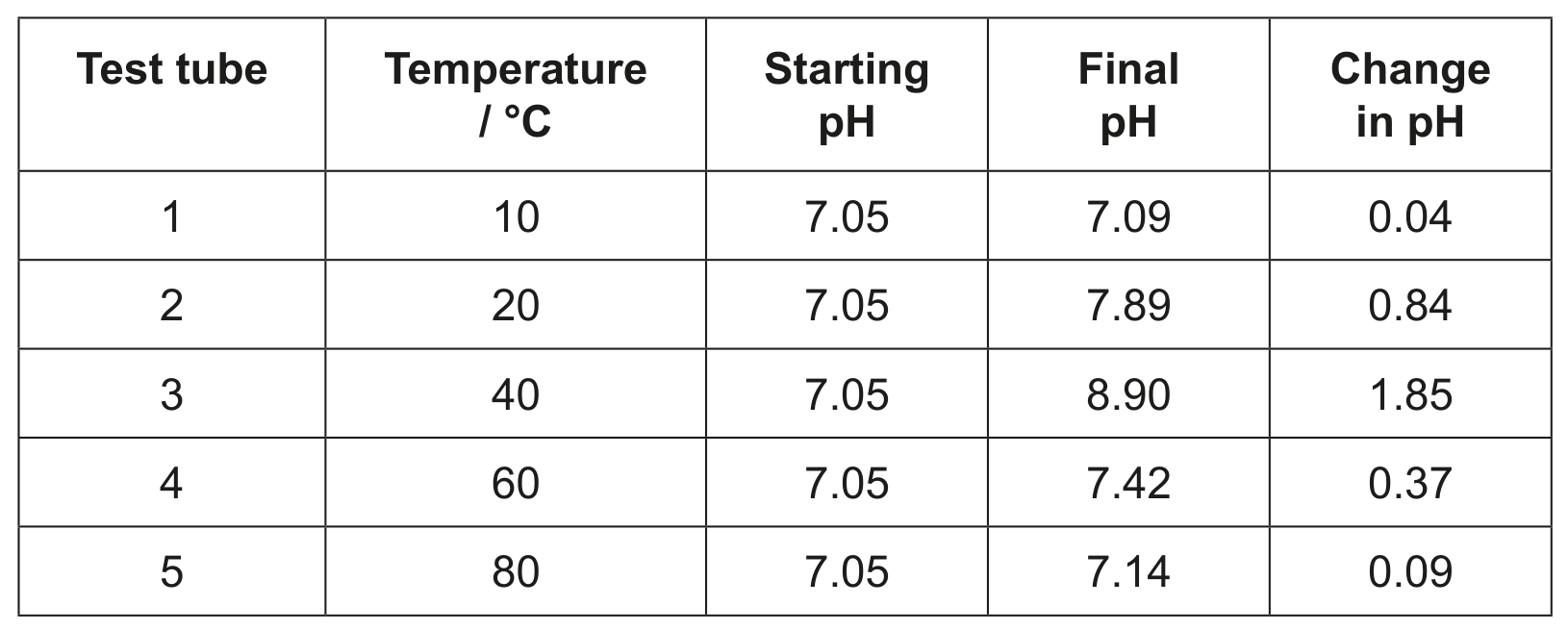
In order to investigate the effect of temperature on the activity of urease, a student placed 0.50 g samples of urease powder into 10.0 ml of 1.0 % aqueous urea solutions in five separate test tubes. Each test tube was held at a different temperature and the change in pH in the samples was measured after 20 minutes. Ammonia is a weak base and its formation causes the pH of the reaction mixture to increase. The results are summarized in the table.

Table

Question 1(b)

(a)

Identify two controlled variables in this investigation.
1.
2.

[ 2 ]

Question 1(c)

(b)

Explain two ways in which the investigation can be improved.

[ 2 ]

Question 1

[Maximum number: 2]

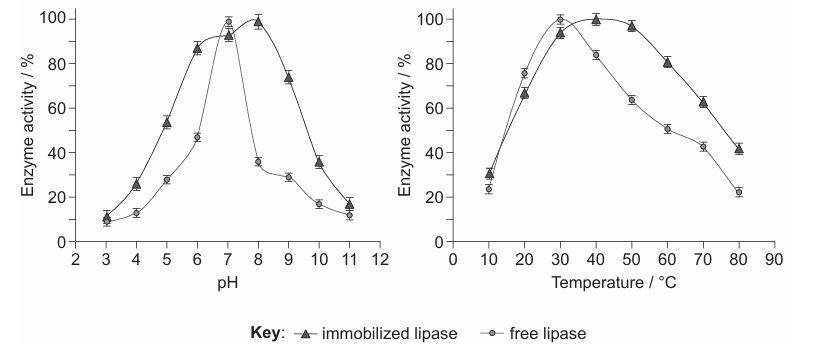
Lipase was extracted from the fungus Aspergillus niger and used to hydrolyse one of its substrates. This was repeated for an immobilized form of lipase. The graph shows how the enzyme activity varied at different pH and temperature levels.

Key: - immobilized lipase - - free lipase

Key: - immobilized lipase - - free lipase

Question 1(b)

(a)

The graph of the effect of pH on immobilized lipase activity does not allow for the determination of optimum pH precisely. Explain how a more exact value for the optimum pH could be determined.

[ 2 ]

Question 2

[Maximum number: 3]

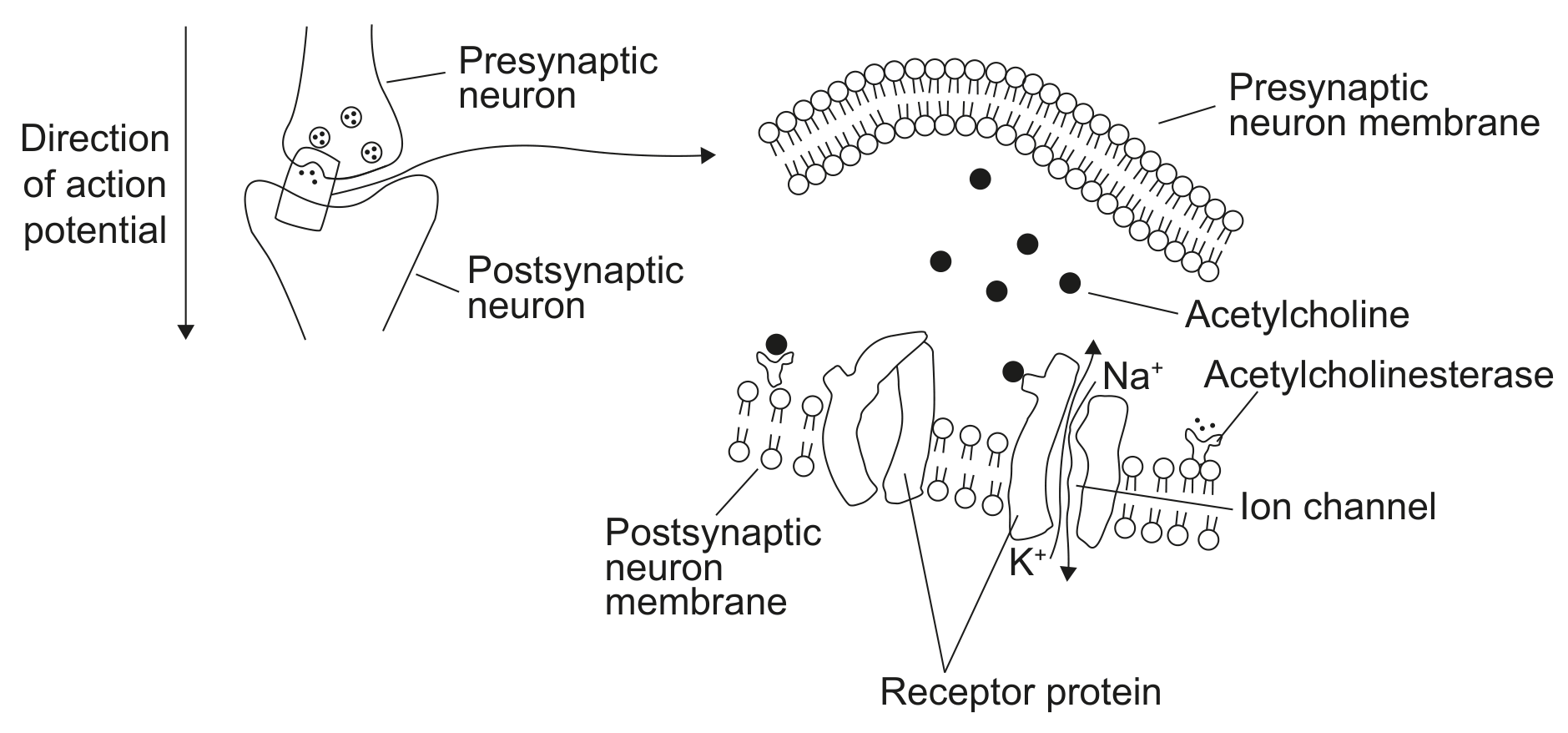
Cholinergic synapses use acetylcholine as their neurotransmitter. They are widespread in the body, passing on signals to muscle cells. These synapses are affected by neonicotinoid pesticides.

The diagrams, which are not drawn to scale, show the synapse between two neurons and a detail of the synaptic cleft.

Question image

Question 2(d)

Question 2(d)(ii)

(a)
(i)

Explain what happens to an enzyme if there is a change of pH .

[ 3 ]

Question 2

[Maximum number: 5]

Egg white or albumin solutions can be used in enzyme activity experiments. The influence of different ions on the activity of a peptidase was determined at 55C55^{\circ} \mathrm{C} and at pH 6.5 . The concentration of each ion studied was the same.

Question 2(b)

(a)

Predict, with reasons, the difference in peptidase activity if the experiment were repeated at pH 5.

[ 3 ]

Question 2(c)

(b)

Describe an experimental method that can be used to measure the activity of an enzyme.

[ 2 ]

Question 2

[Maximum number: 3]

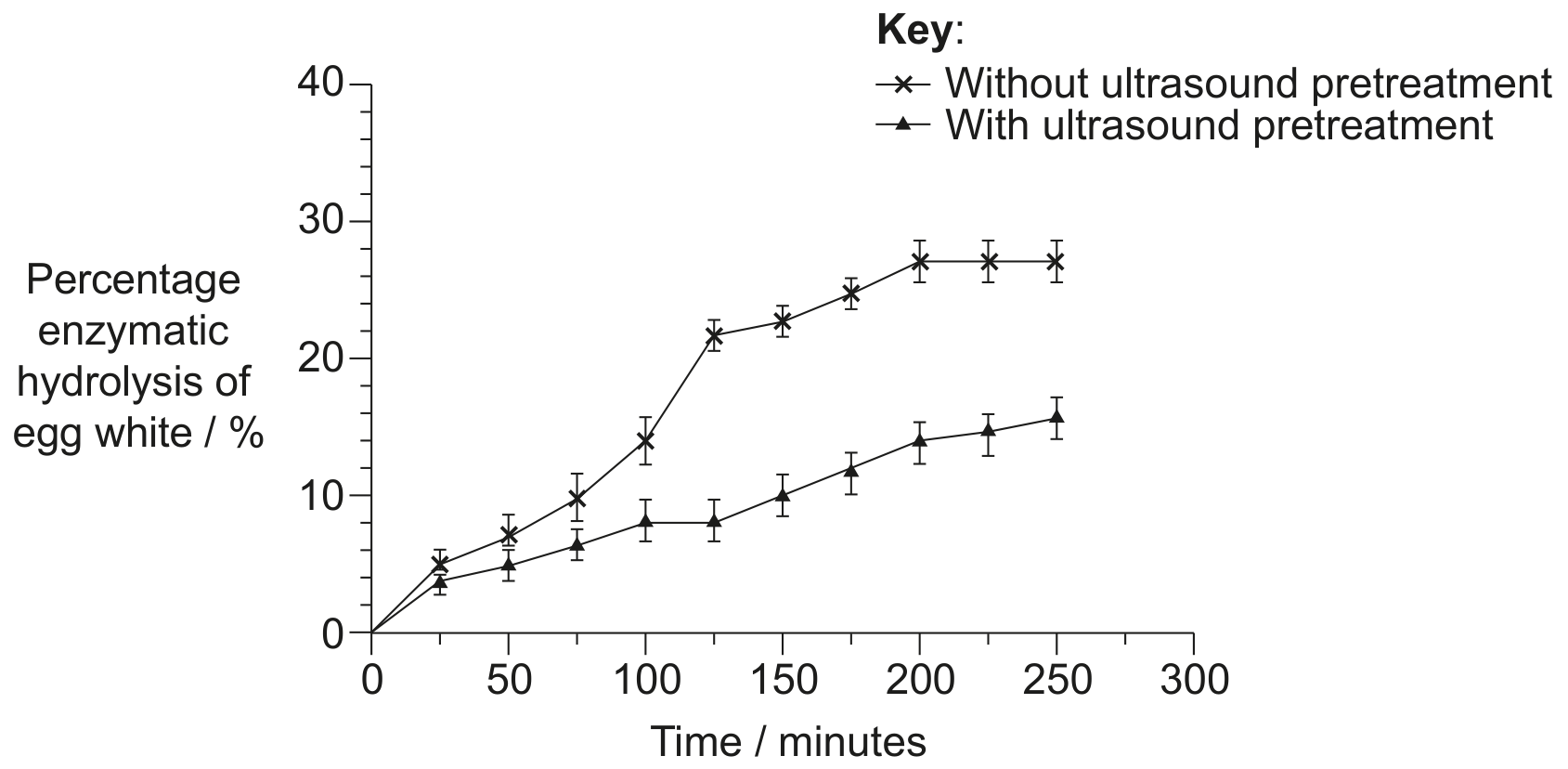
A study investigated the effect of pretreating egg white proteins with ultrasound on how they were digested by enzymes. A series of 10 % egg white solutions were exposed to ultrasound waves. Enzymatic hydrolysis of the egg whites with and without ultrasound pretreatment was then carried out using the enzyme alcalase in optimum conditions.

Question image

Question 2(c)

(a)

Each measurement was repeated several times. Explain the need for replicates of each treatment.

[ 2 ]

Question 2(d)

(b)

Using the data, deduce whether pretreatment with ultrasound is effective for hydrolysing proteins.

[ 1 ]
0 selected