EduNinja

IB Biology HLA3.1 Diversity of organismsQuestion Bank

Question 1

[Maximum number: 5]

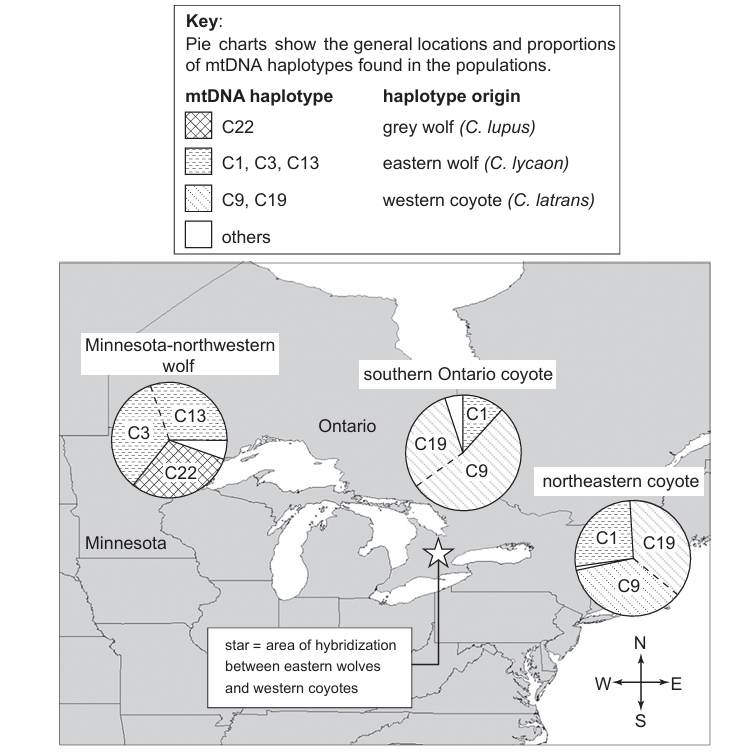
There are many closely related Canis species in North America including the grey wolf (C. lupus), eastern wolf (C. lycaon) and western coyote (C. latrans). Hybridization can occur between members of these species.

For example, during the last 100 years, hybridization has occurred between western coyotes (C. latrans) and eastern wolves (C. lycaon) in the area of Ontario shown by a star in the map shown below.

Genetic evidence for hybridization is based on identification of haplotypes (combinations of linked alleles in clusters of similar genes) that exist in mitochondrial DNA (mtDNA) of Canis populations. The populations in this study were the Minnesota-northwestern wolf, southern Ontario coyote and northeastern coyote. Assume that all animals in each Canis population have the same mtDNA haplotypes.
Question image

Question 1(a)

(a)

Outline the genetic evidence that Canis populations have hybridized.

[ 2 ]

Question 1(b)

(b)

Compare the genetic data for southern Ontario coyotes and northeastern coyotes.

[ 2 ]

Question 1(c)

(c)

State with a reason whether the genetic evidence shows that the western coyote and the grey wolf have overlapping ranges.
[ 1 ]

Question 1

[Maximum number: 5]

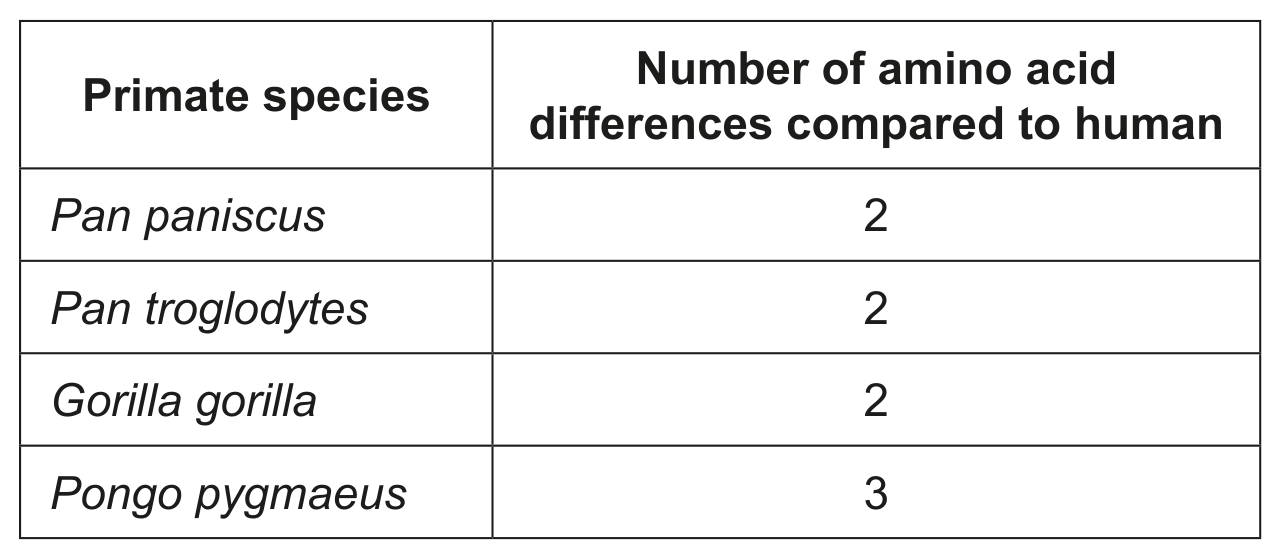
The table shows the number of amino acids that are different in the sequences of the protein FOXP2 from a human compared with four other primate species.

Table

Question 1(a)

(a)

Identify the total number of different genera named in the table.

[ 1 ]

Question 1(c)

(b)

Using evidence from the diagrams, justify the hypothesis that chromosome 2 in humans arose from the fusion of chromosomes 12 and 13 with a shared primate ancestor.

[ 4 ]

Question D1

[Maximum number: 4]

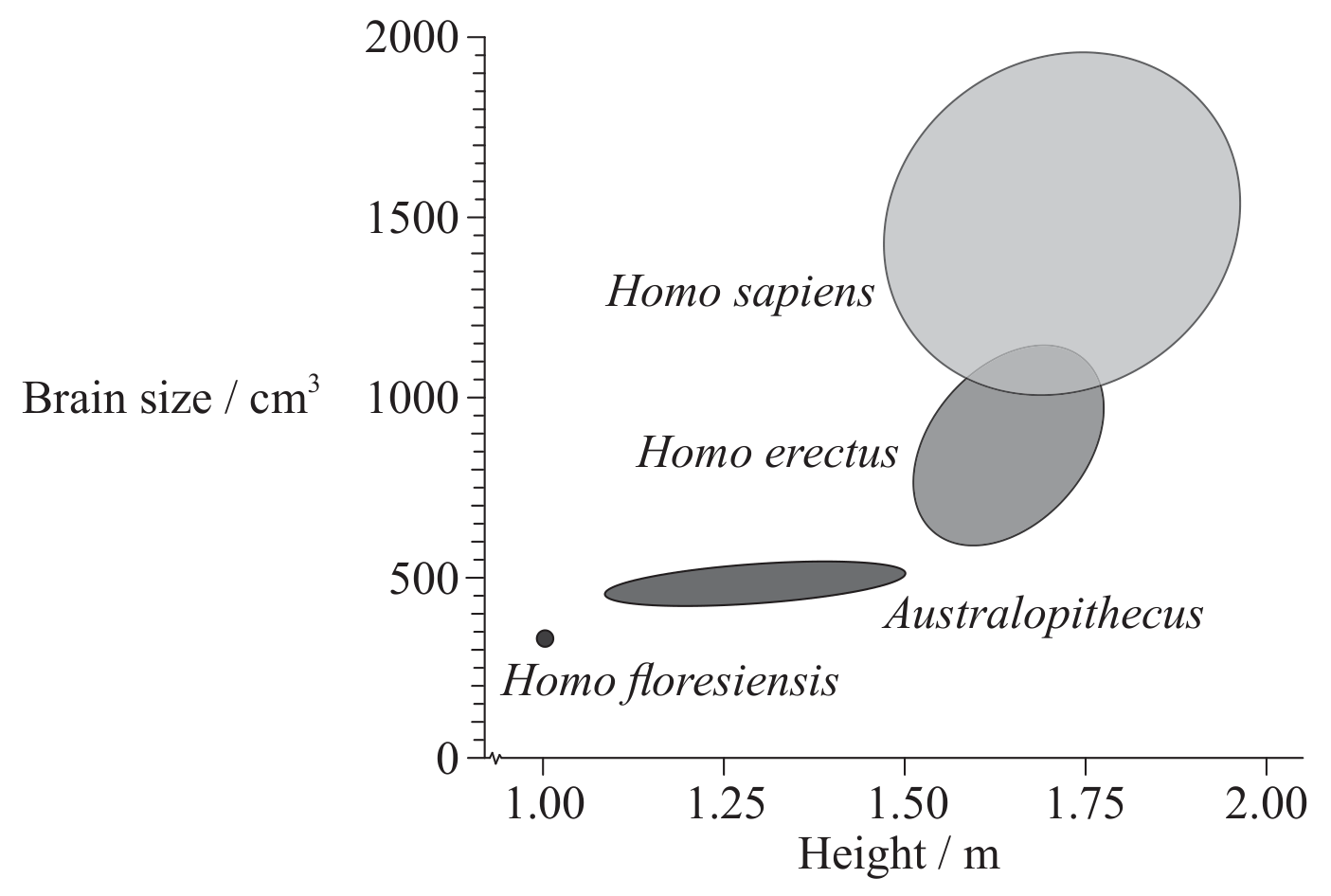
The diagram shows the range of heights and brain sizes found in four groups of hominids.

Question image

Question D1(b)

(a)

Distinguish between the characteristics of the Australopithecus and H. erectus using the data.

[ 2 ]

Question D1(d)

(b)

State two ways, apart from brain volume, by which the skulls of the Australopithecus and H. erectus would differ in appearance.
1.
2.

[ 2 ]

Question 2

Question 2(c)

(a)

A species is often defined as a group of similar individuals that interbreed in nature and produce fertile offspring. Discuss some problems with the use of this definition.

[ 2 ]

Question 10

[Maximum number: 1]

What is a feature of the human genome?

A

Plasmids

B

Messenger RNA

C

Transfer RNA

D

Mitochondrial DNA

Question 10

[Maximum number: 1]

Where can the entire genome of an organism be found?

A

In the DNA present in plasmids of a bacterial cell

B

In the DNA present in the nucleus of a eukaryotic cell

C

In the DNA present in the nucleus and chloroplasts of a plant cell

D

In the DNA present in the nucleus and mitochondria of an animal cell

Question 10

[Maximum number: 1]

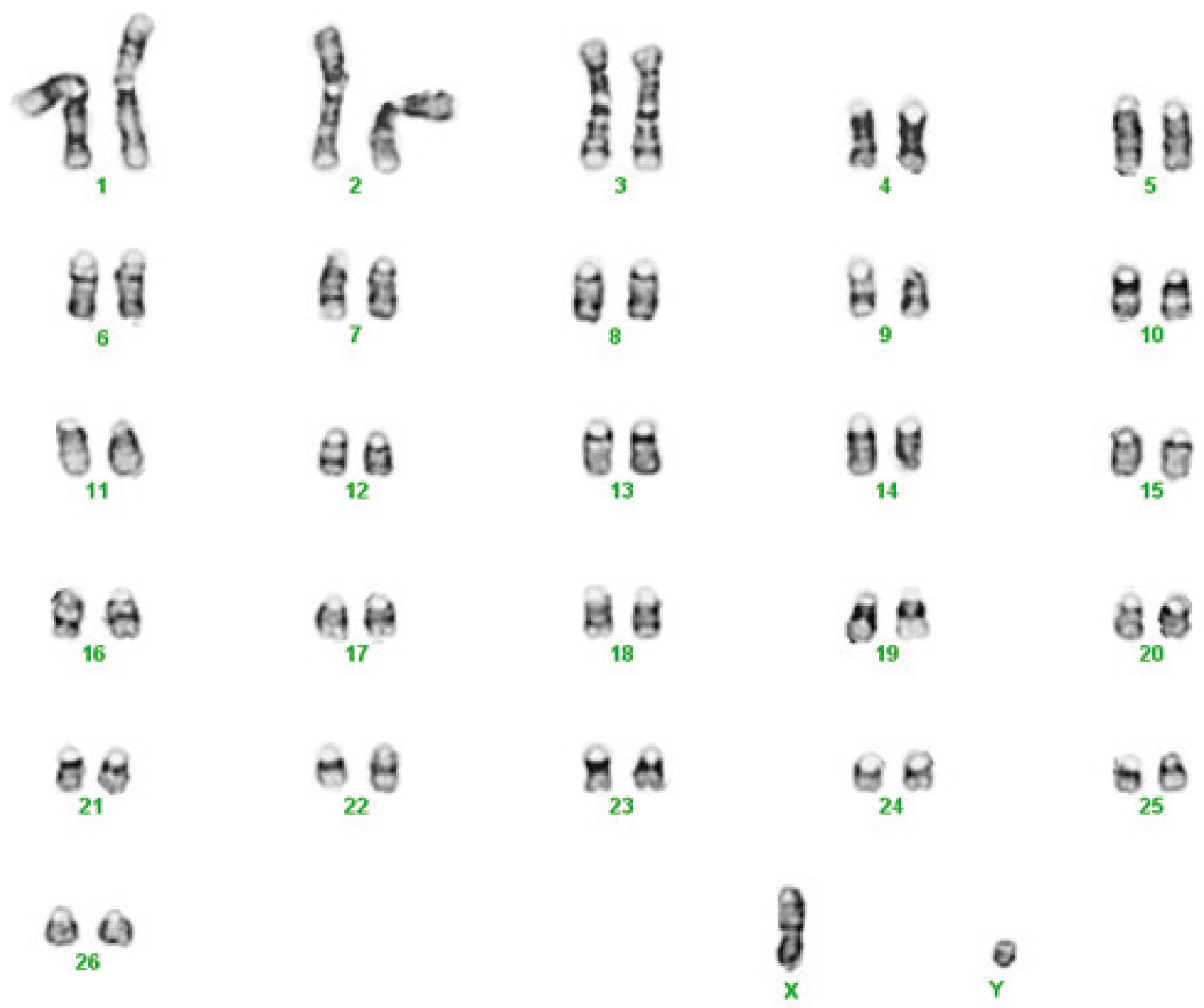
The image shows a karyogram.

Table

What information can be determined from this karyogram?

A

The sex is female.

B

The haploid number is 54 .

C

Disjunction occurred during meiosis.

D

The species is not human.

Question 10

[Maximum number: 1]

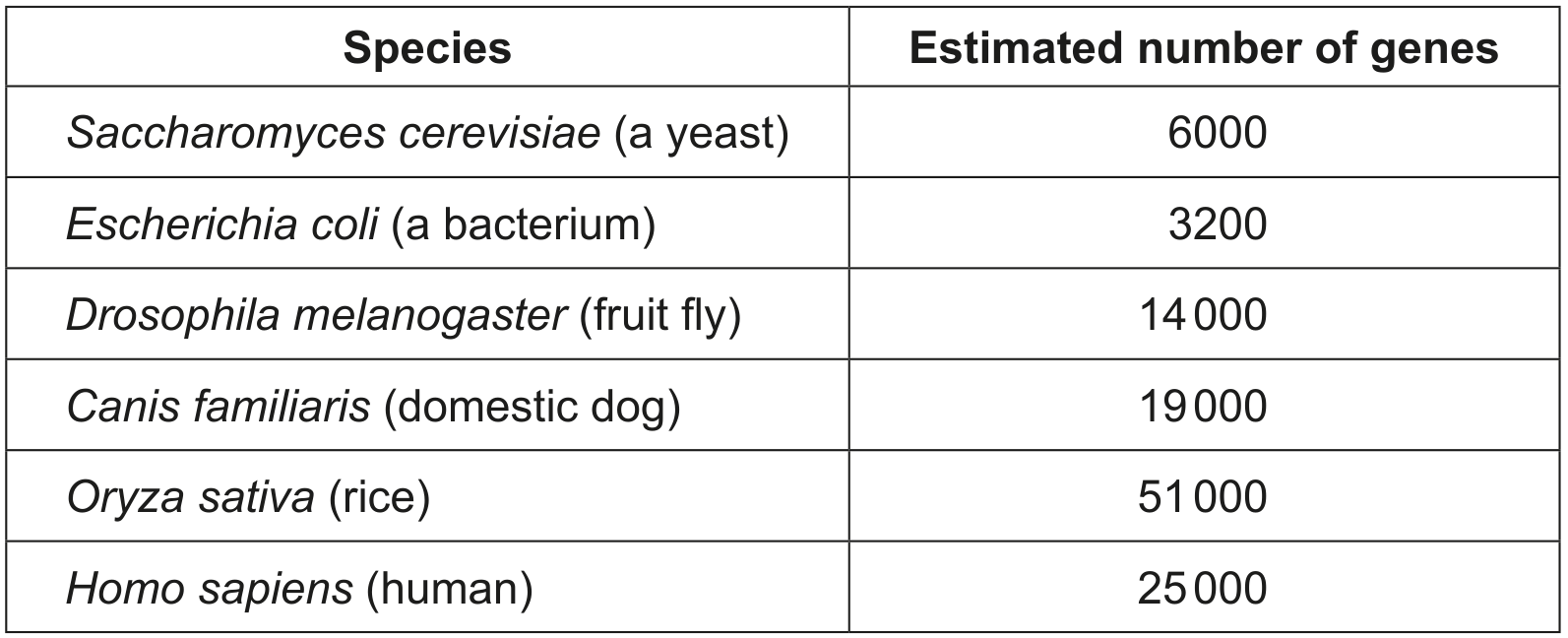
The table shows the estimated total number of genes in several organisms.

Table

What can be deduced from the information in this table?

A

Throughout evolution, the number of genes increases.

B

The domestic dog is more closely genetically related to the fruit fly than to the human.

C

The number of genes does not determine evolutionary success.

D

Humans produce about half as many proteins as rice.

Question 2

Question 2(c)

(a)

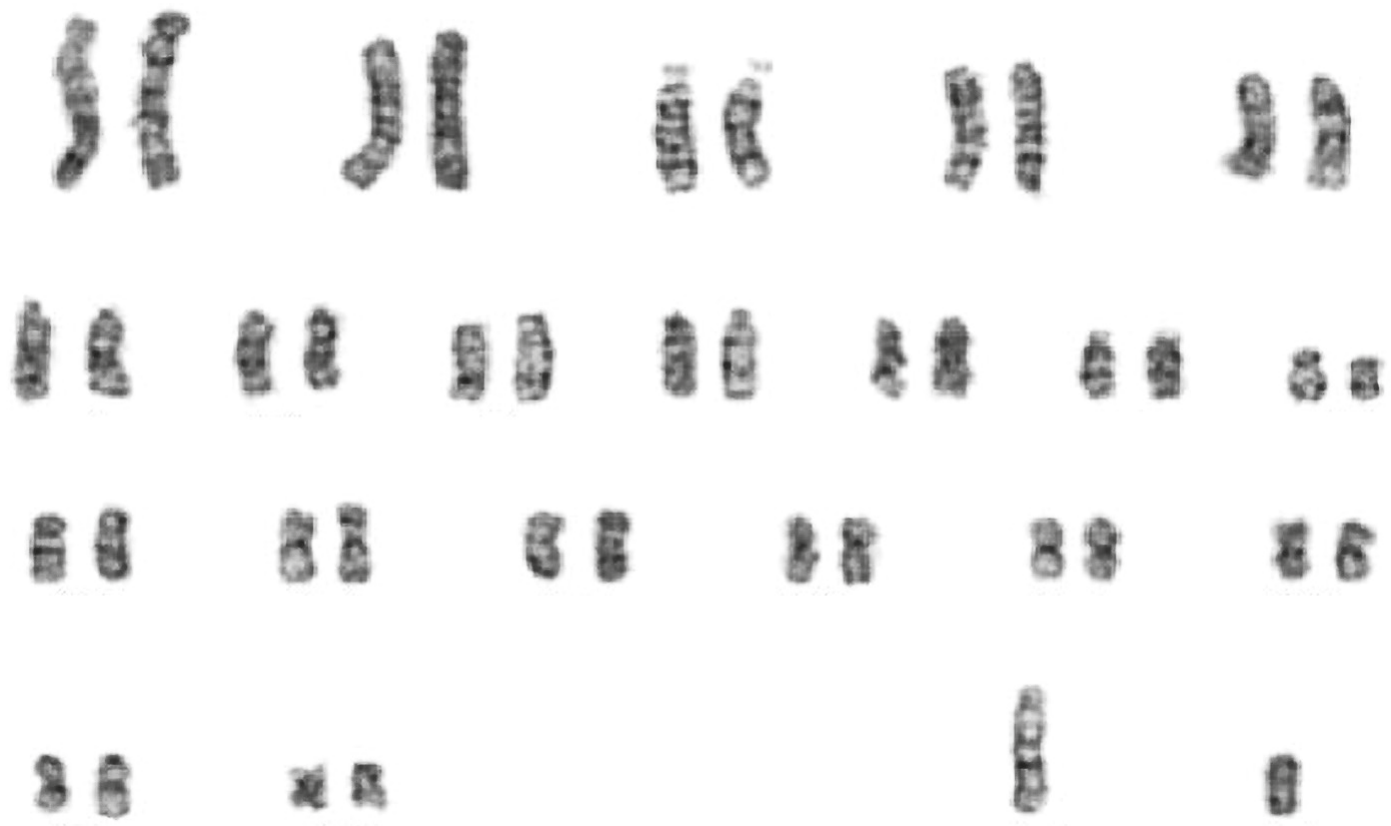
The karyogram shown is for the African marsh rat (Dasymys incomtus). In this species, sex is determined by X and Y chromosomes. Females are XX and males are XY .

Question image
[ 2 ]

Question 2(c)(i)

(i)

Identify, with a reason, the sex of this individual.

[ 1 ]

Question 2(c)(ii)

(ii)

State the haploid number for this nucleus.

[ 1 ]

Question 11

[Maximum number: 1]

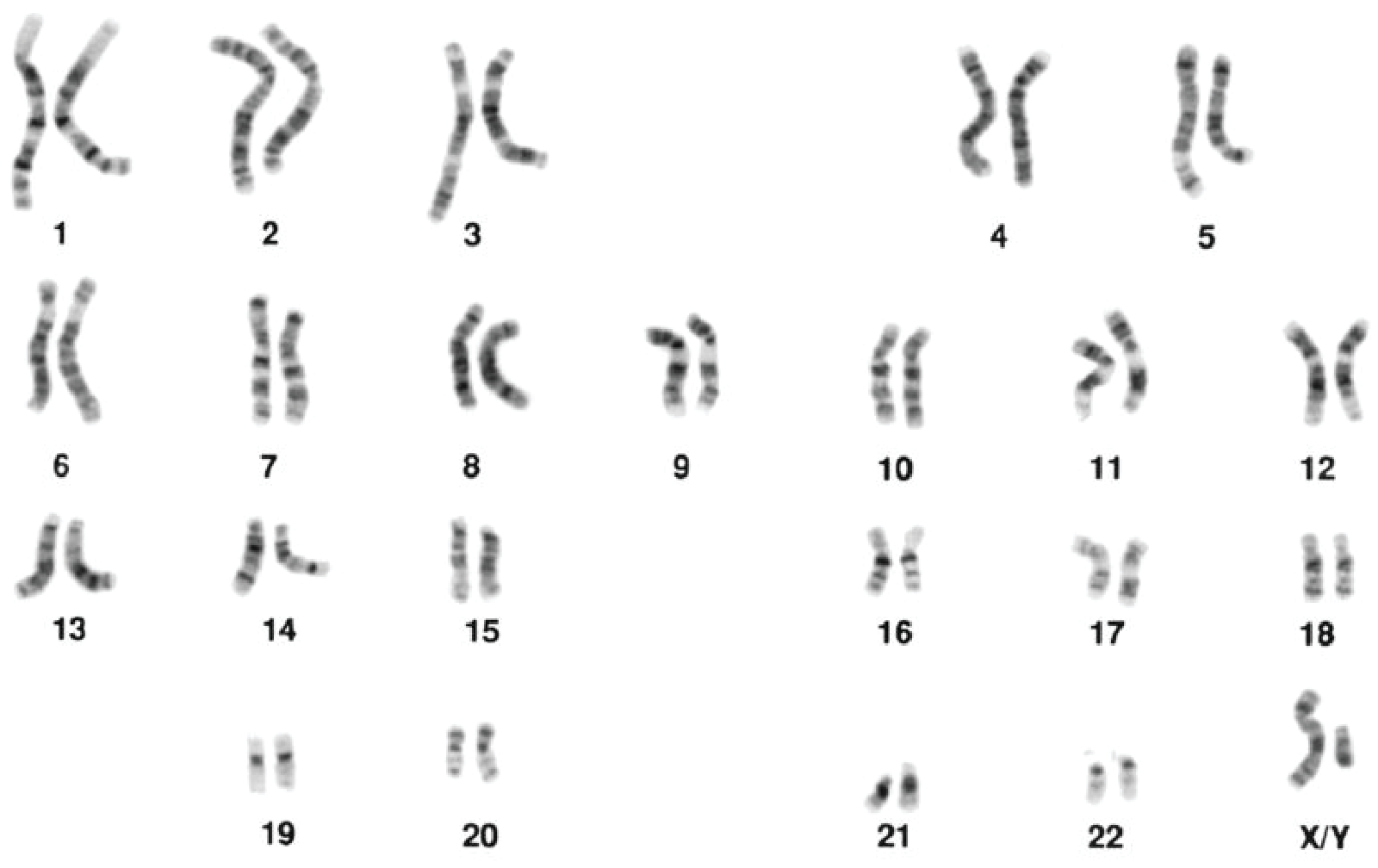
A pregnant woman had fetal cells removed by chorionic villus sampling and tested. The following karyogram was produced.

Question image

What does this show?

A

The child is female with Down syndrome.

B

The child is female without Down syndrome.

C

The child is male with Down syndrome.

D

The child is male without Down syndrome.

0 selected