Question 1
Which of the following describes the molecular structure of DNA?
I. Complementary base pairing occurs within the molecule
II. Contains deoxyribose
III. Contains thymine
I and II only
I and III only
II and III only
I, II and III
EduNinjaWhich of the following describes the molecular structure of DNA?
I. Complementary base pairing occurs within the molecule
II. Contains deoxyribose
III. Contains thymine
I and II only
I and III only
II and III only
I, II and III
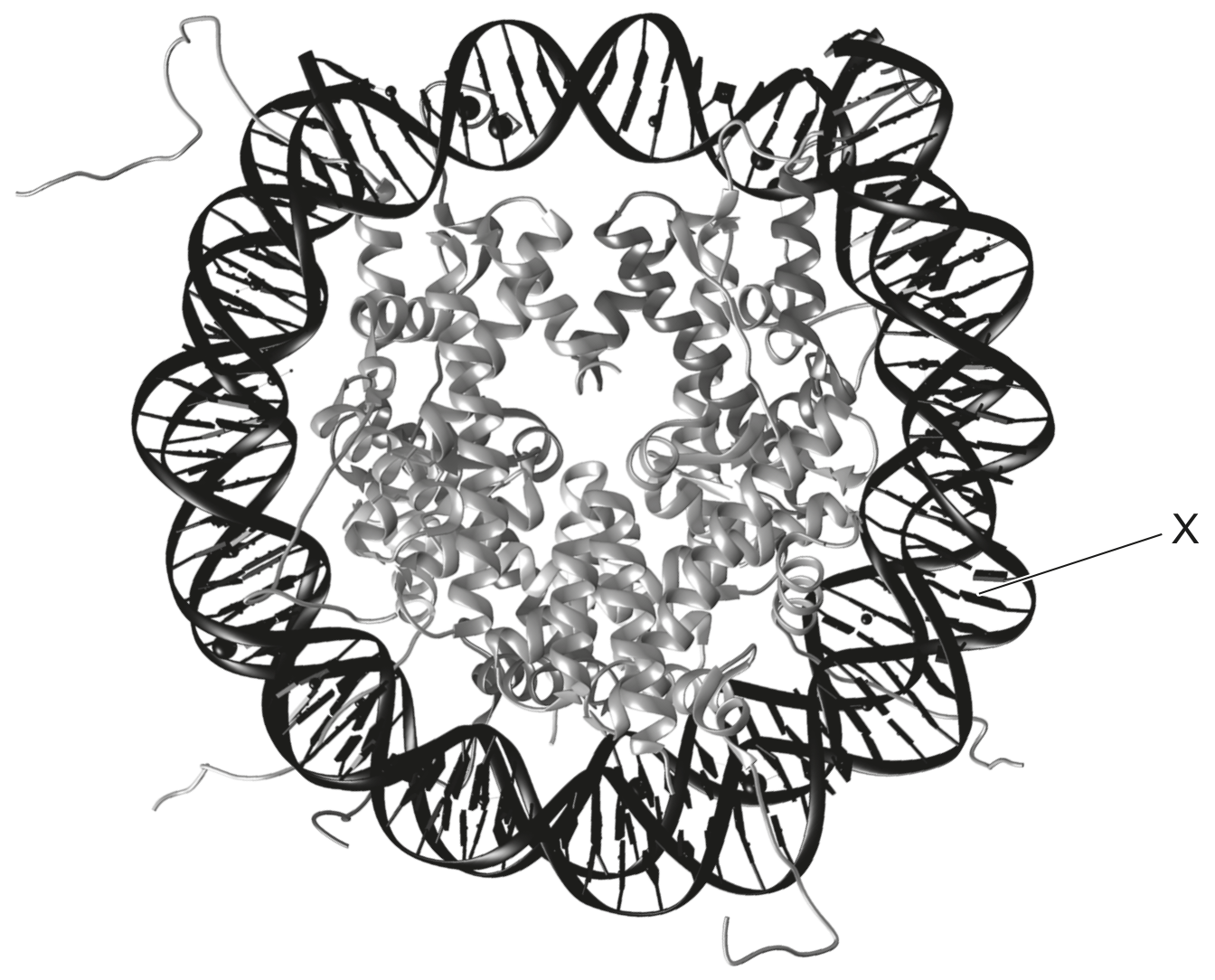
The image of a nucleosome was obtained using molecular visualization software.

Adenine forms hydrogen bonds with the nitrogenous base X . Identify X .
Describe the structure of the nucleosome.
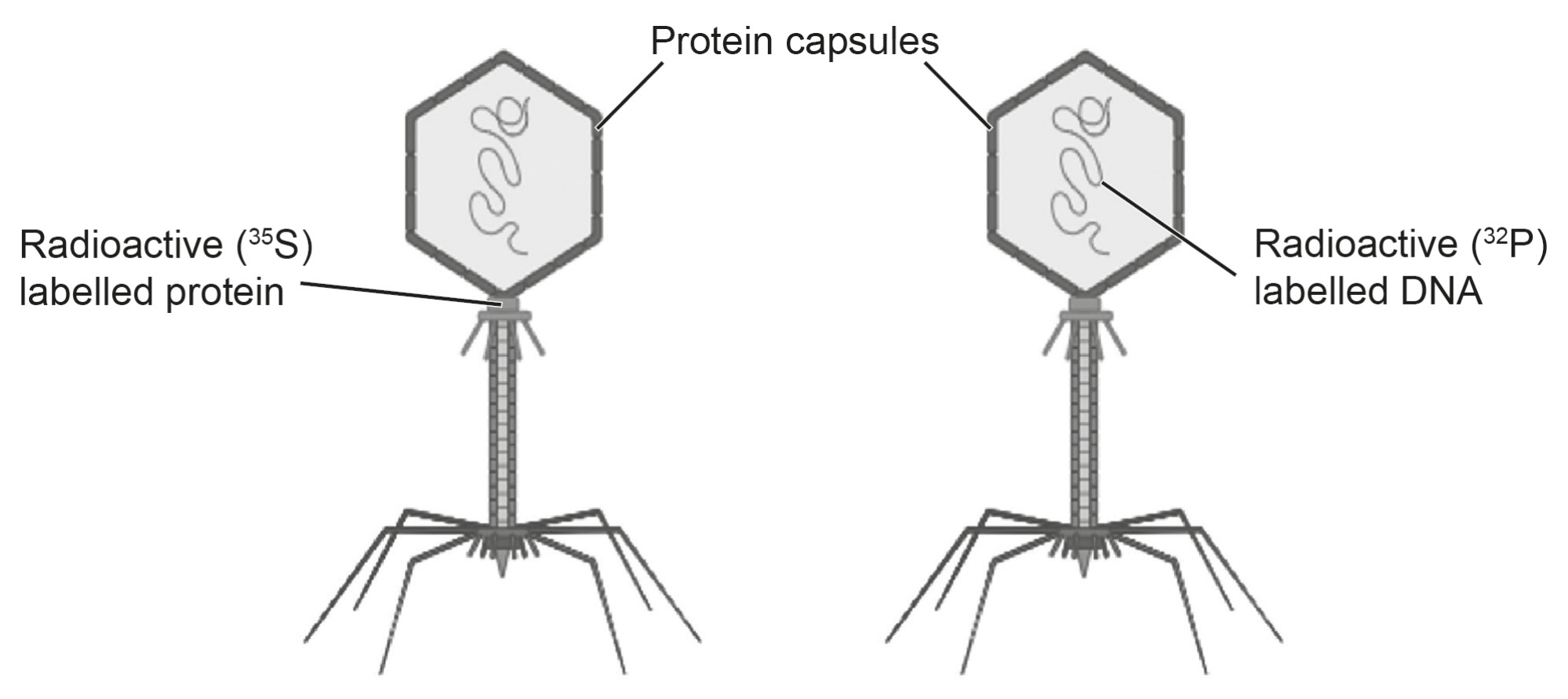
Hershey and Chase used bacteriophages to investigate the chemical nature of genes. The phosphorus in the DNA and the sulphur in the protein of the bacteriophages were radioactively labelled.

The data obtained after the infection and then centrifugation of bacterial cells is shown in the table.

What did Hershey and Chase conclude from their experiment?
Viral DNA was found within the bacterial cells.
Viruses infect bacterial cells with proteins.
DNA was mainly outside the bacterial cells.
Neither protein nor DNA were chemicals making up genes in viruses.
What is a nucleosome?
DNA wrapped around histone proteins in a eukaryotic cell
RNA bound to ribosomes in a eukaryotic cell
A region of the nucleus in a eukaryotic cell
Genetic material within a viral capsule
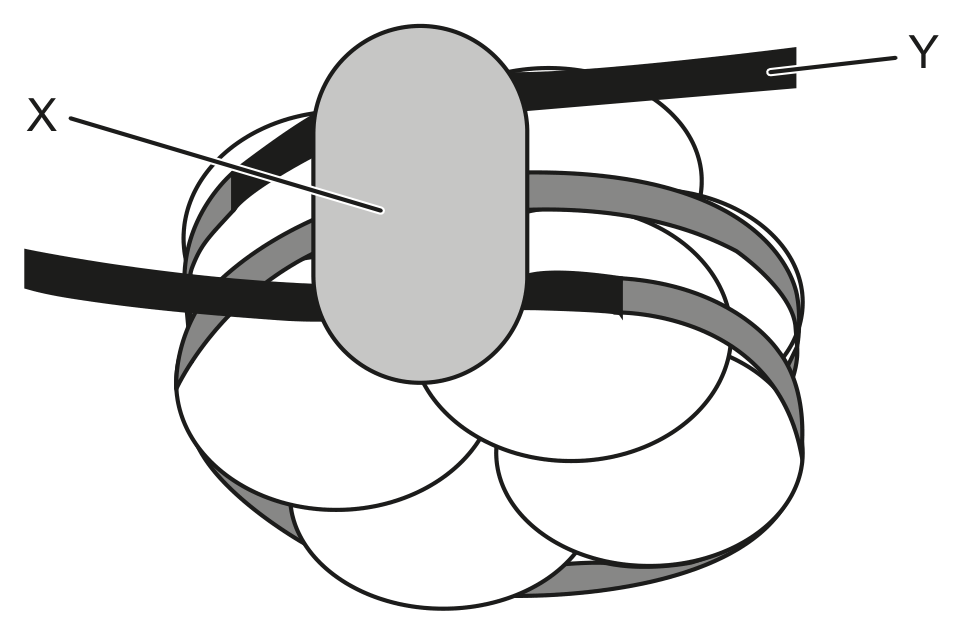
The diagram shows a structure found in a eukaryotic nucleus.

What is represented by X and Y ?
X
Y
Ribosome
mRNA
Histone
Linker DNA
Nucleosome
mRNA
RNA polymerase
Linker DNA
What usually distinguishes DNA from RNA?
DNA
RNA
strands are symmetrical
strands are antiparallel
contains adenine
contains cytosine
pentoses linked to phosphates
pentoses linked to bases
double stranded
single stranded
A molecule of DNA is found to contain 200 guanine bases, representing 25 % of the total number of bases. How many phosphate groups does this molecule of DNA contain?
50
200
800
1000
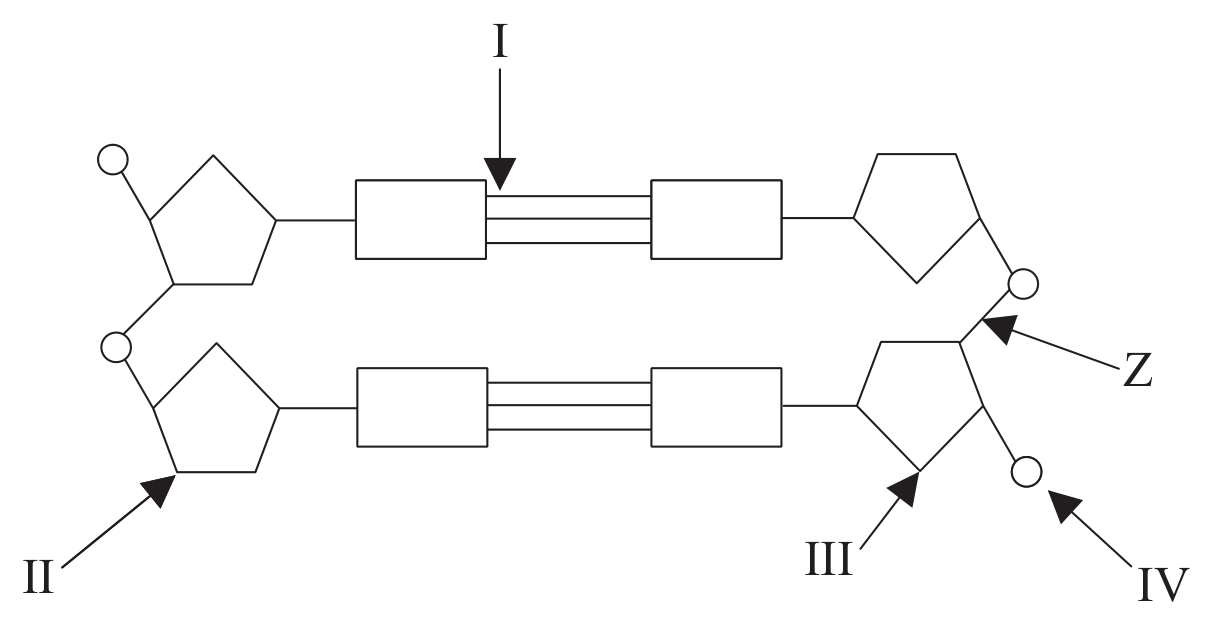
Which points to the 3′ end of a strand of DNA?

I
II
III
IV
What type of bond does Z represent?

Covalent bond
Hydrogen bond
Peptide bond
Semi-conservative bond
What is a universal characteristic of the genetic code?
There are more than 64 different anticodons.
There are more nucleotides than codons.
There are more codons than amino acids.
There are two or more amino acids for each codon.