
Question 6(b)
Water is important for plants. There are pores in the surface of the leaf, which are formed by guard cells. Changes to the guard cells cause the pores to open or close. The diagram shows guard cells, at the same time of day, from a wheat plant without water stress and from a wheat plant that has water stress.
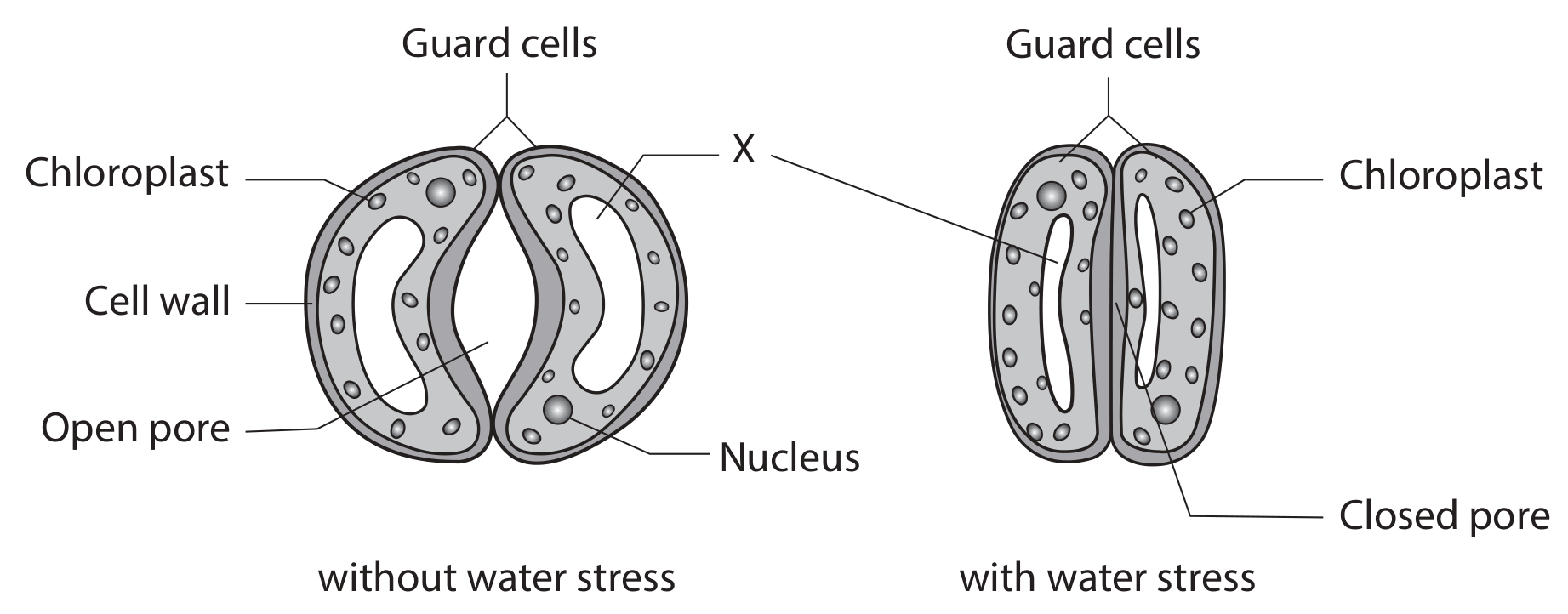
When a plant is not given sufficient water, for a period of time, it develops water stress. This can have several effects on the plant.
Another effect is the reduction in the absorption of mineral ions, for example magnesium ions.
Magnesium ions are needed in the formation of chlorophyll. The effect of water stress on the chlorophyll content of a wheat plant was investigated. The results are shown in the graph.
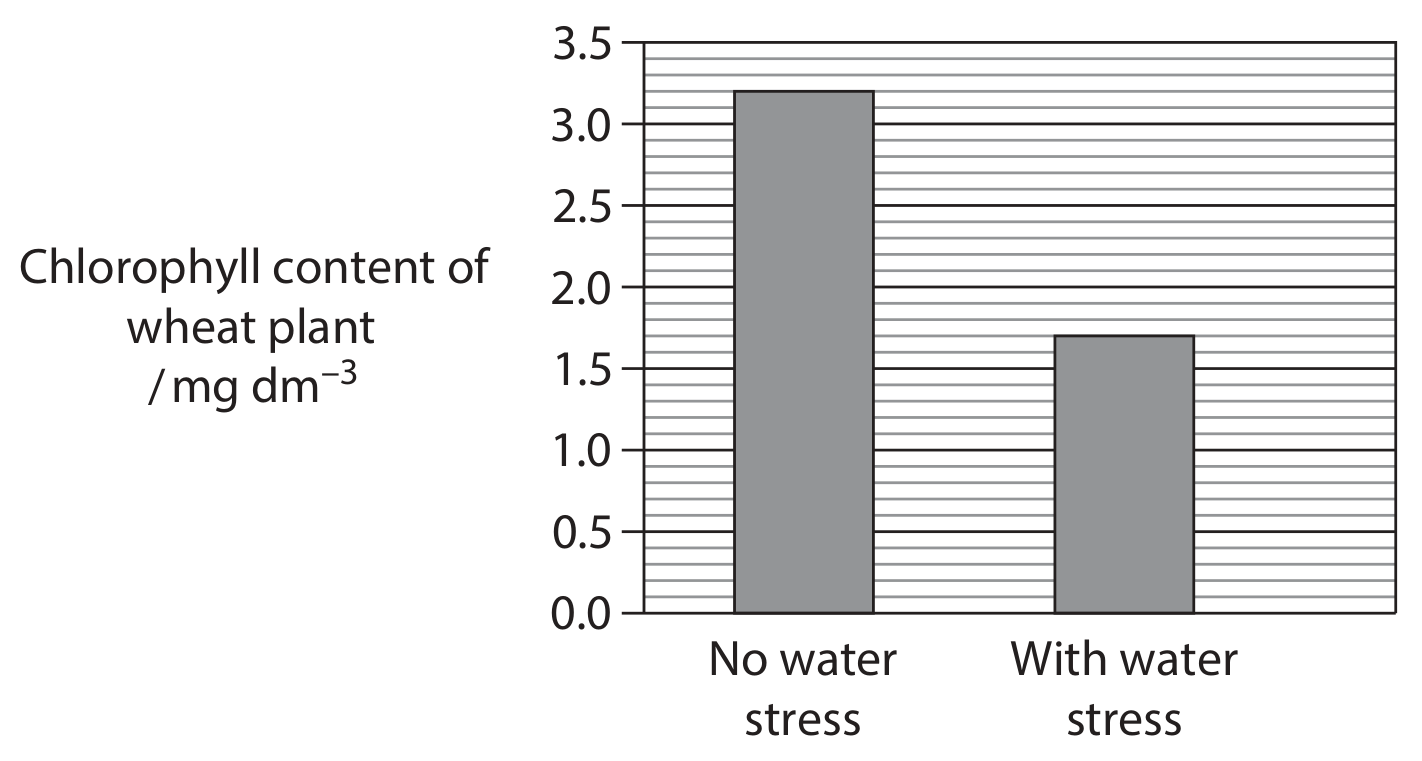
Which is the percentage change in chlorophyll content when the wheat plant has water stress? □ A +46.9% □ B -46.9% □ C -88.2\% □ D +88.2\%