
EduNinja

Edexcel IAL Biology A2 Topic 5 Energy Flow, Ecosystems and Environment

Edexcel IAL Biology A2 Topic 5 Energy Flow, Ecosystems and Environment
Pearson Edexcel IAL Biology syllabusBiology YBI11First assessment 2019

Identify the molecular or ecological energy transfer, use the relevant diagram or formula and connect limiting factors and human pressures to measured system outcomes.

Exam points

  • Trace light-dependent and Calvin-cycle reactions through chloroplast structures and products.
  • Calculate productivity or transfer efficiency from GPP, NPP, respiration and trophic data.
  • Interpret succession, nutrient cycles or environmental change through field evidence.

Question 1

[Maximum number: 10]

Seaweeds are photosynthetic organisms. They contain chloroplast pigments, some of which are similar to land plants and some of which are different.

Question 1(a)

(a)

Which process can be used to separate chloroplast pigments according to their solubility?

A

chromatography

B

dendrochronology

C

gel electrophoresis

D

polymerase chain reaction

[ 1 ]

Question 1(b)

(b)

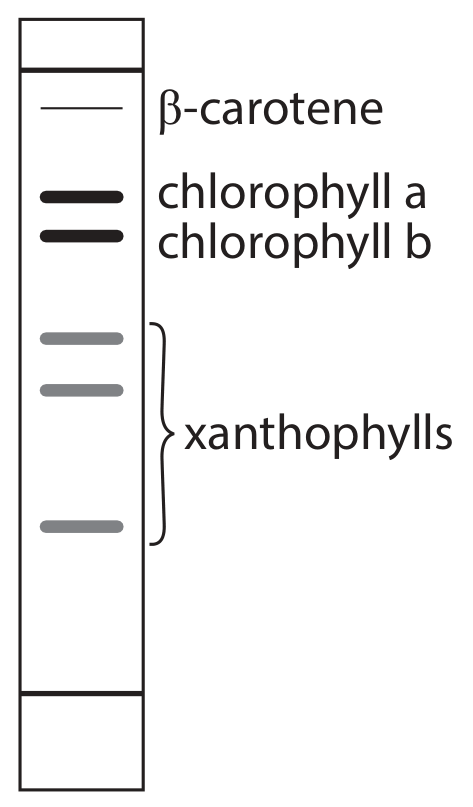
A student separated the chloroplast pigments found in brown seaweed, red seaweed and spinach using this method.

The diagram shows the results.
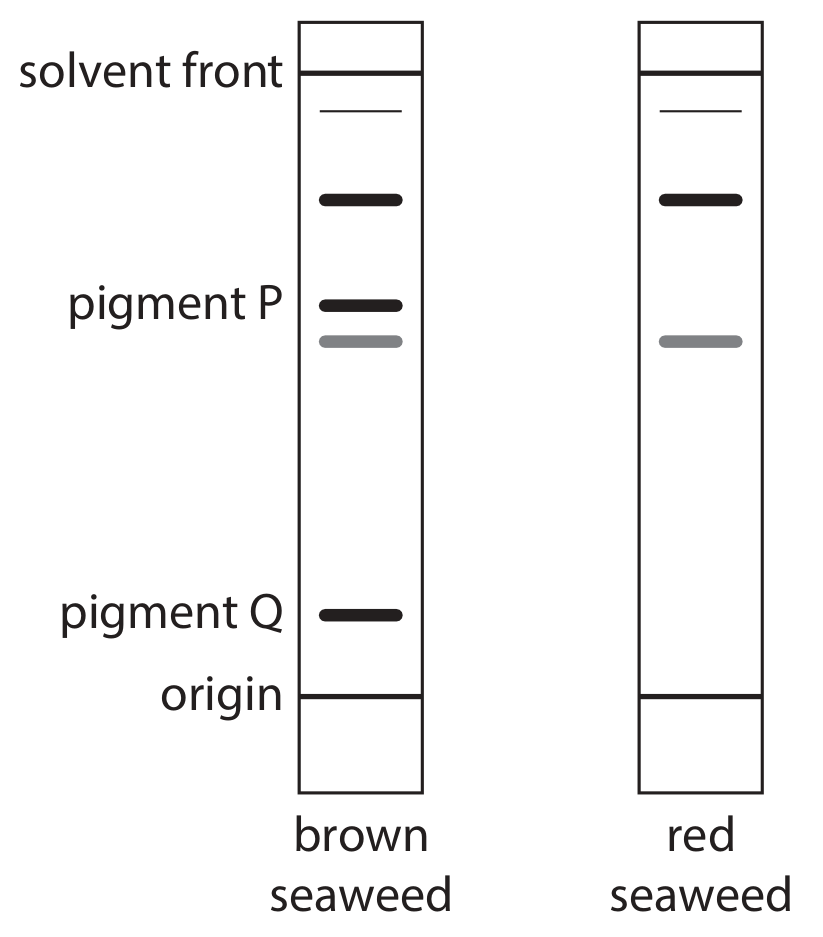
Figure for Question 1(b) — Edexcel A-Level Biology A2
spinach

spinach

[ 6 ]

Question 1(b)(i)

(i)

Compare and contrast the types of chloroplast pigment found in the seaweeds with those found in the spinach.

Use the information in the diagram to support your answer.
(3)

[ 3 ]

Question 1(b)(ii)

(ii)

Describe how the student could identify pigment P using this method.

[ 3 ]

Question 1(c)

(c)

The diagram shows the position of three different types of seaweed on rock covered in water.

The diagram also shows the depth to which red light, green light and blue light penetrate into the water.
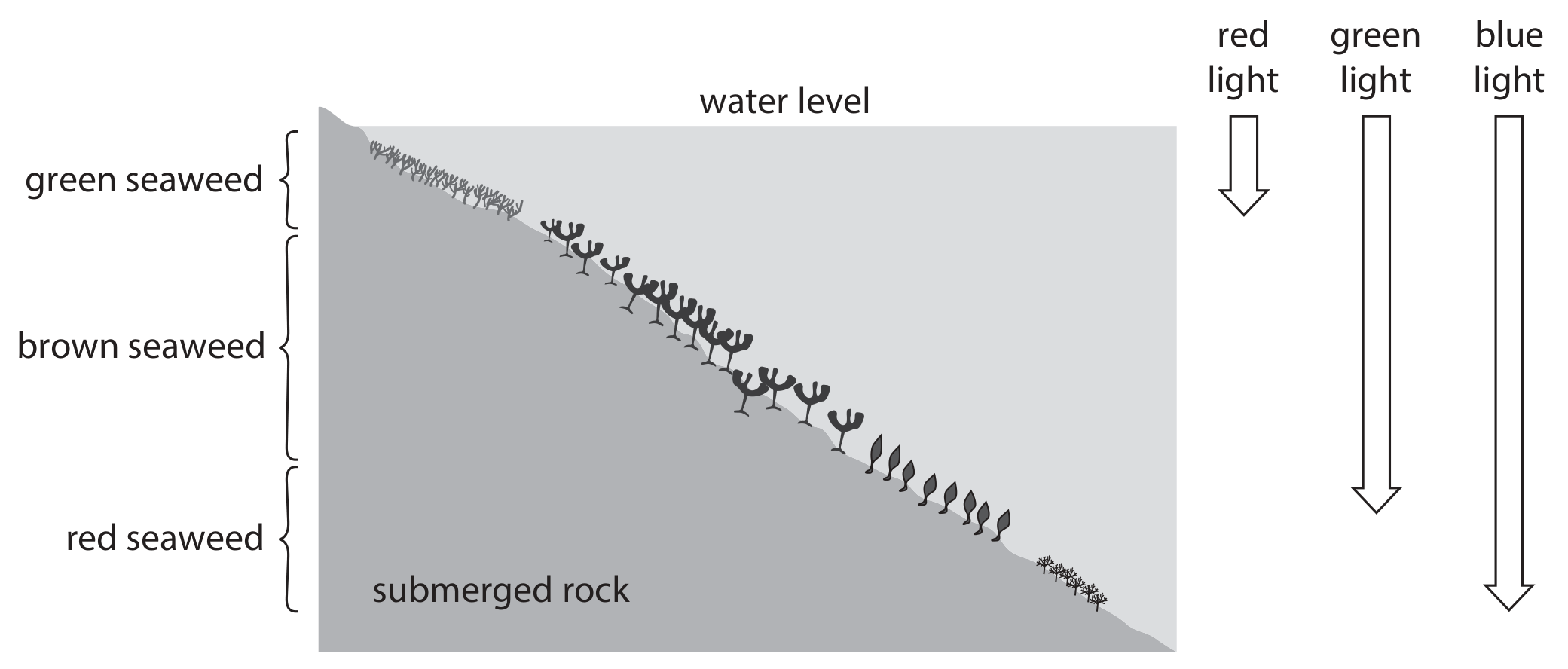
Figure for Question 1(c) — Edexcel A-Level Biology A2
[ 3 ]

Question 1(c)(i)

(i)

Which row of the table shows the light that green seaweed can absorb?
□ A
□ B
□ C
□ D
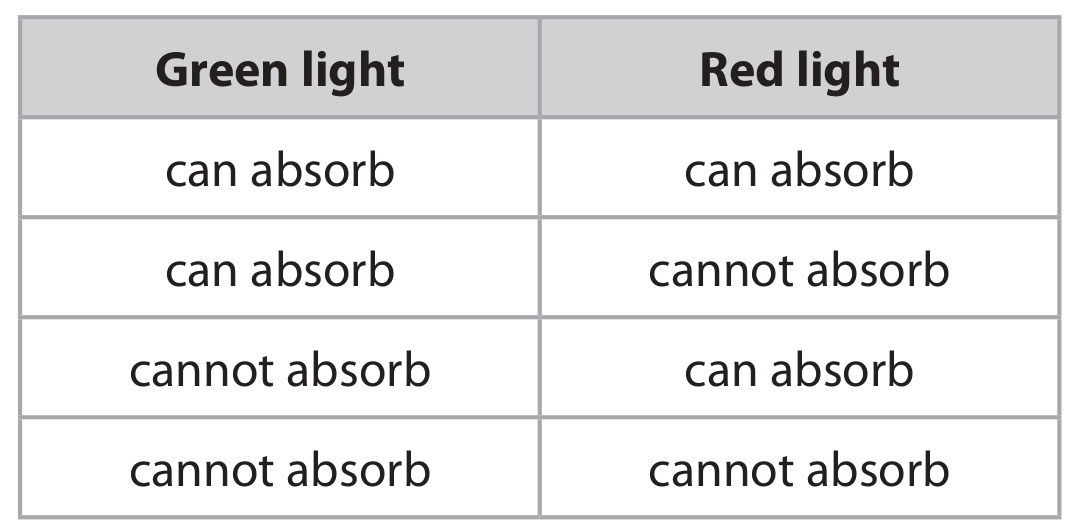
Table for Question 1(c)(i) — Edexcel A-Level Biology A2
[ 1 ]

Question 1(c)(ii)

(ii)

Explain the positions of the brown and red seaweeds on the submerged rock.
(2)
[ 2 ]

Question 2

[Maximum number: 8]

The light-independent reactions of photosynthesis use the products of the light-dependent reactions to produce simple sugars.

Question 2(a)(i)

(a)

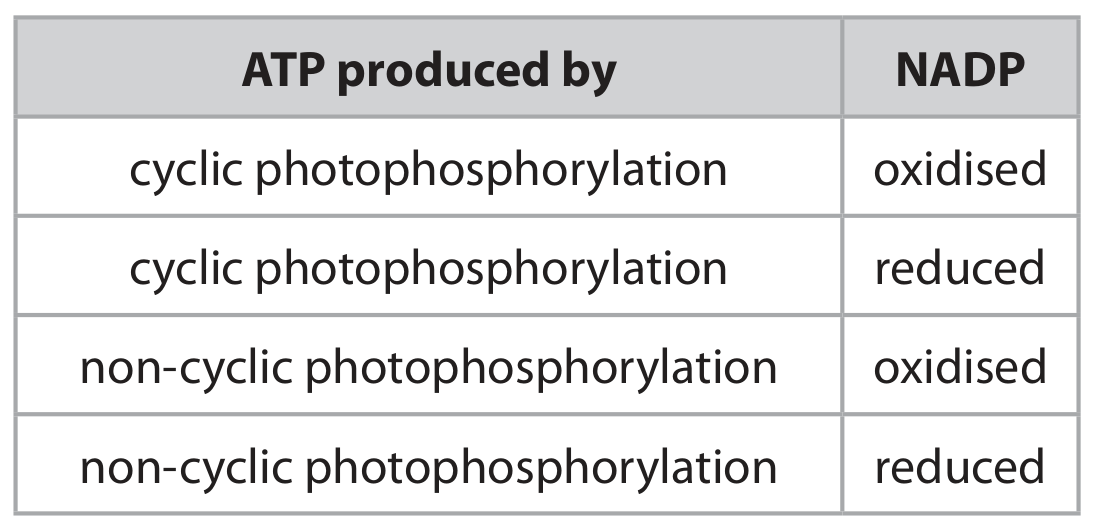
Which row of the table shows the products of the light-dependent reactions that are used in the light-independent reactions?
□ A
□ B
□ C

Table for Question 2(a)(i) — Edexcel A-Level Biology A2

□ D

[ 1 ]

Question 2(a)(ii)

(b)

Simple sugars have the formula CnH2nOn\mathrm{C}_{n} \mathrm{H}_{2 n} \mathrm{O}_{n}.

Name the inorganic molecule that provides each element in a simple sugar.
(2)

C

H

O

[ 2 ]

Question 2(b)

(c)

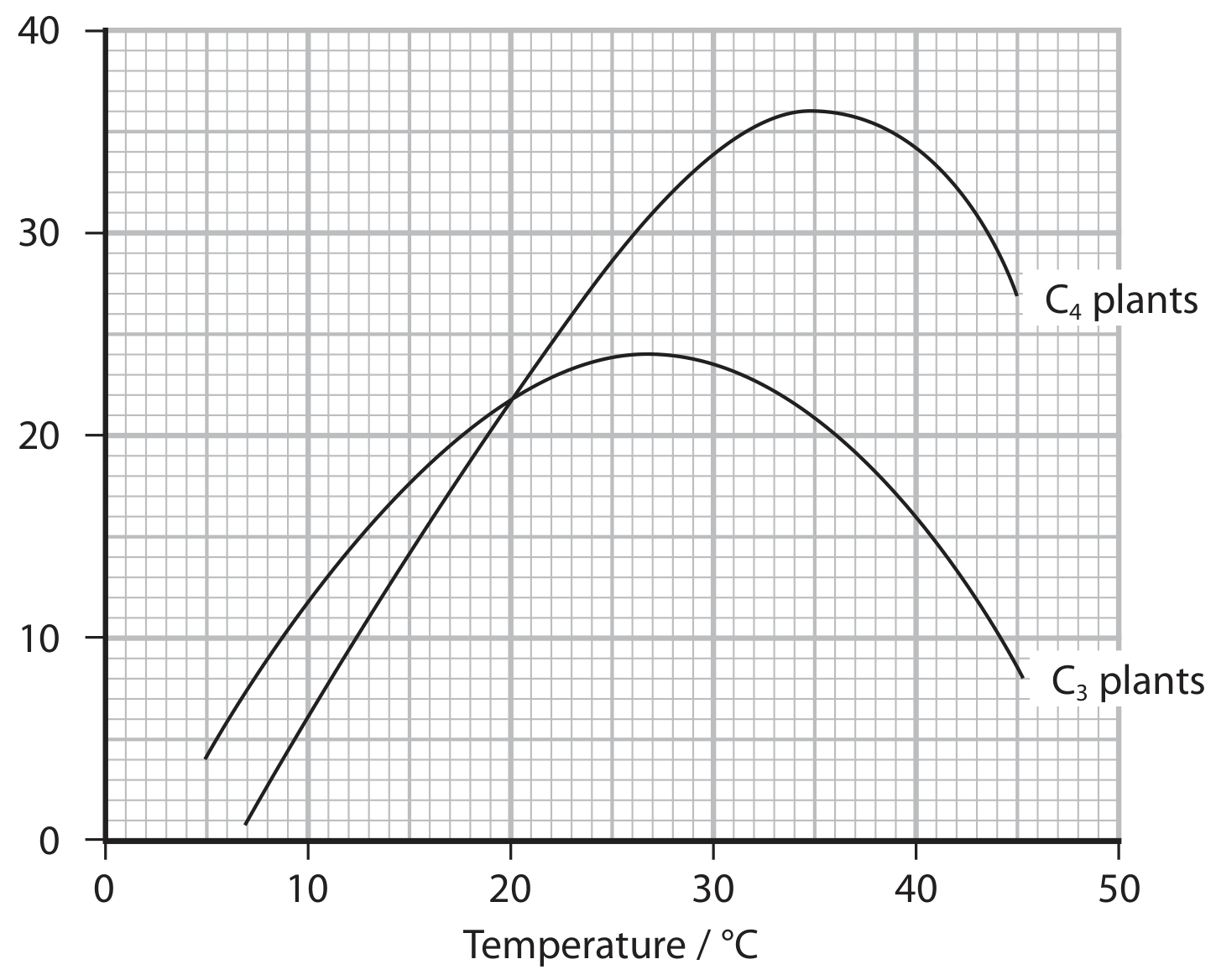
Two types of plant, C3\mathrm{C}_{3} and C4\mathrm{C}_{4}, have slightly different pathways of light-independent reactions.

The graph shows how the rate of photosynthesis is affected by temperature in these two types of plant.

Rate of photosynthesis / a.u.

Figure for Question 2(b) — Edexcel A-Level Biology A2
[ 5 ]

Question 2(b)(i)

(i)

Describe three conclusions that can be made about the differences in the effect of temperature on the rate of photosynthesis in these two types of plant.
(3)

[ 3 ]

Question 2(b)(ii)

(ii)

Calculate the Q10\mathrm{Q}_{10} for the enzymes in C4\mathrm{C}_{4} plants.

Use the formula:

Q10=Rt+10RtQ_{10}=\frac{R_{t+10}}{R_{t}}

where RtR_{t} is the initial rate of reaction at 10C10^{\circ} \mathrm{C}.
Give your answer as a whole number.
(2)

[ 2 ]

Question 3

[Maximum number: 12]

Apple maggot flies are thought to have evolved from hawthorn flies by sympatric speciation.

Hawthorn flies are native to North America. They lay their eggs in the berries of the hawthorn bush.

The eggs hatch into maggots and the maggots develop into adult flies.

Question 3(a)

(a)

State the meaning of the term sympatric speciation.
(2)

[ 2 ]

Question 3(b)

(b)

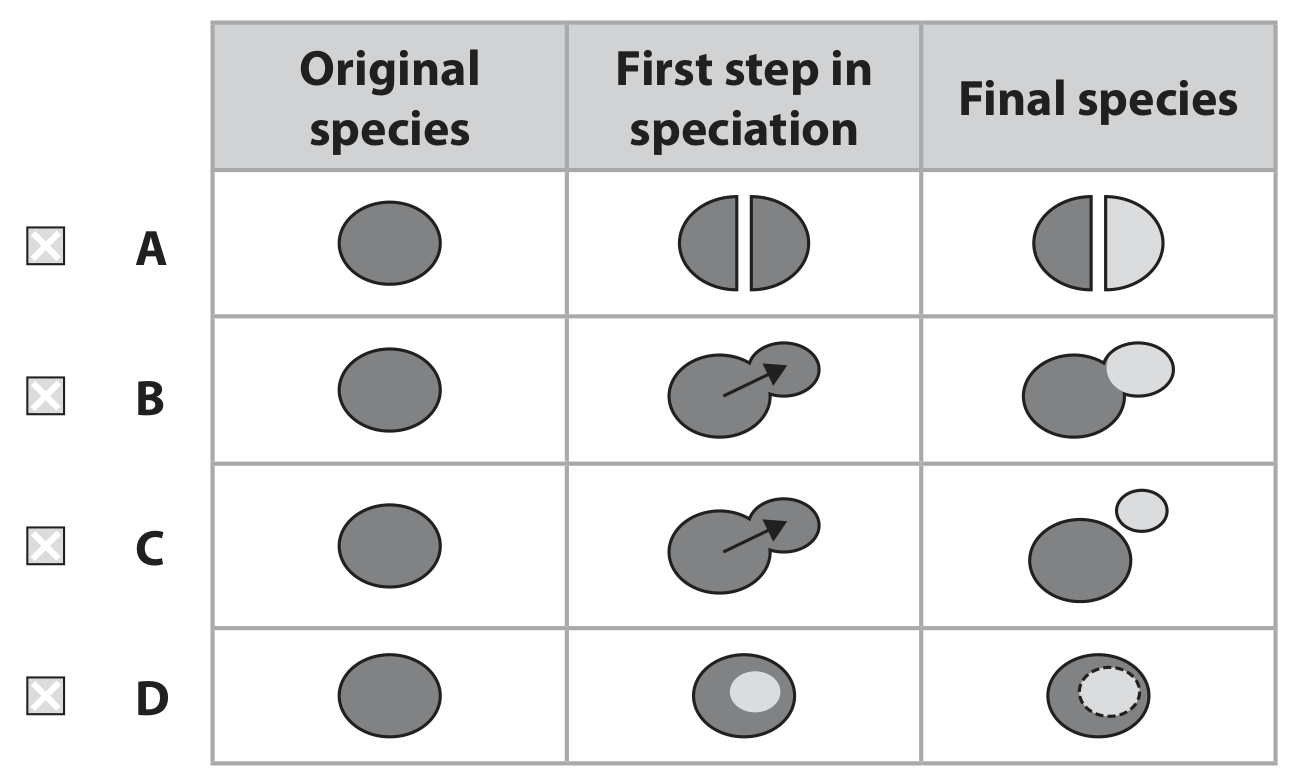
Which row of the table represents sympatric speciation?

The shapes shaded dark grey represent the original species and the shapes shaded light grey represent the new species.

Table for Question 3(b) — Edexcel A-Level Biology A2
[ 1 ]

Question 3(c)

(c)

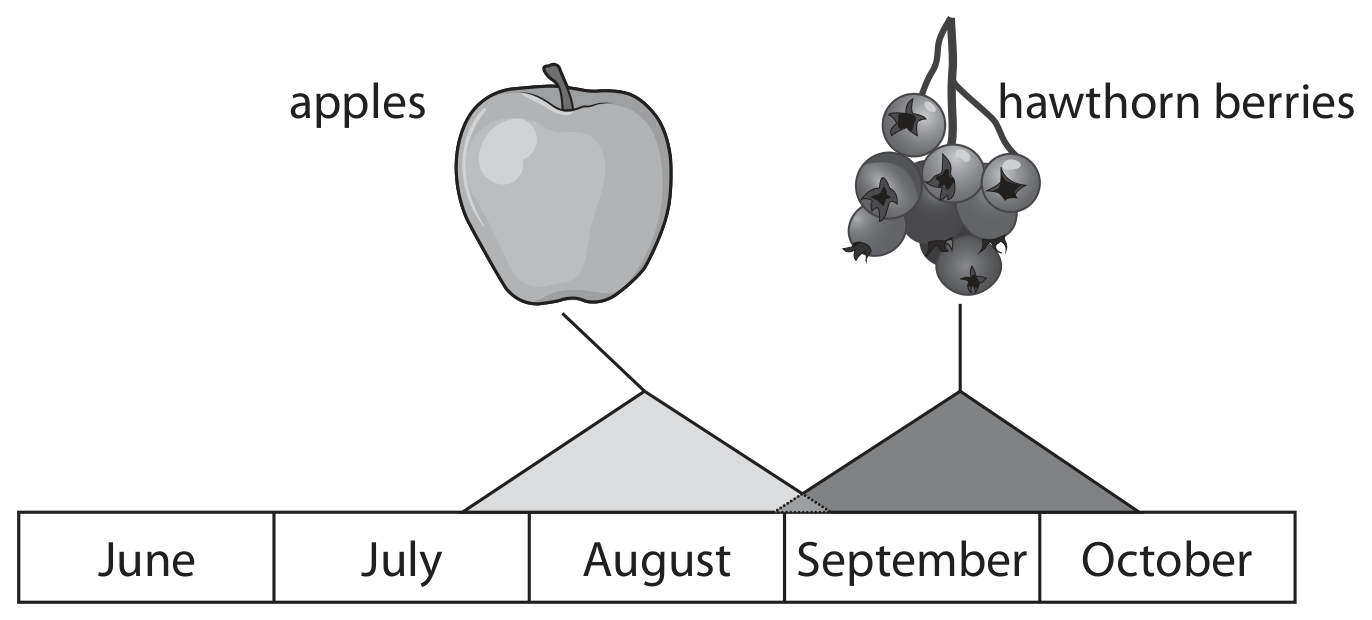
Following the introduction of apple trees to North America, a small group of the hawthorn flies started laying their eggs in the apples.

The diagram shows the two types of fruit and the time of year that the fruits are produced.

Figure for Question 3(c) — Edexcel A-Level Biology A2
[ 9 ]

Question 3(c)(i)

(i)

Suggest two adaptations needed for this change in behaviour of the flies.

[ 2 ]

Question 3(c)(ii)

(ii)

Explain what had to occur for changes in these flies to be inherited.
(3)

[ 3 ]

Question 3(c)(iii)

(iii)

Explain why it is an advantage for the hawthorn fly and the apple maggot fly to lay their eggs in the fruits of different plants.
(2)

[ 2 ]

Question 3(c)(iv)

(iv)

Suggest how these flies became reproductively isolated.

Use the information in the diagram to support your answer.
(2)

[ 2 ]

Question 3

[Maximum number: 7]

Textiles used in clothing can be made from:
- plants, for example cotton
- animals, for example wool and leather
- crude oil, for example nylon and polyester.

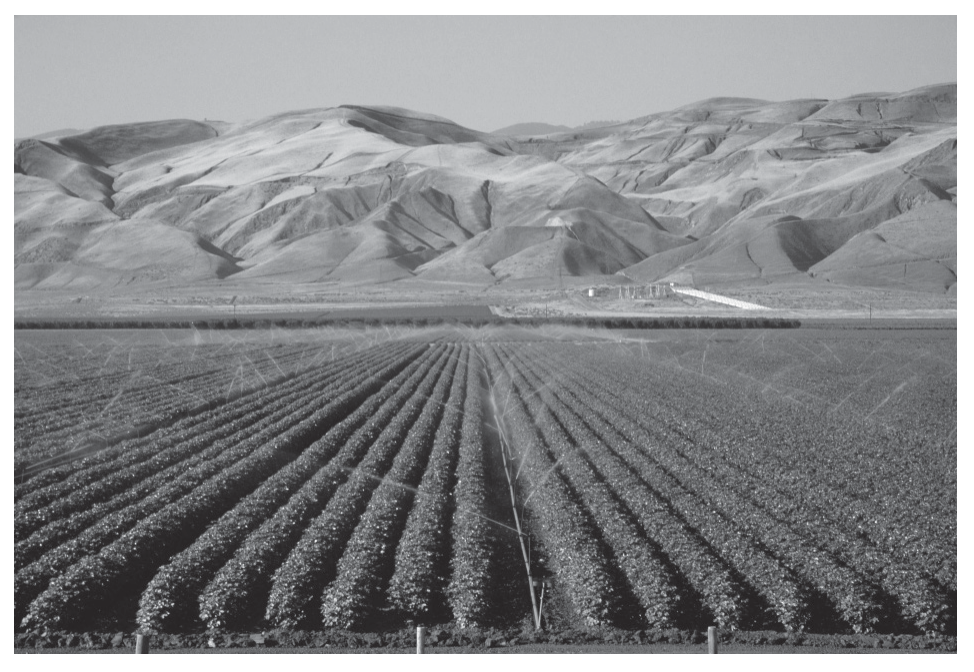
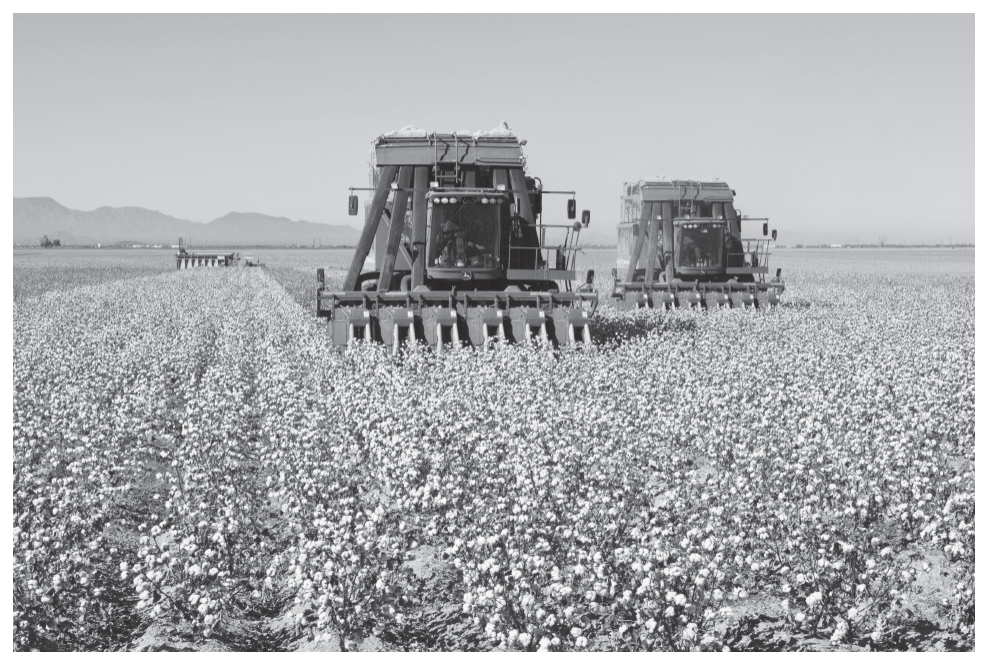
The photographs show cotton being grown and harvested.

Figure for Question 3 — Edexcel A-Level Biology A2

In 2022, it was estimated that 92 million tonnes of textile waste was produced in the world.

Textile waste is either burned or buried underground in landfill sites.

Question 3(b)

(a)

The production of textiles and the removal of textile waste is an example of human activity affecting the environment.

Which term is used to describe the effect of human activity on the environment?

A

antigenic

B

anthropogenic

C

epigenetic

D

polygenic

[ 1 ]

Question 3(c)

(b)

There are companies in Scandinavia that are producing sustainable textiles for clothing.

One company is recycling textile waste. It is removing dyes and making new fibres that can be woven.

Another company is using waste from the wood industry, wheat straw and leather scraps to make fibres.

[ 6 ]

Question 3(c)(ii)

(i)

*(ii) Discuss the extent to which these companies are reducing the conflict between human needs, climate change and conservation.

Use the information in the question, the photographs and your own knowledge to support your answer.
(6)

[ 6 ]

Question 4

[Maximum number: 11]

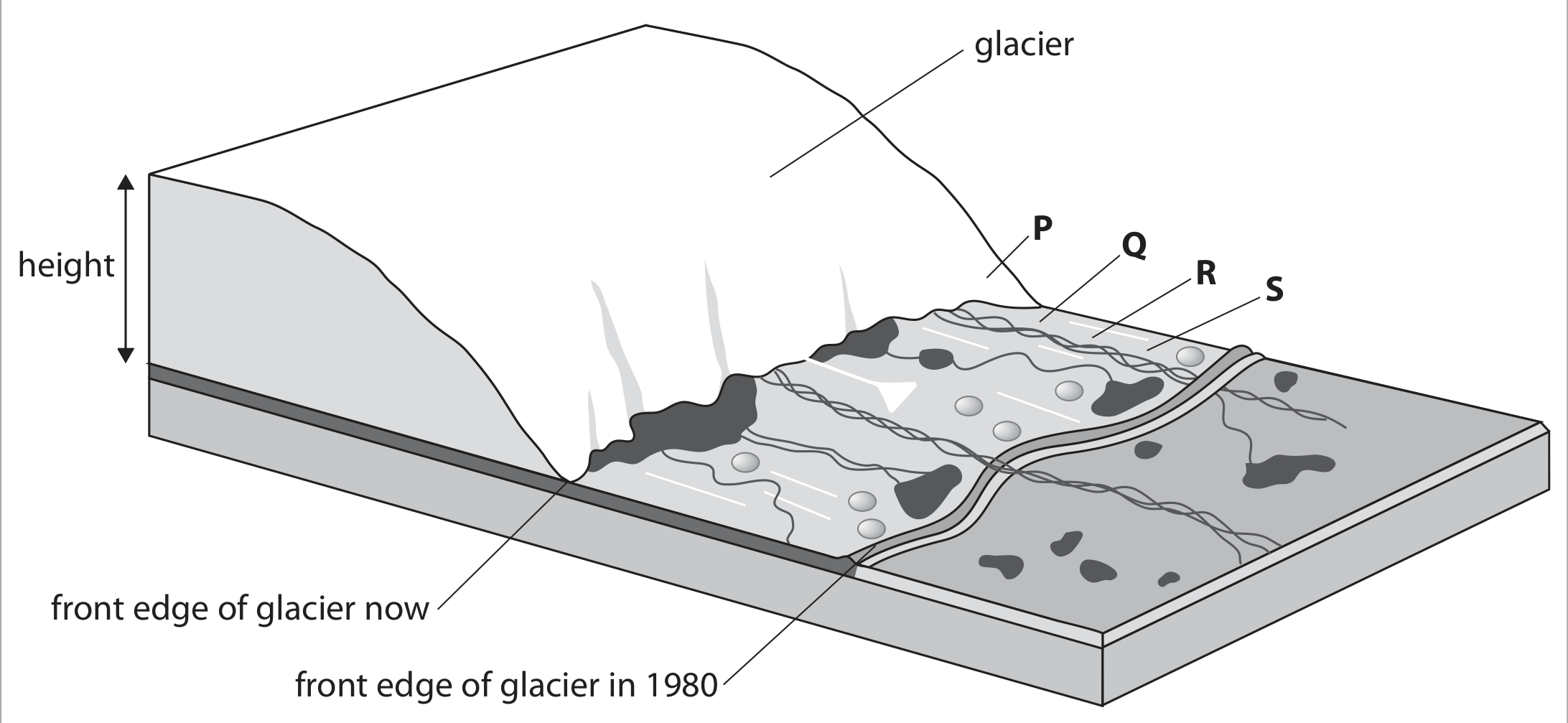
Glaciers are decreasing in height and retreating due to global warming.
The diagram shows a retreating glacier.

Figure for Question 4 — Edexcel A-Level Biology A2

Question 4(a)

(a)

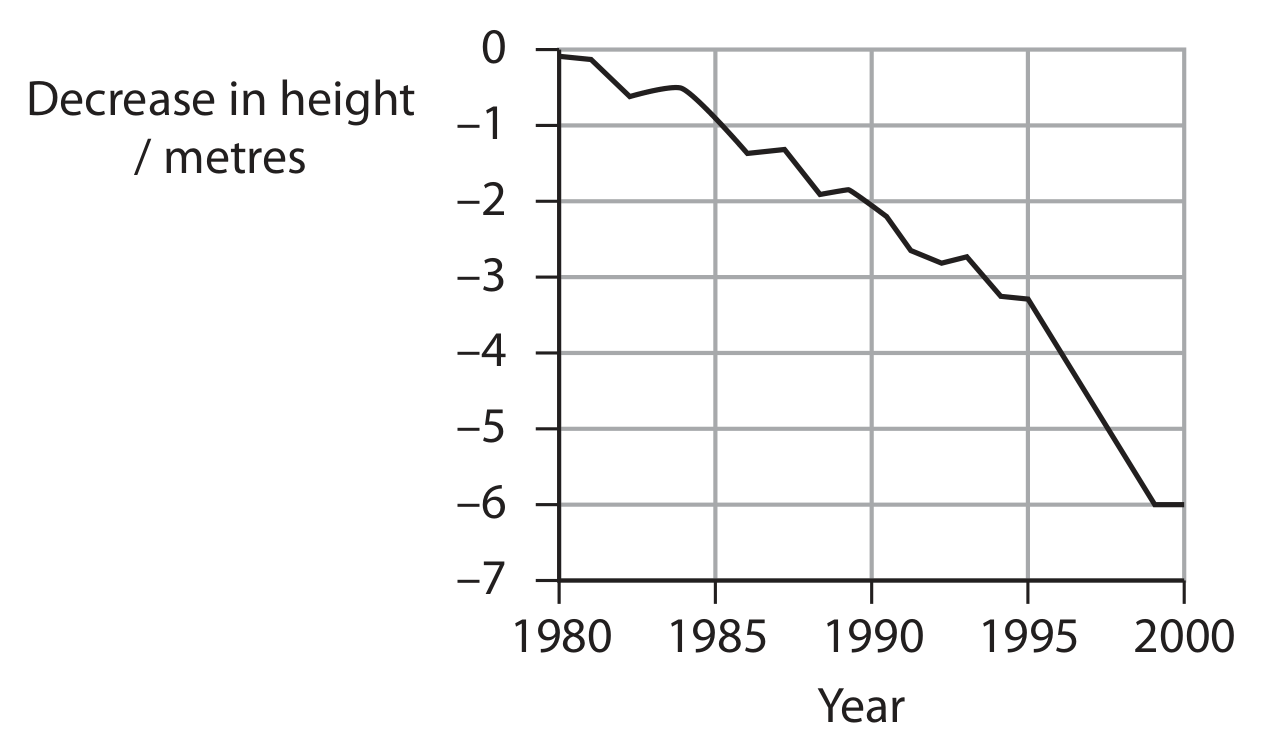
The graph shows the decrease in height of a glacier from 1980 to 2000.

Figure for Question 4(a) — Edexcel A-Level Biology A2
[ 3 ]

Question 4(a)(ii)

(i)

Explain why the decrease in height is greater from 1995 to 2000 than it is from 1980 to 1985.
(3)

[ 3 ]

Question 4(b)

(b)

Which letter on the diagram indicates the location of pioneer species only?

A

P

B

Q

C

R

D

S

[ 1 ]

Question 4(c)

(c)

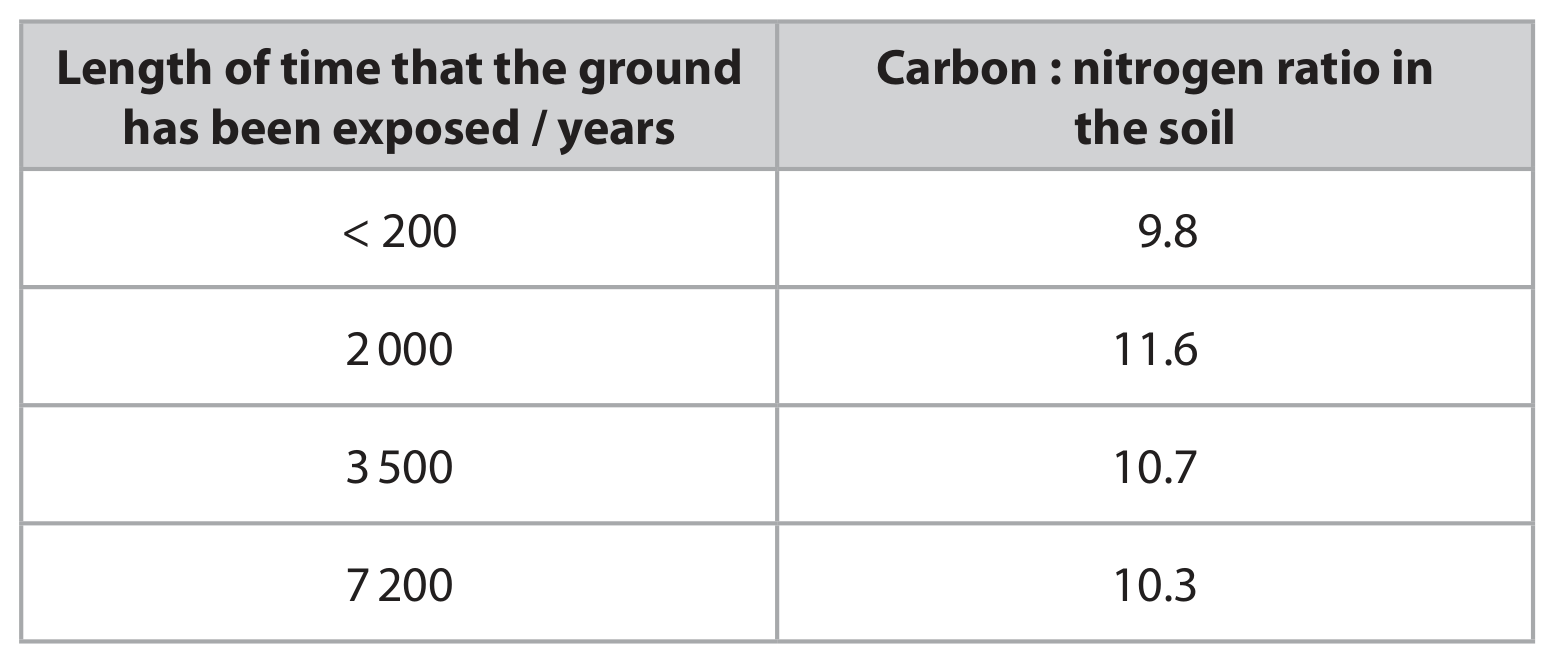
At different distances from the front edge of the glacier, there will be variations in soil conditions.

These soil conditions include: soil depth, the carbon : nitrogen ratio and the organisms present in the soil.

These differences depend on the length of time the ground has been exposed by the retreating glacier.

[ 7 ]

Question 4(c)(i)

(i)

Which term describes the changes in soil conditions and organisms with time?

A

anthropogenic

B

evolution

C

speciation

D

succession

[ 1 ]

Question 4(c)(ii)

(ii)

*(ii) The table shows the soil carbon : nitrogen ratio in ground exposed by a retreating glacier.

Table for Question 4(c)(ii) — Edexcel A-Level Biology A2

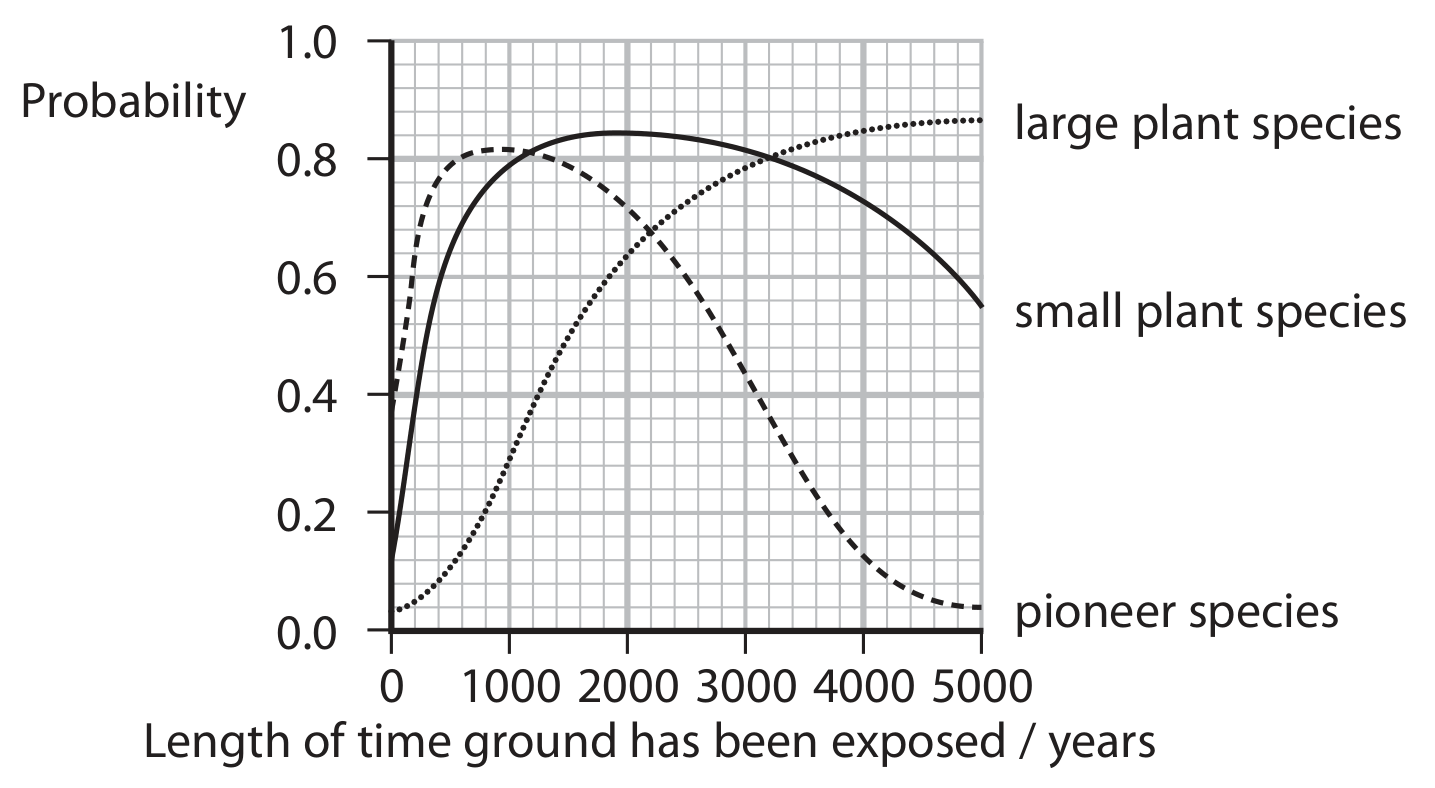
Graph 1 shows the probability that three different types of plant will be found on ground exposed for different lengths of time.

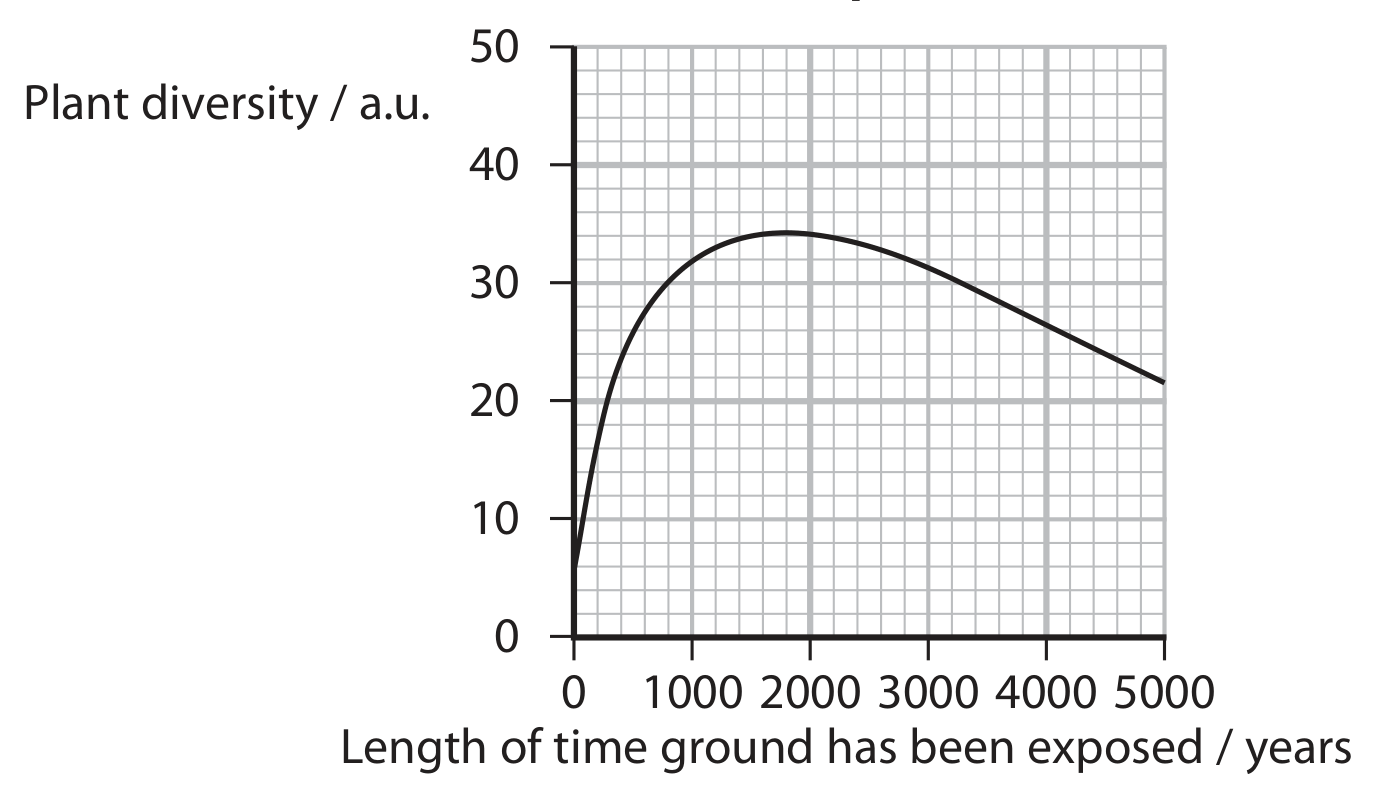
Graph 2 shows a model of plant diversity on ground exposed for different lengths of time.

Graph 1

Graph 1

Graph 2

Graph 2

Explain the variations in soil conditions and the organisms found at different distances from the front edge of the glacier.

Use the information in the question and your own knowledge to support your answer.
(6)

[ 6 ]

Question 7

[Maximum number: 8]

Increased levels of atmospheric carbon dioxide can lead to an increased rate of photosynthesis. This is called the CO2\mathrm{CO}_{2} fertilisation effect.

This effect varies depending on air and soil temperature, the availability of water, the availability of nutrients and the species of plant.

Plants that can take advantage of higher carbon dioxide levels will have a greater increase in biomass.

Question 7(a)

(a)

Describe how carbon becomes incorporated into plant biomass.
(3)

[ 3 ]

Question 7(b)(i)

(b)

Explain why air temperature affects the CO2\mathrm{CO}_{2} fertilisation effect.

[ 2 ]

Question 7(c)

(c)

Explain why a lack of water availability in the leaves would decrease the CO2\mathrm{CO}_{2} fertilisation effect.
(3)

[ 3 ]

Question 8(c)

[Maximum number: 6]

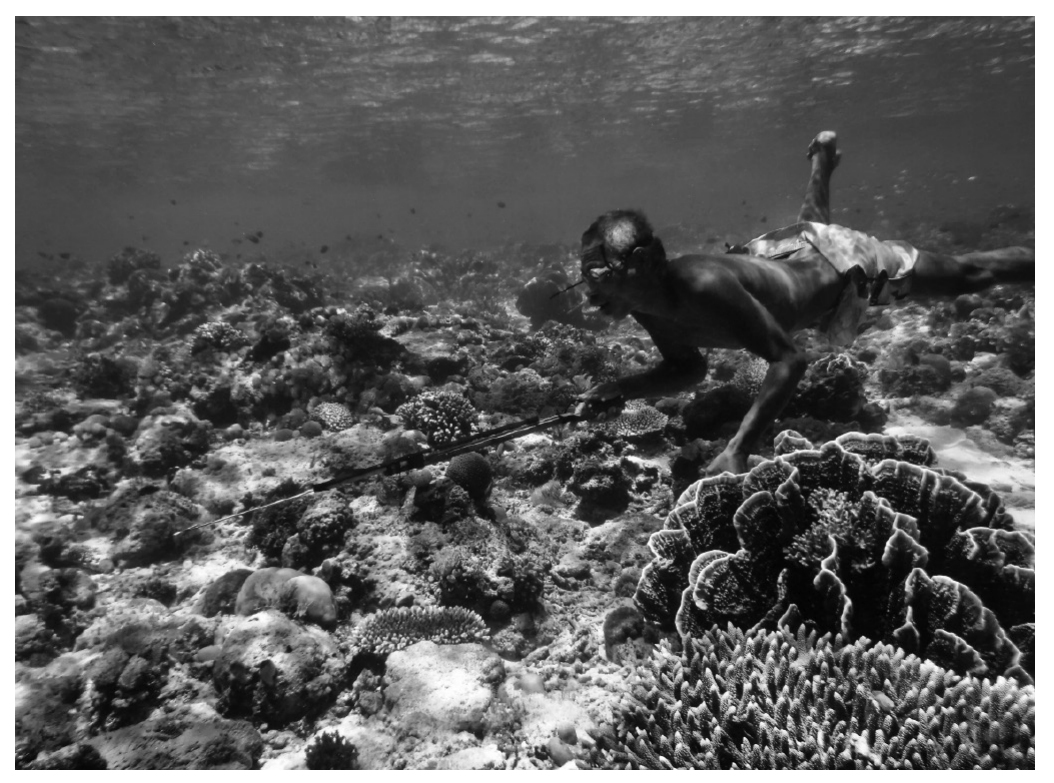
The Bajau people are nomadic people who free-dive in the waters around the Philippines, Malaysia and Indonesia.

They have been travelling around these waters on house boats for over 1000 years.
They can free-dive to depths of 70 m for as long as 13 minutes, spending 60\% of their working time underwater.

The photograph shows a Bajau free-diving, without breathing equipment.

Figure for Question 8(c) — Edexcel A-Level Biology A2

Scientists measured the size of the spleens of the Bajau people and a related group of people called Saluan.

The Saluan people live on the mainland of Indonesia and do not free-dive.
The genomes of the two groups of people were analysed.

*(c) The study analysed the genomes of the Saluan people and the Bajau people to identify any genetic relationships that correlated with spleen volume.

DO NOT WRITE IN THIS AREADO NOT WRITE IN THIS AREADO NOT WRITE IN THIS AREA

The scientists concluded that the Bajau had become genetically-adapted to diving.

Explain how the Bajau could have become genetically-adapted to diving.
Use the information in the question and your own knowledge to support your answer.
(6)