EduNinja

Edexcel IAL Biology A2 Topic 8 Coordination and gene technology

Edexcel IAL Biology A2 Topic 8 Coordination and gene technology
Pearson Edexcel IAL Biology syllabusBiology YBI11First assessment 2019

Identify the stimulus, pathway or molecular tool, trace the named mechanism in sequence and use diagram, calculation or experimental evidence to support the conclusion.

Exam points

  • Interpret neurone, receptor and response diagrams using impulse direction and effectors.
  • Explain action potentials, synaptic transmission and drug effects through ion movement.
  • Apply behavioural or gene-technology evidence to experimental conclusions.

Question 2(a)

[Maximum number: 4]

Habituation is an example of learning that can be observed in many different animals.

Woodlice are small animals that live in damp places, for example under stones and in areas with decomposing leaves.

The photograph shows one species of woodlouse before and after being gently touched.
before being touched
after being touched

Describe how you could investigate habituation in woodlice.

Question 2

[Maximum number: 7]

Impulses are transmitted along nerves as a series of action potentials.
An action potential can be split into four main stages:
- depolarisation
- repolarisation
- hyperpolarisation
- resting state.

Question 2(a)(i)

(a)

Which row shows the events that happen during depolarisation of a neurone?

Sodium channels

Membrane potential

closed

decreasing

closed

increasing

open

decreasing

open

increasing

[ 1 ]

Question 2(a)(ii)

(b)

Explain what happens during repolarisation in a neurone.

[ 3 ]

Question 2(b)

(c)

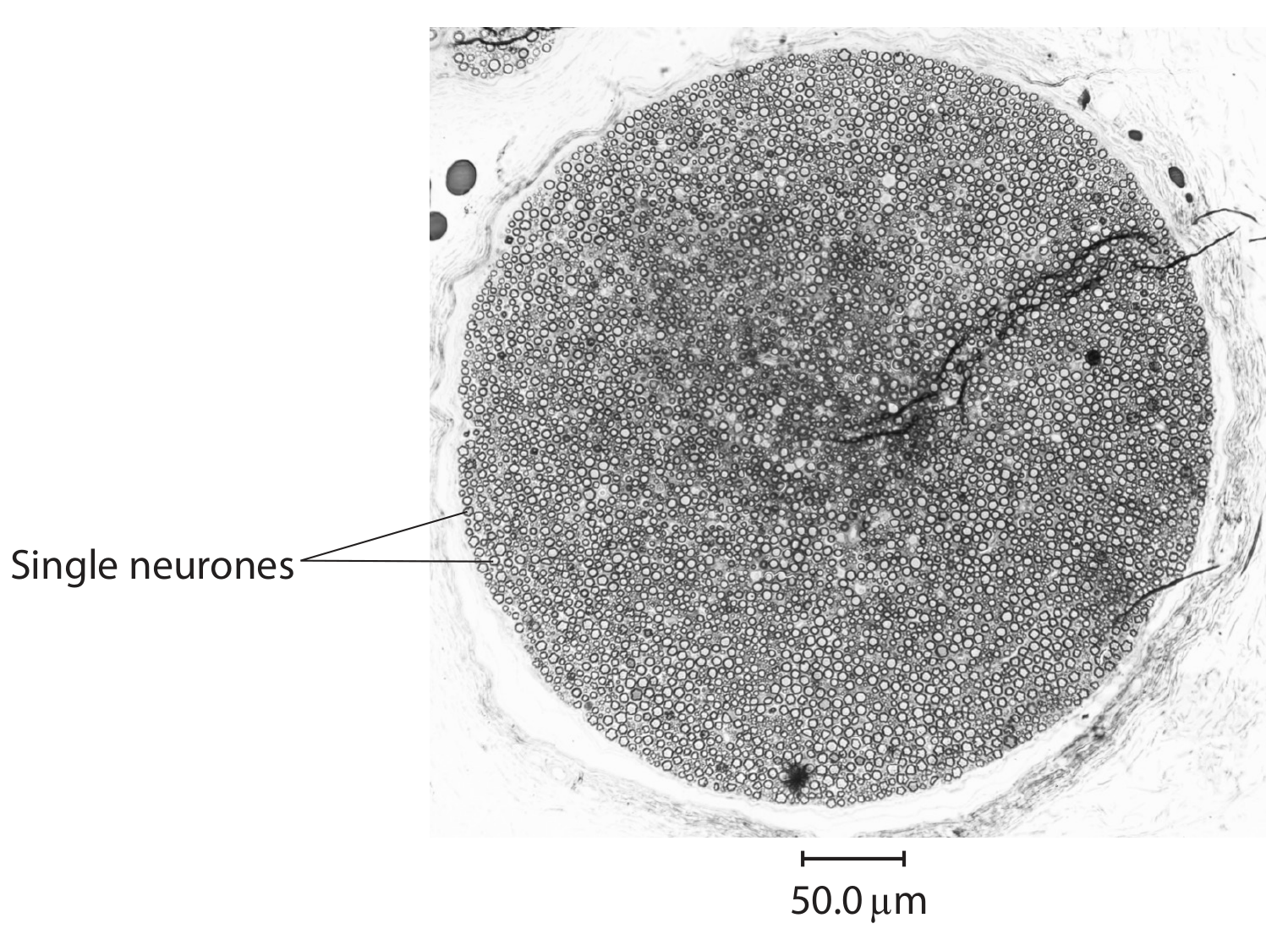
The photograph is a cross-section of part of a sciatic nerve showing the neurones.

Figure for Question 2(b) — Edexcel A-Level Biology A2

© Malcolm Park/Alamy Stock Photo

[ 3 ]

Question 2(b)(iii)

(i)

Explain how myelinated neurones enable a greater speed of transmission in a neurone.
(3)
(Total for Question 2 = 10 marks)

[ 3 ]

Question 3

[Maximum number: 7]

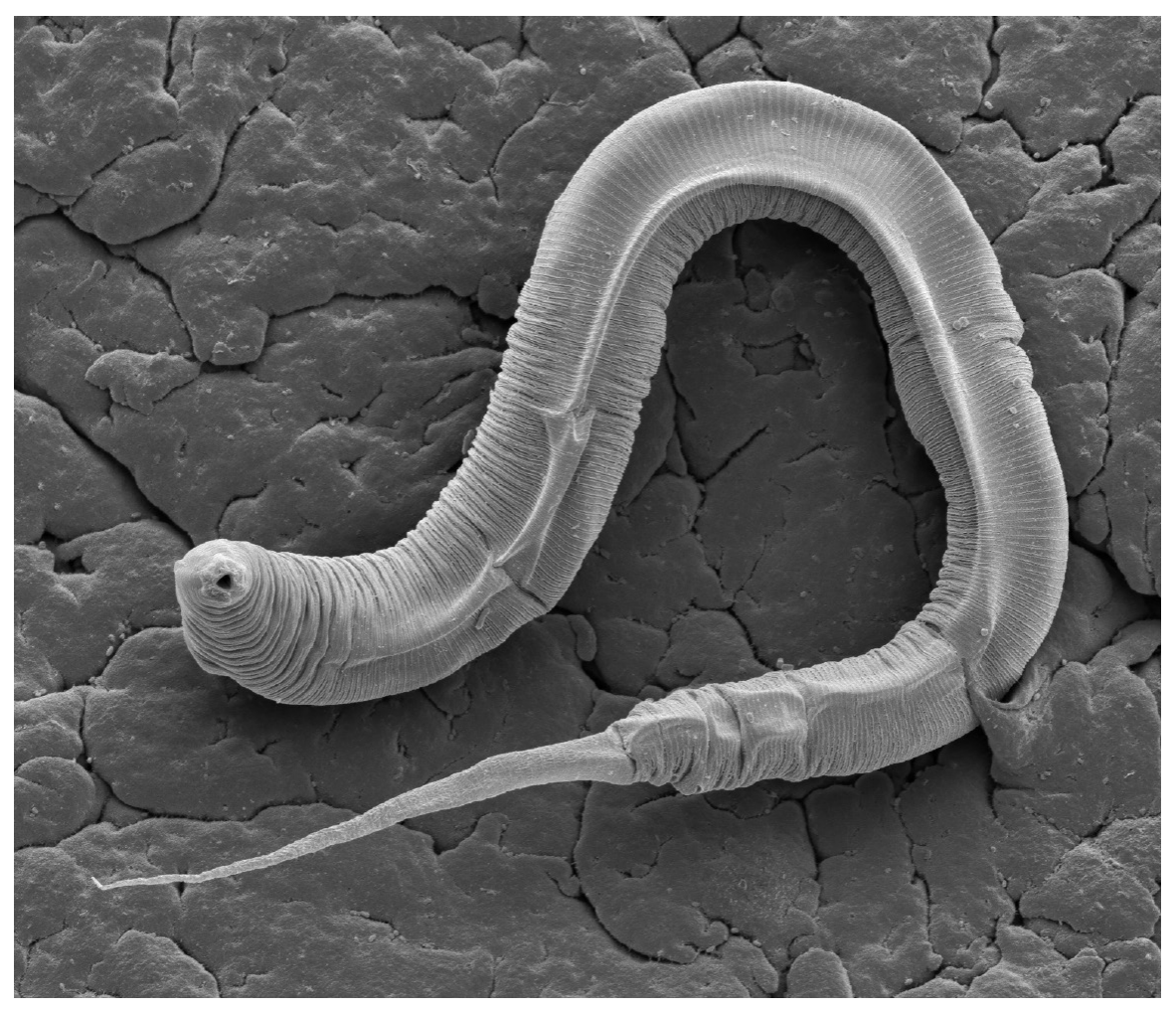
The photograph shows a roundworm, C. elegans.

Figure for Question 3 — Edexcel A-Level Biology A2

Magnification ×200\times 200

These roundworms are simple animals with a nervous system consisting of 302 neurones.

Question 3(a)

(a)

The roundworm can respond to stimuli with reflex actions.

A reflex action is a rapid involuntary movement in response to a stimulus that involves receptors.

[ 4 ]

Question 3(a)(i)

(i)

Which receptors detect a change in light intensity and stimulate an action potential?

A

baroreceptors

B

chemoreceptors

C

osmoreceptors

D

photoreceptors

[ 1 ]

Question 3(a)(ii)

(ii)

A reflex arc carries a nerve impulse from receptors in the skin to the central nervous system in a human.

Describe the structures that a nerve impulse passes through from the skin to the central nervous system.
(3)

[ 3 ]

Question 3(b)

(b)

Roundworms respond to physical stimuli by changing the direction in which they swim.

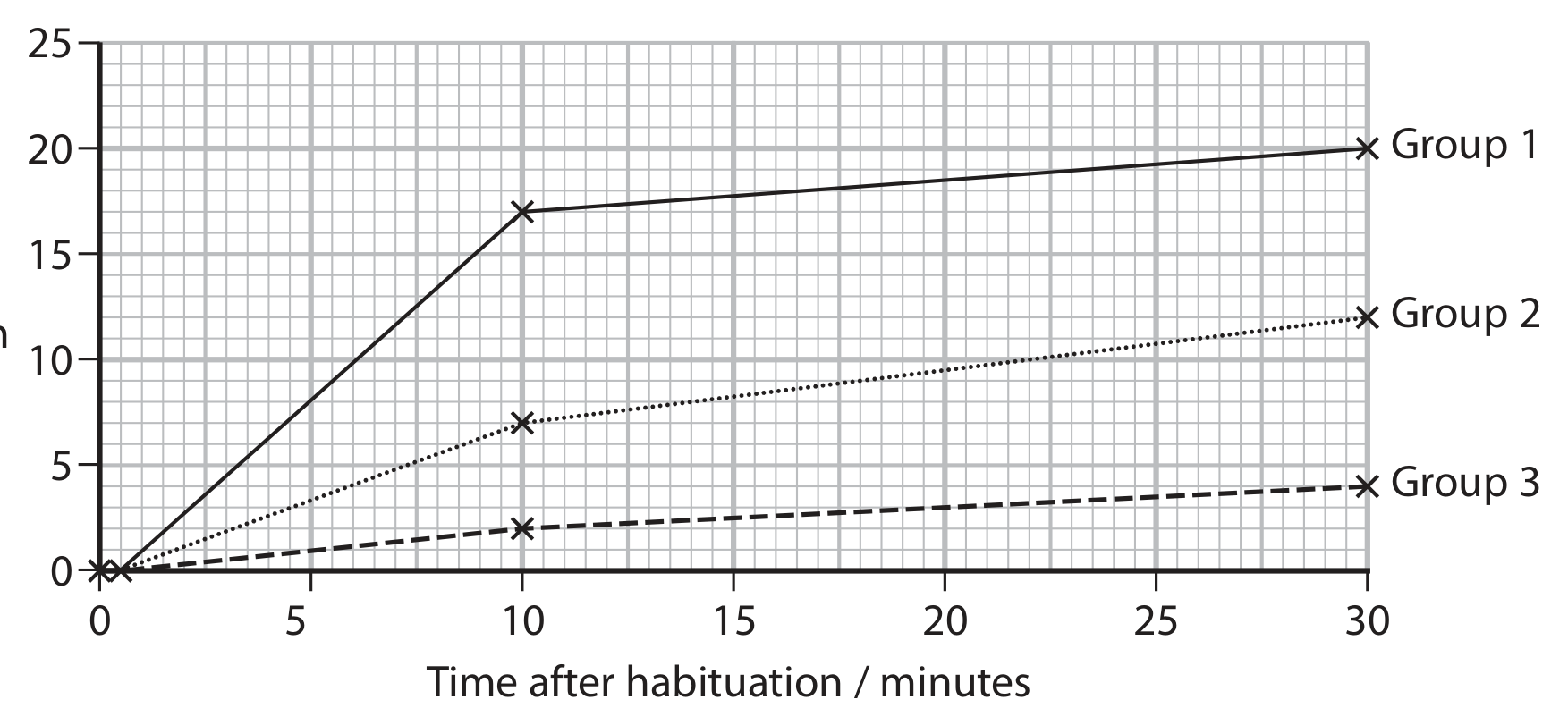
The recovery time of roundworms following habituation was investigated.
Three groups of 25 roundworms were kept in separate Petri dishes.
The roundworms were habituated to a physical stimulus by tapping the side of the Petri dish at different time intervals.
- Group 1 were habituated with 60 taps at 2 -second intervals.
- Group 2 were habituated with 60 taps at 10 -second intervals.
- Group 3 were habituated with 60 taps at 60 -second intervals.

At 0,0.5,10 and 30 minutes after this habituation, each Petri dish was tapped once and the number of roundworms whose swimming direction changed was recorded.

The graph shows the results of this investigation.

Number of roundworms changing direction

Figure for Question 3(b) — Edexcel A-Level Biology A2
[ 3 ]

Question 3(b)(ii)

(i)

Describe three conclusions about recovery times after habituation.
(3)

[ 3 ]

Question 4(b)

[Maximum number: 4]

The nervous system of an organism enables it to respond to a stimulus.

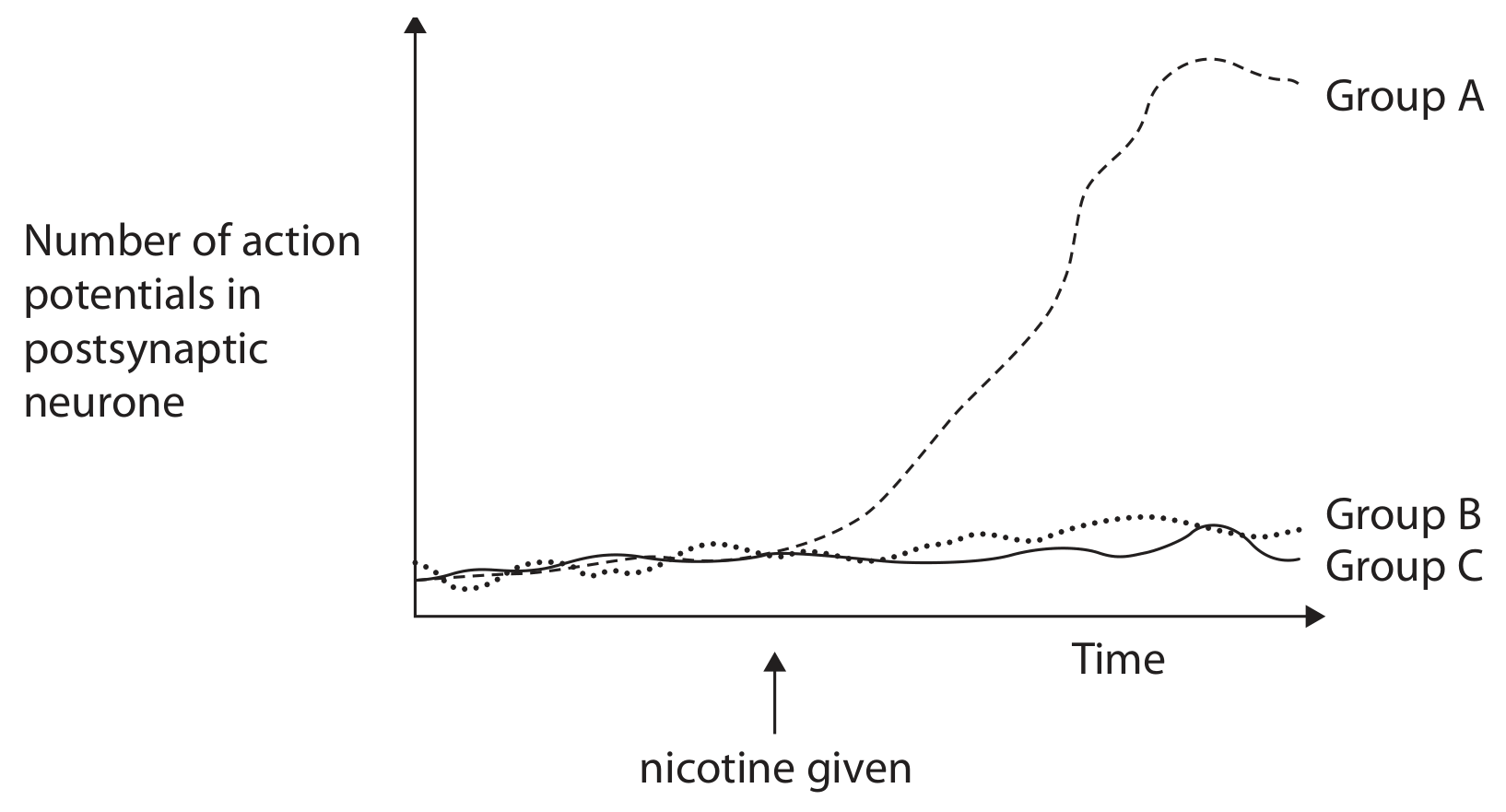
Scientists used three groups of mice (A, B and C) to investigate the effect of nicotine on the transmission of nerve impulses.
- Group A were given nicotine
- Group B were not given nicotine
- Group C were given nicotine but were deficient in the gene that produces the acetylcholine receptor on the postsynaptic membrane.

The mice in groups A and C were given the same dose of nicotine ( 0.5 mg / kg ) over the same time period.

The results are shown in the graph.

Figure for Question 4(b) — Edexcel A-Level Biology A2

Explain the results of this investigation.

Use your own knowledge and the results in the graph to support your answer.
(4)

Question 5

[Maximum number: 6]

Small variations in DNA sequences and activation of genes can explain why individuals respond differently to diseases and the drugs used to treat them.

Question 5(a)

(a)

Describe how active genes could be identified.
(2)

[ 2 ]

Question 5(c)

(b)

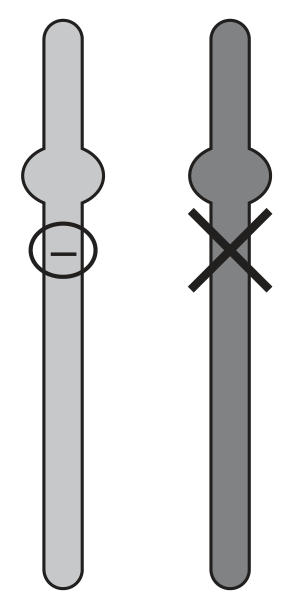
Prader-Willi syndrome is an inherited genetic disorder that involves changes on chromosome 15.

The chromosome inherited from the father has genetic deletions.
The chromosome inherited from the mother has DNA methylated bases.
The diagram shows these chromosomes for an individual with Prader-Willi syndrome.
region of DNA methylation

Figure for Question 5(c) — Edexcel A-Level Biology A2

region of genetic deletion

[ 4 ]

Question 5(c)(ii)

(i)

The symptoms of Prader-Willi syndrome can be treated using human growth hormone (HGH).

This hormone is a protein produced by the pituitary gland.
Describe how Escherichia coli bacteria can be used to produce human growth hormone.

[ 4 ]

Question 7

[Maximum number: 3]

Serotonin is produced by neurones in the brain.

DO NOT WRITE IN THIS AREADO NOT WRITE IN THIS AREADO NOT WRITE IN THIS AREA

Question 7(a)

(a)

How many of the following statements about serotonin are correct?
- L-dopa can be converted into serotonin in the brain
- Serotonin is a neurotransmitter
- Serotonin is produced by post-synaptic neurones
- A 0
- B 1
— C 2
— D 3

Question 7(c)

(b)

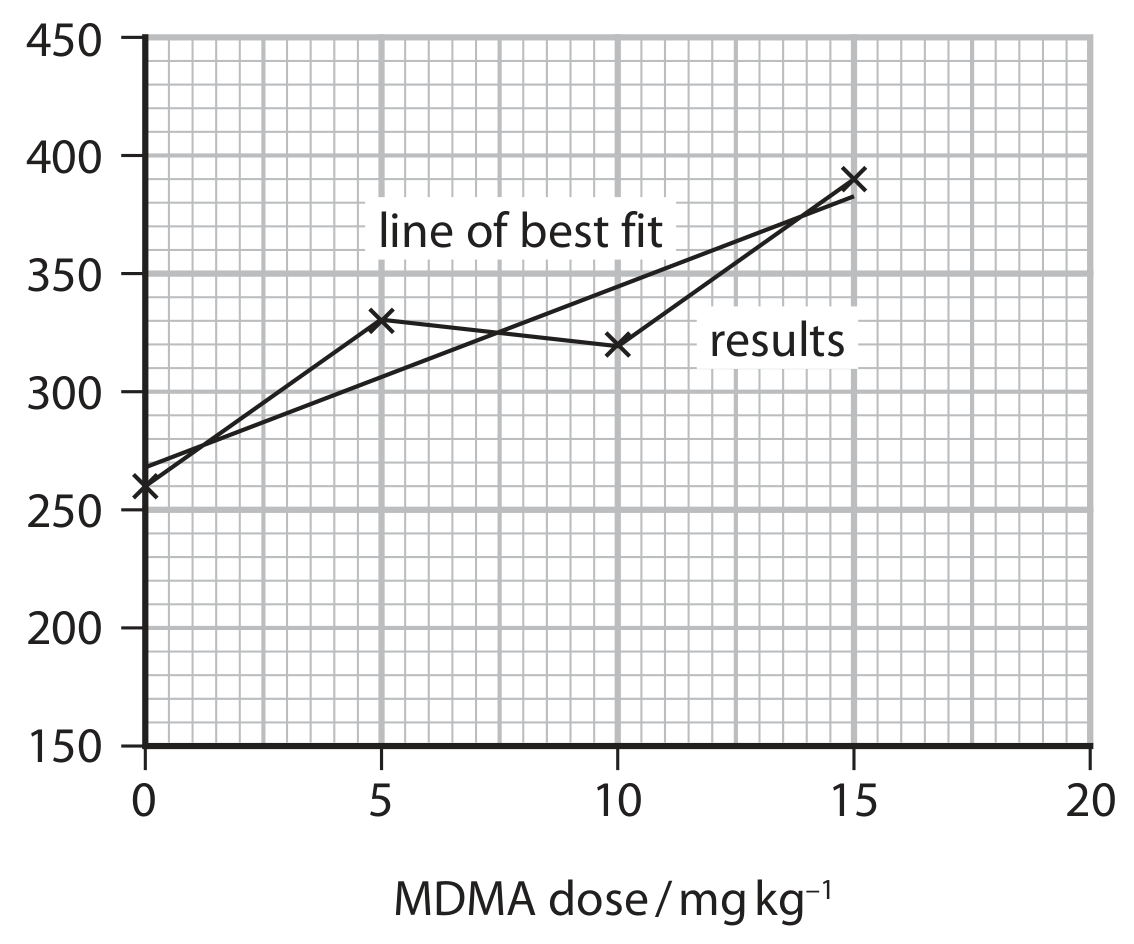
The effect of MDMA (ecstasy) on serotonin concentration in rats was investigated. Rats were given different concentrations of MDMA by mouth twice daily for a week.

The concentration of serotonin in the cerebrospinal fluid of the rats was analysed 24 hours after the last dose of MDMA.

Cerebrospinal fluid is fluid that surrounds the brain and spinal cord.
The graph shows the effect of MDMA on the concentration of serotonin and a line of best fit is shown on the graph.

Concentration of serotonin 24 hours after the last dose of MDMA /mgcm3/ \mathrm{mg} \mathrm{cm}^{-3}

Figure for Question 7(c) — Edexcel A-Level Biology A2
[ 3 ]

Question 7(c)(i)

(i)

Determine the effect of MDMA on the serotonin level in the cerebrospinal fluid.

Figure for Question 7(c)(i) — Edexcel A-Level Biology A2

Question 7(c)(iii)

(ii)

Explain how the MDMA taken by mouth could affect the level of serotonin in the brain.

Use the information in the question to support your answer.

[ 3 ]

Question 8

[Maximum number: 5]

The scientific document you have studied is adapted from the article 'Microbiota-gut-brain axis and the central nervous system' by Xiqun Zhu, Yong Han, Jing Du, Renzhong Liu, Ketao Jin and Wei Yi in Oncotarget (2017).

Use the information from the article and your own knowledge to answer the following questions.

Question 8(d)

(a)

Describe how fMRI scans could be used to show the activity of the regions of the brain controlling memory and sensation when probiotics are consumed (paragraph 11).

[ 2 ]

Question 8(e)

(b)

Suggest how changes in diet could affect the composition of the gut flora causing imbalances in the naturally occurring chemicals in the brain (paragraph 10).

Question 8(f)

(c)

"Multiple sclerosis (MS) is a... demyelinating disease of the nervous system" (paragraph 14).

Symptoms of MS include poor coordination and loss of vision.
Explain how demyelination could result in these symptoms.

Question 8(g)

(d)

Gut microorganisms produce LPS (paragraphs 15 and 17).

White blood cells have receptors for LPS on their cell surface.
Describe the techniques that could be used to identify the LPS receptor gene found in white blood cells.

Biology

International Advanced Level
UNIT 5: Respiration, Internal Environment, Coordination and Gene Technology

Scientific article for use with Question 8
Do not return this Insert with the question paper.

Scientific article for use with Question 8

Microbiota-gut-brain axis and the central nervous system

Gut microorganisms
1. The human gut contains various microorganisms, such as bacteria, fungi, parasites, and viruses, and more than 100 million bacteria reside in human gastrointestinal tract, which is 10-100 times the number of eukaryotic cells in our body. After years of common development with the human body, the gut bacteria have reached a mutually beneficial symbiotic state with the human body.
2. Gut microorganisms play an important role in promoting adult development and homeostasis; for example, they can affect human metabolic functions by decomposing the complex polysaccharides in food. In addition, gut microorganisms can regulate gut movement, the gut barrier system and fat distribution. Gut microorganisms can affect immune function through the development of gut-associated lymphoid tissue and by preventing the colonization of pathogens, and they can affect the energy metabolism and mitochondrial function of the host. The intricate relationship governing host and microorganism interactions suggest that when this relationship is abnormal, the microorganisms may cause the pathogenesis of disease or promote the progression of disease. Therefore, recent research has focused on determining the diversity of these microorganisms to clarify the physiological roles they play and eventually to prevent and treat diseases by controlling the microorganism species.
3. There are three main methods for detecting gut microorganisms: the bacteria culture technique, the traditional molecular biology technique that is independent of culture, and high-throughput sequencing technology. The former is mainly used for stool culture, this method is time-consuming, and the bacterial species obtained are limited. The latter two mainly isolate the bacterial DNA from the stool for the detection, the detection is fast, and the bacterial species are complete.

Microbiota gut-brain axis
4. The central nervous system (CNS) is closely related to the gastrointestinal tract, and the CNS plays an important role in regulating gut function and homeostasis. In turn, the gut flora may affect the CNS and nerve cells, participate in the regulation of nervous system function, affect the pathogenesis and progression of nervous system-related diseases. Due to the complex relationship between the gut microorganism population and the host, the authors proposed a new concept: the microbiota gut-brain axis. The microbiota gut-brain axis is the focus of recent research on the gut microecology. In addition to studies of the relationship between the gut microecology and neurological function, recent studies have emphasized how this relationship affects human health.
5. The brain and gut can be connected through a variety of pathways, including the enteric nervous system (ENS), vagus nerve, the immune system, or the metabolic processes of gut microorganisms.
6. The vagus nerve of the body can control the function of multiple organs, such as heart rate and gut motility; the vagus nerve can also transmit peripheral immune signals to the CNS. The vagus signal from the gut can trigger an anti-inflammatory response against the sepsis induced by microorganisms. Gut microorganisms can affect brain functions through the vagus nerve; after a vagotomy, the microorganisms will not be able to regulate behaviors.
7. Because gut microorganisms can directly affect the immune system, immune activation may be the pathway for transmitting microbial actions to the CNS. Microorganisms can also enhance the anti-tumor immune effect of drugs by promoting T cell accumulation and transformation, and microorganisms are very important for the immune function of organisms. The immune system plays an important role in maintaining health by maintaining gut homeostasis.
8. Microorganisms can also cause neurophysiological changes in the host by producing chemical substances that bind to the receptors inside and outside of the gut.


[ 3 ]