Question 1
Question 1(a)
Question 1(a)(ii)
(a)
(i)
Define electric field.
[ 1 ]
 EduNinja
Define electric field.
A tiny oil droplet with mass is at rest in an electric field of electric field strength , as shown.
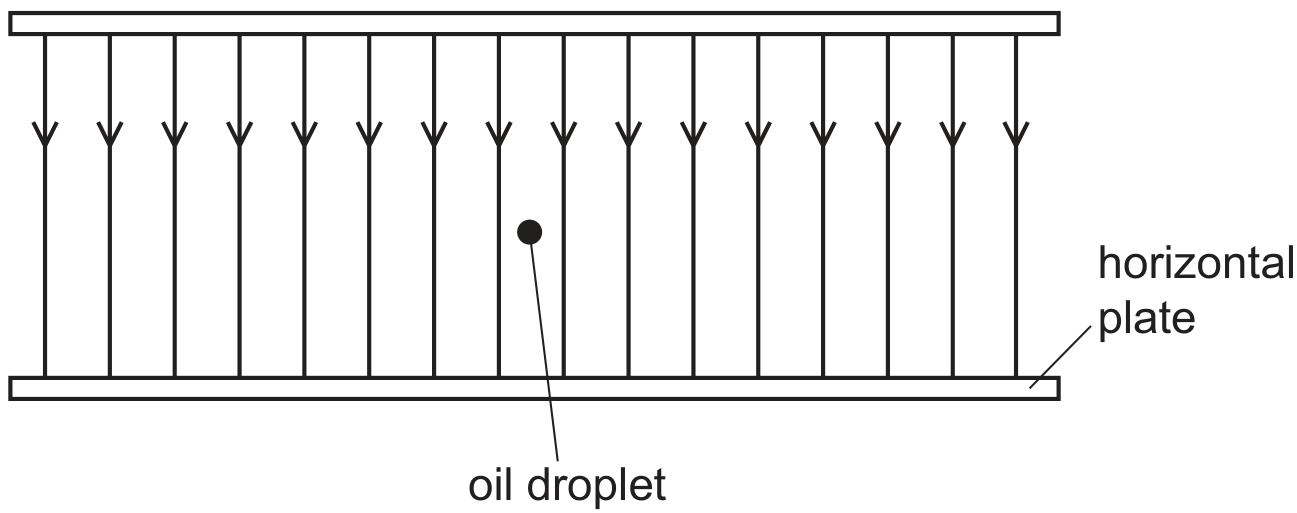
The weight of the droplet is exactly balanced by the electrical force on the droplet.
What is the charge on the droplet?
The diagrams show a negative electric charge situated in a uniform electric field and a mass situated in a uniform gravitational field.
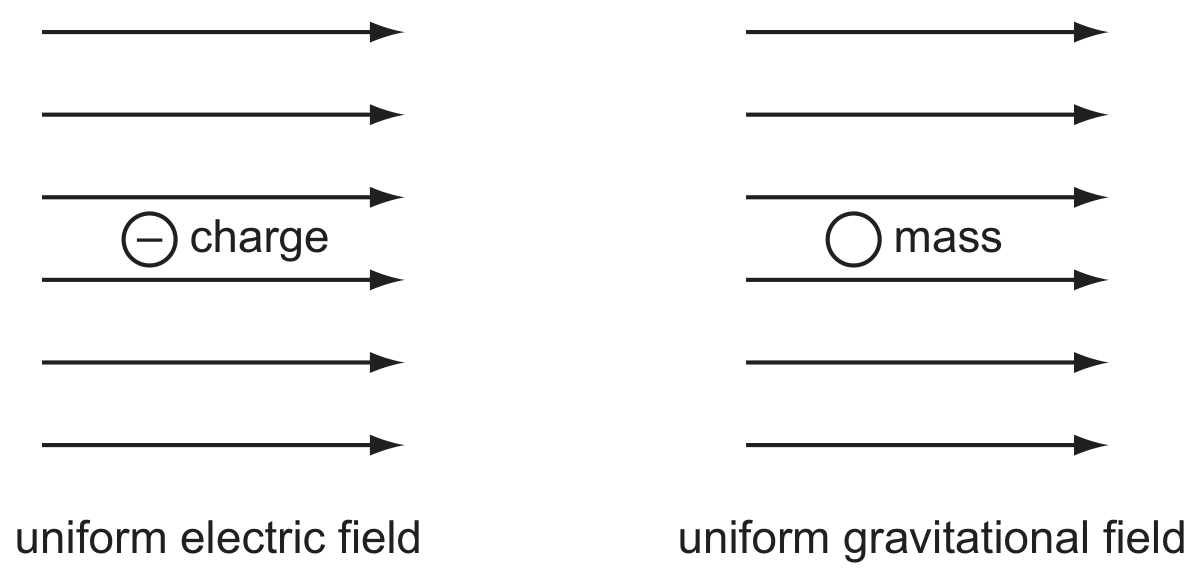
Which row shows the directions of the forces acting on the charge and on the mass?
charge
mass


Two point charges A and B are separated by a distance of 20 nm in a vacuum, as illustrated in Fig. 3.1.
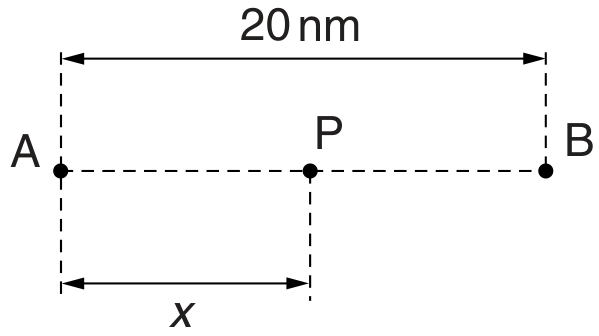
Fig. 3.1
A point P is a distance x from A along the line A B.
The variation with distance x of the electric potential due to charge A alone is shown in Fig. 3.2.
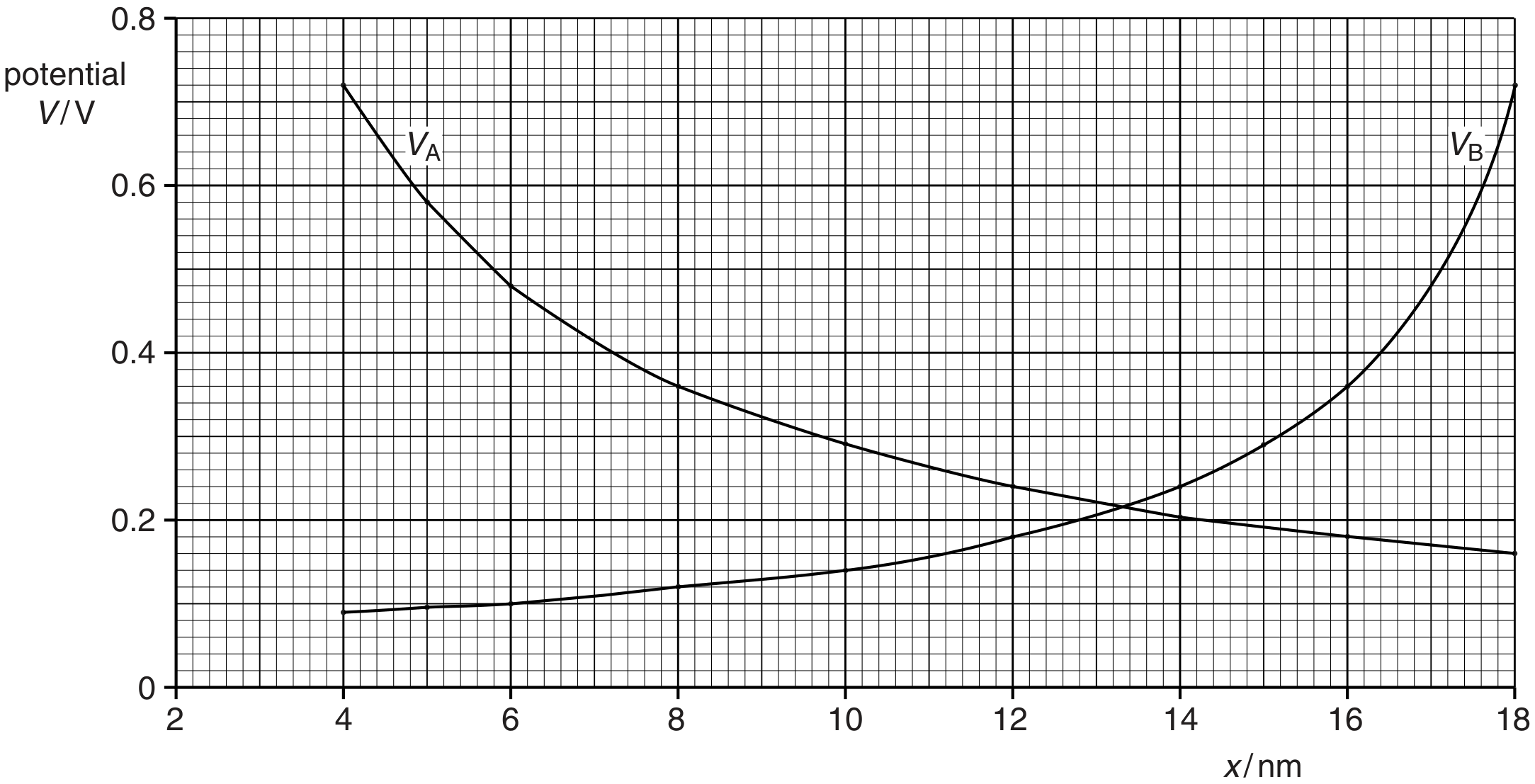
Fig. 3.2
The variation with distance x of the electric potential due to charge B alone is also shown in Fig. 3.2.
State and explain whether the charges A and B are of the same, or opposite, sign.
A particle is in a uniform field. The particle experiences a force in the opposite direction to the field.
Which field is the particle in, and on which property of the particle is the field acting?
field
property of particle
on which the field acts
electric
charge
electric
current
gravitational
mass
gravitational
weight
State what is meant by a line of force in
an electric field.
Define electric field strength.
Two charged metal spheres A and B are situated in a vacuum, as illustrated in Fig. 4.1.
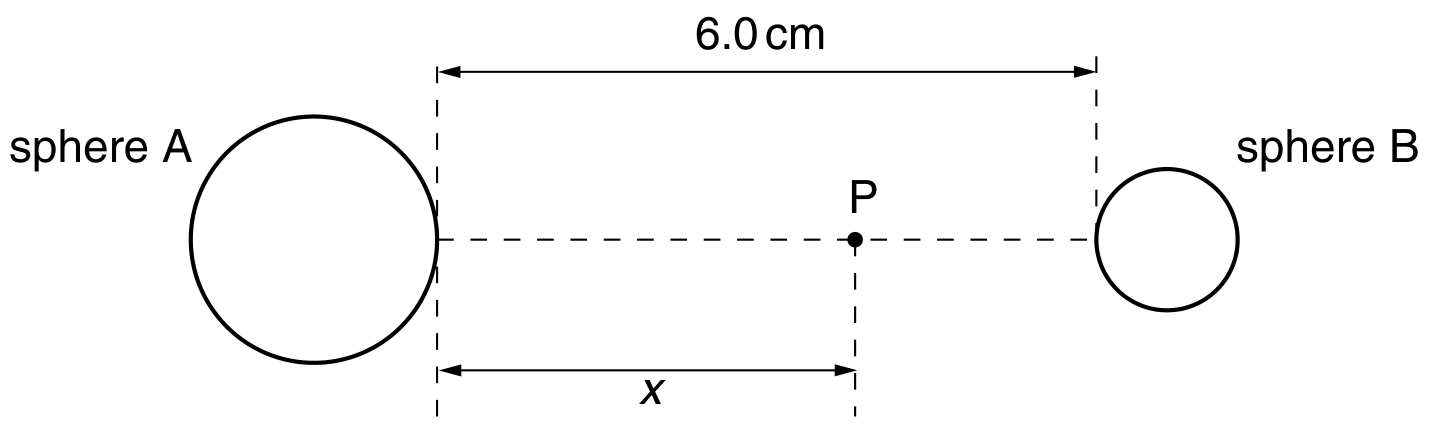
Fig. 4.1
The shortest distance between the surfaces of the spheres is 6.0 cm .
A movable point P lies along the line joining the centres of the two spheres, a distance x from the surface of sphere A.
The variation with distance x of the electric field E at point P is shown in Fig. 4.2.
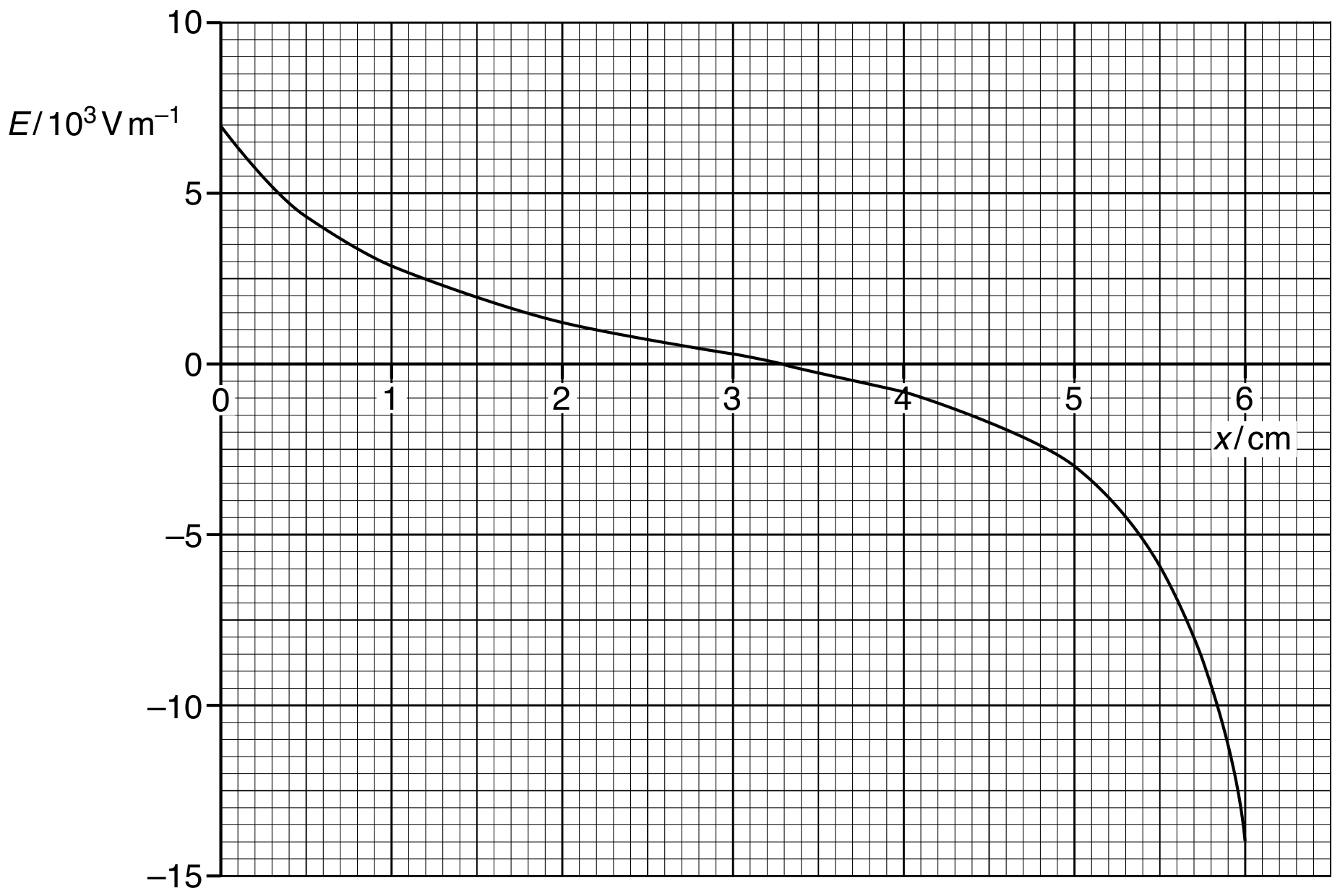
Fig. 4.2
Use Fig. 4.2 to explain whether the two spheres have charges of the same, or opposite, sign.
Define electric field strength.
State what is meant by an electric field.
The electric field between an earthed metal plate and two charged metal spheres is illustrated in Fig. 5.1.
.
The electric field between an earthed metal plate and two charged metal spheres is ustrated in Fig. 5.1.
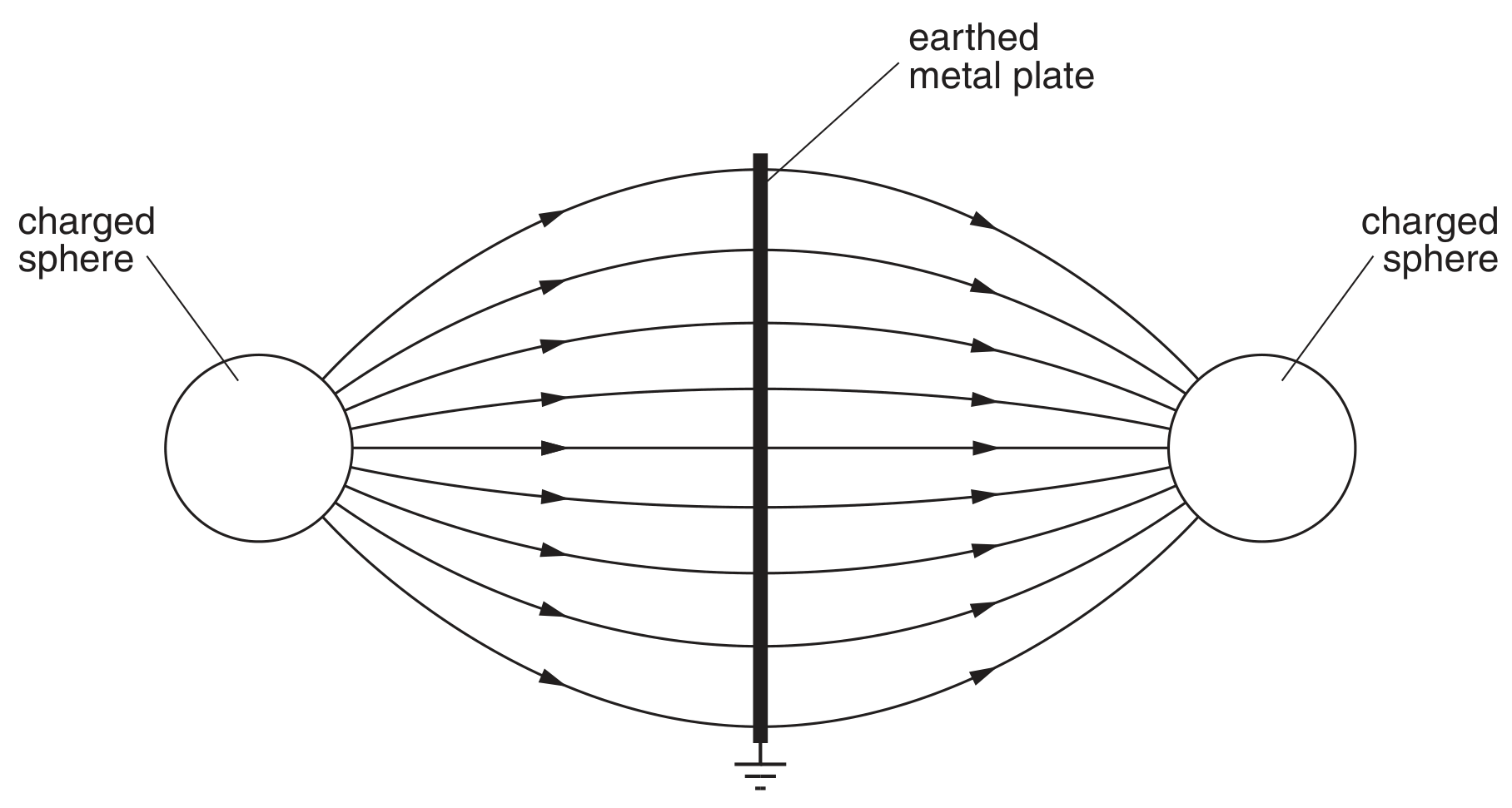
Fig. 5.1
On Fig. 5.1, label each sphere with (+) or (-) to show its charge.
On Fig. 5.1, mark a region where the magnitude of the electric field is
1. constant (label this region C ),
2. decreasing (label this region D ).
A molecule has its centre P of positive charge situated a distance of from its centre N of negative charge, as illustrated in Fig. 5.2.
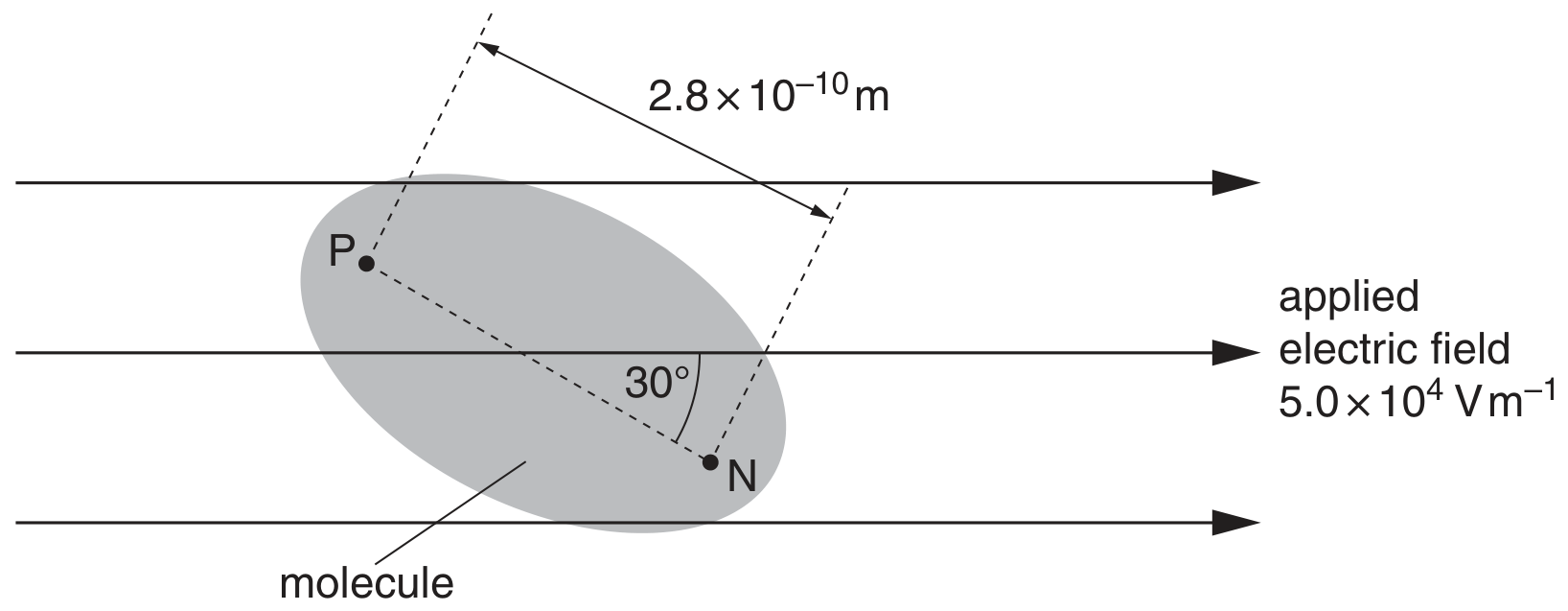
Fig. 5.2
The molecule is situated in a uniform electric field of field strength . The axis NP of the molecule is at an angle of to this uniform applied electric field. The magnitude of the charge at P and at N is .
On Fig. 5.2, draw an arrow at P and an arrow at N to show the directions of the forces due to the applied electric field at each of these points.