Muscle and motility connect sarcomere contraction, antagonistic muscles, skeletons, synovial joints and locomotor adaptations to movement across biological scales efficiently.
Syllabus
First assessment 2025
Topic
B3.3
Level
HL
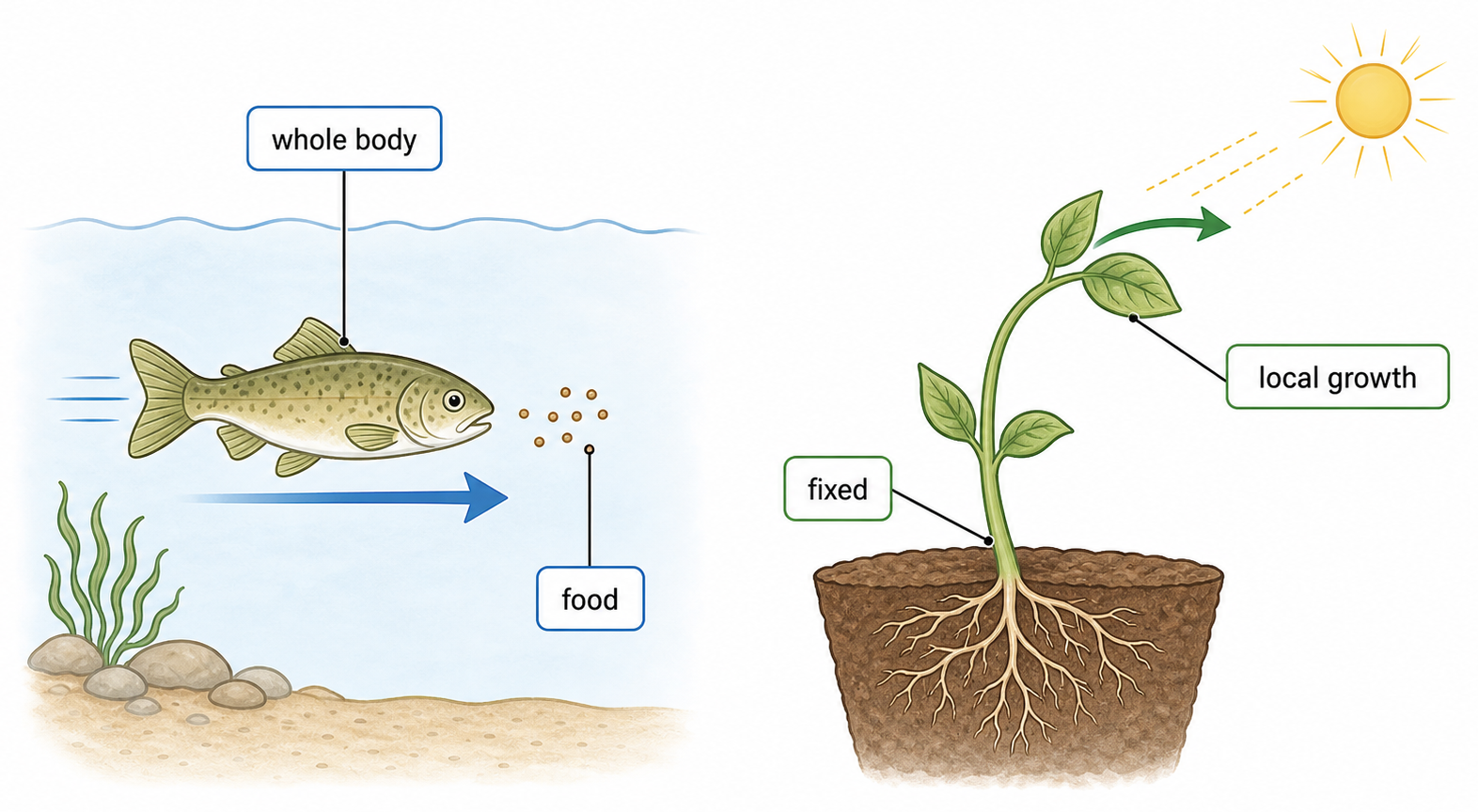
Movement Does Not Always Mean Locomotion
HL only
Movement changes position or shape; locomotion moves the whole organism from one place to another. A sessile organism remains attached yet may move body parts or grow directionally.
Locomotion can improve access to food, escape from predators, mate finding and migration. The benefit must outweigh its metabolic cost and exposure to risk.
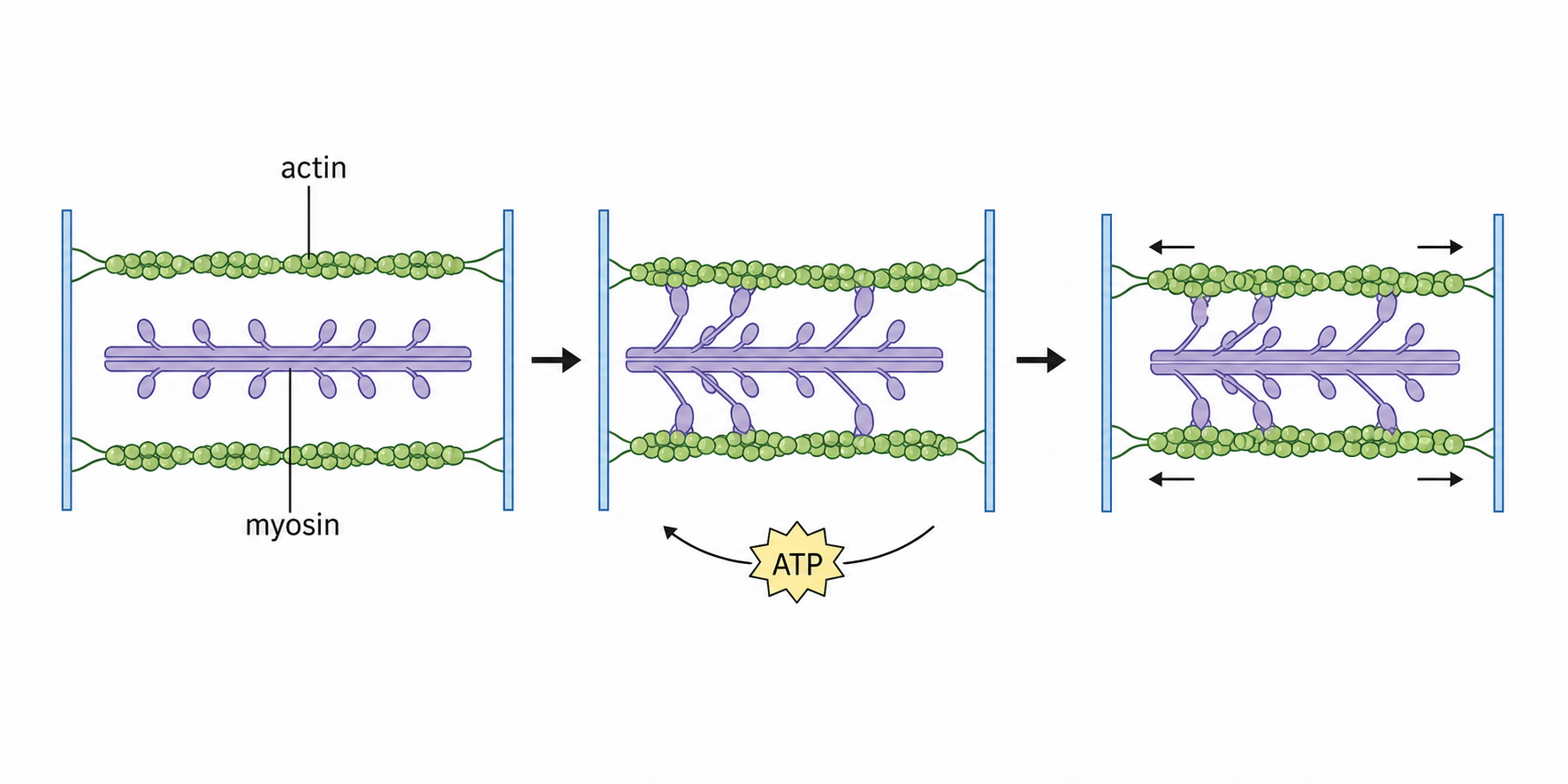
Sliding Filaments Shorten the Sarcomere
HL only
A sarcomere runs from Z line to Z line. During contraction, myosin pulls thin actin filaments toward the centre, increasing overlap and bringing Z lines closer; neither filament shortens.
I band and H zone narrow → overlap increases
A band stays constant → myosin length is unchanged
Z lines approach → sarcomere shortens
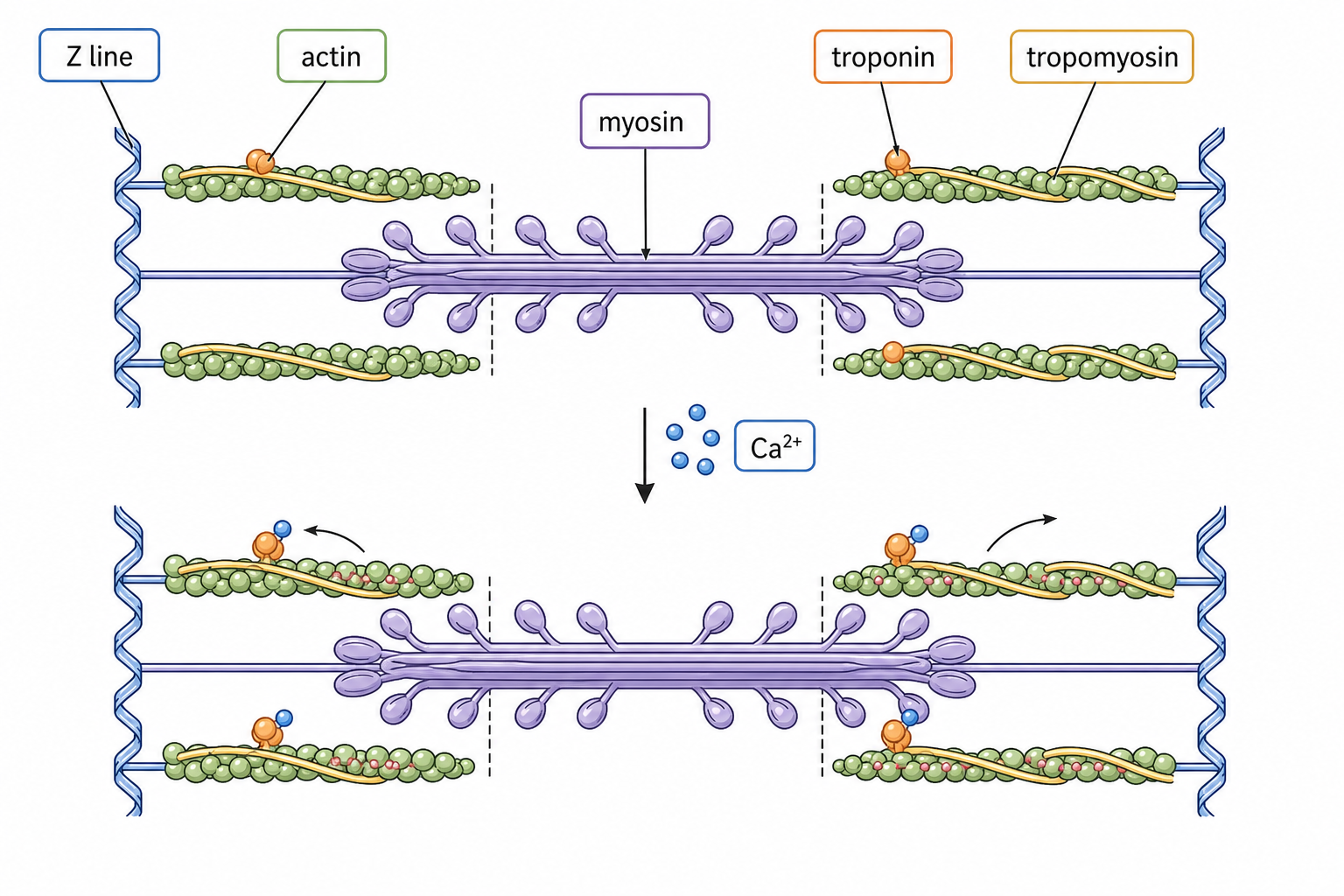
Calcium Opens the Site; ATP Resets the Myosin Head
HL only
Ca²⁺ permits cross-bridge formation, while ATP controls detachment and re-cocking. Repeated myosin power strokes slide actin toward the sarcomere centre.
1 Ca²⁺ binds troponin; tropomyosin moves
2 energized myosin–ADP–Pi binds actin
3 Pi/ADP release drives the power stroke
4 ATP binding detaches myosin
5 ATP hydrolysis re-cocks the head
Titin Recoils; Antagonistic Muscles Reverse Movement
HL only
Skeletal muscles generate active force by shortening; they cannot actively push themselves longer. Titin and antagonistic muscle pairs provide two different routes back toward the starting state.
titin spans from thick filament toward the Z line, centres myosin and resists overstretching
stretched titin stores elastic energy and recoils as the sarcomere relaxes
an agonist contracts while its antagonist relaxes; reversing the movement swaps their roles
Titin restores sarcomere alignment and passive length; it does not replace the opposing muscle force needed to rotate a joint in the reverse direction.
A Motor-Neuron Signal Releases Calcium around Myofibrils
HL only
A motor unit is one motor neuron and all muscle fibres it controls. At each neuromuscular junction, neuronal excitation is converted into sarcolemma excitation and then Ca²⁺ release from sarcoplasmic reticulum.
Muscles pull; they do not push. A tendon transmits tension to a rigid skeletal element, a joint acts as fulcrum, and an antagonistic muscle produces the reverse movement.
At the elbow: joint = fulcrum, biceps force = effort, forearm/hand load = resistance. Attachment close to the joint sacrifices force advantage for speed and range.
Joint Shape Sets the Available Range of Motion
HL only
A synovial joint combines smooth cartilage, lubricating synovial fluid, stabilizing ligaments and force-transmitting tendons. Articulating surface shape constrains its directions of movement.
ball-and-socket hip/shoulder → movement in three planes, including circumduction
hinge knee/elbow → mainly flexion and extension
goniometer → angular change between starting and safe maximum positions
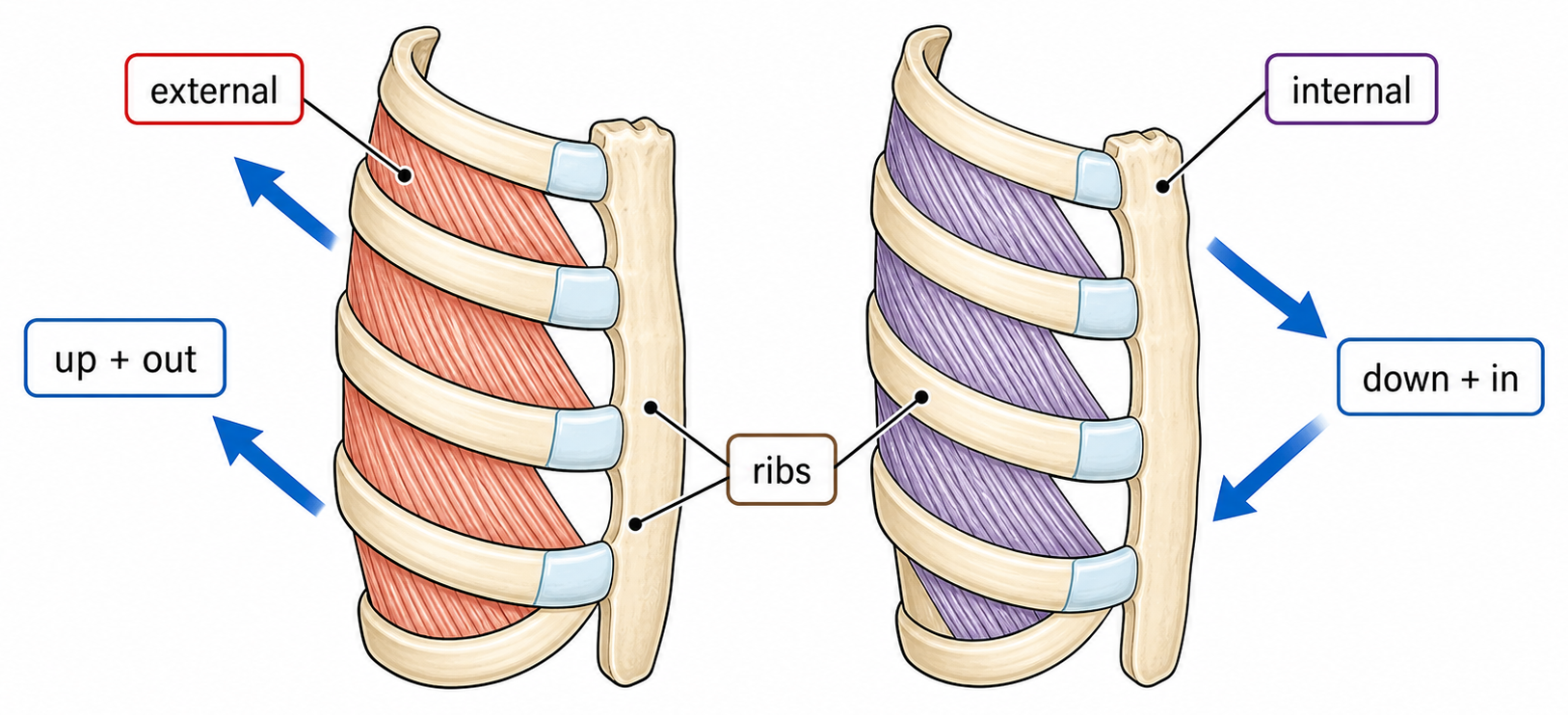
Antagonistic Intercostals Change Thoracic Volume
HL only
External and internal intercostals have opposing fibre directions. Their contraction moves ribs differently, changing thoracic volume and therefore lung pressure.
Marine Mammals Reduce Drag and Surface Efficiently
HL only
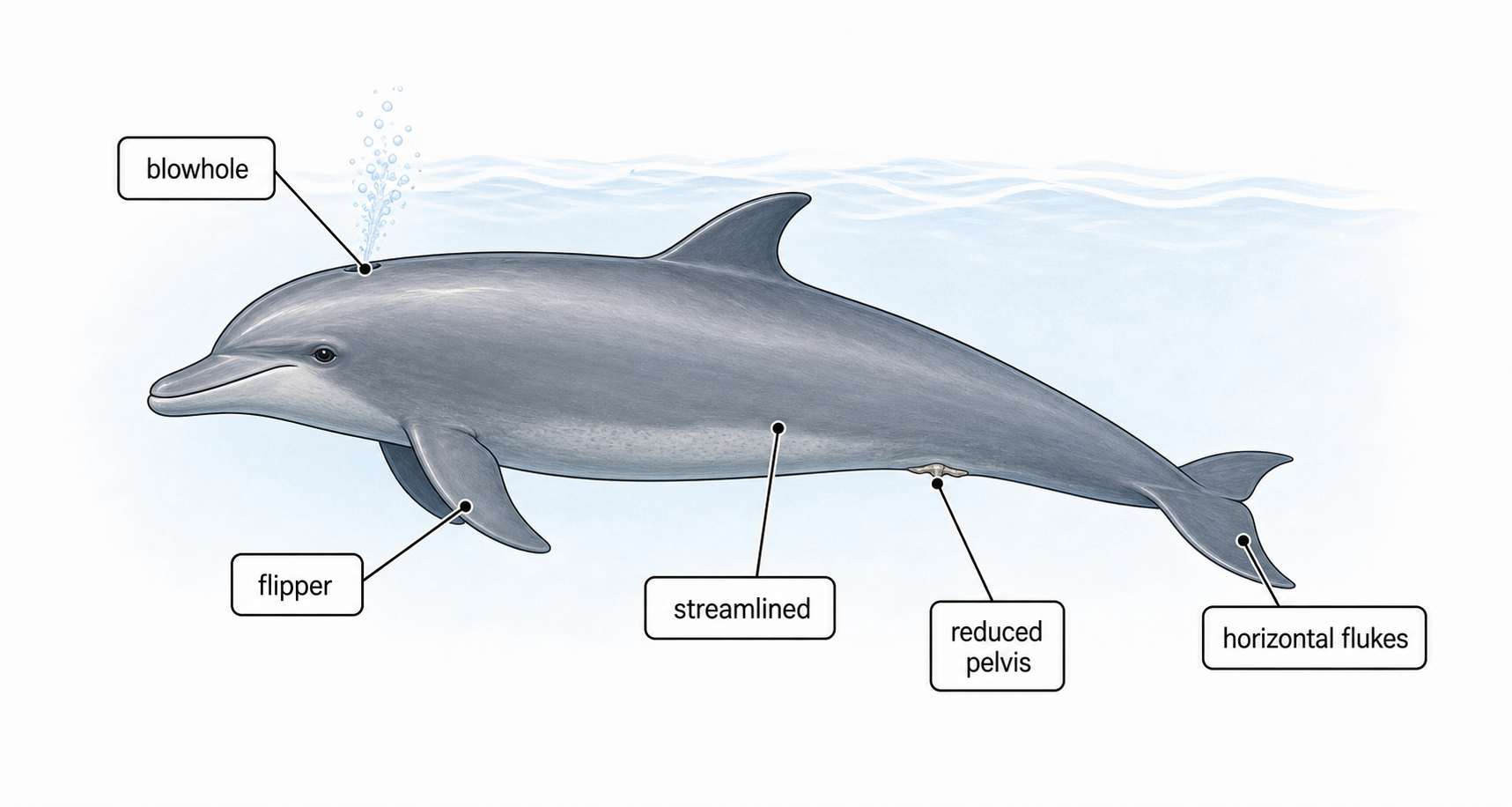
Water is dense, so marine mammals combine a streamlined body with controlled thrust and rapid surface ventilation. They remain air-breathing mammals.
Feature
Mechanical or respiratory effect
tapered body and reduced projections
reduces drag in dense water
forelimb flippers
steer and stabilize the body
horizontal tail flukes driven by axial muscles
generate up-down thrust
dorsal blowhole
permits rapid ventilation with little emergence
Summary: From Molecular Pull to Locomotion
HL only
motor signal → ACh → muscle action potential → SR Ca²⁺ → exposed actin sites → cross-bridge cycling → sarcomere shortening → tendon tension → joint rotation
ATP detaches and re-cocks myosin; Ca²⁺ reuptake stops new bridges; titin restores passive sarcomere length, while antagonistic muscle action reverses joint movement. Whole-body form then determines whether force becomes efficient locomotion.
Movement adaptations
HL only
[ 2 ]
Microscopic eukaryotes include Euglena and Paramecium. Outline the range of cellular structures used for locomotion in these organisms.
Sliding filament model
HL only
[ 8 ]
Actin and myosin are two proteins found in muscles. Explain how skeletal muscle contracts, including the interaction of these proteins.
Drawing canvas
Titin and antagonistic muscles
HL only
[ 2 ]
Explain the role of the protein titin in muscle relaxation.
Motor units
HL only
[ 1 ]
What happens when an action potential reaches motor end plates?
Skeletons as anchorage and levers
HL only
[ 1 ]
Outline how the muscle attachment of insects differs from humans.
Synovial joint movement
HL only
[ 2 ]
State the function of structures I and II.
I:
II:
Range of motion
HL only
[ 2 ]
Compare the movements of the hip joint and the knee joint.