EduNinja
[Maximum number: 1]

Data analysis question.

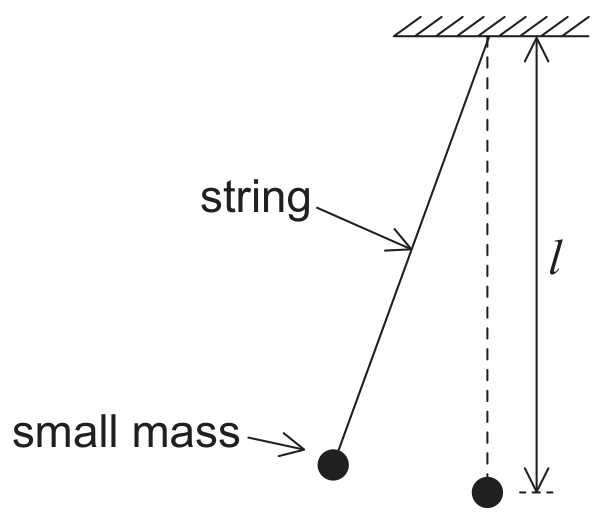
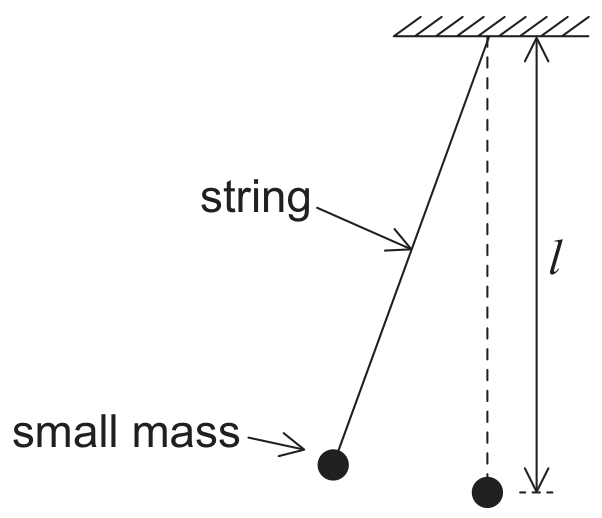
A simple pendulum of length l consists of a small mass attached to the end of a light string.
Question image

The time T taken for the mass to swing through one cycle is given by

T=2πlgT=2 \pi \sqrt{\frac{l}{g}}

where g is the acceleration due to gravity.

(a)

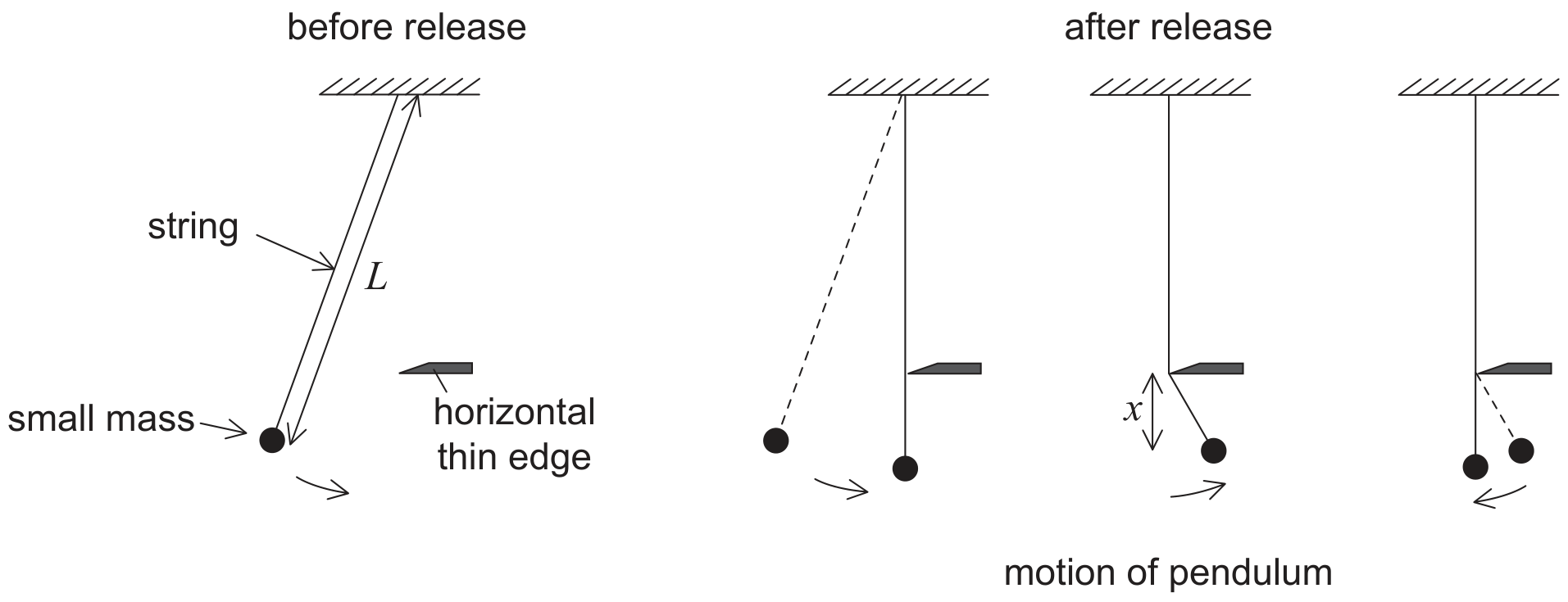
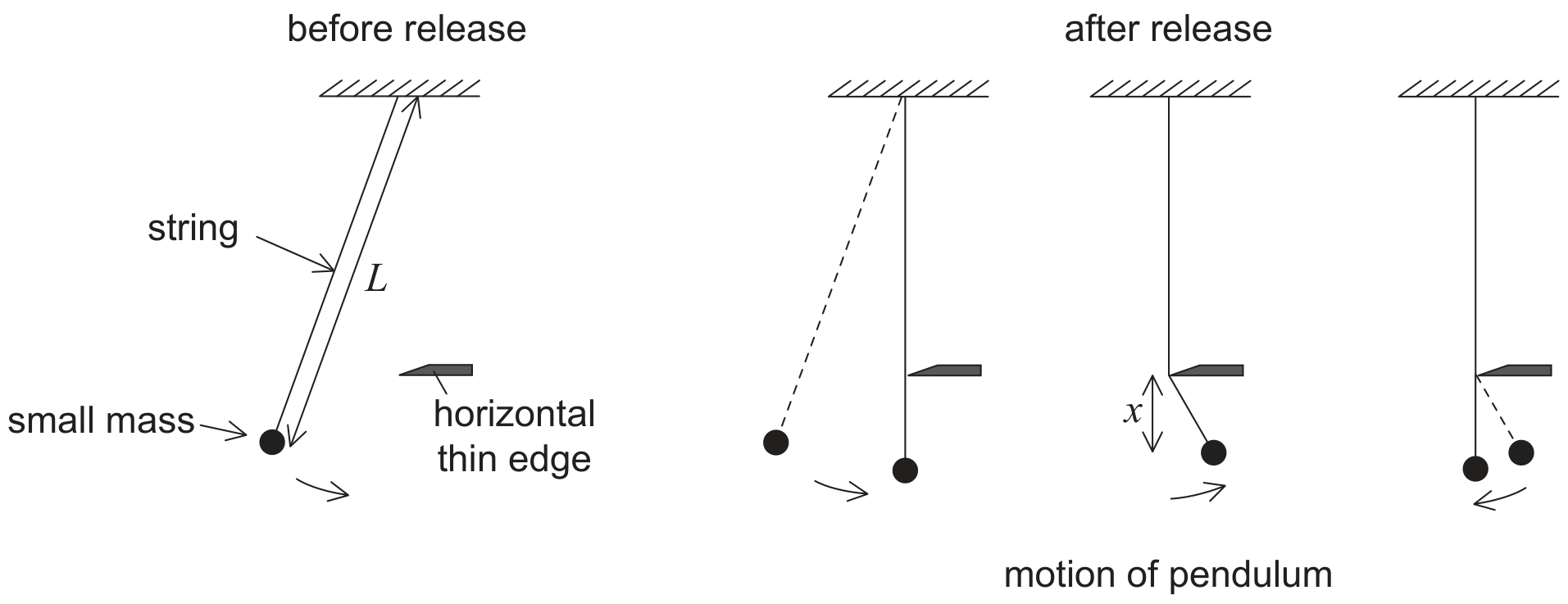
The student modifies the simple pendulum of length L so that, after release, it swings for a quarter of a cycle before the string strikes a horizontal thin edge. For the next half cycle, the pendulum swings with a shorter length x. The string then leaves the horizontal thin edge to swing with its original length L.
Question image

The length L of the string is kept constant during the experiment. The vertical position of the horizontal thin edge is varied to change x.

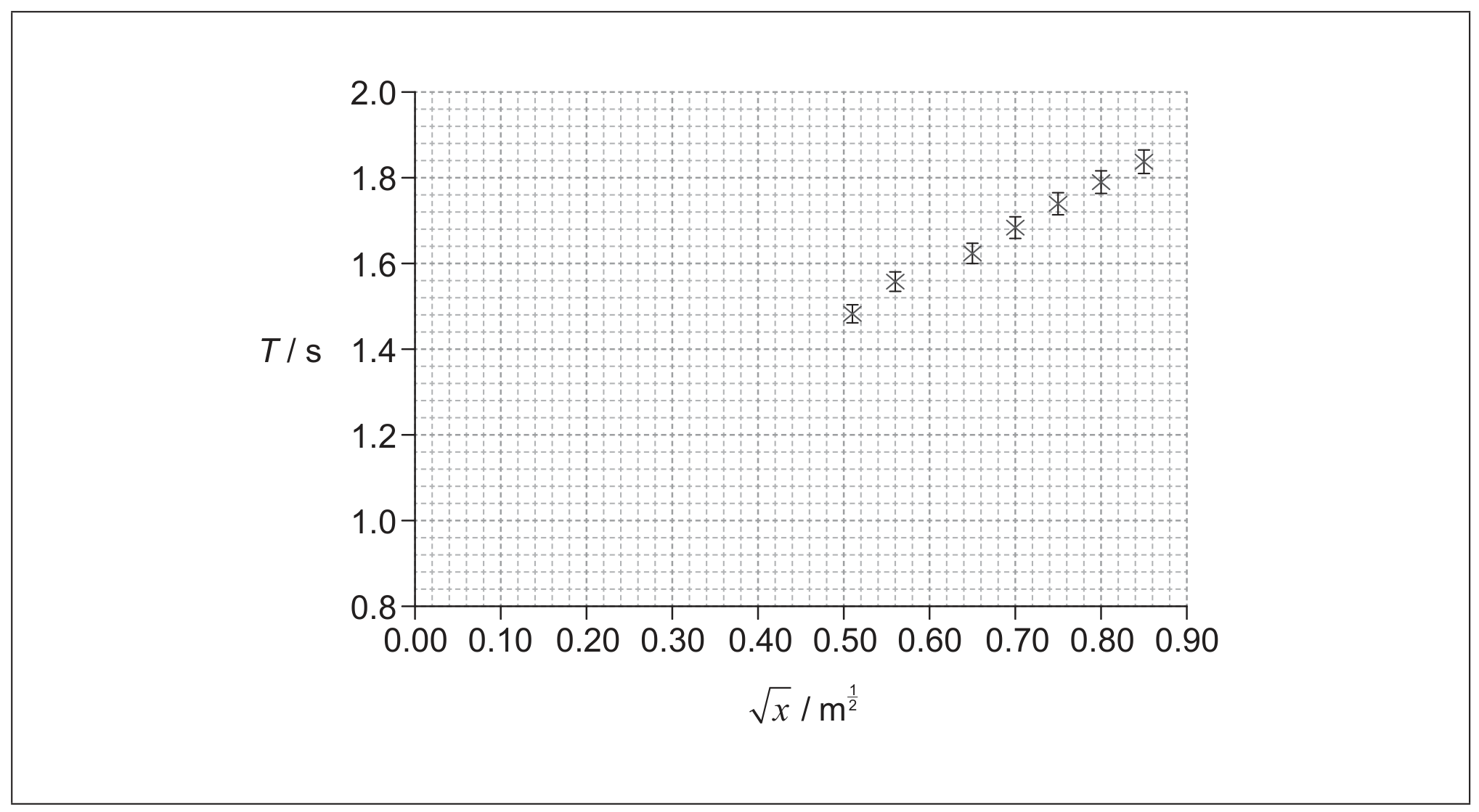
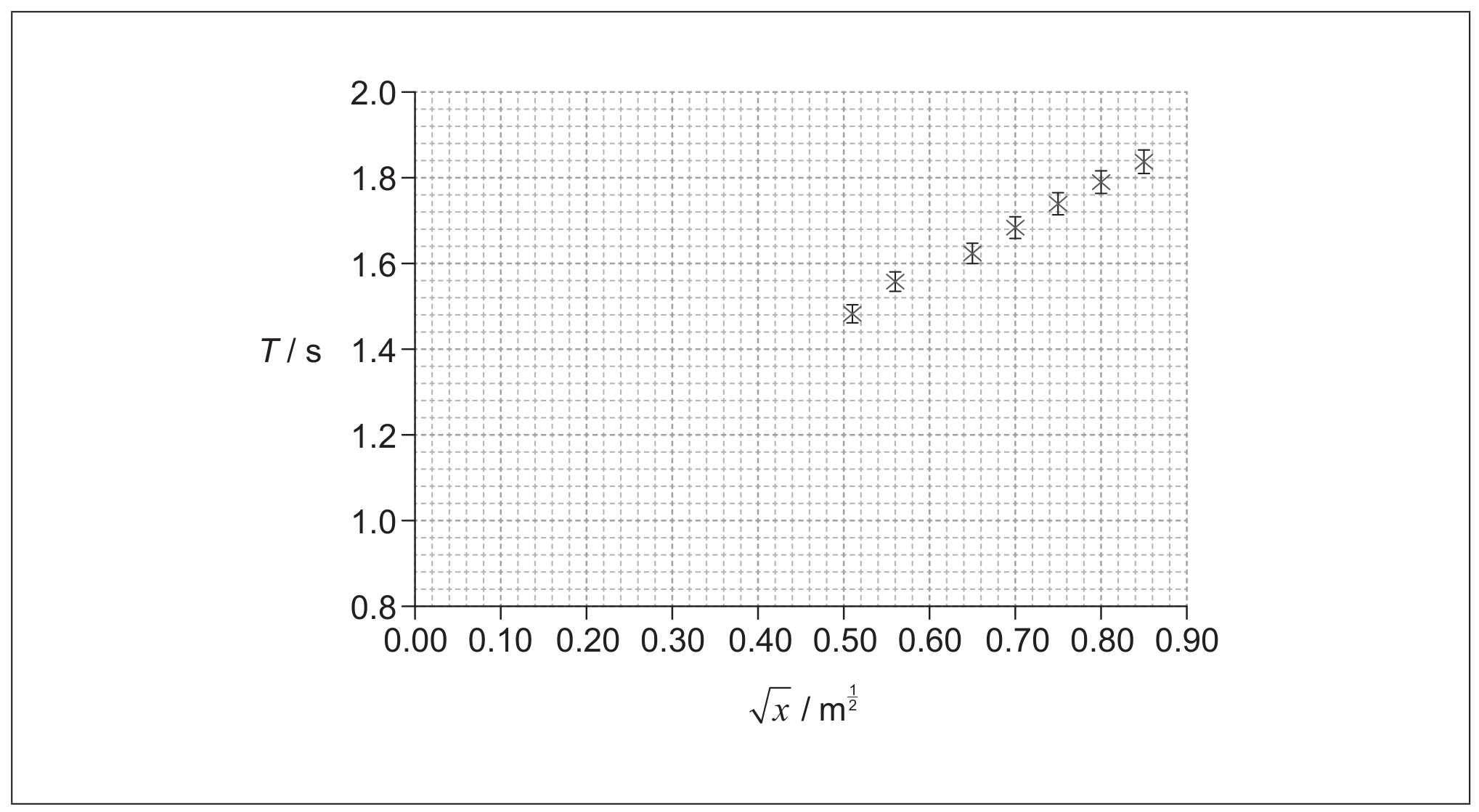
The graph shows the variation of the time period with x\sqrt{x} for data obtained by the student together with error bars for the data points. The error in x\sqrt{x} is too small to be shown.

Question image
[ 1 ]
(i)

Deduce that the time period for one complete oscillation of the pendulum is given by

T=πg(L+x)T=\frac{\pi}{\sqrt{g}}(\sqrt{L}+\sqrt{x})
(ii)

Calculate L.

[ 1 ]
[Maximum number: 1]

Data analysis question.

A simple pendulum of length l consists of a small mass attached to the end of a light string.

Question image

The time T taken for the mass to swing through one cycle is given by

T=2πlgT=2 \pi \sqrt{\frac{l}{g}}

where g is the acceleration due to gravity.

(a)

The student modifies the simple pendulum of length L so that, after release, it swings for a quarter of a cycle before the string strikes a horizontal thin edge. For the next half cycle, the pendulum swings with a shorter length x. The string then leaves the horizontal thin edge to swing with its original length L.

Question image

The length L of the string is kept constant during the experiment. The vertical position of the horizontal thin edge is varied to change x.

The graph shows the variation of the time period with x\sqrt{x} for data obtained by the student together with error bars for the data points. The error in x\sqrt{x} is too small to be shown.

Question image
[ 1 ]
(i)

Deduce that the time period for one complete oscillation of the pendulum is given by

T=πg(L+x)T=\frac{\pi}{\sqrt{g}}(\sqrt{L}+\sqrt{x})
(ii)

Calculate L.

[ 1 ]
[Maximum number: 2]

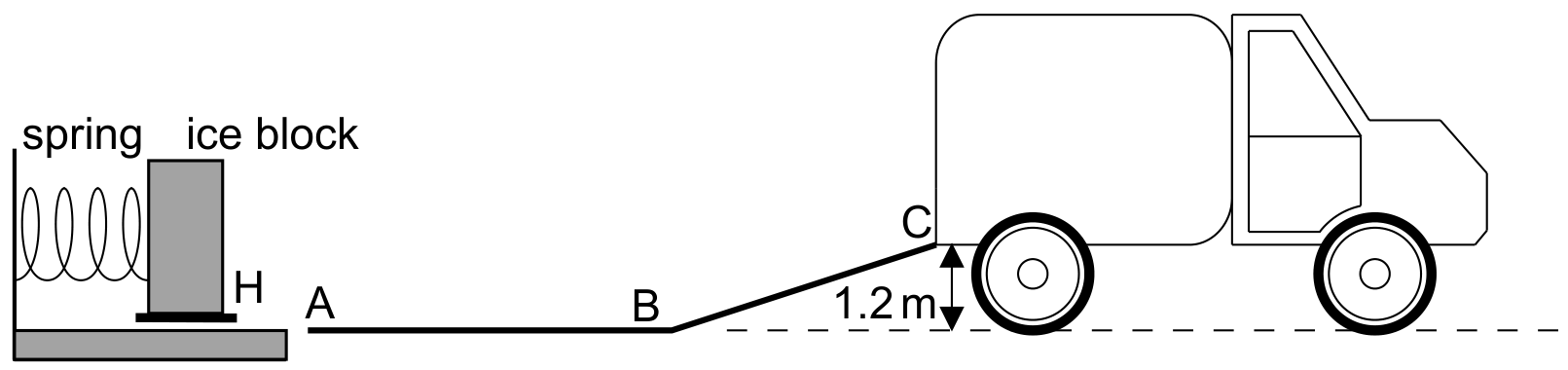
A company designs a spring system for loading ice blocks onto a truck. The ice block is placed in a holder H in front of the spring and an electric motor compresses the spring by pushing H to the left. When the spring is released the ice block is accelerated towards a ramp ABC . When the spring is fully decompressed, the ice block loses contact with the spring at A . The mass of the ice block is 55 kg .

Question image

Assume that the surface of the ramp is frictionless and that the masses of the spring and the holder are negligible compared to the mass of the ice block.

(a)

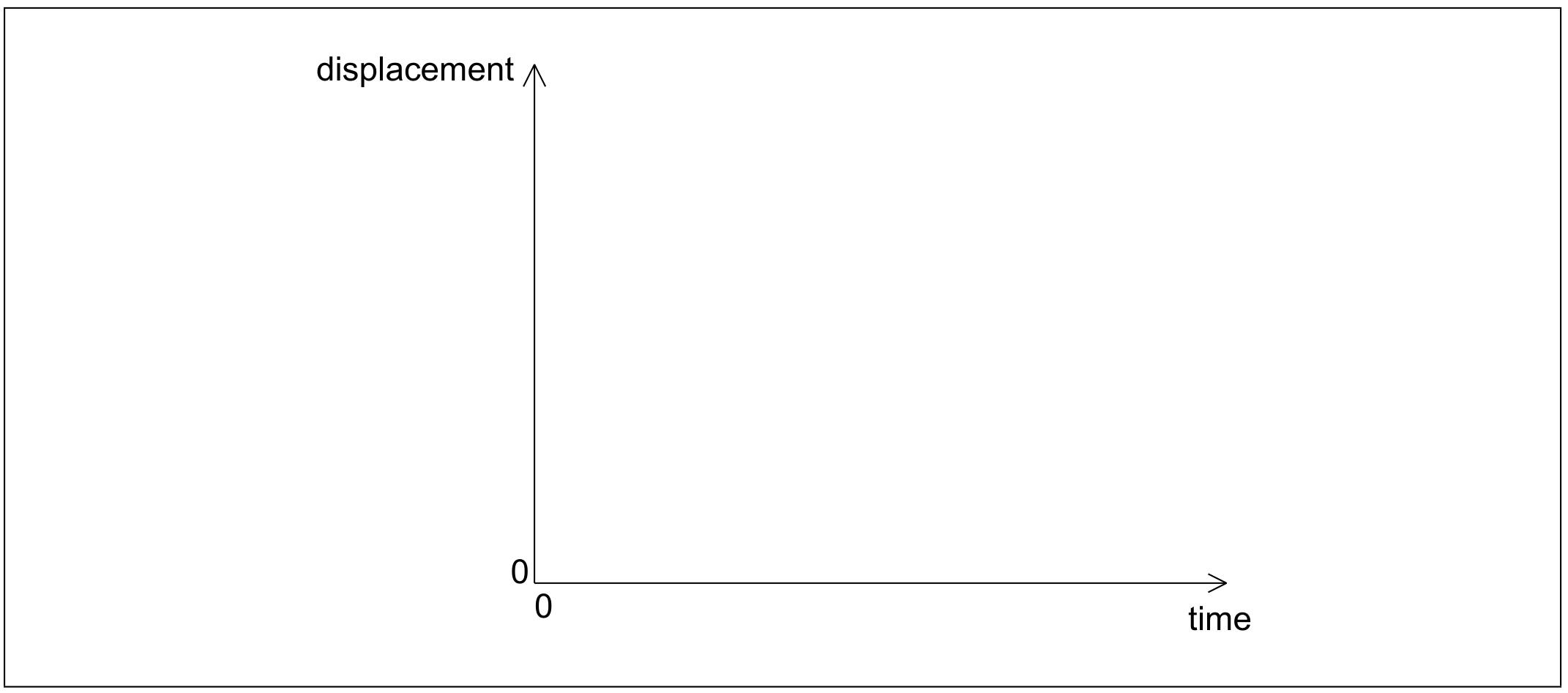
On the axes, sketch a graph to show how the displacement of the block varies with time from A to C. (You do not have to put numbers on the axes.)

Question image
[ 2 ]
[Maximum number: 2]

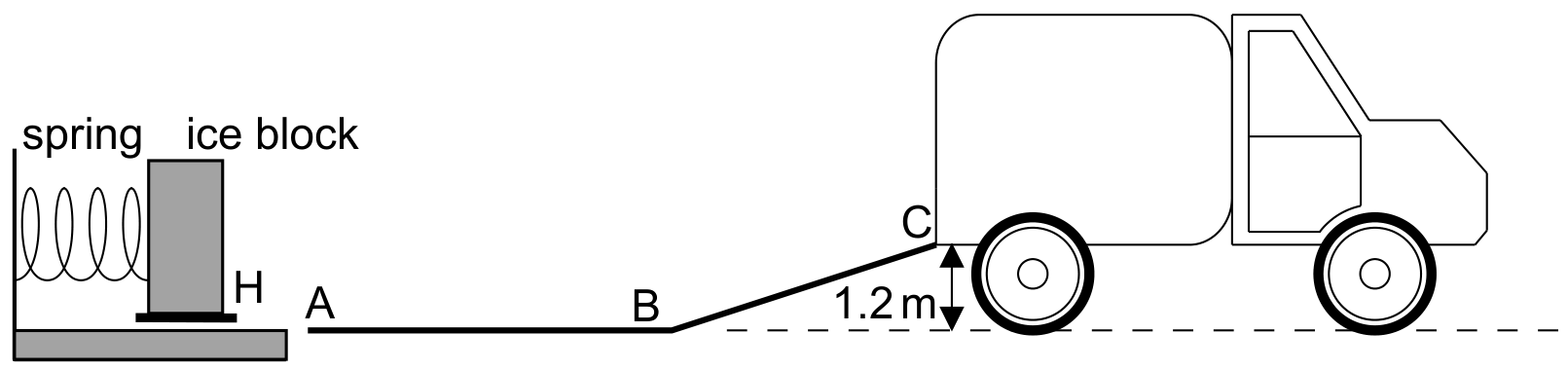
A company designs a spring system for loading ice blocks onto a truck. The ice block is placed in a holder H in front of the spring and an electric motor compresses the spring by pushing H to the left. When the spring is released the ice block is accelerated towards a ramp ABC . When the spring is fully decompressed, the ice block loses contact with the spring at A . The mass of the ice block is 55 kg .

Question image

Assume that the surface of the ramp is frictionless and that the masses of the spring and the holder are negligible compared to the mass of the ice block.

(a)

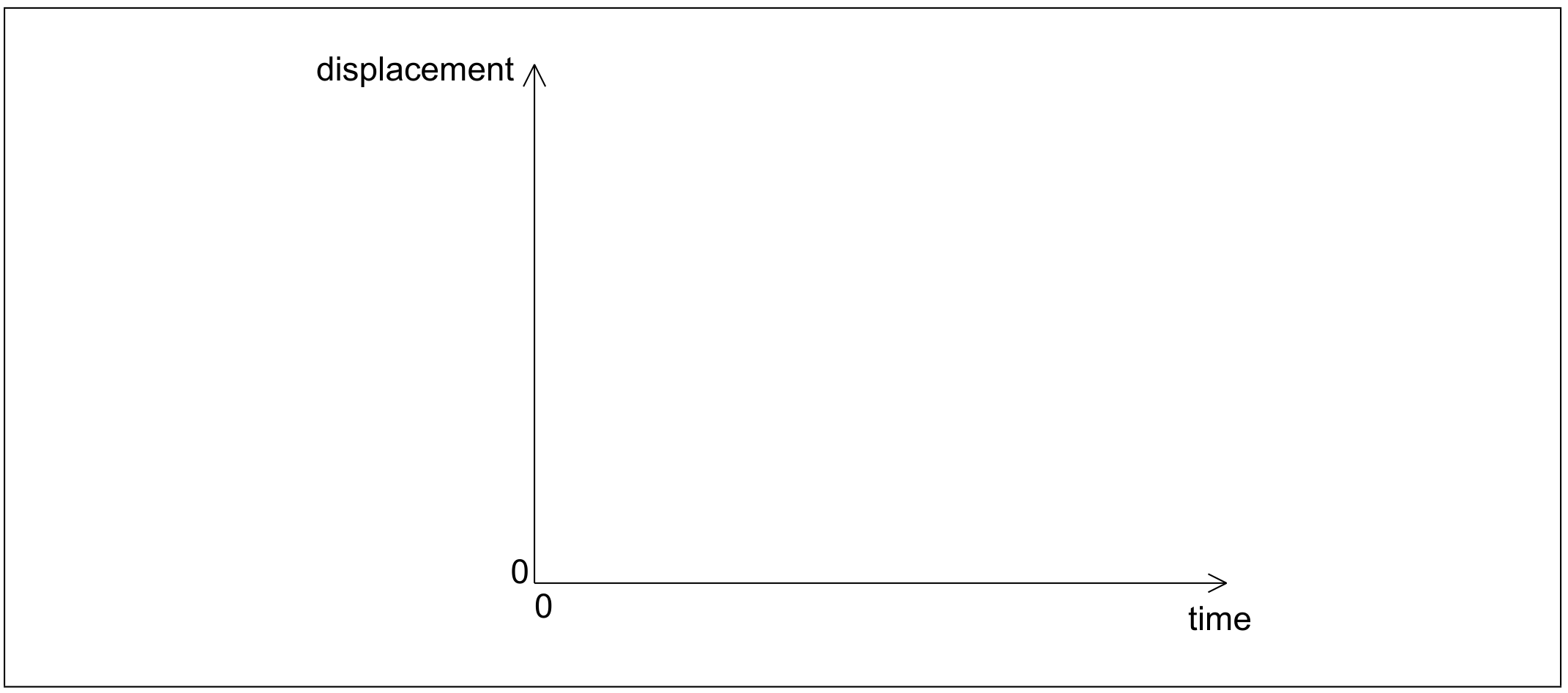
On the axes, sketch a graph to show how the displacement of the block varies with time from A to C. (You do not have to put numbers on the axes.)

Question image
[ 2 ]
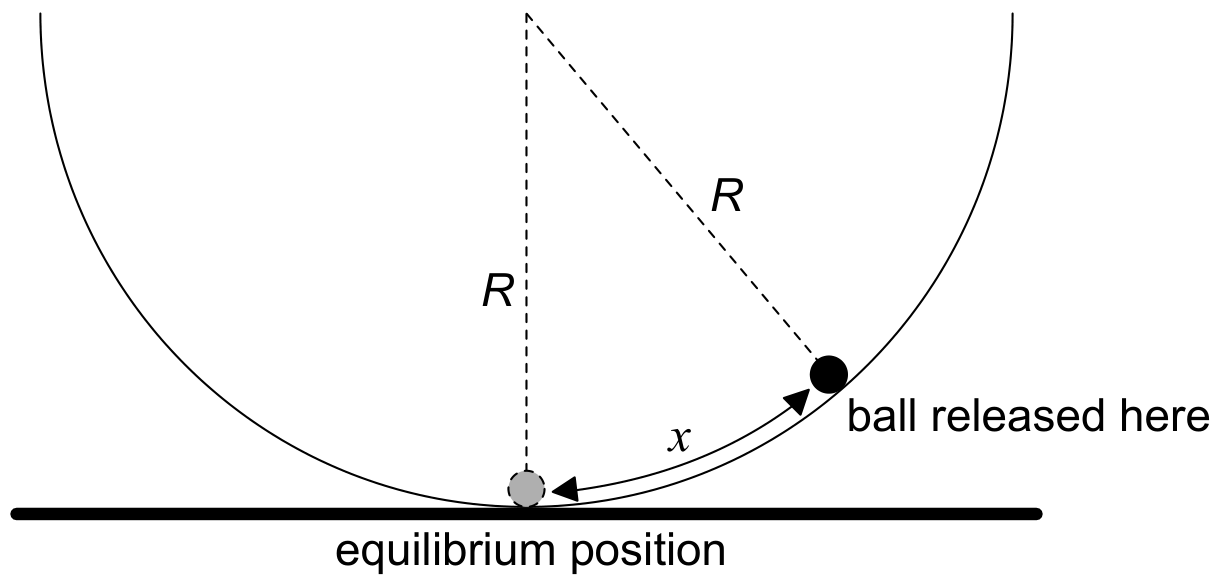
(a)

The ball is now displaced through a small distance x from the bottom of the bowl and is then released from rest.

Question image

The magnitude of the force on the ball towards the equilibrium position is given by

mgxR\frac{m g x}{R}

where R is the radius of the bowl.

[ 6 ]
(i)

Outline why the ball will perform simple harmonic oscillations about the equilibrium position.

[ 1 ]
(ii)

Show that the period of oscillation of the ball is about 6 s .

[ 2 ]
(iii)

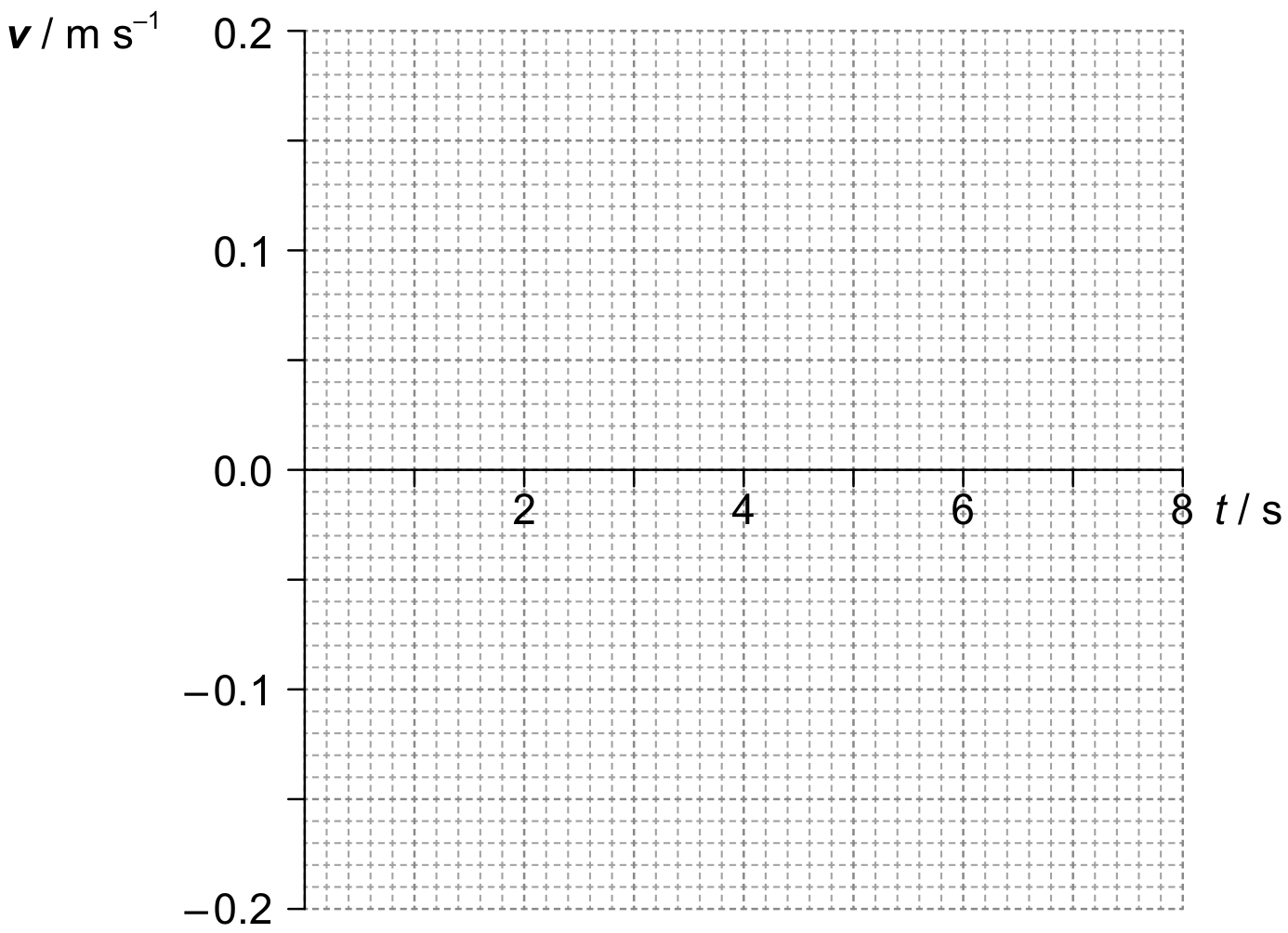
The amplitude of oscillation is 0.12 m . On the axes, draw a graph to show the variation with time t of the velocity v of the ball during one period.

Question image
[ 3 ]
[Maximum number: 4]

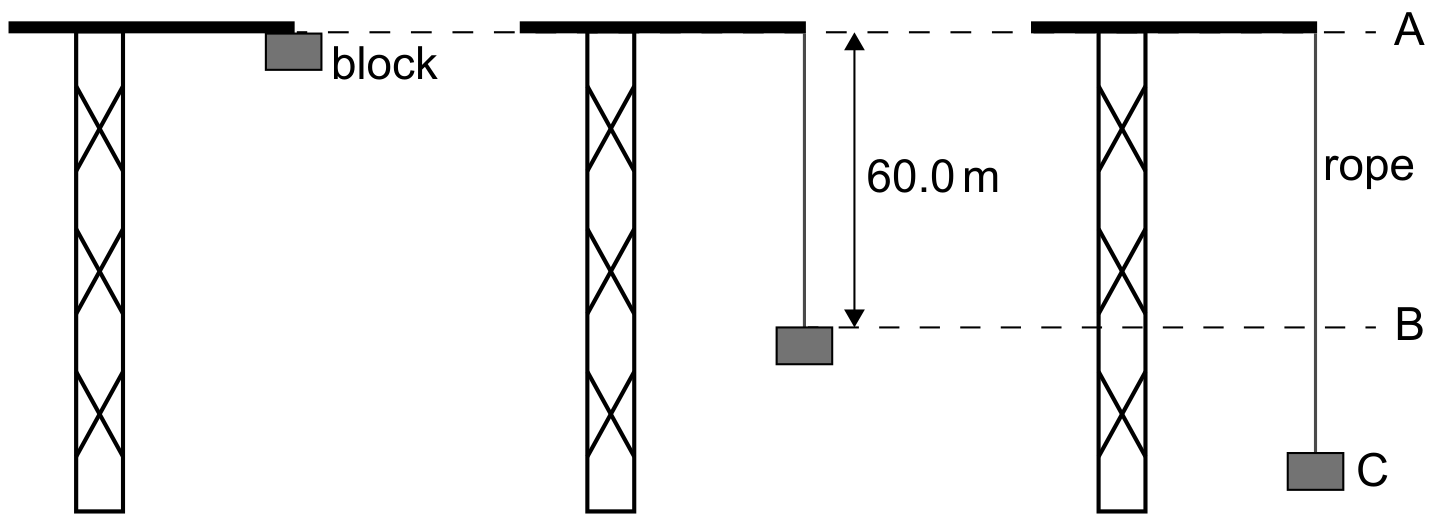
An elastic climbing rope is tested by fixing one end of the rope to the top of a crane. The other end of the rope is connected to a block which is initially at position A. The block is released from rest. The mass of the rope is negligible.

diagram not to scale

diagram not to scale

The unextended length of the rope is 60.0 m . From position A to position B, the block falls freely.

(a)

In another test, the block hangs in equilibrium at the end of the same elastic rope. The elastic constant of the rope is 400Nm1400 \mathrm{Nm}^{-1}. The block is pulled 3.50 m vertically below the equilibrium position and is then released from rest.

[ 4 ]
(i)

Calculate the time taken for the block to return to the equilibrium position for the first time.

[ 2 ]
(ii)

Calculate the speed of the block as it passes the equilibrium position.

[ 2 ]
(a)

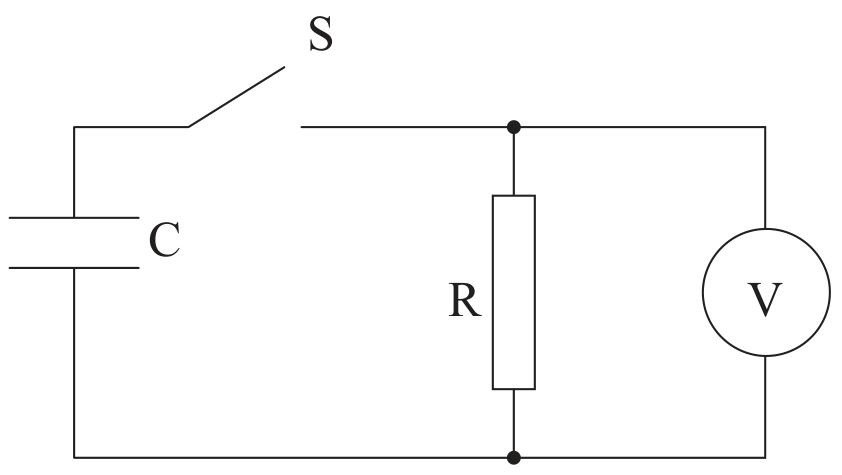
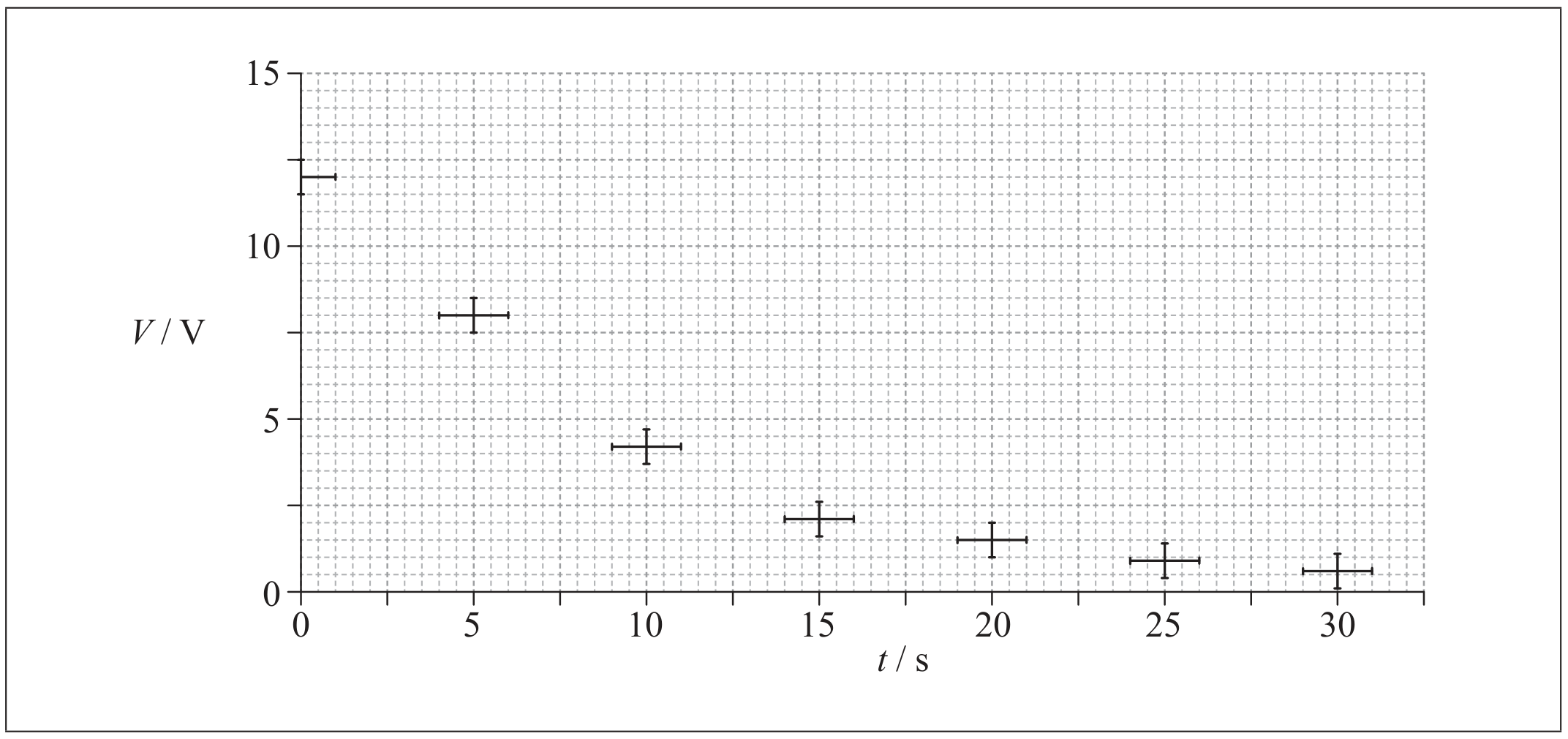
An experiment was undertaken to investigate one of the circuit properties of a capacitor. A capacitor C was connected via a switch S to a resistance R and a voltmeter V .

Question image

The initial potential difference across C was 12 V . The switch S was closed and the potential difference V across R was measured at various times t. The data collected, along with error bars, are shown plotted below.

Question image
[ 4 ]
(i)

It was hypothesized that the decay of the potential difference across the capacitor is exponential. Determine, using the graph, whether this hypothesis is true or not.

[ 4 ]
[Maximum number: 1]

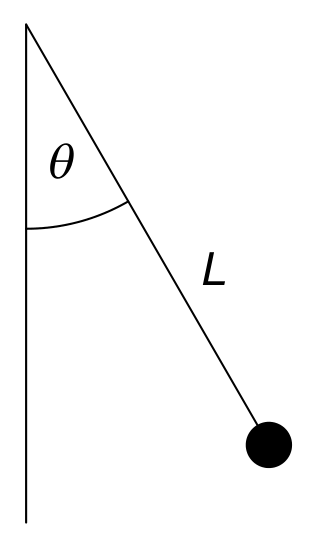
A pendulum is displaced by angle θ\theta and released from rest.

Question image

What is the initial acceleration of the pendulum?

A

zero

B

gsinθg \sin \theta

C

gcosθg \cos \theta

D

g

[Maximum number: 1]

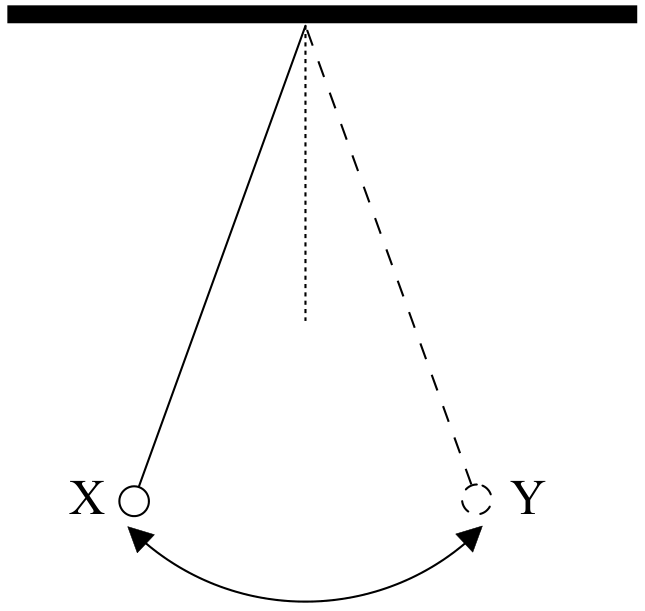
A pendulum swings back and forth in a circular arc between X and Y .

Question image

The pendulum bob is

A

always in equilibrium.

B

only in equilibrium at X and Y .

C

in equilibrium as it passes through the central position.

D

never in equilibrium.

(a)

Outline the conditions necessary for simple harmonic motion (SHM) to occur.

[ 2 ]
(b)

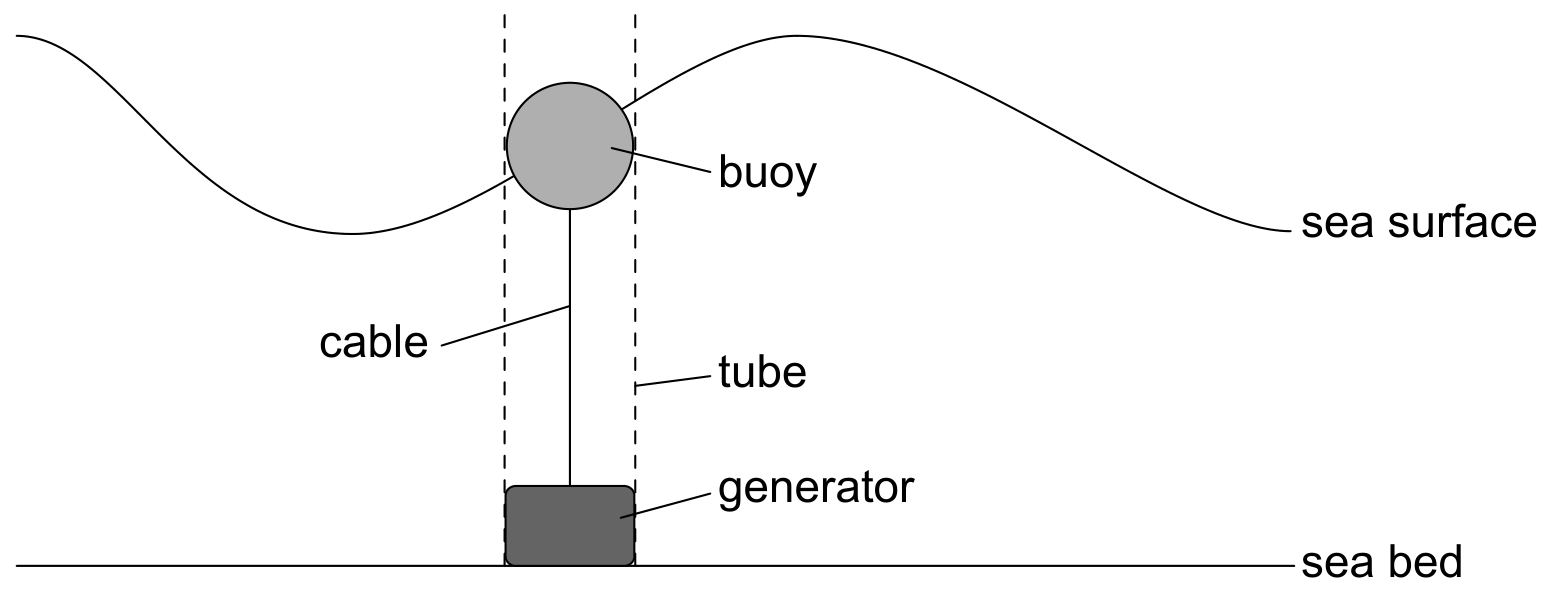
A buoy, floating in a vertical tube, generates energy from the movement of water waves on the surface of the sea. When the buoy moves up, a cable turns a generator on the sea bed producing power. When the buoy moves down, the cable is wound in by a mechanism in the generator and no power is produced.

Question image

The motion of the buoy can be assumed to be simple harmonic.

[ 3 ]
(i)

A wave of amplitude 4.3 m and wavelength 35 m , moves with a speed of 3.4 m s13.4 \mathrm{~m} \mathrm{~s}^{-1}. Calculate the maximum vertical speed of the buoy.

[ 3 ]
0