EduNinja

IB Physics HLD.2 Electric and magnetic fieldsQuestion Bank

Question 1

[Maximum number: 2]

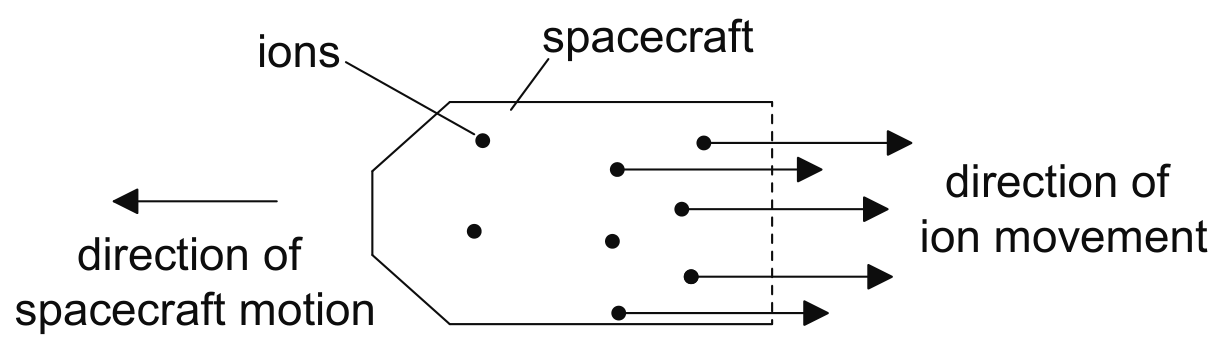
Ion-thrust engines can power spacecraft. In this type of engine, ions are created in a chamber and expelled from the spacecraft. The spacecraft is in outer space when the propulsion system is turned on. The spacecraft starts from rest.
Question image

The mass of ions ejected each second is 6.6×10⁶ kg6.6 \times 10^{-6} \mathrm{~kg} and the speed of each ion is 5.2×10⁴ m s15.2 \times 10^{4} \mathrm{~m} \mathrm{~s}^{-1}. The initial total mass of the spacecraft and its fuel is 740 kg . Assume that the ions travel away from the spacecraft parallel to its direction of motion.

Question 1(c)

(a)

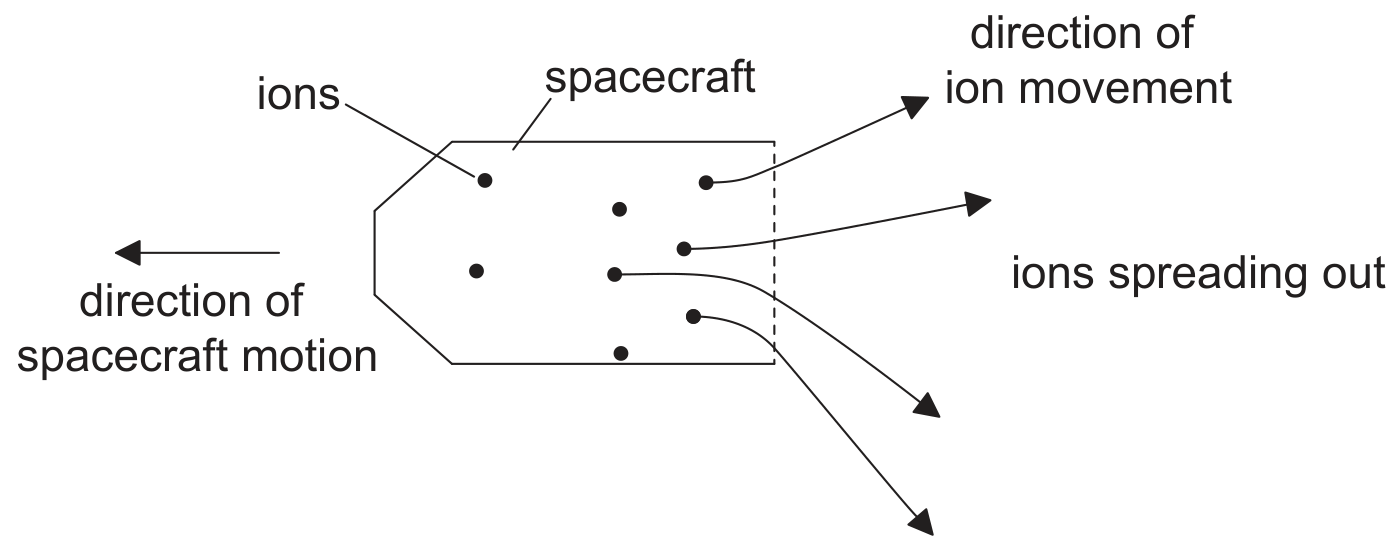
In practice, the ions leave the spacecraft at a range of angles as shown.
Question image
[ 2 ]

Question 1(c)(i)

(i)

Outline why the ions are likely to spread out.

[ 2 ]
Question 7

[Maximum number: 1]

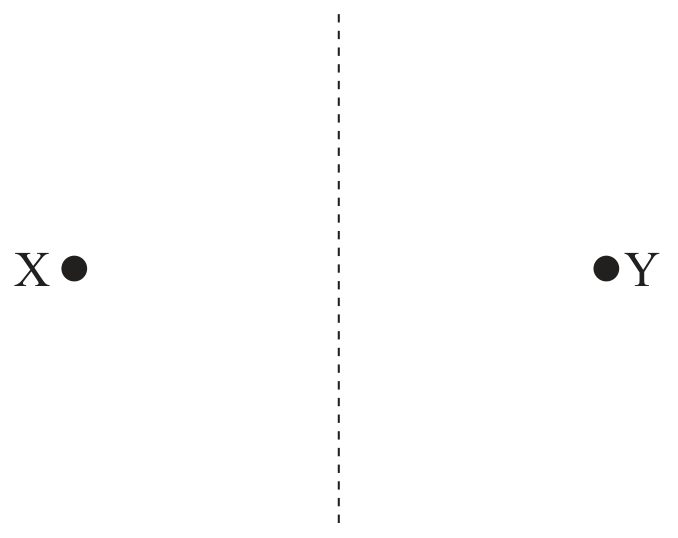
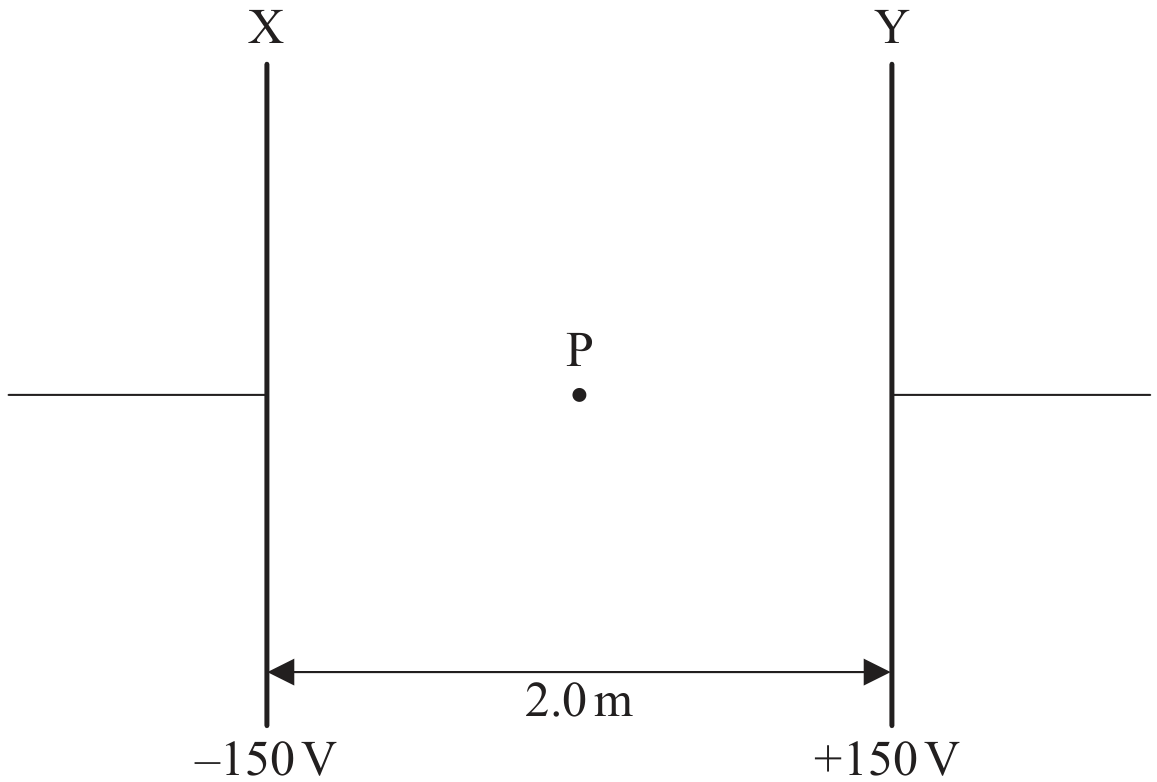
Two charged parallel metal plates, X and Y , are separated by a distance of 2.0 m.X2.0 \mathrm{~m} . \mathrm{X} is at a potential of -150 V and Y is at a potential of +150 V .

Question image

Point P is midway between X and Y . Which of the following gives the electric field strength at point P ?

A

150Vm1150 \mathrm{Vm}^{-1} to the right

B

150Vm1150 \mathrm{Vm}^{-1} to the left

C

300Vm1300 \mathrm{Vm}^{-1} to the right

D

300Vm1300 \mathrm{Vm}^{-1} to the left

Question 8

[Maximum number: 1]

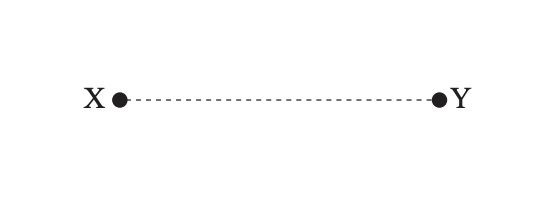
Which diagram shows a correct equipotential line due to two point charges X and Y of opposite sign?

A
Question image
B
Question image
C
Question image
D
Question image

Question 3

Question 3(a)

(a)

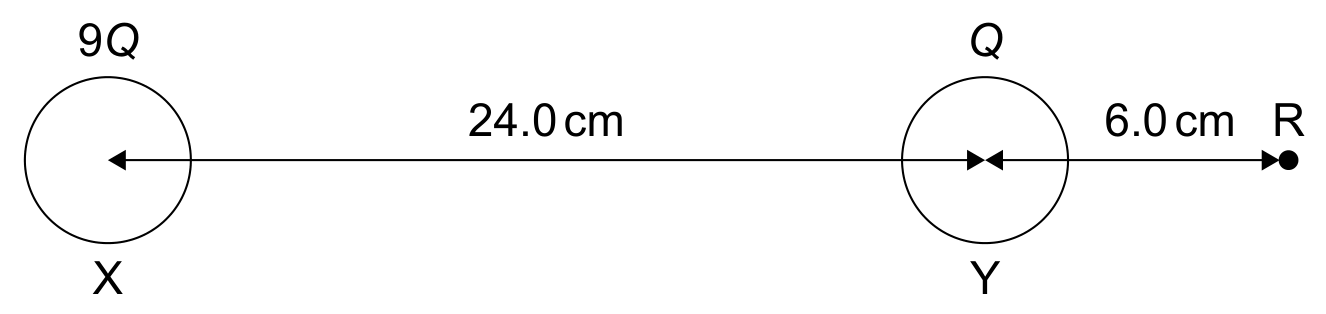
Two identical conducting spheres X and Y that carry positive charges are separated by a centre-to-centre distance of 24.0 cm in a vacuum. The charge on X is 9 Q and the charge on Y is Q. Point R is 6.0 cm from the centre of Y, as shown.

Question image

The resultant electric field at R is 32.6MNC132.6 \mathrm{MNC}^{-1}. Determine Q, giving an appropriate unit.

[ 2 ]

Question 3

[Maximum number: 5]

A vertical wall carries a uniform positive charge on its surface. This produces a uniform horizontal electric field perpendicular to the wall. A small, positively-charged ball is suspended in equilibrium from the vertical wall by a thread of negligible mass.

Question image

Question 3(d)

(a)

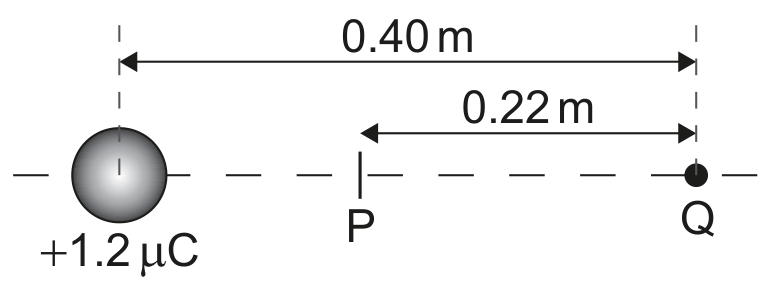
The centre of the ball, still carrying a charge of 1.2×10⁶C1.2 \times 10^{-6} \mathrm{C}, is now placed 0.40 m from a point charge Q . The charge on the ball acts as a point charge at the centre of the ball.
P is the point on the line joining the charges where the electric field strength is zero. The distance PQ is 0.22 m .

Question image
[ 5 ]

Question 3(d)(i)

(i)

Calculate the charge on Q. State your answer to an appropriate number of significant figures.

[ 3 ]

Question 3(d)(ii)

(ii)

Outline, without calculation, whether or not the electric potential at P is zero.

[ 2 ]

Question 14

[Maximum number: 1]

Electric field lines

A

can cross each other.

B

are parallel to equipotential surfaces.

C

are directed from negative to positive charges.

D

show field strength by their density.

Question 3

[Maximum number: 2]

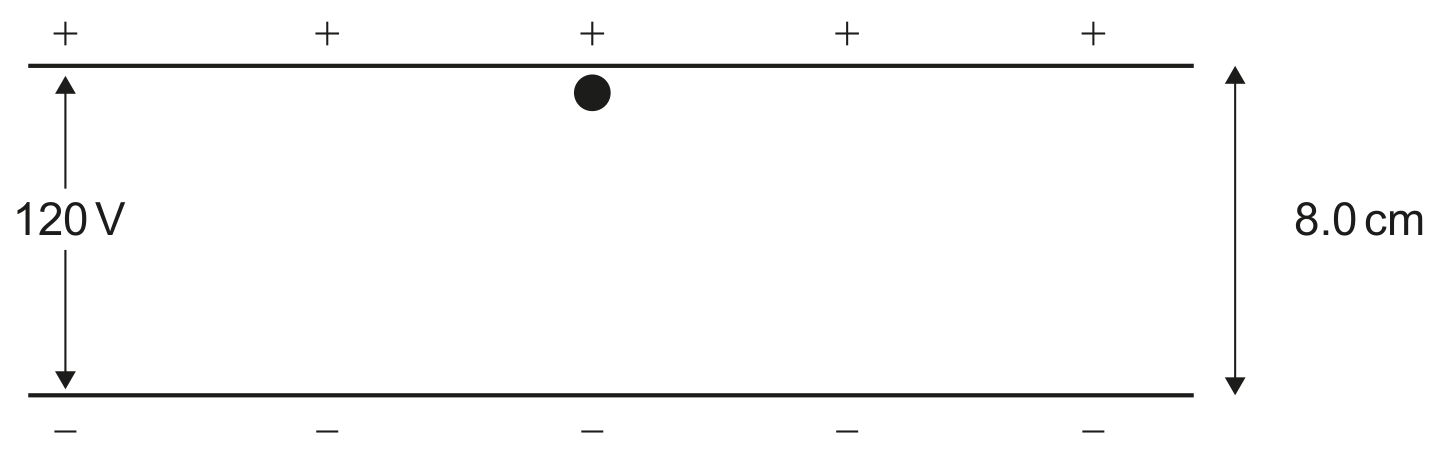
Two oppositely charged parallel plates are a distance 8.0 cm apart. The potential difference between the plates is 120 V . An alpha particle is placed on the positively charged plate and released from rest. Gravity is ignored.

Question image

Question 3(a)

(a)

Calculate the electric field between the plates.

[ 1 ]

Question 3(b)

Question 3(b)(iii)

(b)
(i)

State, in eV, the kinetic energy of the alpha particle when it arrives at the negative plate.

[ 1 ]

Question 15

[Maximum number: 1]

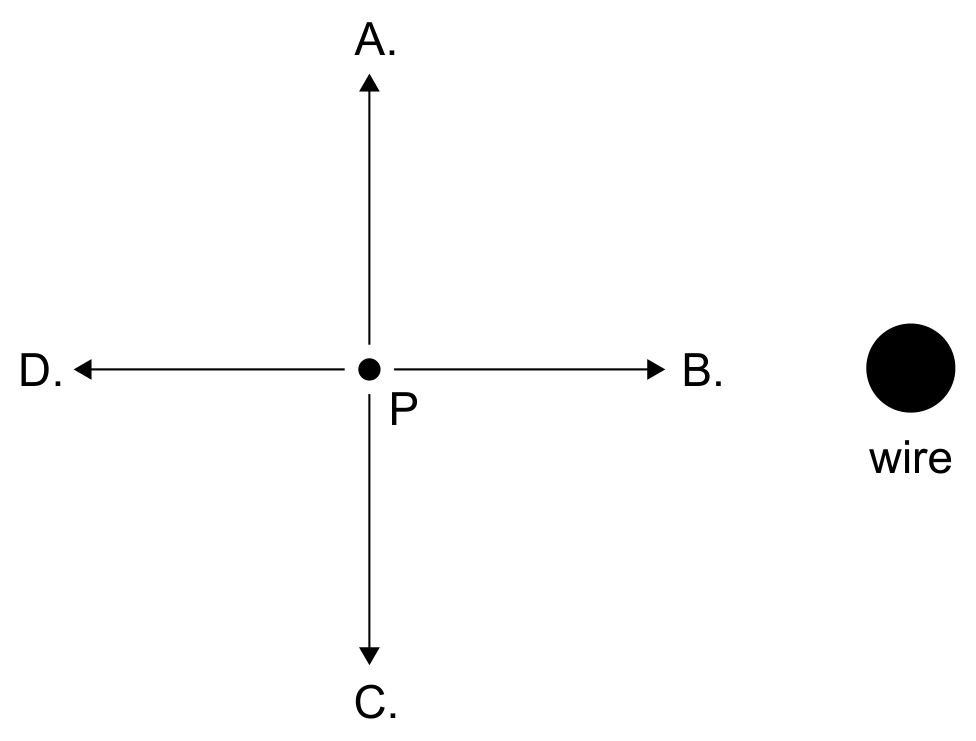
Electrons are moving in a long wire that is normal to the plane of the paper. The electrons move into the paper.

Question image

What is the direction of the magnetic field at point P ?

Question 15

[Maximum number: 1]

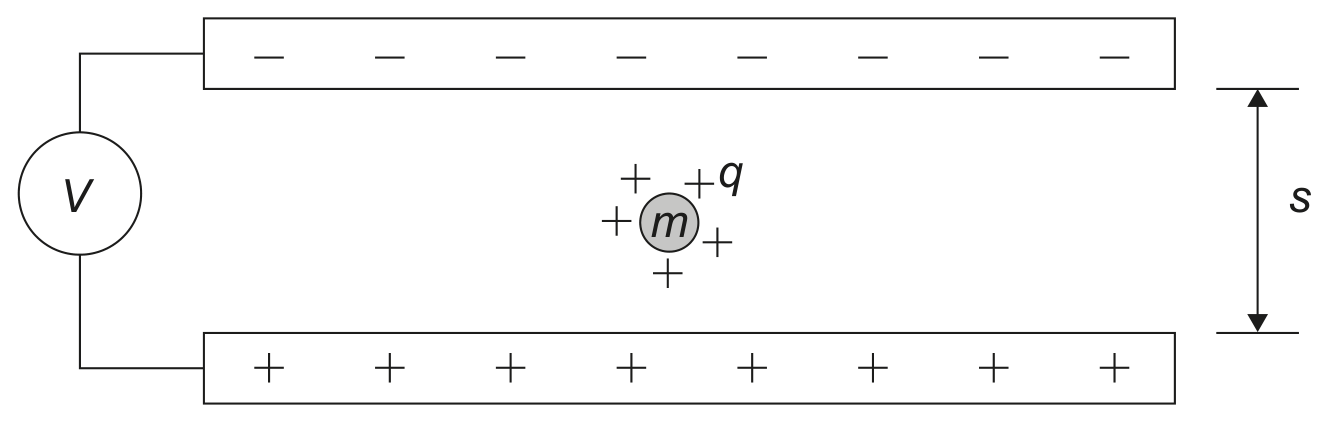
A sphere of mass m and positive charge q is at rest midway between two horizontal parallel plates separated by a distance s. The potential difference across the plates is V.

Question image

What is q ?

A

smgV\frac{s}{m g V}

B

Vmgs\frac{V}{m g s}

C

mgVs\frac{m g V}{s}

D

mgsV\frac{m g s}{V}

Question 15

[Maximum number: 1]

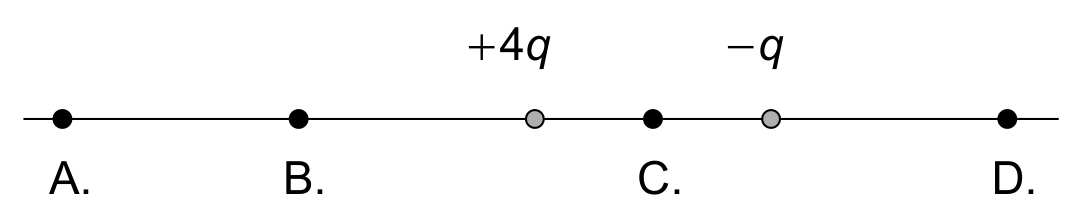
Two point charges of +4 q and -q are placed a fixed distance apart. Where is the electric field strength equal to zero?

Question image
0 selected