EduNinja

IB Physics HLC.4 Standing waves and resonanceQuestion Bank

Question 10

[Maximum number: 1]

Which of the following gives the conditions for maximum amplitude in forced, but damped, oscillations?

Driving frequency

Damping

greater than natural frequency

as large as possible

equal to natural frequency

as large as possible

greater than natural frequency

as small as possible

equal to natural frequency

as small as possible
Question 2

[Maximum number: 6]

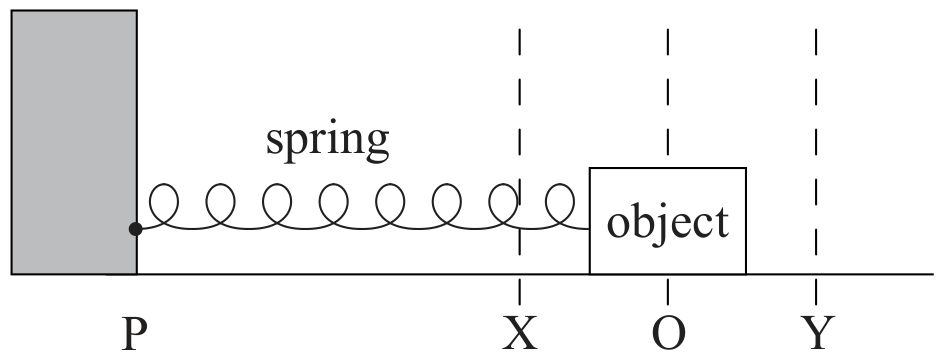
This question is about a mass on a spring.

An object is placed on a frictionless surface and attached to a light horizontal spring.

Question image

The other end of the spring is attached to a stationary point P . Air resistance is negligible. The equilibrium position is at O . The object is moved to position Y and released.

Question 2(b)

(a)

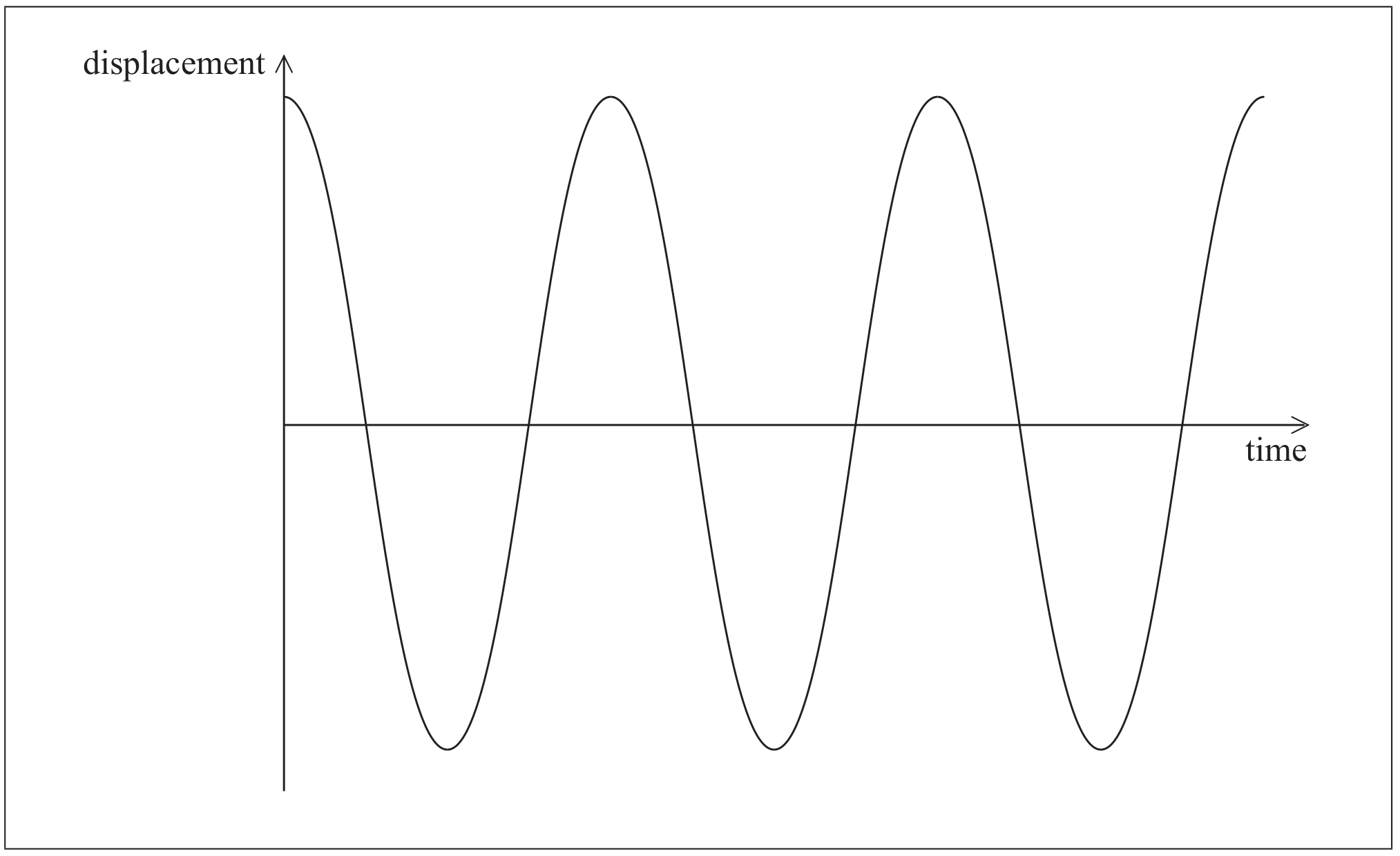
The sketch graph below shows how the displacement of the object from point O varies with time over three time periods.

Question image
[ 2 ]

Question 2(b)(iii)

(i)

Sketch on the same axes a graph of how the displacement varies with time if a small frictional force acts on the object.

[ 2 ]

Question 2(c)

(b)

Point P now begins to move from side to side with a small amplitude and at a variable driving frequency f. The frictional force is still small.

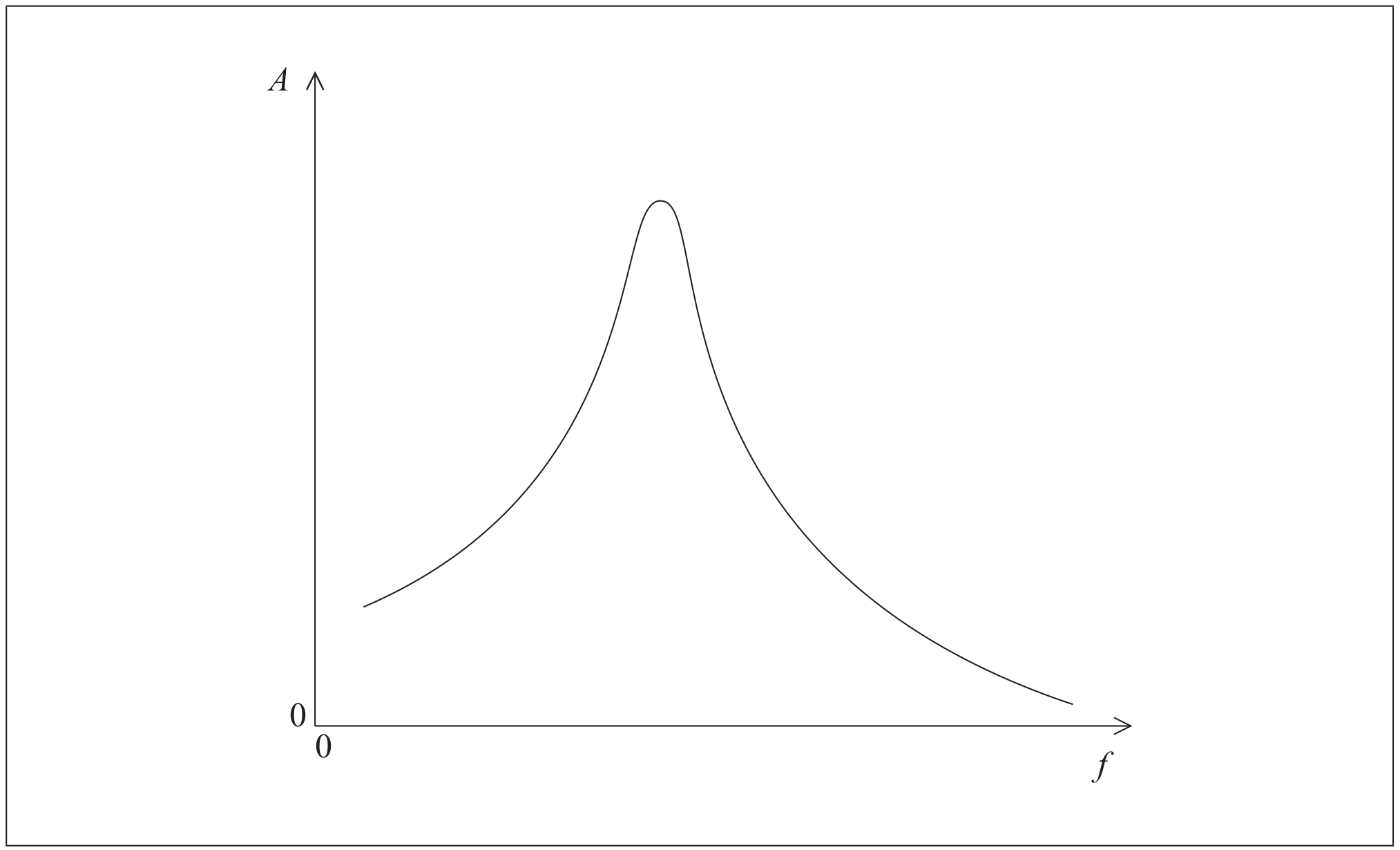
At each value of f, the object eventually reaches a constant amplitude A.
The graph shows the variation with f of A.

Question image
[ 4 ]

Question 2(c)(i)

(i)

With reference to resonance and resonant frequency, comment on the shape of the graph.

[ 2 ]

Question 2(c)(ii)

(ii)

On the same axes, draw a graph to show the variation with f of A when the frictional force acting on the object is increased.

[ 2 ]

Question 11

[Maximum number: 1]

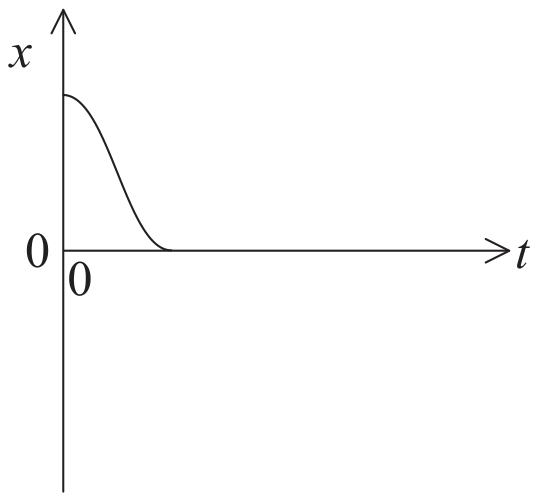
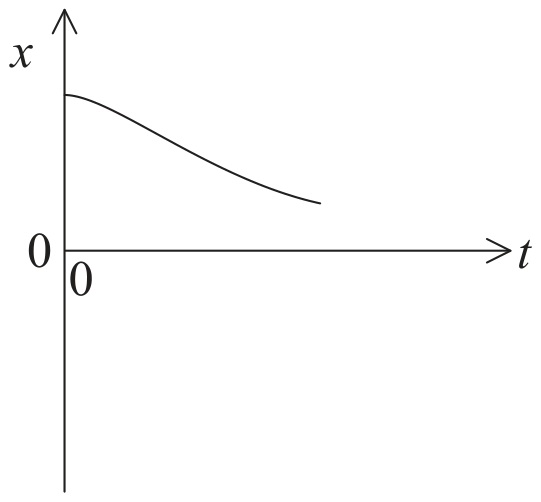
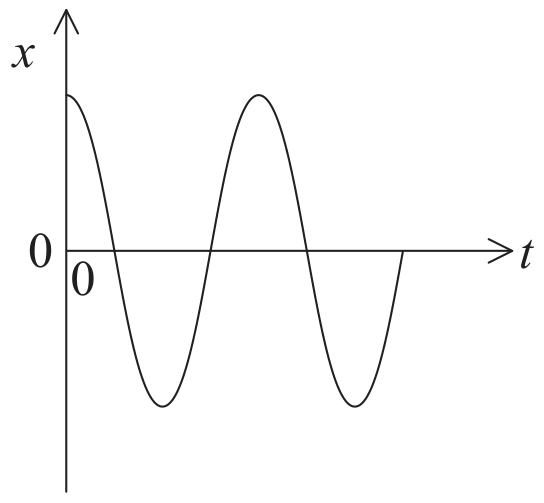
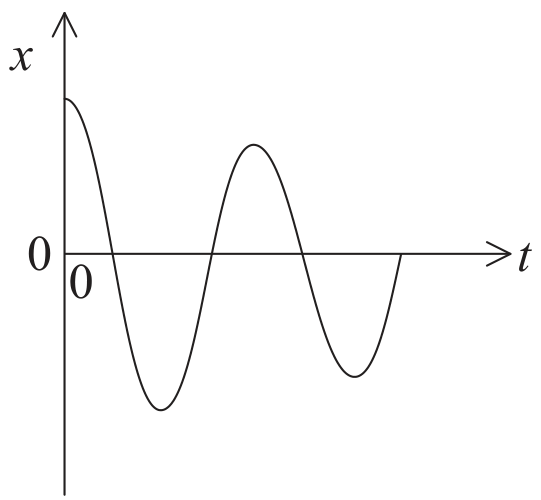
Which graph of displacement x against time t represents the motion of a critically damped body?

A
Question image
B
Question image
C
Question image
D
Question image

Question 11

[Maximum number: 1]

A pipe containing air is closed at one end and open at the other. The third harmonic standing wave for this pipe has a frequency of 150 Hz .

What other frequency is possible for a standing wave in this pipe?

A

25 Hz

B

50 Hz

C

75 Hz

D

300 Hz

Question 11

[Maximum number: 1]

The natural frequency of vibration of a system

A

is the frequency at which it oscillates when it is driven by another system.

B

is the frequency at which it oscillates when it is not driven by another system.

C

depends on the damping in the system.

D

depends on the amplitude of the oscillation of the system.

Question 2

[Maximum number: 4]

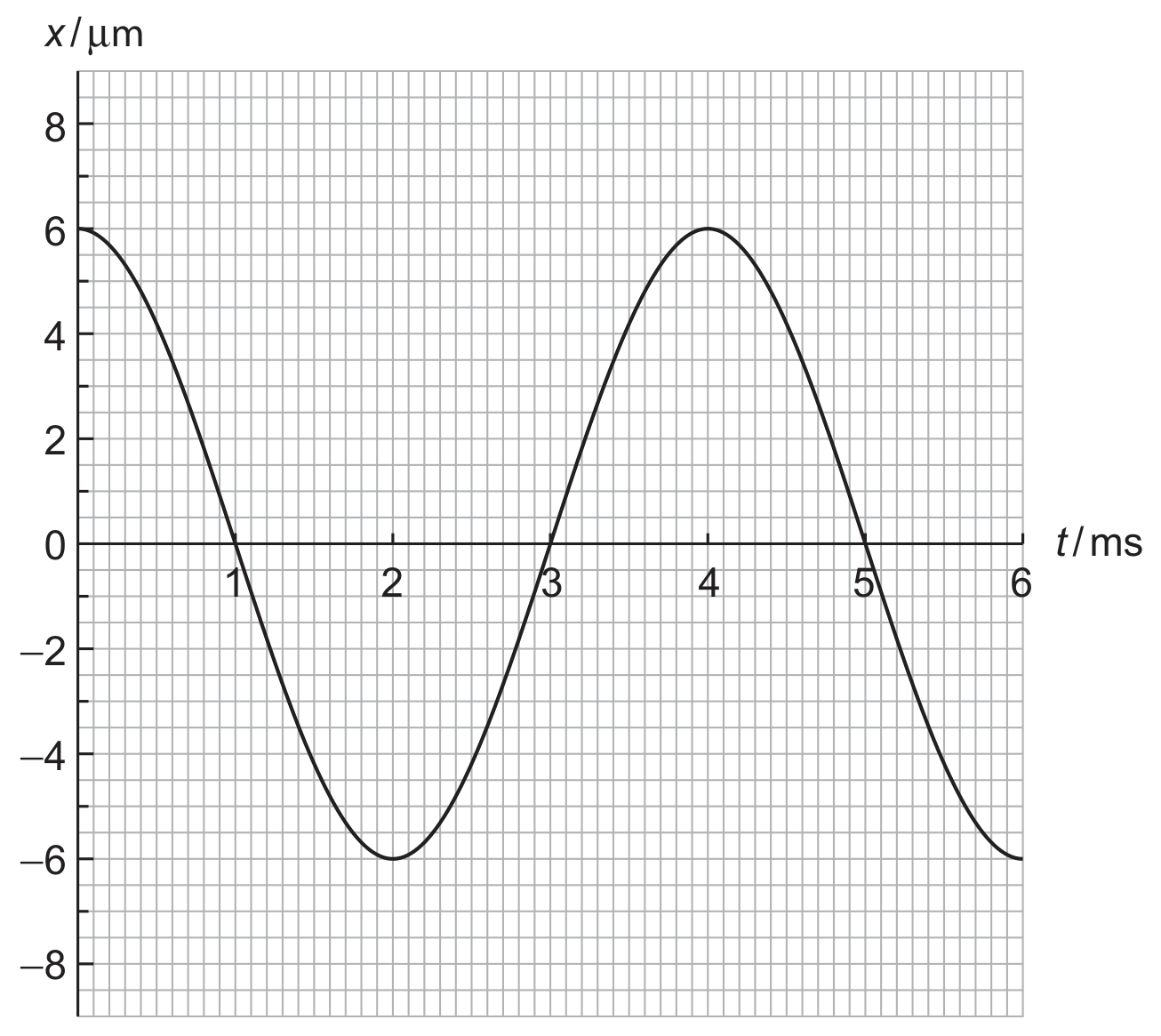
A longitudinal wave travels in a medium with speed 340 ms1340 \mathrm{~ms}^{-1}. The graph shows the variation with time t of the displacement x of a particle P in the medium. Positive displacements on the graph correspond to displacements to the right for particle P .

Question image

Question 2(d)

(a)

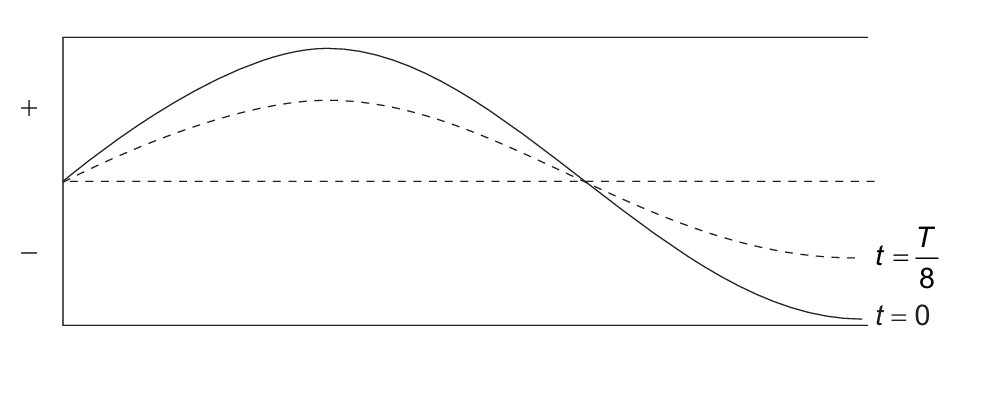
A standing sound wave is established in a tube that is closed at one end and open at the other end. The period of the wave is T. The diagram represents the standing wave at t=0 and at t=T8t=\frac{T}{8}. The wavelength of the wave is 1.20 m . Positive displacements mean displacements to the right.

Question image
[ 4 ]

Question 2(d)(i)

(i)

Calculate the length of the tube.

[ 1 ]

Question 2(d)(ii)

(ii)

A particle in the tube has its equilibrium position at the open end of the tube. State and explain the direction of the velocity of this particle at time t=T8t=\frac{T}{8}

[ 2 ]

Question 2(d)(iii)

(iii)

Draw on the diagram the standing wave at time t=T4t=\frac{T}{4}

[ 1 ]

Question 12

[Maximum number: 1]

A transverse standing wave is established on a string. Consider the following phase differences.

I. 00^{\circ}
II. 9090^{\circ}
III. 180180^{\circ}

Which of the following gives all the possible phase differences between the oscillations of any two particles in the standing wave?

A

I only

B

I and III only

C

II and III only

D

I, II and III

Question 12

[Maximum number: 1]

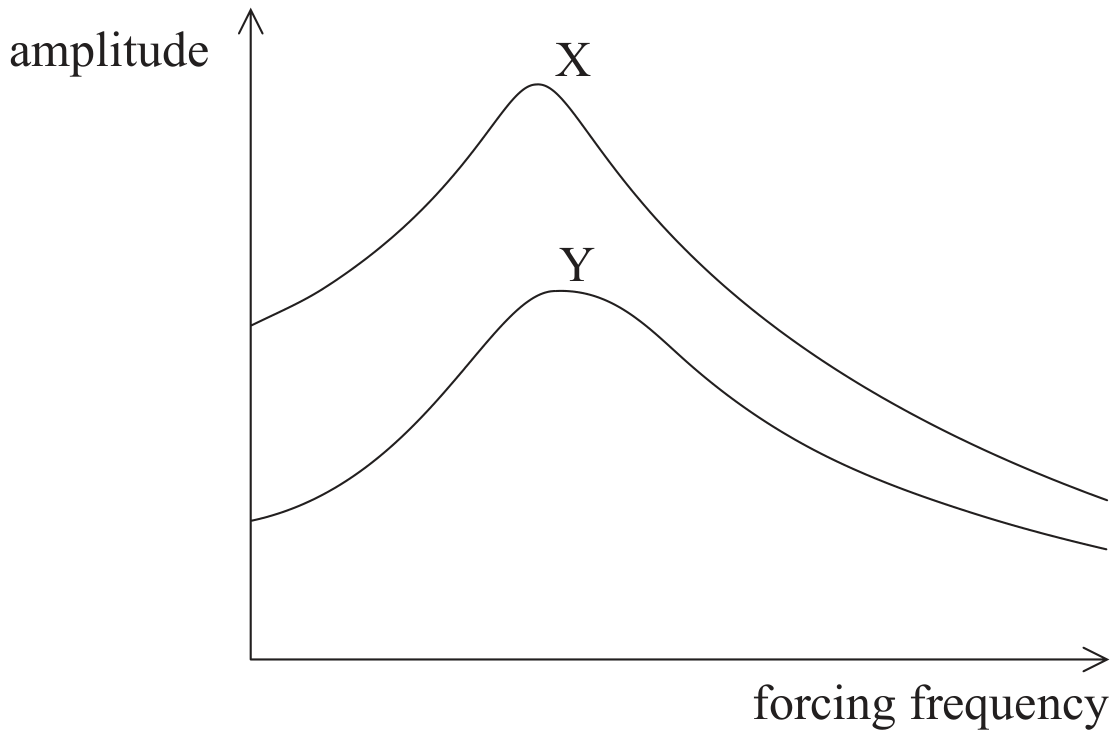
Two oscillators X and Y are undergoing forced oscillations each at a frequency close to the natural frequency of each oscillator. The graph shows the variation of amplitude with forcing frequency for each oscillator.

Question image

Which of the following correctly identifies the system that has the greater amount of damping and the greater natural frequency of oscillation?

Greater amount of damping

Greater natural frequency

X

X

X

Y

Y

X

Y

Y

Question 12

[Maximum number: 1]

A vibrating string is fixed at both ends. The frequency of the second harmonic of a stationary wave generated on the string is 240 Hz .

What is the frequency of the fifth harmonic?

A

96 Hz

B

360 Hz

C

600 Hz

D

1200 Hz

Question 3

[Maximum number: 2]

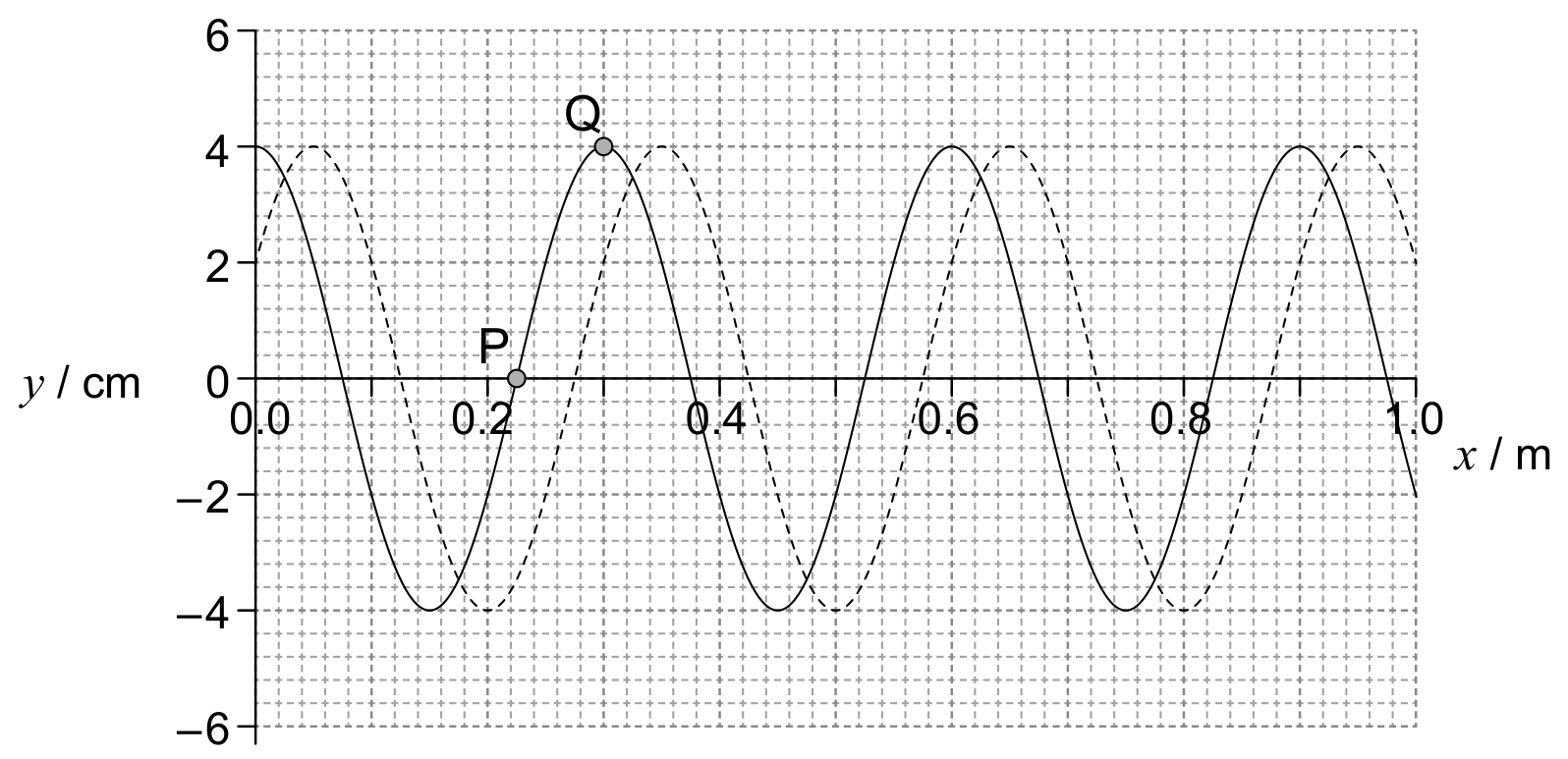
The solid line in the graph shows the variation with distance x of the displacement y of a travelling wave at t=0. The dotted line shows the wave 0.20 ms later. The period of the wave is longer than 0.20 ms .

Question image

Question 3(c)

(a)

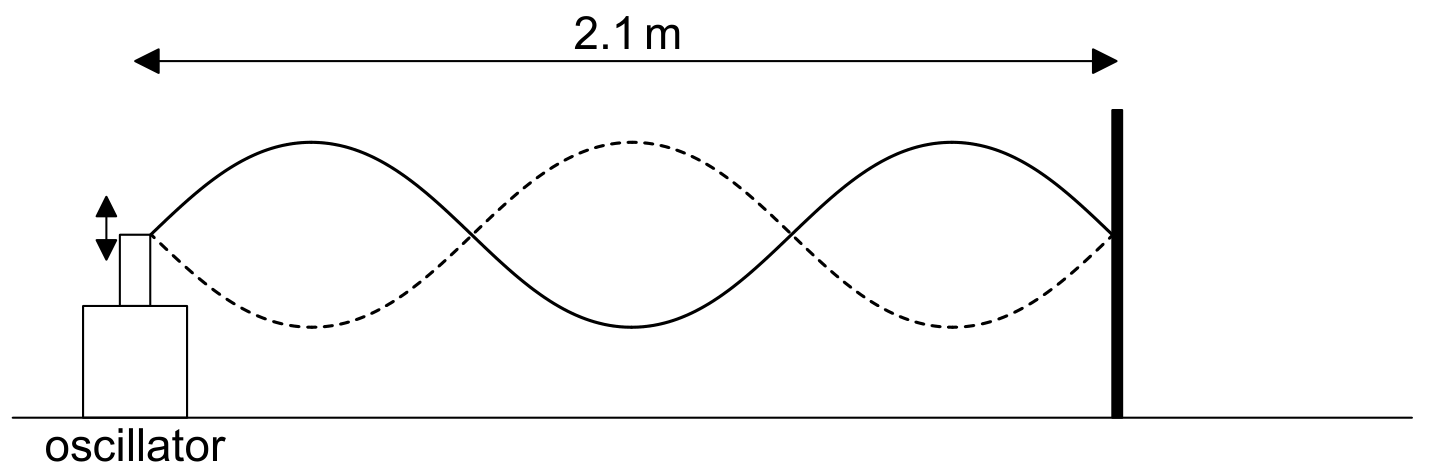
One end of a string is attached to an oscillator and the other is fixed to a wall. When the frequency of the oscillator is 360 Hz the standing wave shown is formed on the string.

Question image

Point X (not shown) is a point on the string at a distance of 10 cm from the oscillator.

[ 2 ]

Question 3(c)(i)

(i)

State the number of all other points on the string that have the same amplitude and phase as X.

[ 1 ]

Question 3(c)(ii)

(ii)

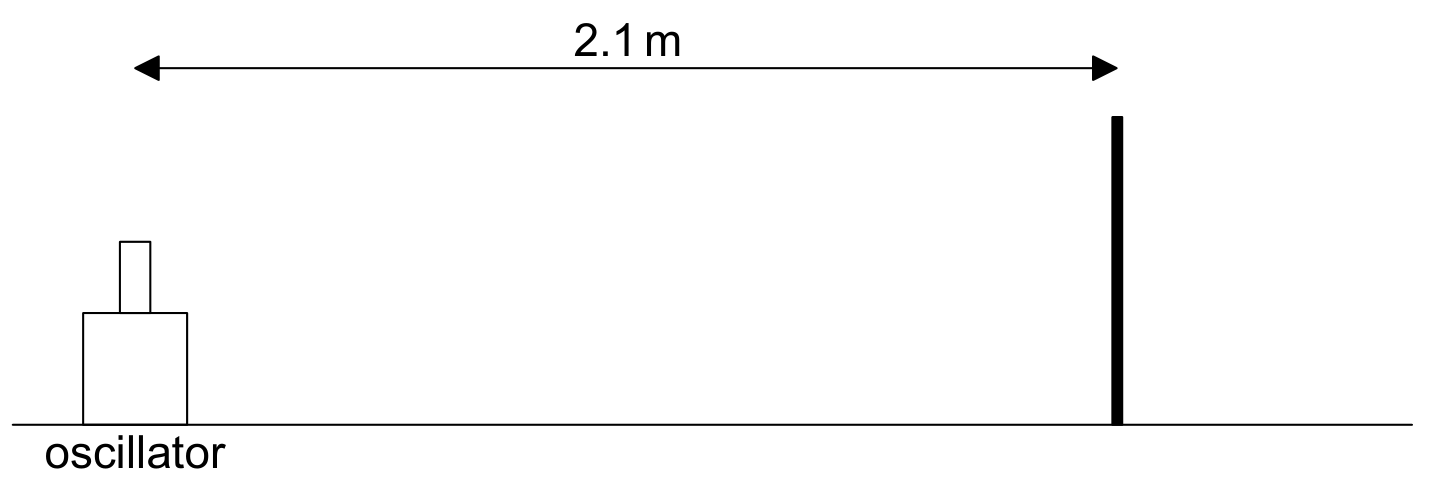
The frequency of the oscillator is reduced to 120 Hz . On the diagram, draw the standing wave that will be formed on the string.

Question image
[ 1 ]
0 selected