EduNinja

IB Physics HLC.1 Simple harmonic motionQuestion Bank

Question 1

Question 1(d)

(a)

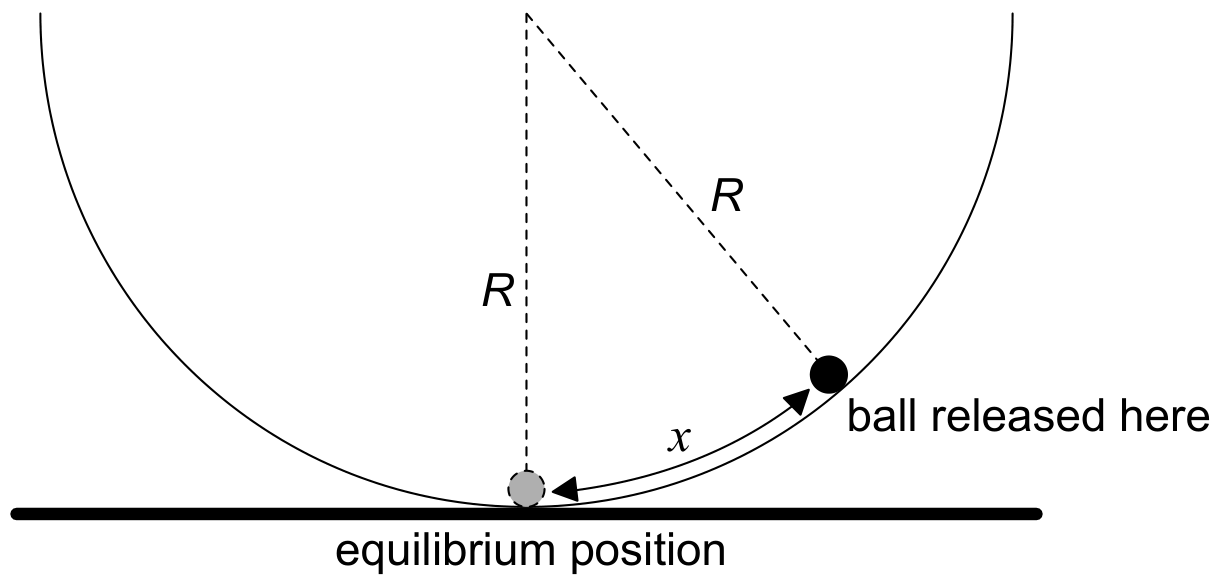
The ball is now displaced through a small distance x from the bottom of the bowl and is then released from rest.
Question image

The magnitude of the force on the ball towards the equilibrium position is given by

mgxR\frac{m g x}{R}

where R is the radius of the bowl.

[ 6 ]

Question 1(d)(i)

(i)

Outline why the ball will perform simple harmonic oscillations about the equilibrium position.

[ 1 ]

Question 1(d)(ii)

(ii)

Show that the period of oscillation of the ball is about 6 s .

[ 2 ]

Question 1(d)(iii)

(iii)

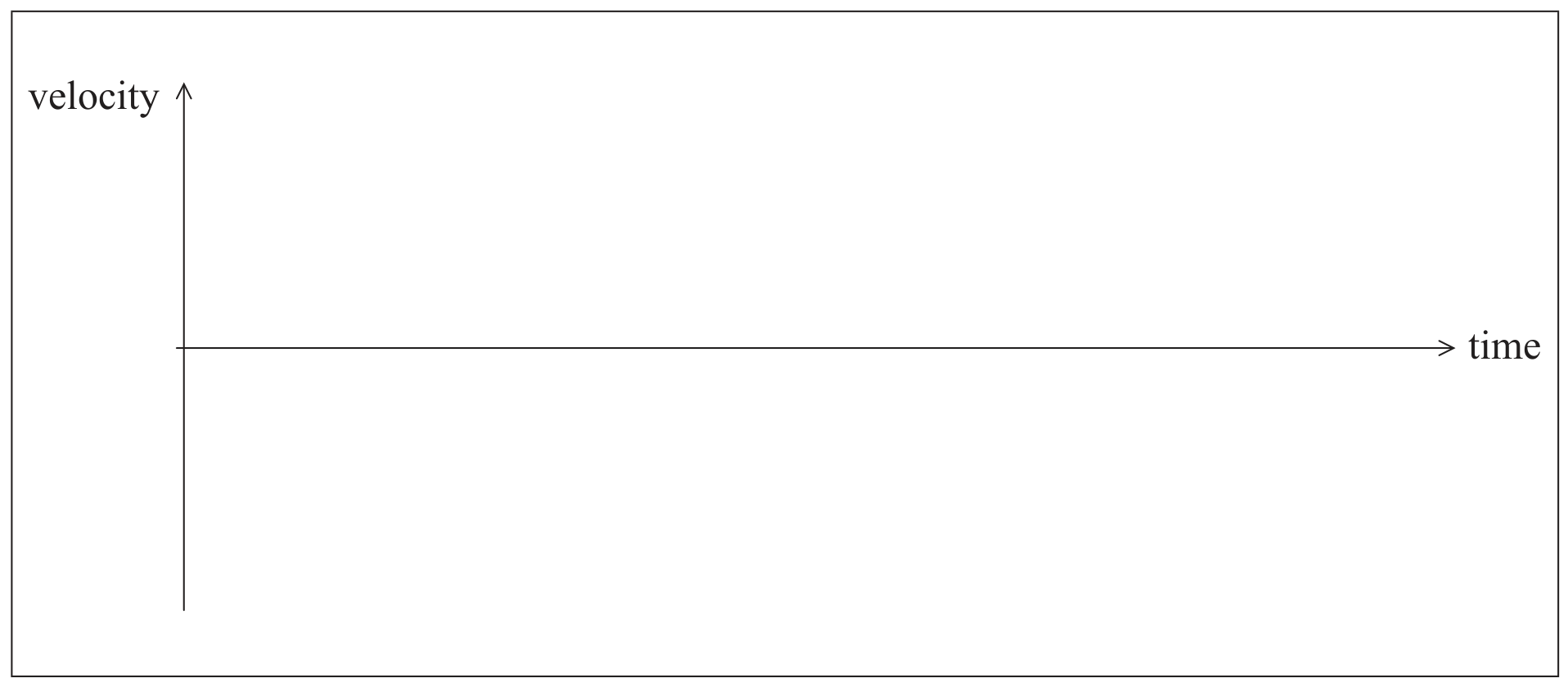
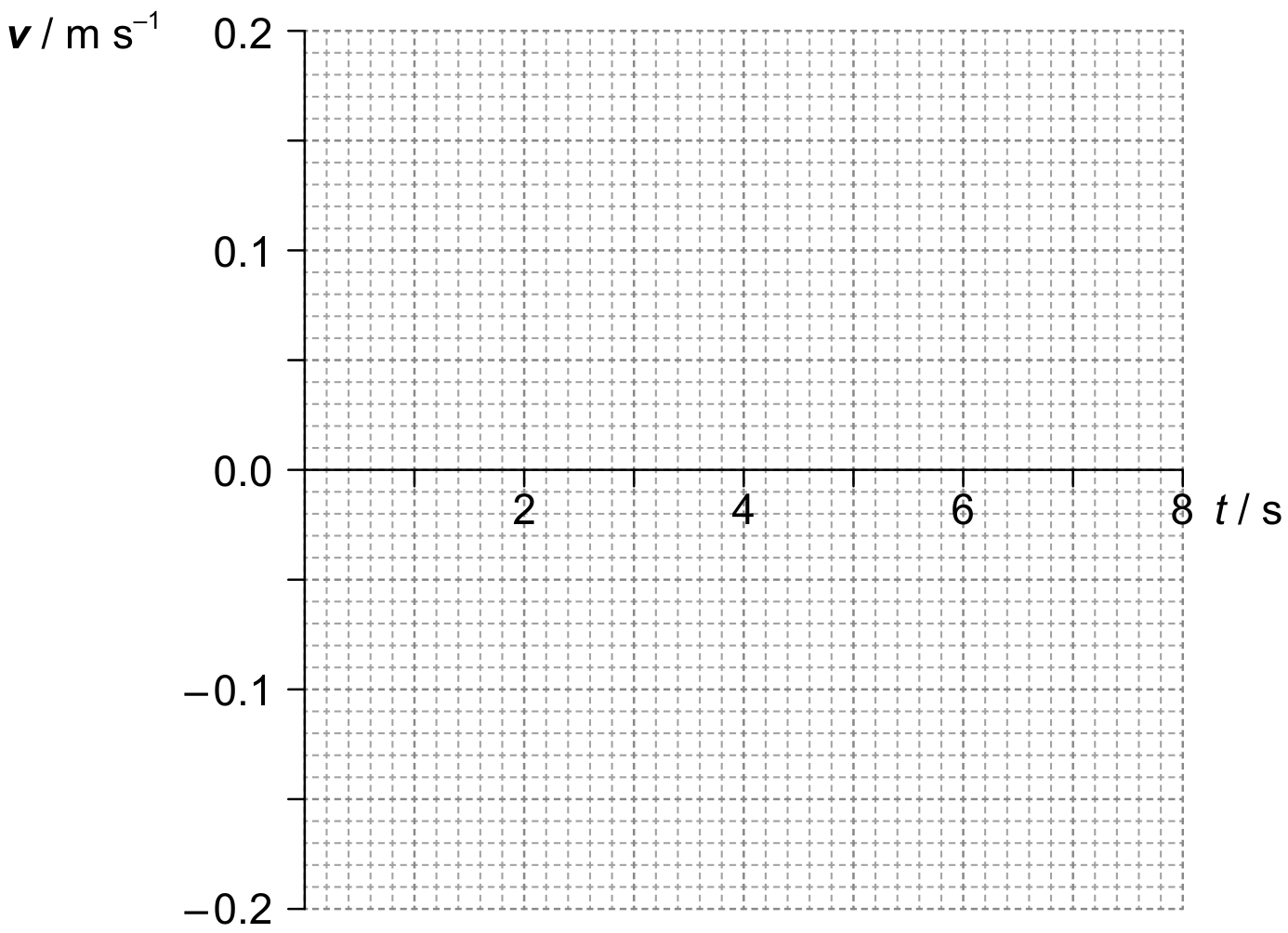
The amplitude of oscillation is 0.12 m . On the axes, draw a graph to show the variation with time t of the velocity v of the ball during one period.
Question image
[ 3 ]

Question 1

[Maximum number: 4]

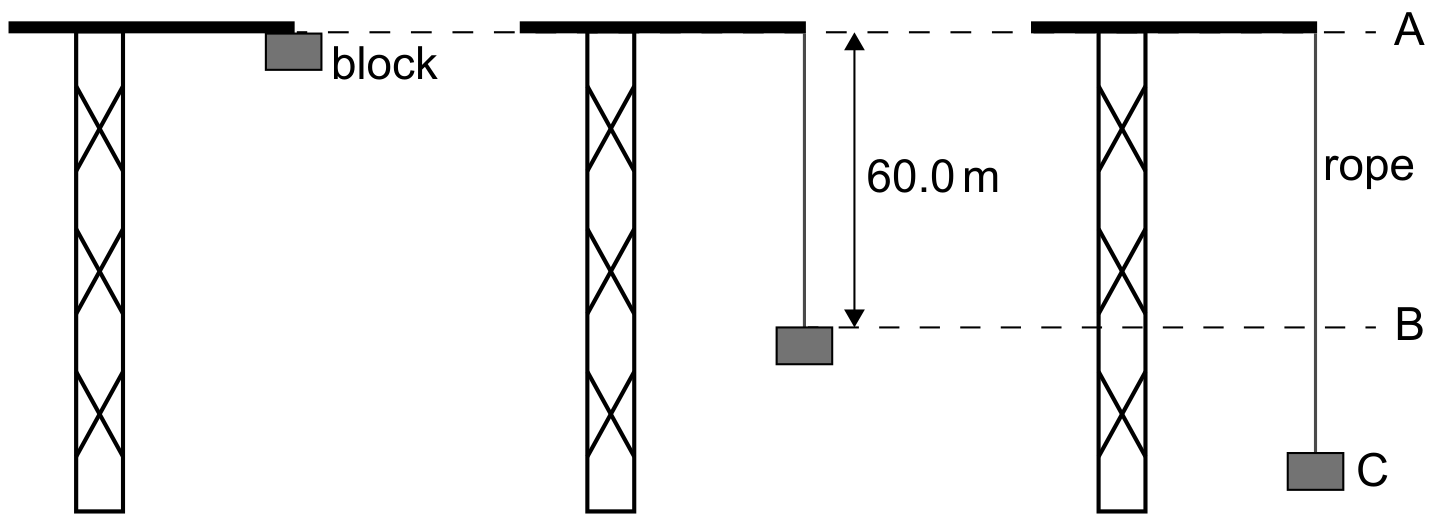
An elastic climbing rope is tested by fixing one end of the rope to the top of a crane. The other end of the rope is connected to a block which is initially at position A. The block is released from rest. The mass of the rope is negligible.

diagram not to scale

diagram not to scale

The unextended length of the rope is 60.0 m . From position A to position B, the block falls freely.

Question 1(e)

(a)

In another test, the block hangs in equilibrium at the end of the same elastic rope. The elastic constant of the rope is 400Nm1400 \mathrm{Nm}^{-1}. The block is pulled 3.50 m vertically below the equilibrium position and is then released from rest.

[ 4 ]

Question 1(e)(i)

(i)

Calculate the time taken for the block to return to the equilibrium position for the first time.

[ 2 ]

Question 1(e)(ii)

(ii)

Calculate the speed of the block as it passes the equilibrium position.

[ 2 ]

Question 2

Question 2(a)

(a)

Outline the conditions necessary for simple harmonic motion (SHM) to occur.

[ 2 ]

Question 2(b)

(b)

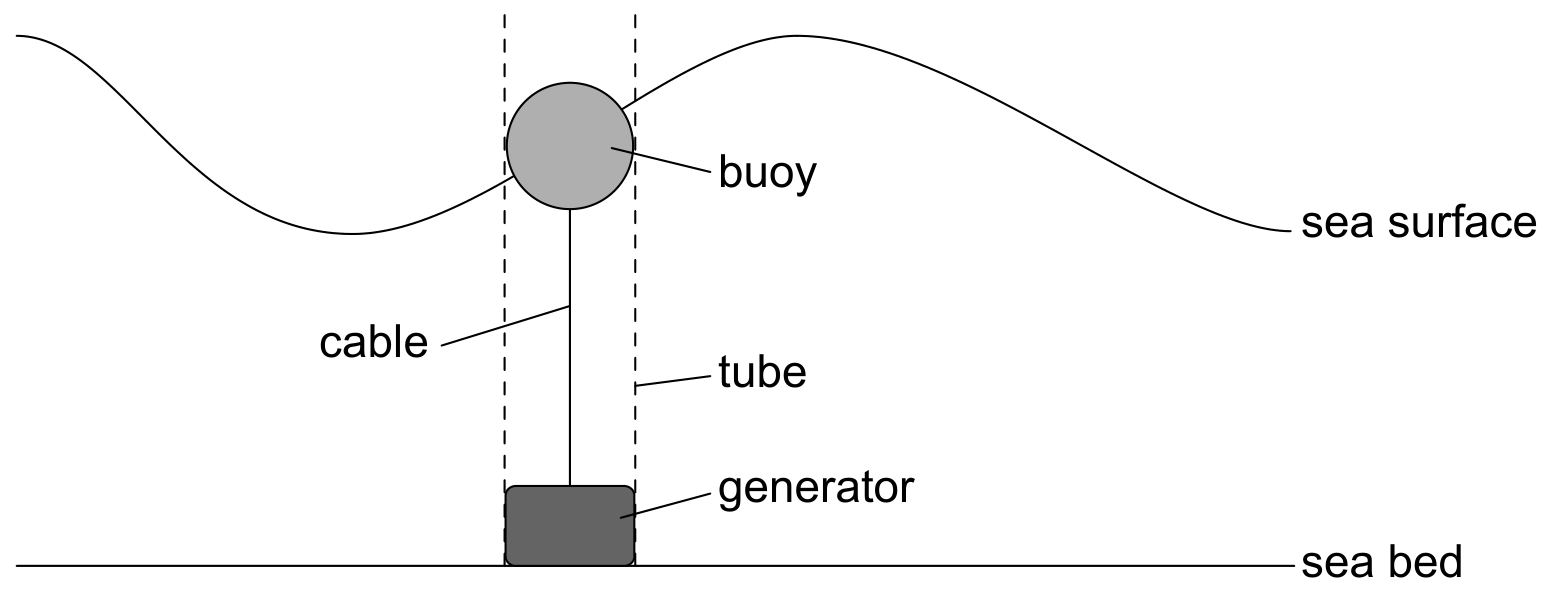
A buoy, floating in a vertical tube, generates energy from the movement of water waves on the surface of the sea. When the buoy moves up, a cable turns a generator on the sea bed producing power. When the buoy moves down, the cable is wound in by a mechanism in the generator and no power is produced.

Question image

The motion of the buoy can be assumed to be simple harmonic.

[ 3 ]

Question 2(b)(i)

(i)

A wave of amplitude 4.3 m and wavelength 35 m , moves with a speed of 3.4 m s13.4 \mathrm{~m} \mathrm{~s}^{-1}. Calculate the maximum vertical speed of the buoy.

[ 3 ]

Question B2

[Maximum number: 5]

B2. This question is in two parts. Part 1 is about simple harmonic motion and the superposition of waves. Part 2 is about thermodynamics.

Part 1 Simple harmonic motion and the superposition of waves
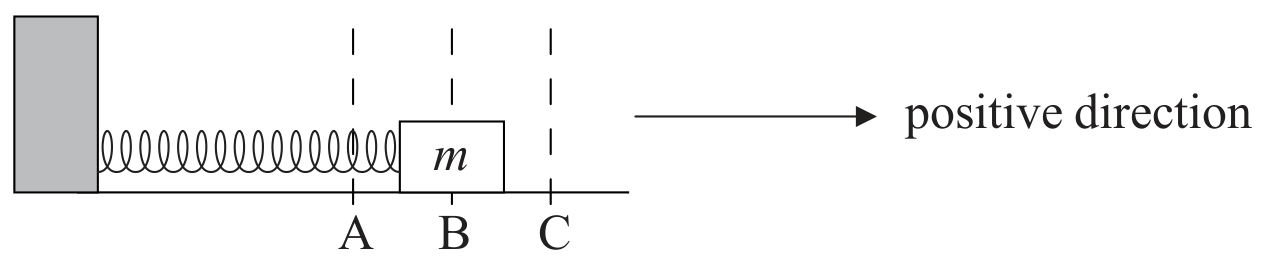
An object of mass m is placed on a frictionless surface and attached to a light horizontal spring. The other end of the spring is fixed.

Question image

The equilibrium position is at B . The direction B to C is taken to be positive. The object is released from position A and executes simple harmonic motion between positions A and C .
(a) Define simple harmonic motion.
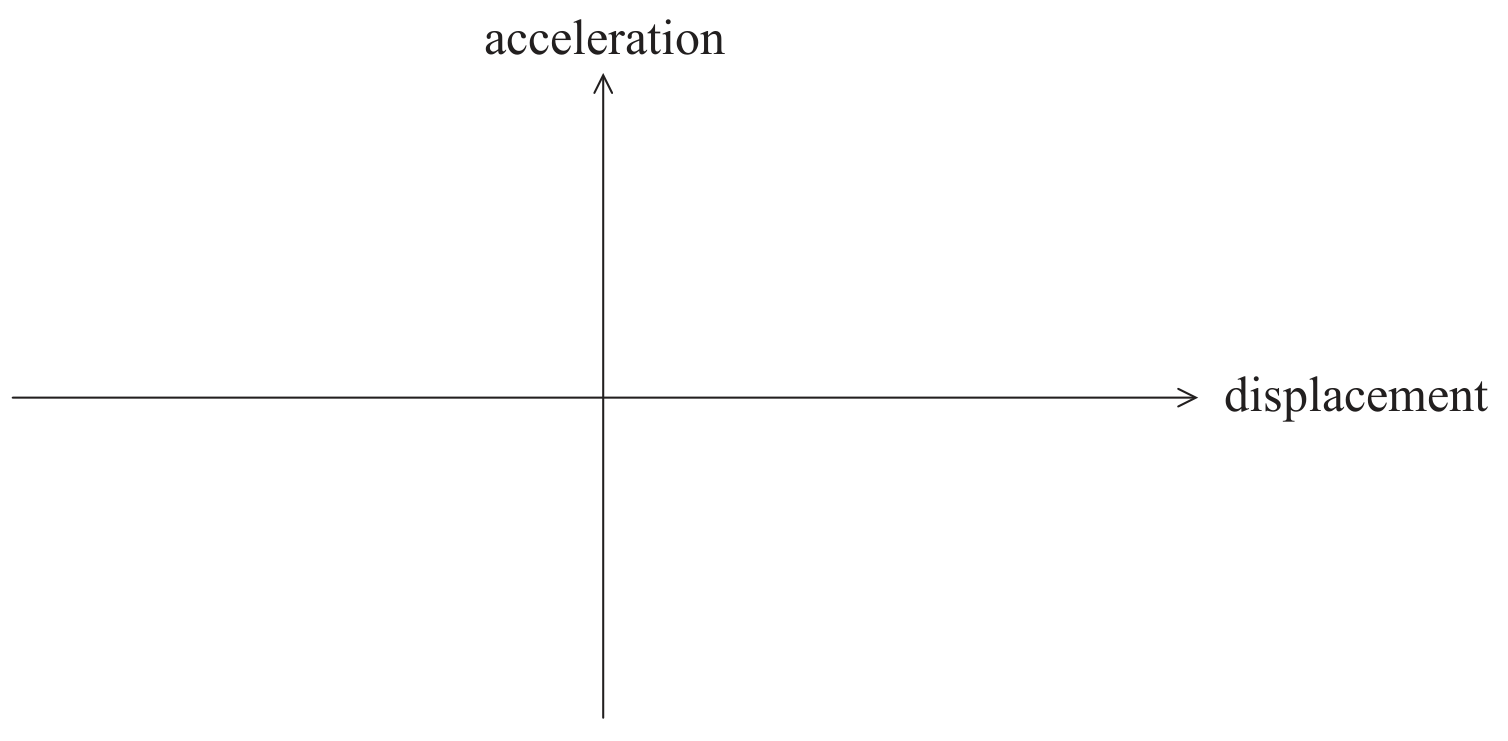
(b) (i) On the axes below, sketch a graph to show how the acceleration of the mass varies with displacement from the equilibrium position B .

Question image

(ii) On your graph, label the points that correspond to the positions A, B and C .
(c) (i) On the axes below, sketch a graph to show how the velocity of the mass varies with time from the moment of release from A until the mass returns to A for the first time.

Question image

(ii) On your graph, label the points that correspond to the positions A, B and C .
(d) The period of oscillation is 0.20 s and the distance from A to B is 0.040 m . Determine the maximum speed of the mass.

```
|
```
(e) A long spring is stretched so that it has a length of 10.0 m . Both ends are made to oscillate with simple harmonic motion so that transverse waves of equal amplitude but different frequency are generated.

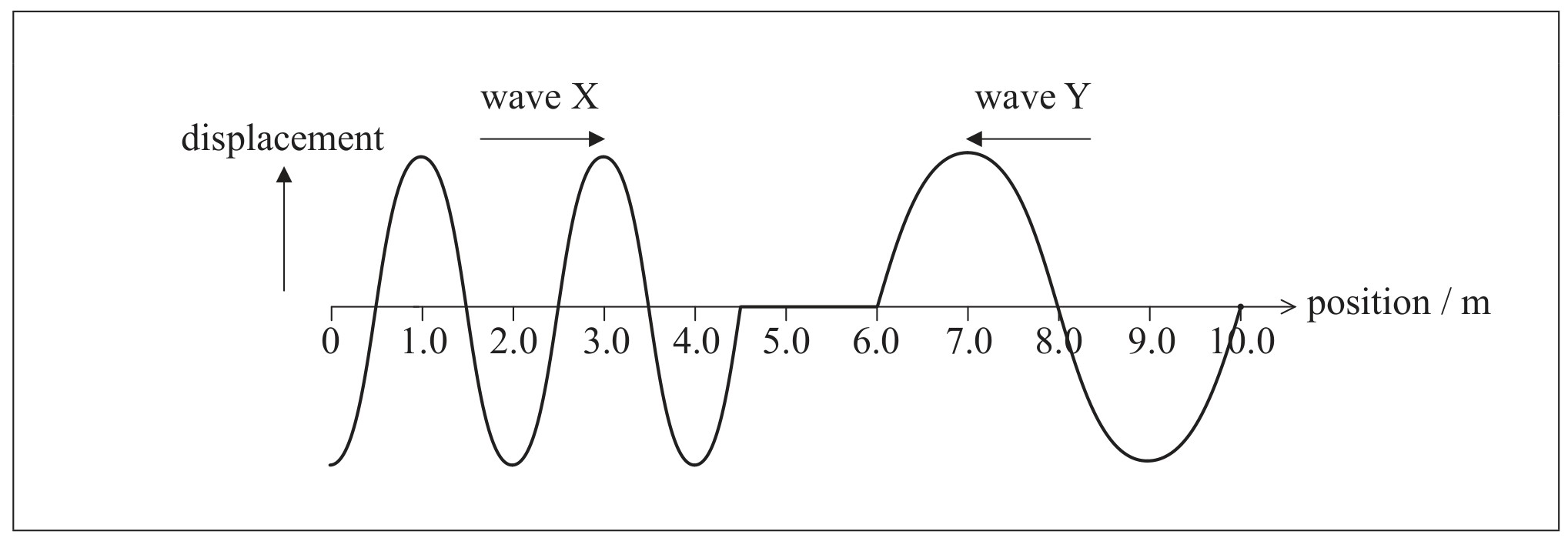
Wave X, travelling from left to right, has wavelength 2.0 m , and wave Y, travelling from right to left, has wavelength 4.0 m . Both waves move along the spring at speed 10.0 m s110.0 \mathrm{~m} \mathrm{~s}^{-1}.

The diagram below shows the waves at an instant in time.

Question image

(i) State the principle of superposition as applied to waves.
(ii) By drawing on the diagram or otherwise, calculate the position at which the resultant wave will have maximum displacement 0.20 s later.
Part 2 Thermodynamics
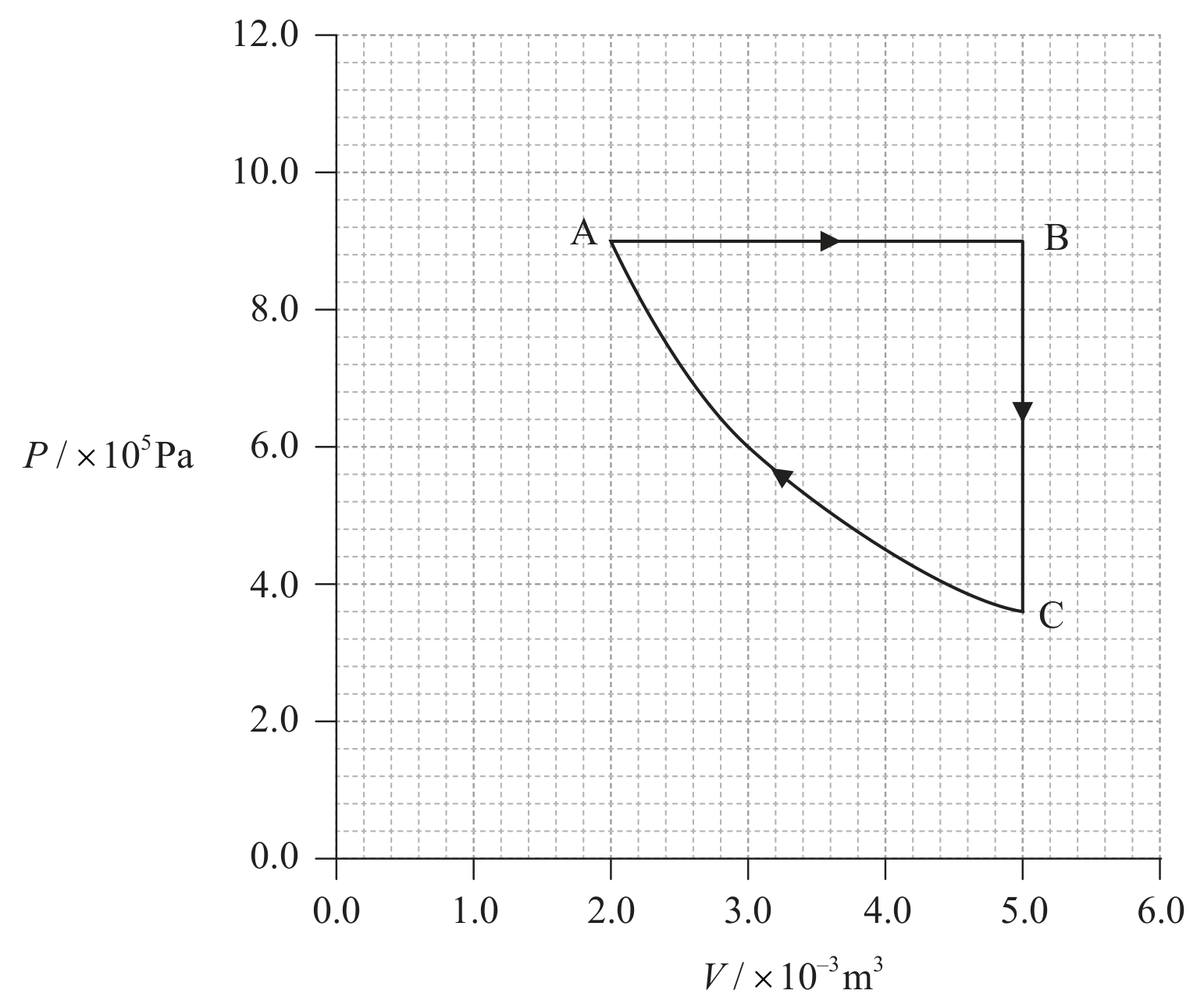
A fixed mass of an ideal gas undergoes the three thermodynamic processes, AB, BC and CA , represented in the P-V graph below.

Question image

(a) State which of the processes is isothermal, isochoric (isovolumetric) or isobaric.

Process AB:

Process BC:

Process CA:
(b) The temperature of the gas at A is 300 K . Calculate the temperature of the gas at B .
(c) The increase in internal energy of the gas during process AB is 4100 J . Determine the heat transferred to the gas from the surroundings during the process AB .

(d) The gas is compressed at constant temperature. Explain what changes, if any, occur to the entropy of
(i) the gas.
(ii) the surroundings.
(iii) the universe.

Question 2

[Maximum number: 2]

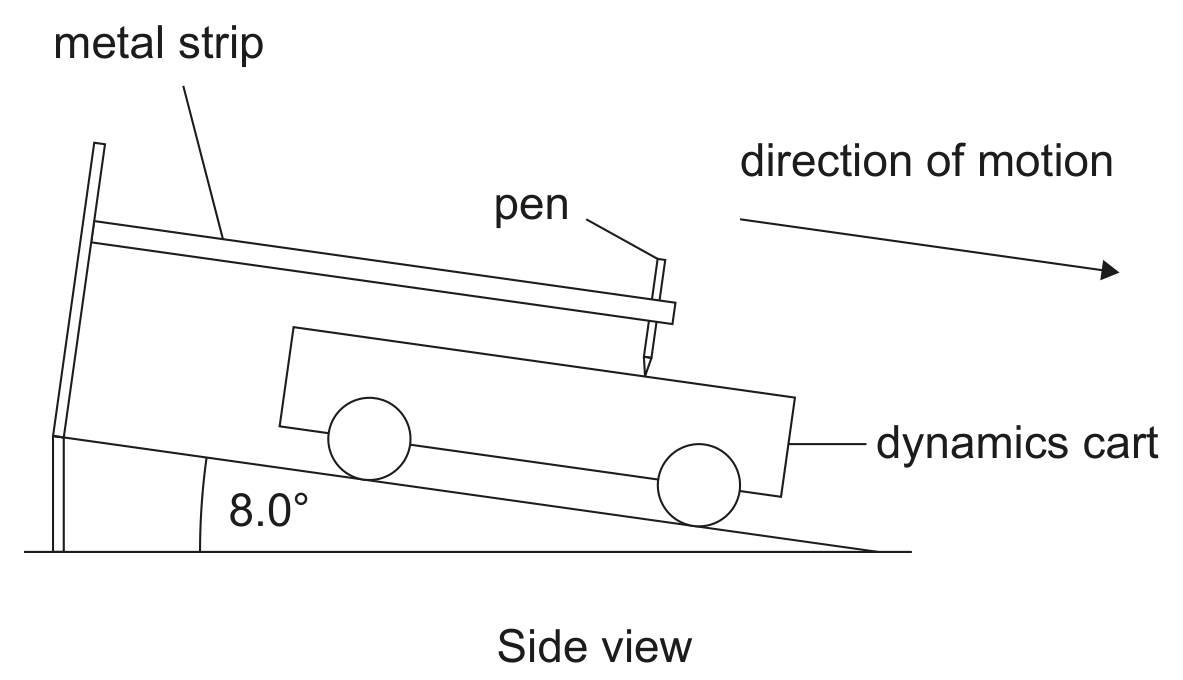
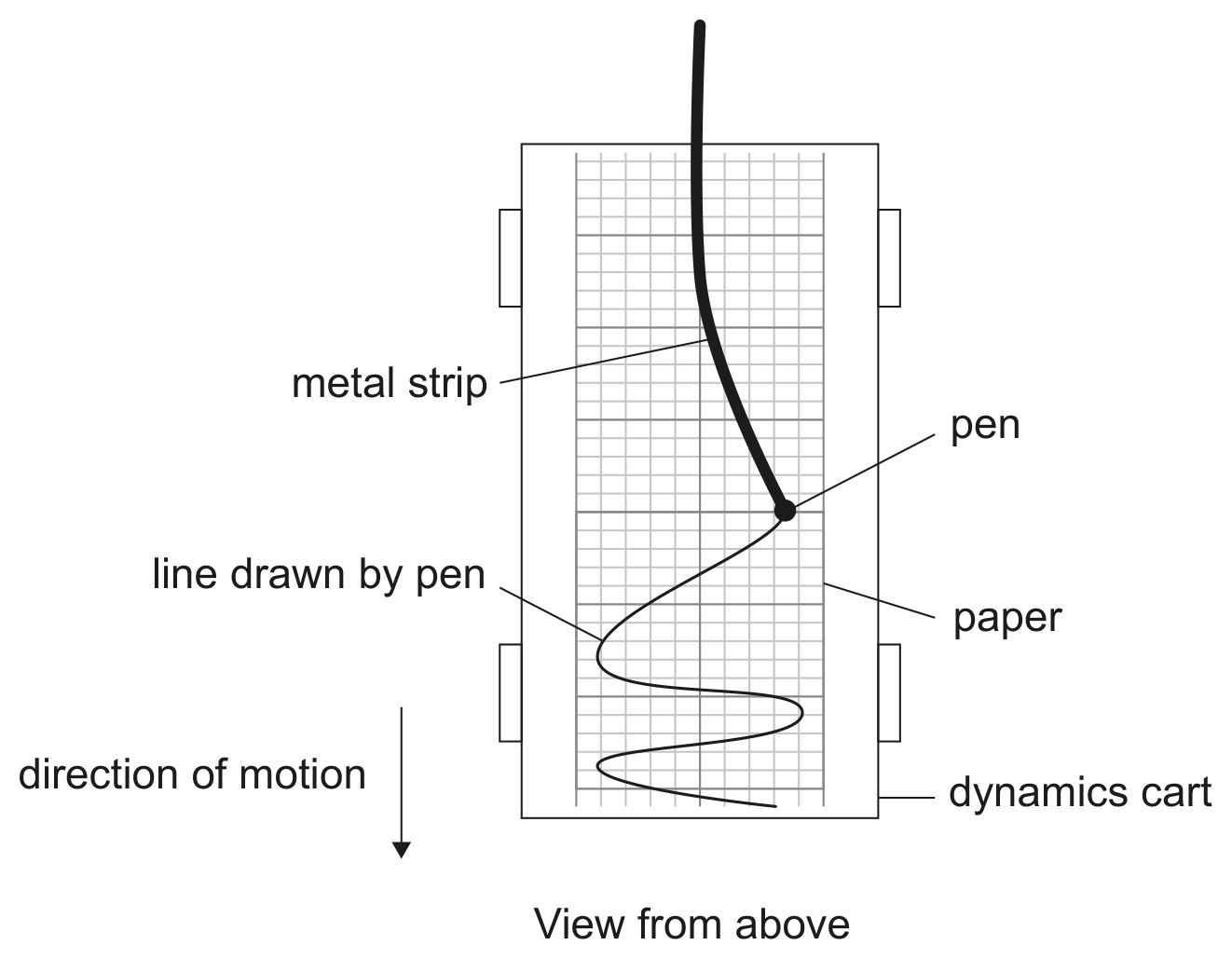
The acceleration of a dynamics cart is measured as the cart rolls from rest down an inclined ramp.

A flexible metal strip is attached to the ramp. The metal strip performs simple harmonic oscillations.
A pen is attached to the metal strip and makes marks on paper that is fixed to the top surface of the cart.

Question image
Question image

The pen is displaced from its equilibrium position. The pen and the cart are then released at the same time.

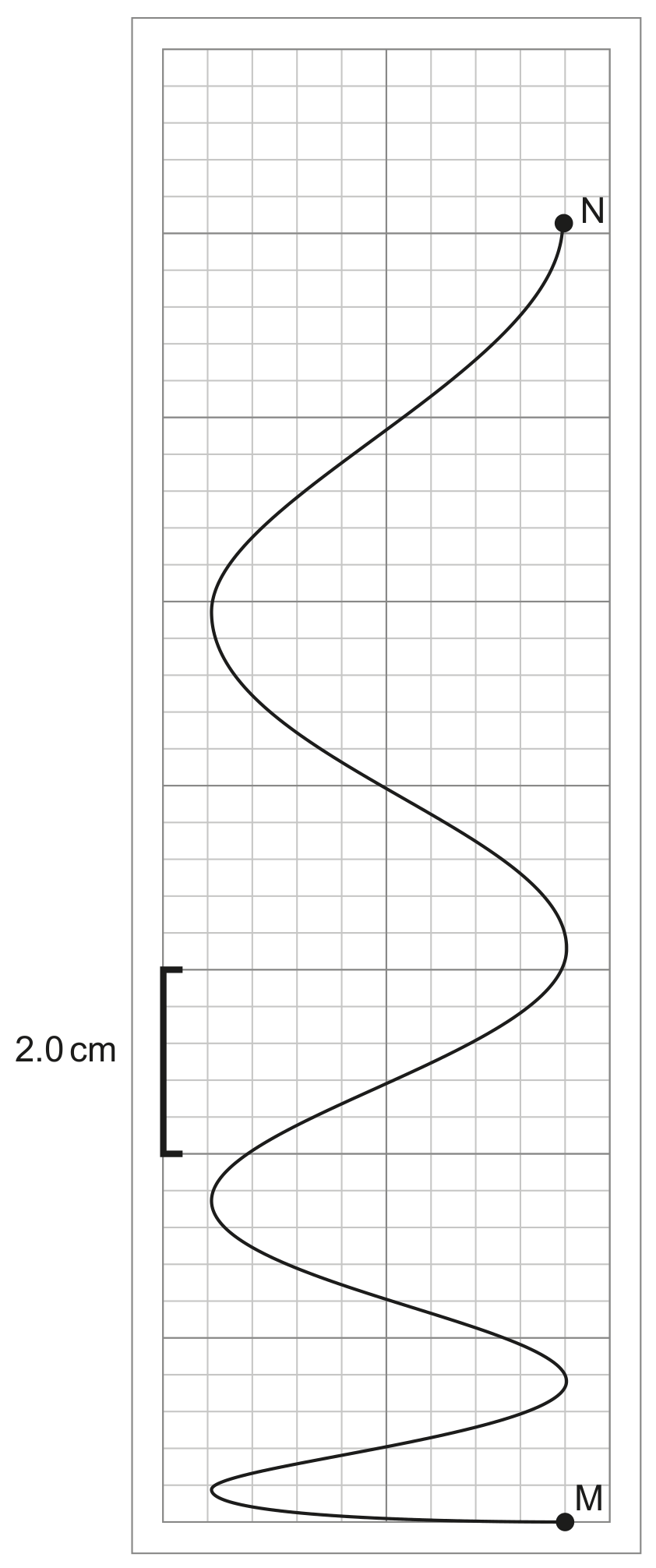
As the cart accelerates down the ramp, the pen oscillates from side to side. The frequency of oscillation of the pen is 6.3 Hz .

The pen moves from point M to point N on the paper. The paper is shown with a grid, and the scale of the grid is marked on the diagram.

Air resistance is negligible in this experiment.

Question image

Question 2(a)

(a)

Calculate the time the pen takes to move from M to N .

[ 2 ]

Question 9

[Maximum number: 1]

An object is undergoing simple harmonic motion (SHM) about a fixed point P. The magnitude of its displacement from P is x. Which of the following is correct?

Magnitude of resultant force

Direction of resultant force

proportional to x

towards P

inversely proportional to x

towards P

proportional to x

away from P

inversely proportional to x

away from P

Question 10

[Maximum number: 1]

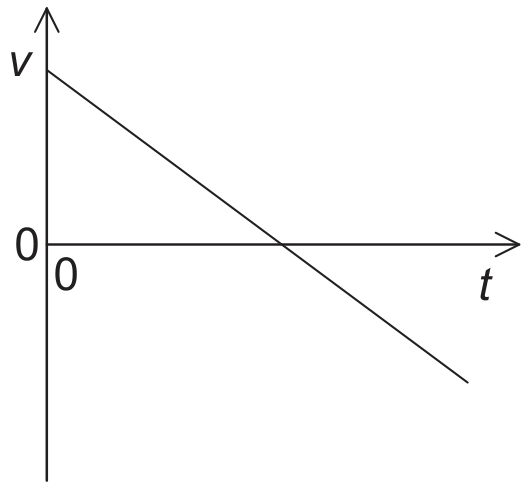
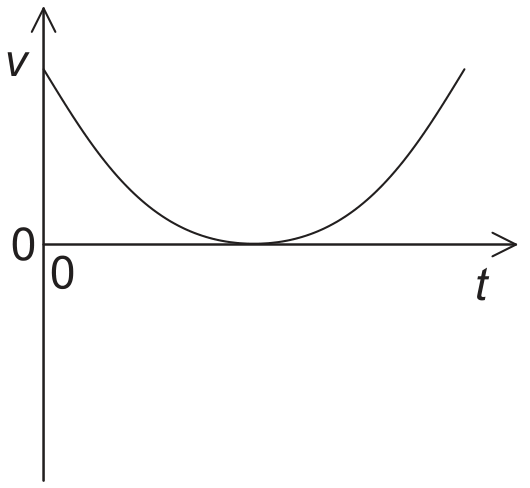
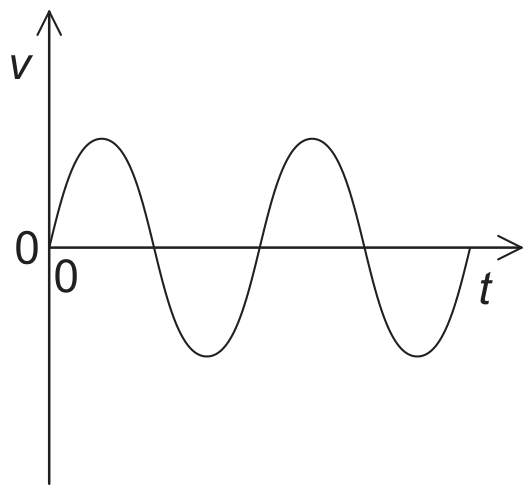
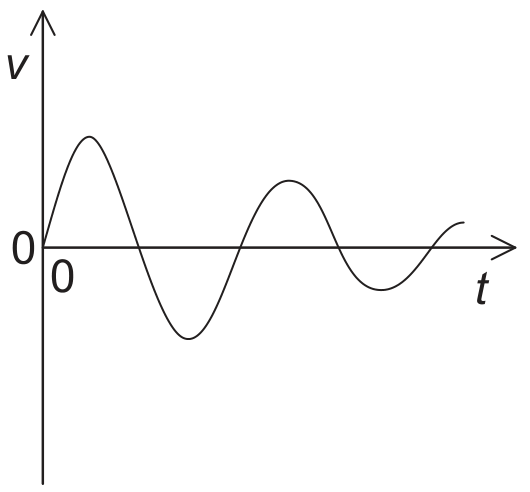
A liquid in a U-tube is given an initial displacement and allowed to oscillate. The motion of the liquid is recorded using a motion sensor. Which graph shows the variation with time t of the velocity v of the liquid?

A
Question image
B
Question image
C
Question image
D
Question image

Question 10

[Maximum number: 1]

For a body undergoing simple harmonic motion the velocity and acceleration are

A

always in the same direction.

B

always in opposite directions.

C

in the same direction for a quarter of the period.

D

in the same direction for half the period.

Question 10

[Maximum number: 1]

A body moves with simple harmonic motion (SHM) with period T and total energy ETE_{\mathrm{T}}. What is the total energy when the period of the motion is changed to 5 T and the amplitude of the motion remains constant?

A

0.04ET0.04 E_{\mathrm{T}}

B

0.2ET0.2 E_{\mathrm{T}}

C

5ET5 E_{\mathrm{T}}

D

25ET25 E_{\mathrm{T}}

Question 2

[Maximum number: 4]

This question is about a mass on a spring.

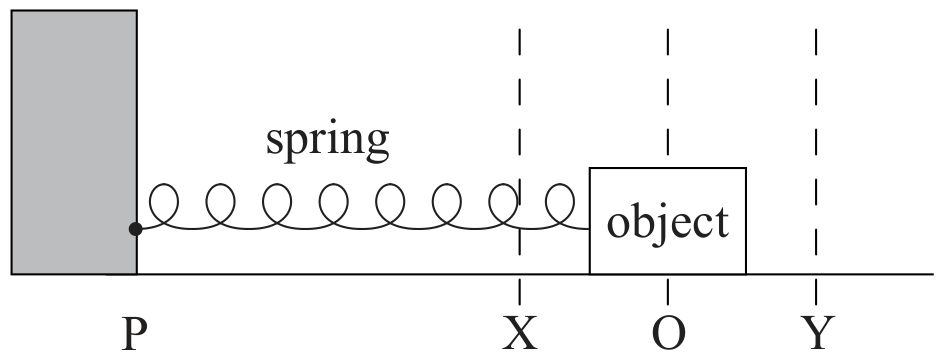
An object is placed on a frictionless surface and attached to a light horizontal spring.

Question image

The other end of the spring is attached to a stationary point P . Air resistance is negligible. The equilibrium position is at O . The object is moved to position Y and released.

Question 2(a)

(a)

Outline the conditions necessary for the object to execute simple harmonic motion.

[ 2 ]

Question 2(b)

(b)

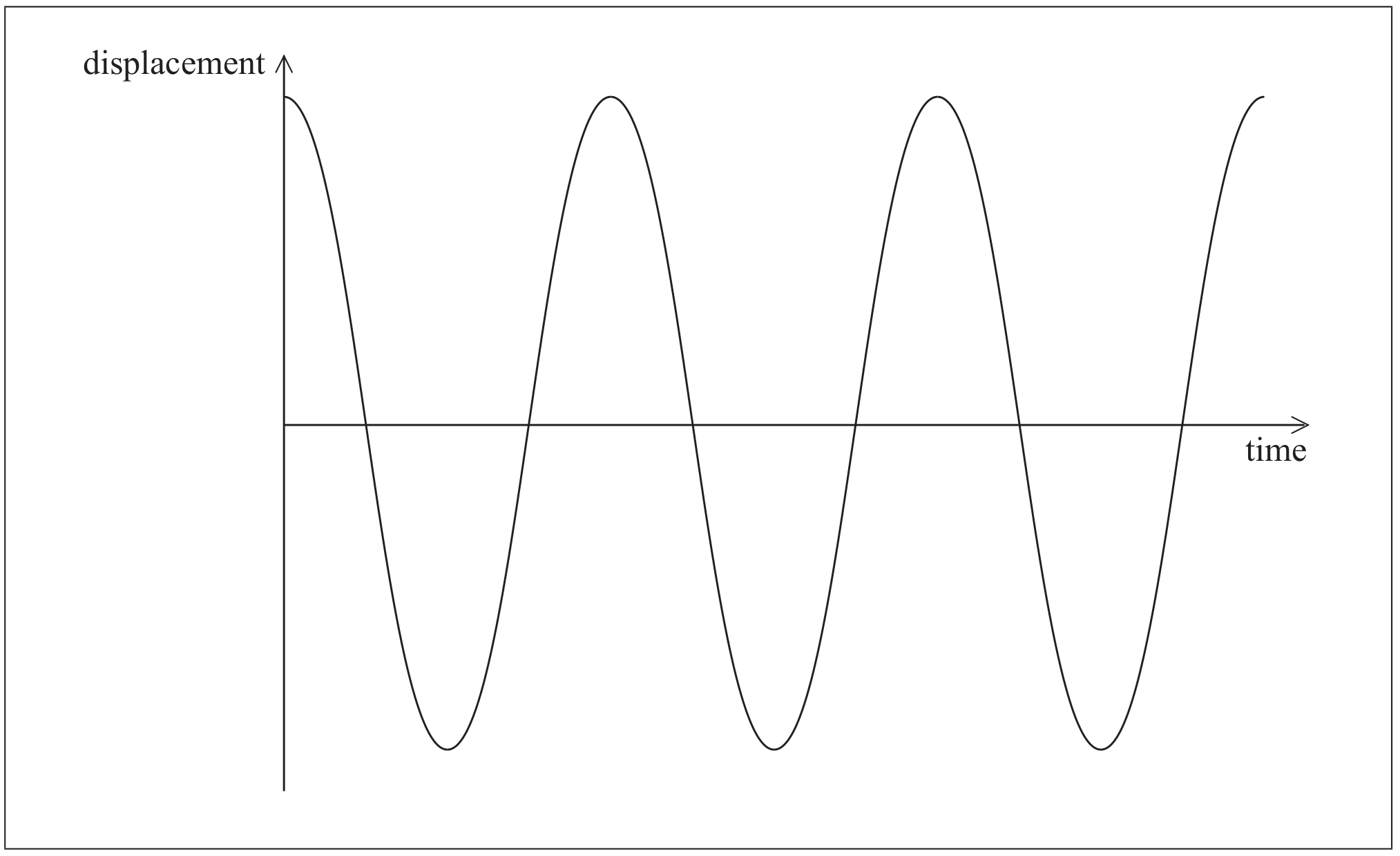
The sketch graph below shows how the displacement of the object from point O varies with time over three time periods.

Question image
[ 2 ]

Question 2(b)(i)

(i)

Label with the letter A a point at which the magnitude of the acceleration of the object is a maximum.

[ 1 ]

Question 2(b)(ii)

(ii)

Label with the letter V a point at which the speed of the object is a maximum.

[ 1 ]
0 selected