
EduNinja

Edexcel IAL Biology AS Topic 4 Plants, Biodiversity and Conservation

Edexcel IAL Biology AS Topic 4 Plants, Biodiversity and Conservation
Pearson Edexcel IAL Biology syllabusBiology YBI11First assessment 2019

Identify the plant feature or ecological measure first, then use structural adaptations, diversity values, population evidence and conservation trade-offs to justify conclusions.

Exam points

  • Relate plant cells, tissues and transport structures to mechanical or transport function.
  • Calculate or interpret biodiversity, classification and population evidence accurately.
  • Evaluate conservation or sustainable-use strategies through ecological and social data.

Question 1

[Maximum number: 5]

A plant contains several types of cells, tissues and organs.

Question 1(b)

(a)

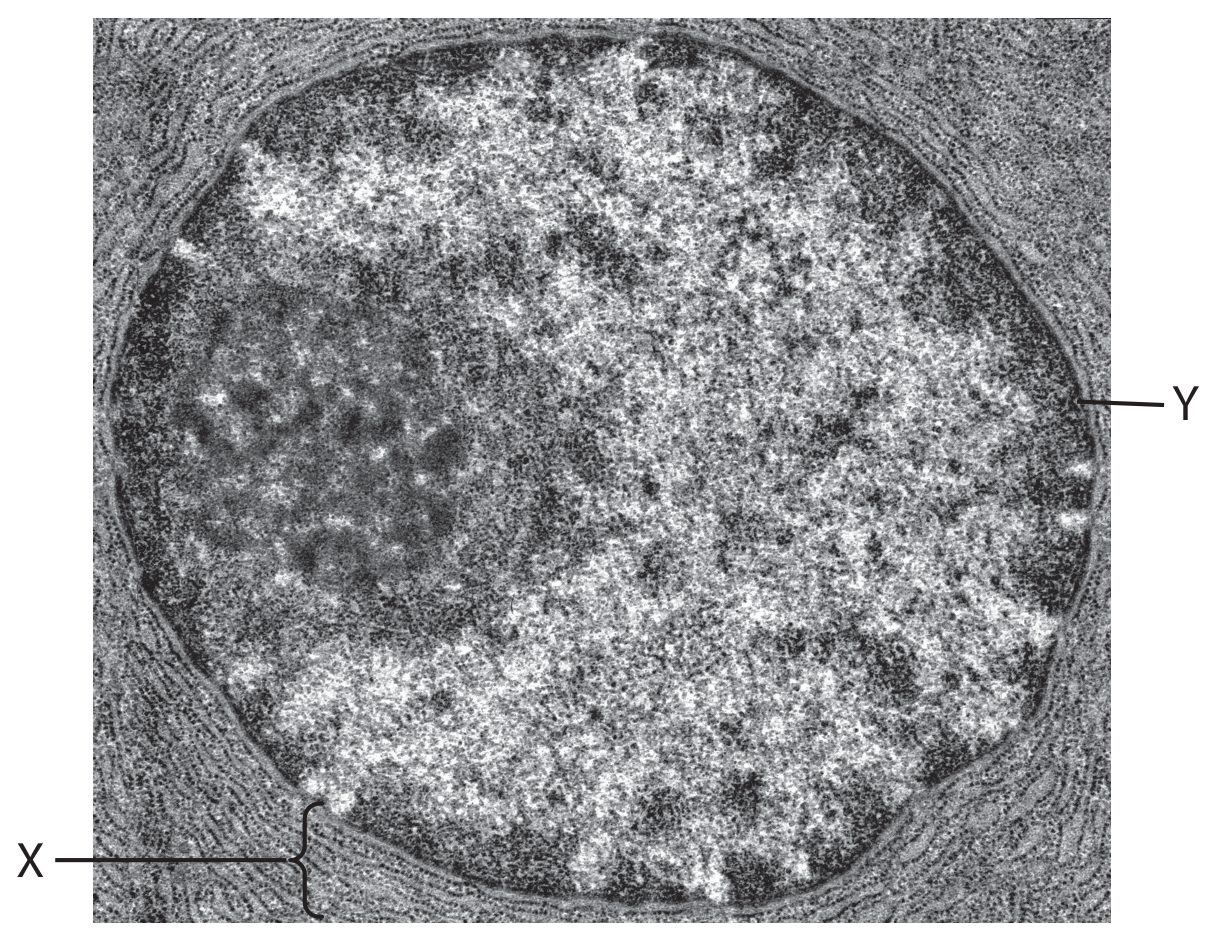
The photograph shows part of a cell.

Figure for Question 1(b) — Edexcel A-Level Biology AS

© Jose Calvo / Alamy Stock Photo

[ 2 ]

Question 1(b)(i)

(i)

Which organelle is labelled X ?

A

chloroplast

B

endoplasmic reticulum

C

Golgi apparatus

D

plasmodesmata

[ 1 ]

Question 1(b)(iv)

(ii)

Organisms can be classified into three domains.

State which of the three domains would contain an organism with the organelles X and Y .

[ 1 ]

Question 1(c)

(b)

The drawing shows tubers of a potato plant developing below the surface of the soil.
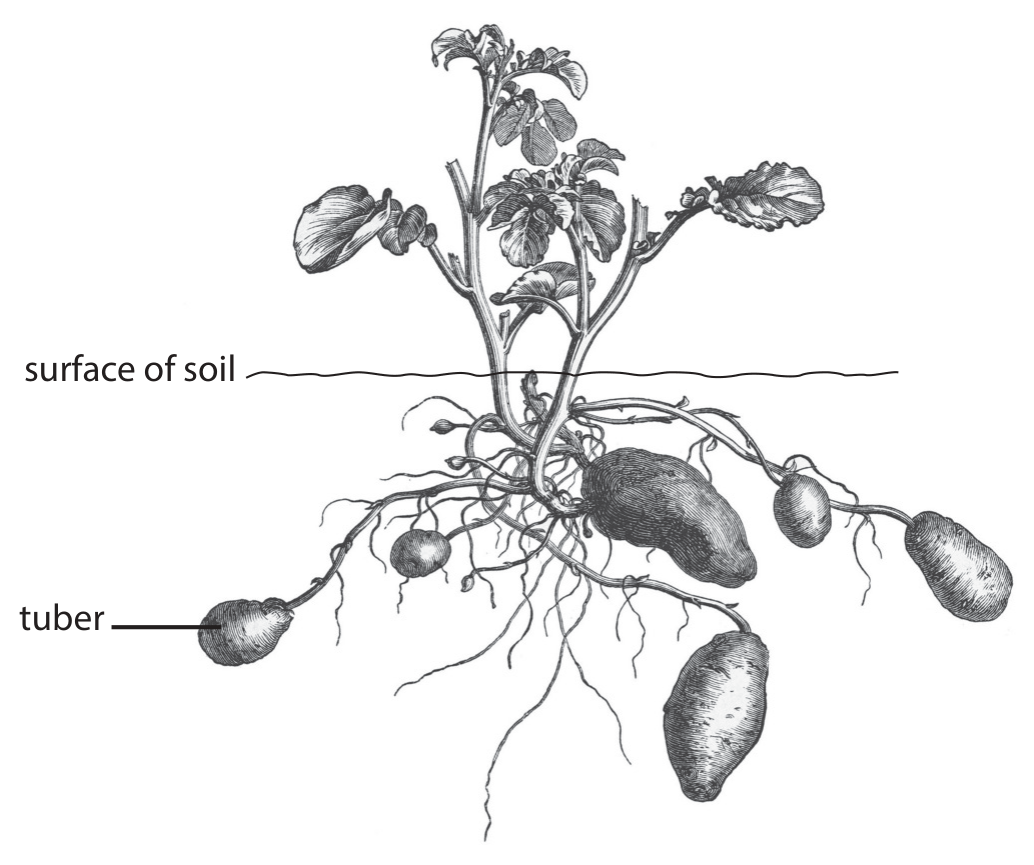
Figure for Question 1(c) — Edexcel A-Level Biology AS

Organic molecules are transported through the potato plant to the developing tubers.

These molecules can be used to form starch molecules.

[ 3 ]

Question 1(c)(i)

(i)

Which structure in the cells of these tubers would store starch molecules?

A

amyloplast

B

chloroplast

C

middle lamella

D

vacuole

[ 1 ]

Question 1(c)(ii)

(ii)

Explain how the structure of starch enables the potato tubers to have a high energy content.
[ 2 ]

Question 3

[Maximum number: 5]

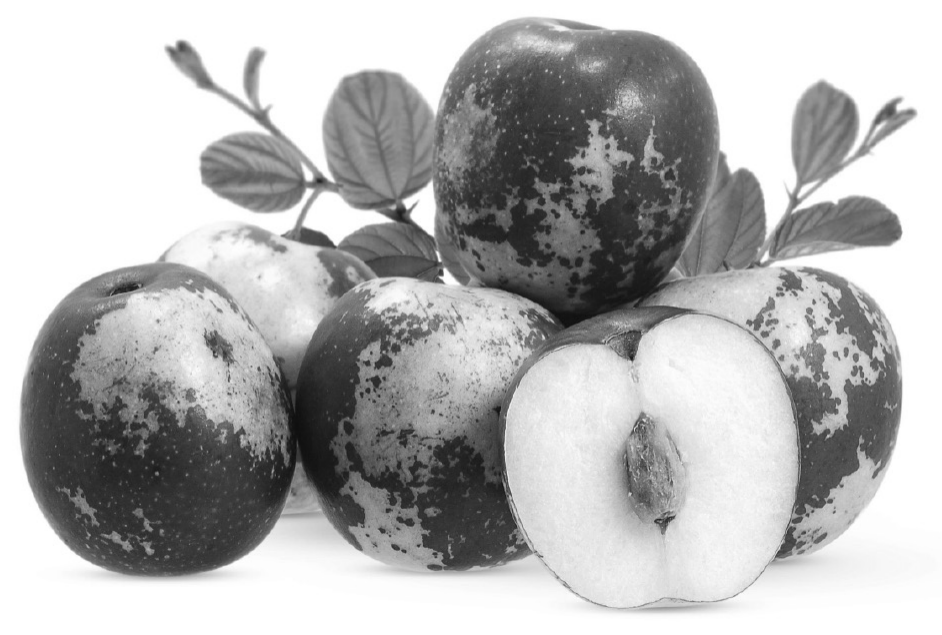
The photograph shows jujube fruits.

Figure for Question 3 — Edexcel A-Level Biology AS

Jujube fruits are edible and are native to China.
Jujube fruits do not store well.
An investigation compared the effect of covering the fruit with an edible coating.
One coating was made from chitosan, a polysaccharide obtained from the outer skeleton of shellfish.

Another coating was made from cinnamon oil.
Samples from stored fruit were tested for vitamin C content and antimicrobial activity.

Question 3(b)

(a)

The antimicrobial activity of the coatings was investigated using the agar diffusion method.

Agar plates were spread with a suspension of bacteria containing 5×1055 \times 10^{5} bacteria per cm3\mathrm{cm}^{3}.

Two suspensions of bacteria were made, one with E. coli and one with S. aureus.
Discs of filter paper were soaked in either the chitosan or the cinnamon oil and placed on top of the agar. The agar plates were then incubated.

Agar plates were also prepared that had two types of fungi grown on them:
A. flavus and P. citrinum.

[ 5 ]

Question 3(b)(iii)

(i)

Explain two safety precautions that must be taken when preparing these plates.
(2)

1

2

[ 2 ]

Question 3(b)(iv)

(ii)

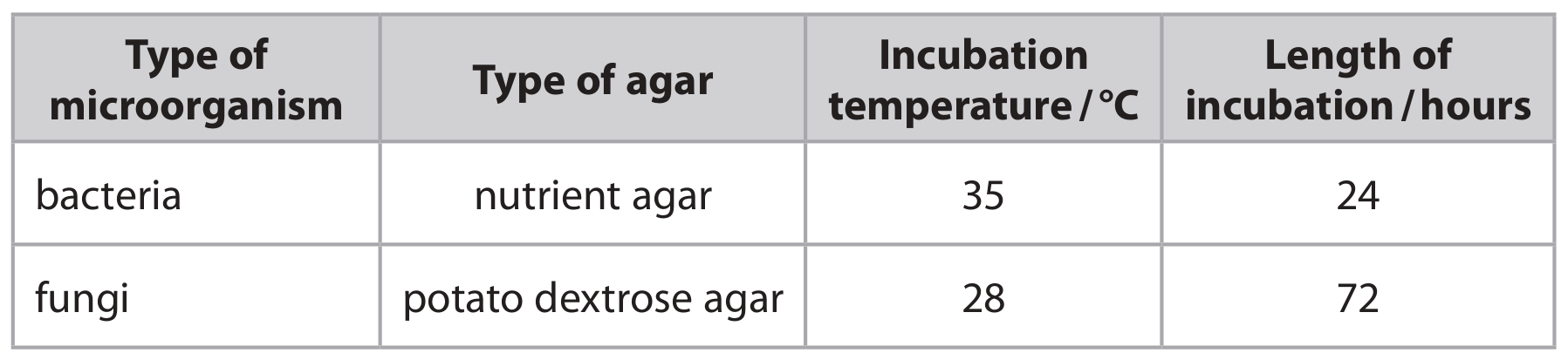
The table shows some differences between the method using bacteria and the method using fungi.

Table for Question 3(b)(iv) — Edexcel A-Level Biology AS

Suggest why different conditions were used when growing these two types of microorganism.

Type of agar

Incubation temperature

Length of incubation

[ 3 ]

Question 3

[Maximum number: 8]

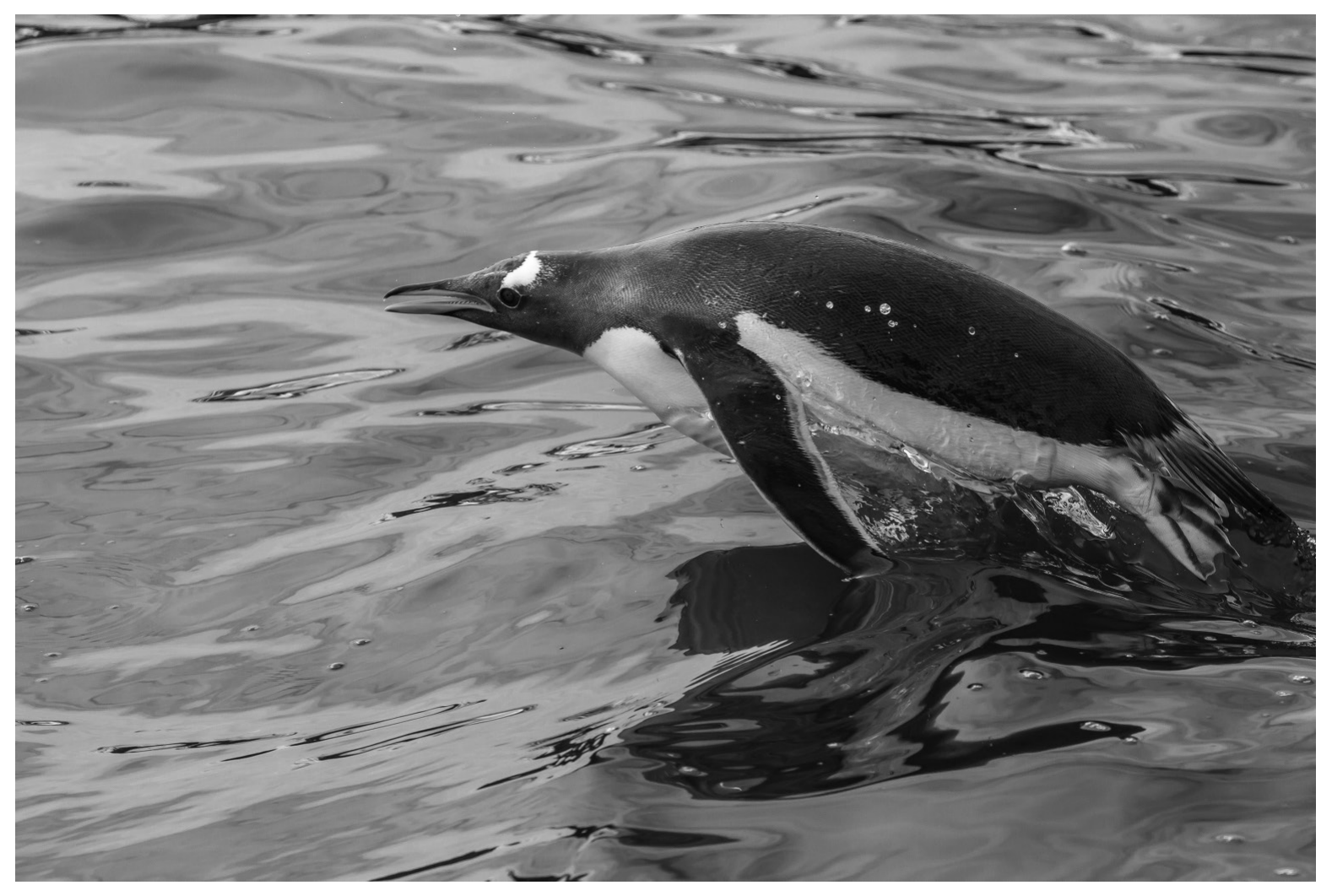
The photograph shows a gentoo penguin from Antarctica.

Figure for Question 3 — Edexcel A-Level Biology AS

© robertharding / Alamy Stock Photo
These penguins swim in the very cold Antarctic waters in search of food.
They feed on fish, squid and shrimp.

Question 3(a)

(a)

Explain two anatomical adaptations of these penguins that enable them to survive in this environment.

Use the information in the question to support your answer.

Adaptation 1

Reason

Adaptation 2

Reason

[ 2 ]

Question 3(b)

(b)

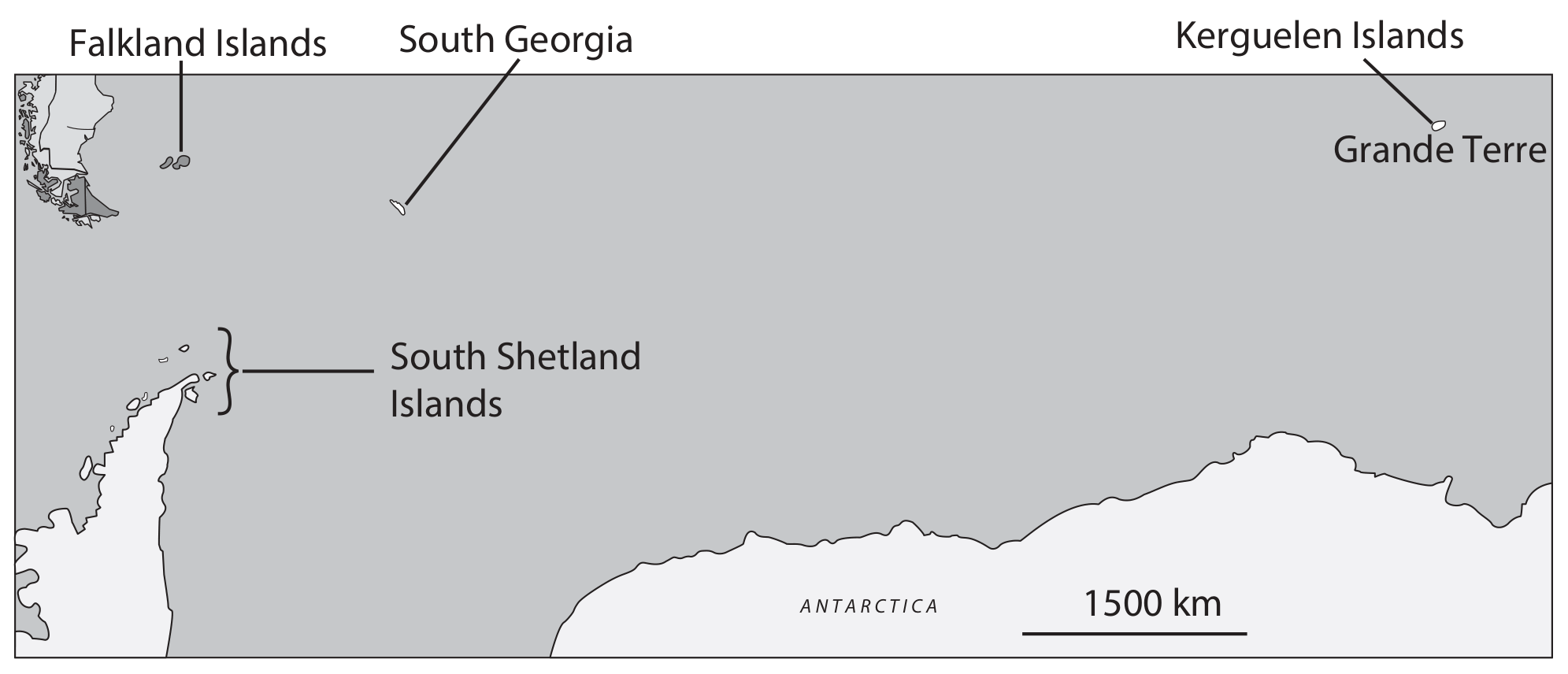
The map shows four groups of islands that have gentoo penguin populations.

Figure for Question 3(b) — Edexcel A-Level Biology AS
DO NOT WRITE IN THIS AREADO NOT WRITE IN THIS AREADO NOT WRITE IN THIS AREA

It has been proposed that the gentoo penguins on these four groups of islands are different species.

[ 6 ]

Question 3(b)(i)

(i)

Suggest one way that these penguins can be shown to belong to different species.

[ 1 ]

Question 3(b)(ii)

(ii)

Explain how different species of gentoo penguin could have formed. Use the map to support your answer.
(5)

[ 5 ]

Question 4

[Maximum number: 5]

Leaves that have fallen from trees are an important source of nutrients for many organisms living in streams.

Bacteria and fungi can break down molecules such as cellulose and lignin, releasing nutrients for small animals that live in the water.

Decomposition of two types of leaf in the Mahoning River, Ohio, was investigated.

Question 4(a)(i)

(a)

Which row of the table describes the structure of cellulose?

Type of glucose molecule

Type of glycosidic bond

A

alpha (α)(\alpha)

1-4

B

alpha (α)(\alpha)

1-6

C

beta (β)(\beta)

1-4

D

beta (β)(\beta)

1-6

[ 1 ]

Question 4(c)

(b)

Calculate how many times greater the biomass of bacteria on the sugar maple leaves is after 30 days compared with the biomass of bacteria at 0 days.

[ 4 ]

Question 4(c)(ii)

(i)

Suggest why the increase in biomass of bacteria after 30 days is greater on the sugar maple leaves than it is on the white oak leaves.

Give a reason for your answer.

[ 2 ]

Question 4(c)(iii)

(ii)

Suggest why the biomass of bacteria on the white oak leaves decreased after 90 days.

Give a reason for your answer.

[ 2 ]

Question 5

Question 5(a)

(a)

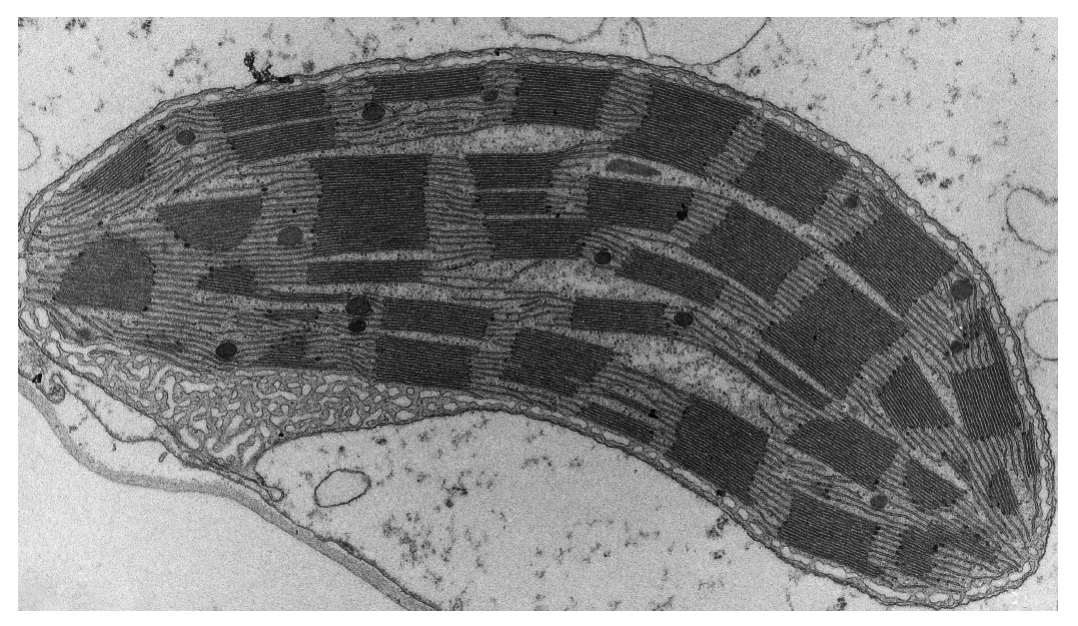
The photograph shows an organelle found in many plant cells, as seen using a microscope.

Figure for Question 5(a) — Edexcel A-Level Biology AS
[ 1 ]

Question 5(a)(i)

(i)

Give the name and function of this organelle.

Name

Function

[ 1 ]

Question 5(b)

(b)

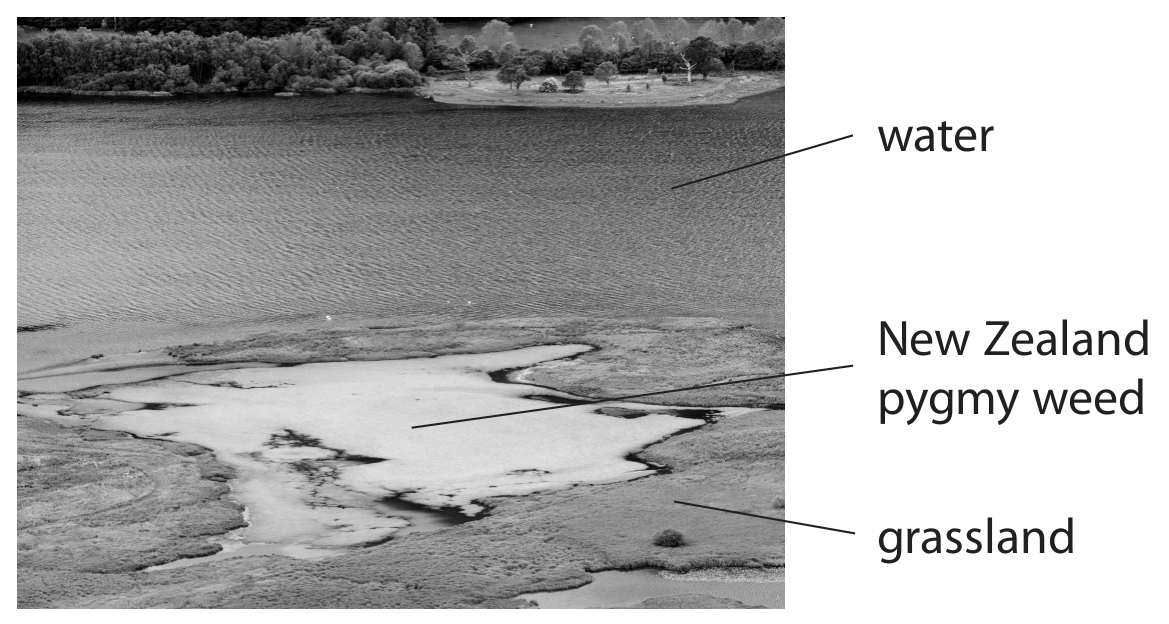
The photograph shows a lake partly covered with New Zealand pygmy weed plants (C. helmsii).

Figure for Question 5(b) — Edexcel A-Level Biology AS

The effect of New Zealand pygmy weed on the biodiversity of a lake was investigated.

Species richness and an index of diversity were determined.

[ 6 ]

Question 5(b)(i)

(i)

State what is meant by species richness.

[ 1 ]

Question 5(b)(ii)

(ii)

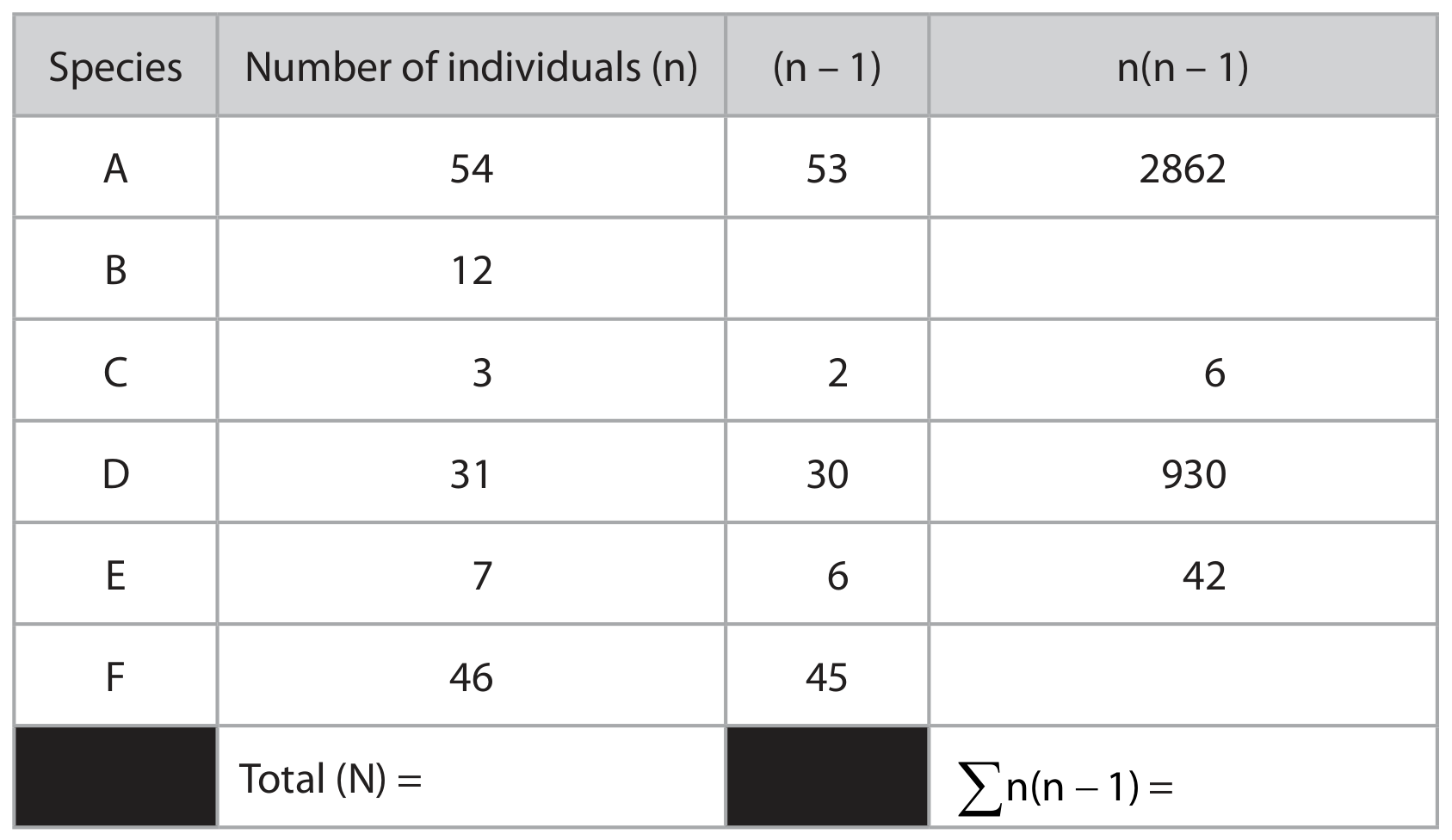
The number of individuals of different species in this area of the lake was measured before the appearance of the New Zealand pygmy weed.

The table shows these results.

Table for Question 5(b)(ii) — Edexcel A-Level Biology AS

Calculate the index of diversity (D) for this area of the lake using the formula:

D=N( N1)n(n1)\mathrm{D}=\frac{\mathrm{N}(\mathrm{~N}-1)}{\sum \mathrm{n}(\mathrm{n}-1)}

Use the table to help you.
Give your answer to two decimal places.

[ 3 ]

Question 5(b)(iii)

(iii)

A year after the appearance of the New Zealand pygmy weed in this lake the index of diversity (D) was found to be 1.8 .

Suggest the effect of the New Zealand pygmy weed on the diversity of this part of the lake.
(2)

[ 2 ]

Question 7

[Maximum number: 7]

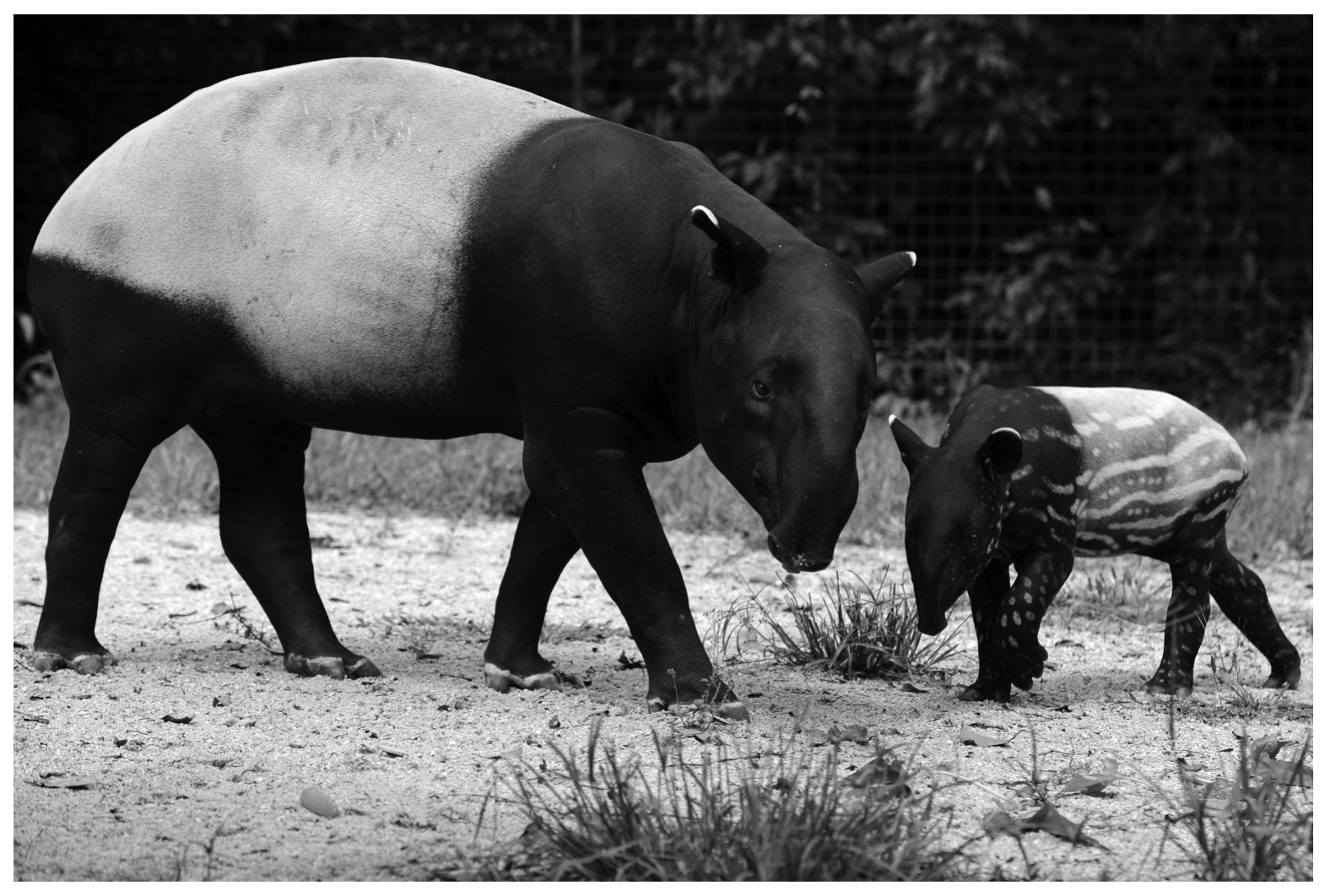
The photograph shows a mother and baby Malayan tapir (Tapirus indicus). They live in the rainforests of southeast Asia.

Each gamete of a Malayan tapir contains 26 chromosomes.

Figure for Question 7 — Edexcel A-Level Biology AS

© Sipa US / Alamy Stock Photo

Question 7(b)

(a)

Biodiversity within a species can be measured using genetic diversity.

Three melanistic Malayan tapirs have been discovered that have black fur all over their bodies.

Melanistic tapirs have two copies of the recessive allele for fur colour and are homozygous.

[ 3 ]

Question 7(b)(i)

(i)

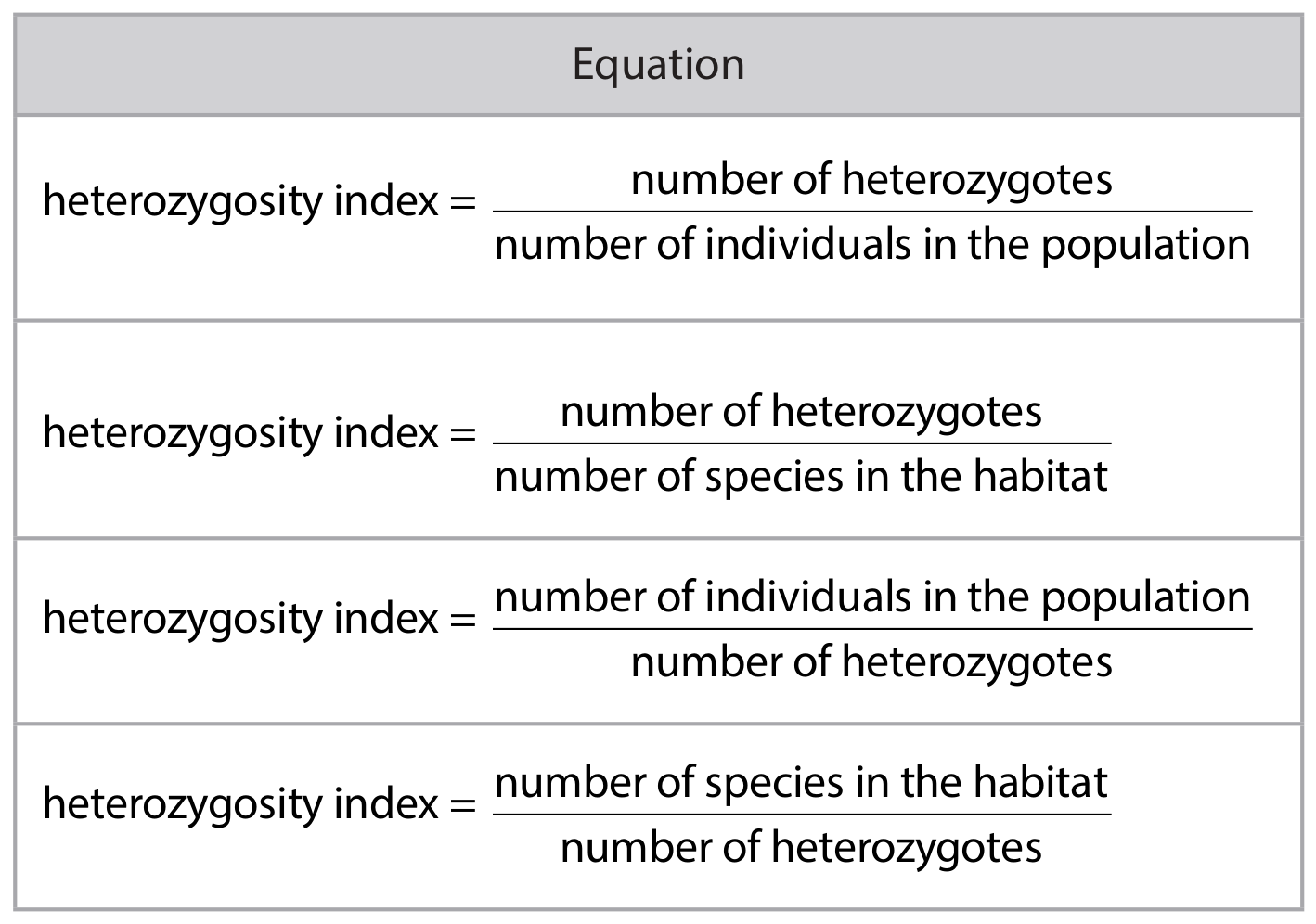
Scientists wanted to determine the heterozygosity index of the Malayan tapir species.

Which equation can be used to calculate the heterozygosity index?
□ A
□ B

C

Table for Question 7(b)(i) — Edexcel A-Level Biology AS
[ 1 ]

Question 7(b)(ii)

(ii)

Explain how scientists could determine if a change in the frequency of the recessive allele was occurring over time.

[ 2 ]

Question 7(c)

(b)

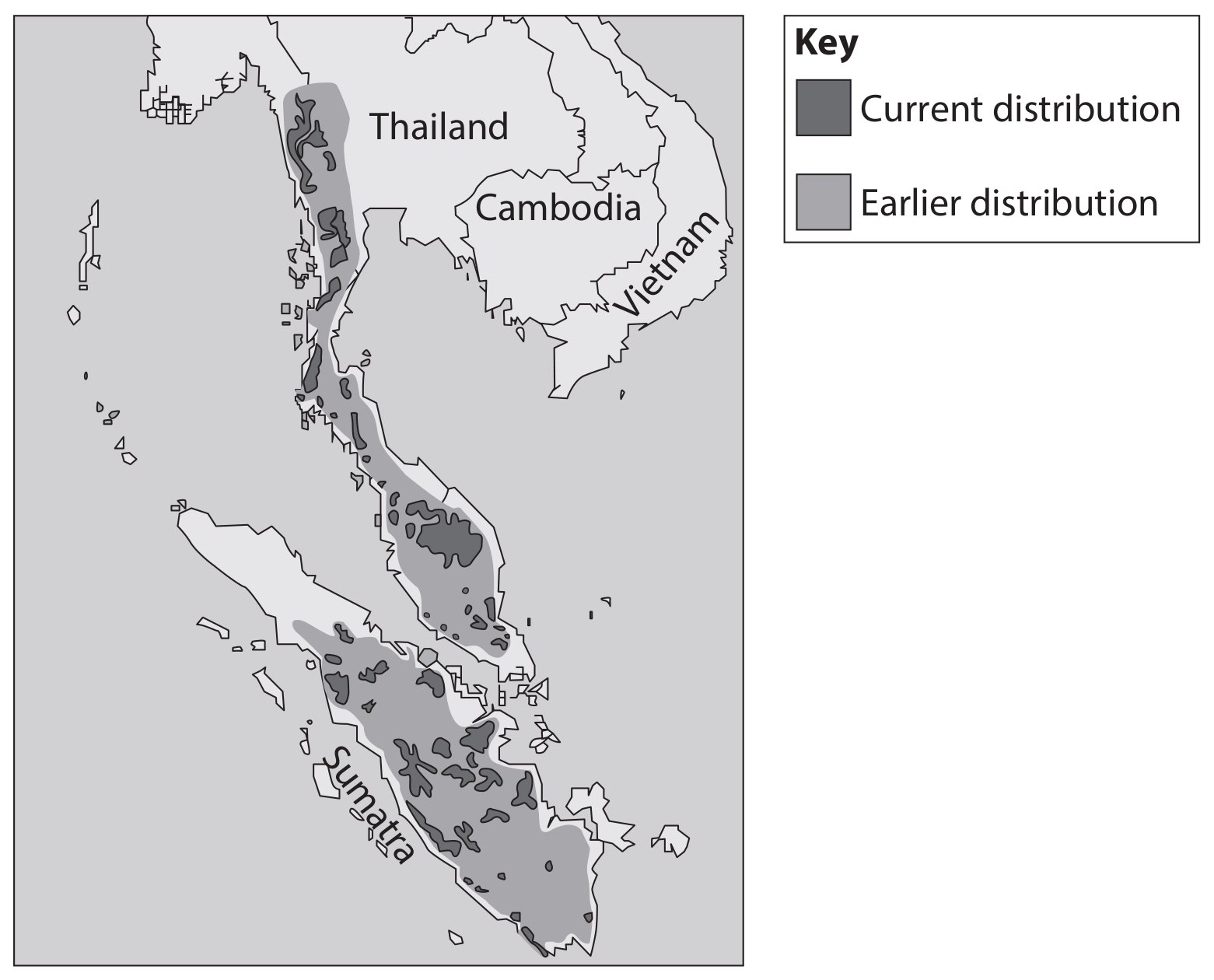
The map shows the change in distribution of the Malayan tapir over the past 20 years.

Figure for Question 7(c) — Edexcel A-Level Biology AS
[ 4 ]

Question 7(c)(ii)

(i)

One difference is that the distribution has reduced due to human activity.
Suggest one reason why human activity has caused this change in distribution.
```

[ 1 ]

Question 7(c)(iii)

(ii)

A study suggested that the genetic diversity of the Malayan tapirs has decreased due to populations being separated from each other.

Explain how a captive breeding programme could maintain the genetic diversity of Malayan tapir populations.
(3)

[ 3 ]

Question 8

[Maximum number: 7]

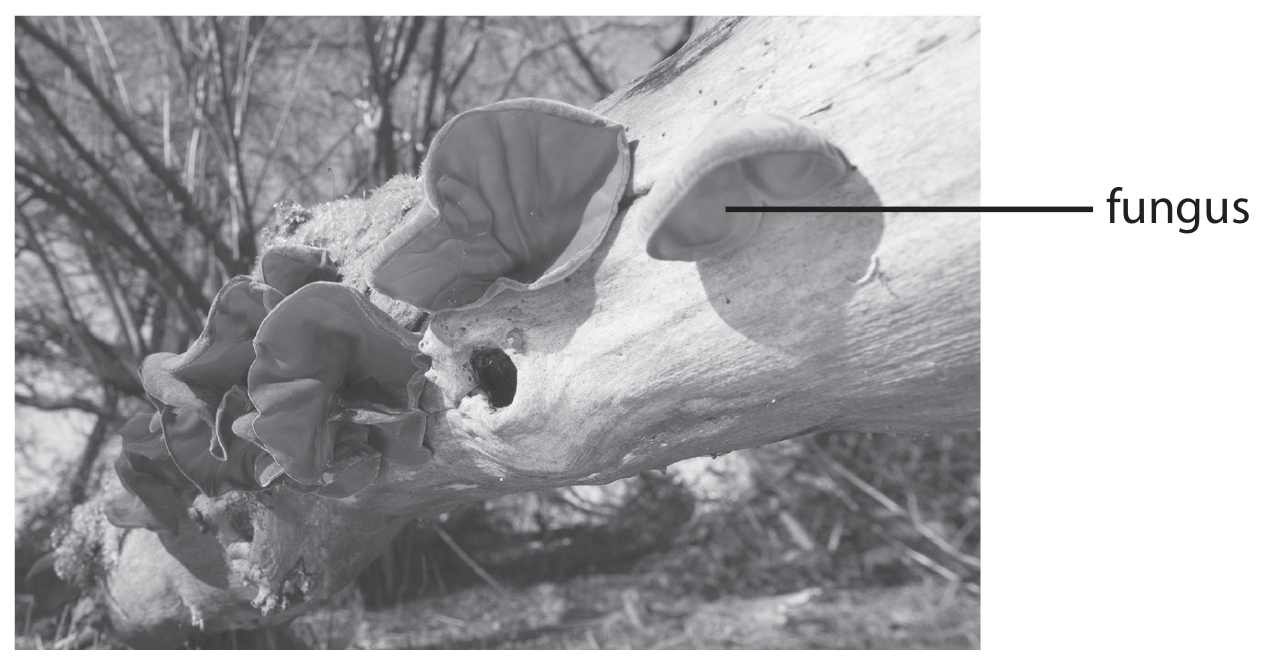
The photograph shows a species of fungus growing on a dead tree in a woodland habitat.

Figure for Question 8 — Edexcel A-Level Biology AS

© www.pqpictures.co.uk / Alamy Stock Photo
Wood contains a high proportion of lignin and cellulose.
Fungi can break down molecules in wood by releasing extracellular enzymes.

Question 8(c)

(a)

A study compared the biodiversity of two woodland habitats.

The index of diversity for habitat one was 4.2.
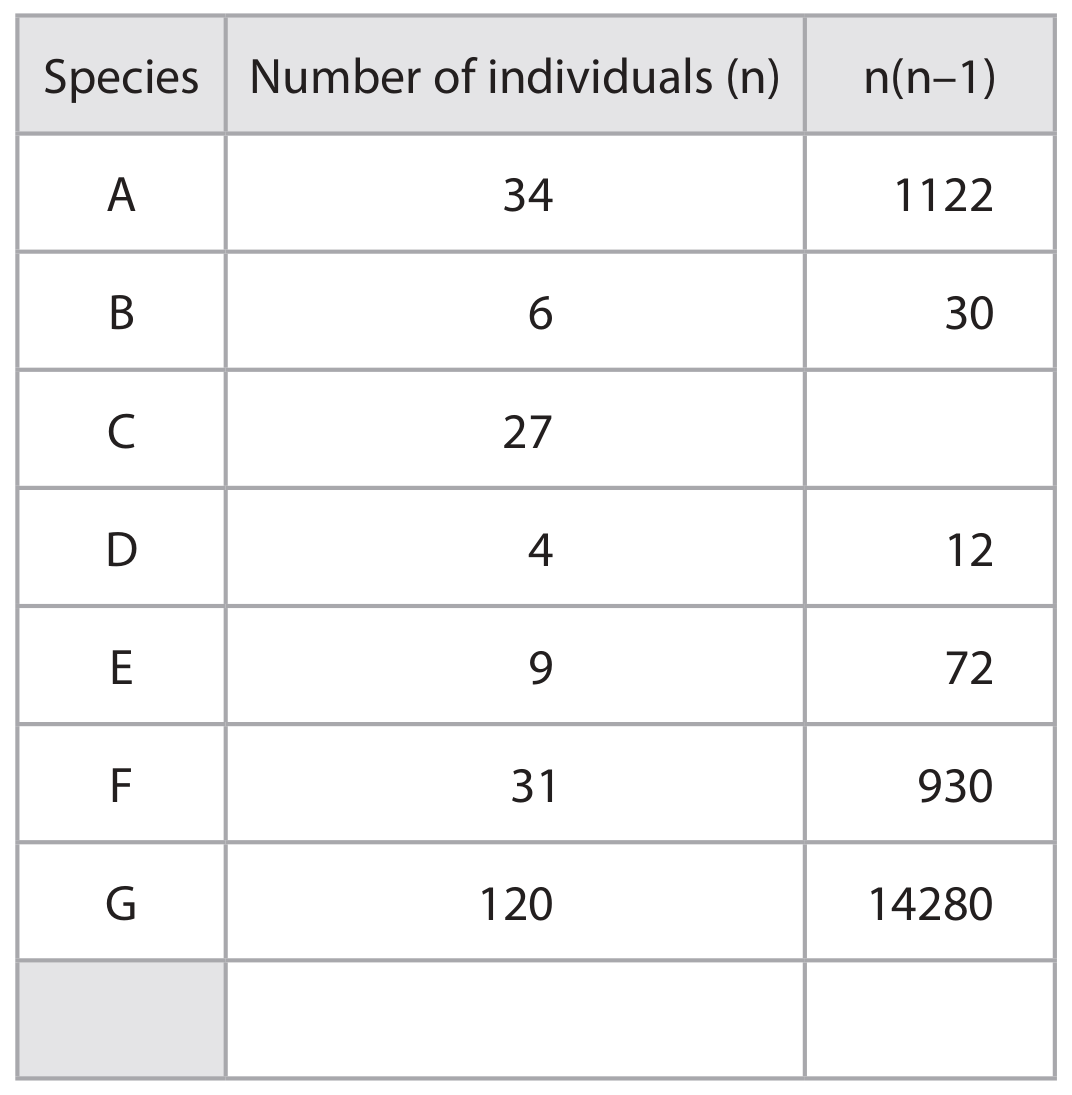
The table shows the data obtained from habitat two.

Table for Question 8(c) — Edexcel A-Level Biology AS
[ 7 ]

Question 8(c)(i)

(i)

An index of diversity (D) is calculated using the formula:

D=N( N1)n(n1)\mathrm{D}=\frac{\mathrm{N}(\mathrm{~N}-1)}{\sum \mathrm{n}(\mathrm{n}-1)}

Calculate the index of diversity for habitat two.
Use the table and the formula to help you.

Answer

[ 3 ]

Question 8(c)(ii)

(ii)

State which habitat has the higher biodiversity.

Give a reason for your answer.

[ 1 ]

Question 8(c)(iii)

(iii)

Species D is an endangered plant species.

Explain the processes that could be used by a seed bank to conserve this plant species.

[ 3 ]