
EduNinja

Edexcel IAL Biology AS Topic 1 Molecules, Transport and Health

Edexcel IAL Biology AS Topic 1 Molecules, Transport and Health
Pearson Edexcel IAL Biology syllabusBiology YBI11First assessment 2019

Identify the molecule, vessel or physiological process first, then use labelled structures, mark-scheme terminology and quantitative evidence to build the explanation.

Exam points

  • Describe biological molecules through monomers, bonds, functional groups and structure.
  • Interpret vessel, heart and dissociation evidence to explain transport and exchange.
  • Apply practical methods, calculations and health data with correct variables and units.

Question 4

[Maximum number: 4]

Water is an important molecule in living organisms.

Question 4(a)

(a)

Water is a dipolar molecule that forms hydrogen bonds with other water molecules.

[ 3 ]

Question 4(a)(i)

(i)

Explain the dipole nature of water.
(2)

[ 2 ]

Question 4(a)(ii)

(ii)

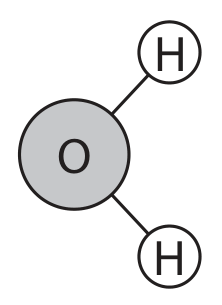
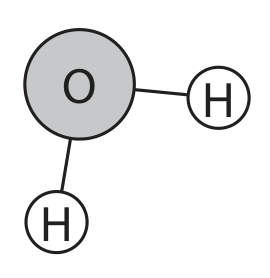
The diagram shows three water molecules.

Complete the diagram to show a hydrogen bond between two water molecules.
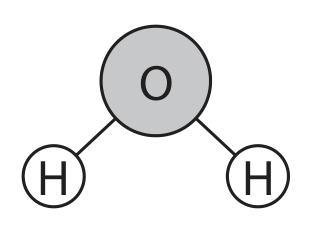
Figure for Question 4(a)(ii) — Edexcel A-Level Biology AS
[ 1 ]

Question 4(b)

(b)

Water plays a role as a solvent.

Sodium chloride dissolves in water.
The diagram shows a sodium ion ( Na+\mathrm{Na}^{+}).
Complete the diagram to show the arrangement of two water molecules around a sodium ion when it is dissolved.
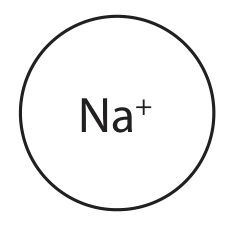
Figure for Question 4(b) — Edexcel A-Level Biology AS
[ 1 ]

Question 4

[Maximum number: 6]

Many animals have a heart and circulation.

Question 4(a)

(a)

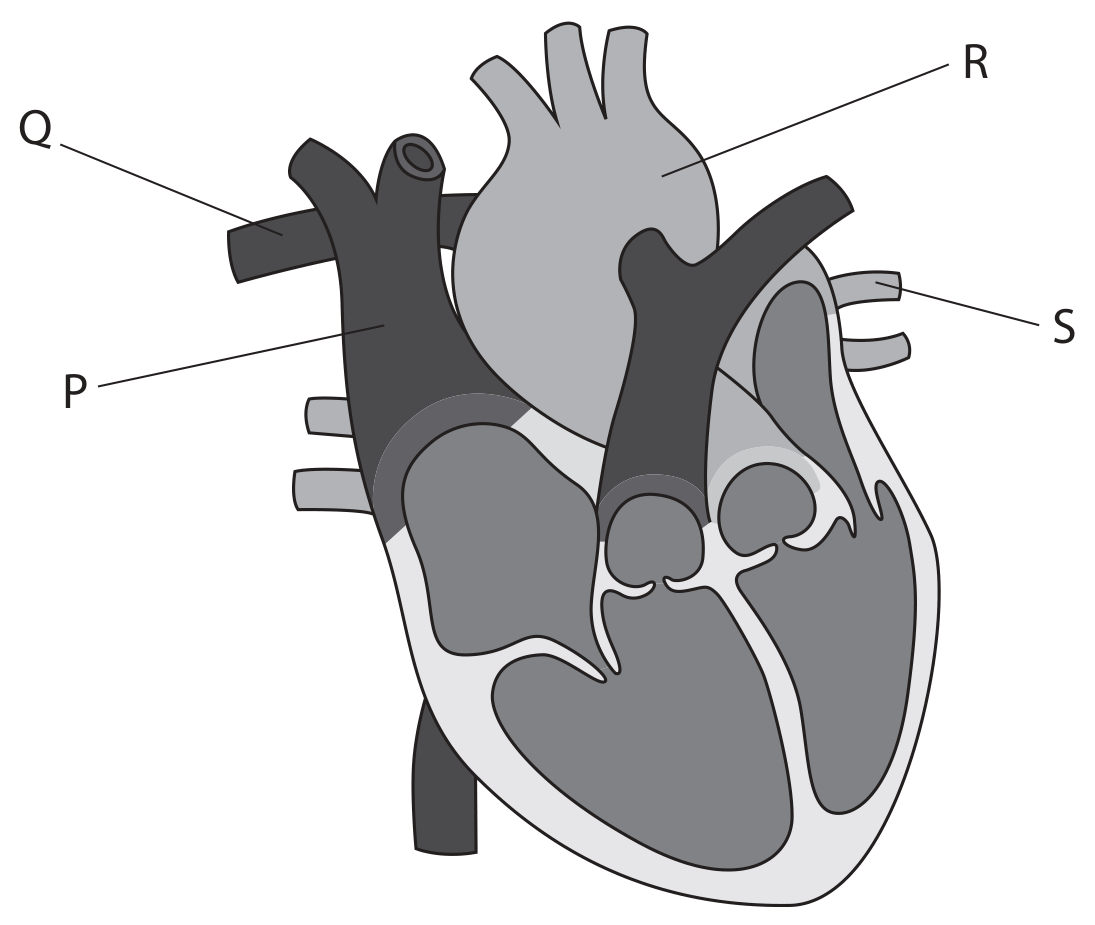
The diagram shows a human heart and its major blood vessels, labelled P, Q, R and S.

Figure for Question 4(a) — Edexcel A-Level Biology AS
[ 3 ]

Question 4(a)(i)

(i)

Which pair of blood vessels transports blood to and from the lungs?

A

P and Q

B

Q and S

C

Rand P

D

S and R

[ 1 ]

Question 4(a)(ii)

(ii)

Which blood vessels have valves along their length?

A

P

B

P and R

C

Q

D

Q and R

[ 1 ]

Question 4(a)(iii)

(iii)

Which blood vessel does the coronary artery branch from?

A

P

B

Q

C

R

D

S

[ 1 ]

Question 4(c)

(b)

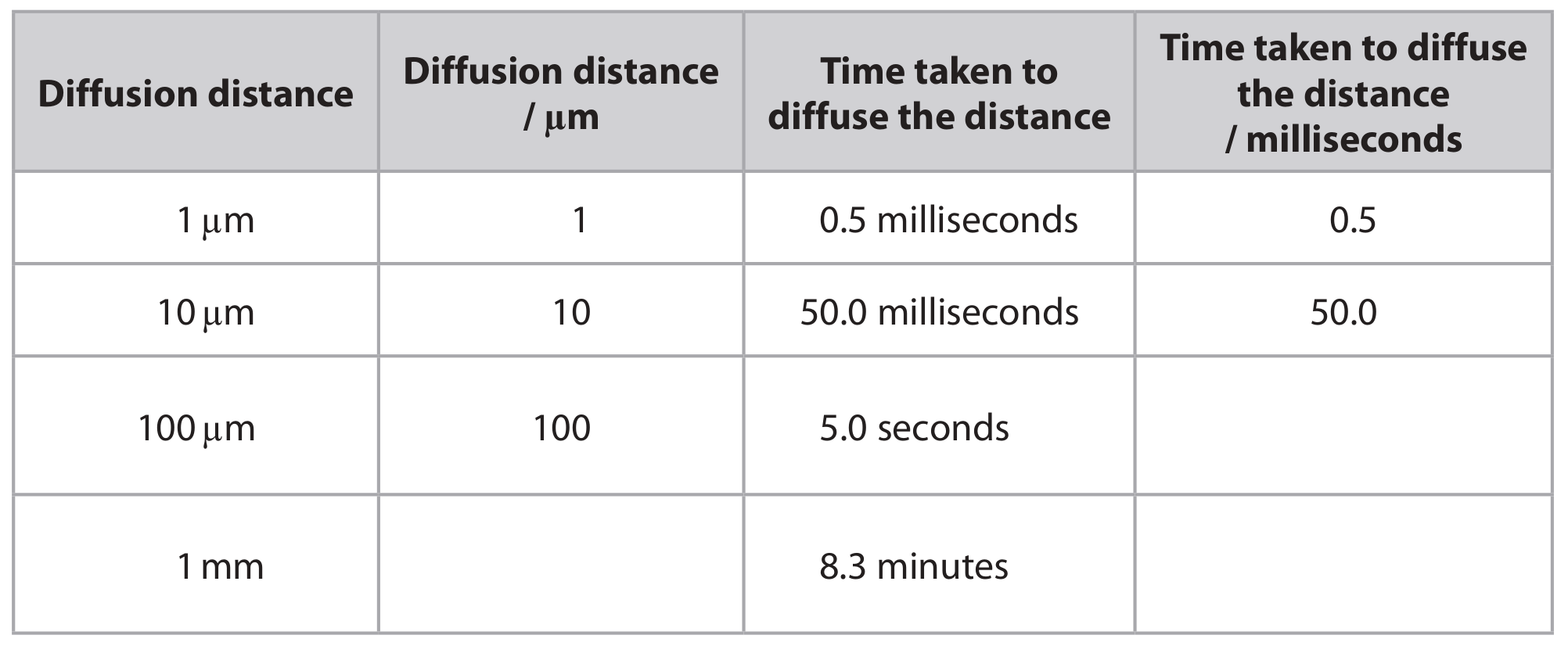
The table shows the time taken for a molecule to diffuse over different diffusion distances.

Table for Question 4(c) — Edexcel A-Level Biology AS
[ 3 ]

Question 4(c)(ii)

(i)

Explain why it is important for body cells to be close to capillaries to meet the demands of respiration.

Use the information in the question and the table to support your answer.
(3)

[ 3 ]

Question 5

[Maximum number: 9]

Several factors are associated with the risk of developing cardiovascular disease (CVD).

Obesity is one risk factor associated with CVD.
The ability of a group of people to lose weight was investigated.
This investigation considered:
- the body mass index (BMI) of the person
- the levels of amylase in their saliva
- the bacteria present in their digestive system.

Question 5(a)

(a)

The BMI of a person can be calculated using the formula:

BMI = mass in kg÷( height in m)2\mathrm{kg} \div(\text { height in } \mathrm{m})^{2}

[ 3 ]

Question 5(a)(i)

(i)

Name one other obesity indicator.

[ 1 ]

Question 5(a)(ii)

(ii)

Which of the following is the BMI of a person who has a mass of 65 kg and a height of 165 cm ?

A

23

B

24

C

39

D

40

[ 1 ]

Question 5(a)(iii)

(iii)

A person's BMI is used to put them into a weight category.

A person with a BMI of 25 and above, but below 30, is considered to be overweight but not obese.

Which describes the body mass of a person who is obese?

A

BMI>30\mathrm{BMI}>30

B

BMI30\mathrm{BMI} \geqslant 30

C

BMI<30

D

BMI30\mathrm{BMI} \leqslant 30

[ 1 ]

Question 5(b)

(b)

People who are overweight or obese are encouraged to lose weight.

State two ways in which a person could lose weight.

1

2

[ 1 ]

Question 5(c)

(c)

Amylase in saliva breaks down amylose into maltose.

[ 3 ]

Question 5(c)(i)

(i)

Which row of the table describes the action of amylase?
□ A
□ B
□ C

Table for Question 5(c)(i) — Edexcel A-Level Biology AS
[ 1 ]

Question 5(c)(ii)

(ii)

People with low levels of amylase in their saliva were found to lose weight more easily.

Suggest why these people lost weight more easily.

[ 2 ]

Question 5(d)

(d)

The bacteria in people's digestive systems replicate.

The investigation found that people with greater weight loss had bacteria with increased rates of replication.

[ 2 ]

Question 5(d)(i)

(i)

Explain why this finding can be described as a positive correlation.
(2)

[ 2 ]

Question 5

[Maximum number: 4]

Haemophilia is a group of rare conditions that affects the ability of the blood to clot.
These conditions are caused by mutations in the genes coding for factors involved in the blood clotting process.

Question 5(b)

(a)

Two types of haemophilia are haemophilia A and haemophilia B.

In 2021, there were 7.87×1097.87 \times 10^{9} people in the world.
There were 185218 people with haemophilia A and 37998 people with haemophilia B.

[ 1 ]

Question 5(b)(iii)

(i)

The number of people with haemophilia is only an estimate.

Give one reason why this is only an estimate.

[ 1 ]

Question 5(c)

(b)

In haemophilia, activation of the blood clotting pathway results in less thrombin being produced than in healthy individuals.

Explain how reduced thrombin will affect blood clotting.

[ 3 ]

Question 6

[Maximum number: 8]

Glucose is an example of a monosaccharide.
Monosaccharides join together to form disaccharides, oligosaccharides and polysaccharides.

Oligosaccharides contain from three to ten monosaccharides.

Question 6(a)

(a)

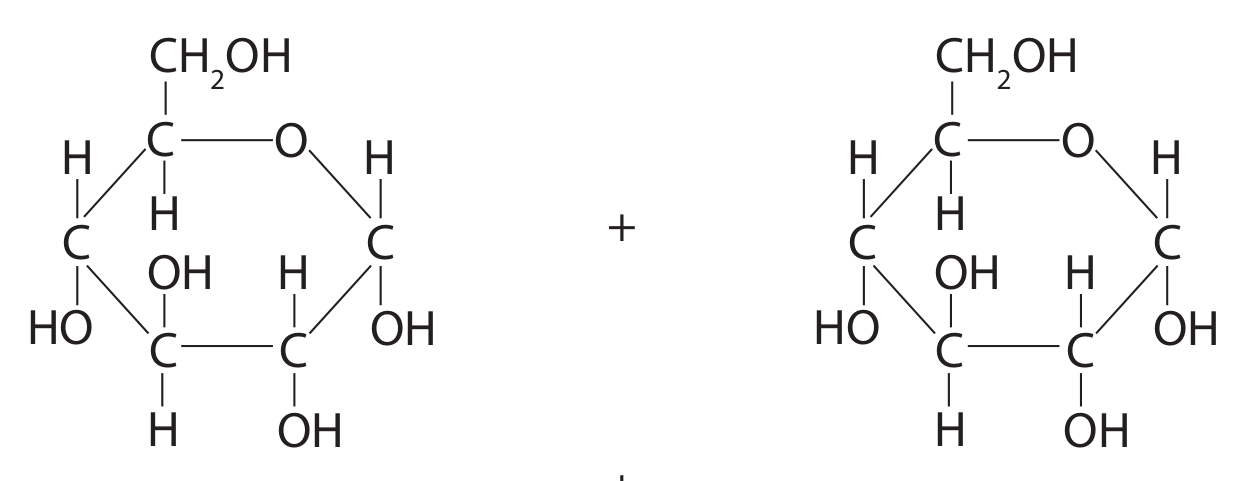
The diagram shows two glucose molecules.

Complete the diagram to show how these two molecules join by a glycosidic bond to form two products.

Figure for Question 6(a) — Edexcel A-Level Biology AS
[ 3 ]

Question 6(b)

(b)

Starch is a polysaccharide composed of amylose and amylopectin.

Digestion of starch begins in the mouth by an enzyme called amylase.
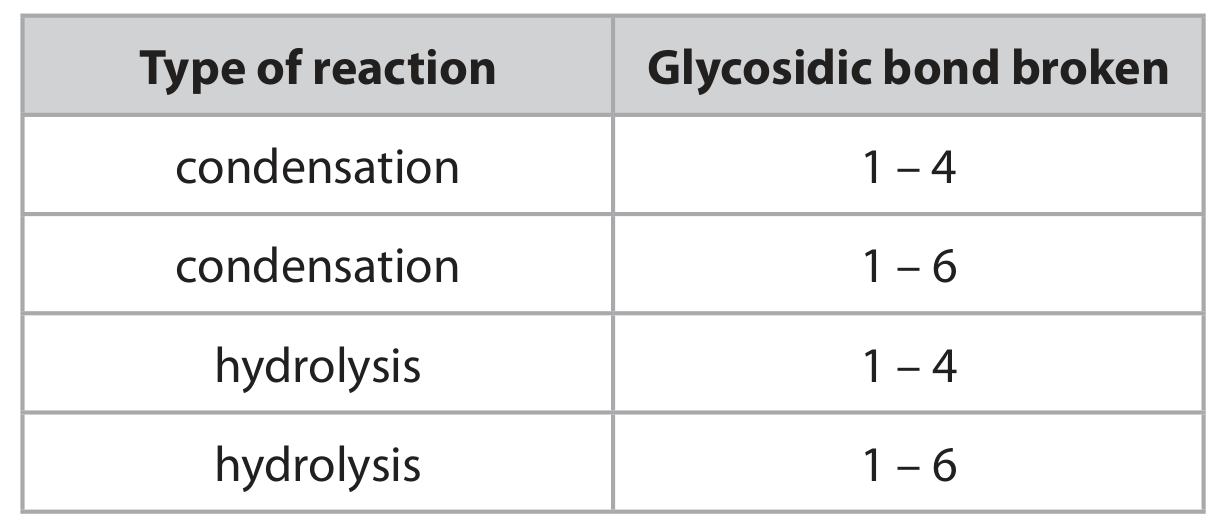
This amylase can break only 1-4 glycosidic bonds.
Only disaccharides and oligosaccharides are produced during this reaction.

[ 2 ]

Question 6(b)(i)

(i)

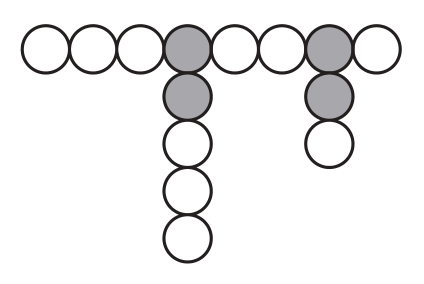
The diagram shows part of an amylopectin molecule.

Figure for Question 6(b)(i) — Edexcel A-Level Biology AS

Key glucose molecule joined by 1-4 glycosidic bonds glucose molecule joined by 1-4 and 1-6 glycosidic bonds

Draw one disaccharide and two different oligosaccharides that could be produced following the digestion of this part of amylopectin by this amylase.

[ 2 ]

Question 6(c)

(c)

The digestion of carbohydrates is completed in the small intestine.

Glucose is then absorbed into the bloodstream.

[ 3 ]

Question 6(c)(i)

(i)

Suggest how disaccharides and oligosaccharides are broken down in the small intestine.

Give reasons for your answer.
(3)

[ 3 ]

Question 7

[Maximum number: 9]

Statins are used in the prevention and treatment of cardiovascular disease (CVD).

Red yeast rice (RYR) is a source of food and medicine in Asia. It is produced by the fermentation of rice by yeast.

Red yeast rice contains monacolin K, which is similar to a statin.

Question 7(b)

(a)

*(b) Scientists have studied the effects of RYR on lipid levels.
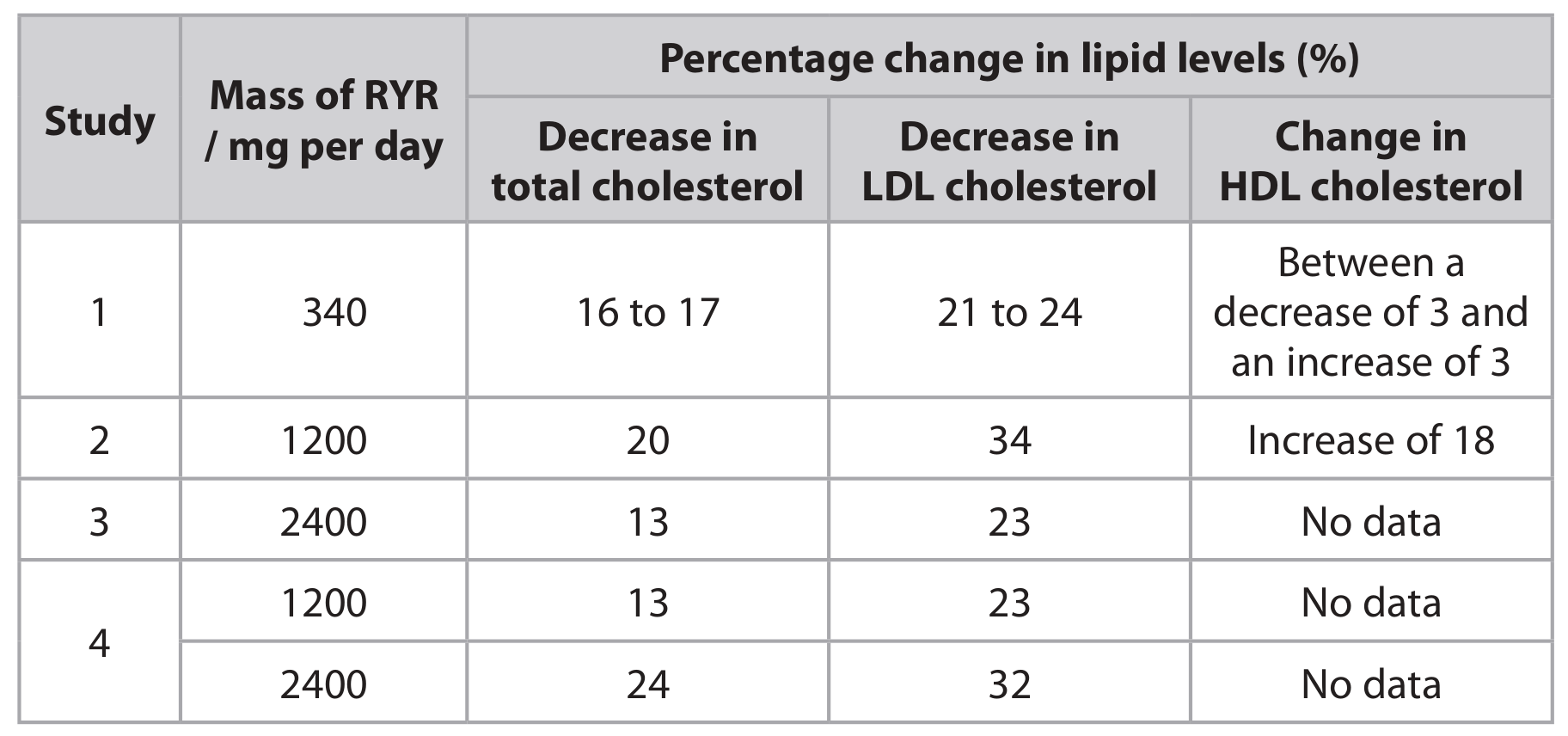
The table shows the results of four studies on the effects of eating RYR on lipid levels.

Table for Question 7(b) — Edexcel A-Level Biology AS

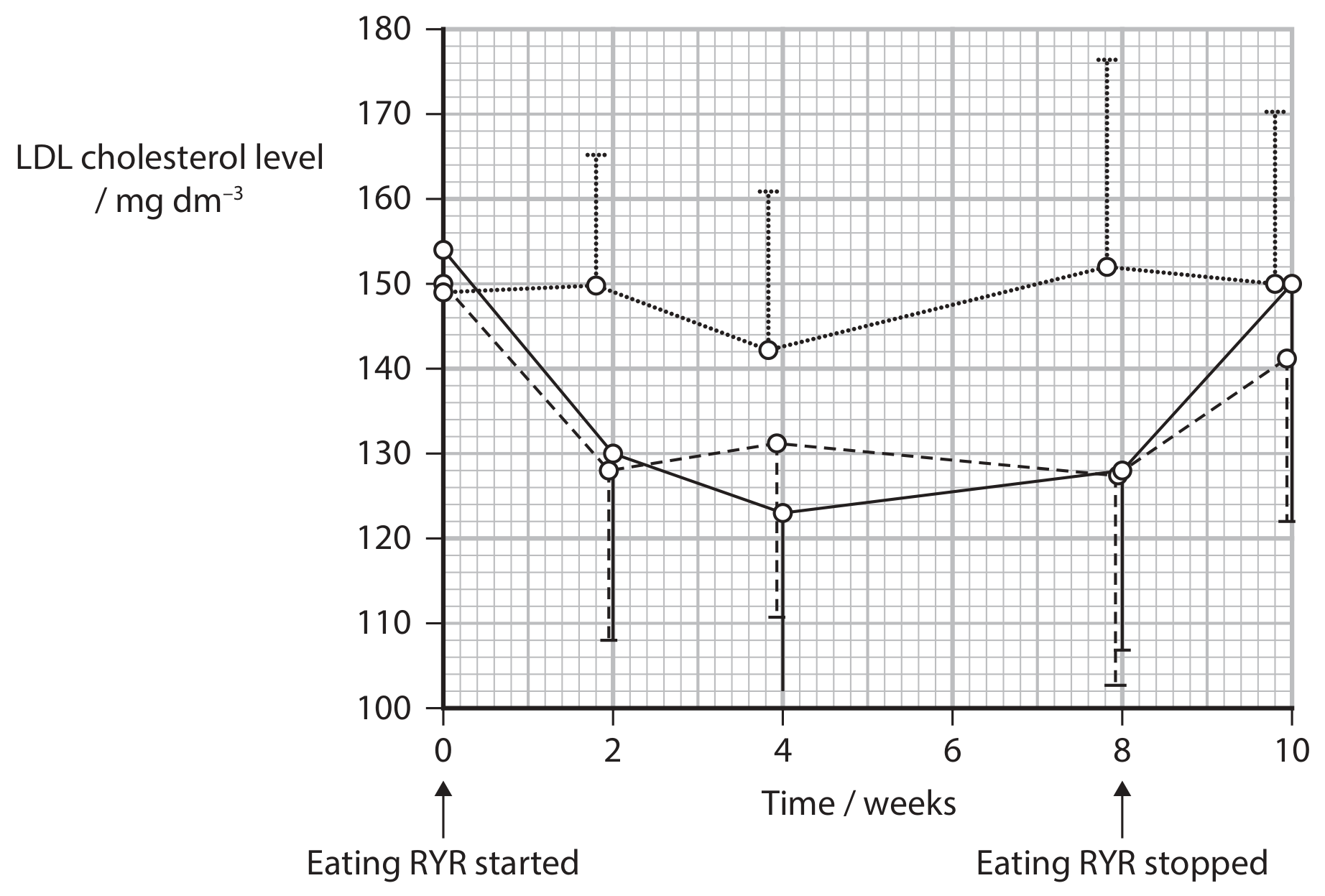
Graph 1 shows the effects of eating RYR daily on LDL cholesterol levels. It also shows the changes in levels of LDL cholesterol when eating RYR was stopped.

The investigation included a control group that did not eat RYR.

Figure for Question 7(b) — Edexcel A-Level Biology AS

```
Key
```

```
eating 200 mg RYR ( n=21 )
--- eating 100 mg RYR ( n=22 )
```
Graph 1

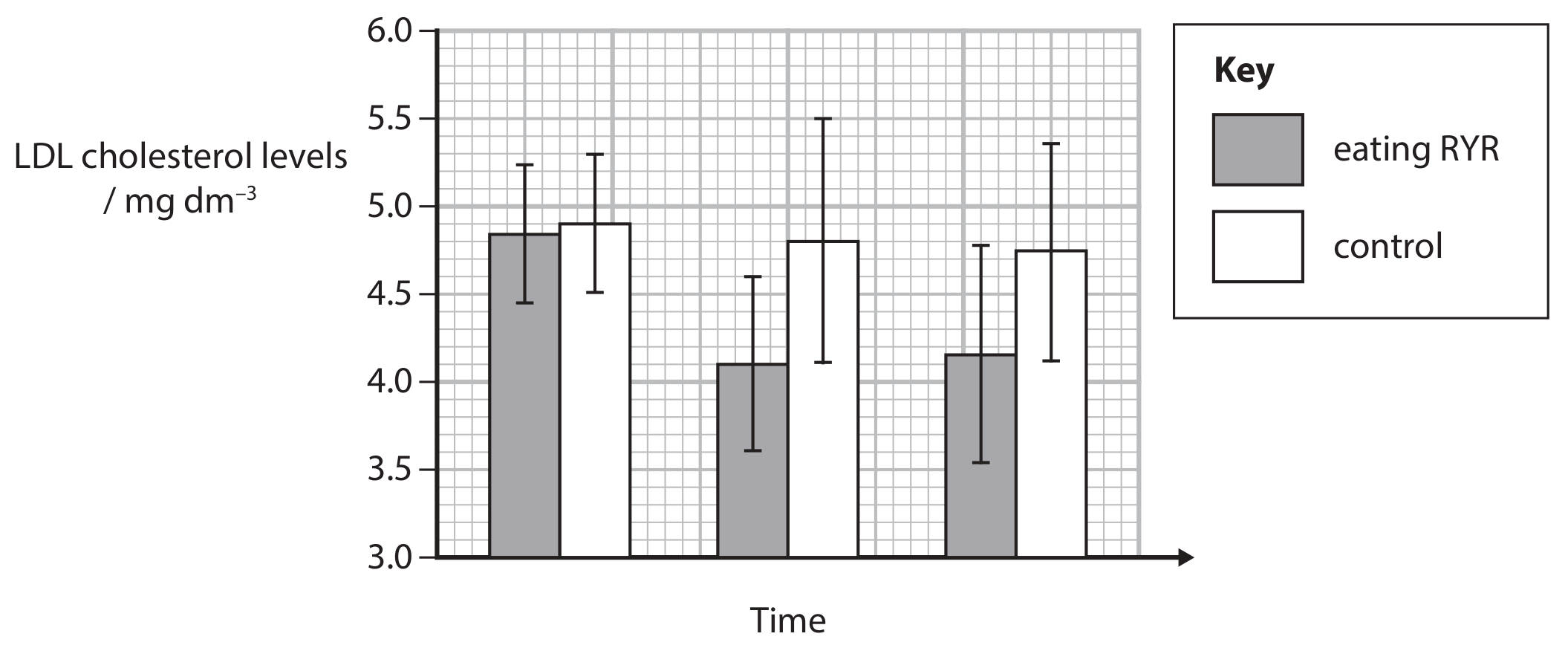
Graph 2 shows the results of another study where the effect of eating RYR on LDL cholesterol levels was compared with a control group.

Figure for Question 7(b) — Edexcel A-Level Biology AS

Graph 2

Discuss the limitations of using the results of these studies to draw conclusions about the effects of RYR on lipid levels.
(6)

[ 6 ]

Question 7(c)

(b)

Treatment with statins can have side effects.

[ 3 ]

Question 7(c)(i)

(i)

Name two possible side effects of being treated with statins.

1

2

[ 1 ]

Question 7(c)(iii)

(ii)

Suggest two problems when assessing possible side effects resulting from treatment with monacolin K in an investigation.
(2)

1

2

[ 2 ]

Question 8

[Maximum number: 10]

The role of red blood cells is to transport oxygen around the body.
The oxygen-carrying capacity of red blood cells varies from species to species.
The oxygen-carrying capacity depends partly on the size and structure of the red blood cells and their haemoglobin content.

Question 8(b)

(a)

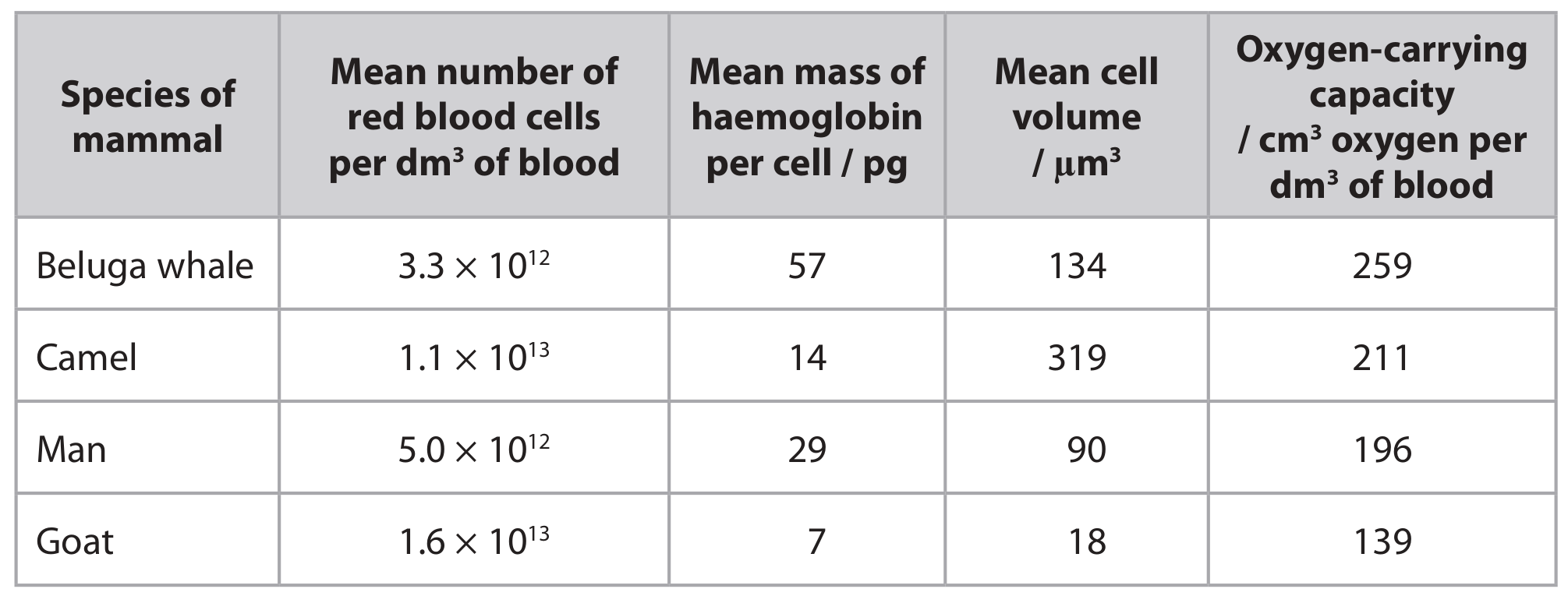
*(b) The table shows some information about red blood cells from four species of air

breathing mammals.

The species are listed by decreasing size.

Table for Question 8(b) — Edexcel A-Level Biology AS

Explain the relationships between the sizes of these species of mammal, the characteristics of their red blood cells and their oxygen-carrying capacity.

Use the information in the table to support your answer.
(6)

[ 6 ]

Question 8(c)

(b)

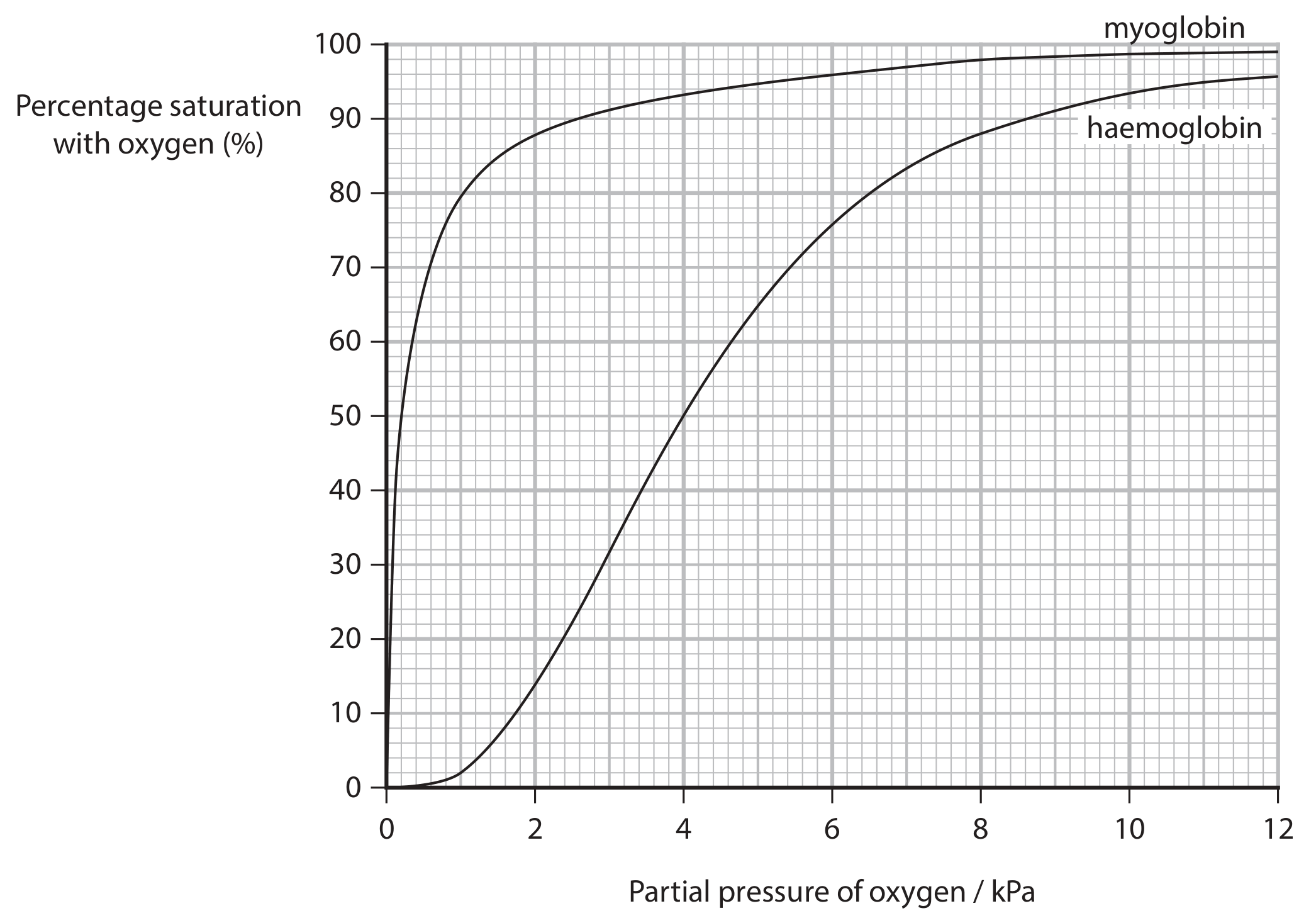
The graph shows the oxygen dissociation curve for haemoglobin and myoglobin. Myoglobin is present inside muscle cells and acts as an oxygen store.

Figure for Question 8(c) — Edexcel A-Level Biology AS
[ 4 ]

Question 8(c)(i)

(i)

The decrease in percentage saturation with oxygen of myoglobin from 6 kPa to 4 kPa is 3%.

Calculate the difference between this decrease and the decrease for haemoglobin from 6 kPa to 4 kPa.
(2)

[ 2 ]

Question 8(c)(ii)

(ii)

Describe the effect of the partial pressure of oxygen on the percentage saturation with oxygen of myoglobin.

Use values from the graph to support your answer.
(2)

[ 2 ]

Question 8(c)(iii)

(iii)

Suggest why the dissociation curve for myoglobin is to the left of the curve for haemoglobin.
(Total for Question 8 = 15 marks)