
EduNinja

Edexcel IAL Biology AS Topic 2 Membranes, Proteins, DNA and Gene Expression

Edexcel IAL Biology AS Topic 2 Membranes, Proteins, DNA and Gene Expression
Pearson Edexcel IAL Biology syllabusBiology YBI11First assessment 2019

Identify the molecular structure or process being tested, annotate the evidence precisely and link each bond, gradient or sequence change to its biological outcome.

Exam points

  • Interpret membrane and gas-exchange diagrams through structure, gradients and transport.
  • Explain protein and enzyme behaviour through bonds, shape and molecular interactions.
  • Apply DNA and gene-expression mechanisms to sequences, data and experimental evidence.

Question 1

[Maximum number: 5]

Enzymes are biological catalysts.

Question 1(a)

(a)

Enzyme molecules are formed from chains of amino acids joined together.

Which pair of elements is found in all amino acids?

A

carbon and oxygen

B

carbon and sulfur

C

nitrogen and magnesium

D

oxygen and magnesium

[ 1 ]

Question 1(b)

(b)

Which row of the table describes how two amino acids are joined together in an enzyme molecule?
□ A
□ B
□ C
□ D
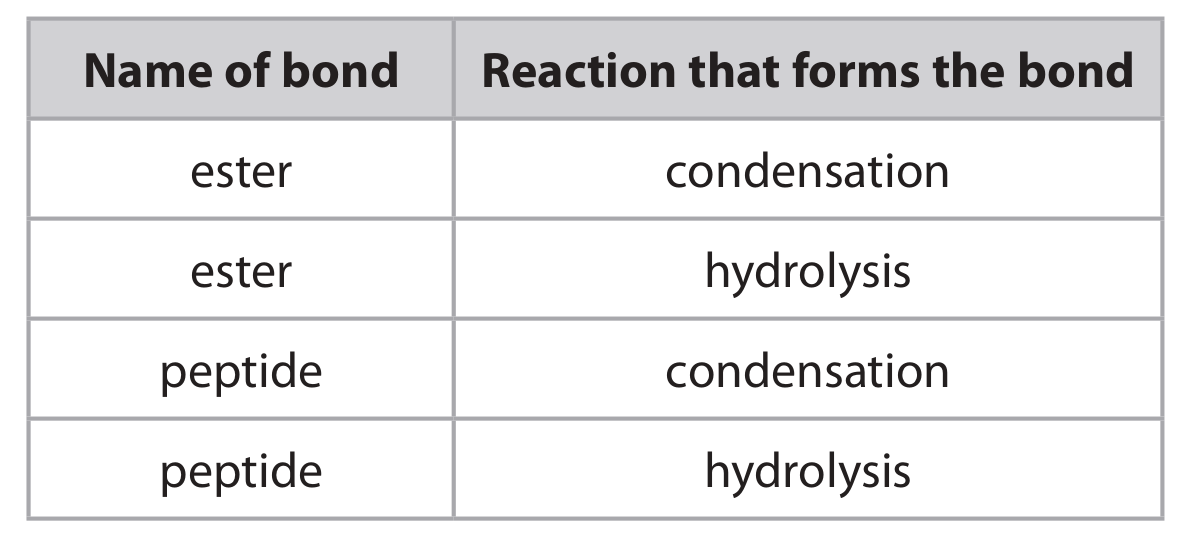
Table for Question 1(b) — Edexcel A-Level Biology AS
[ 1 ]

Question 1(c)

(c)

Describe how a chain of amino acids can form an enzyme molecule.
(3)

[ 3 ]
Question 2

[Maximum number: 3]

Errors in DNA replication can give rise to mutations.

Question 2(a)

(a)

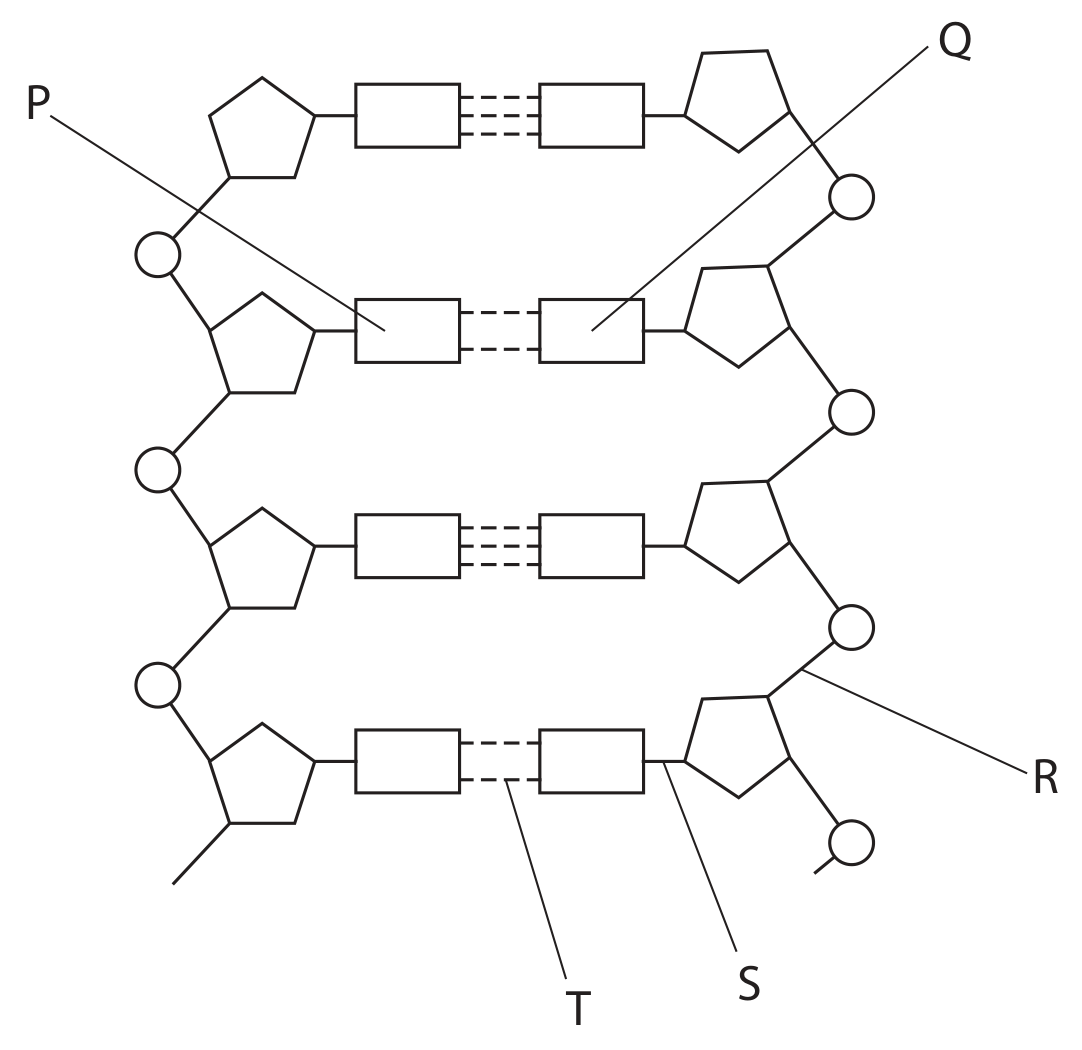
The diagram shows part of a DNA molecule.

Figure for Question 2(a) — Edexcel A-Level Biology AS
[ 2 ]

Question 2(a)(i)

(i)

The base labelled Q is thymine.

Which is the base labelled P ?

A

adenine

B

cytosine

C

guanine

D

uracil

[ 1 ]

Question 2(a)(ii)

(ii)

Which row of the table identifies the bonds labelled R, S and T ?

R

S

T

A

covalent

phosphodiester

hydrogen

B

hydrogen

covalent

phosphodiester

C

hydrogen

phosphodiester

covalent

D

phosphodiester

covalent

hydrogen

[ 1 ]

Question 2(b)

(b)

Name two types of gene mutation.
(1)

1

2

[ 1 ]

Question 3

[Maximum number: 7]

The process of protein synthesis involves RNA polymerase, start and stop codons and ribosomes.

Question 3(a)

(a)

Describe the role of RNA polymerase in protein synthesis.
(2)

[ 2 ]

Question 3(b)

(b)

Compare and contrast the structure of the start and stop codons and how they work.
(3)

[ 3 ]

Question 3(c)

(c)

Describe the roles of the ribosomes in protein synthesis.
(2)

[ 2 ]

Question 4

[Maximum number: 4]

Many animals have a heart and circulation.

Question 4(b)

(a)

Capillaries enable the movement of molecules between the blood and cells.

The distance the molecules diffuse between the blood and cells affects the rate of diffusion. This is the diffusion distance.

[ 2 ]

Question 4(b)(i)

(i)

Name two other factors that affect the rate of diffusion.

1
2

[ 1 ]

Question 4(b)(ii)

(ii)

Name the law of diffusion that can be used to calculate the rate of diffusion.

[ 1 ]

Question 4(c)

(b)

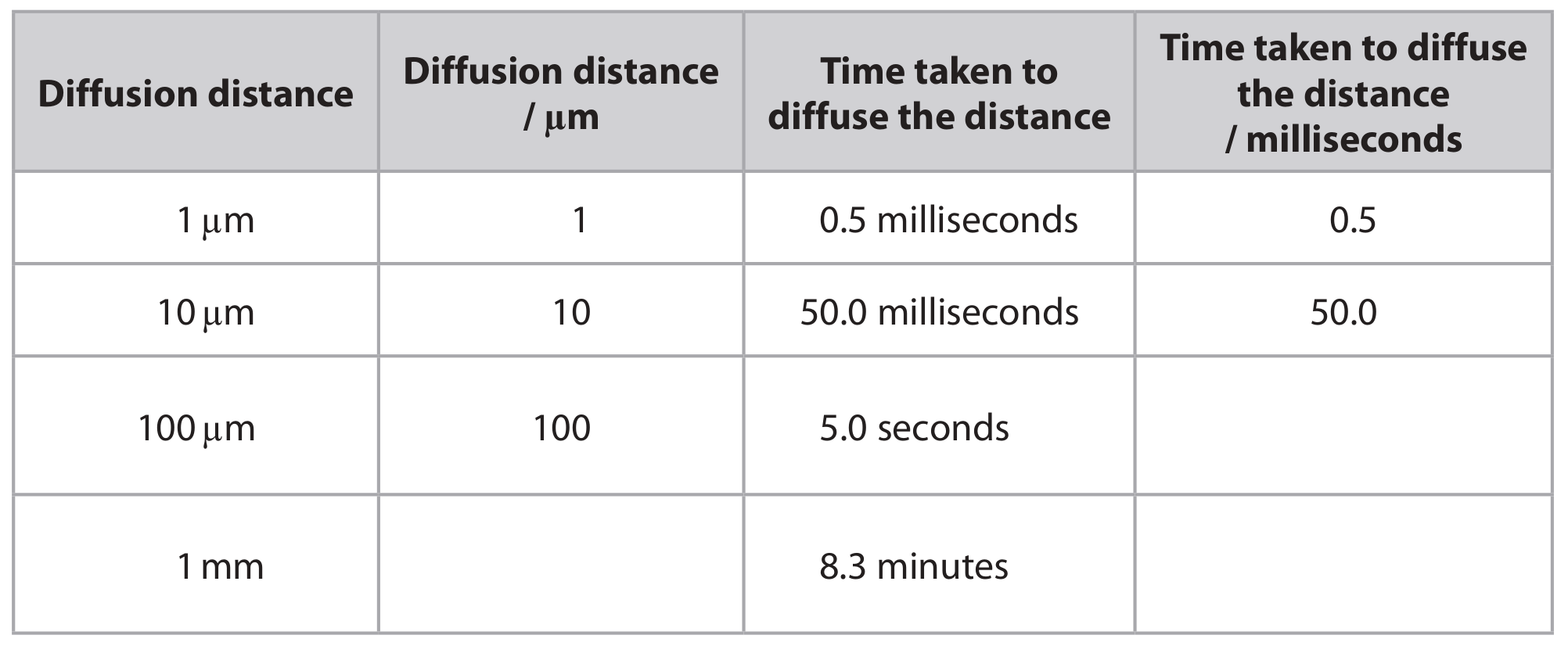
The table shows the time taken for a molecule to diffuse over different diffusion distances.

Table for Question 4(c) — Edexcel A-Level Biology AS
[ 2 ]

Question 4(c)(i)

(i)

Complete the table to show the missing values.

[ 2 ]

Question 5(a)

[Maximum number: 4]

Haemophilia is a group of rare conditions that affects the ability of the blood to clot.
These conditions are caused by mutations in the genes coding for factors involved in the blood clotting process.

Haemophilia is inherited in a similar way to red-green colour blindness and most people who have it are male.

Explain why most people who have haemophilia are male.
(4)

Question 6

[Maximum number: 4]

Glucose is an example of a monosaccharide.
Monosaccharides join together to form disaccharides, oligosaccharides and polysaccharides.

Oligosaccharides contain from three to ten monosaccharides.

Question 6(b)

(a)

Starch is a polysaccharide composed of amylose and amylopectin.

Digestion of starch begins in the mouth by an enzyme called amylase.
This amylase can break only 1-4 glycosidic bonds.
Only disaccharides and oligosaccharides are produced during this reaction.

[ 2 ]

Question 6(b)(ii)

(i)

Explain why this amylase is able to break only 1-4 glycosidic bonds.

[ 2 ]

Question 6(c)

(b)

The digestion of carbohydrates is completed in the small intestine.

Glucose is then absorbed into the bloodstream.

[ 2 ]

Question 6(c)(ii)

(i)

The absorption of glucose into the bloodstream requires membrane transport proteins.

Explain why glucose cannot diffuse into the bloodstream.
(2)

[ 2 ]

Question 8(a)

[Maximum number: 3]

The role of red blood cells is to transport oxygen around the body.
The oxygen-carrying capacity of red blood cells varies from species to species.
The oxygen-carrying capacity depends partly on the size and structure of the red blood cells and their haemoglobin content.

Describe the structure of a haemoglobin molecule.
(3)