CAIE A-Level Business 4.1 The Nature of Operations Question Bank

CAIE A-Level Business 4.1 The Nature of Operations Question Bank
Cambridge International AS & A Level Business 9609 syllabus for exams in 2026, 2027 and 20282026–2028

Practise applying the transformation process, productivity, production methods, flexibility and sustainability to analyse operational performance and evaluate business choices.

Exam points

  • identify inputs, the transformation process and outputs and apply each stage to the case
  • calculate or analyse labour productivity and connect a change to unit cost, output or quality
  • evaluate production or sustainability choices using scale, flexibility, investment and stakeholder effects

Question 1(a)(i)

[Maximum number: 1]

The Research Agency (TRA)

TRA is a quaternary sector business. It is the market leader in providing social media data to food manufacturers in country F. TRA's market has grown by 40% over the last year.

DF is a multinational business that specialises in non-alcoholic drinks. DF has asked TRA for data about a new bottle of water with pod attachments. The pods give a fruity flavour which is combined with sparkling water. TRA has sampled 8000 potential consumers on social media to identify their favourite fruity flavour (see Fig. 1.1).
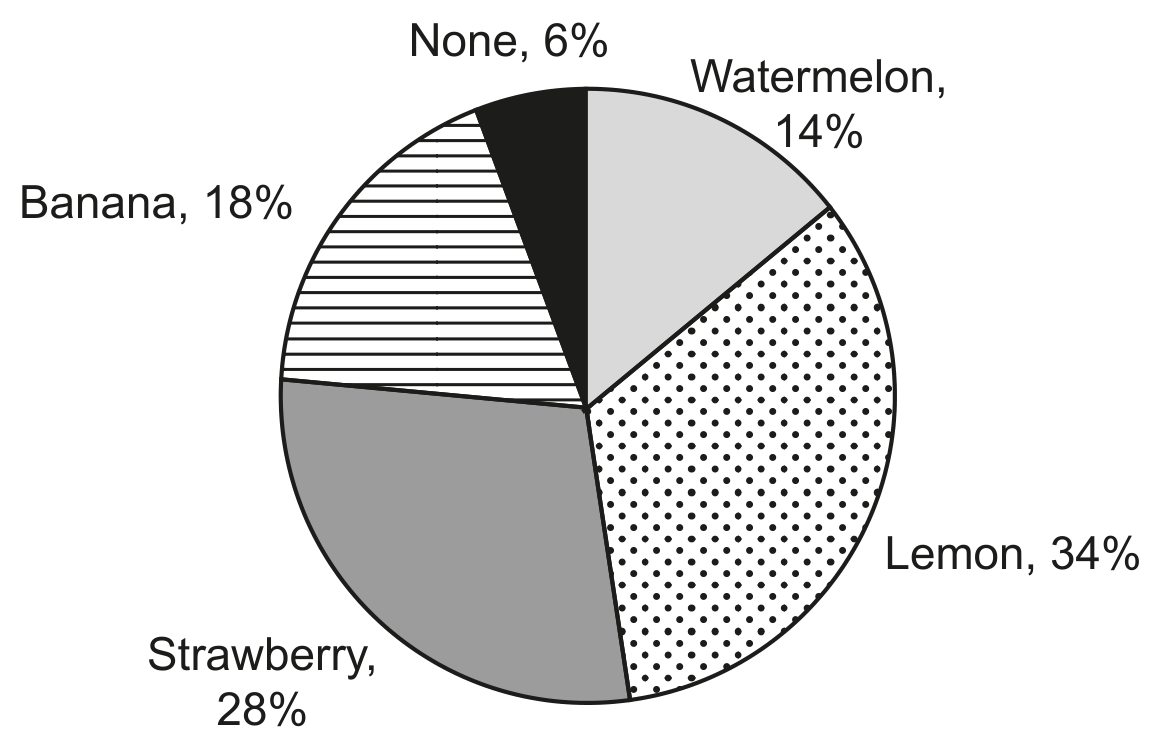
Fig. 1.1 Data about consumer flavour preferences for DF

Fig. 1.1 Data about consumer flavour preferences for DF

TRA employs 65 researchers. Since 2020, all of these employees work from home. They are provided with all the necessary IT equipment and a high-speed internet connection. However, motivation is poor, and this has led to high labour turnover. The Human Resource Director has received some feedback from employees. Fig. 1.2 shows some of this feedback.
- I hate being so isolated - I never get to speak to any other employees.
- I have to use my own electricity, and the cost has doubled in the last two years.
- I know some employees are not working very hard, but they get paid the same as me. It's not fair!

Identify one stage of the transformational process.

Question 1(c)

[Maximum number: 8]

Analyse two limitations to SF of operating as a capital intensive business.

Question 1

[Maximum number: 18]

Crafty Toys (CT)

CT is a co-operative that produces and sells a range of wooden toys, such as puzzles, cars and dolls. The co-operative was formed in 2020 by a group of 12 people who share a passion for making toys. They wanted to work together to create quality products that would appeal to children and parents. No one person takes on the role of manager; instead, they share the traditional manager functions between them.

CT operates from a large workshop in a rural area of country Z, making toys using labour-intensive techniques. CT uses locally sourced wood that is certified as eco-friendly. CT also uses natural paints and finishes that are safe and non-toxic for children. Table 1.1 shows CT's output in 2024.

CT sells its products online through its own website and social media platforms, as well as through some independent retailers who specialise in ethical products. The co-operative

Table 1.1 Output data for CT in 2024

Table 1.1 Output data for CT in 2024

also attends various trade fairs and exhibitions to showcase its products and network with potential customers and suppliers. CT has never researched customer wants.

CT faces some challenges in its current operations. These challenges include:
- high costs of production
- a long lead time
- a requirement for skilled workers.

CT is considering changing to flow production to overcome these challenges.

Question 1(b)(i)

(a)

Refer to Table 1.1. Calculate the labour productivity for CT in 2024.

[ 3 ]

Question 1(b)(ii)

(b)

Explain one advantage to CT of labour-intensive operations.

[ 3 ]

Question 1(d)

(c)

Evaluate whether CT should change to flow production.

[ 12 ]

Question 3

Question 3(a)

(a)

Define the term labour productivity.

[ 2 ]

Question 3(b)

(b)

Explain one way that a business can improve labour productivity.

[ 3 ]