Q BankQuestion BankDocsDocuments

A4.1 Evolution and speciation

Evolution and speciation explain how heritable variation, molecular evidence, selection, isolation, and chromosome change produce population divergence and new species over time.

Syllabus
First assessment 2025
Topic
A4.1
Level
SL

Exam analysis

Chance of appearing36%of analysed past papers
Latest appearanceNovember 2025
Most common paperPaper1
Typical marks1–3

Most tested objectives

Common question formats

  • Definition or recall
  • Process explanation
  • Data analysis
  • Comparison
  • Evaluation

Recent exam appearances

November 2025Paper2 ["SL"] · TZ17(a)[ 4 ]A4.1.5—Convergent evolution
November 2025Paper1A ["SL"] · TZ122[ 1 ]A4.1.7—Reproductive isolation and differential selection
May 2025Paper2 ["SL"] · TZ28(b)[ 4 ]A4.1.6—Speciation by splitting of pre-existing species
May 2025Paper2 ["SL"] · TZ33(b)[ 3 ]A4.1.7—Reproductive isolation and differential selection
May 2025Paper1A ["SL"] · TZ323[ 1 ]A4.1.5—Convergent evolution
Practice this topic

Coverage 2010–2025 · Updated 15 Jul 2026

Objective notes

7 learning objectives
A4.1.1Evolution as change in heritable characteristics

• Evolution is cumulative change in heritable characteristics of a population

• Acquired characteristics are not inherited in the Darwinian sense

A4.1.2Evidence from sequences

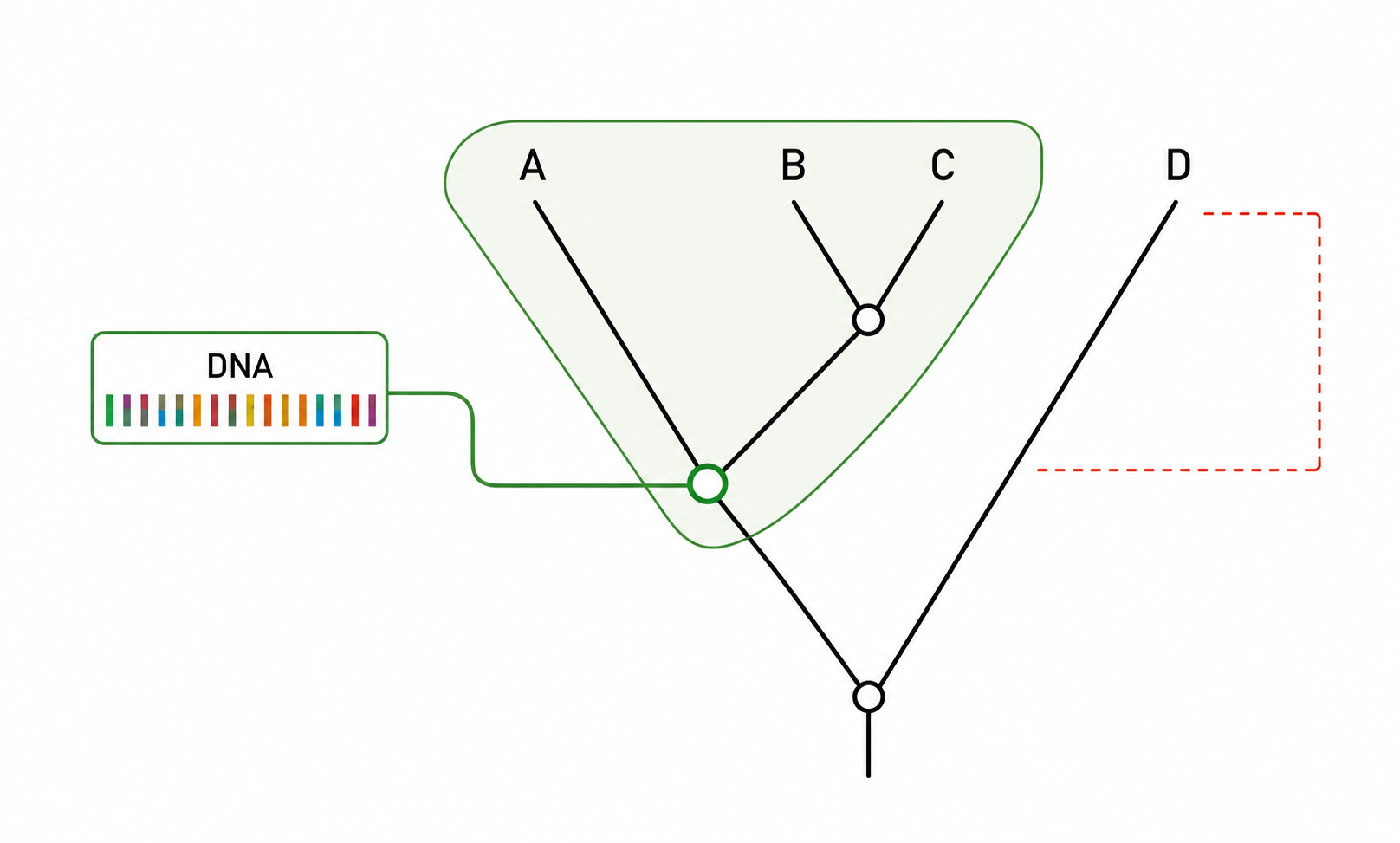
• Universal DNA, genetic code, ATP use, and core metabolism support common ancestry

• DNA, RNA, and protein sequence differences indicate relatedness and divergence

A4.1.3Evidence from selective breeding

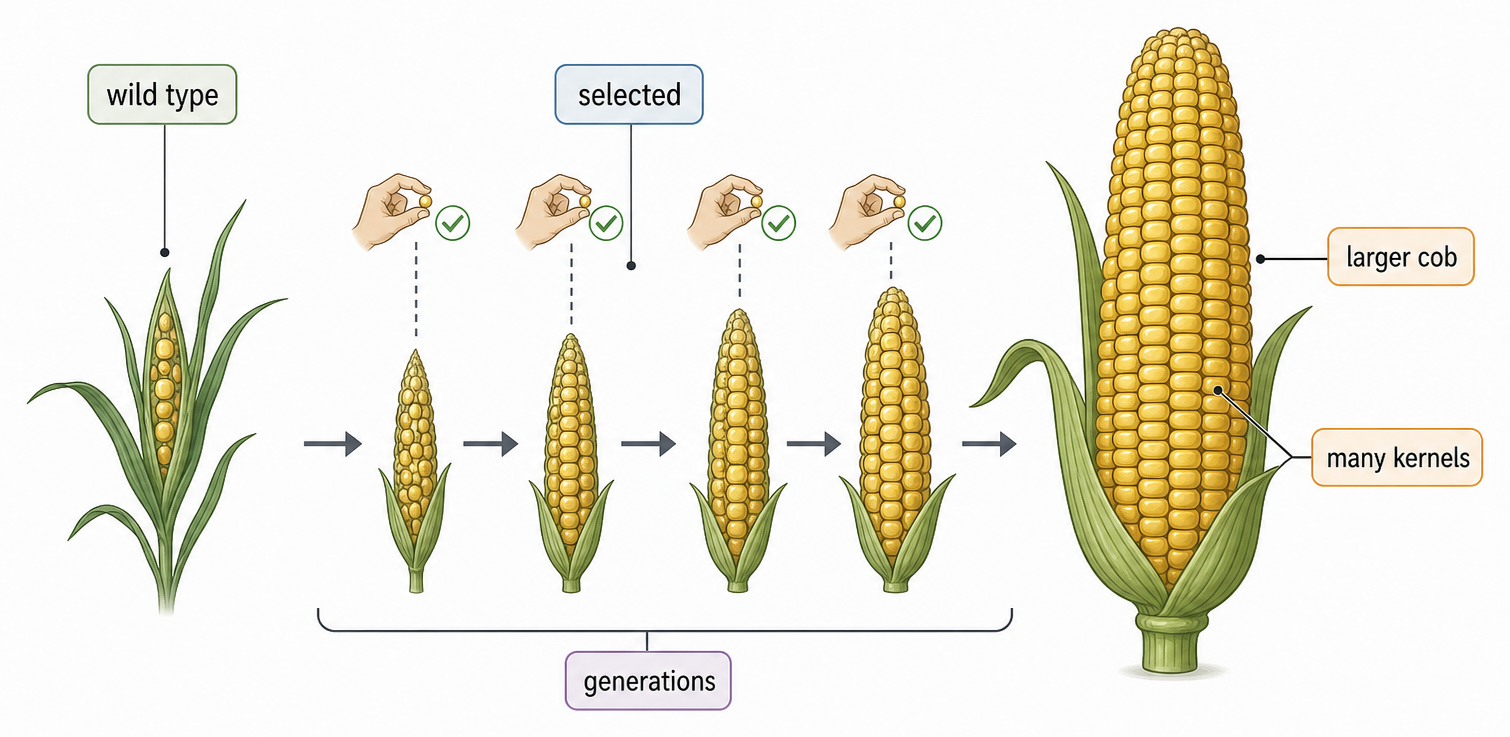
• Selective breeding shows traits can change rapidly under selection

• Examples include pigeons, domesticated animals, Brassica crops, wheat, and maize

A4.1.4Evidence from homologous structures

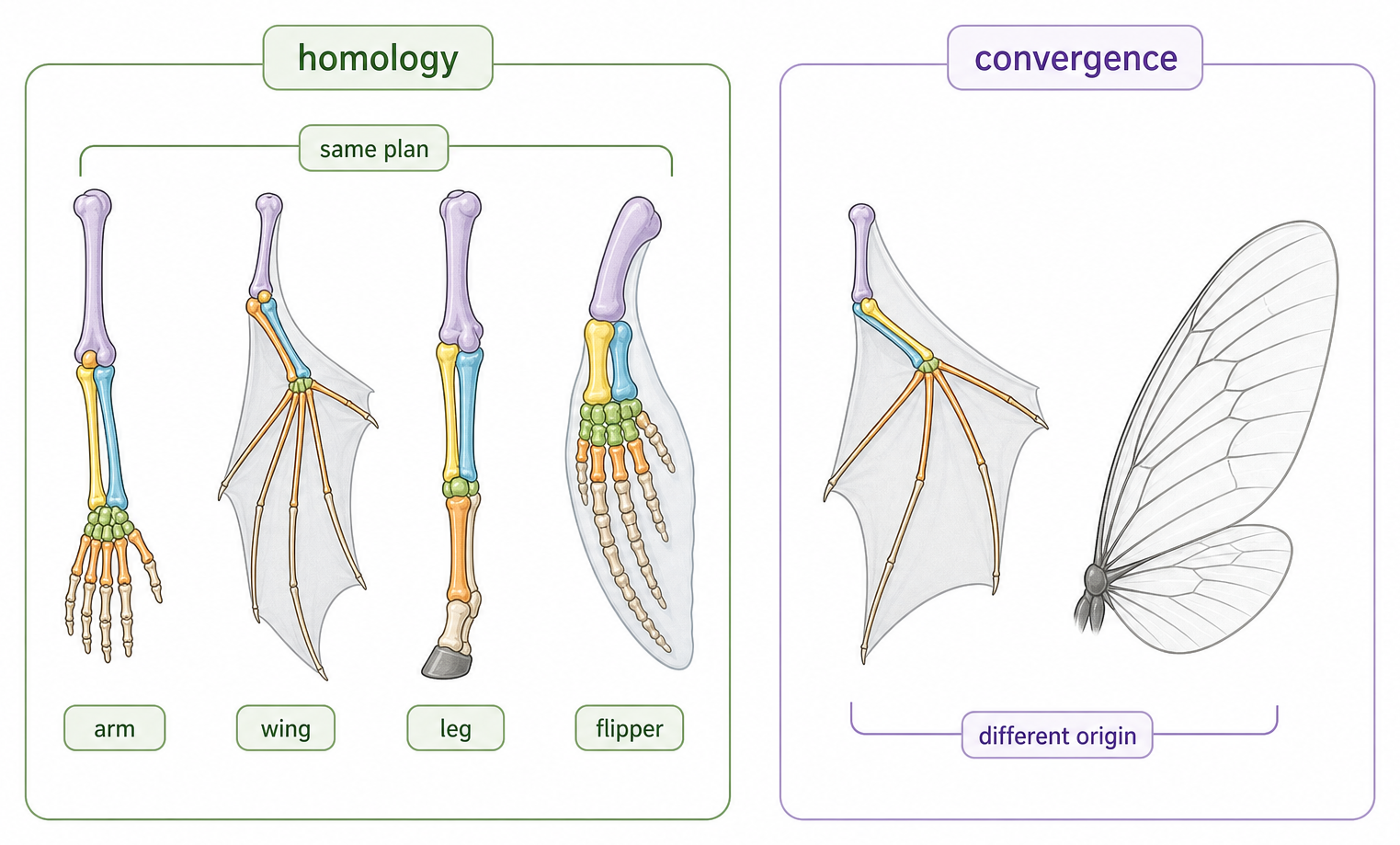
• Homologous structures share ancestry even when functions differ

• Vertebrate pentadactyl limbs support divergent evolution and adaptive radiation

A4.1.5Convergent evolution

• Analogous structures have similar functions but different evolutionary origins

• Similar selection pressures can produce convergence, such as bat and insect wings

A4.1.6Speciation by splitting of pre-existing species

• Speciation forms new species by splitting a pre-existing species

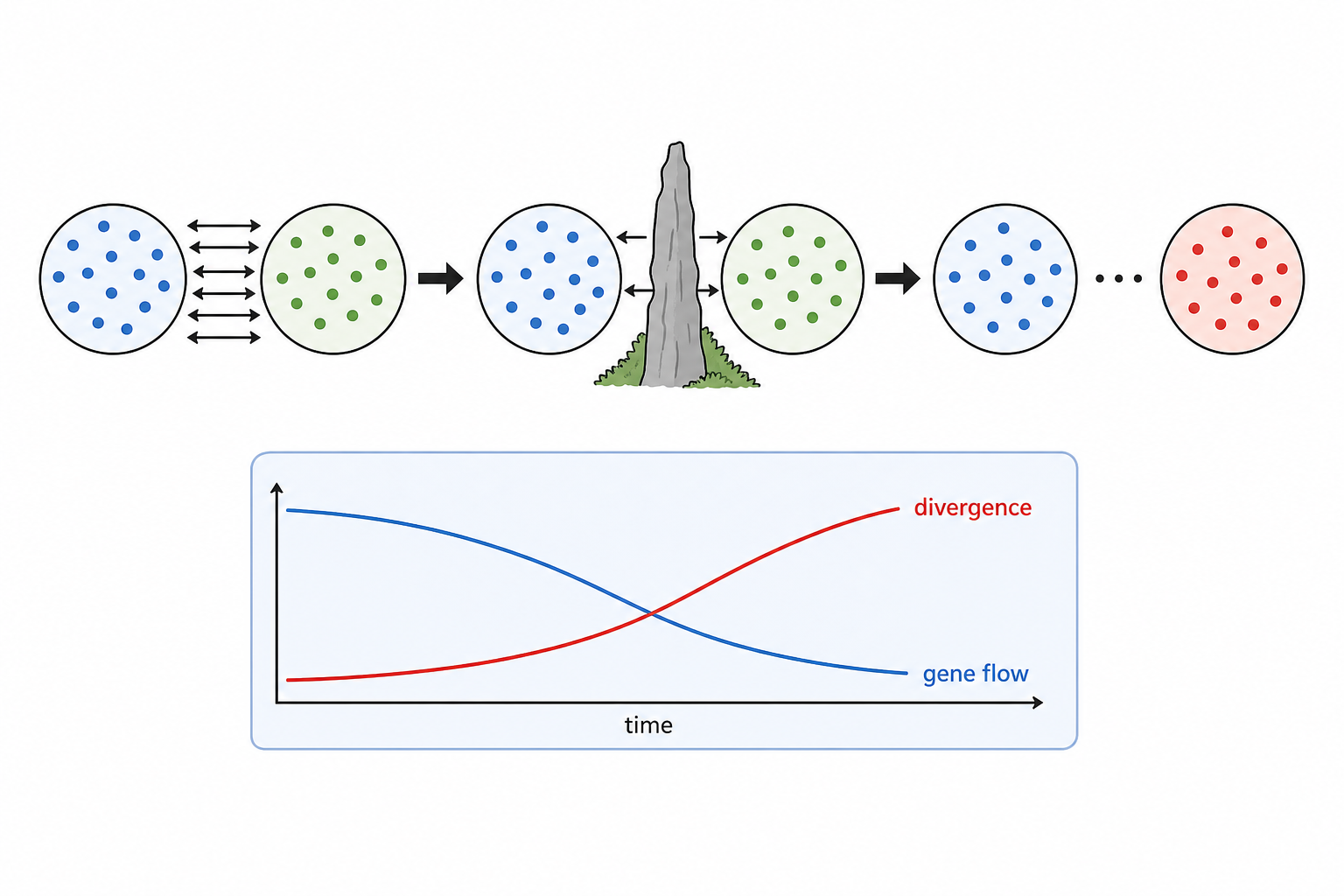
• Isolated gene pools diverge through selection, mutation, and genetic drift

A4.1.7Reproductive isolation and differential selection

• Reproductive isolation reduces gene flow so populations can diverge

• Geographic separation and different selection pressures can drive speciation

• Chimpanzees and bonobos illustrate river-linked isolation and divergence

ConceptIB Biology SL