
Question 1
Town Trucks (TT)
TT is a private limited company in country J. TT has contracts to deliver products to secondary, tertiary and quaternary sector businesses.
QZ is one of the largest manufacturers in country J and plans to outsource its supply chain management. A contract has been agreed between TT and QZ based on the following cost and revenue data (see Table 1.1). TT's Sales Manager has forecast that TT will make 5000 deliveries with the new contract.
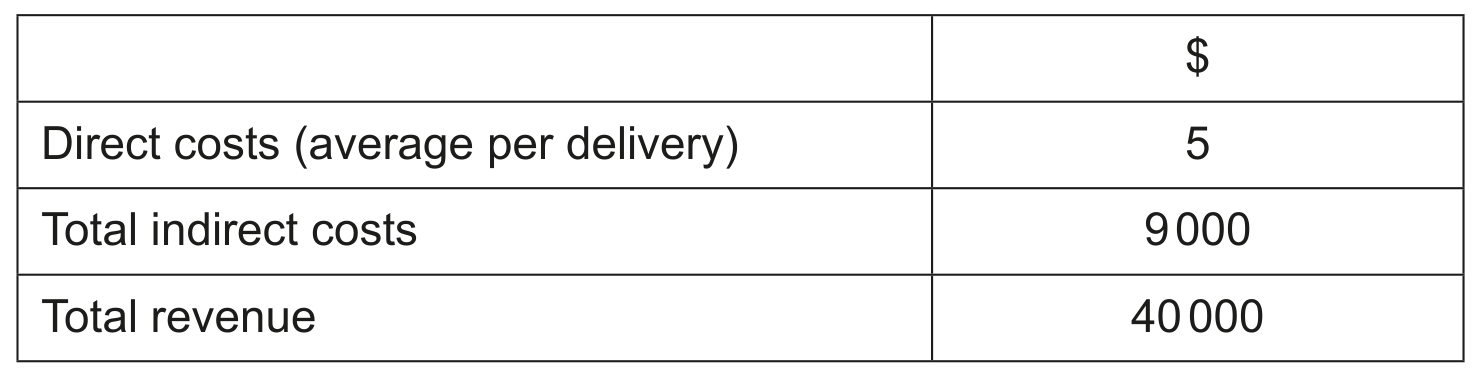
Table 1.1 Cost and revenue forecast for the QZ contract
TT employs 120 drivers. The majority of these drivers are white men aged between 40 and 60 . A national newspaper has recently criticised the truck industry in country J for not having diversity and equality in the workplace.
Klide, the Marketing Manager, has been set an objective to increase TT's revenue. He has decided to target small online retailers. TT will pick up individual products from the small online retailers and deliver them to households. This would require a new fleet of smaller trucks but has the potential to increase TT's revenue. Klide plans to use digital promotion to target these small online retailers.
Question 1(b)(i)
Refer to Table 1.1 and other information. Calculate TT's forecast total profit from the QZ contract.
Question 1(b)(ii)
Explain one reason why TT needs accurate cost information.