Let f(x)=p(x-q)(x-r). Part of the graph of f is shown below.
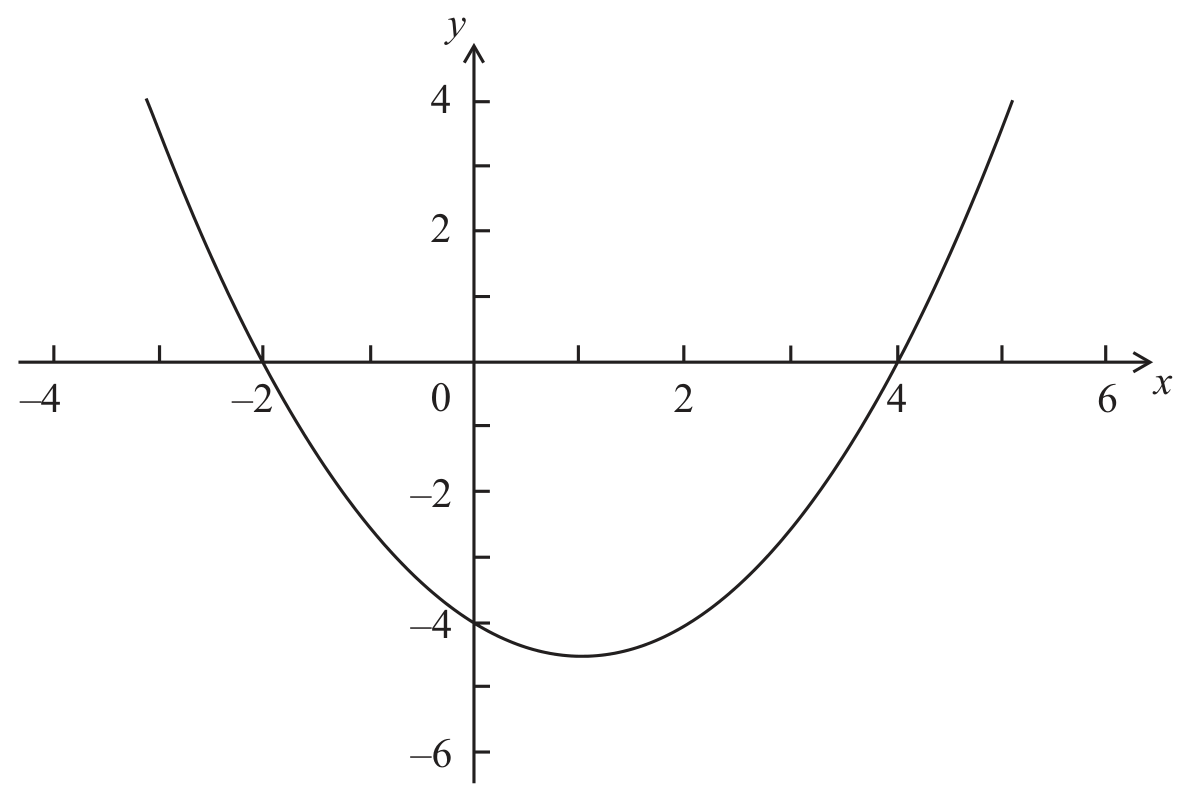
The graph passes through the points (-2,0),(0,-4) and (4,0).
Write down the value of q and of r.
Write down the equation of the axis of symmetry.
Find the value of p.
EduNinjaLet f(x)=p(x-q)(x-r). Part of the graph of f is shown below.

The graph passes through the points (-2,0),(0,-4) and (4,0).
Write down the value of q and of r.
Write down the equation of the axis of symmetry.
Find the value of p.
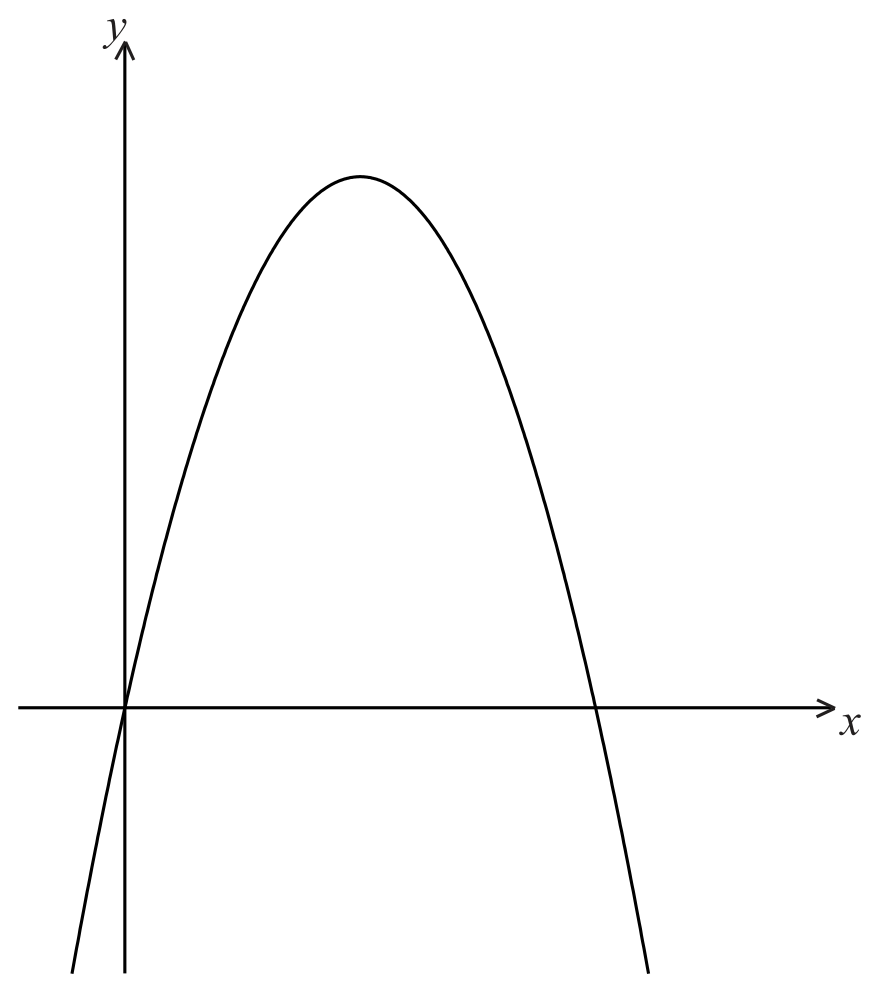
Let f(x)=8x−2x2. Part of the graph of f is shown below.

Find the x-intercepts of the graph.
Write down the equation of the axis of symmetry.
Find the y-coordinate of the vertex.
Let f(x)=2 x+4 and g(x)=7x2.
Find (f∘g)(x).
Find (f∘g)(3.5).
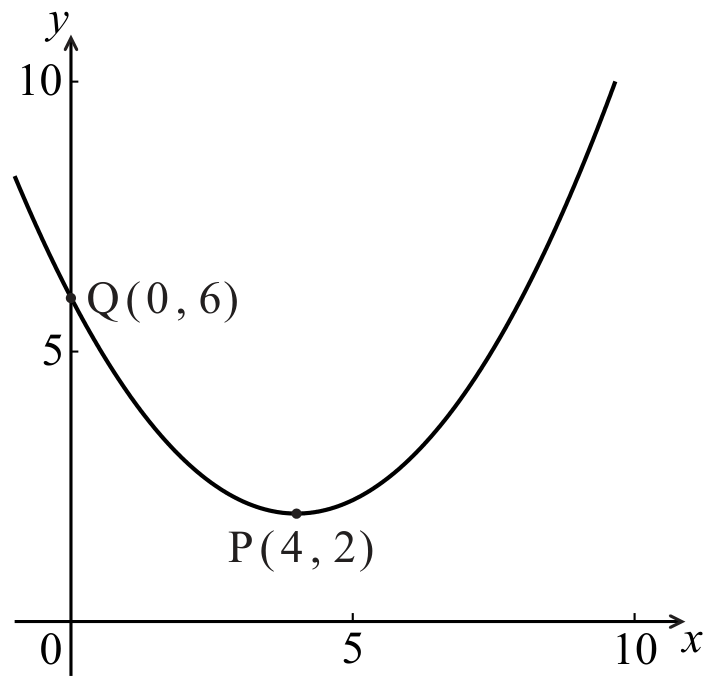
Let f be a quadratic function. Part of the graph of f is shown below.

The vertex is at P(4,2) and the y-intercept is at Q(0,6).
Write down the equation of the axis of symmetry.
The function f can be written in the form f(x)=a(x−h)2+k.
Write down the value of h and of k.
Find a.
Let f(x)=3 x, g(x)=2 x-5 and h(x)=(f∘g)(x).
Find h(x).
Find h−1(x).
Let f(x)=7-2 x and g(x)=x+3.
Find (g∘f)(x).
Write down g−1(x).
Find (f∘g−1)(5).
Let f(x)=4 x-2 and g(x)=−2x2+8.
Find f−1(x).
Find (f∘g)(1).
Let f(x)=2 x+3 and g(x)=x3.
Find (f∘g)(x).
Solve the equation (f∘g)(x)=0.
Let f(x)=x2+x−6.
Write down the y-intercept of the graph of f.
Solve f(x)=0.
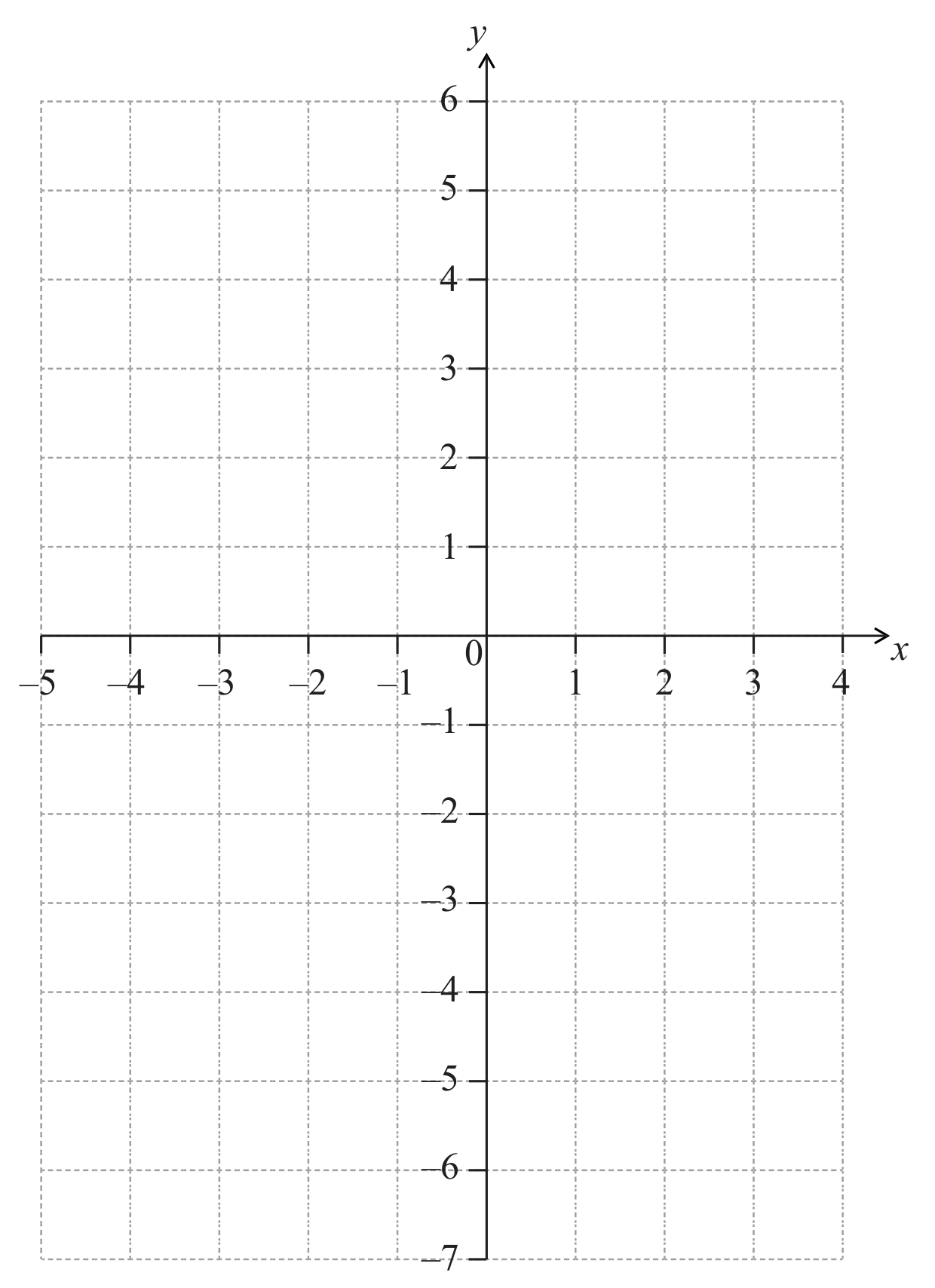
On the following grid, sketch the graph of f, for −4≤x≤3.

Let f(x)=a(x−h)2+k. The vertex of the graph of f is at (2,3) and the graph passes through (1,7).
Write down the value of h and of k.
Find the value of a.