Question 1(d)
[Maximum number: 2]
Describe the impact of a reduction in the cost of communication on globalisation.
 EduNinja
Reasons for globalisation:
• fewer tariffs and quotas
• reduced cost of transport
• reduced cost of communication
• increased significance of multinational corporations (MNCs).
Describe the impact of a reduction in the cost of communication on globalisation.
Which one of the following is the most likely reason for increased globalisation?
Higher number of tariffs and quotas
Lower transportation costs
Reduced significance of multinational corporations
Increased communication costs
Explain one reason why the reduced cost of communication has helped to increase globalisation.
In 2019, Germany was considering increasing the tax on meat to protect the environment and improve animal welfare. Currently meat in Germany has a reduced tax rate of 7\%. Some political groups are arguing that this should increase to the standard 19\%. According to United Nations research, methane from animals accounts for 14.5% of greenhouse gas emissions - more than the direct emissions from transport.
(Source adapted from: https://www.independent.co.uk/environment/ german-meat-tax-environment-animal-welfare-a9045271.html)
Explain one reason why the reduced cost of transport has helped to increase globalisation.
Total healthcare spending in England was £ 129 bn in 2018-2019 and was expected to rise to nearly £ 134 bn by 2019-2020. Access to healthcare is free in England.
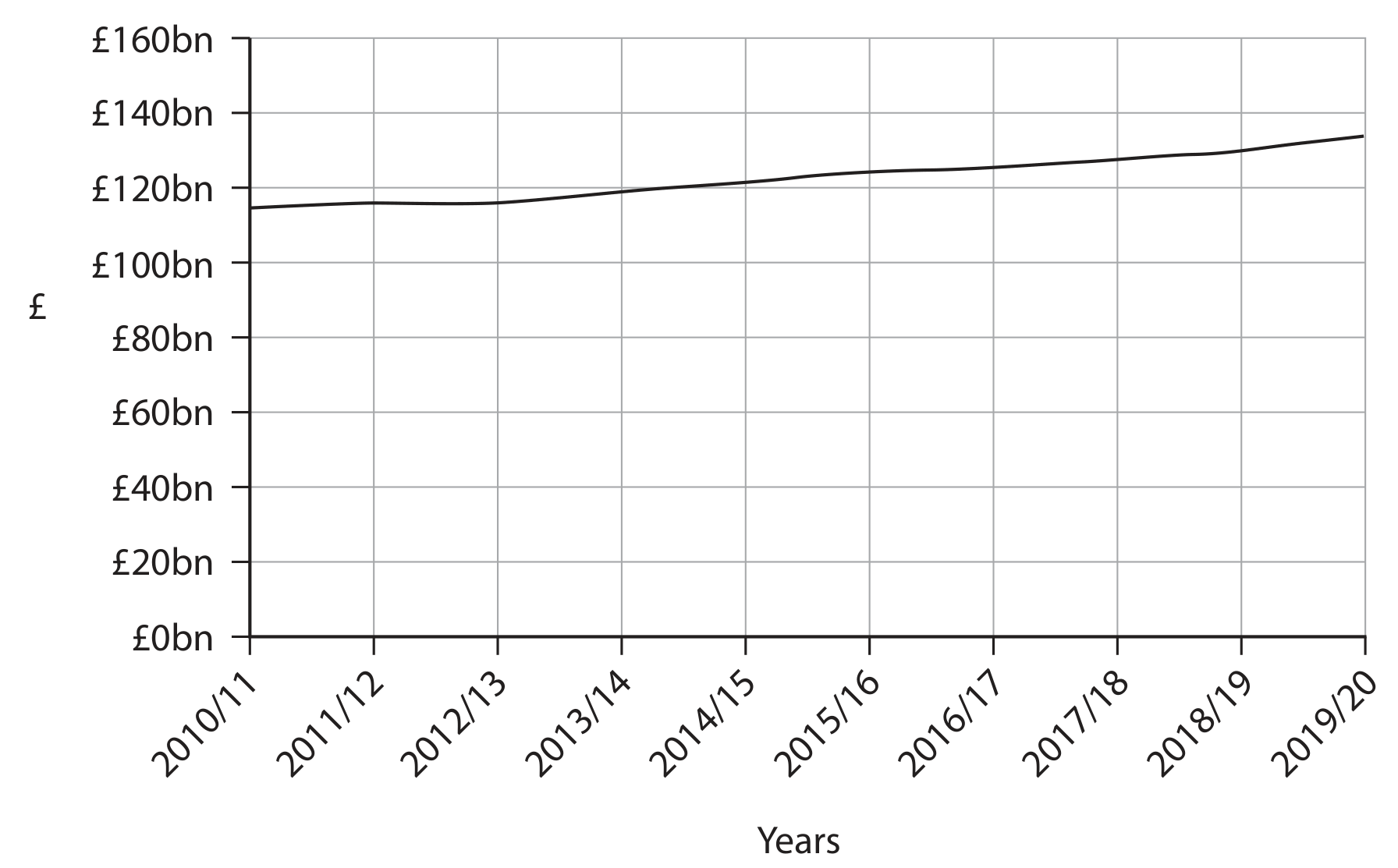
Total healthcare spending in England 2010-2020
(Source adapted from: https://fullfact.org/health/spending-english-nhs/)
Which one of the following is the most likely reason for increased globalisation?
An increase in tariffs and quotas
An increase in the cost of transport
An increase in the significance of MNCs
An increase in the cost of communication
What is the likely impact of lower transport and communication costs on an economy?
Increased unemployment
Decreased international trade
Increased economic growth
Decreased consumer spending
Globalisation has transformed the world. Centuries ago, it brought exotic spices and goods from distant parts of the globe. More recently, it has allowed people to work, communicate and travel more easily. Fewer tariffs and quotas are one of the reasons for an increase in globalisation.
With reference to the data above and your knowledge of economics, analyse why fewer tariffs and quotas have resulted in an increase in globalisation.