Question 33
A beta-particle enters a uniform magnetic field directed into the page and deflects downwards, as shown.
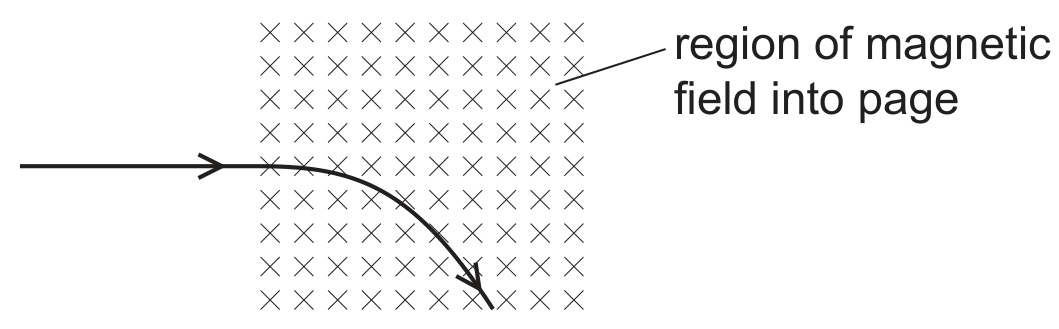
Which direction of electric field would also deflect an electron downwards?
into the page
out of the page
down the page
up the page
EduNinjaA beta-particle enters a uniform magnetic field directed into the page and deflects downwards, as shown.

Which direction of electric field would also deflect an electron downwards?
into the page
out of the page
down the page
up the page
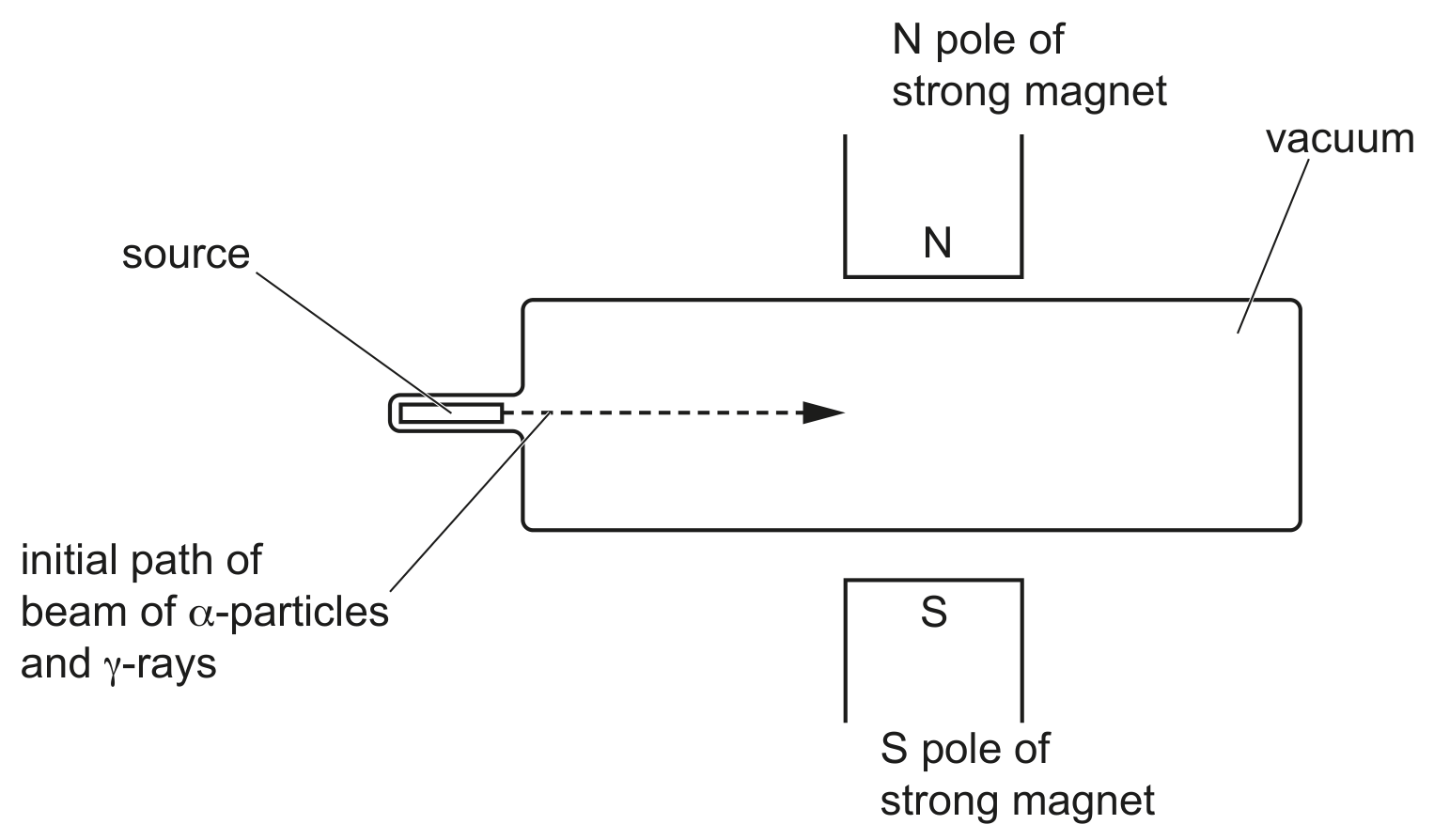
A beam consists of α-particles, β-particles and γ-rays.
Explain how a uniform magnetic field may be used to separate the α-particles, the β-particles and the γ-rays.
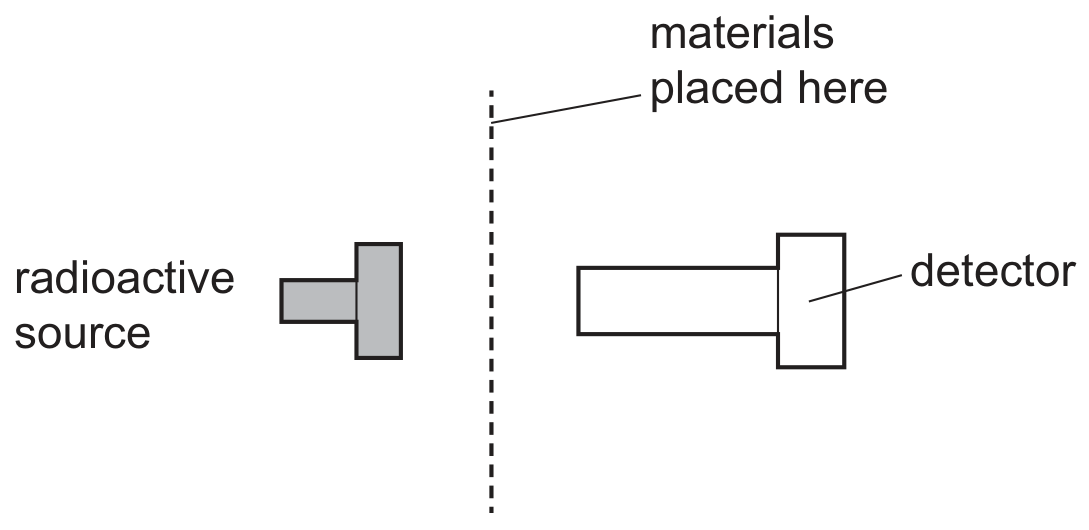
A radioactive source is placed near a detector.
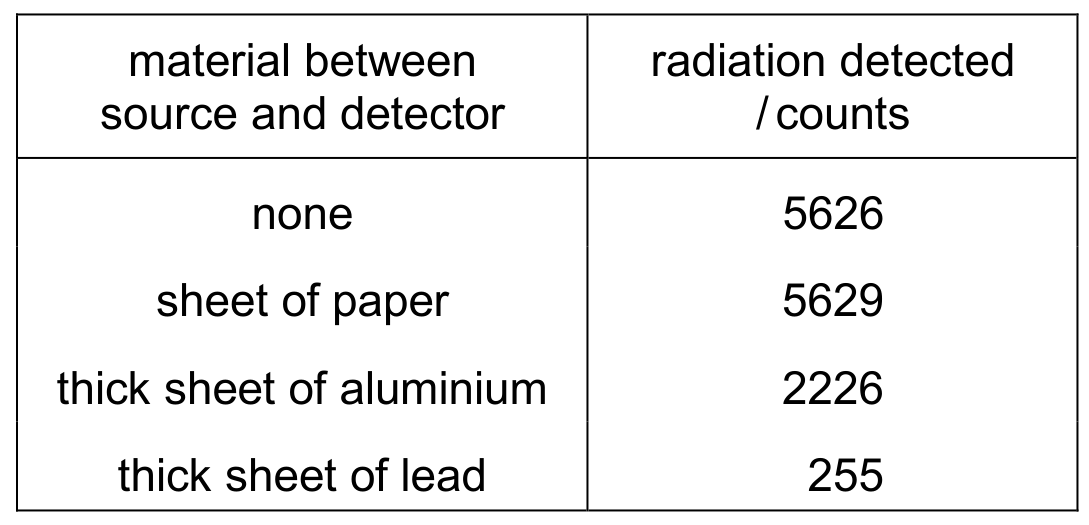
The radiation arriving at the detector from the source is measured for 10 minutes with different materials placed between the source and the detector.


Which types of radiation are emitted by the source?
α-particles and γ-rays
α-particles only
β-particles and γ-rays
β-particles only
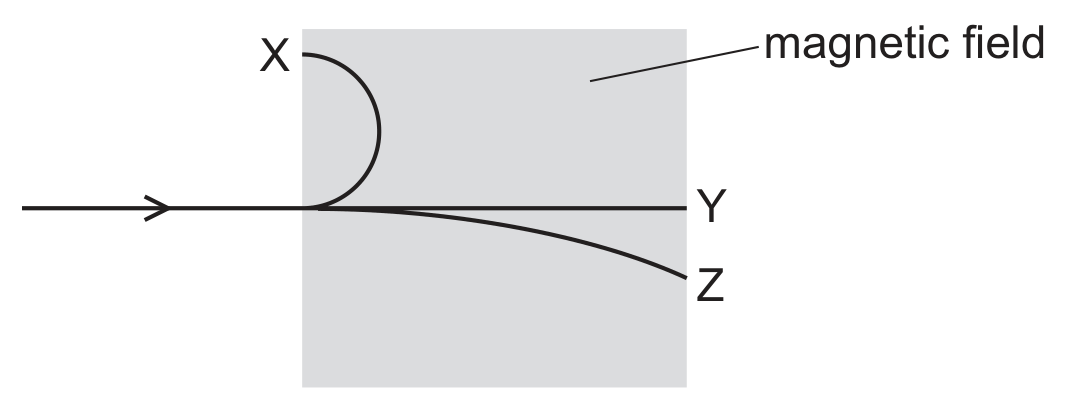
The diagram represents the paths of three types of ionising radiation, X, Y and Z, through a magnetic field.
The three types of radiation are alpha, beta and gamma.

Which statement about the ionising radiation is correct?
X is positively charged.
Y is negatively charged.
Z is the most strongly ionising.
X has a smaller mass than Y .
35α-particles, β-particles and γ-rays are emitted by radioactive nuclei when they decay.
Which emissions can be deflected by an electric field?
α-particles, β-particles and γ-rays
α-particles and β-particles only
β-particles and γ-rays only
γ-rays and α-particles only
Why are beta-particles deflected more strongly than alpha-particles when they enter an electric field?
Beta-particles have less mass than alpha-particles.
Beta-particles are negatively charged.
Beta-particles have lower velocities than alpha-particles.
Beta-particles have more ionising power than alpha-particles.
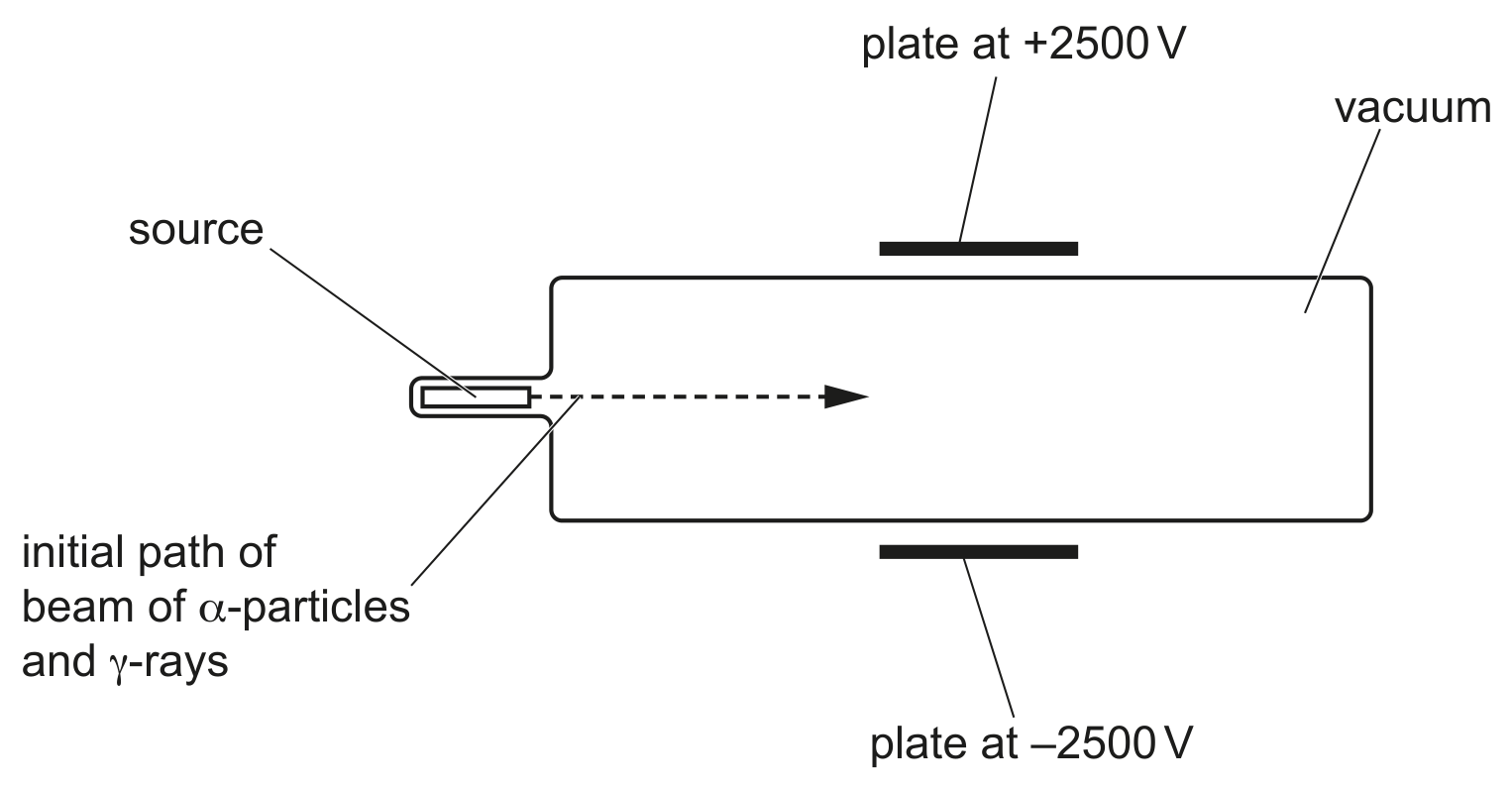
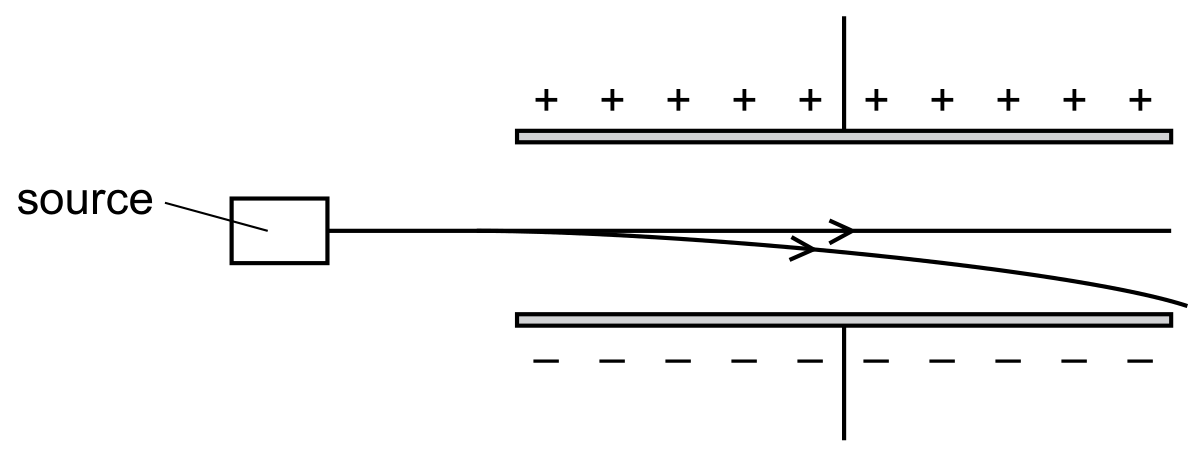
Two identical radioactive sources emit α-particles and γ-rays into two vacuum tubes.
Fig. 8.1 shows two electrically charged plates on either side of one of the vacuum tubes.

Fig. 8.1
Write the symbol α once in Table 8.1 to indicate any deflection of the α-particles.
Write the symbol γ once in Table 8.1 to indicate any deflection of the γ-rays.

Table 8.1
Fig. 8.2 shows the poles of a very strong magnet on either side of the other vacuum tube.

Fig. 8.2
Write the symbol α once in Table 8.2 to indicate any deflection of the α-particles.
Write the symbol γ once in Table 8.2 to indicate any deflection of the γ-rays.

Table 8.2
The diagram shows emissions from a source passing into the electric field between two charged plates.

What is emitted by this source?
neutrons and γ-rays only
α-particles and β-particles only
α-particles and γ-rays only
β-particles and γ-rays only
The table compares α-radiation, β-radiation and γ-radiation.
Which row is correct?
α-radiation
β-radiation
γ-radiation
more ionising than β or γ
a proton
electromagnetic radiation
less ionising than β or γ
an electron
two protons and two neutrons
more ionising than β or γ
an electron
electromagnetic radiation
less ionising than β or γ
electromagnetic radiation
a proton
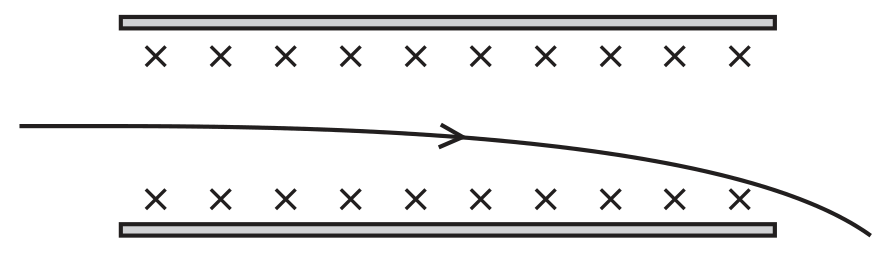
The radiation from a radioactive source passes between two metal plates, and is deflected as shown in the diagram. Between the plates there is a magnetic field directed into the plane of the paper, as indicated by the crosses.

Only one type of radiation is present.
Which situation is possible?
The source emits alpha particles and there is an upwards electric field between the plates.
The source emits alpha particles and there is no electric field between the plates.
The source emits beta particles and there is an upwards electric field between the plates.
The source emits gamma radiation and there is a downwards electric field between the plates.