EduNinja

IGCSE Physics3.2.3 Thin lensesQuestion Bank

Question 18

[Maximum number: 1]

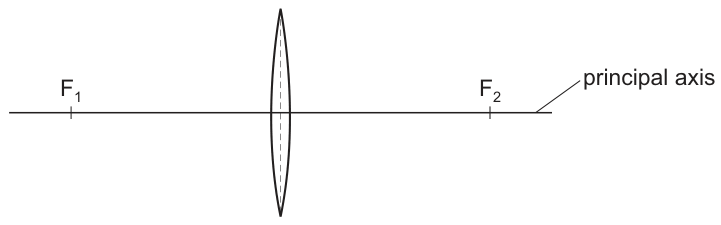
The diagram shows a thin converging lens with principal focuses at F1F_{1} and F2F_{2}.

Question image

A small light source is placed at F1F_{1}. A beam of light from the source passes through the lens. Which statement correctly describes the beam of light emerging from the lens?

A

The beam converges to F2\mathrm{F}_{2}.

B

The beam converges to a point to the right of F2F_{2}.

C

The beam diverges from a point to the left of F1F_{1}.

D

The beam travels parallel to the principal axis.
Question 18

[Maximum number: 1]

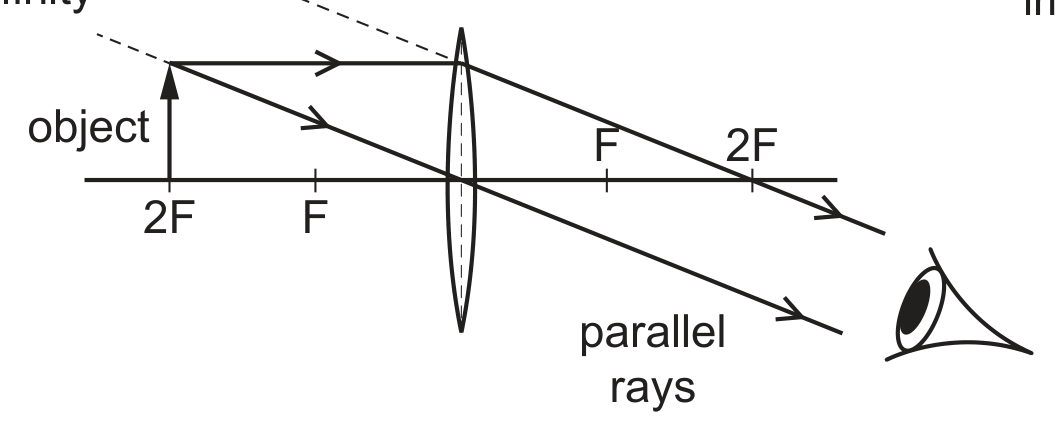
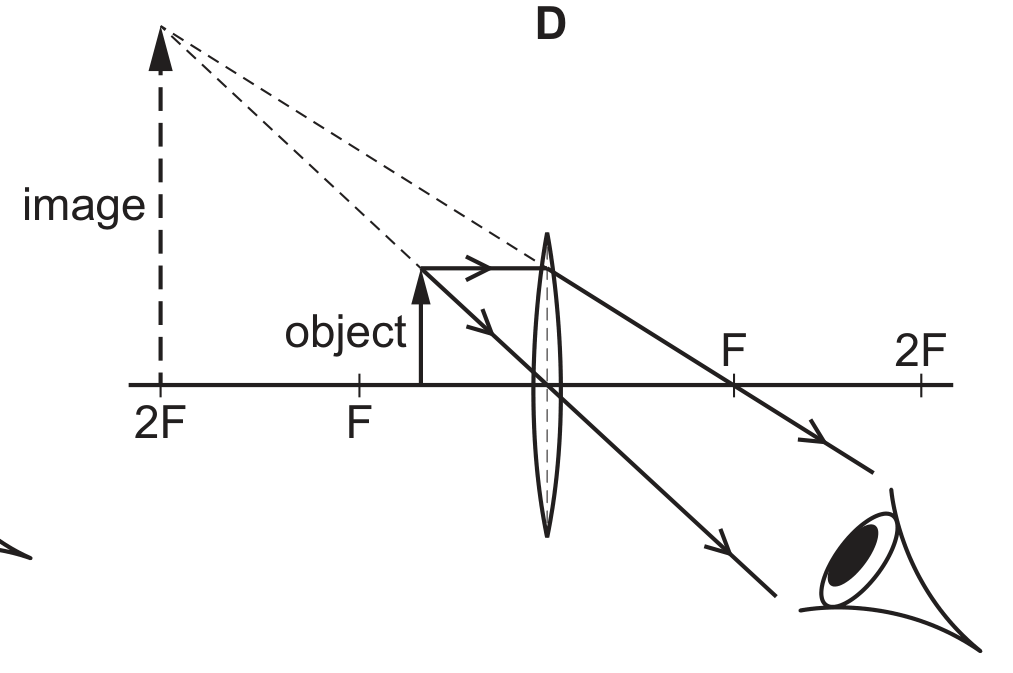
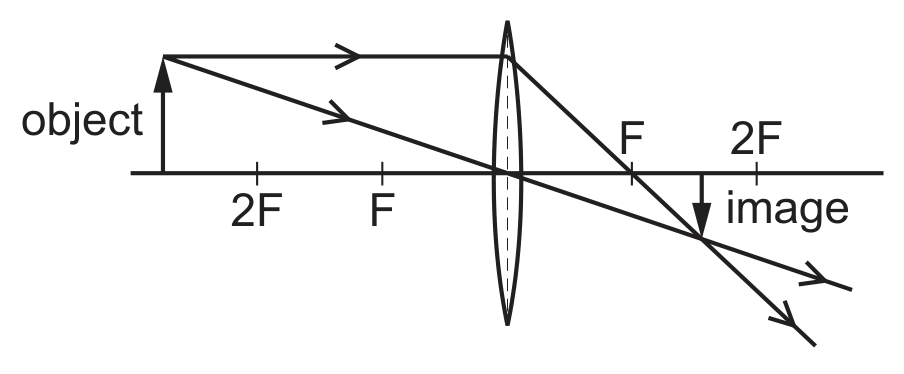
Each point F is one focal length from the centre of the lens. Each point 2F is two focal lengths from the centre of the lens.

Which diagram shows a converging lens being used as a magnifying glass?

A

A

B

B

image at infinity

C

C

Question image

Question 19

[Maximum number: 1]

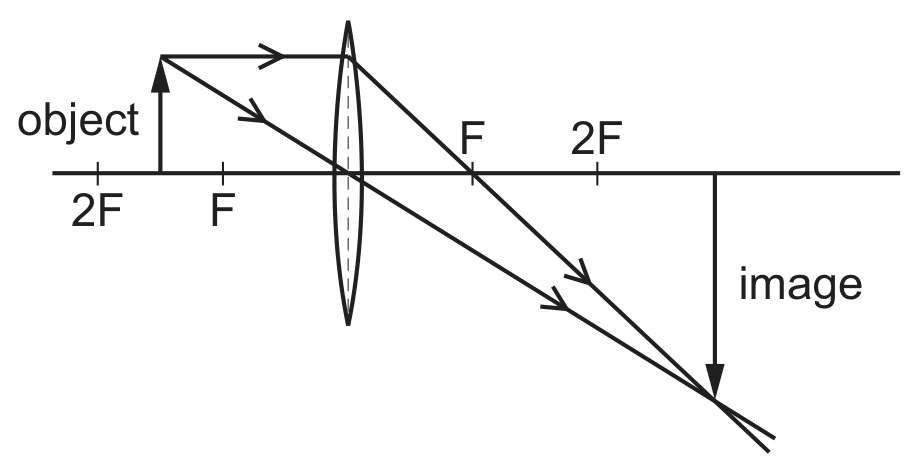
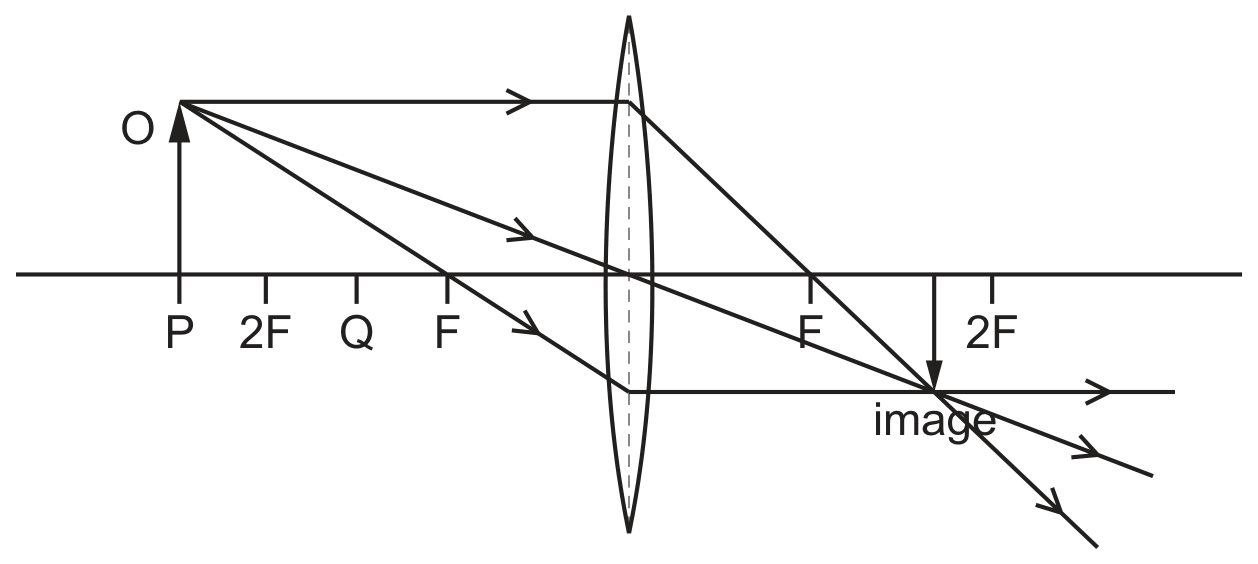
An object O is placed at point P near to a thin converging lens. The diagram shows three rays from the top of O passing through the lens. Each point F is one focal length from the centre of the lens. Each point 2F is two focal lengths from the centre of the lens.

Question image

The object O is moved to point Q on the diagram.
Which type of image is produced when the object O is at point Q ?

A

inverted and the same size as the object

B

inverted and enlarged

C

upright and the same size as the object

D

upright and enlarged

Question 19

[Maximum number: 1]

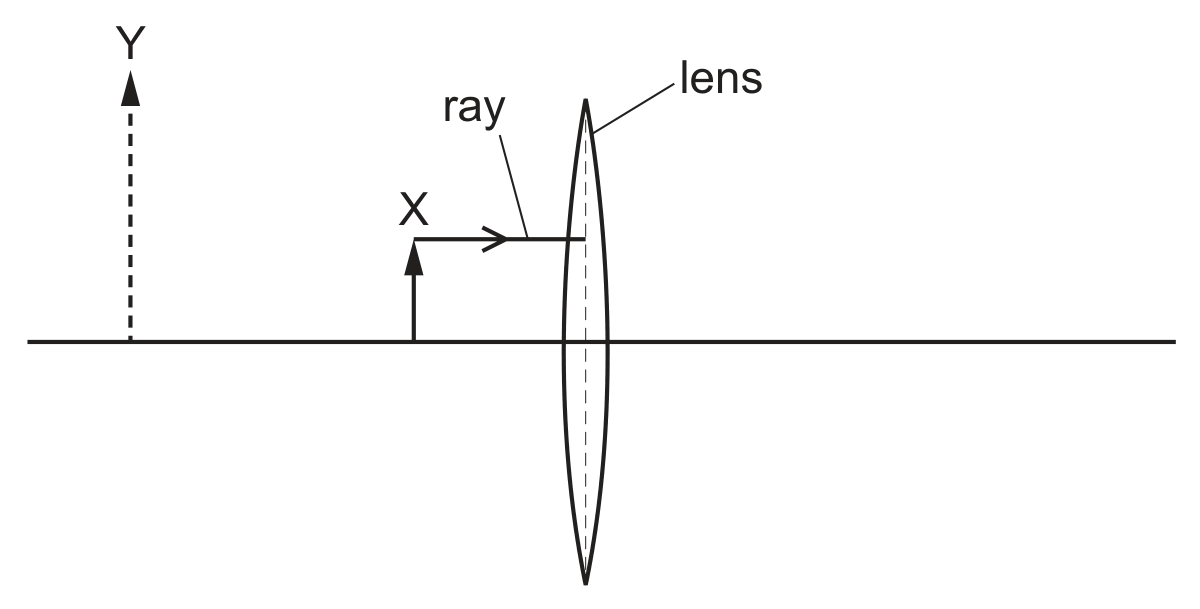
The diagram shows part of a ray diagram that demonstrates the formation of a virtual image Y of object X by a converging lens.

Question image

One ray of light from X is shown approaching the lens.
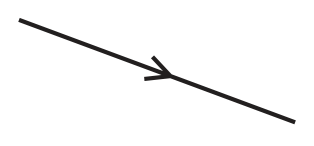
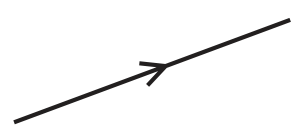
Which arrow shows the direction of this ray as it leaves the lens?
A

Question image

B

Question image

C
D

Question 19

[Maximum number: 1]

A person uses a magnifying glass to look at a stamp.
Which ray diagram shows a thin converging lens being used to do this?

Question 4

[Maximum number: 7]

The lens in a magnifying glass is a converging lens.

Question 4(a)

(a)

Fig. 4.1 shows the lens of the magnifying glass, its two focal points, F1F_{1} and F2F_{2}, and its principal axis.

Fig. 4.1

Fig. 4.1

[ 4 ]

Question 4(a)(i)

(i)

State what is meant by 'focal point'.

[ 2 ]

Question 4(a)(ii)

(ii)

A student using the magnifying glass sees a magnified image of an object.

On Fig. 4.1, mark:
- a point X on the principal axis for a possible position of the object
- a point E for a possible position of the student's eye.

[ 1 ]

Question 4(a)(iii)

(iii)

Underline two words in the list that describe the image produced in (a)(ii).
inverted
real
upright
virtual

[ 1 ]

Question 4(c)

(b)

Converging lenses are used in spectacles (glasses) to correct one problem with vision.

State the name of the problem and explain how a converging lens is used to correct it. You may draw a diagram.
name of problem:

[ 3 ]

Question 20

[Maximum number: 1]

A converging lens is used as a magnifying glass to view an object.
Which statement is correct?

A

The image is inverted.

B

The image is nearer the lens than the object.

C

The image is the same size.

D

The image is virtual.

Question 20

[Maximum number: 1]

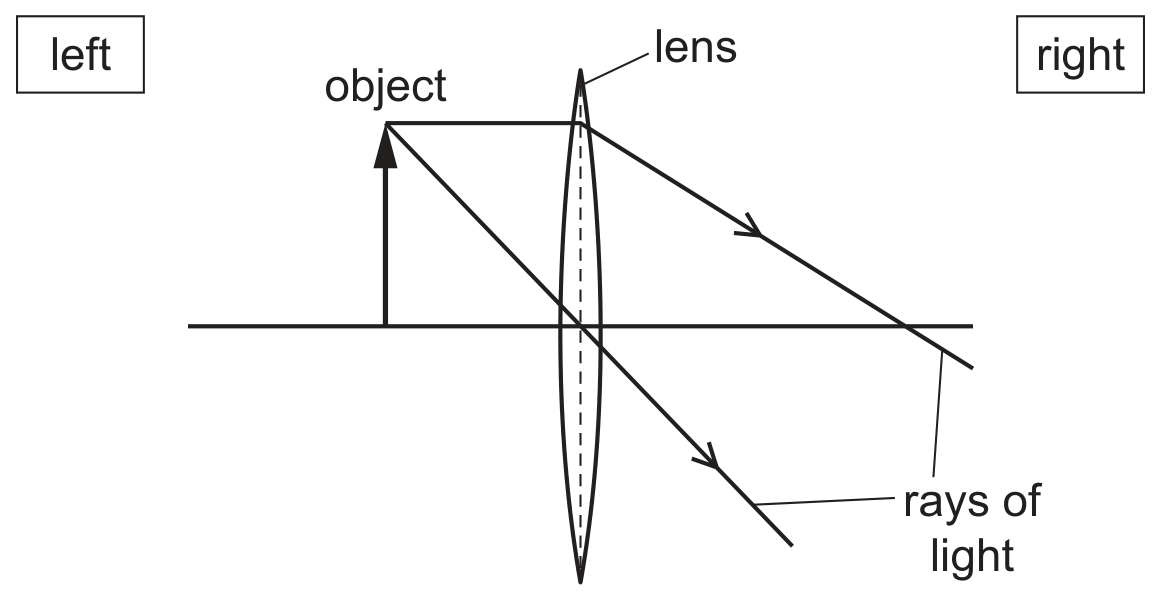
The incomplete ray diagram shows two rays of light that have passed from one point on an object through a thin converging lens.

Question image

Which type of image is formed, and on which side of the lens is it formed?

type of image

which side of lens

real

on the left

real

on the right

virtual

on the left

virtual

on the right

Question 20

[Maximum number: 1]

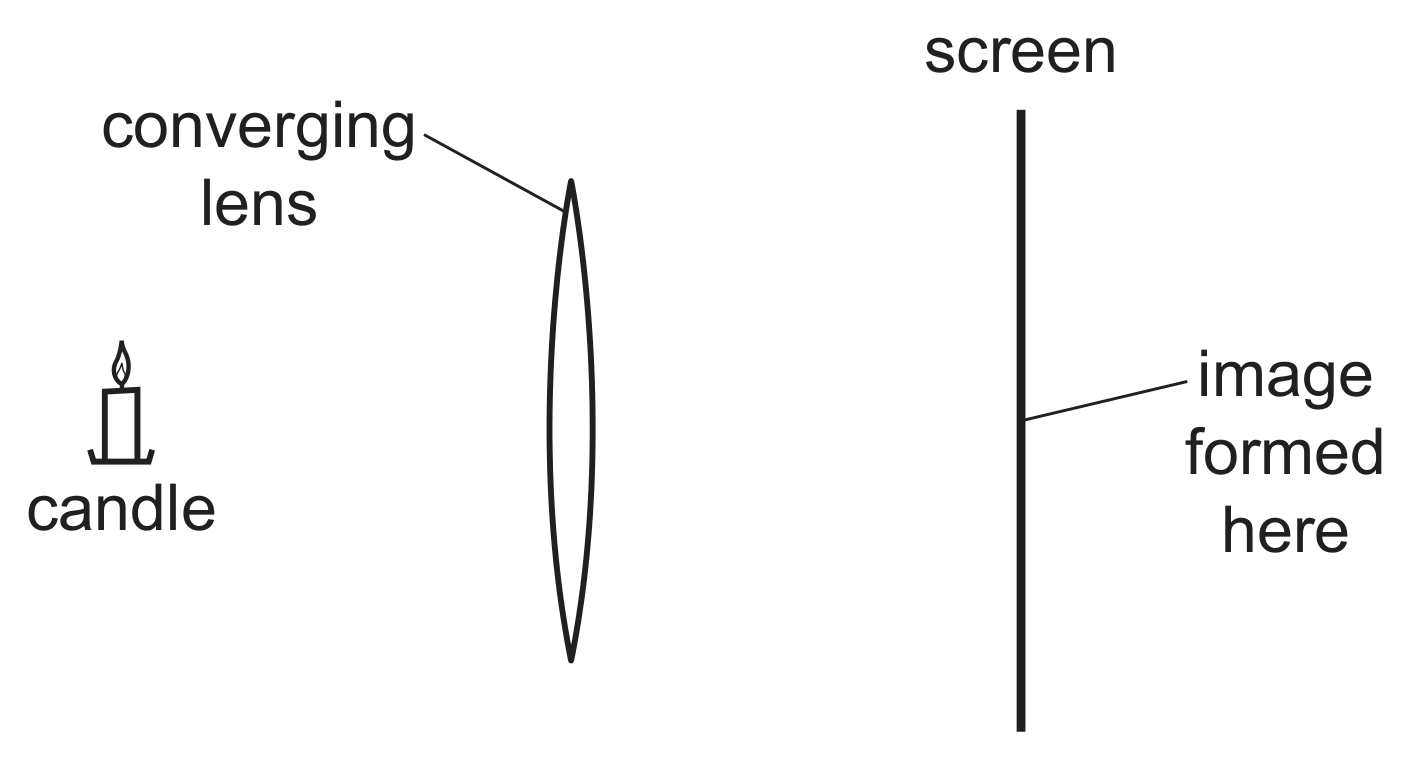
A converging lens is used to make an image on a screen.

Question image

What type of image is formed on the screen?

A

real and inverted

B

real and upright

C

virtual and inverted

D

virtual and upright

Question 20

[Maximum number: 1]

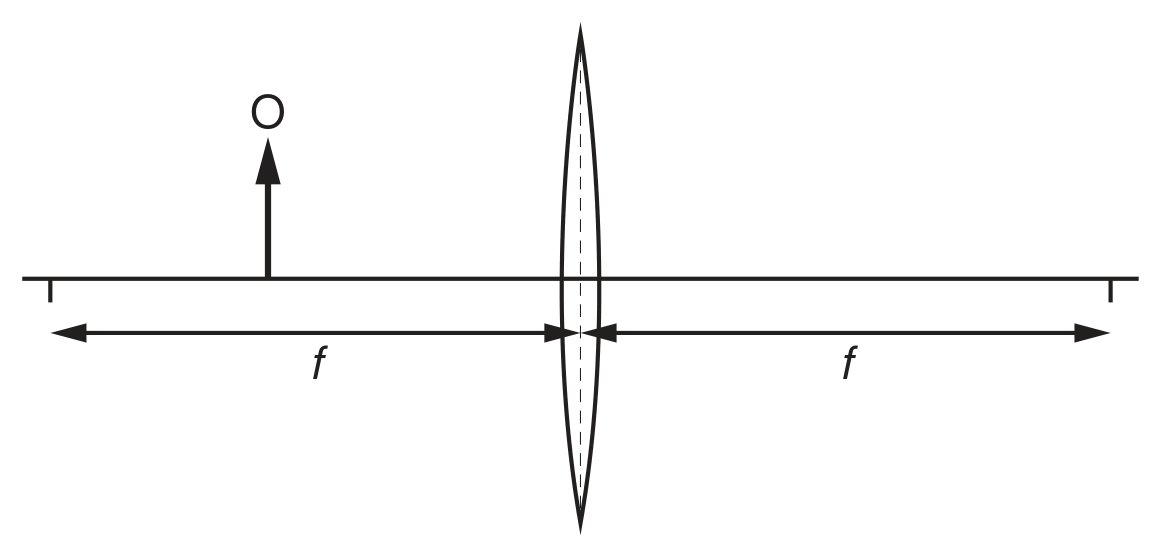
A thin converging lens has a focal length f. An object 0 is placed to the left of the lens, as shown.

Question image

Where is the image formed and how does its size compare to the object?

image position

image size

on the opposite side of the lens to the object

larger than the object

on the opposite side of the lens to the object

smaller than the object

on the same side of the lens as the object

larger than the object

on the same side of the lens as the object

smaller than the object

0 selected