EduNinja

IGCSE Physics2.3.2 ConvectionQuestion Bank

Question 2

[Maximum number: 1]

A copper cooking pan contains water. Fig. 2.1 shows the pan on a hotplate of a cooker.
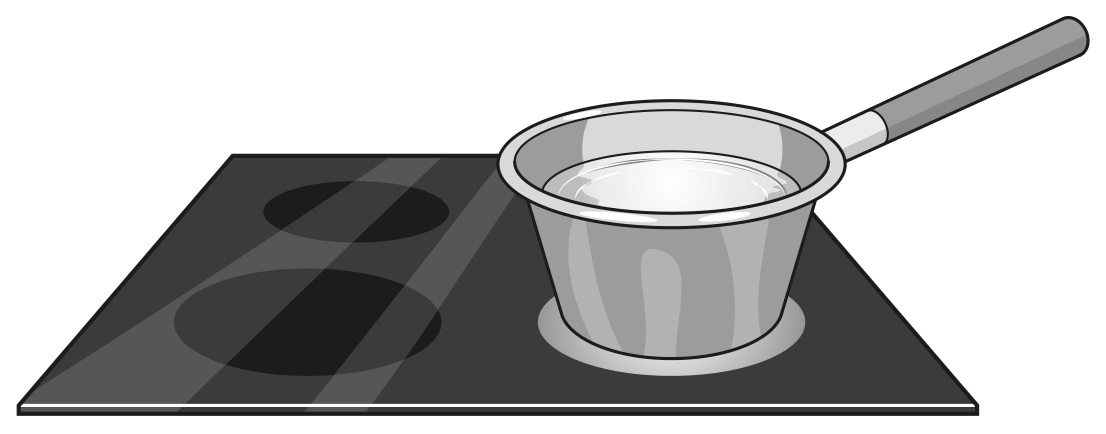
Fig. 2.1

Fig. 2.1

Copper is a metal.

Question 2(c)

(a)

The thermal energy passes into the water through the base of the pan.

Identify the main method by which thermal energy is transferred throughout the water.

[ 1 ]
Question 3

[Maximum number: 3]

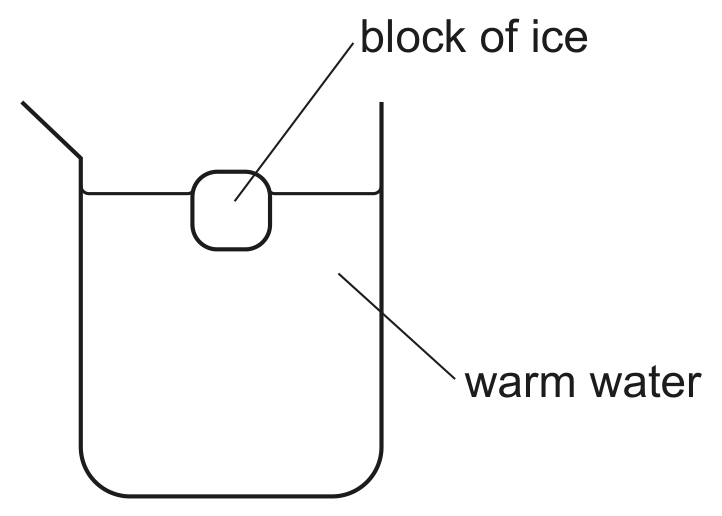
Fig. 3.1 shows a small block of ice floating in a beaker of warm water.

Fig. 3.1

Fig. 3.1

Question 3(b)

(a)

Energy is transferred from the water to the block of ice.

[ 3 ]

Question 3(b)(iii)

(i)

The temperature of the water near the ice decreases first.

Explain how convection causes the temperature of all the water in the beaker to decrease.

[ 3 ]

Question 3

[Maximum number: 2]

A rubber balloon is inflated with helium and sealed so that no helium escapes.
The balloon is positioned immediately below the ceiling in a room.
Heaters are switched on and the temperature of the air in the room increases.

Question 3(a)

(a)

When the heaters are first switched on, the temperature of the air immediately below the ceiling increases more quickly than the temperature of the air in the rest of the room.

Explain why this happens.

[ 2 ]

Question 16

[Maximum number: 1]

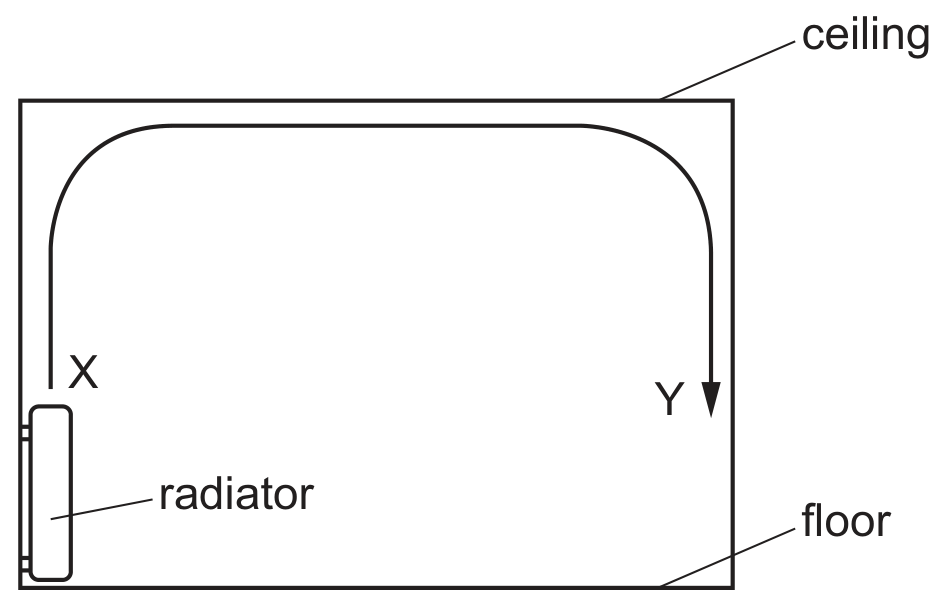
The diagram shows the view of a room heated by a radiator. The arrowed line from X to Y is the path of the convection current in the air.

Question image

Which row about the air temperature and the air density at X and at Y is correct?

air temperature

air density

higher at X

higher at X

higher at X

higher at Y

higher at Y

higher at Y

higher at Y

higher at X

Question 16

[Maximum number: 1]

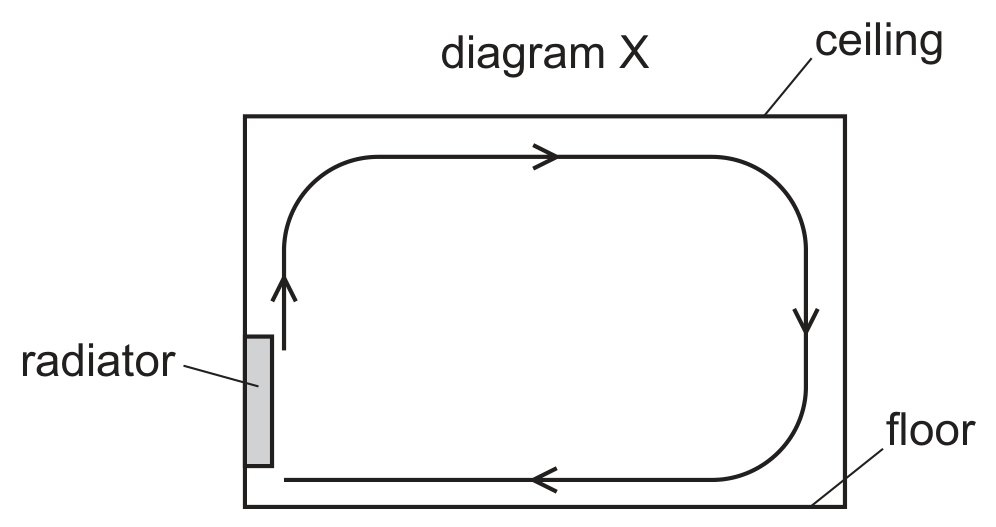
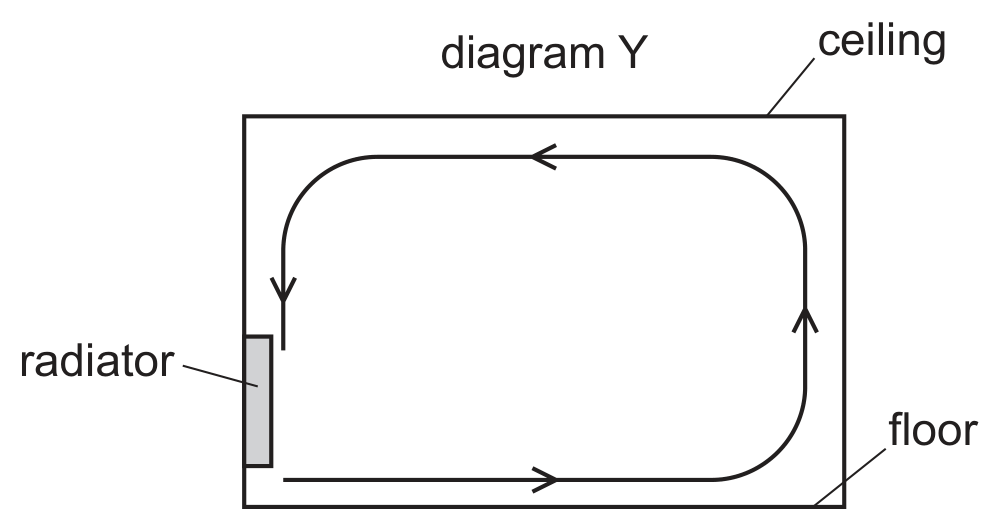
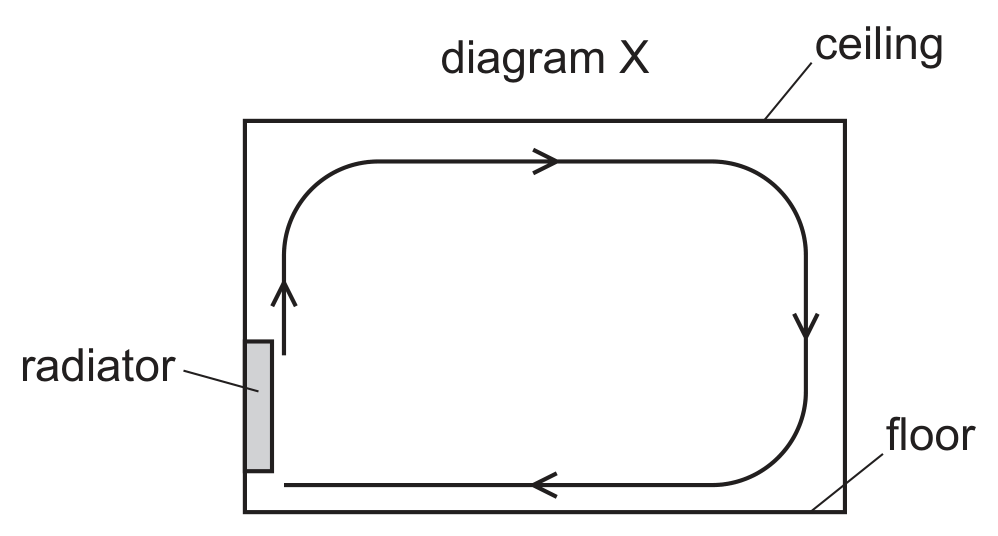
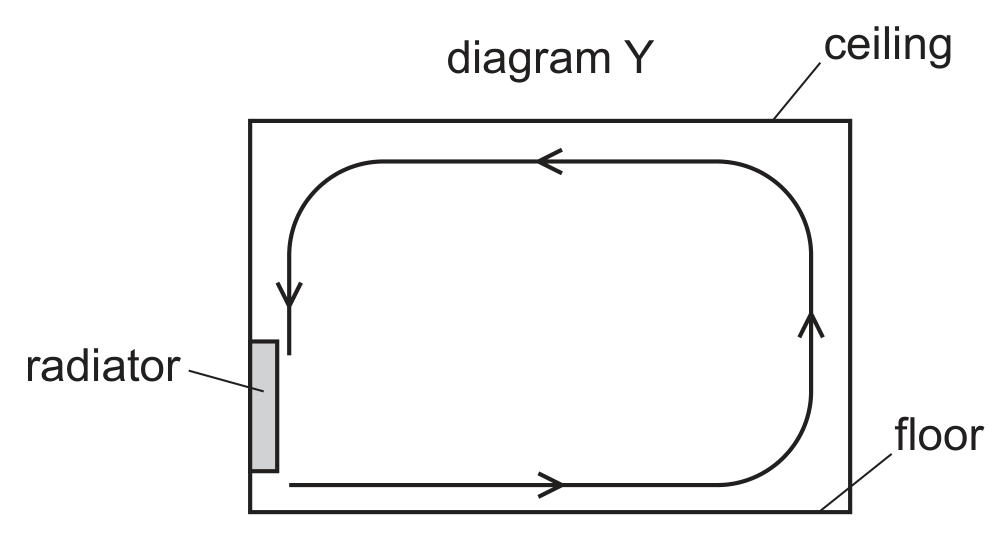
A room is heated by a radiator. The diagrams X and Y show two possible circulations of hot air, which heat the room.

Question image
Question image

Which diagram and reason explain the heating of the room by convection?

diagram

reason

X

air density decreases when air is heated

X

air density increases when air is heated

Y

air density decreases when air is heated

Y

air density increases when air is heated

Question 16

[Maximum number: 1]

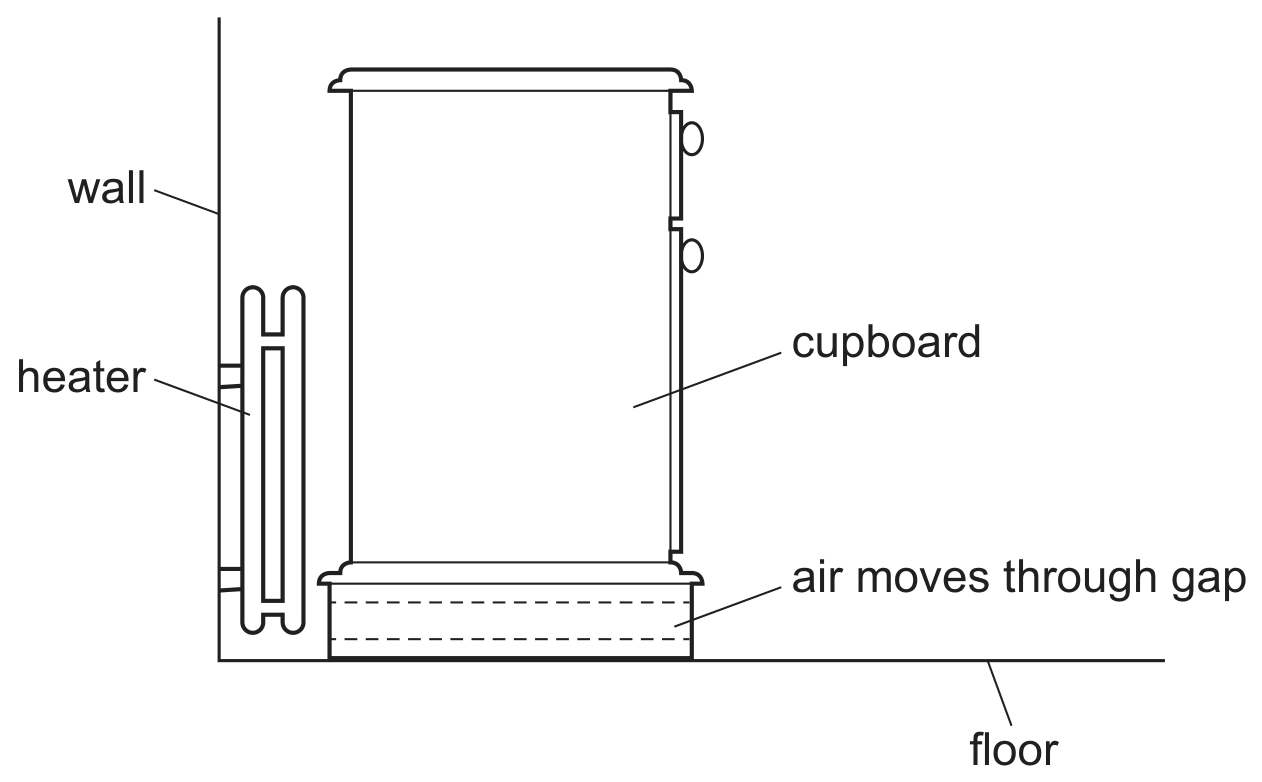
A cupboard is placed in front of a heater. Air can move through a gap under the cupboard.

Question image

Which row describes the temperature and the direction of movement of the air in the gap?

air temperature

air direction

cool

away from the heater

cool

towards the heater

warm

away from the heater

warm

towards the heater

Question 18

[Maximum number: 1]

A room is heated by a radiator. The diagrams X and Y show two possible circulations of hot air, which heat the room.

Question image
Question image

Which diagram and reason explain the heating of the room by convection?

diagram

reason

X

air density decreases when air is heated

X

air density increases when air is heated

Y

air density decreases when air is heated

Y

air density increases when air is heated

Question 18

[Maximum number: 1]

The metal surface of a kettle is hot.
What happens to the cool air outside the kettle when it comes into contact with the hot kettle?

A

The density of the air decreases and the air falls.

B

The density of the air decreases and the air rises.

C

The density of the air increases and the air falls.

D

The density of the air increases and the air rises.

Question 18

[Maximum number: 1]

The metal surface of a kettle is hot.
What happens to the cool air outside the kettle when it comes into contact with the hot kettle?

A

The density of the air decreases and the air falls.

B

The density of the air decreases and the air rises.

C

The density of the air increases and the air falls.

D

The density of the air increases and the air rises.

Question 18

[Maximum number: 1]

The metal surface of a kettle is hot.
What happens to the cool air outside the kettle when it comes into contact with the hot kettle?

A

The density of the air decreases and the air falls.

B

The density of the air decreases and the air rises.

C

The density of the air increases and the air falls.

D

The density of the air increases and the air rises.

0 selected