EduNinja

IGCSE Physics2.2.3 Melting, boiling and evaporationQuestion Bank

Question 2

[Maximum number: 2]

A student carries out an experiment using a plastic beaker that contains 0.24 kg of water at 17C17^{\circ} \mathrm{C}. The thermal capacity (heat capacity) of the beaker is negligible.

Question 2(c)

(a)

As the temperature of the water decreases, some of the ice melts.

[ 2 ]

Question 2(c)(i)

(i)

Explain why this ice melts.

[ 2 ]
Question 2

[Maximum number: 3]

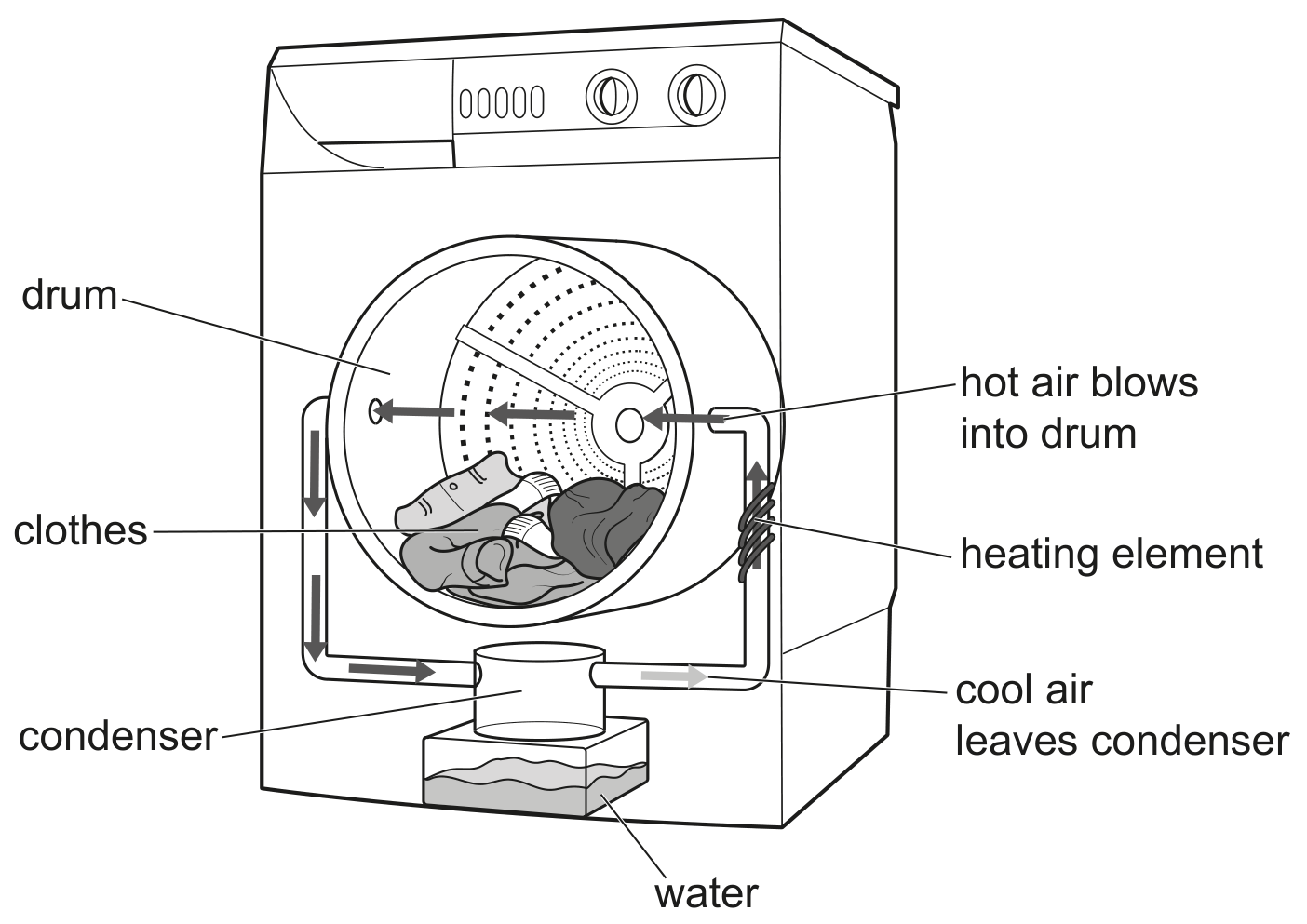
Fig. 2.1 shows an electric tumble dryer used to dry wet clothes.

Fig. 2.1

Fig. 2.1

Question 2(a)

(a)

Hot air blows into the drum. The air gains water vapour from the clothes and then leaves the drum. The moist air enters the condenser. Cool air leaves the condenser, passes through the heating element and enters the drum again.

[ 3 ]

Question 2(a)(i)

(i)

State the process by which the hot air removes water from the wet clothes.

[ 1 ]

Question 2(a)(ii)

(ii)

The air is cooled as it passes through the condenser.

Describe and explain one other way in which the air leaving the condenser is different from the air entering the condenser.
description
explanation

[ 2 ]

Question 12

[Maximum number: 1]

A liquid is evaporating. The liquid is not boiling.
Which statement about the liquid is correct at an instant in time?

A

Any molecule can escape, and from any part of the liquid.

B

Any molecule can escape, but only from the liquid's surface.

C

Only molecules with enough energy can escape, and only from the liquid's surface.

D

Only molecules with enough energy can escape, but from any part of the liquid.

Question 12

[Maximum number: 1]

During evaporation of a liquid, the most energetic particles escape. The temperature of the remaining liquid changes.

Which row identifies where these particles escape from and describes the temperature change?

place from which
the particles escape

temperature of
remaining liquid

body of the liquid

decreases

body of the liquid

increases

surface of the liquid

decreases

surface of the liquid

increases

Question 12

[Maximum number: 1]

A liquid is evaporating. The liquid is not boiling.
Which statement about the liquid is correct at an instant in time?

A

Any molecule can escape, and from any part of the liquid.

B

Any molecule can escape, but only from the liquid's surface.

C

Only molecules with enough energy can escape, and only from the liquid's surface.

D

Only molecules with enough energy can escape, but from any part of the liquid.

Question 12

[Maximum number: 1]

A liquid is evaporating. The liquid is not boiling.
Which statement about the liquid is correct at an instant in time?

A

Any molecule can escape, and from any part of the liquid.

B

Any molecule can escape, but only from the liquid's surface.

C

Only molecules with enough energy can escape, and only from the liquid's surface.

D

Only molecules with enough energy can escape, but from any part of the liquid.

Question 13

[Maximum number: 1]

Wet clothes are hanging outside to dry.
What are the best conditions for the clothes to dry most quickly?

wind speed

temperature

high

high

high

low

low

high

low

low

Question 13

[Maximum number: 1]

A circular, flat-bottomed dish contains 100 cm3100 \mathrm{~cm}^{3} of water.
Students are asked how to increase the rate at which the water evaporates.
Their suggestions are listed.
student 1 Pour the water into a flat-bottomed dish of larger diameter.
student 2 Cool the dish and water.
student 3 Create a current of air over the dish with a fan.
Which suggestions will increase the rate of evaporation?

A

1, 2 and 3

B

1 and 2 only

C

1 and 3 only

D

2 and 3 only

Question 13

[Maximum number: 1]

Which row correctly describes boiling and evaporation of water?

boiling

evaporation

bubbles seen

occurs at surface only

bubbles seen

occurs throughout the water

no bubbles

occurs at surface only

no bubbles

occurs throughout the water

Question 3

[Maximum number: 7]

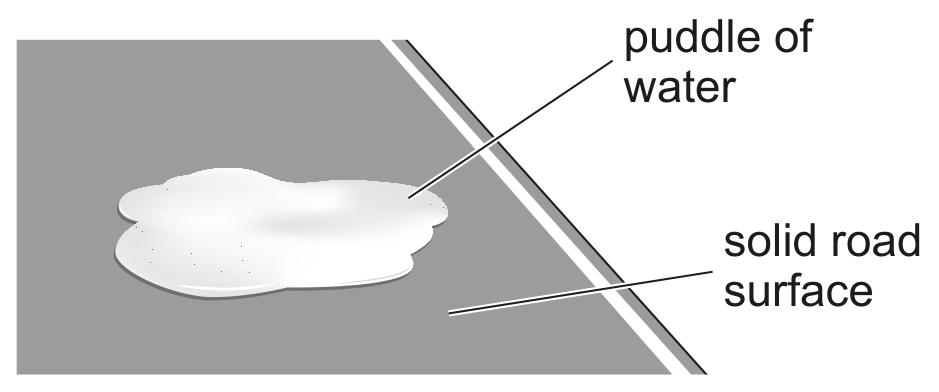
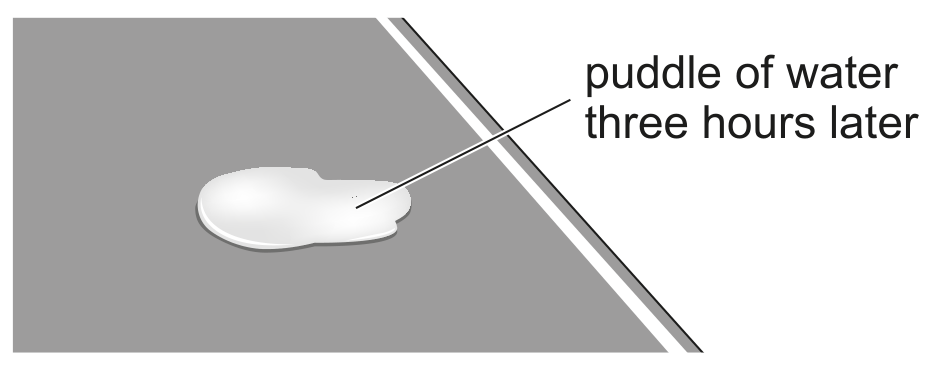
Fig. 3.1 and Fig. 3.2 show how a puddle of water changes on a warm windy day.

Fig. 3.1

Fig. 3.1

Fig. 3.2

Fig. 3.2

Question 3(a)

(a)

Describe the process by which the volume of water in the puddle decreases.

[ 2 ]

Question 3(b)

(b)

State and explain one change in the weather that would cause the volume of water in the puddle to decrease more slowly.
statement
explanation

[ 2 ]

Question 3(c)

(c)

Explain, in terms of molecules, how sweating helps to cool your body on a hot day.

[ 3 ]
0 selected