Question 12
[Maximum number: 1]
Which effect is caused by thermal expansion?
A
a metal surface heating up in direct sunlight
B
ice-cream melting on a hot day
C
a railway track buckling on a hot day
D
ice forming on a pond on a cold day
 EduNinja
Which effect is caused by thermal expansion?
a metal surface heating up in direct sunlight
ice-cream melting on a hot day
a railway track buckling on a hot day
ice forming on a pond on a cold day
Solids expand when heated and contract when cooled.
In which example is there a useful application of expansion and not an unwanted effect?
bridges
railway lines
telephone cables
thermostats
The liquid level in a thermometer rises when the thermometer is placed in hot water.
What causes this?
The liquid contracts.
The liquid evaporates.
The liquid expands.
The liquid freezes.
The diagram shows a liquid-in-glass thermometer.

Which change increases the sensitivity of the thermometer?
a narrower capillary tube
a wider capillary tube
thicker glass around the bulb
thinner glass around the bulb
The diagram shows a glass flask, sealed with a small volume of mercury in a glass tube. When the flask is gently warmed the mercury rises up the tube.
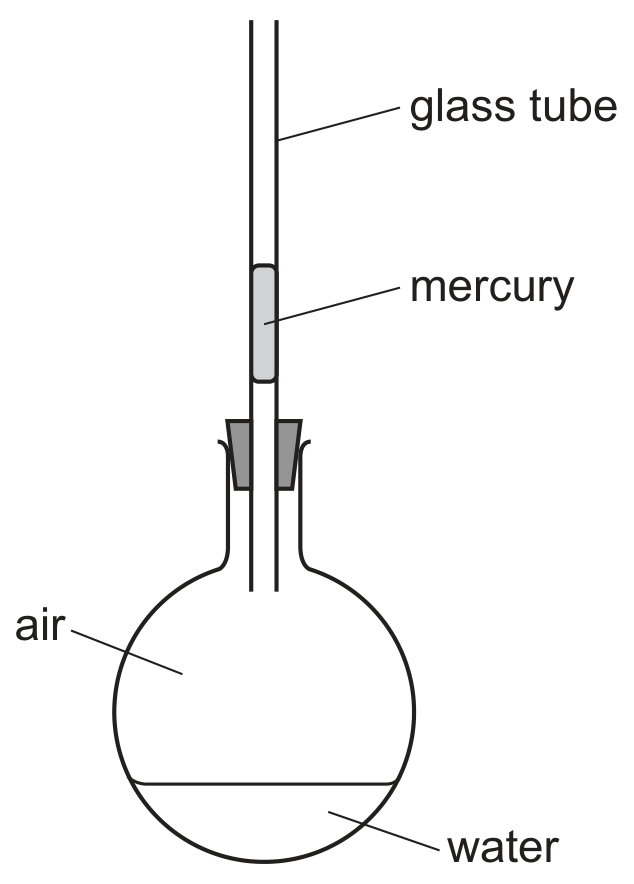
What is the main cause of the movement of the mercury?
expansion of air in the flask
expansion of the glass flask
expansion of the glass tube
expansion of the mercury
State which state of matter, solid, liquid or gas, has the greatest thermal expansion and which has the least.
greatest expansion
least expansion
A solid and a gas are each given the same increase in temperature. The gas is kept at a constant pressure.
Which row is correct?
the one which
expands most
the reason
the gas
molecules in the gas each expand
more than the solid molecules
the gas
the molecules in the solid
are held strongly together
the solid
molecules in the solid each expand
more than the gas molecules
the solid
all the molecules in the gas are
separate from one another
A model thermometer consists of a flask of coloured water and a stopper with a glass tube passing through it, as shown.
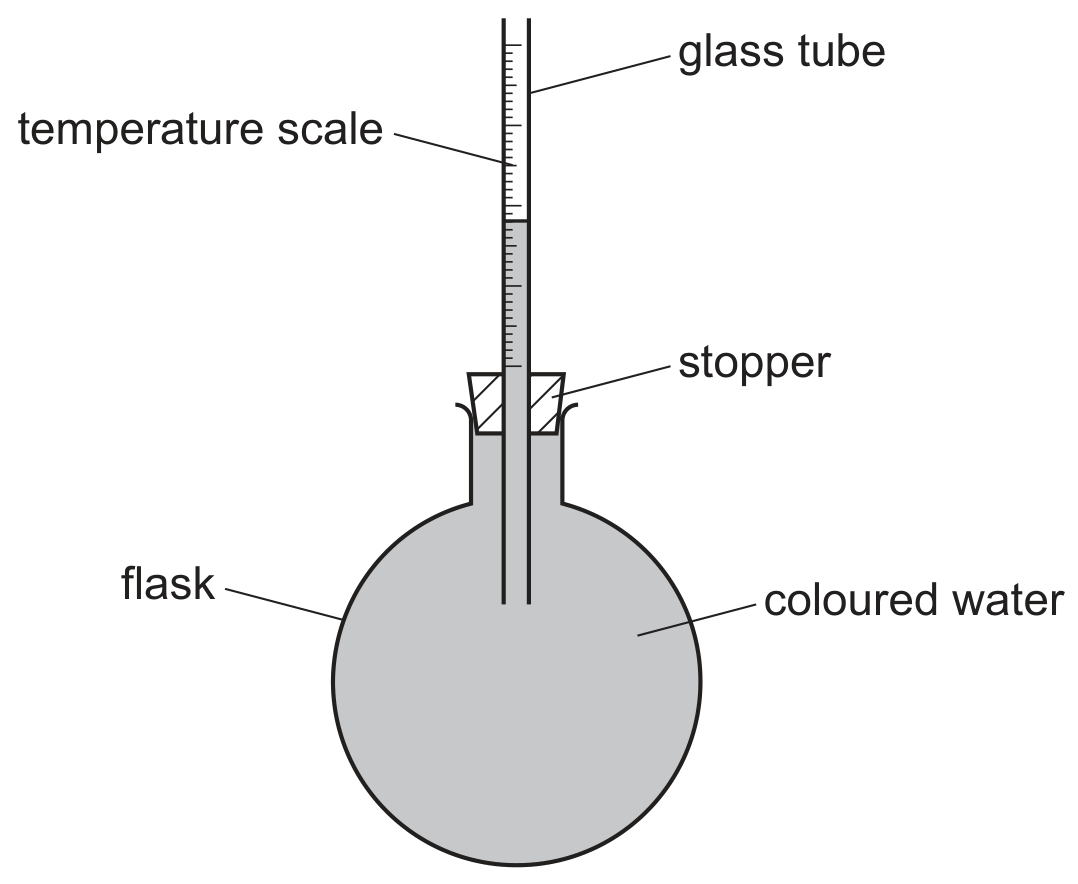
The model thermometer can be changed in one of two ways.
- The flask can be replaced with a larger one full of coloured water.
- The glass tube can be replaced with one with a larger internal diameter.
Which statement is correct?
Only using a larger flask increases the sensitivity.
Only using a wider tube increases the sensitivity.
Using a larger flask increases the sensitivity and using a wider tube increases the sensitivity.
Neither using a larger flask nor using a wider tube increases the sensitivity.
The diagram shows a glass flask, sealed with a small volume of mercury in a glass tube. When the flask is gently warmed the mercury rises up the tube.
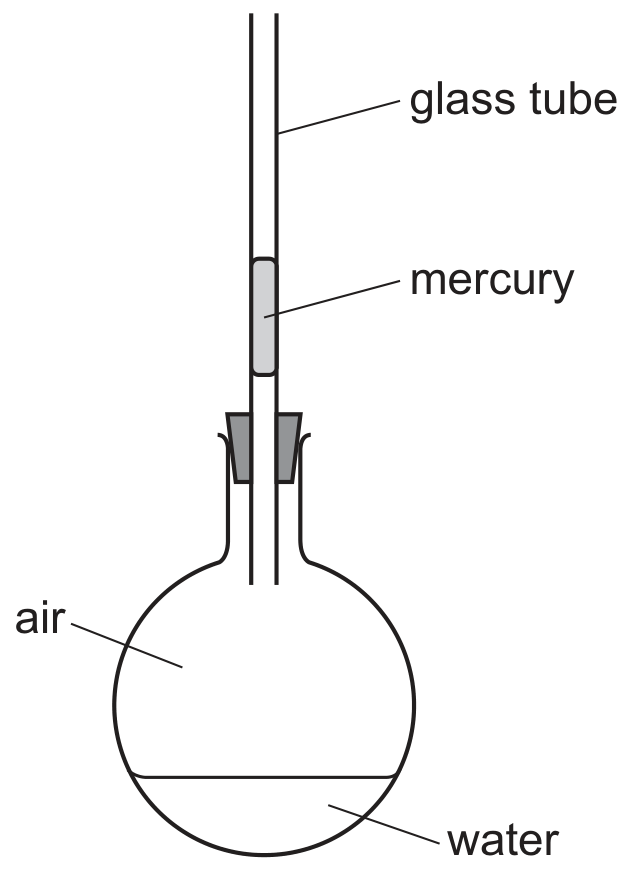
What is the main cause of the movement of the mercury?
expansion of air in the flask
expansion of the glass flask
expansion of the glass tube
expansion of the mercury
The diagram shows a liquid-in-glass thermometer.
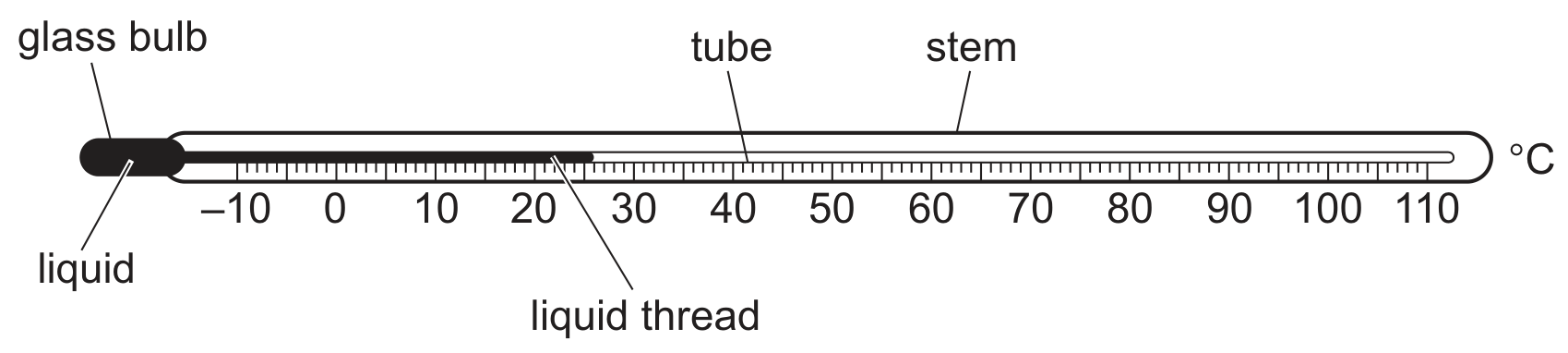
How can the thermometer be made more sensitive?
increase the internal diameter of the tube containing the liquid thread
increase the internal volume of the glass bulb and the volume of the liquid
increase the length of the tube and stem
increase the thickness of the glass in the glass bulb