Question 9
A piece of solid metal melts to become a liquid.
How do the particles of metal or their behaviour change?
They increase in size.
They move around each other.
They move much further apart.
They vibrate more about their fixed positions.

EduNinjaA piece of solid metal melts to become a liquid.
How do the particles of metal or their behaviour change?
They increase in size.
They move around each other.
They move much further apart.
They vibrate more about their fixed positions.

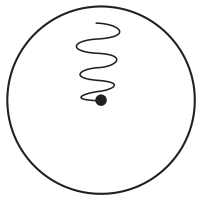
A pollen grain in a beaker of still water is viewed through a microscope.
Which diagram shows the most likely movement of the pollen grain?


Brownian motion of particles is observed.
Which statements describe the movement of the particles?
1 The particles all travel along a curved path.
2 The particles move randomly.
3 The particles all travel in the same direction.
1 and 3
1 only
2 and 3
2 only
Extremely small pollen grains in water are viewed through a microscope. The grains are seen to move continually and randomly.
What is the reason for this random movement?
The grains are moved by randomly moving water molecules.
The grains are moved by random convection currents in the water.
The grains are moved by random rays of light reflecting off them.
The grains are moved by the random motion of their own atoms.
(a) A car has a weight of 13000 N . The car is supported by 4 tyres. The area of each tyre in contact with the road is 0.016 m2.
A car has a weight of 13000 N . The car is supported by 4 tyres. The area of each tyre in contact with the road is 0.016 m2.
Explain, in terms of particles, why the air pressure in the tyres increases when the car travels along the road.
Liquids are difficult to compress whereas gases can be compressed easily.
Explain, in terms of particles, why it is difficult to compress liquids.
Why can a gas be compressed easily into a smaller volume?
The particles are far apart.
The particles do not attract each other.
The particles move randomly.
The volume of each particle can be reduced.
Brownian motion is the random motion of particles.
In which states of matter is Brownian motion observed?
gases, liquids and solids
gases and liquids only
gases and solids only
liquids and solids only
Explain, in terms of molecules, why liquids are very difficult to compress.
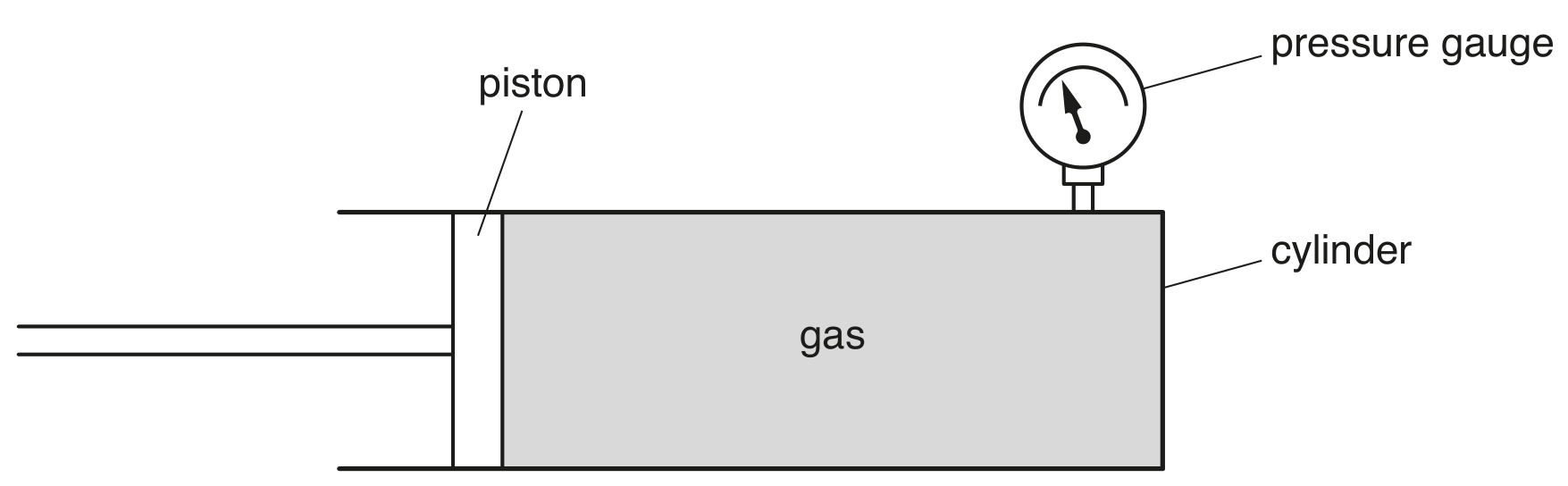
Fig. 3.1 shows a gas contained in a cylinder enclosed by a piston.

Fig. 3.1
Describe, in terms of momentum of the molecules, how a pressure is exerted on the walls of the cylinder.