EduNinja

IGCSE Physics1.8 PressureQuestion Bank

Question 1

[Maximum number: 3]

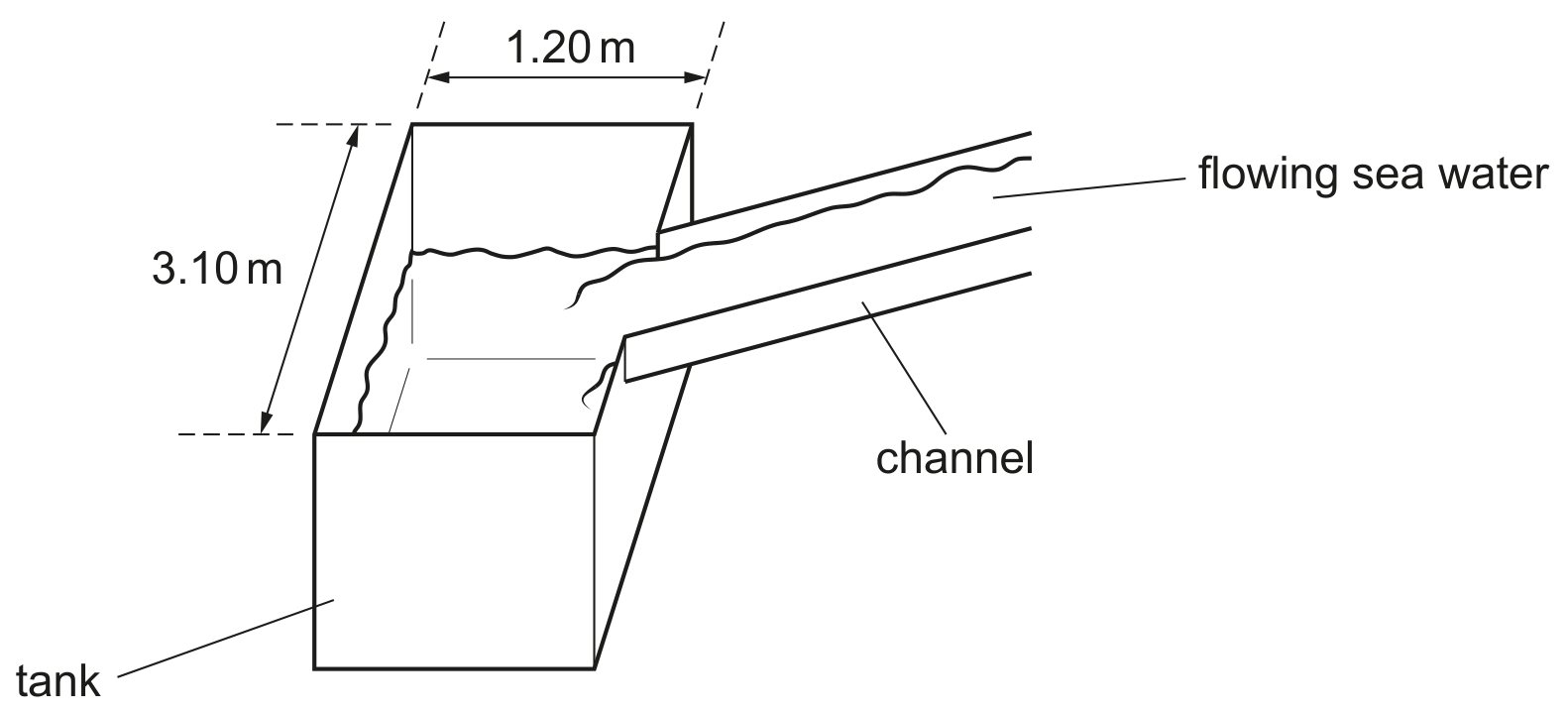
Fig. 1.1 shows sea water flowing down a channel into a tank without splashing. The water is flowing at a rate of 800 kg/min800 \mathrm{~kg} / \mathrm{min}. The length and width of the tank are 3.10 m and 1.20 m . The density of the sea water is 1020 kg/m31020 \mathrm{~kg} / \mathrm{m}^{3}.

Fig. 1.1 (not to scale)

Fig. 1.1 (not to scale)

Question 1(c)

(a)

The water stops flowing. The depth of water in the tank is 0.800 m .

Calculate the pressure at the bottom of the tank due to the water.

[ 3 ]
Question 1

Question 1(b)

(a)

The piece of glass shown in Fig. 1.1 is used as the vertical viewing window of an aquarium. The atmospheric pressure outside the aquarium is 1.0×10⁵ Pa1.0 \times 10^{5} \mathrm{~Pa}. The average pressure on the inside of the aquarium window is 1.3×10⁵ Pa1.3 \times 10^{5} \mathrm{~Pa}.

Calculate the resultant force acting on the window due to these pressures and state the direction in which it acts.
force =
direction of force

[ 4 ]

Question 1(c)

(b)

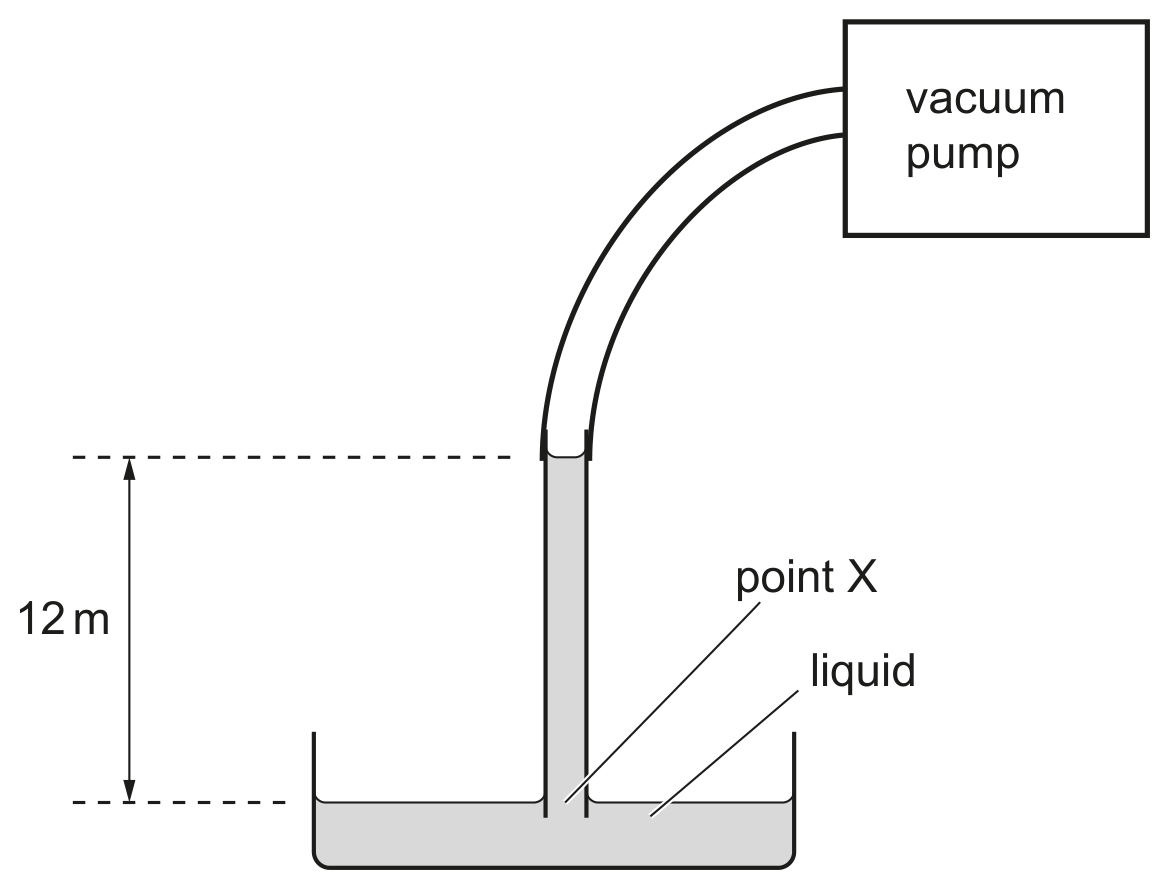
Fig. 1.2 shows a vacuum pump connected to the top of a vertical tube with its lower end immersed in a tank of liquid. The pump reduces the pressure above the column to zero and the pressure at point X is 9.6×10⁴ Pa9.6 \times 10^{4} \mathrm{~Pa}.

Fig. 1.2 (not to scale)

Fig. 1.2 (not to scale)

Calculate the density of the liquid.
density =
[Total: 10]

[ 3 ]

Question 1

[Maximum number: 3]

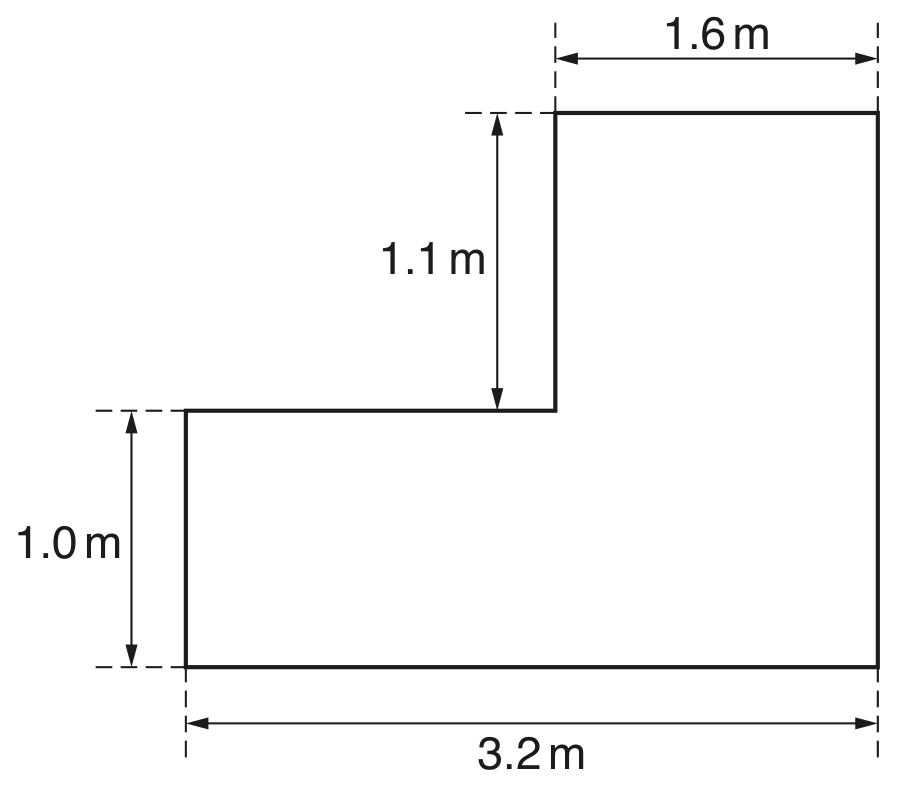
Fig. 1.1 is the top view of a tank in an aquarium. The tank is filled with salt water.

Fig. 1.1 (not to scale)

Fig. 1.1 (not to scale)

The depth of the water in the tank is 2.0 m .

Question 1(c)

(a)

Calculate the pressure due to the water at a level of 0.80 m above the base of the tank.
pressure =
[Total: 8]

[ 3 ]

Question 1

[Maximum number: 2]

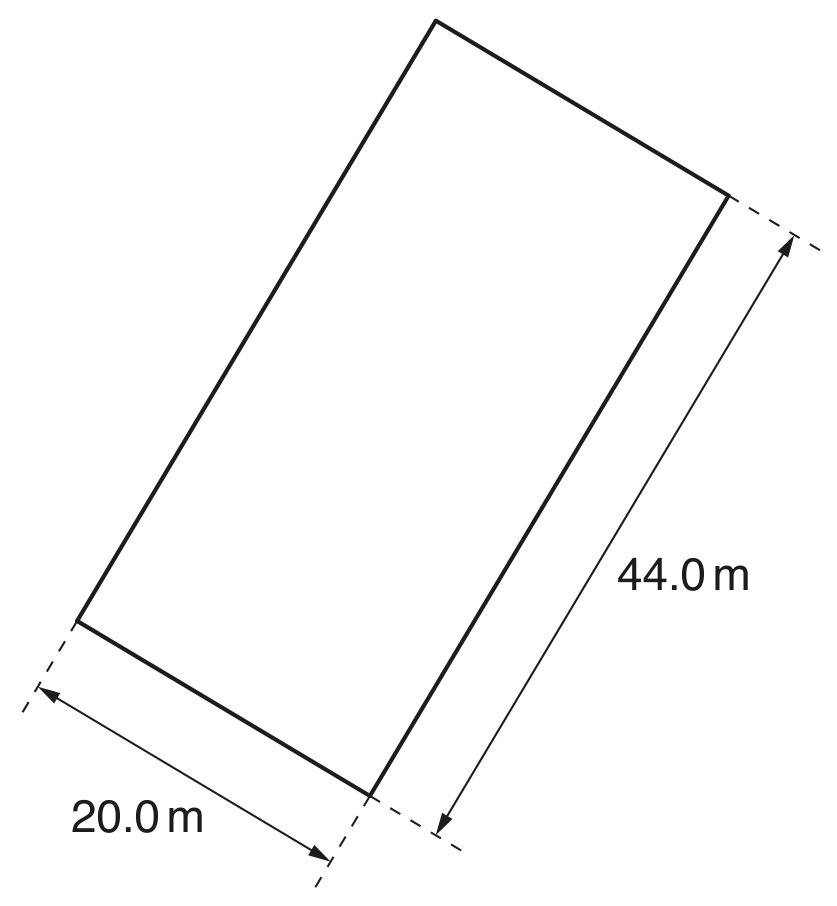
Fig. 1.1 is the top view of a rectangular paddling pool of constant depth. The pool is filled with sea water.

Fig. 1.1 (not to scale)

Fig. 1.1 (not to scale)

Question 1(c)

(a)

Calculate the pressure due to the sea water at the bottom of the pool.
pressure =

[ 2 ]

Question 2

Question 2(a)

Question 2(a)(i)

(a)
(i)

Define pressure.

[ 1 ]

Question 2(a)(ii)

(ii)

Describe how pressure in a liquid varies with its depth and with its density.
variation with depth
variation with density

[ 2 ]

Question 2

Question 2(a)

(a)

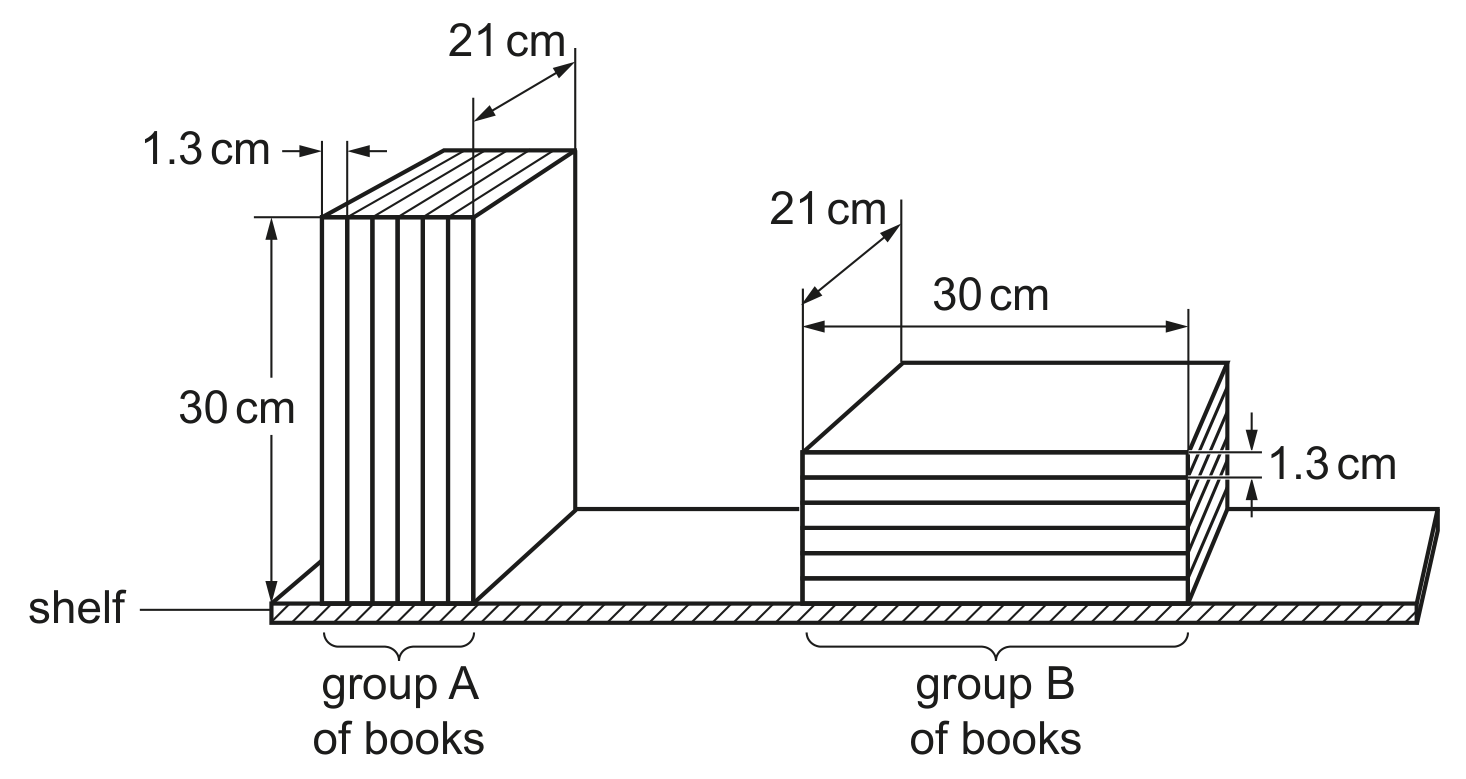
Fig. 2.1 shows a bookshelf with two groups of books A and B on it. There are six books in each group of books. All the books are identical. The mass of each book is 0.52 kg.

Fig. 2.1

Fig. 2.1

[ 6 ]

Question 2(a)(i)

(i)

Explain why the pressure exerted on the shelf by the books in group B is less than the pressure exerted on the shelf by the books in group A.

[ 3 ]

Question 2(a)(ii)

(ii)

Calculate the pressure exerted on the shelf by the books in group A .

pressure =...........................................................
[ 3 ]

Question 2(b)

(b)

A diver dives to a depth below the surface of the sea where the total pressure is 3.0×10⁵ Pa3.0 \times 10^{5} \mathrm{~Pa}. The atmospheric pressure is 1.0×10⁵ Pa1.0 \times 10^{5} \mathrm{~Pa}. The density of the sea water is 1030 kg/m31030 \mathrm{~kg} / \mathrm{m}^{3}.

Calculate the depth of the diver below the surface of the sea.
depth =

[ 3 ]

Question 2

[Maximum number: 1]

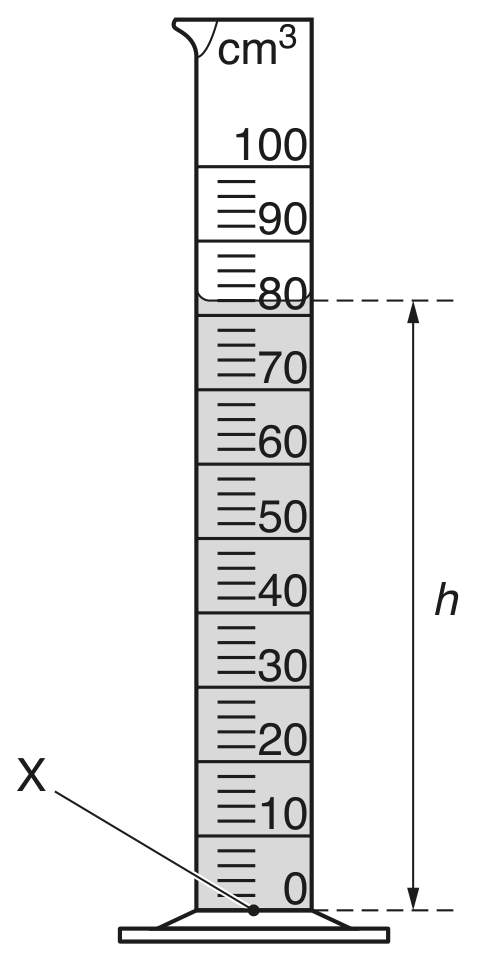
Fig. 2.1 shows a measuring cylinder that contains a coloured liquid.

Fig. 2.1

Fig. 2.1

The measuring cylinder contains 82 cm382 \mathrm{~cm}^{3} of the liquid. The density of the liquid is 950 kg/m3950 \mathrm{~kg} / \mathrm{m}^{3}.

Question 2(b)

(a)

The height h of the liquid in the measuring cylinder is 0.094 m.

[ 1 ]

Question 2(b)(i)

(i)

Calculate the pressure due to the liquid at point X in Fig. 2.1.
pressure =

Question 2(b)(ii)

(ii)

The true pressure at point X is different from the value calculated in (b)(i). Explain why.

[ 1 ]

Question 2

[Maximum number: 2]

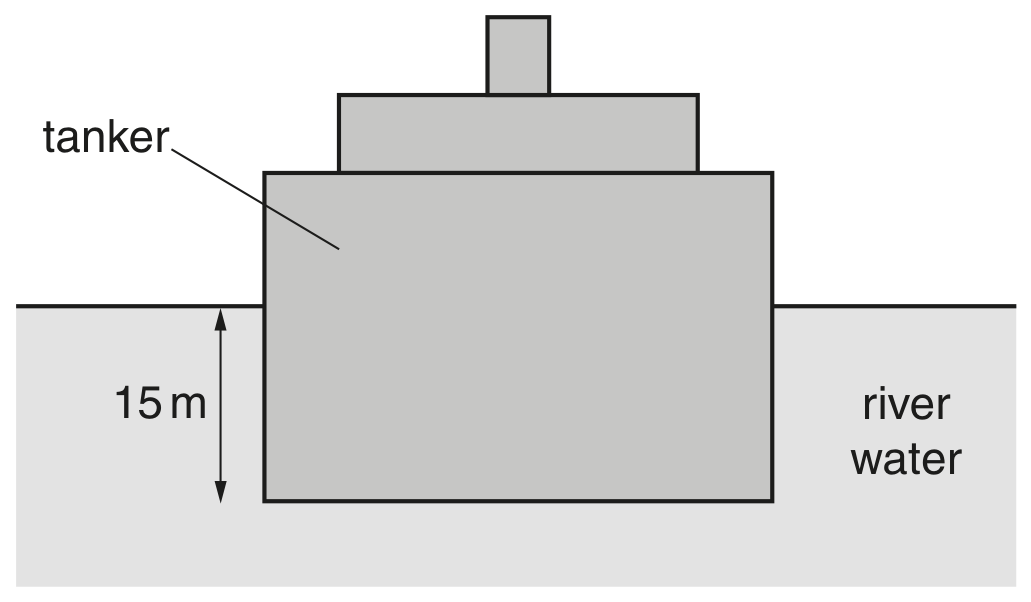
Fig. 2.1 represents the cross-section of an oil tanker in a river.

Fig. 2.1

Fig. 2.1

Question 2(a)

(a)

The bottom of the tanker is 15 m below the surface of the water. The area of the bottom of the tanker is 6000 m26000 \mathrm{~m}^{2}. The density of the water is 1000 kg/m31000 \mathrm{~kg} / \mathrm{m}^{3}.

[ 2 ]

Question 2(a)(i)

(i)

Calculate the pressure due to the water at the depth of 15 m .

pressure =
[ 2 ]

Question 2(a)(ii)

(ii)

Calculate the force due to the water pressure on the bottom of the tanker.

force =

Question 2

[Maximum number: 7]

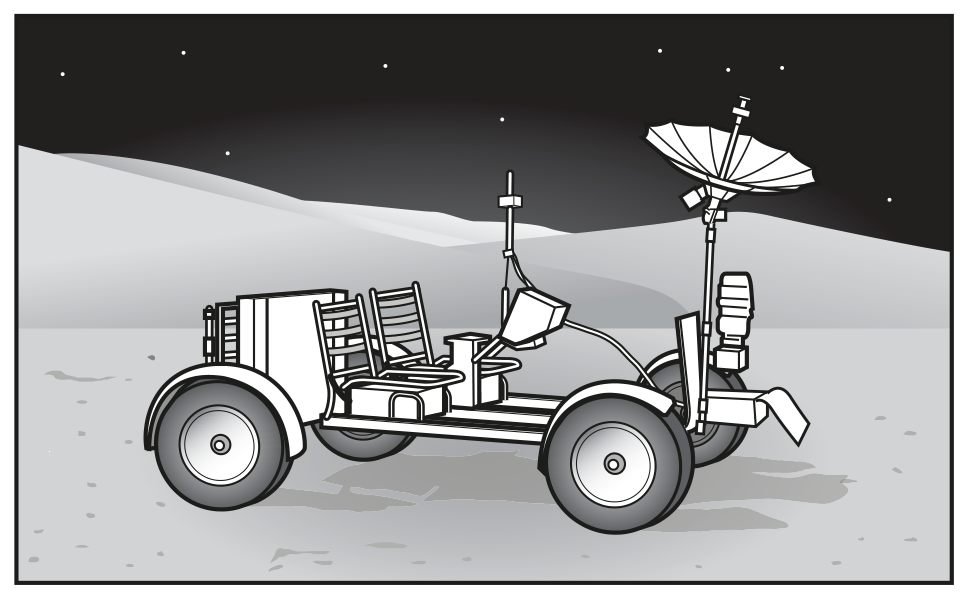
Fig. 2.1 shows a vehicle designed to be used on the Moon.

Fig. 2.1

Fig. 2.1

The brakes of the vehicle are tested on Earth.

Question 2(b)

(a)

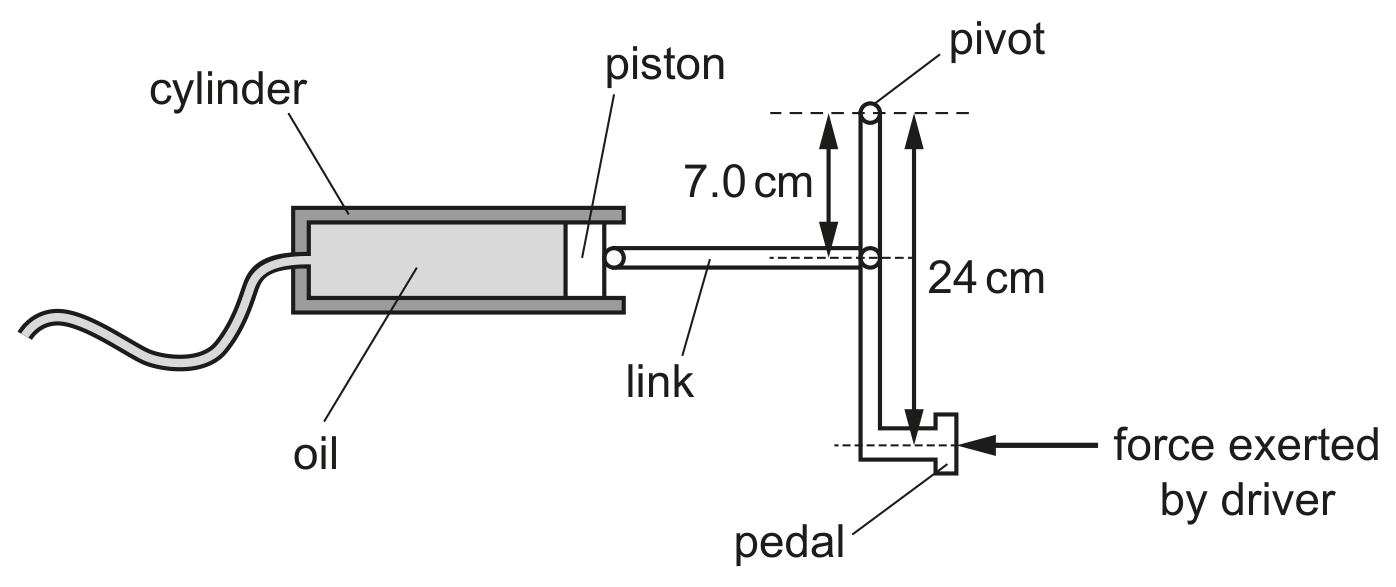
Fig. 2.2 shows the brake pedal of the vehicle.

Fig. 2.2 (not to scale)

Fig. 2.2 (not to scale)

The driver exerts a force on the pedal, which increases the pressure in the oil to operate the brakes.

The area of the piston in the cylinder is 6.5×10⁴ m2(0.00065 m2)6.5 \times 10^{-4} \mathrm{~m}^{2}\left(0.00065 \mathrm{~m}^{2}\right). The pressure increase in the oil is 5.0×10⁵ Pa(500000 Pa)5.0 \times 10^{5} \mathrm{~Pa}(500000 \mathrm{~Pa}).

Calculate the force exerted by the driver on the brake pedal.

force =
[ 7 ]

Question 8

[Maximum number: 1]

The equation Δp=ρgΔh\Delta p=\rho g \Delta h can be used for a liquid.
What is the meaning of the term ρ\rho ?

A

pressure due to the liquid

B

density of the liquid

C

total pressure due to the liquid and the air above the liquid

D

density of an object placed in the liquid

0 selected