Question 1
Question 1(c)
(a)
Consider this bicycle compared to a small motorcycle.
State two environmental benefits of the electrically powered bicycle.
1.
2.
[ 2 ]
 EduNinja
Consider this bicycle compared to a small motorcycle.
State two environmental benefits of the electrically powered bicycle.
1.
2.
Fig. 2.1 shows a fork-lift truck lifting a box.
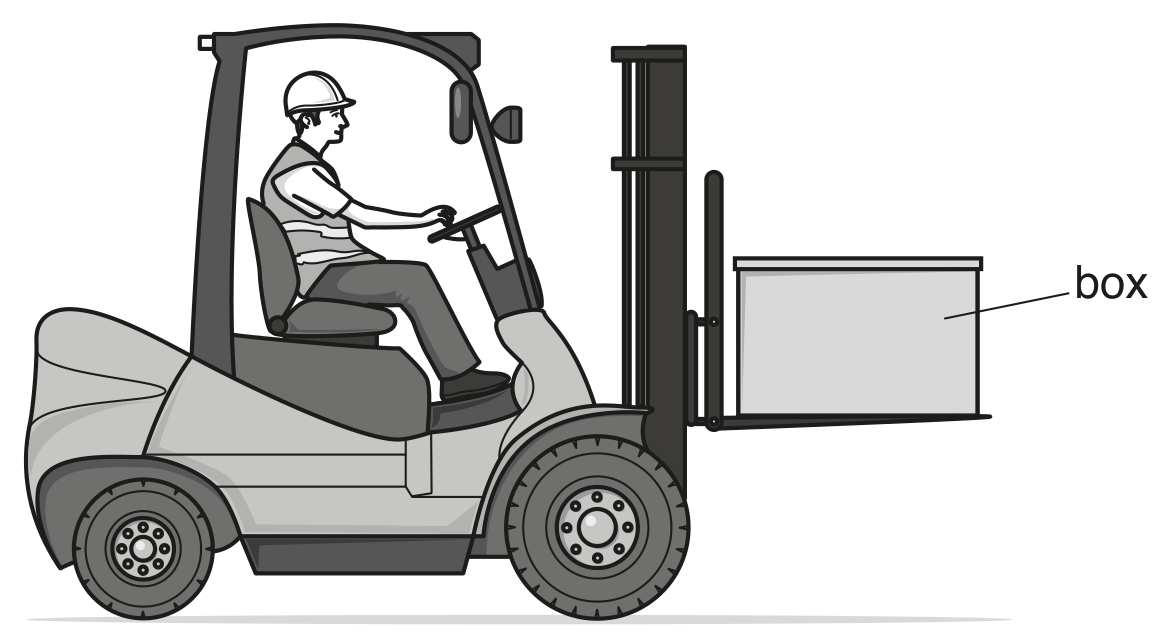
Fig. 2.1
The electric motor that drives the lifting mechanism is powered by batteries.
The lifting mechanism raises a box of mass 32 kg through a vertical distance of 2.5 m in 5.4 s .
The efficiency of the lifting mechanism is 0.65(65 %).
Calculate the input power to the lifting mechanism.
The batteries are recharged from a mains voltage supply that is generated in an oil-fired power station.
By comparison with a wind farm, state one advantage and one disadvantage of running a power station using oil.
advantage
disadvantage
State two energy resources for which the Sun is not the main source.
1
2
State and explain whether each of the following methods of electrical power generation is renewable.
power generation in a nuclear power station
statement
explanation
power generation from waves in the sea
statement
explanation
Fig. 2.1 shows solar-powered traffic warning lights.
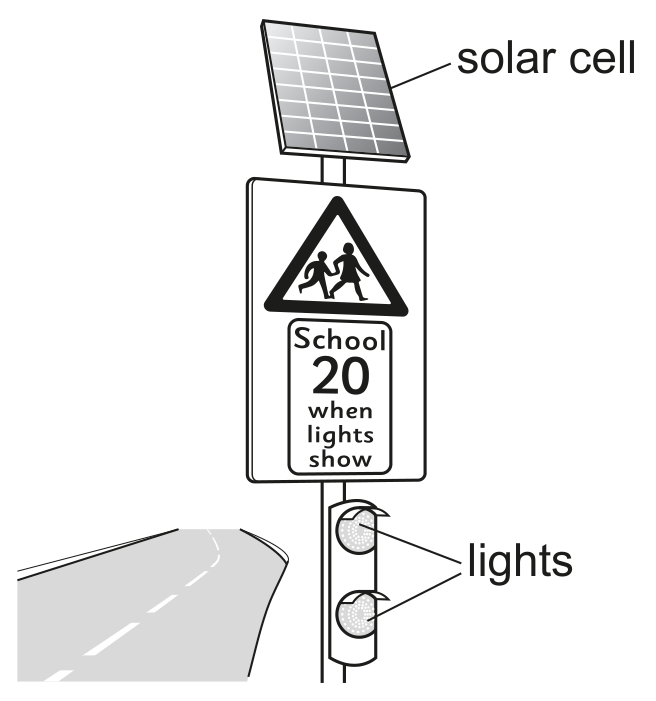
Fig. 2.1
The energy from the solar cell is stored in a battery.
The efficiency of the solar cell is 22%. The power supplied to the lights by the cell is 15 W.
State what is meant by 22% efficiency.
Calculate the solar power input to the solar cell.
power =
Suggest two advantages of using a solar cell to power the traffic warning lights in Fig. 2.1 compared to using mains electricity.
1
2
State one advantage and one disadvantage of using a wind turbine as a source of electrical energy.
advantage
disadvantage
Fig. 2.1 shows a wind turbine.
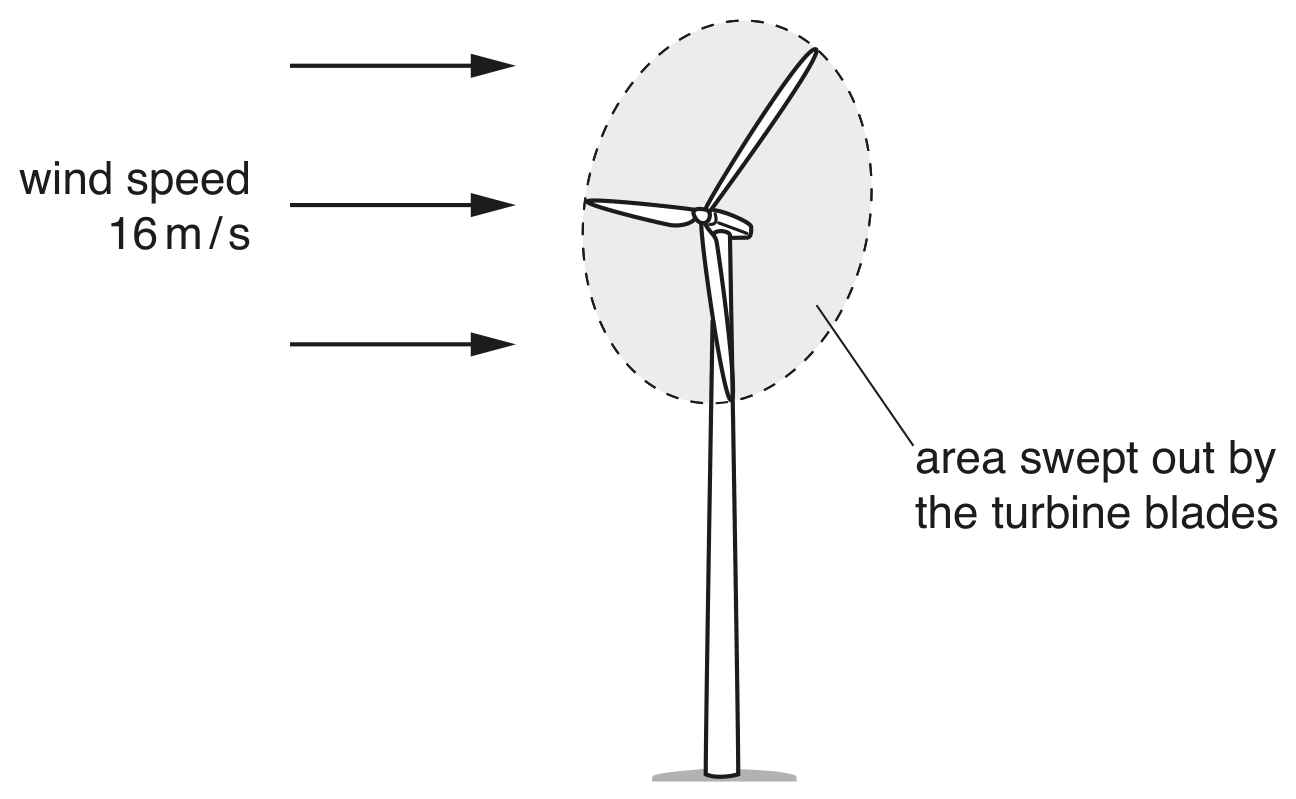
Fig. 2.1
Suggest why some of the kinetic energy of the air that passes through the circular area swept out by the blades is not converted into electrical energy.
Fig. 2.1 shows a simplified version of a 'gravity lamp'. This apparatus is used to light a light-emitting diode (LED) without mains electricity.
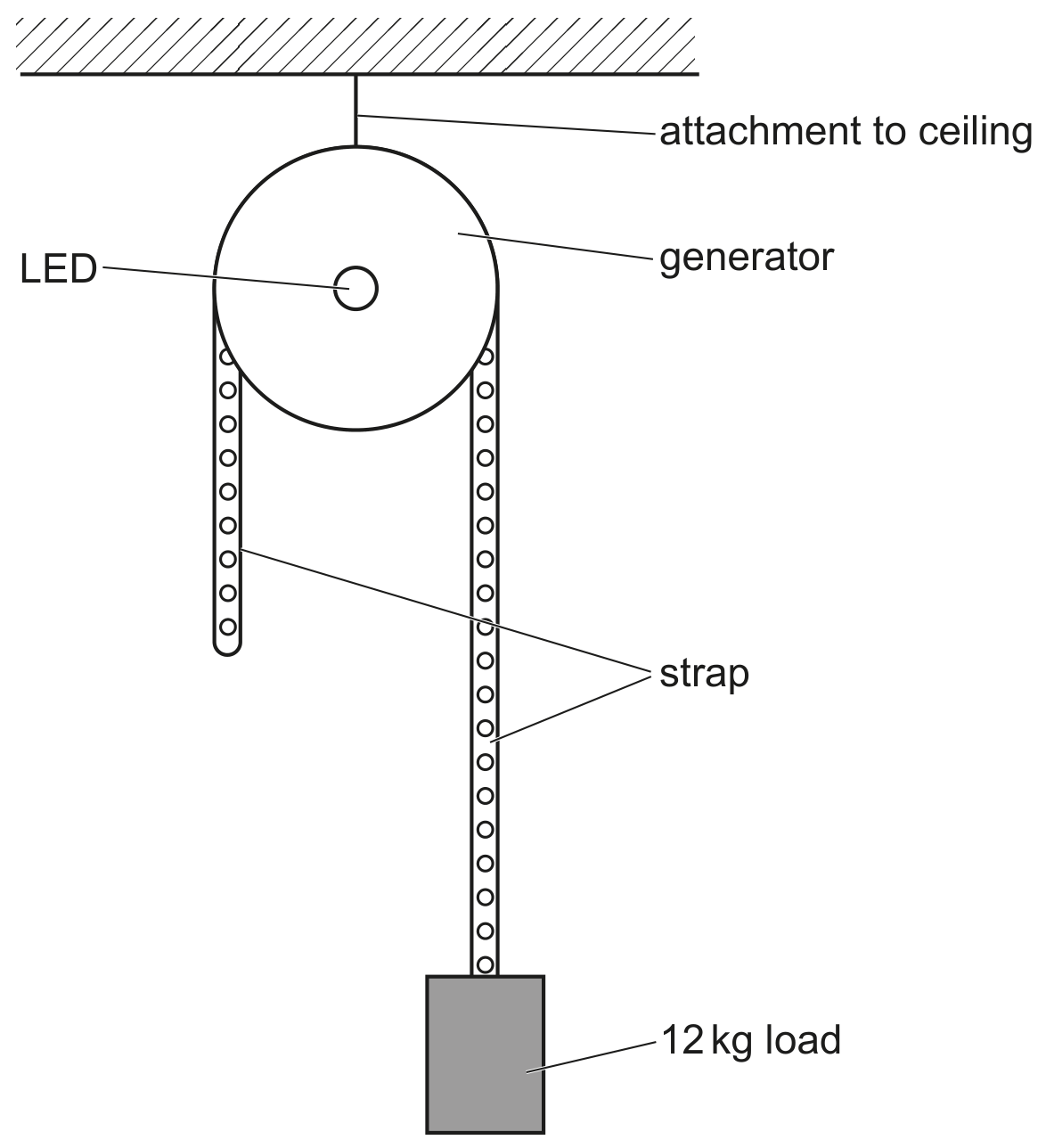
Fig. 2.1
The load of 12 kg is raised to a height of 1.7 m above the ground. The load is connected to a pulley system. The time taken for the load to fall to the ground is 1200 seconds. The load falls at constant speed. The generator is connected to an LED.
The light output of the LED is 0.10 W . Calculate the efficiency of the 'gravity lamp'.
efficiency =
Suggest a social or environmental advantage of using a 'gravity lamp'.
The table gives four energy resources and states whether the main source of energy for the resource is the Sun.
Which row is correct?
energy resource
main source of
energy is the Sun
geothermal
yes
oil
no
water held behind a dam
yes
wind
no
Water is held behind a dam in a hydroelectric power scheme.
The water is released from the dam and falls a vertical height of 410 m at a rate of .
The power scheme supplies a current of 270 A at a voltage of 6000 V .
Calculate the efficiency of the power scheme.
Hydroelectric energy is a renewable form of energy.
State one disadvantage of hydroelectric power schemes.
State one other renewable source of energy.
Electrical energy may be obtained from nuclear fission.
In which order is the energy transferred in this process?
nuclear fuel → generator → reactor and boiler → turbines
nuclear fuel → generator → turbines → reactor and boiler
nuclear fuel → reactor and boiler → generator → turbines
nuclear fuel → reactor and boiler → turbines → generator
Electrical energy may be obtained from nuclear fission.
In which order is the energy transferred in this process?
nuclear fuel → generator → reactor and boiler → turbines
nuclear fuel → generator → turbines → reactor and boiler
nuclear fuel → reactor and boiler → generator → turbines
nuclear fuel → reactor and boiler → turbines → generator