EduNinja

IGCSE Physics1.5.3 Centre of gravityQuestion Bank

Question 2

[Maximum number: 2]

Fig. 2.1 shows a ship loaded with containers.
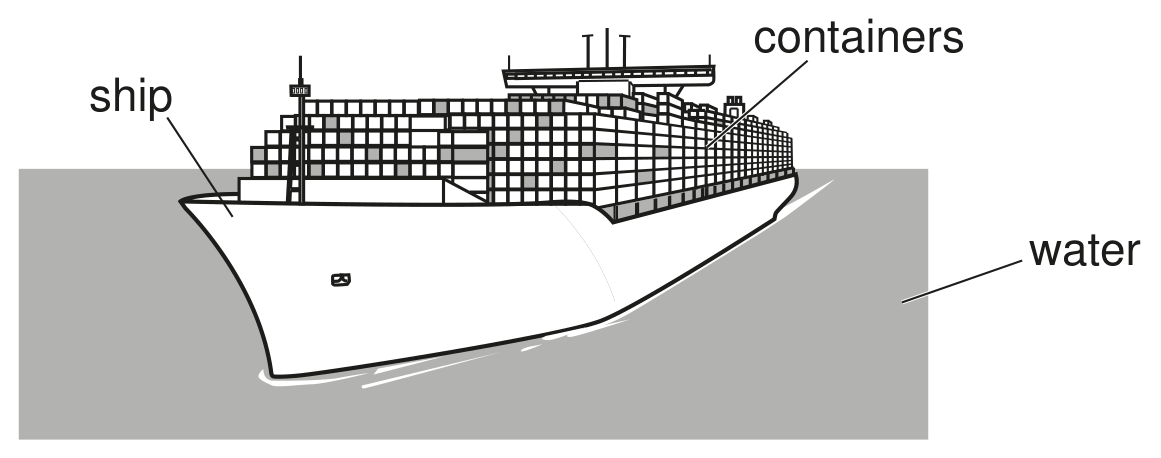
Fig. 2.1

Fig. 2.1

Question 2(b)

(a)

The containers with the greatest mass are loaded near the bottom of the ship.

State and explain the effect on the stability of the ship of loading the containers in this way.

[ 2 ]
Question 2

Question 2(b)

(a)

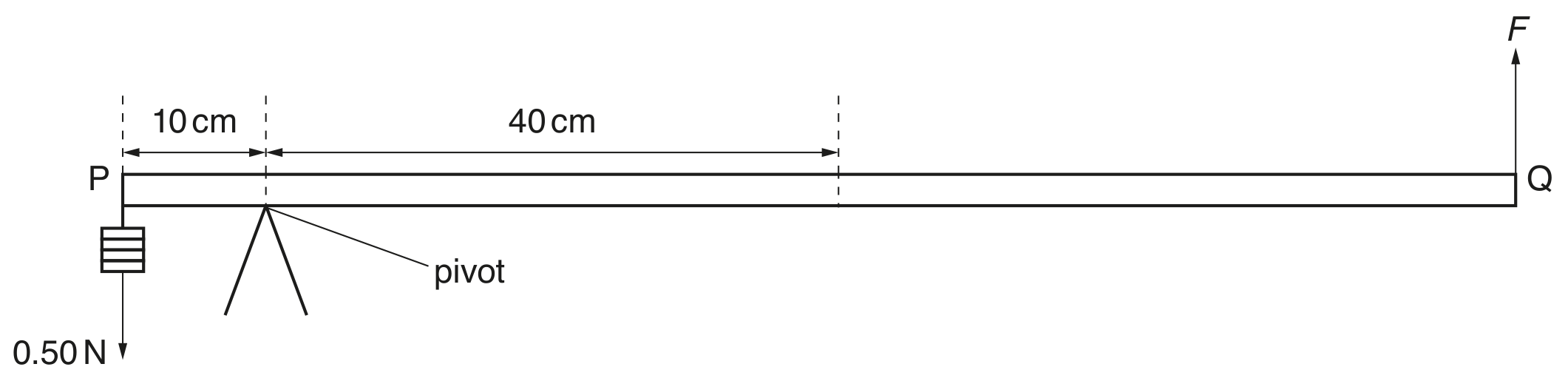
Fig. 2.1 shows a uniform metre rule PQ in equilibrium.

Fig. 2.1

Fig. 2.1

The distance PQ is 100 cm. The mass of the metre rule is 0.12 kg and its weight is W.

[ 2 ]

Question 2(b)(i)

(i)

On Fig 2.1, draw and label:
1. an arrow to show the force W acting on PQ at the centre of mass
2. an arrow to show the force R acting on PQ at the pivot.

[ 2 ]

Question 7

[Maximum number: 1]

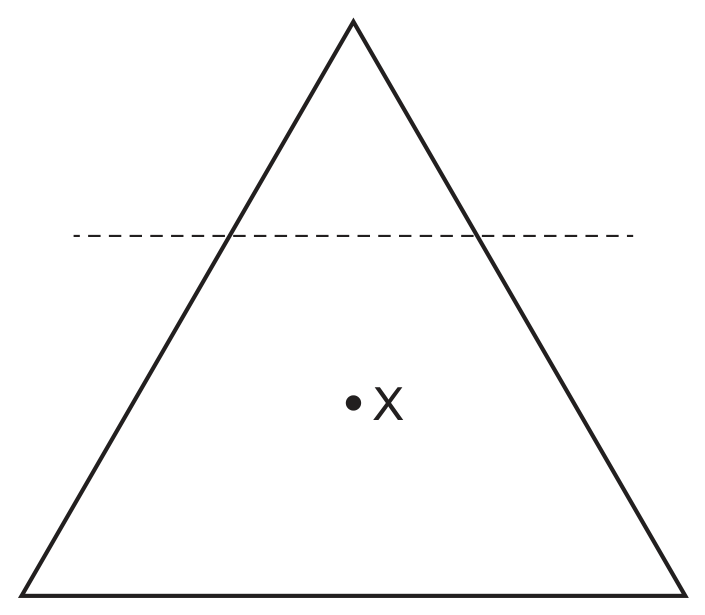
Point X is the centre of mass of a lamina in the shape of a triangle with sides of equal length. The top of the triangle is cut off along the dotted line shown.

Question image

What happens to the centre of mass, X ?

A

moves towards the bottom of the page

B

moves to the left

C

moves to the right

D

moves towards the top of the page

Question 7

[Maximum number: 1]

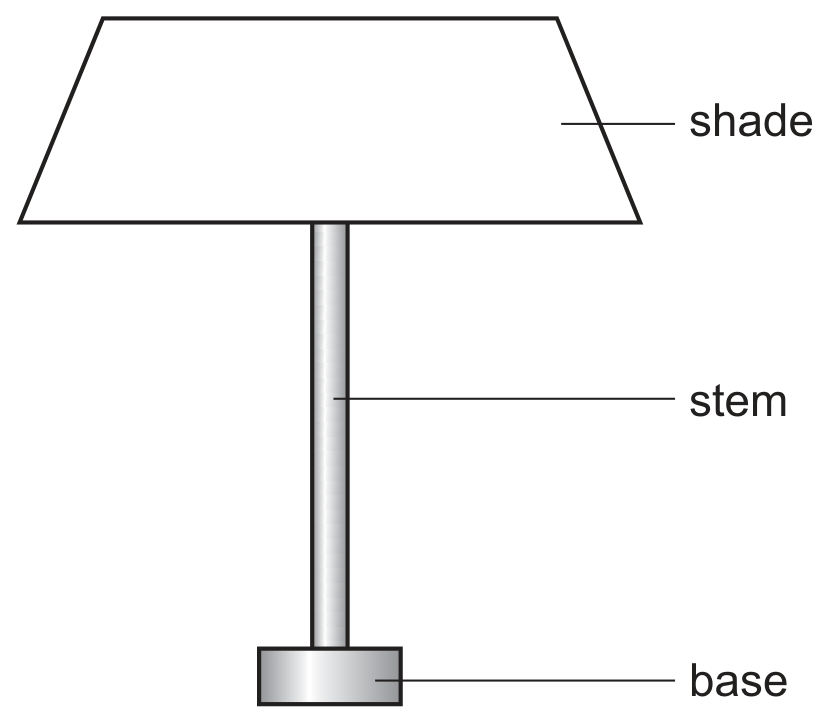
The lamp in the diagram is not very stable and falls over easily.

Question image

Which row shows changes that would definitely make the lamp more stable?

base

centre of gravity

narrower

higher

narrower

lower

wider

higher

wider

lower

Question 7

[Maximum number: 1]

The diagrams show four table lamps resting on a table. The position of the centre of mass of each lamp is labelled X .

Which lamp is the most stable?

Question 8

[Maximum number: 1]

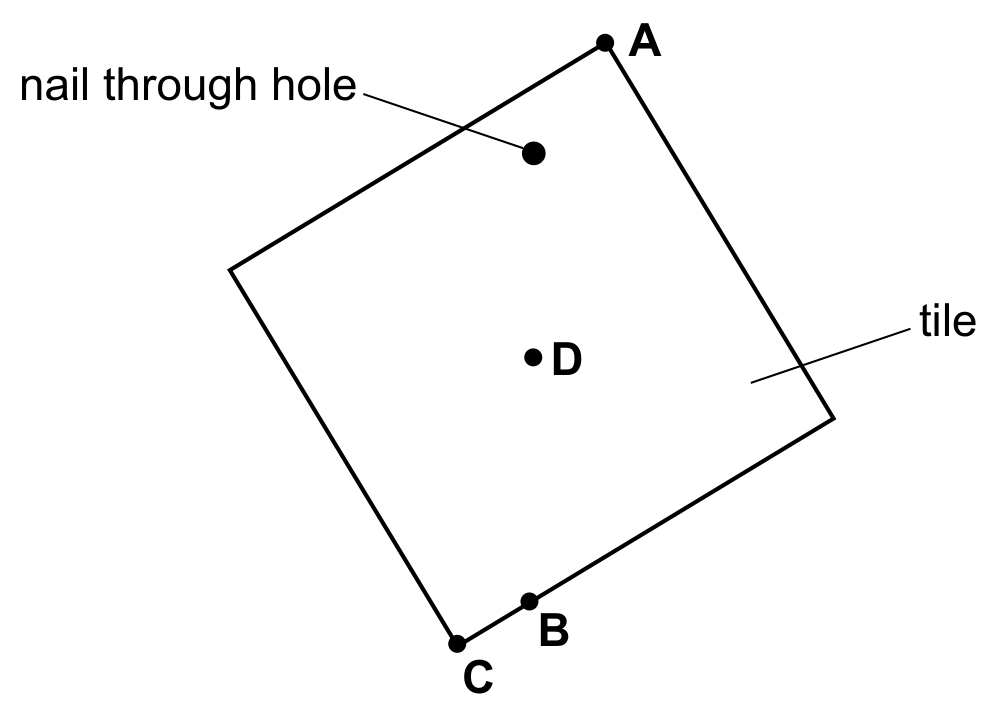
A hole is made in a square tile of uniform thickness. The diagram shows the tile hanging loosely on a nail.

Where is the centre of gravity of the tile?

Question image

Question 8

[Maximum number: 1]

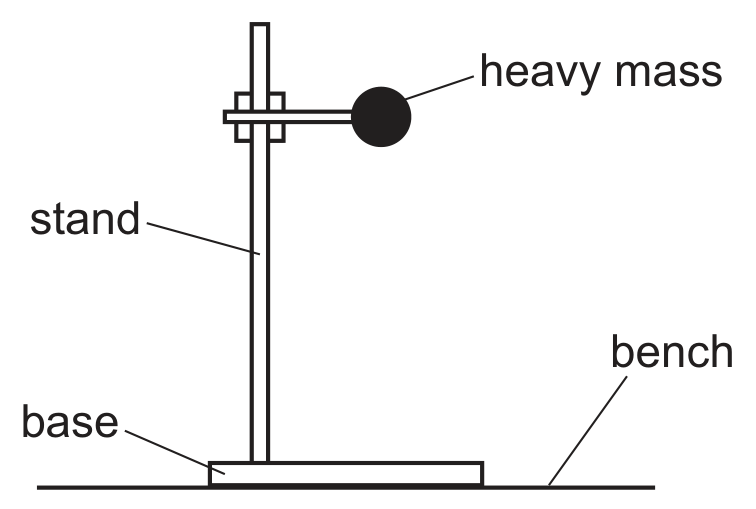
The diagram shows a stand. The stand holds a heavy mass above the bench.

Question image

Which two changes would definitely make the stand more stable?

A

Lower the mass and make the base narrower.

B

Lower the mass and make the base wider.

C

Raise the mass and make the base narrower.

D

Raise the mass and make the base wider.

Question 3

[Maximum number: 3]

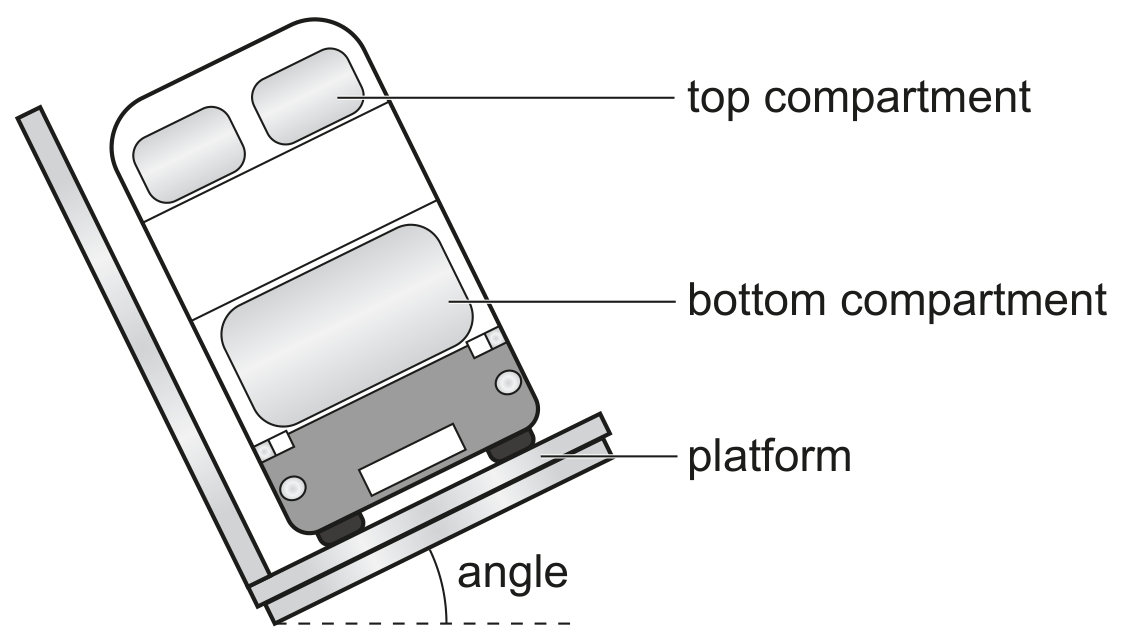
In a double-decker bus there are two passenger compartments, one above the other.

Question 3(a)

(a)

Fig. 3.1 shows a double-decker bus on a tilted platform.

Fig. 3.1

Fig. 3.1

The platform is used to test the stability of the bus.
The angle the bus makes with the horizontal is gradually increased until the bus begins to topple to the left.

Explain why the bus begins to topple.

[ 1 ]

Question 3(b)

(b)

There are 30 passengers in the upper compartment of the bus and 2 passengers in the bottom compartment of the bus.

State how this affects the stability of the bus and the reason for this.

[ 2 ]

Question 4

[Maximum number: 2]

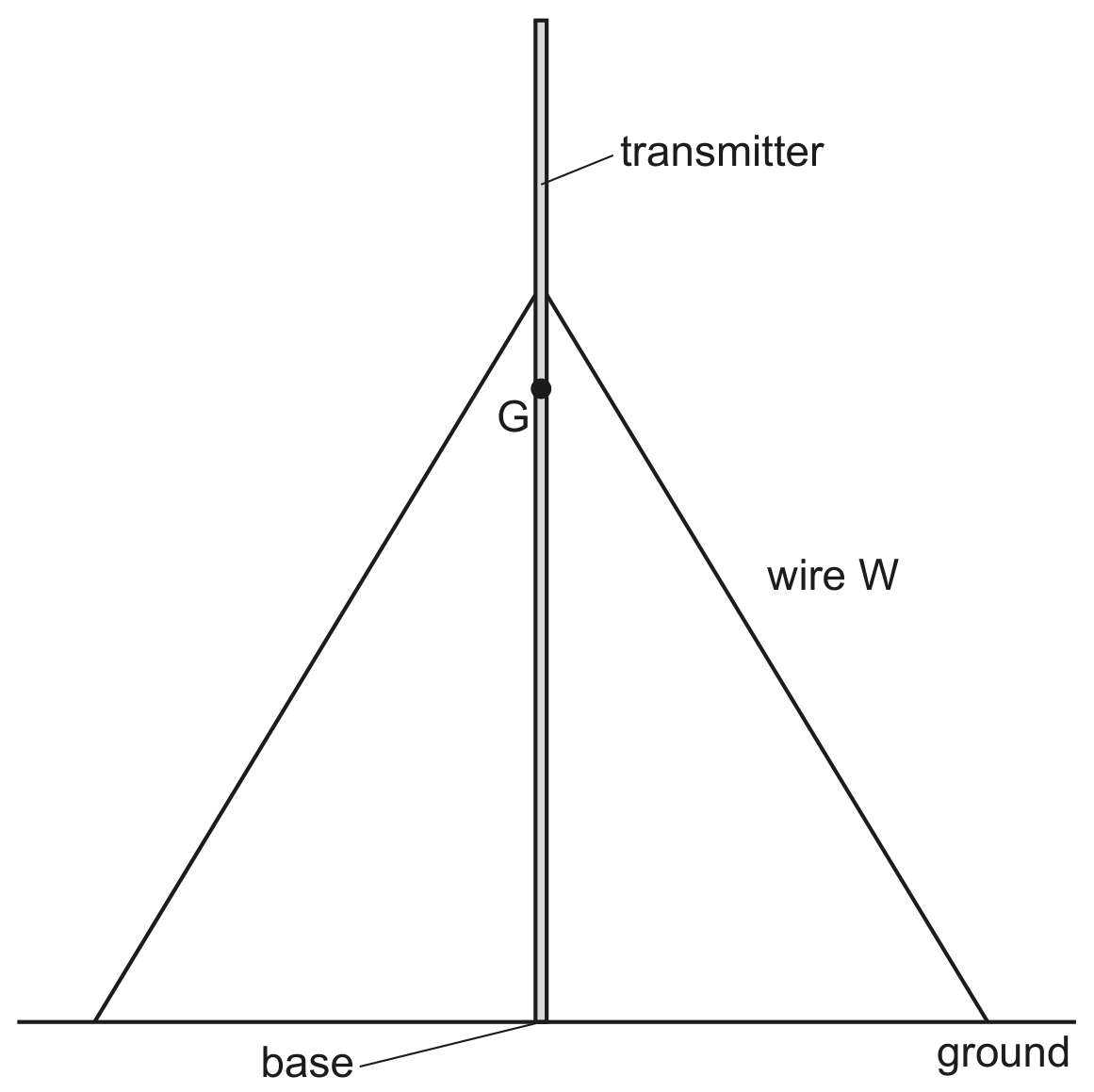
A radio transmitter is a very tall, thin cylinder. It is prevented from falling over by wires which have one end fixed to the transmitter and the other end fixed in the ground. The ends of the wires in the ground are a long distance from the transmitter.

Fig. 4.1 shows the transmitter and two of the wires.

Fig. 4.1

Fig. 4.1

Question 4(a)

(a)

The centre of gravity G is shown on Fig. 4.1.

[ 2 ]

Question 4(a)(i)

(i)

State what is meant by centre of gravity.

[ 1 ]

Question 4(a)(ii)

(ii)

Explain why the radio transmitter without the wires is a very unstable structure.

[ 1 ]
0 selected