EduNinja

IGCSE Physics1.5.1 Effects of forcesQuestion Bank

Question 1

Question 1(b)

(a)

A 20 N force and a 15 N force act at the same time on an object of mass 14 kg .

Calculate

[ 3 ]

Question 1(b)(i)

(i)

the maximum possible force on the object due to these two forces,
force =

[ 1 ]

Question 1(b)(ii)

(ii)

the acceleration caused by a resultant force equal to this maximum force.
acceleration =

[ 2 ]
Question 1

[Maximum number: 3]

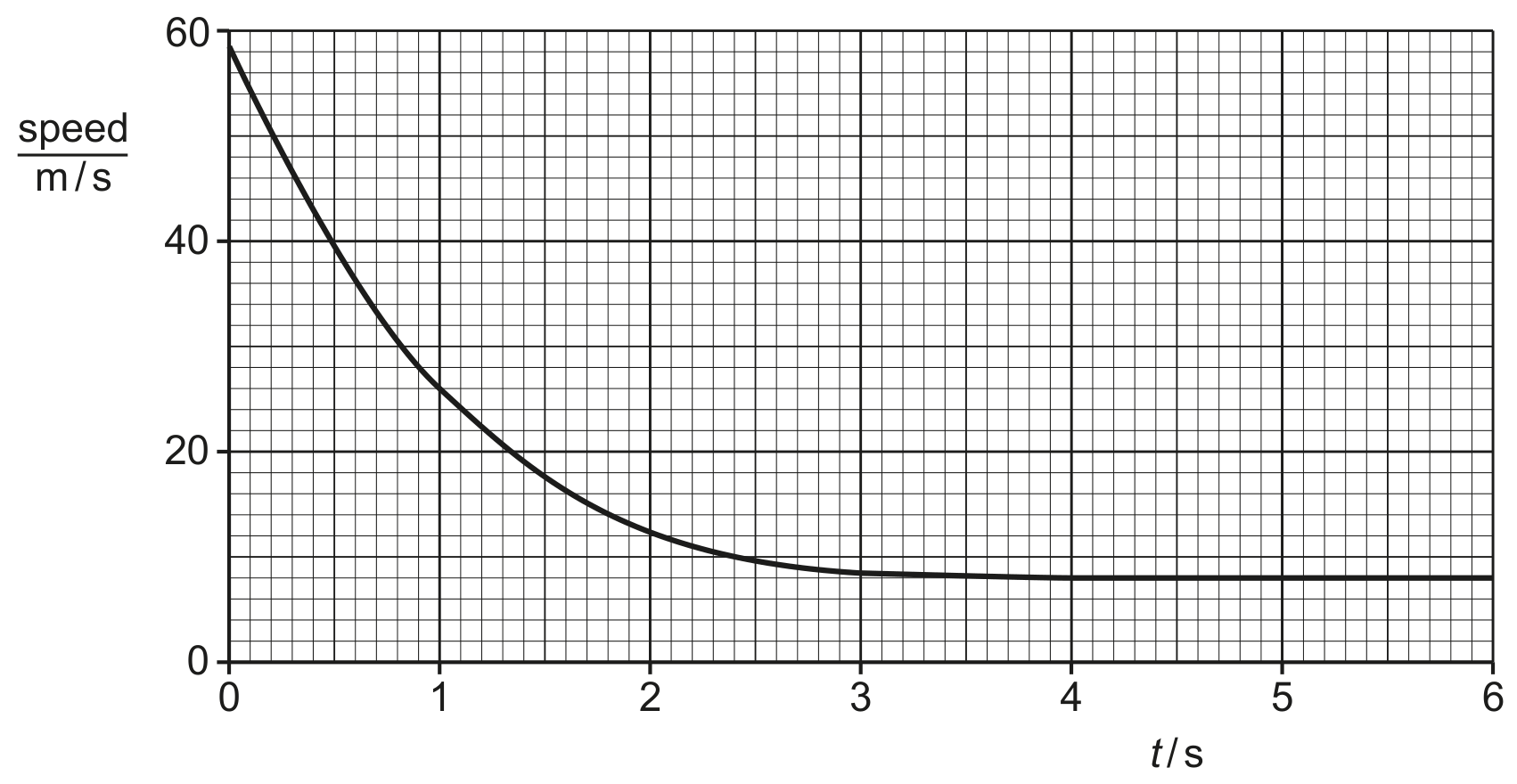
A skydiver of mass 76 kg is falling vertically in still air. At time t=0, the skydiver opens his parachute.

Fig. 1.1 is the speed-time graph for the skydiver from t=0.

Fig. 1.1

Fig. 1.1

Question 1(a)

(a)

Using Fig. 1.1, determine:

[ 3 ]

Question 1(a)(ii)

(i)

the force due to air resistance acting on the skydiver immediately after the parachute opens.
force =

[ 3 ]

Question 1

Question 1(b)

(a)

At night, the gas inside the balloon cools. The pressure of the air outside the balloon remains the same.

[ 3 ]

Question 1(b)(i)

(i)

State whether the balloon rises, falls or remains stationary.

[ 1 ]

Question 1(b)(ii)

(ii)

Explain your answer.

[ 2 ]

Question 1

Question 1(c)

(a)

A plane is at rest on an airport runway. The brakes of the plane are released and the engine of the plane provides a constant accelerating force.

Using the following data, calculate the take-off speed of the plane. Ignore any resistive forces. constant forward force =56000 N=56000 \mathrm{~N}
mass of plane =16000 kg=16000 \mathrm{~kg}
time of travel along runway =16 s=16 \mathrm{~s}
speed =
[Total: 8]

Question 1

[Maximum number: 6]

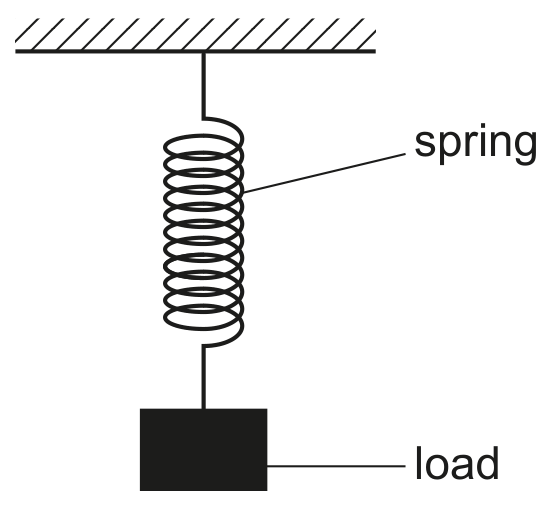
Fig. 1.1 shows a load suspended from a spring.

Fig. 1.1

Fig. 1.1

The value of the spring constant k of the spring is 0.20 N/cm0.20 \mathrm{~N} / \mathrm{cm}. The spring reaches its limit of proportionality when the load is 15 N.

Question 1(a)

(a)

Calculate the extension of the spring when the load is 3.0 N .
extension =

[ 2 ]

Question 1(b)

(b)

Explain what is meant by the term limit of proportionality of the spring.

[ 2 ]

Question 1(c)

(c)

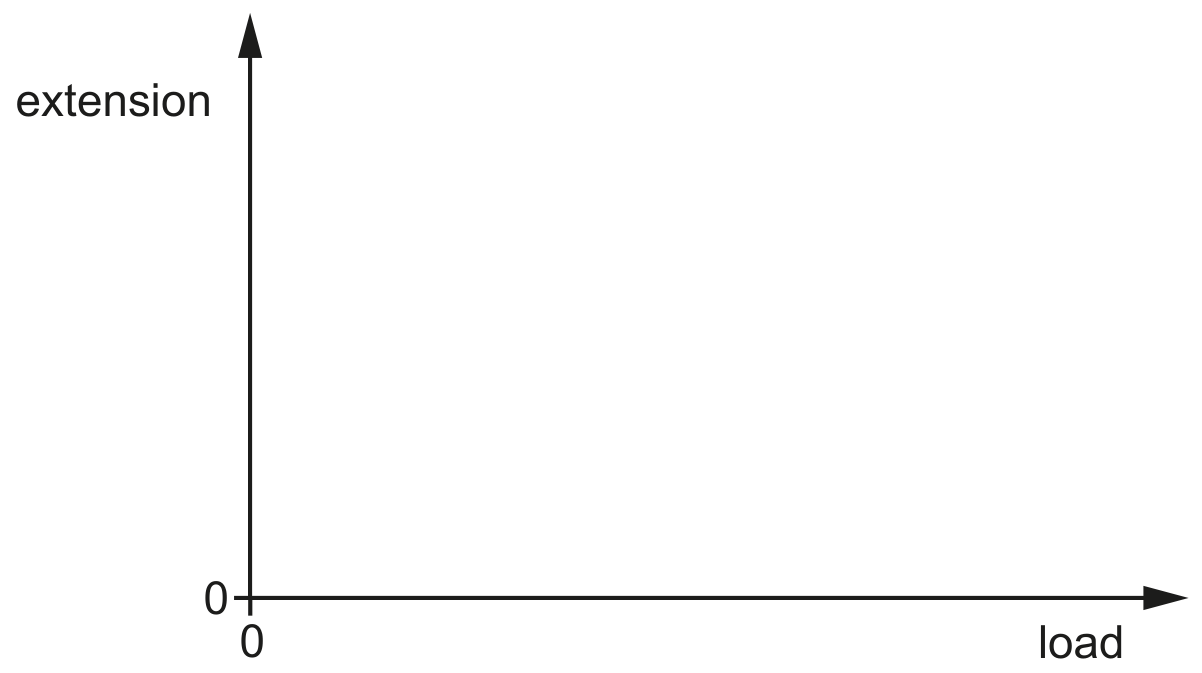
On Fig. 1.2, sketch an extension-load graph for a spring. Label the limit of proportionality with the letter L on your graph.

Fig. 1.2

Fig. 1.2

[ 2 ]

Question 1

Question 1(a)

(a)

An object is moving in a straight line at constant speed. A force is applied to the object. State the possible changes in the motion of the object.

[ 2 ]

Question 1(b)

(b)

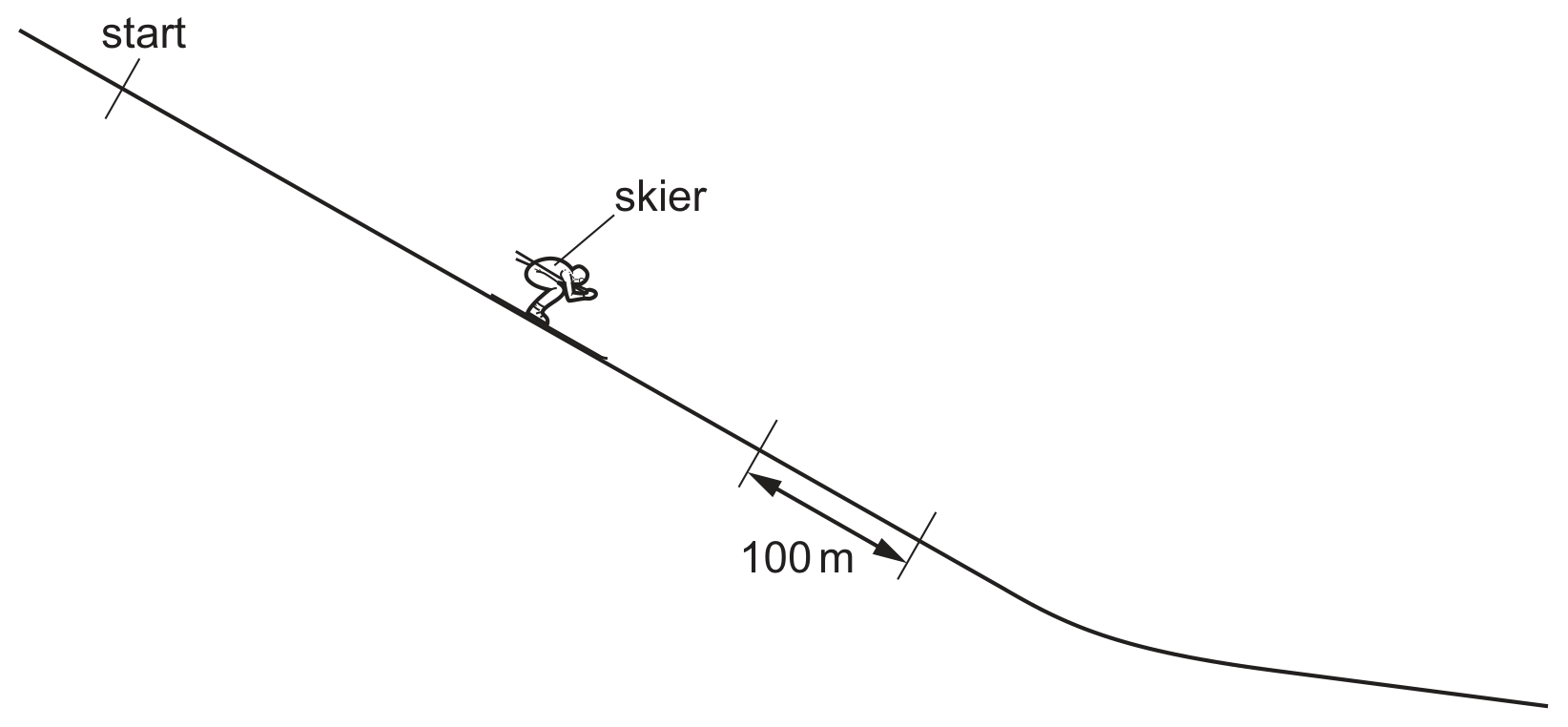
Fig. 1.1 shows a skier taking part in a speed competition. The winner of the competition has the highest average speed over the 100 m section shown in Fig. 1.1.

Fig. 1.1

Fig. 1.1

[ 2 ]

Question 1(b)(iii)

(i)

Suggest why the skier bends his body, as shown in Fig. 1.1.

Explain your answer.

[ 2 ]

Question 1

[Maximum number: 2]

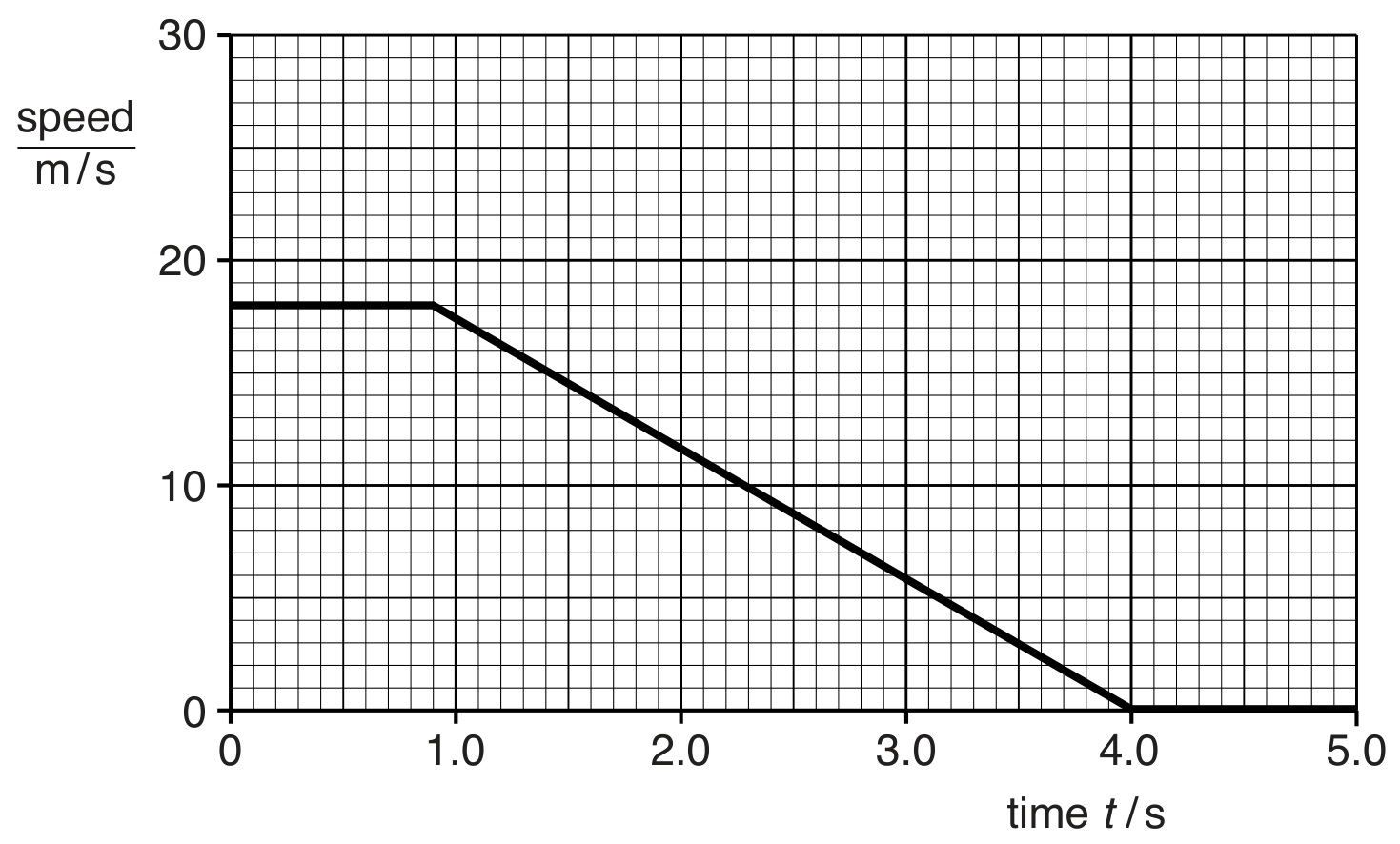
A driving instructor gives a student a sudden order to stop the car in the shortest possible time.
Fig. 1.1 shows the speed-time graph of the motion of the car from the moment the order is given.

Fig. 1.1

Fig. 1.1

Question 1(c)

(a)

Describe and explain a danger to a driver of not wearing a safety belt during a sudden stop.
[Total: 9]

[ 2 ]

Question 1

[Maximum number: 3]

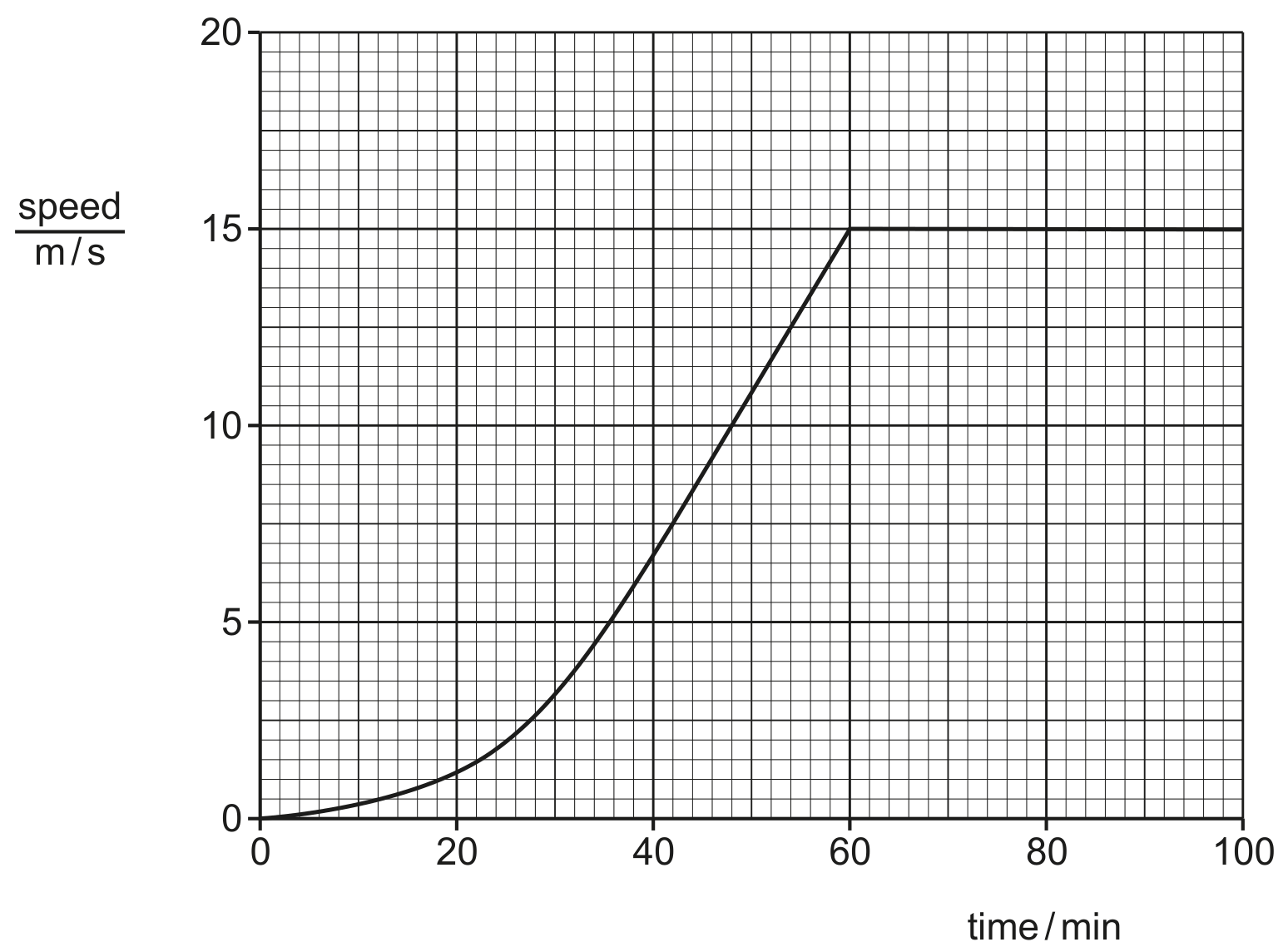
A ship sails in a straight line between two ports.
Fig. 1.1 shows the speed-time graph of the ship for the first 100 minutes of its journey between the two ports.

Fig. 1.1

Fig. 1.1

Question 1(c)

(a)

At a time not shown on the graph, the acceleration of the ship is 0.0087 m/s20.0087 \mathrm{~m} / \mathrm{s}^{2}. The total mass of the ship and its passengers is 2.3×10⁷ kg2.3 \times 10^{7} \mathrm{~kg}.

[ 3 ]

Question 1(c)(i)

(i)

Calculate the resultant force on the ship.
force =

[ 2 ]

Question 1(c)(ii)

(ii)

Explain why the force on the ship due to the ship's engine is greater than the value you calculated in (c)(i).

[ 1 ]

Question 1

[Maximum number: 1]

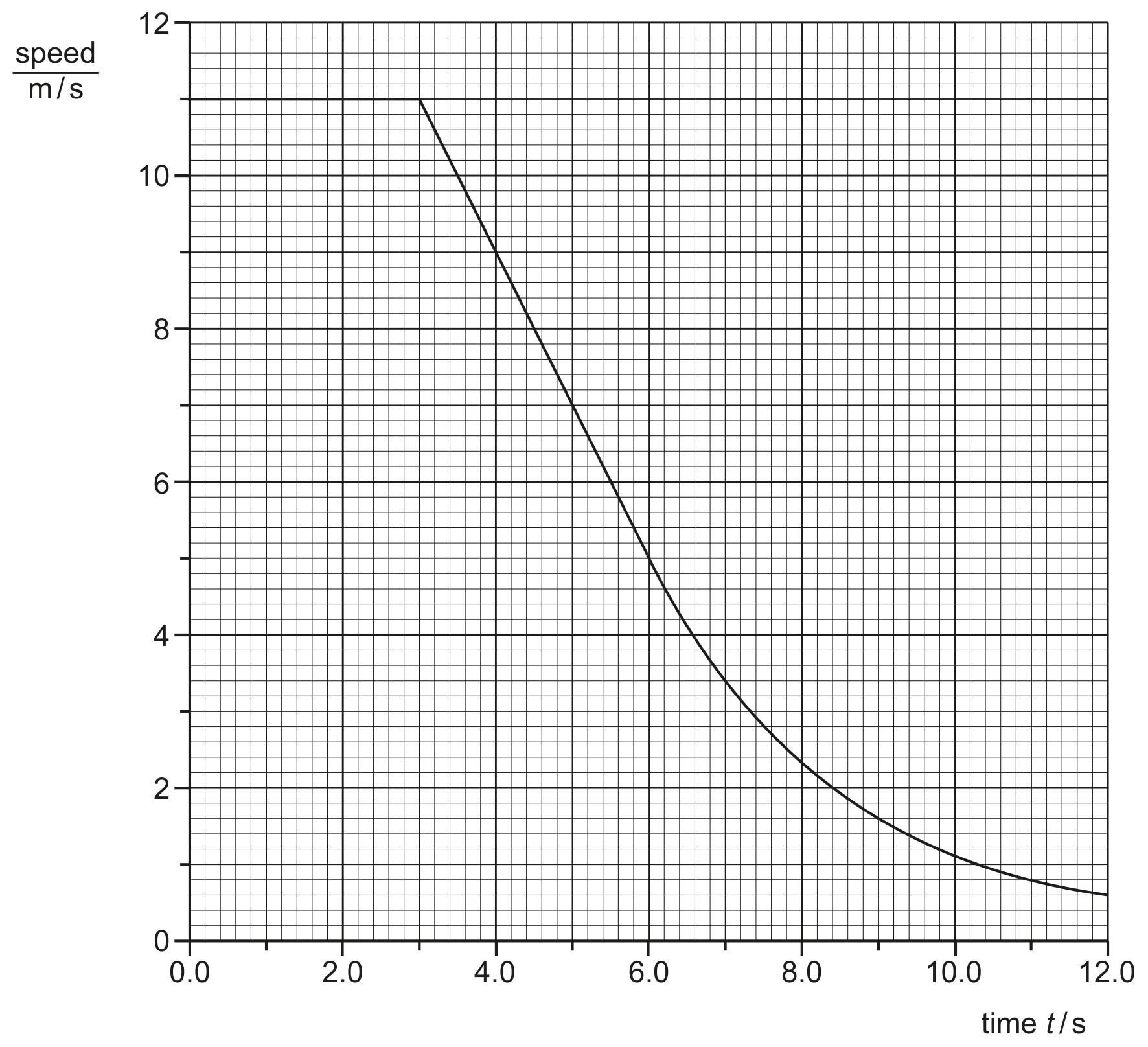
Fig. 1.1 is the speed-time graph for an ice skater.

Fig. 1.1

Fig. 1.1

Question 1(c)

Question 1(c)(ii)

(a)
(i)

State what happens to the resultant force on the skater after time t=6.0 st=6.0 \mathrm{~s}.

[ 1 ]

Question 1

[Maximum number: 2]

Some physical quantities are scalars and other physical quantities are vectors.

Question 1(c)

(a)

A microphone in a recording studio has a mass of 0.55 kg and a weight W.

[ 2 ]

Question 1(c)(iii)

(i)

State and explain how the magnitude and direction of the resultant in (c)(ii) compares with the force on the ring due to the tension in the cord.

[ 2 ]
0 selected