EduNinja

IGCSE Physics1.2 MotionQuestion Bank

Question 1

[Maximum number: 1]

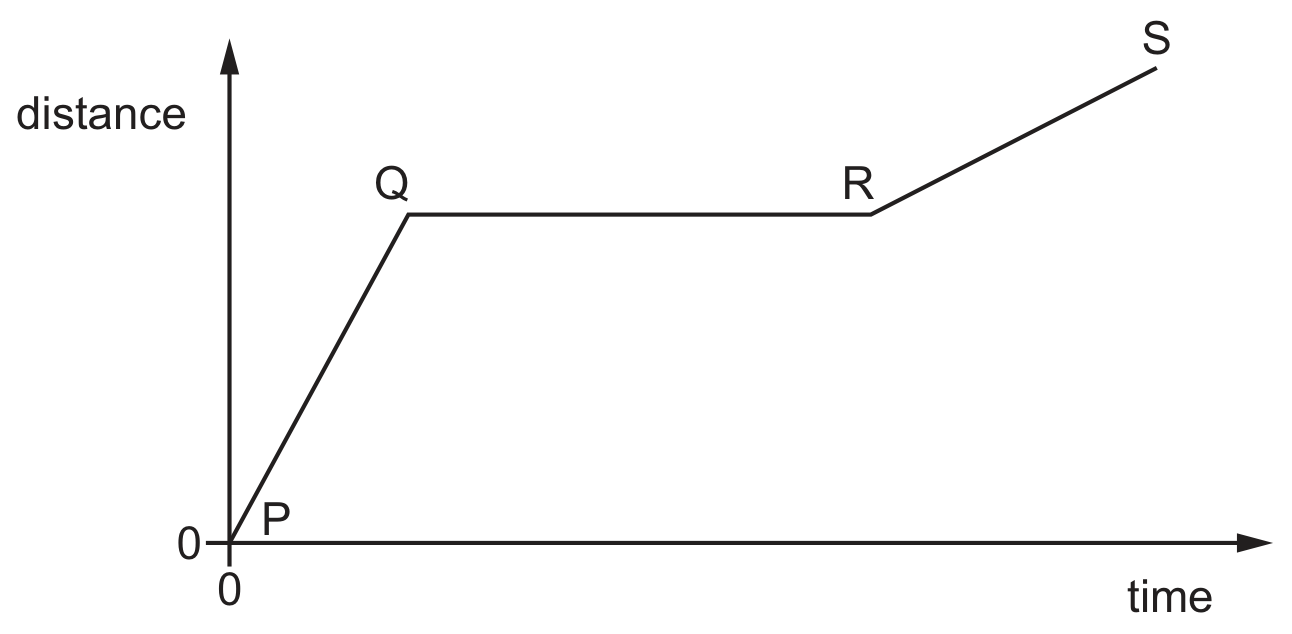
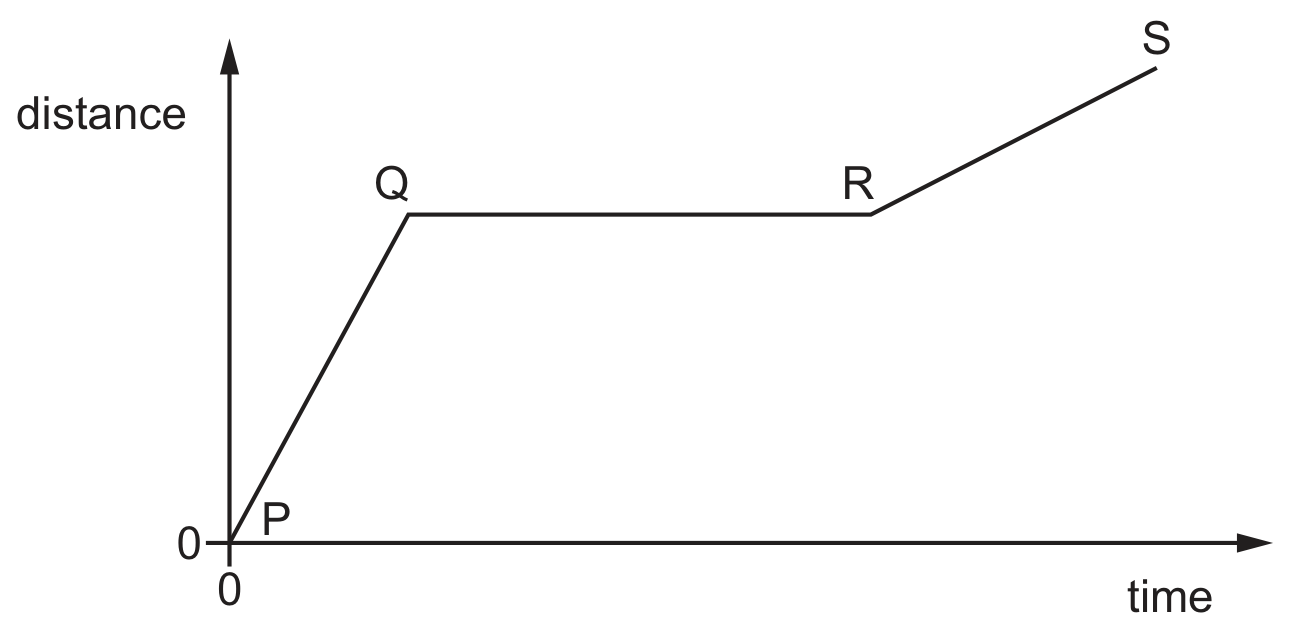
The graph shows how the distance travelled by a vehicle changes with time.
Question image

Which row describes the speed of the vehicle in each section of the graph?

P to Q

Q to R

R to S

constant

zero

constant

constant

zero

decreasing

increasing

constant

decreasing

increasing

zero

constant
Question 1

[Maximum number: 1]

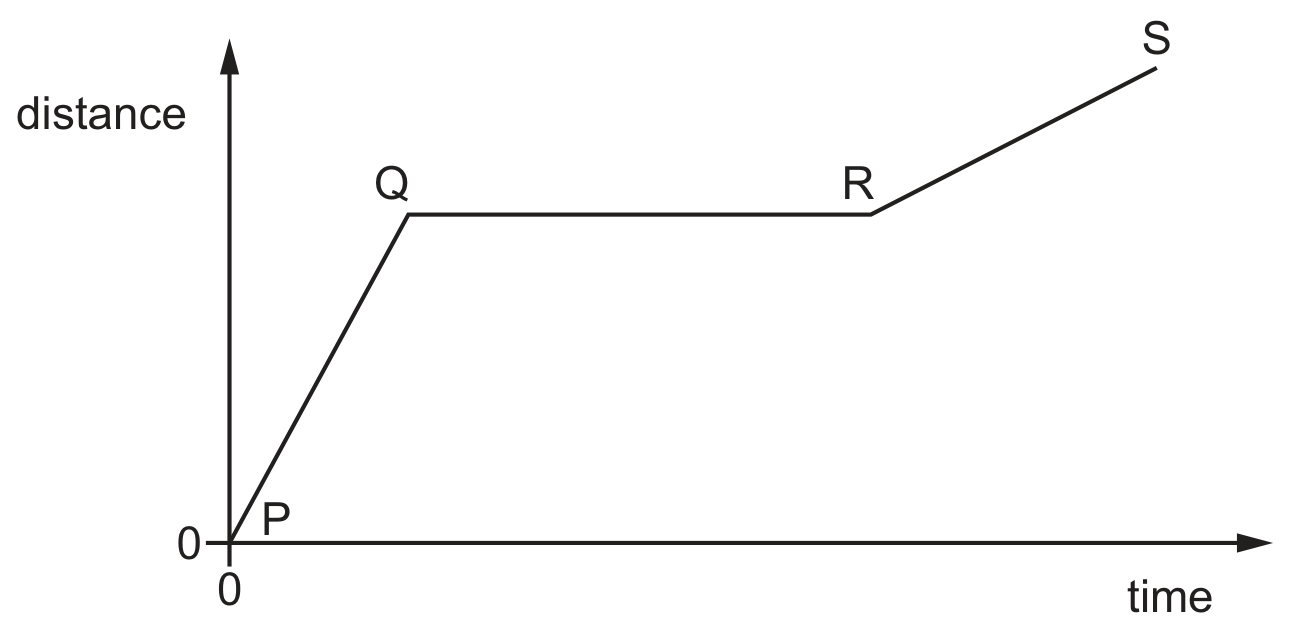
The graph shows how the distance travelled by a vehicle changes with time.

Question image

Which row describes the speed of the vehicle in each section of the graph?

P to Q

Q to R

R to S

constant

zero

constant

constant

zero

decreasing

increasing

constant

decreasing

increasing

zero

constant
Question 1

[Maximum number: 1]

The graph shows how the distance travelled by a vehicle changes with time.

Question image

Which row describes the speed of the vehicle in each section of the graph?

P to Q

Q to R

R to S

constant

zero

constant

constant

zero

decreasing

increasing

constant

decreasing

increasing

zero

constant
Question 1

[Maximum number: 6]

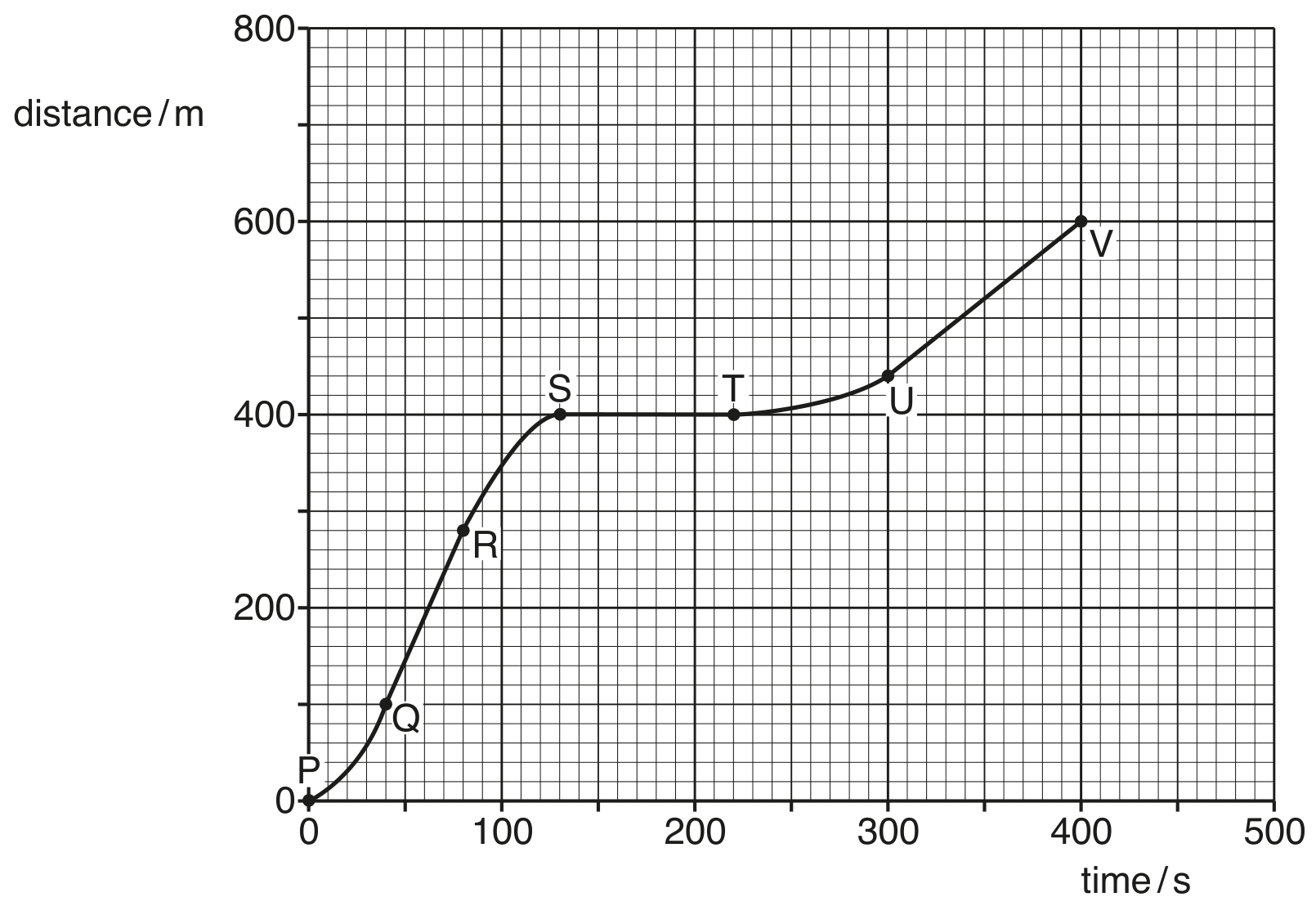
Fig. 1.1 shows a distance-time graph for a cyclist travelling between points P and V on a straight road.

Fig. 1.1

Fig. 1.1

Question 1(a)

(a)

Describe the motion between:

Q and R

R and S
S and T.

[ 3 ]

Question 1(b)

(b)

Calculate the speed between U and V .

speed =
[ 2 ]

Question 1(c)

(c)

After point V, the straight road continues down a steep hill. The cyclist travels down the steep hill. He does not apply the brakes and all resistive forces can be ignored.

On Fig. 1.1, sketch a possible motion for the cyclist after V.

[ 1 ]

Question 1

[Maximum number: 5]

A train of mass 5.6×10⁵ kg5.6 \times 10^{5} \mathrm{~kg} is at rest in a station.
At time t=0 st=0 \mathrm{~s}, a resultant force acts on the train and it starts to accelerate forwards.
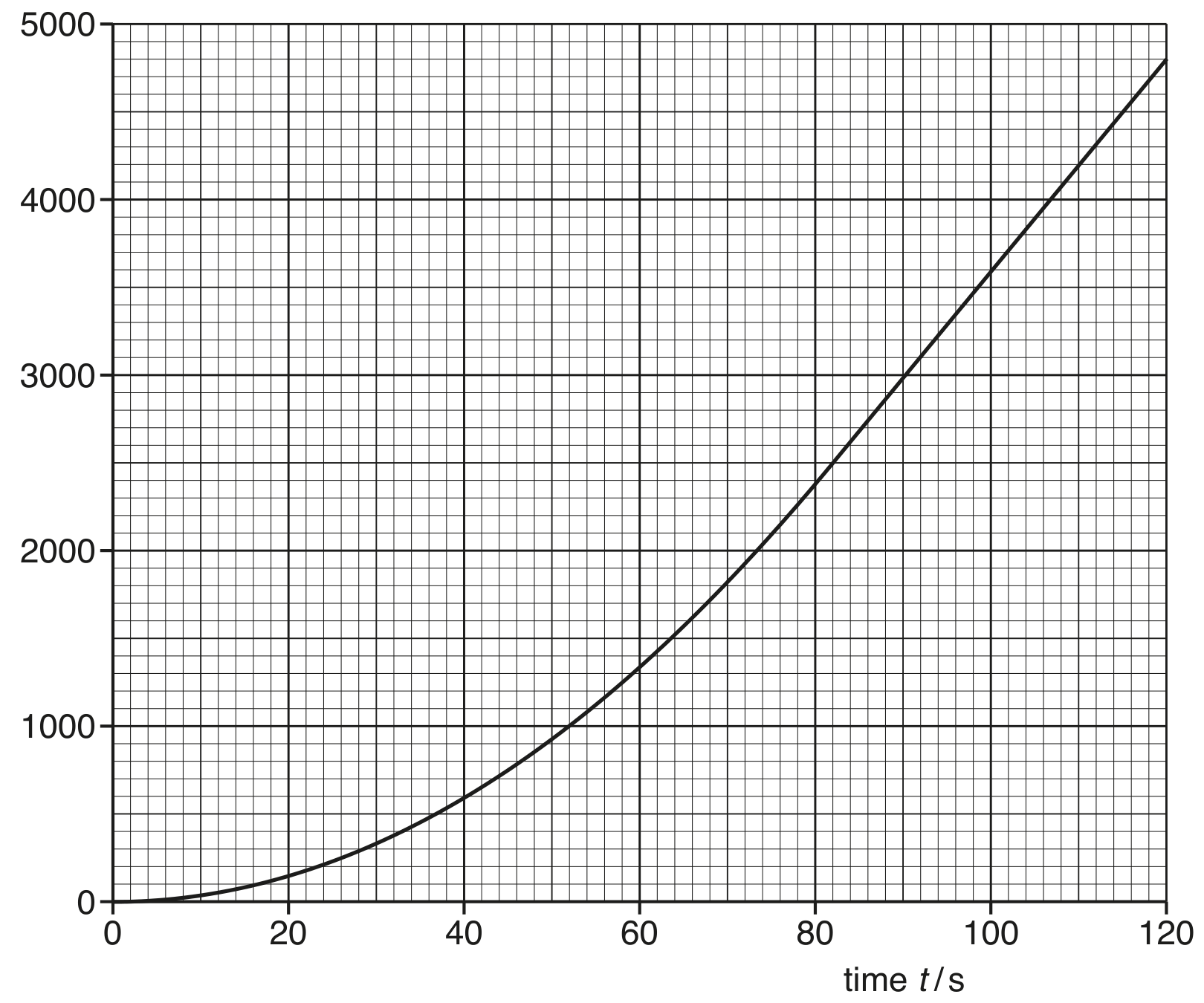
Fig. 1.1 is the distance-time graph for the train for the first 120 s .
distance/m

Fig. 1.1

Fig. 1.1

Question 1(a)

Question 1(a)(i)

(a)
(i)

Use Fig. 1.1 to determine:
1. the average speed of the train during the 120 s
average speed =
2. the speed of the train at time t=100 st=100 \mathrm{~s}.
speed = [2]

[ 2 ]

Question 1(a)(ii)

(ii)

Describe how the acceleration of the train at time t=100 st=100 \mathrm{~s} differs from the acceleration at time t=20 st=20 \mathrm{~s}.

[ 2 ]

Question 1(b)

Question 1(b)(ii)

(b)
(i)

At time t=120 st=120 \mathrm{~s}, the train begins to decelerate.

State what is meant by deceleration.

[ 1 ]

Question 1

[Maximum number: 7]

A lorry is travelling along a straight, horizontal road.
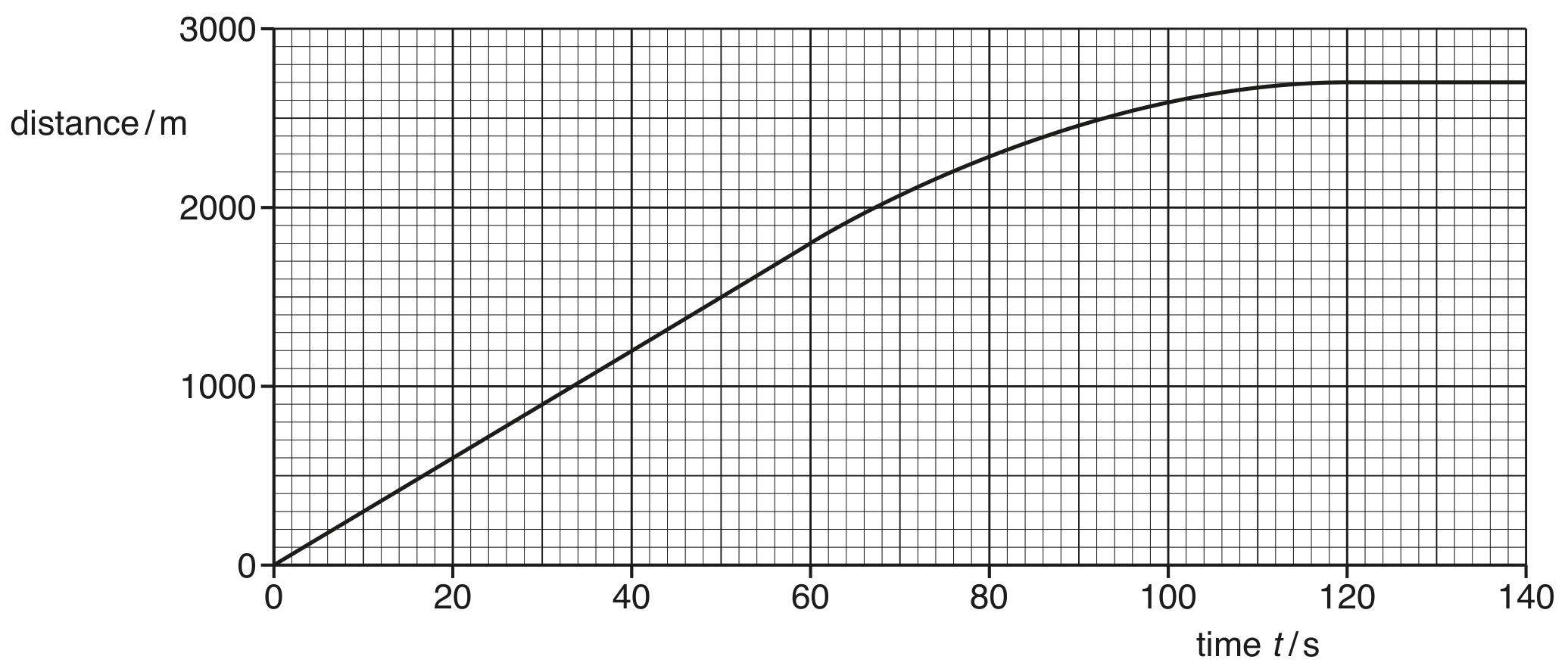
Fig. 1.1 is the distance-time graph for the lorry.

Fig. 1.1

Fig. 1.1

Question 1(a)

(a)

Using Fig. 1.1, determine:

[ 4 ]

Question 1(a)(i)

(i)

the speed of the lorry at time t=30 st=30 \mathrm{~s}
speed =

[ 2 ]

Question 1(a)(ii)

(ii)

the average speed of the lorry between time t=60 st=60 \mathrm{~s} and time t=120 st=120 \mathrm{~s}.
average speed = [2]

[ 2 ]

Question 1(b)

(b)

At time t=30 st=30 \mathrm{~s}, the total resistive force acting on the lorry is 1.4×10⁴ N1.4 \times 10^{4} \mathrm{~N}.

[ 1 ]

Question 1(b)(i)

(i)

Using Fig. 1.1, determine the magnitude of the acceleration of the lorry at time t=30 st=30 \mathrm{~s}.
acceleration = [1]

[ 1 ]

Question 1(c)

(c)

Describe the motion of the lorry between time t=60 st=60 \mathrm{~s} and time t=130 st=130 \mathrm{~s}.

[ 2 ]

Question 1

[Maximum number: 8]

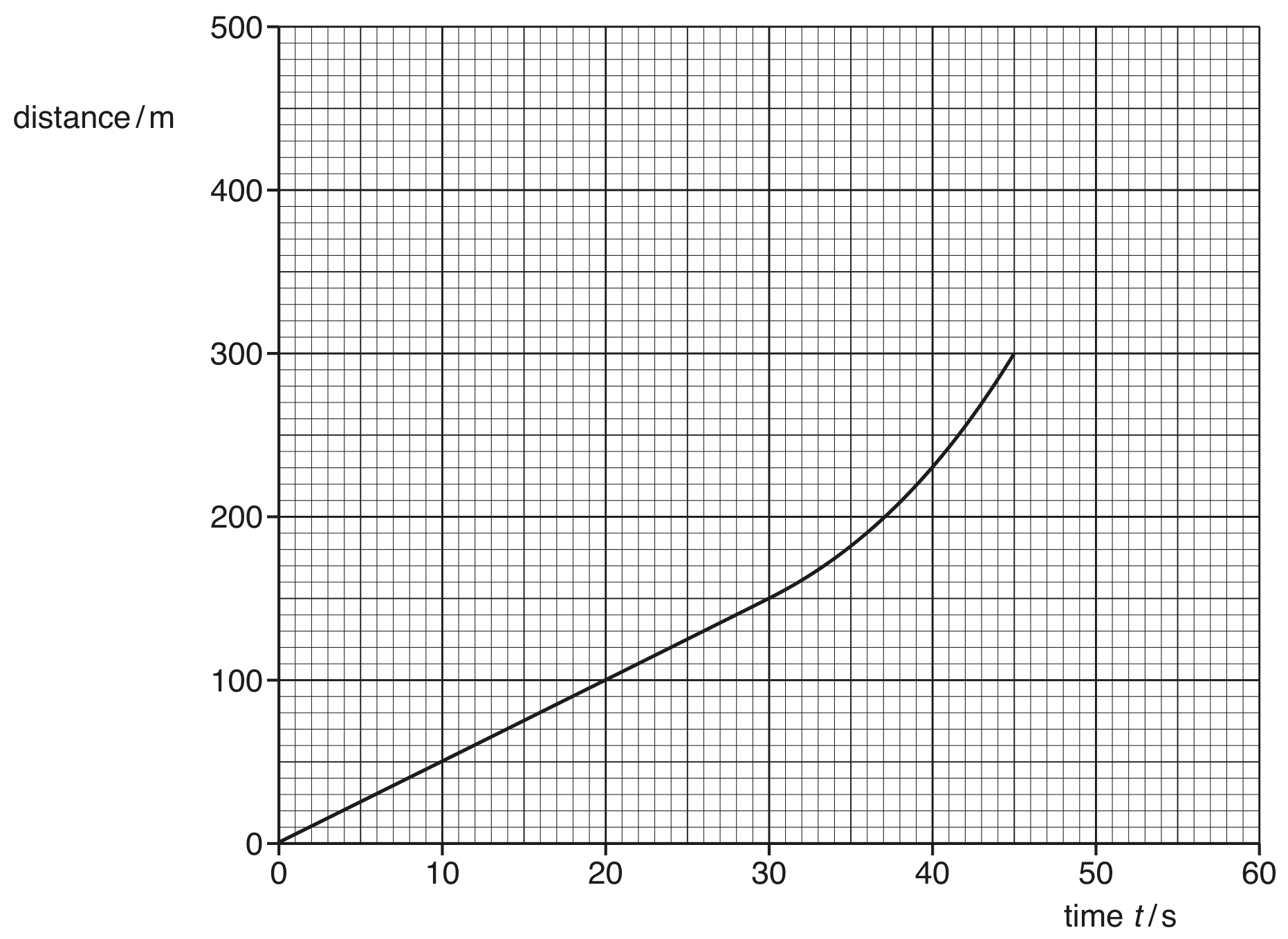
Fig. 1.1 is the distance-time graph for a moving car.

Fig. 1.1

Fig. 1.1

Question 1(a)

(a)

On Fig. 1.1, mark a point P where the acceleration of the car is zero.

[ 1 ]

Question 1(b)

(b)

Determine:

[ 4 ]

Question 1(b)(i)

(i)

the speed of the car at time t=15 st=15 \mathrm{~s}
speed = [2]

[ 2 ]

Question 1(b)(ii)

(ii)

the average speed of the car between time t=30 st=30 \mathrm{~s} and time t=45 st=45 \mathrm{~s}.
average speed = [2]

[ 2 ]

Question 1(c)

(c)

At time t=45 st=45 \mathrm{~s}, the car starts to decelerate. At time t=55 st=55 \mathrm{~s} and at a distance of 400 m from the starting point, the car stops. It then remains stationary for 5.0 s .

On Fig. 1.1, draw a possible continuation of the distance-time graph.
[Total: 8]

[ 3 ]

Question 1

Question 1(a)

(a)

Define acceleration.

[ 1 ]

Question 1(b)

(b)

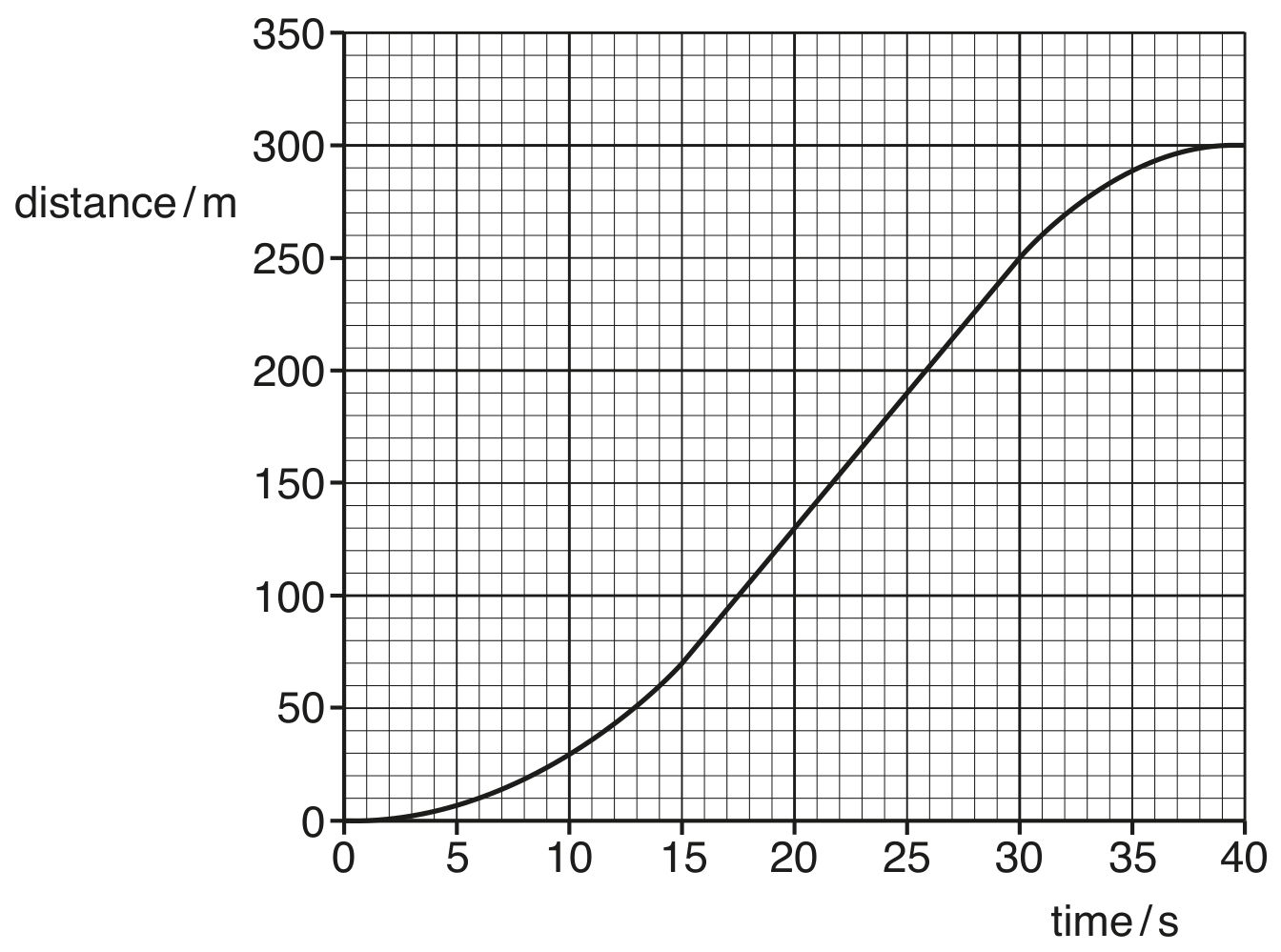
Fig. 1.1 shows the distance-time graph for the journey of a cyclist.

Fig. 1.1

Fig. 1.1

[ 7 ]

Question 1(b)(i)

(i)

Describe the motion of the cyclist in the time between:
1. time =0 and time =15 s=15 \mathrm{~s}
2. time =15 s=15 \mathrm{~s} and time =30 s=30 \mathrm{~s}
3. time =30 s=30 \mathrm{~s} and time =40 s=40 \mathrm{~s}.

[ 3 ]

Question 1(b)(ii)

(ii)

Calculate, for the 40 s journey:
1. the average speed
average speed =
2. the maximum speed.
maximum speed =

[ 4 ]

Question 1

[Maximum number: 4]

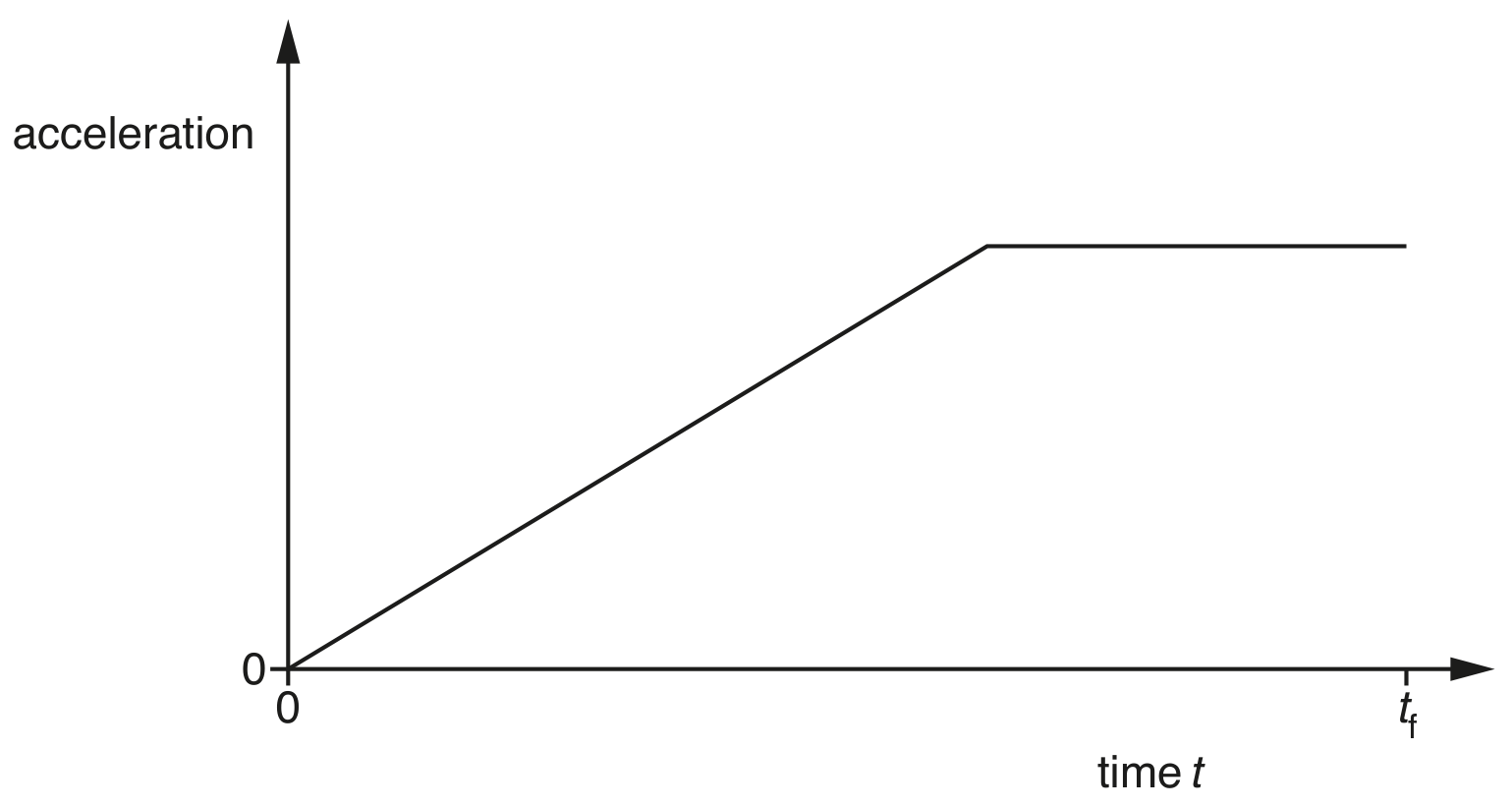
A rocket is stationary on the launchpad. At time t=0, the rocket engines are switched on and exhaust gases are ejected from the nozzles of the engines. The rocket accelerates upwards.

Fig. 1.1 shows how the acceleration of the rocket varies between time t=0 and time t=tft=t_{\mathrm{f}}.

Fig. 1.1

Fig. 1.1

Question 1(a)

(a)

Define acceleration.

[ 1 ]

Question 1(b)

(b)

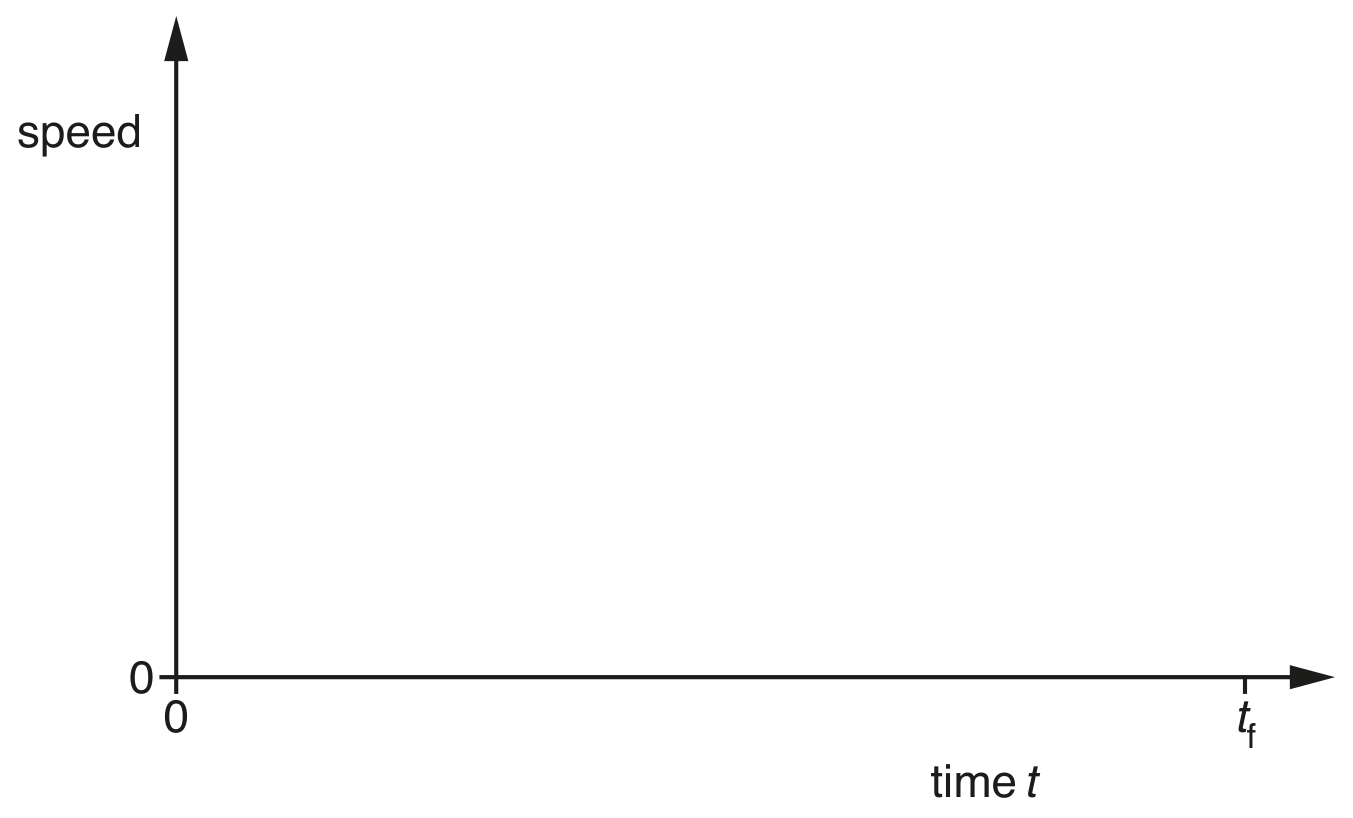
On Fig. 1.2, sketch a graph to show how the speed of the rocket varies between time t=0 and time t=tft=t_{\mathrm{f}}.

Fig. 1.2

Fig. 1.2

[ 3 ]

Question 1

[Maximum number: 9]

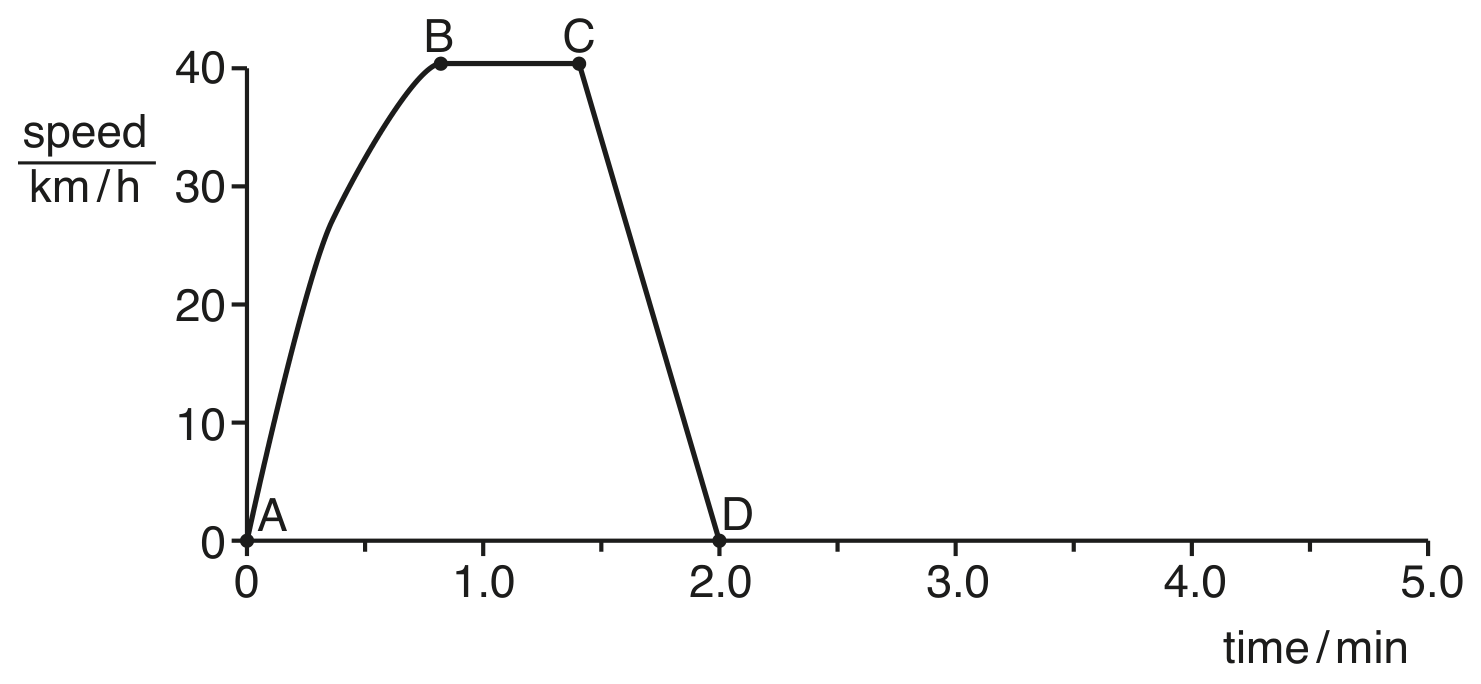
A bus is travelling between points A and D. There are bus stops at A, B, C and D but the bus does not stop at B and C. Fig. 1.1 is a speed-time graph for the bus.

Fig. 1.1

Fig. 1.1

Question 1(a)

(a)

Describe the motion of the bus between each of the bus stops. Select the appropriate description from the list below.
constant acceleration
decreasing acceleration
increasing acceleration
moving backwards at constant speed
moving forwards at constant speed
stationary
1. between A and B
2. between B and C
3. between C and D

[ 3 ]

Question 1(b)

(b)

The average speed of the bus between A and D is 23 km/h23 \mathrm{~km} / \mathrm{h}.

Calculate the distance between A and D.

distance =
[ 3 ]

Question 1(c)

(c)

The bus stops at D for 1 min and then travels at a constant acceleration for 30 seconds.

On Fig. 1.1, sketch a possible graph for this additional motion. Label X when the bus starts to accelerate and label Y for 30 seconds later.

[ 3 ]
0 selected