EduNinja

IGCSE Biology9.3 Blood vesselsQuestion Bank

Question 1

[Maximum number: 1]

Fig. 1.1 is a diagram of the human heart. The diagram shows the phase during the heart beat when the atria contract. The blood vessels that carry blood to and from the heart are labelled A to F.
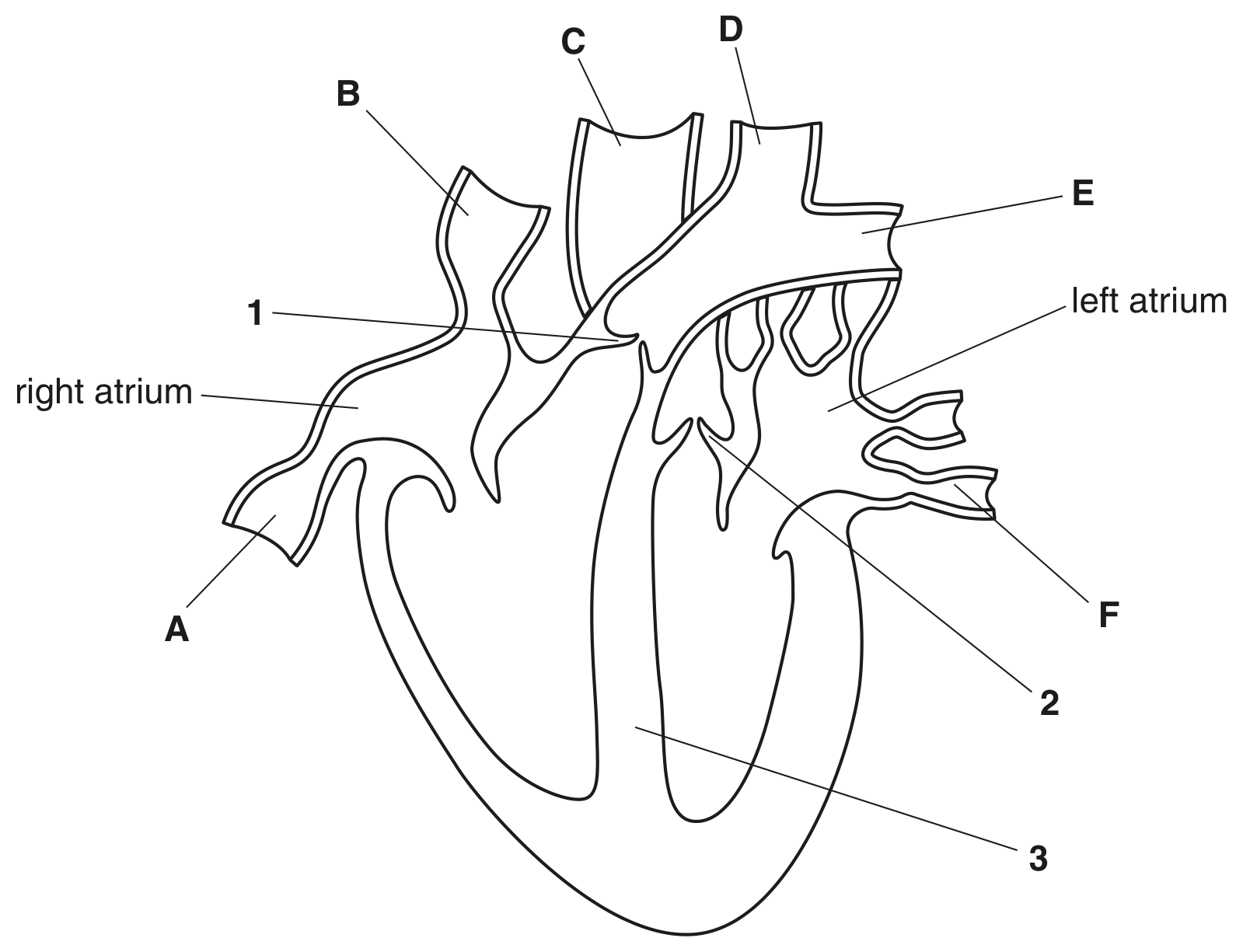
Fig. 1.1

Fig. 1.1

Question 1(a)

Question 1(a)(ii)

(a)
(i)

Identify the letter of the blood vessel that carries blood at the highest pressure and state its name.
letter
name of the blood vessel

[ 1 ]
Question 1

Question 1(e)

(a)

Explain how the structure of arteries and veins relates to the difference in the pressure of the blood transported by these vessels.

[ 4 ]

Question 1(f)

(b)

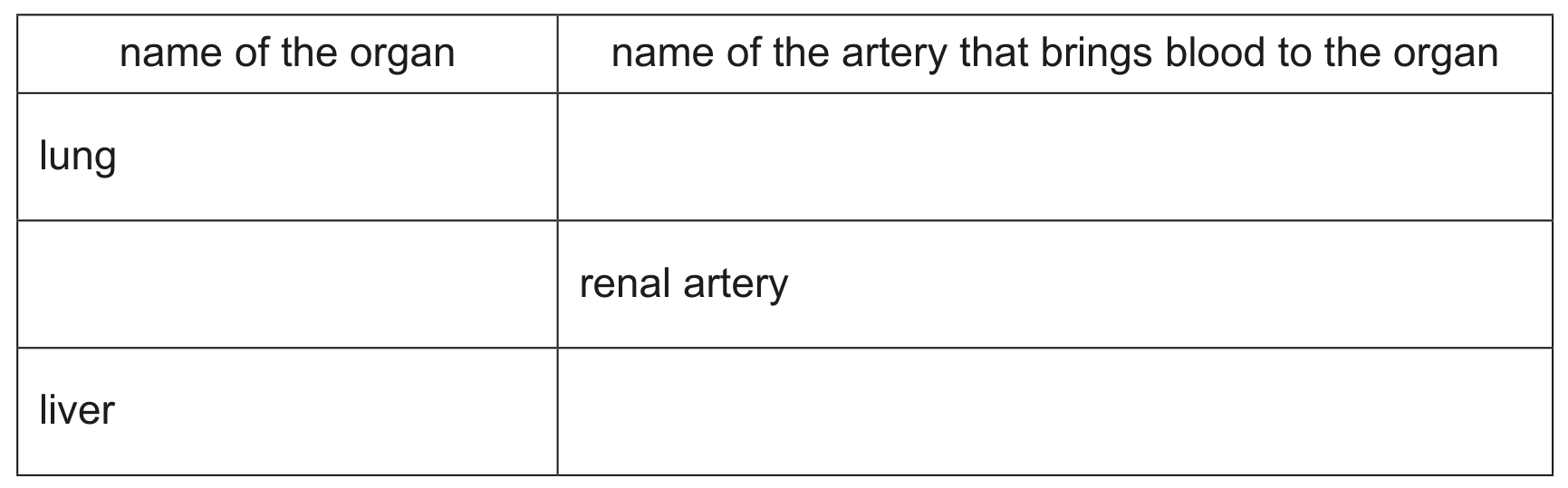
Table 1.1 shows the names of some organs and the name of the main artery that brings blood to the organ.

Complete Table 1.1.

Table 1.1

Table 1.1

[ 3 ]

Question 1

Question 1(a)

(a)

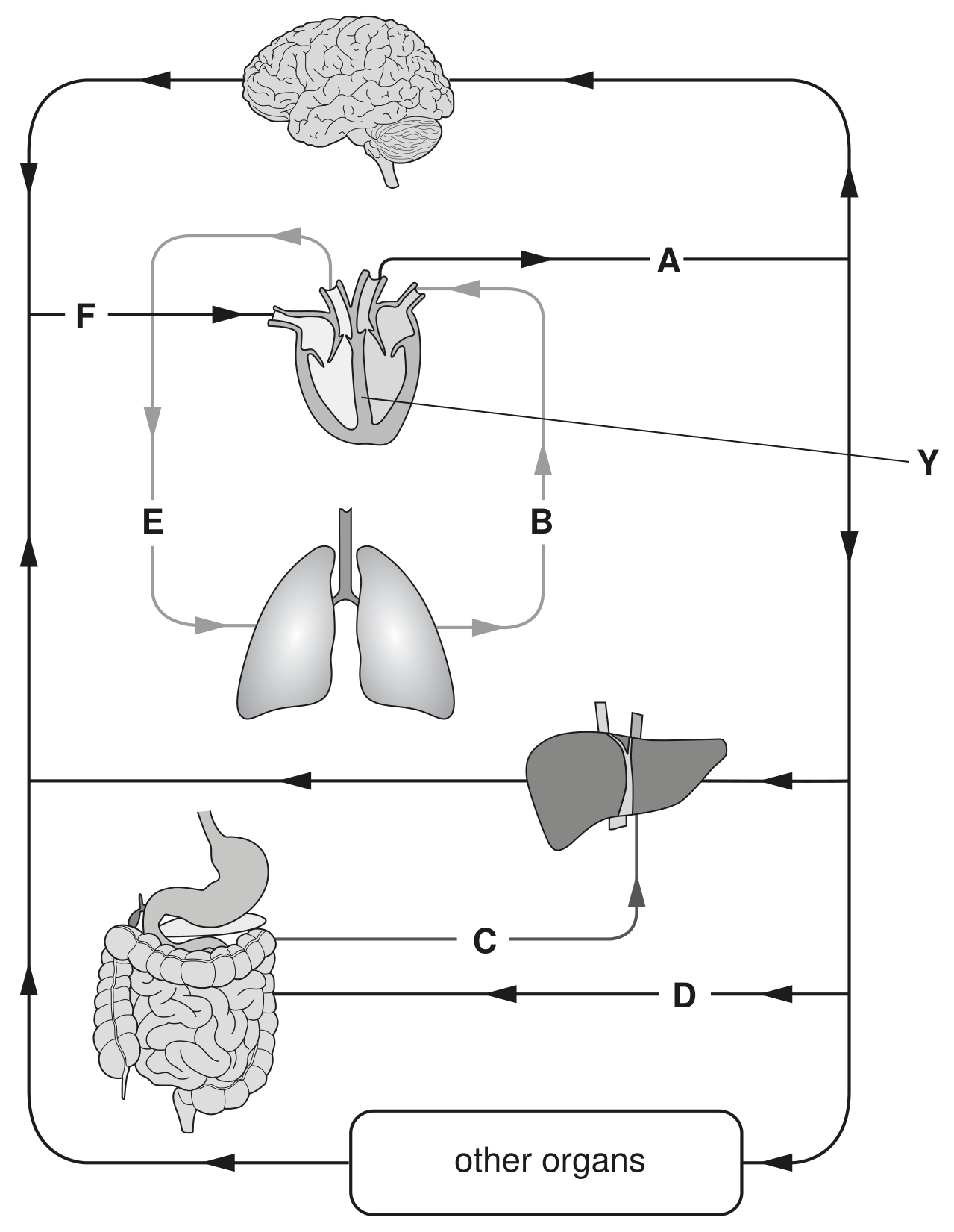
Fig. 1.1 is a simplified diagram of the circulatory system in humans.

Fig. 1.1

Fig. 1.1

[ 3 ]

Question 1(a)(i)

(i)

State the letter from Fig. 1.1 that represents the blood vessel that contains blood with the highest concentration of oxygen.

[ 1 ]

Question 1(a)(ii)

(ii)

State the letter from Fig. 1.1 that represents the hepatic portal vein.

[ 1 ]

Question 1(a)(iii)

(iii)

State all the letters from Fig. 1.1 that represent arteries.

[ 1 ]

Question 1(b)

(b)

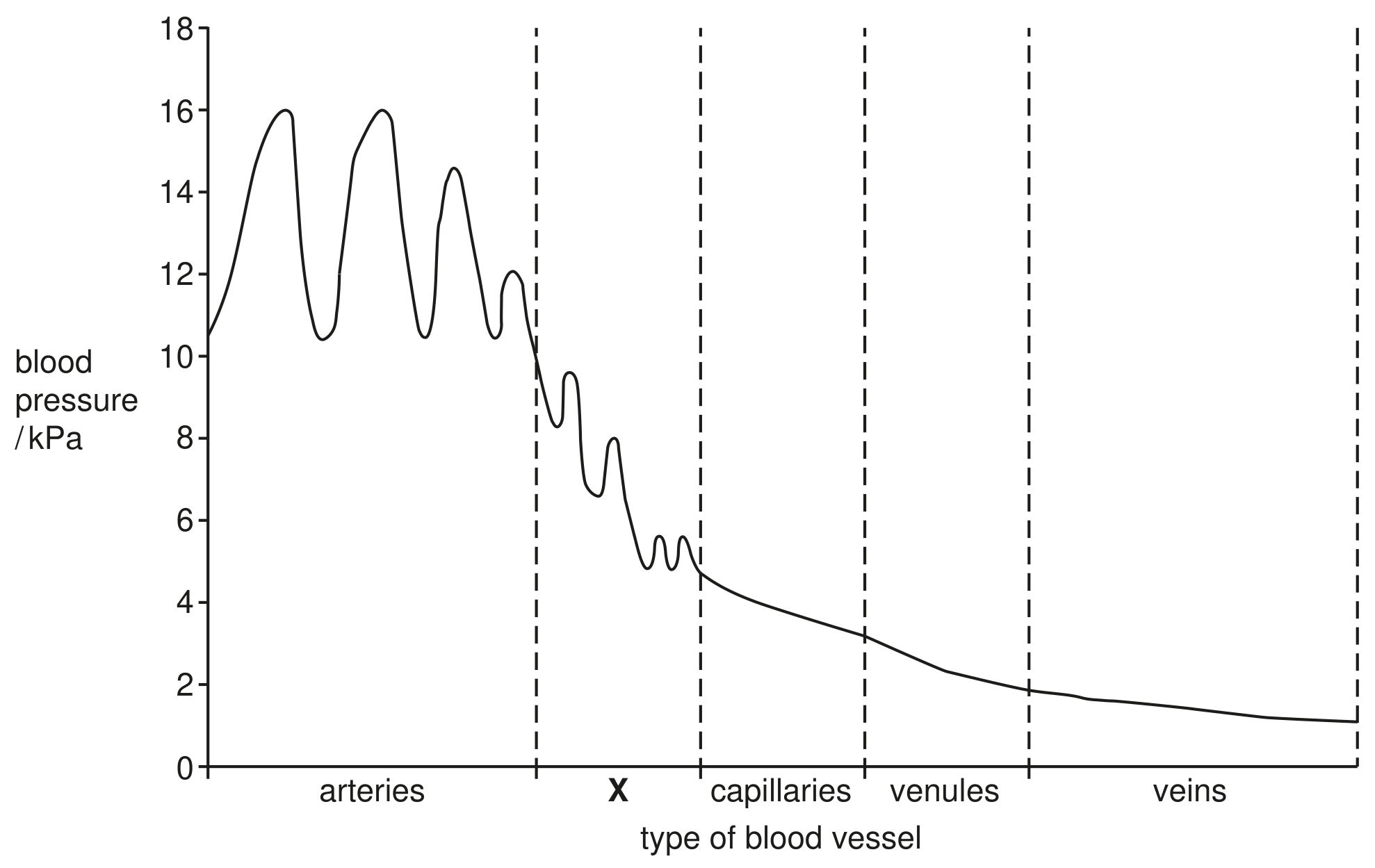
Fig. 1.2 shows the pressure of blood flowing through different blood vessels as it travels around the body. (Venules are narrow vessels that connect capillaries to veins.)

Fig. 1.2

Fig. 1.2

[ 4 ]

Question 1(b)(iii)

(i)

Using the information in Fig. 1.2, explain the structural adaptations of arteries and veins.

[ 4 ]

Question 2

[Maximum number: 4]

Mammals have a double circulation.
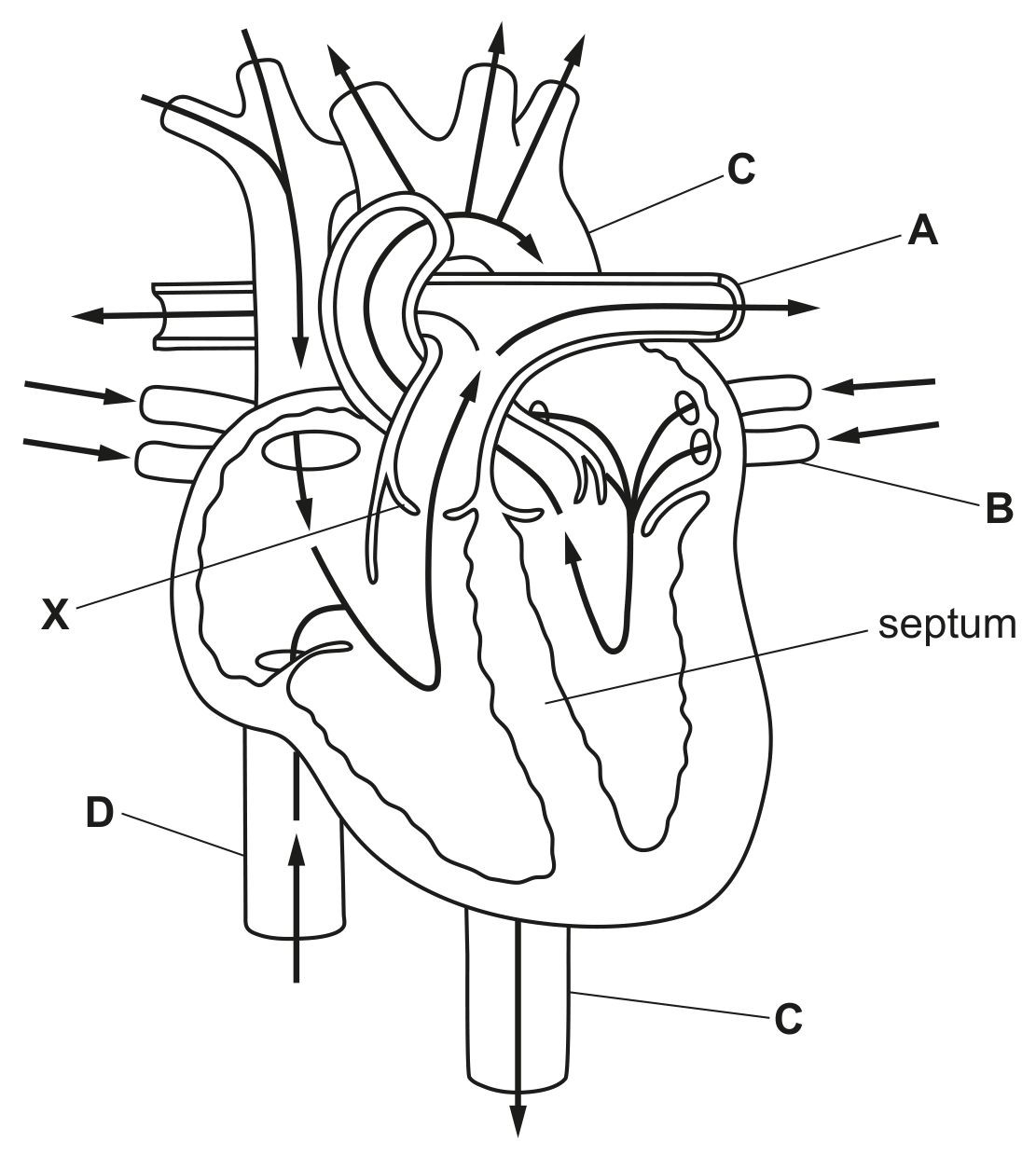
Fig. 2.1 is a diagram of a section through the heart of a mammal. The arrows show the direction of blood flow through the heart and blood vessels.

Fig. 2.1

Fig. 2.1

Question 2(a)

Question 2(a)(ii)

(a)
(i)

D is a vein. State the name of this vein and describe its structure. name description of structure

[ 3 ]

Question 2(b)

(b)

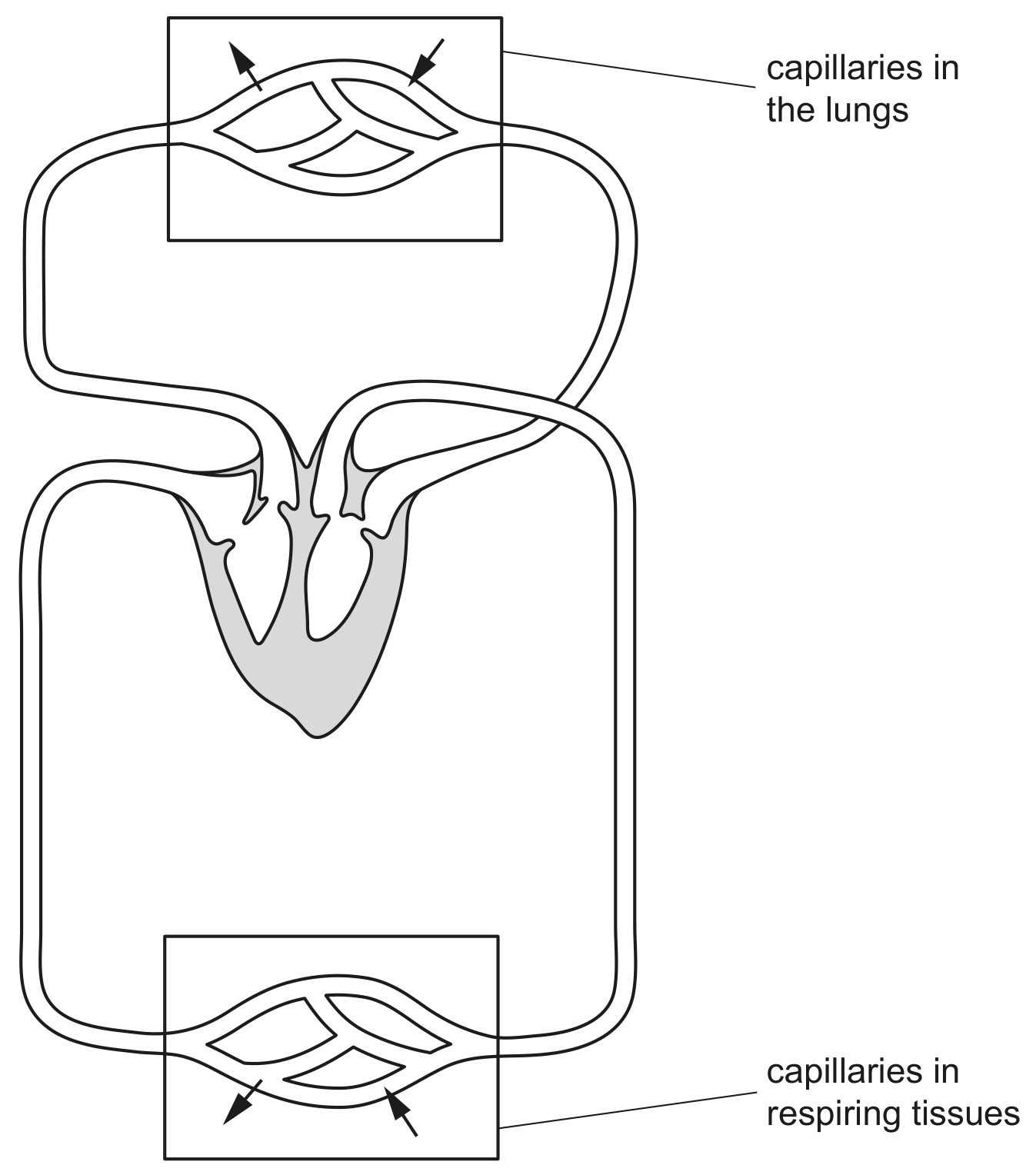
Fig. 2.2 is a diagram that shows the double circulation of a mammal. The arrows indicate the movement of oxygen and carbon dioxide in and out of the blood.

Fig. 2.2

Fig. 2.2

[ 1 ]

Question 2(b)(i)

(i)

Shade the blood vessel in Fig. 2.2 that transports blood with the highest oxygen concentration.

[ 1 ]

Question 2

[Maximum number: 1]

Pregnancy can occur after the fusion of a male gamete and a female gamete.

Question 2(d)

(a)

The umbilical artery is found in the umbilical cord. This artery transports blood away from the heart of the fetus.

The umbilical artery is unusual because it transports deoxygenated blood.

[ 1 ]

Question 2(d)(i)

(i)

State the name of one other artery in the mother that transports deoxygenated blood.

[ 1 ]

Question 2

Question 2(b)

(a)

State the name of the main blood vessel that takes blood from the small intestine to the liver.

[ 1 ]

Question 2

[Maximum number: 1]

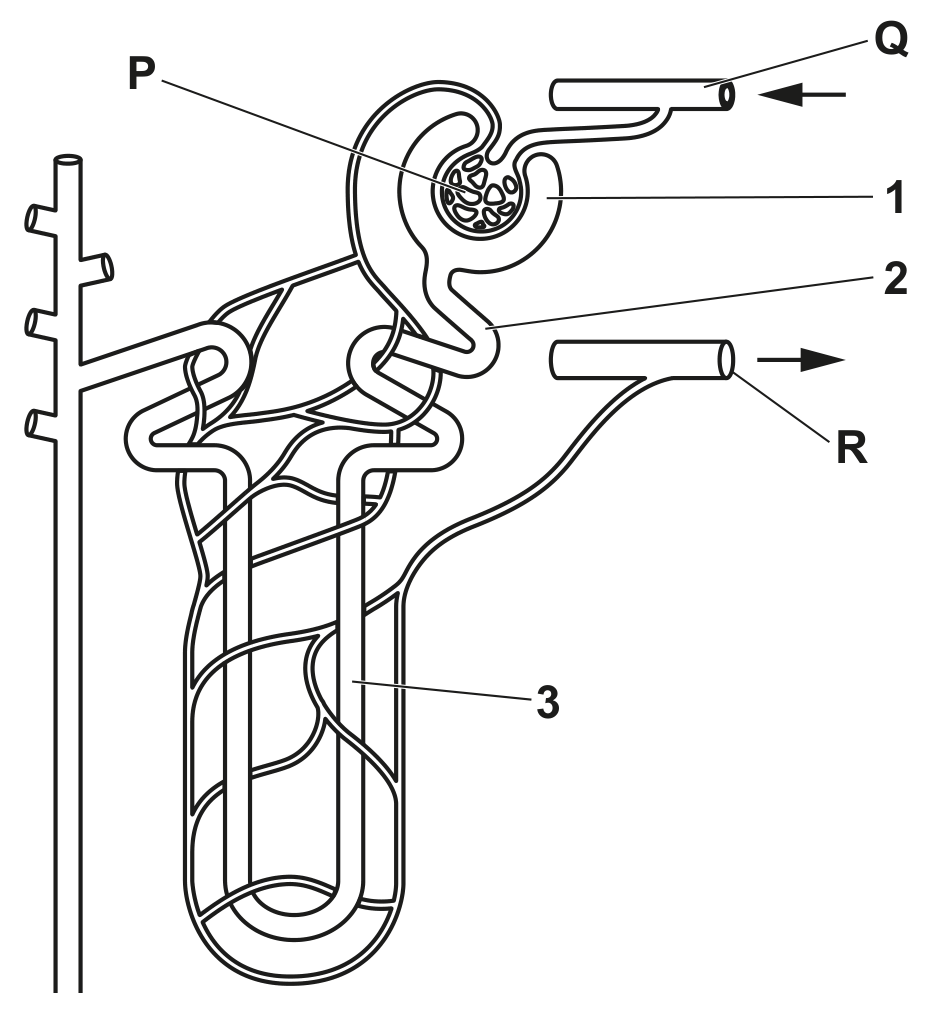
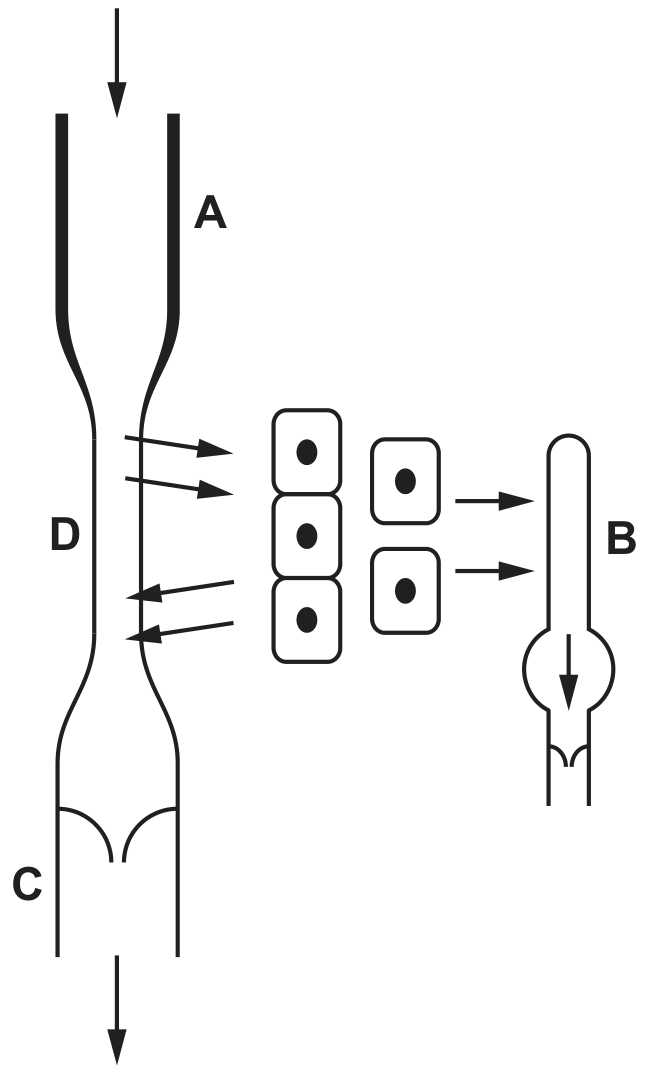
The kidneys filter blood, separate useful molecules from excretory wastes and control the water content of the blood.

Fig. 2.1 is a diagram of a kidney tubule and associated blood vessels. The arrows show the direction of blood flow.

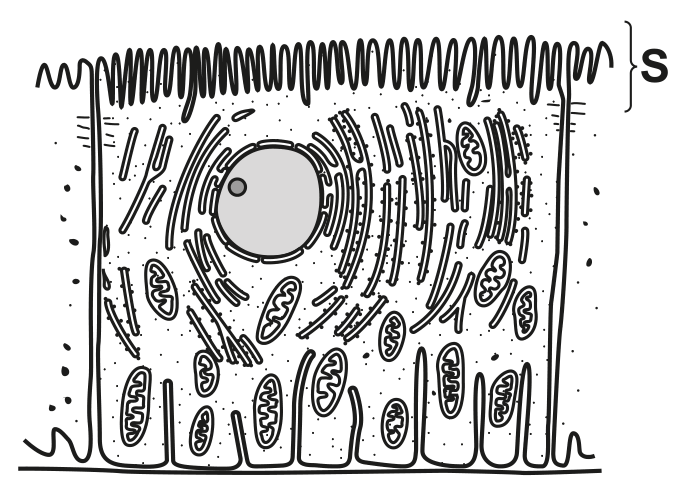
Fig. 2.2 is a drawing of a vertical section through a cell from the lining of region 2 of the tubule.

Fig. 2.1

Fig. 2.1

Fig. 2.2

Fig. 2.2

Question 2(a)

Question 2(a)(ii)

(a)
(i)

Blood vessel Q has the highest blood pressure.

Suggest why.

[ 1 ]

Question 3

Question 3(b)

(a)

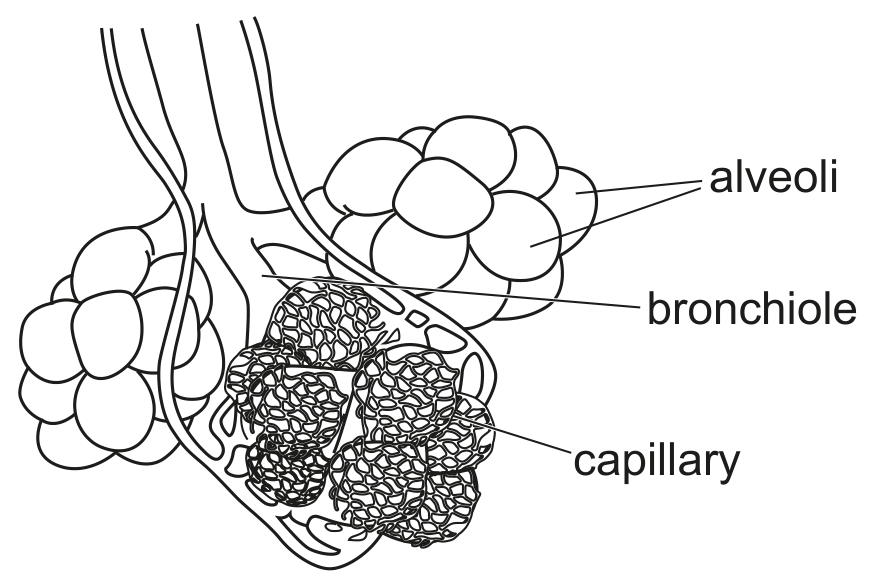
Fig. 3.1 is a diagram of alveoli and associated blood vessels.

Fig. 3.1

Fig. 3.1

[ 4 ]

Question 3(b)(i)

(i)

Explain how the structure of a capillary is related to its function.

[ 3 ]

Question 3(b)(iii)

(ii)

State the name of the blood vessel that transports blood from the heart towards the capillaries in the lungs.

[ 1 ]

Question 14

[Maximum number: 1]

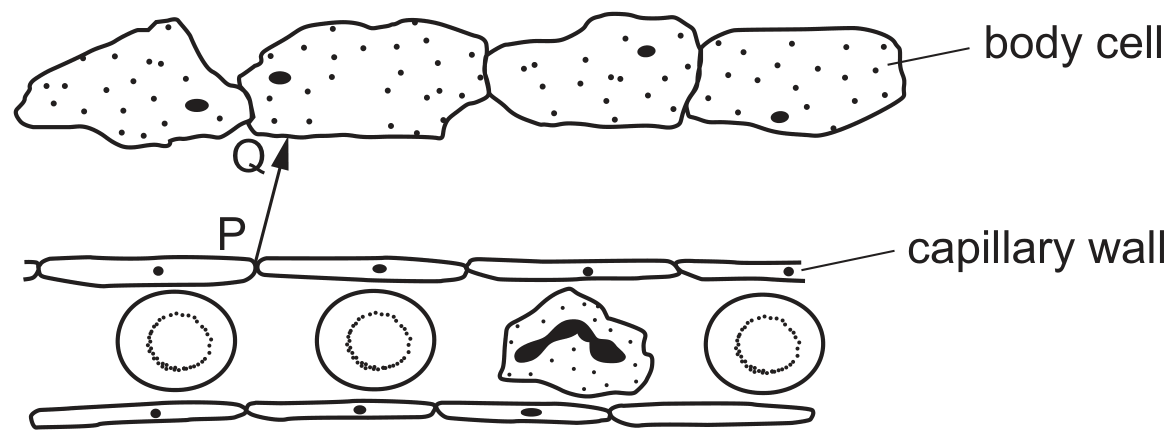
The diagram shows a capillary and some body cells.

Question image

How do ions pass from P to Q ?

A

by diffusion in blood

B

by diffusion in tissue fluid

C

by osmosis in blood

D

by osmosis in tissue fluid

Question 17

[Maximum number: 1]

The diagram shows the vessels associated with the flow of fluids to and from body cells.
Which is the lymph vessel?

Question image
0 selected