Question 1
Question 1(b)
(a)
Fig. 1.1 shows part of the digestive system of a human.
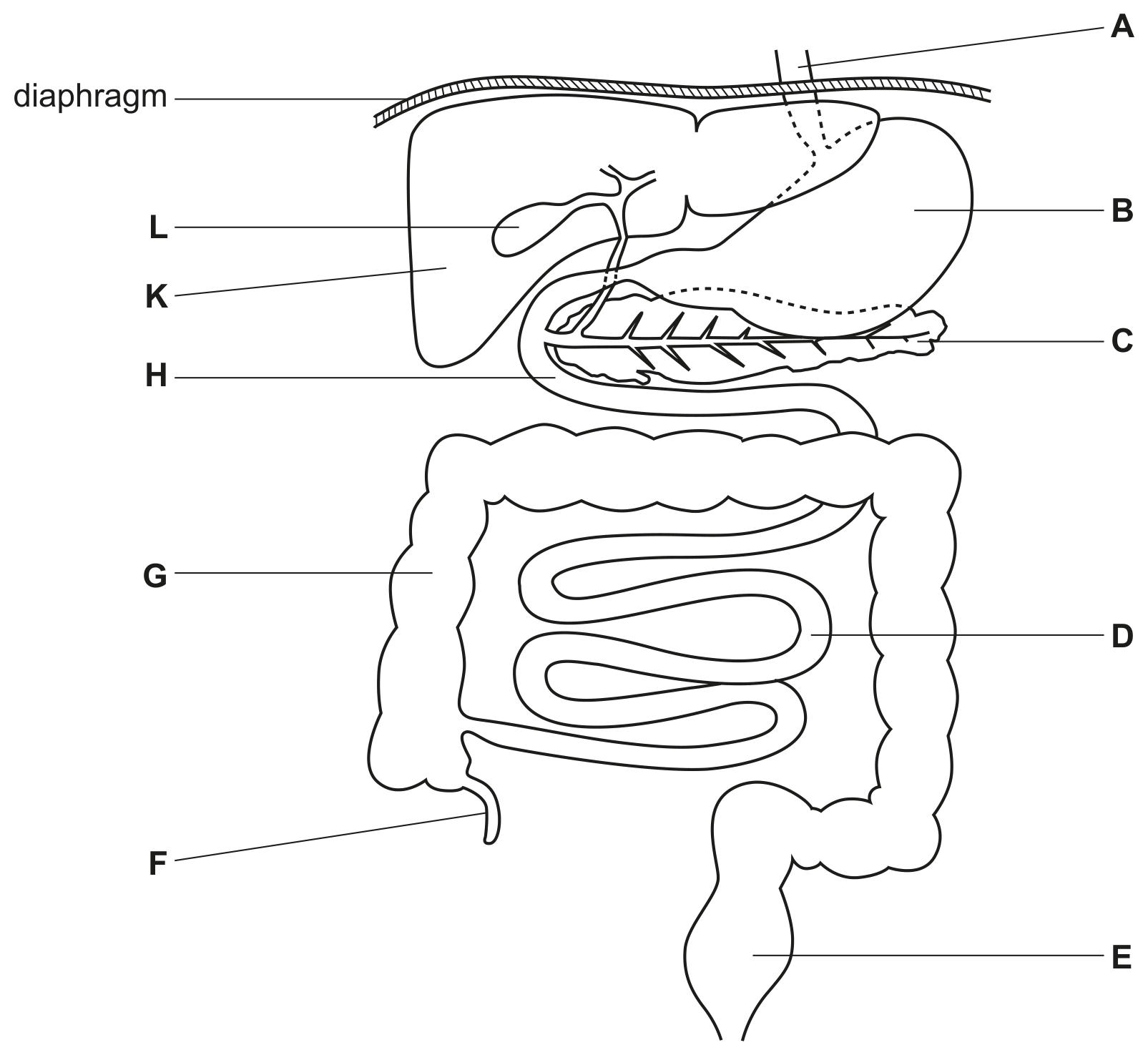
Fig. 1.1
Complete Table 1.1. One row has been done for you.
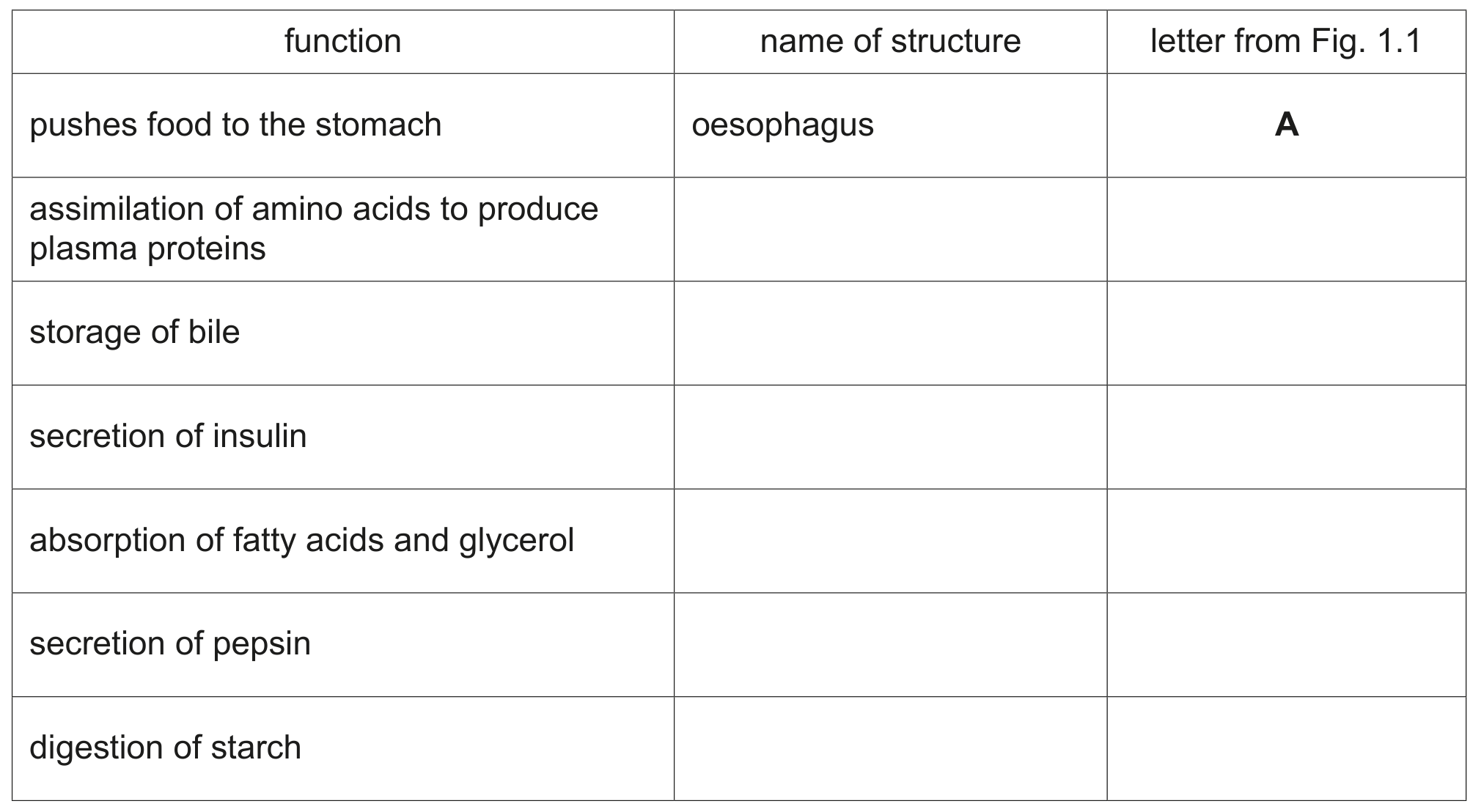
Table 1.1
[ 6 ]
 EduNinja
Fig. 1.1 shows part of the digestive system of a human.
Fig. 1.1
Complete Table 1.1. One row has been done for you.
Table 1.1
Fig. 1.1 is a diagram of the digestive system.
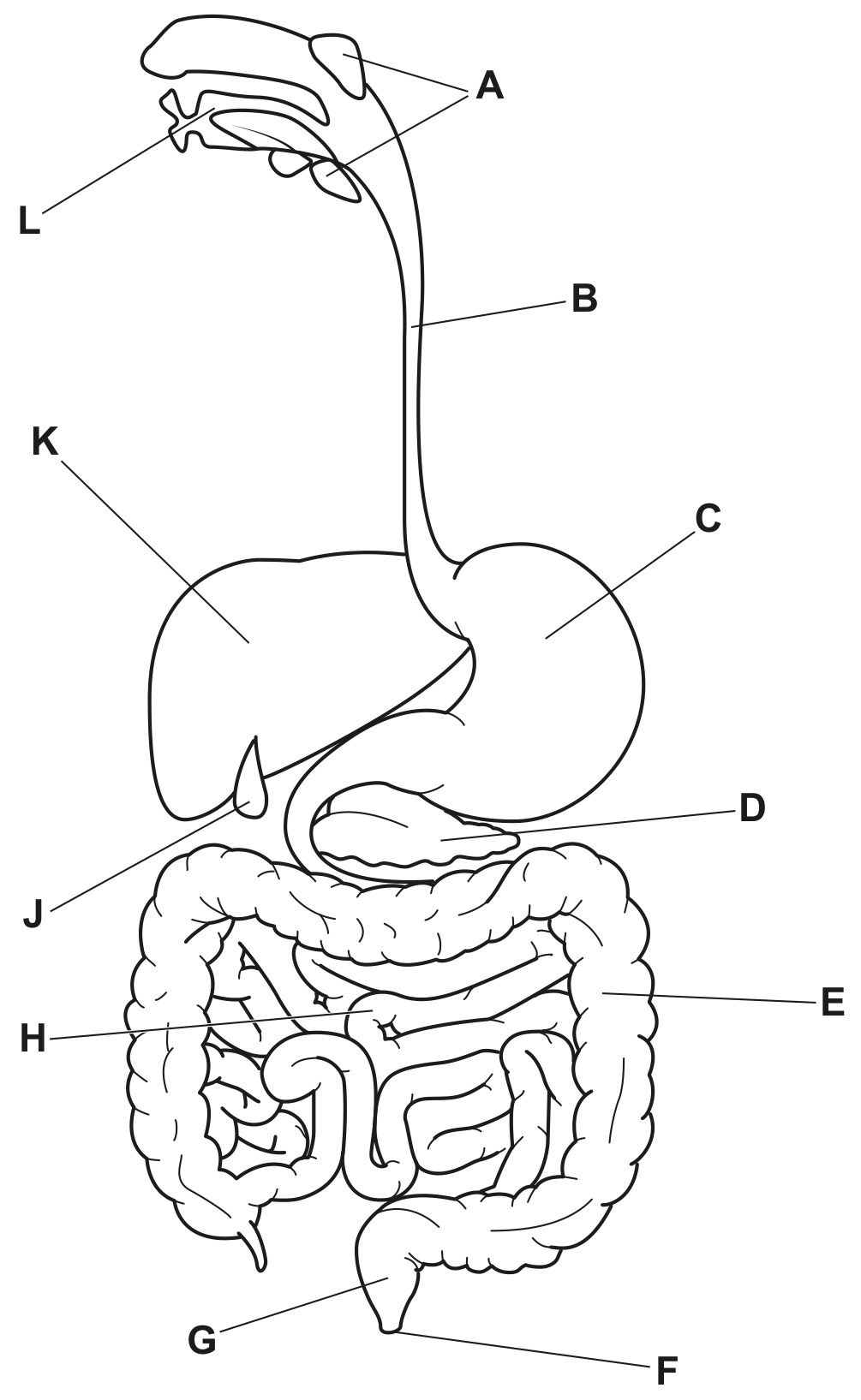
Fig. 1.1
Each letter may be used once, more than once or not at all.
State the letter of the part shown in Fig. 1.1:
that produces bile
that produces gastric juice
that produces urea
where maltose is digested
where trypsin acts.
The nutrients in the blood can be used to become part of cells.
State the name of this process.
Fig. 1.2 shows the human alimentary canal and associated organs.
The functions of some of these parts of the body are given in Table 1.1.
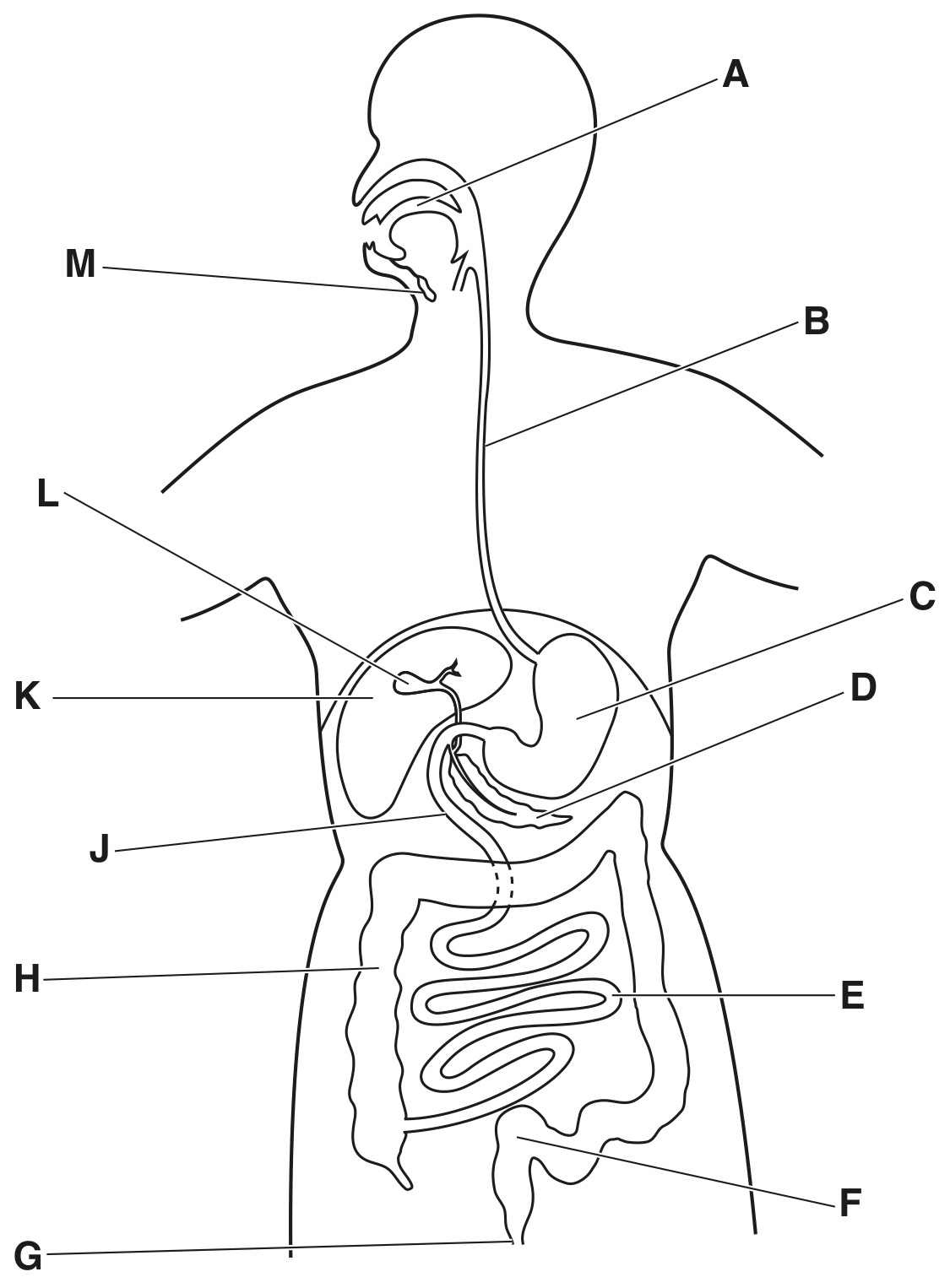
Fig. 1.2
Complete Table 1.1. One row has been done for you.
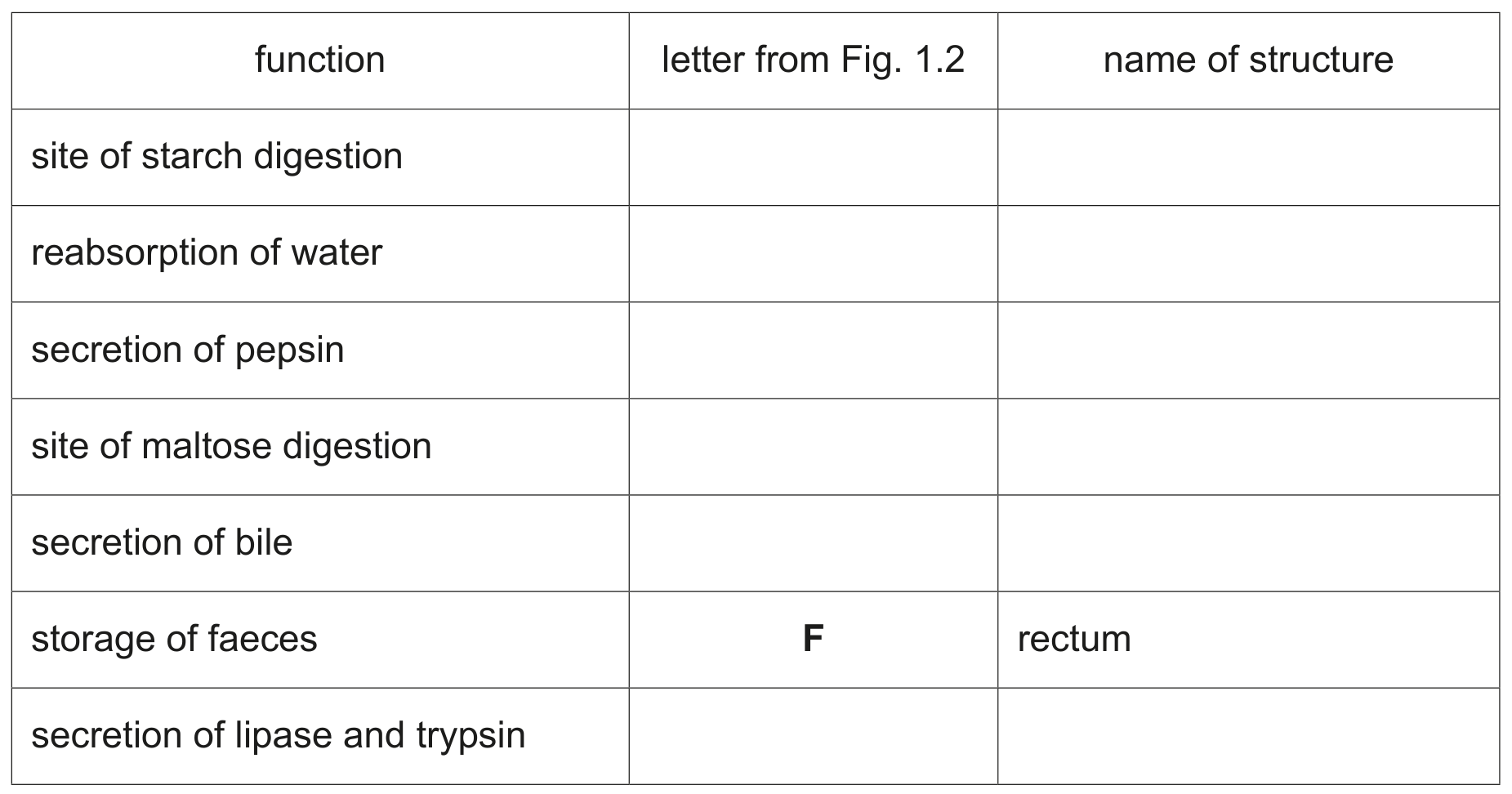
Table 1.1
Fig. 1.1 and Fig. 1.2 show two images of villi.
Fig. 1.1 shows a surface view of many villi viewed through a scanning electron microscope.
Fig. 1.2 shows a section of one villus viewed through a light microscope.
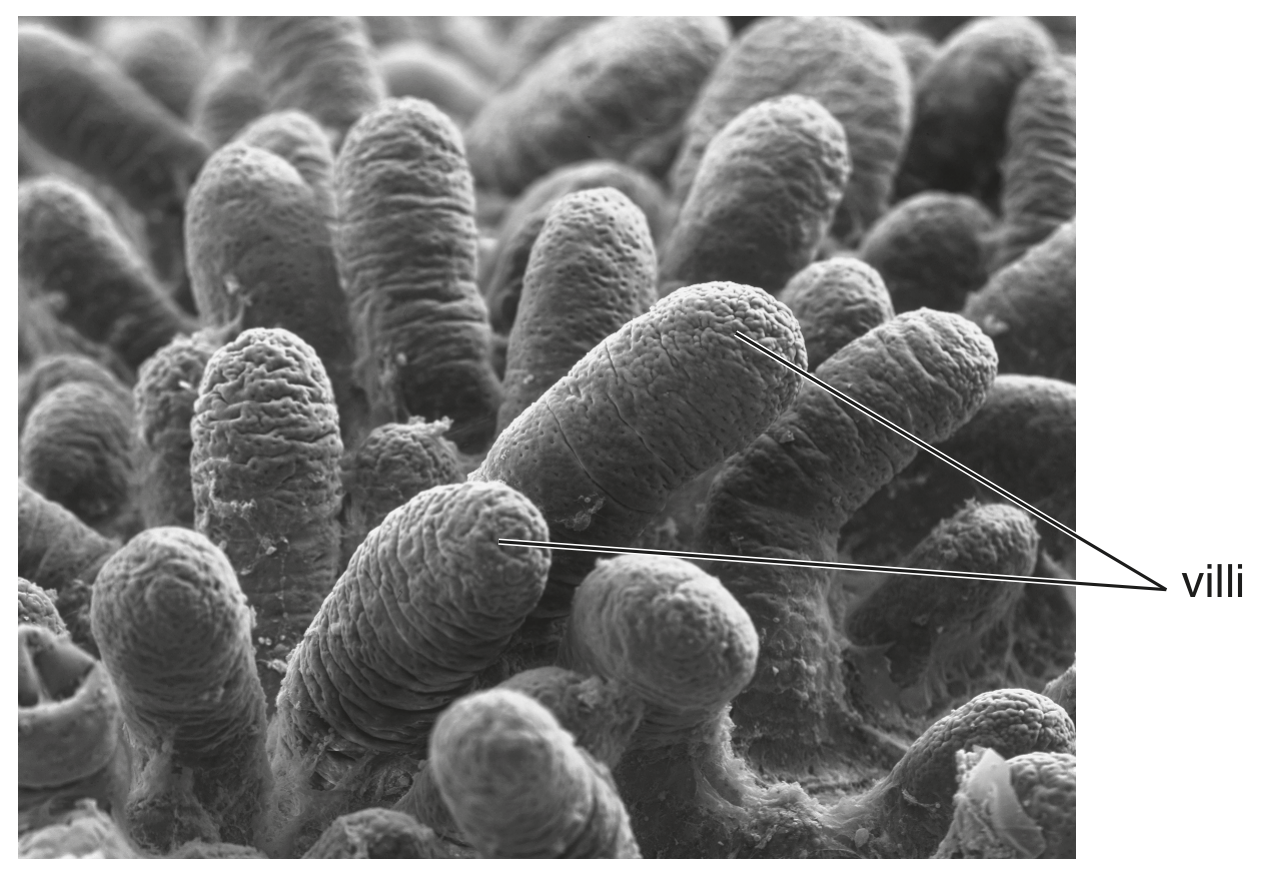
Fig. 1.1
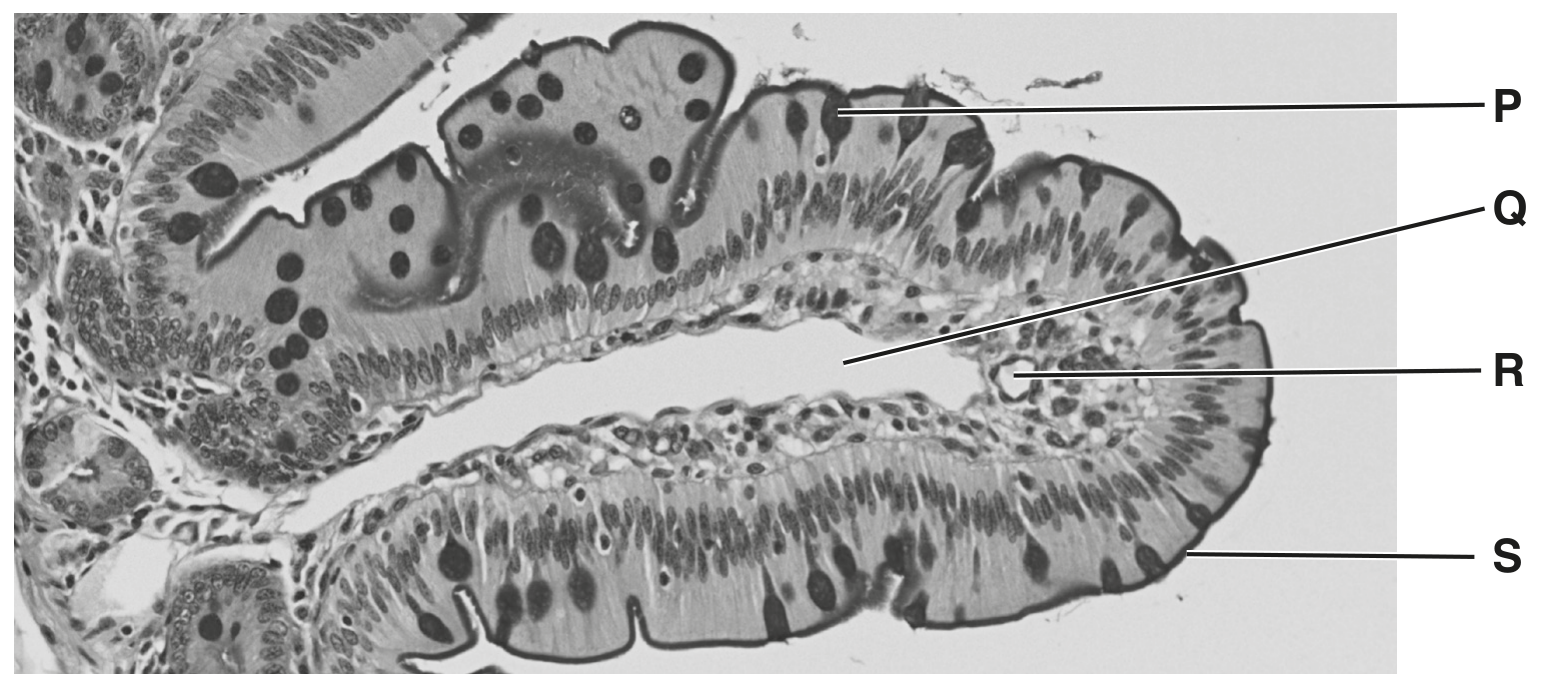
Fig. 1.2
Villi are found in the small intestine.
The nutrients in the blood can be used to become part of cells.
State the name of this process.
Fat is a necessary component of the human diet.
The arrows in Fig. 1.1 show the pathway of fat in part of the alimentary canal.
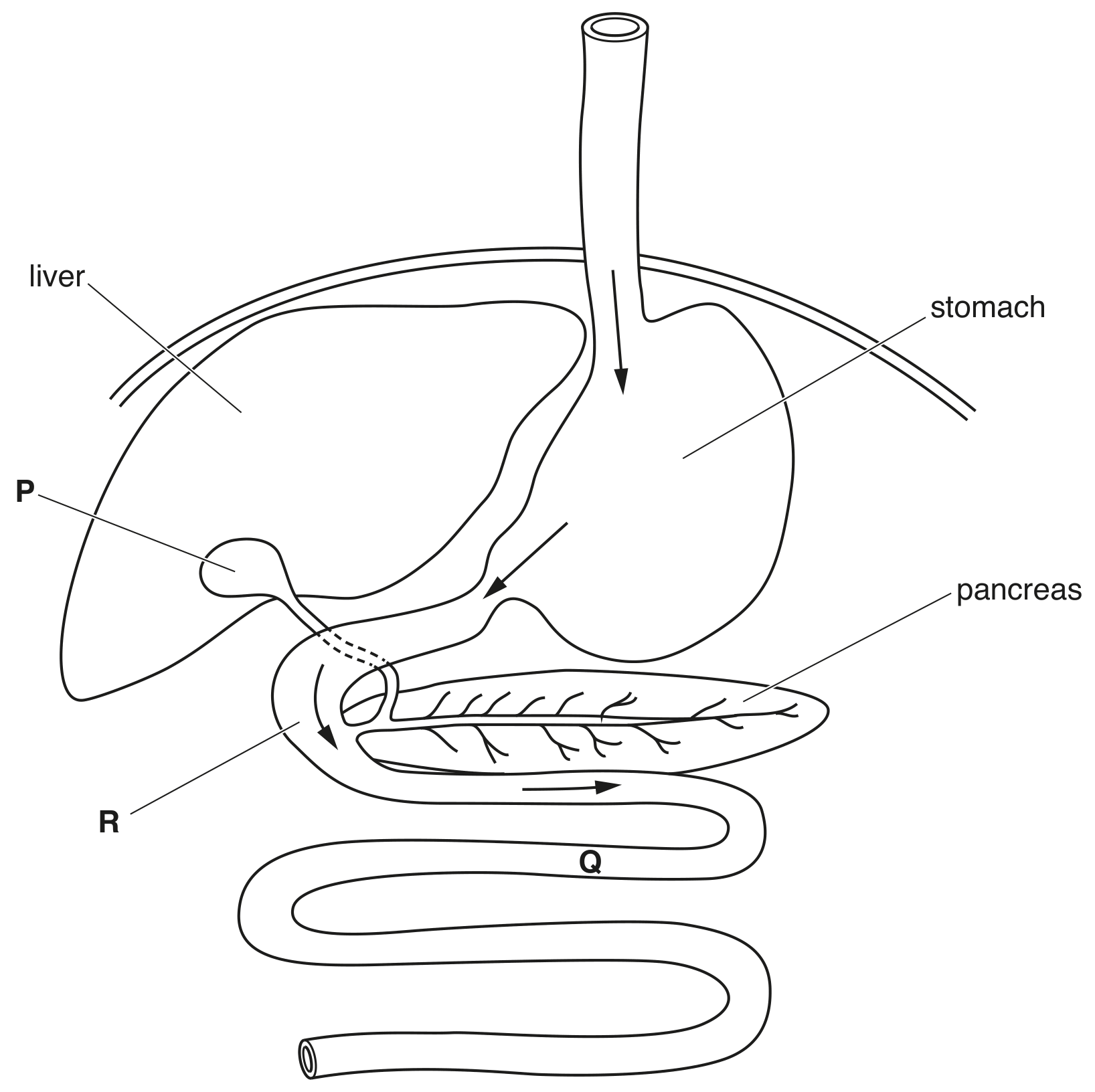
Fig. 1.1
State the name of
organ P in Fig. 1.1.
Fig. 2.1 is a diagram of the human alimentary canal and associated organs.
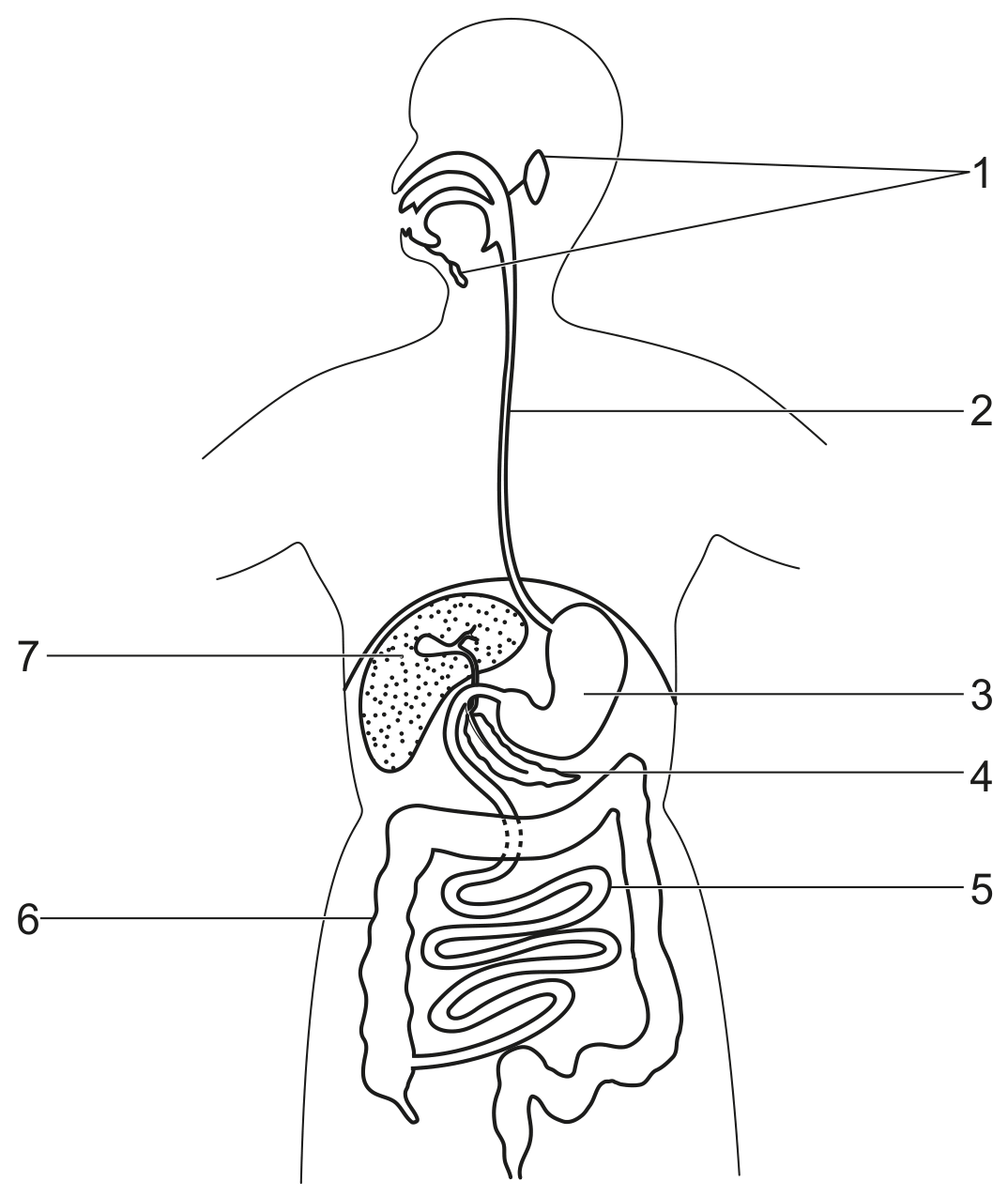
Fig. 2.1
State a function of the region of the alimentary canal labelled 6 in Fig. 2.1.
Which term is defined as the taking of substances into the body through the mouth?
absorption
assimilation
digestion
ingestion
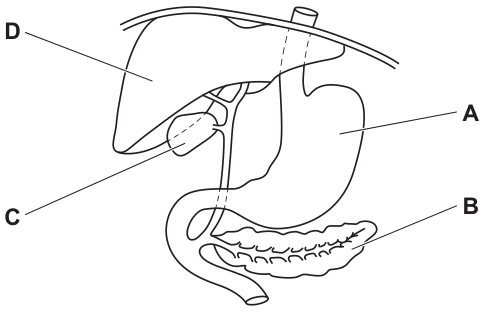
The diagram shows part of the alimentary canal and associated organs.
Which labelled part stores bile?
What is the correct order of the processes that take place in the alimentary canal?
absorption, digestion, ingestion, egestion
digestion, ingestion, egestion, absorption
egestion, digestion, absorption, ingestion
ingestion, digestion, absorption, egestion