Question 1
Question 1(d)
(a)
Explain why lipase cannot be used to catalyse the breakdown of proteins.
[ 3 ]
 EduNinja
Explain why lipase cannot be used to catalyse the breakdown of proteins.
Enzymes are catalysts.
Describe what is meant by the term catalyst.
Lipase is an enzyme found in the human digestive system.
Fig. 1.1 shows the effect of pH on the percentage activity of lipase.
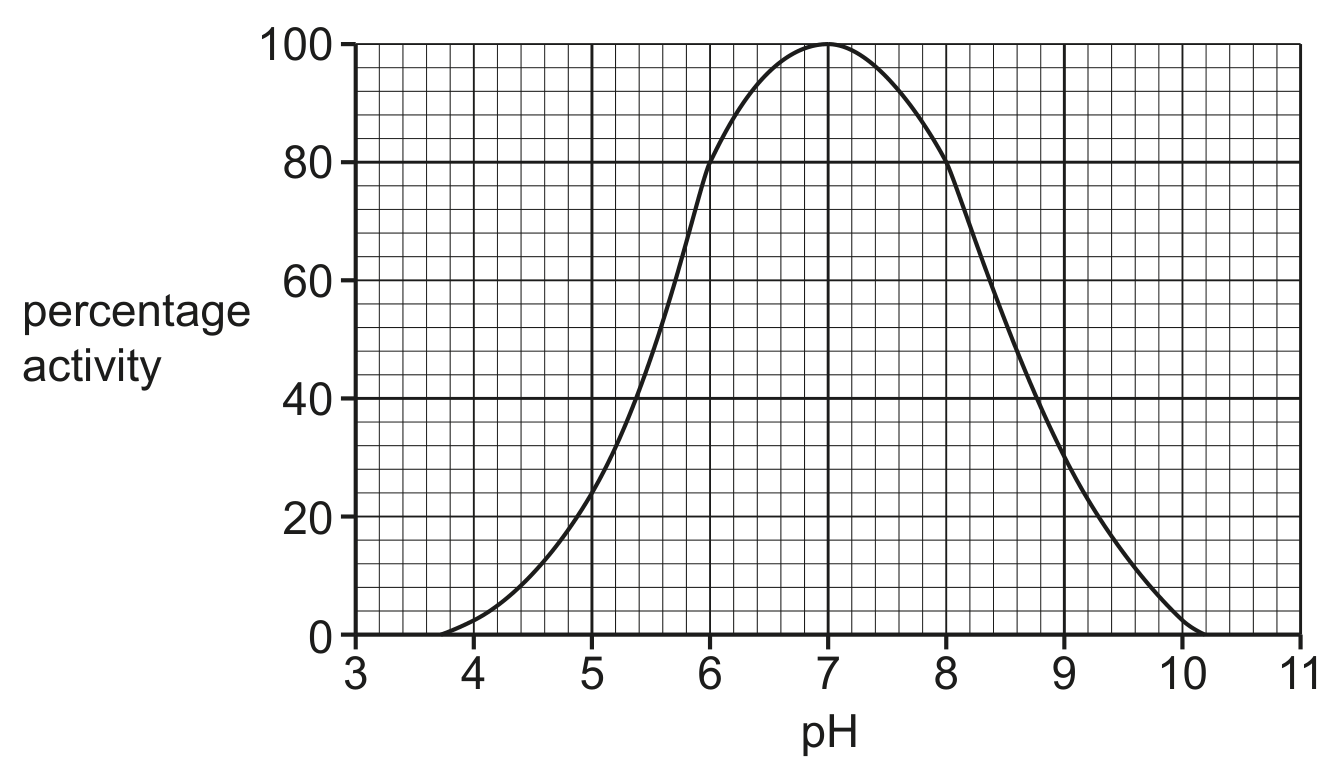
Fig. 1.1
Describe and explain the change in percentage activity of lipase shown on Fig. 1.1.
Enzymes are used in genetic engineering.
Define the term enzyme.
The process of genetic engineering often starts with the steps shown in Fig. 1.1.



Fig. 1.1
Explain how enzyme 1 in Fig. 1.1 is specific to the exact sequence of DNA bases.
Sketch a graph to describe how the activity of the enzymes used in genetic engineering would change if the reaction occurred at a range of temperatures from very cold to very hot.
Label the axes with appropriate titles.
Do not use units or a numbered scale.
Fungal cells and plant cells contain mitochondria.
A scientist investigated the effect of sugar on respiration in yeast cells.
One flask contained of a sugar solution and another flask contained of water. Both flasks contained the same mass of yeast. The temperature was maintained at .
The scientist used the apparatus shown in Fig. 1.1.
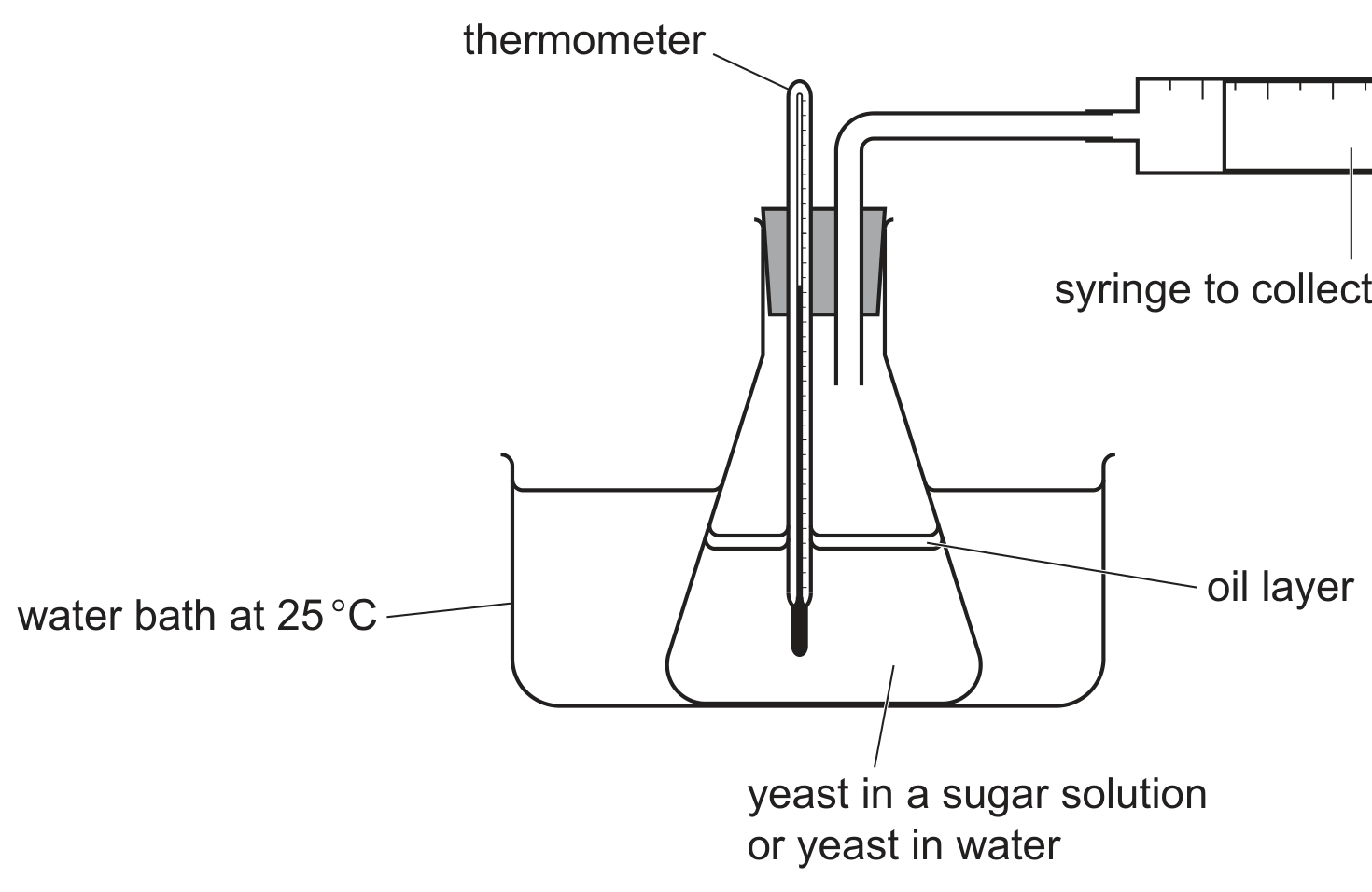
Fig. 1.1
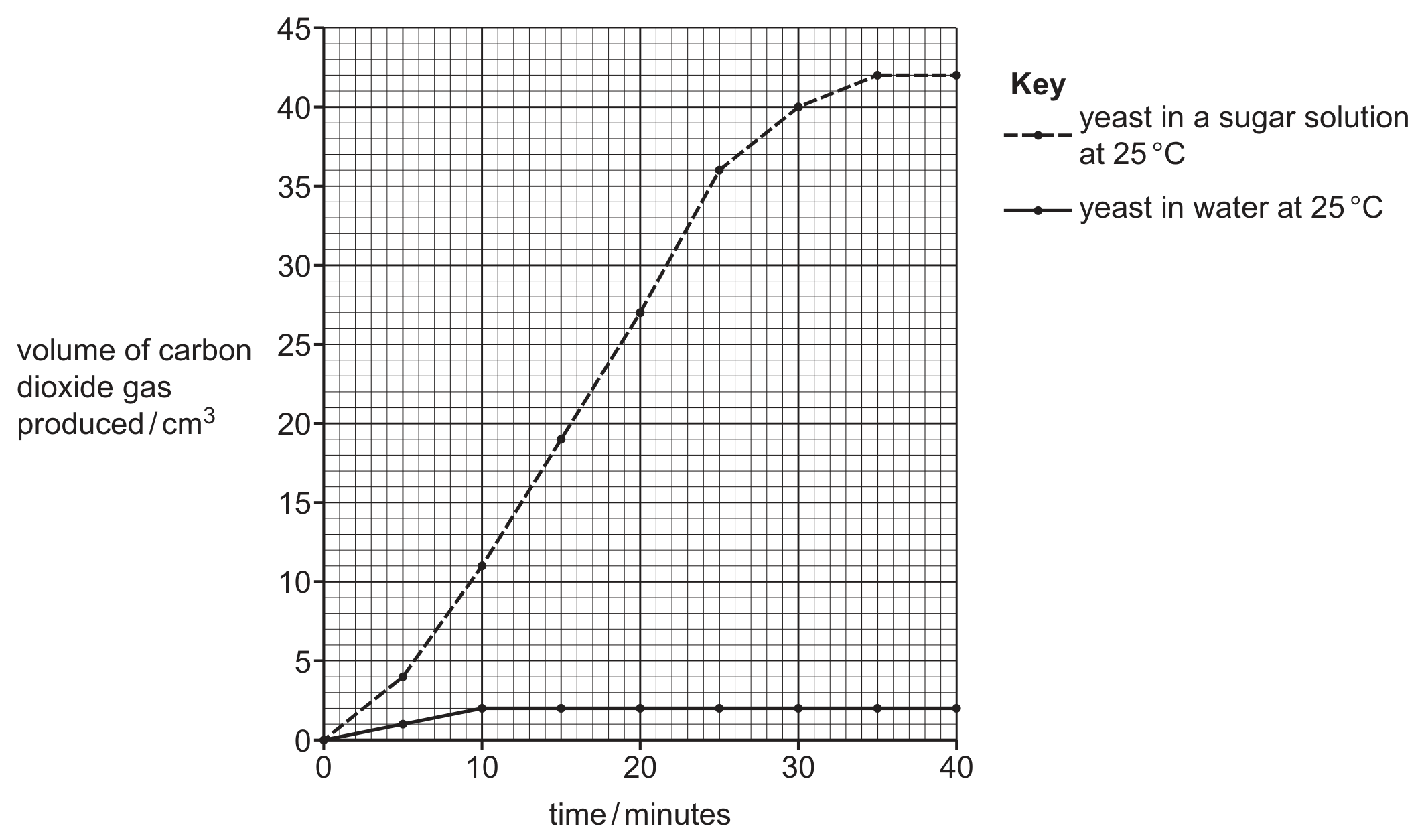
ig. 1.2 is a graph of the results of the investigation.
The scientist repeated the investigation using yeast and the sugar solution at a temperature of .
Explain why no carbon dioxide was produced at a temperature of .
The reactions of chemical digestion are catalysed by enzymes.
Fig. 1.1 shows the stages of an enzyme-catalysed reaction.
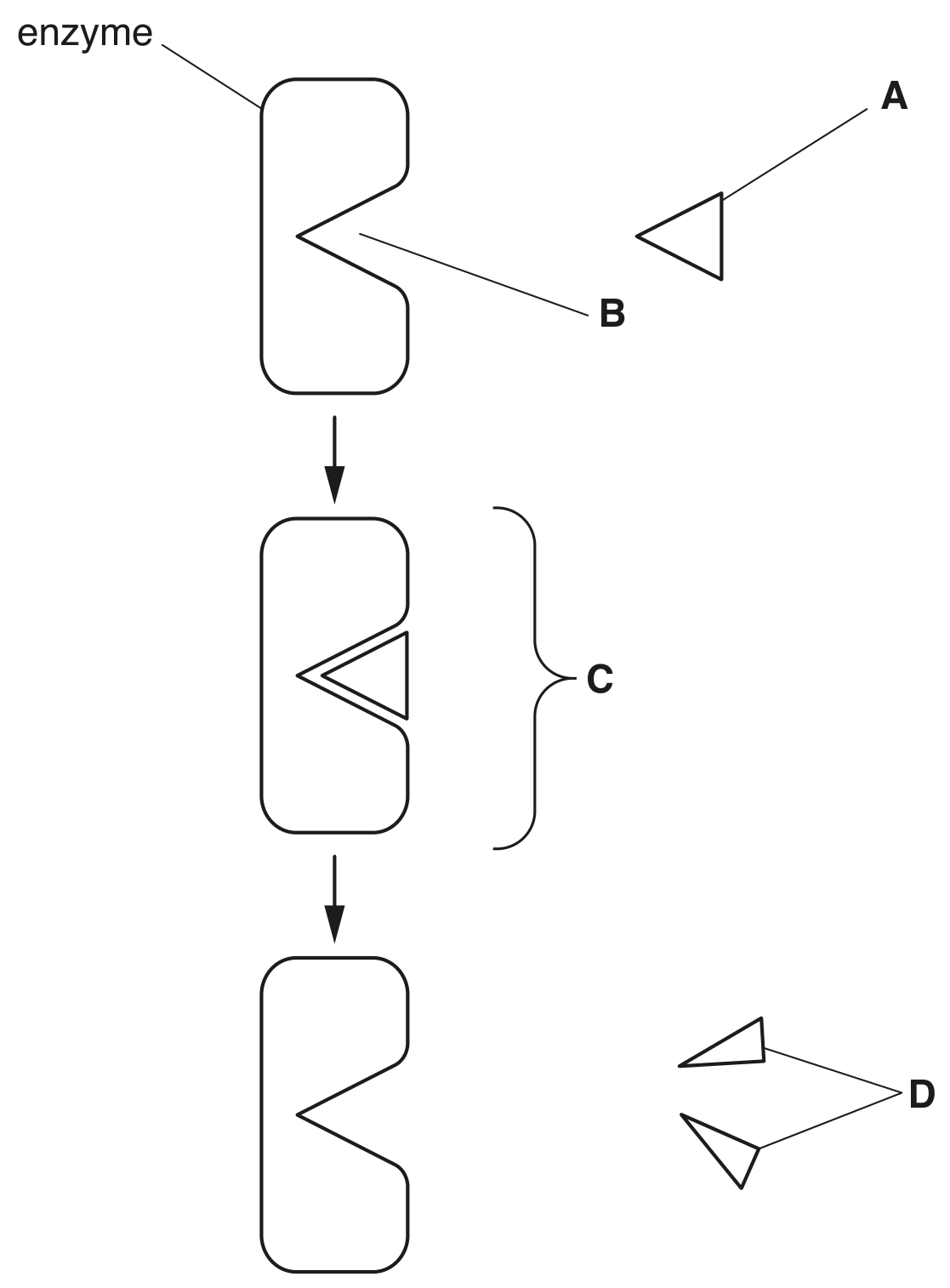
Fig. 1.1
State the names of A to D in Fig. 1.1.
A
B
C
D
Yeast cells make the enzyme sucrase. Sucrase catalyses the breakdown of sucrose to glucose and fructose.
Enzymes are made of protein.
Explain how the shape of a sucrase molecule is related to its function.
The students made an extract of sucrase from yeast cells.
They investigated the activity of the sucrase extract at different pH values. They determined the rate of reaction at each pH .
They then calculated the rate of each reaction as a percentage of the fastest reaction, to give the percentage activity of sucrase.
The results of this investigation are shown in Fig. 1.2.
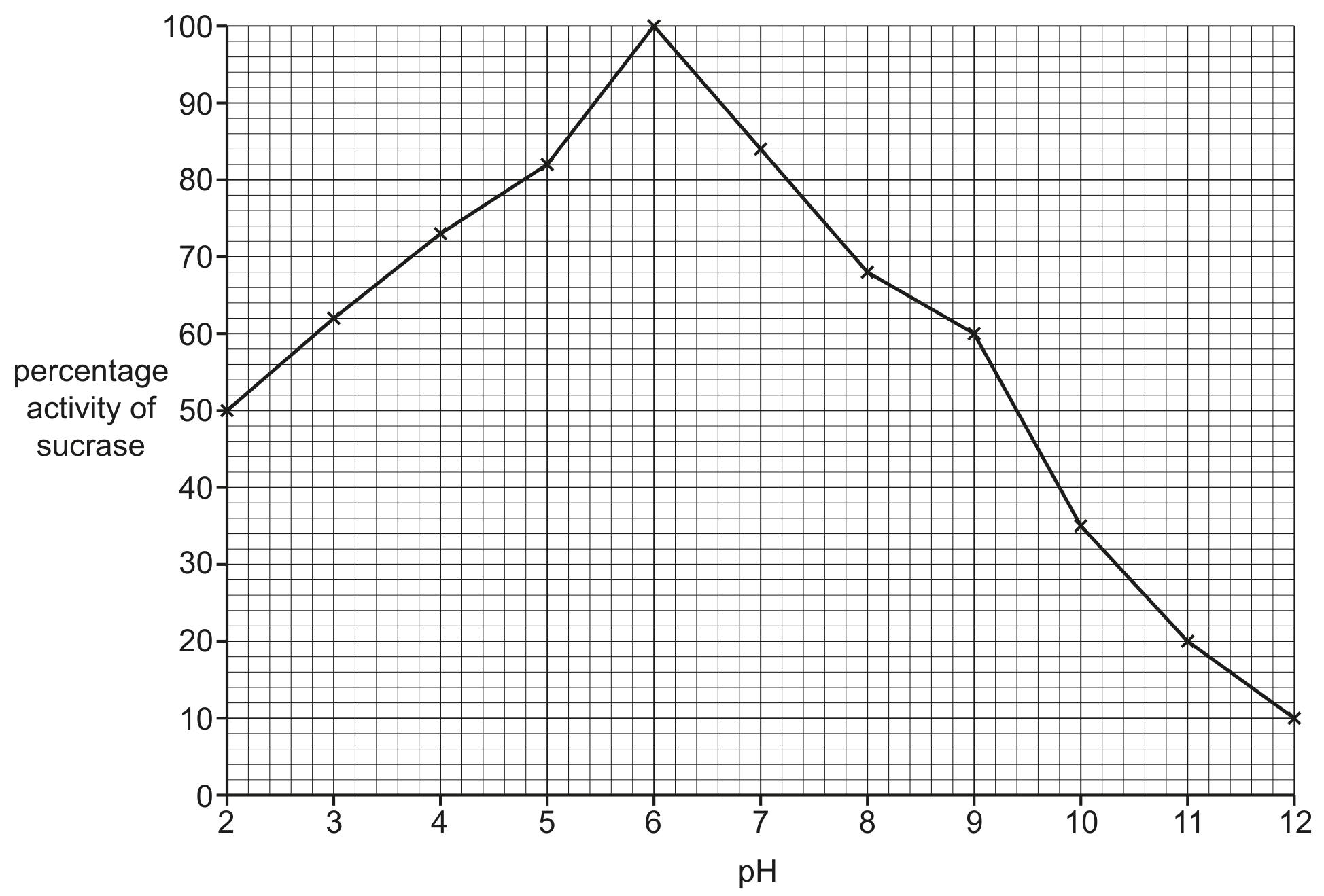
Fig. 1.2
Describe and explain the effect of pH on the activity of sucrase shown in Fig. 1.2.
Fig. 1.1 shows several villi from the ileum, which is part of the small intestine.
Many fungi are decomposers that feed on dead plants. The fungi secrete enzymes to digest large molecules.
Students made an extract from a species of fungus. The extract contained digestive enzymes.
The students carried out an investigation to find out if amylase and pectinase were present in the fungal extract.
They made agar plates by filling Petri dishes with agar jelly containing either starch or pectin. They cut four holes of the same size in the agar jelly in each Petri dish.
The holes in each Petri dish contained the same volume of:
A - 1\% amylase solution
B - 1\% pectinase solution
C - distilled water
D - fungal extract. The Petri dishes were kept at for four days. After this time a dye was poured into each dish to stain the areas where starch and pectin remained. Fig. 1.3 shows drawings of the stained agar in the Petri dishes. The clear zones indicate the areas where no starch or pectin remained.
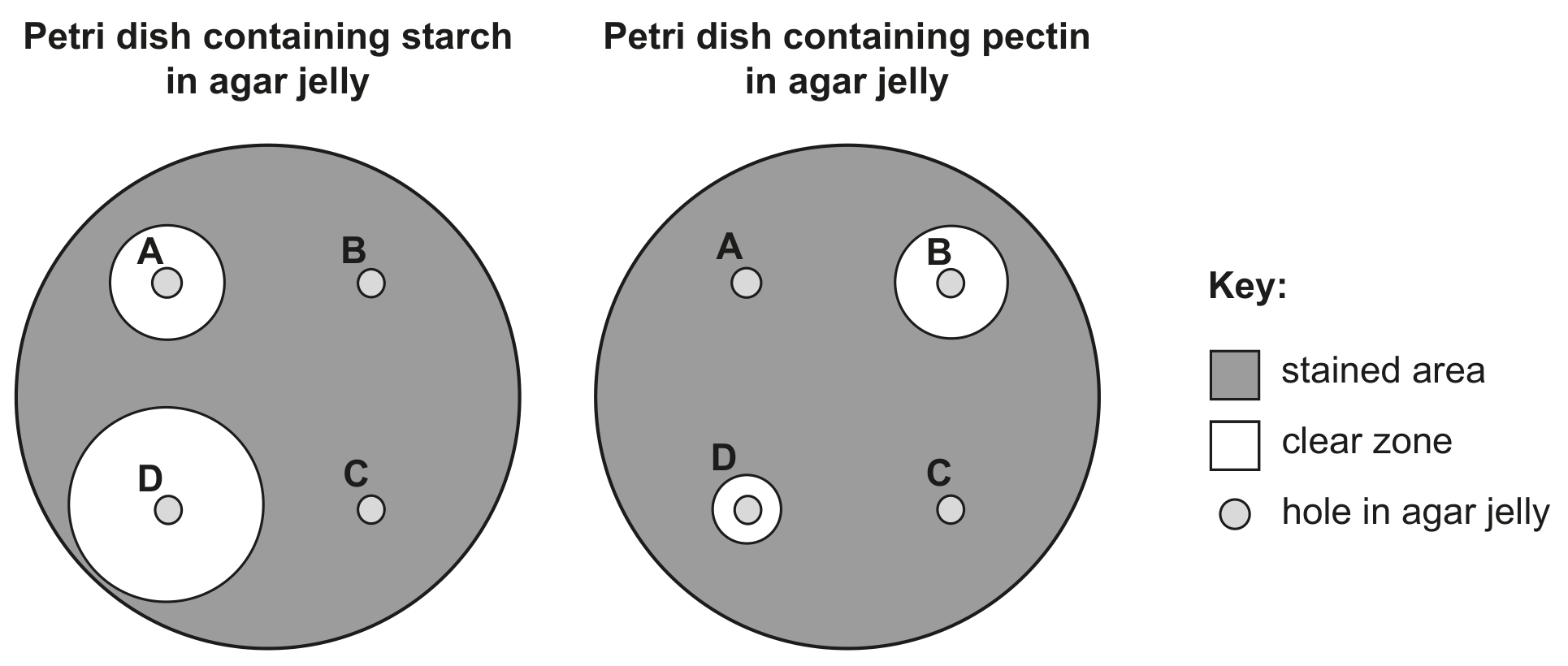
Fig. 1.3
State what conclusions can be made about the enzymes in the fungal extract and give evidence from Fig. 1.3 to support your conclusions.
The investigation was repeated but at instead of at .
Predict the effect of the lower temperature on the results.
Biological washing powders contain enzymes that break down food stains.
Compare the effectiveness of the two washing powders at removing stains.
Use the information in Fig. 2.1 in your answer.
The students suggested that the enzymes in the biological washing powder were denatured at high temperatures.
Explain why enzyme molecules do not function when they are denatured.
The list shows some statements about enzymes.
1 They all contain the element nitrogen.
2 They are proteins.
3 They can be denatured by cold temperatures.
4 Their specificity is due to the complementary shapes of the active site and the substrate.
Which statements are correct?
1, 2 and 3
1, 2 and 4
2 and 4 only
3 and 4
The diagram shows a protease molecule catalysing the break down of a protein molecule.
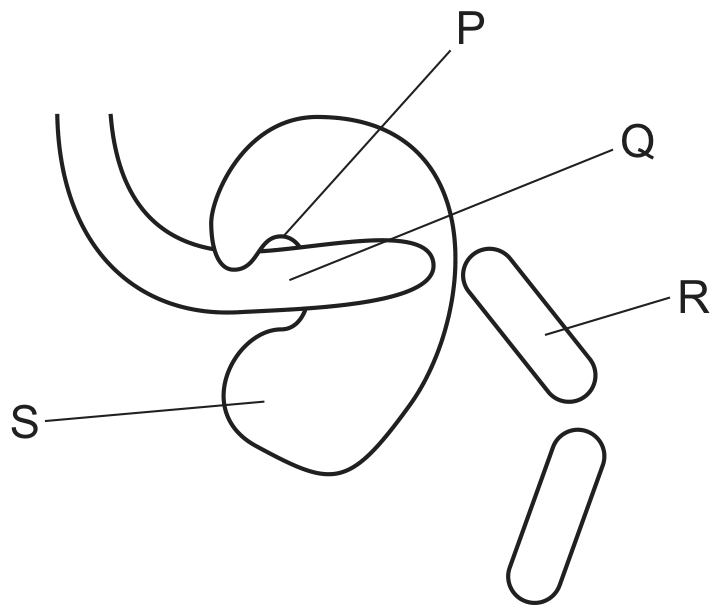
What are the parts labelled P, Q, R and S ?
enzyme
product
substrate
active site
P
Q
R
S
R
S
P
Q
S
P
Q
R
S
R
Q
P