EduNinja

IGCSE Biology19.1 Energy flowTopic Practice

19.1 Energy flow

CAIE IGCSE Biology 19.1 Energy flow question practice helps you revise this syllabus point with the course map in view. Use this page to focus on one topic, check the style of questions available, and connect each attempt back to the knowledge area it is testing.

EduNinja keeps Biology practice aligned to CAIE, so you can move from topic review into exam-style question bank work without losing the syllabus structure. Start with a small set, mark the weak steps, then return to nearby topic links when a definition, graph, calculation, or explanation needs repair.

Question 1

[Maximum number: 2]

The dominant grass species in an African grassland ecosystem are star grass and red oat grass.
- Star grass is eaten by antelope species, such as topi and Thomson's gazelle.
- Smaller animals such as mice and grasshoppers feed on red oat grass.
- Topi and Thomson's gazelle are eaten by predators such as cheetahs, lions and serval cats.
- Grasshoppers and mice are eaten by serval cats and tawny eagles.
- Vultures feed on dead mammals.

Fig. 1.1 shows part of the food web for this ecosystem.
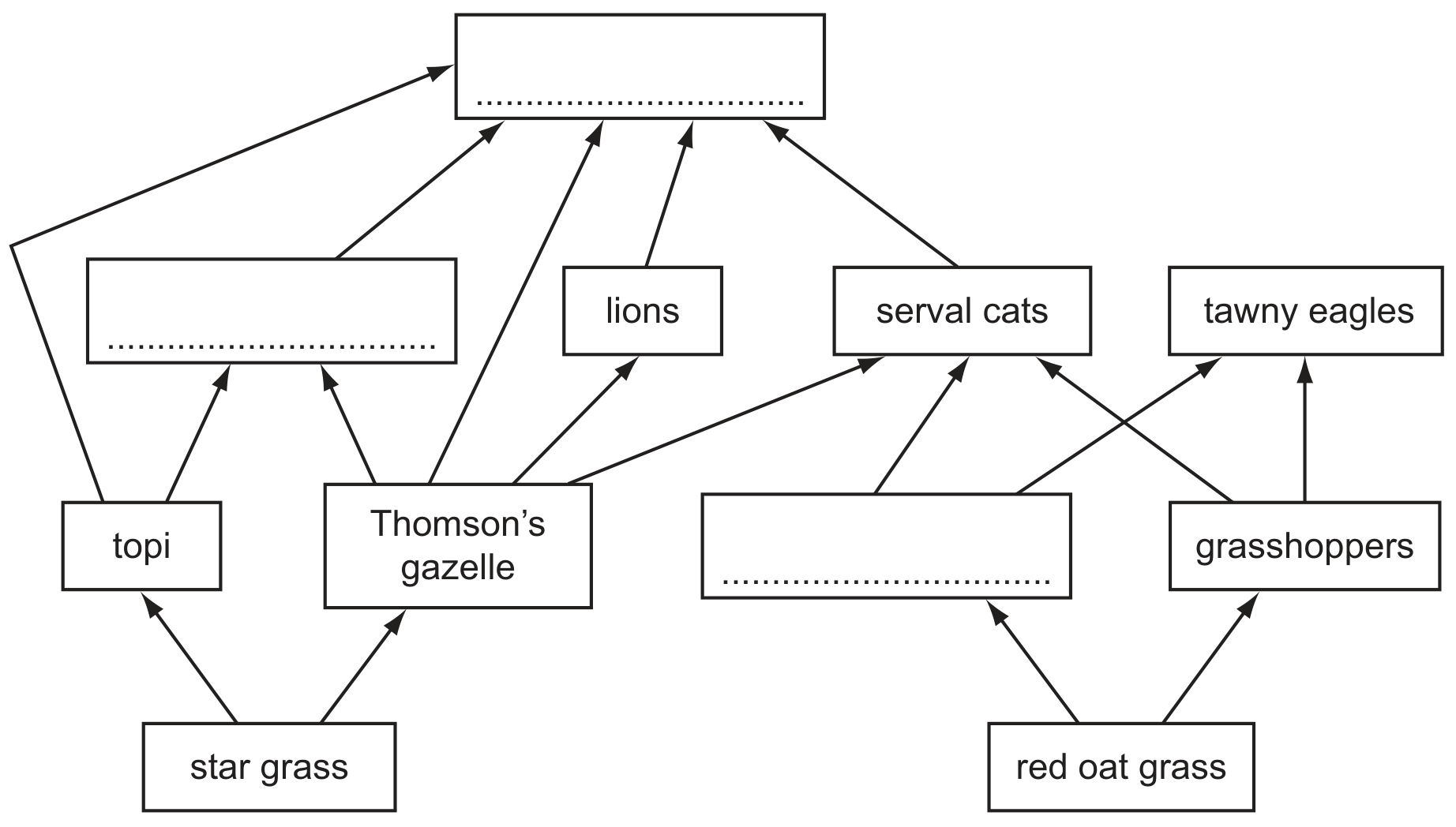
Fig. 1.1

Fig. 1.1

Question 1(c)(i)

(a)

State the principal source of energy for the food web shown in Fig. 1.1.

[ 1 ]

Question 1(c)(ii)

(b)

State what happens to energy when it leaves a food web.

[ 1 ]
Question 1(a)(i)

[Maximum number: 1]

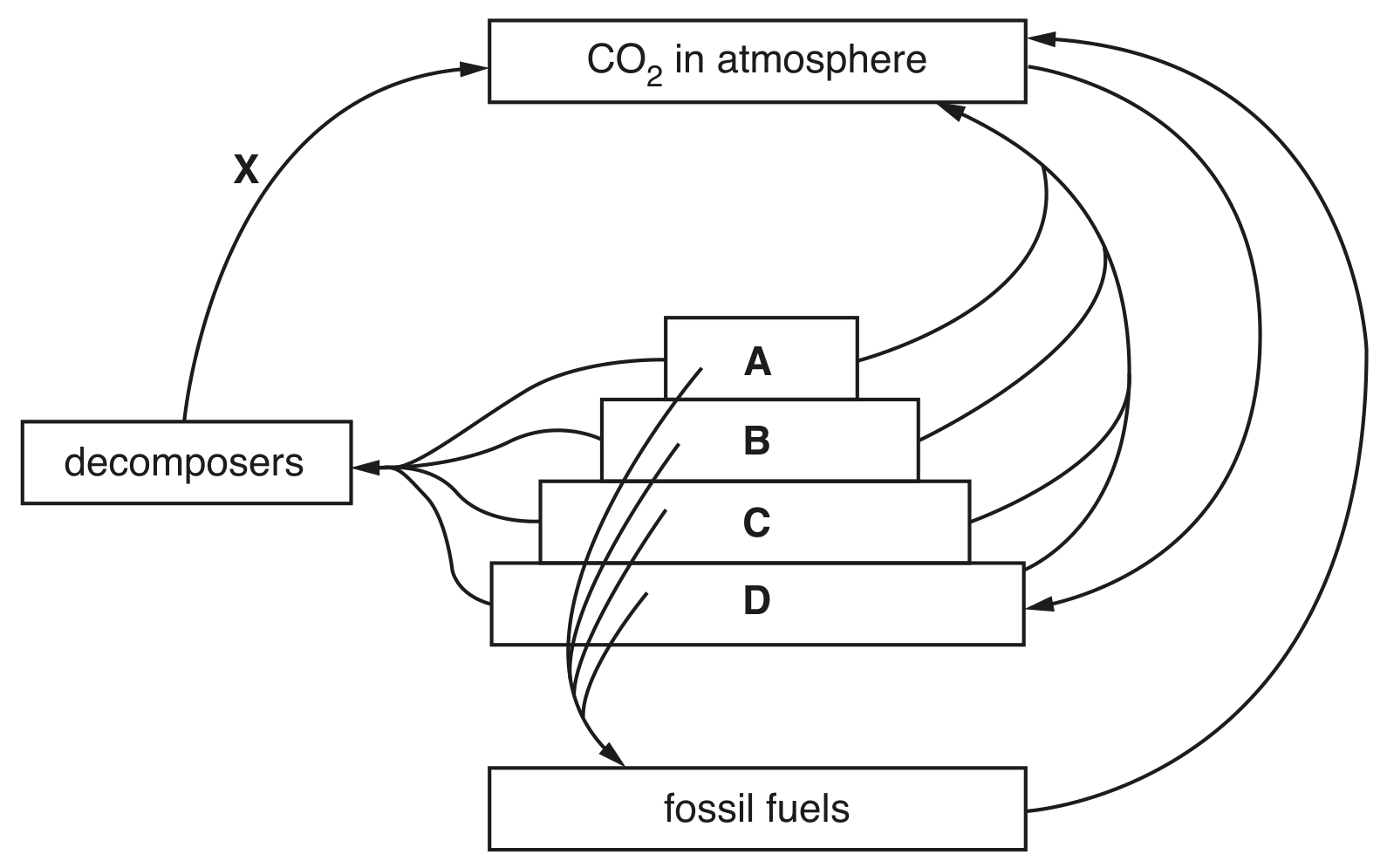
Fig. 1.1 shows a pyramid of biomass and part of the carbon cycle.

Fig. 1.1

Fig. 1.1

State the principal source of energy required for trophic level D of the pyramid of biomass in Fig. 1.1.

Question 1

[Maximum number: 2]

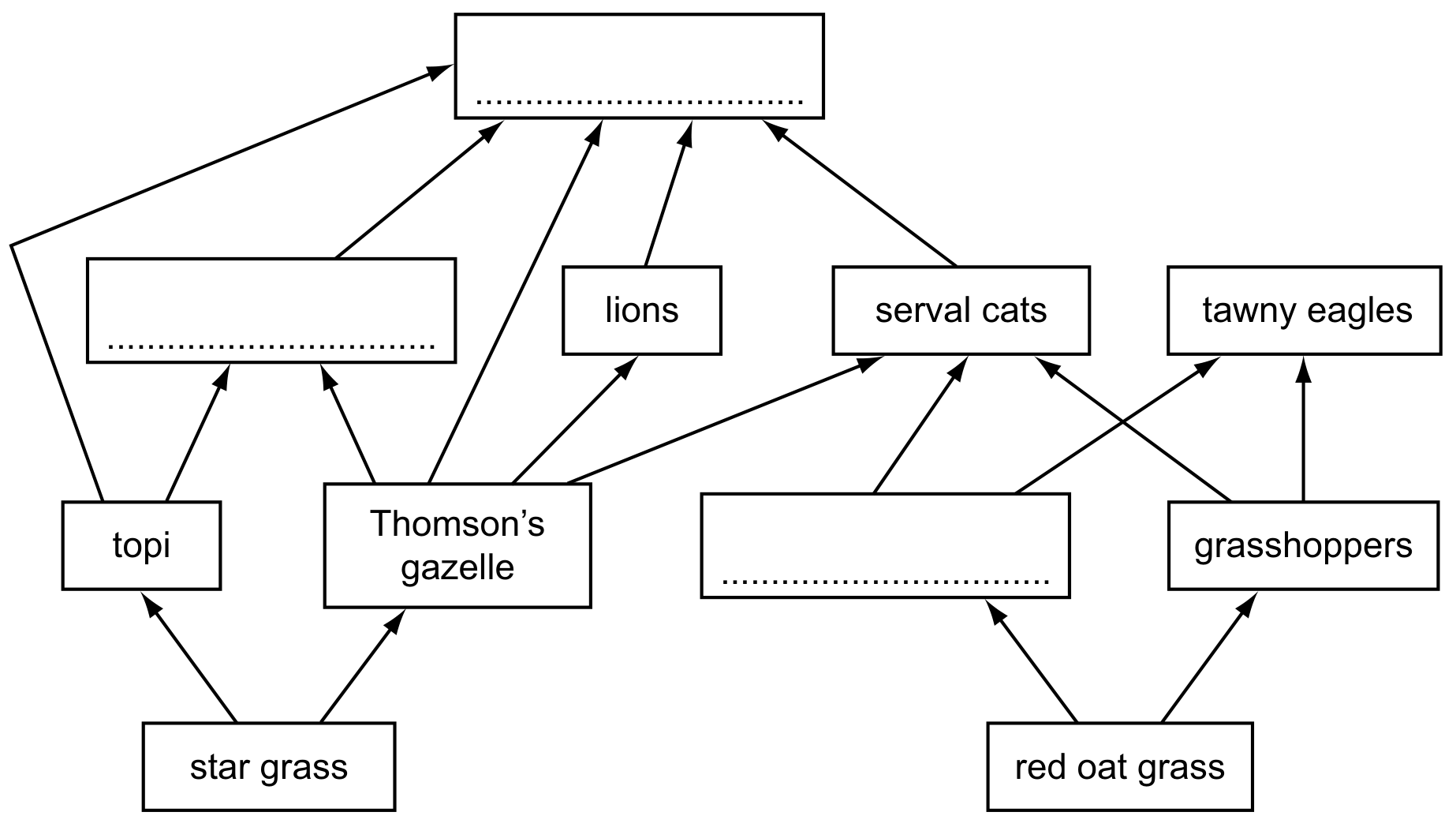
The dominant grass species in an African grassland ecosystem are star grass and red oat grass.
- Star grass is eaten by antelope species, such as topi and Thomson's gazelle.
- Smaller animals such as mice and grasshoppers feed on red oat grass.
- Topi and Thomson's gazelle are eaten by predators such as cheetahs, lions and serval cats.
- Grasshoppers and mice are eaten by serval cats and tawny eagles.
- Vultures feed on dead mammals.

Fig. 1.1 shows part of the food web for this ecosystem.

Fig. 1.1

Fig. 1.1

Question 1(c)(i)

(a)

State the principal source of energy for the food web shown in Fig. 1.1.

[ 1 ]

Question 1(c)(ii)

(b)

State what happens to energy when it leaves a food web.

[ 1 ]
Question 3(c)(i)

[Maximum number: 3]

Outline how organisms in the first trophic level of the woodland food chain produce biomass using energy from the Sun.

Question 5(b)(ii)

[Maximum number: 1]

Phytoplankton are microorganisms that photosynthesise.

A scientist made notes about a marine food web.

Fig. 5.1 shows the notes she made.
- In the sea, phytoplankton photosynthesise.
- Phytoplankton are eaten by small organisms in the sea, called zooplankton.
- Herring fish and cod fish eat phytoplankton. Herring fish also eat zooplankton.
- Cod fish eat other fish such as herring.

State the principal source of energy for this food web.

Question 32

[Maximum number: 1]

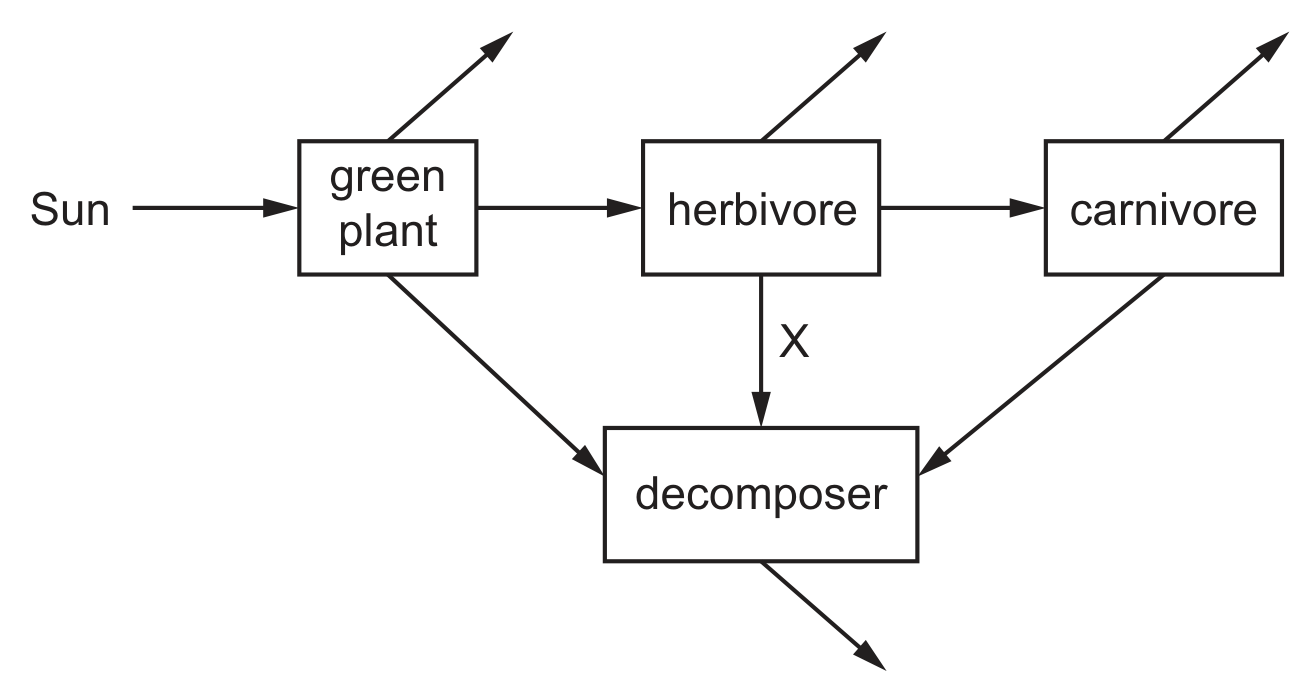
The diagram shows energy flow through an ecosystem.

Question image

In what form is energy transferred at X ?

A

chemical

B

heat

C

kinetic

D

light

Question 34

[Maximum number: 1]

What is the principal source of energy input into an ecosystem?

A

decomposers

B

herbivores

C

producers

D

the Sun

Question 35

[Maximum number: 1]

Where does the energy being transferred along a food chain originally come from?

A

producer

B

photosynthesis

C

carbon dioxide

D

the Sun

Question 35

[Maximum number: 1]

Energy flows through a food chain.
In which form does the energy first enter the food chain?

A

chemical

B

heat

C

kinetic

D

light

Question 35

[Maximum number: 1]

The diagram shows the flow of energy through living organisms.

Question image

Which term should be placed in both boxes to complete the diagram?

A

chemical

B

heat

C

kinetic

D

light

0 selected