EduNinja

IGCSE Biology14.5 Tropic responsesTopic Practice

14.5 Tropic responses

CAIE IGCSE Biology 14.5 Tropic responses question practice helps you revise this syllabus point with the course map in view. Use this page to focus on one topic, check the style of questions available, and connect each attempt back to the knowledge area it is testing.

EduNinja keeps Biology practice aligned to CAIE, so you can move from topic review into exam-style question bank work without losing the syllabus structure. Start with a small set, mark the weak steps, then return to nearby topic links when a definition, graph, calculation, or explanation needs repair.

Question 1

[Maximum number: 8]

Plants are sensitive to light.

Question 1(a)

(a)

Fig. 1.1 shows a sequence of diagrams for two young plant seedlings. The seedlings were first grown in pots with light from all directions and then placed into boxes.
- Seedling A was placed in a box with light entering from one side only.
- Seedling B was placed in a box with no light.
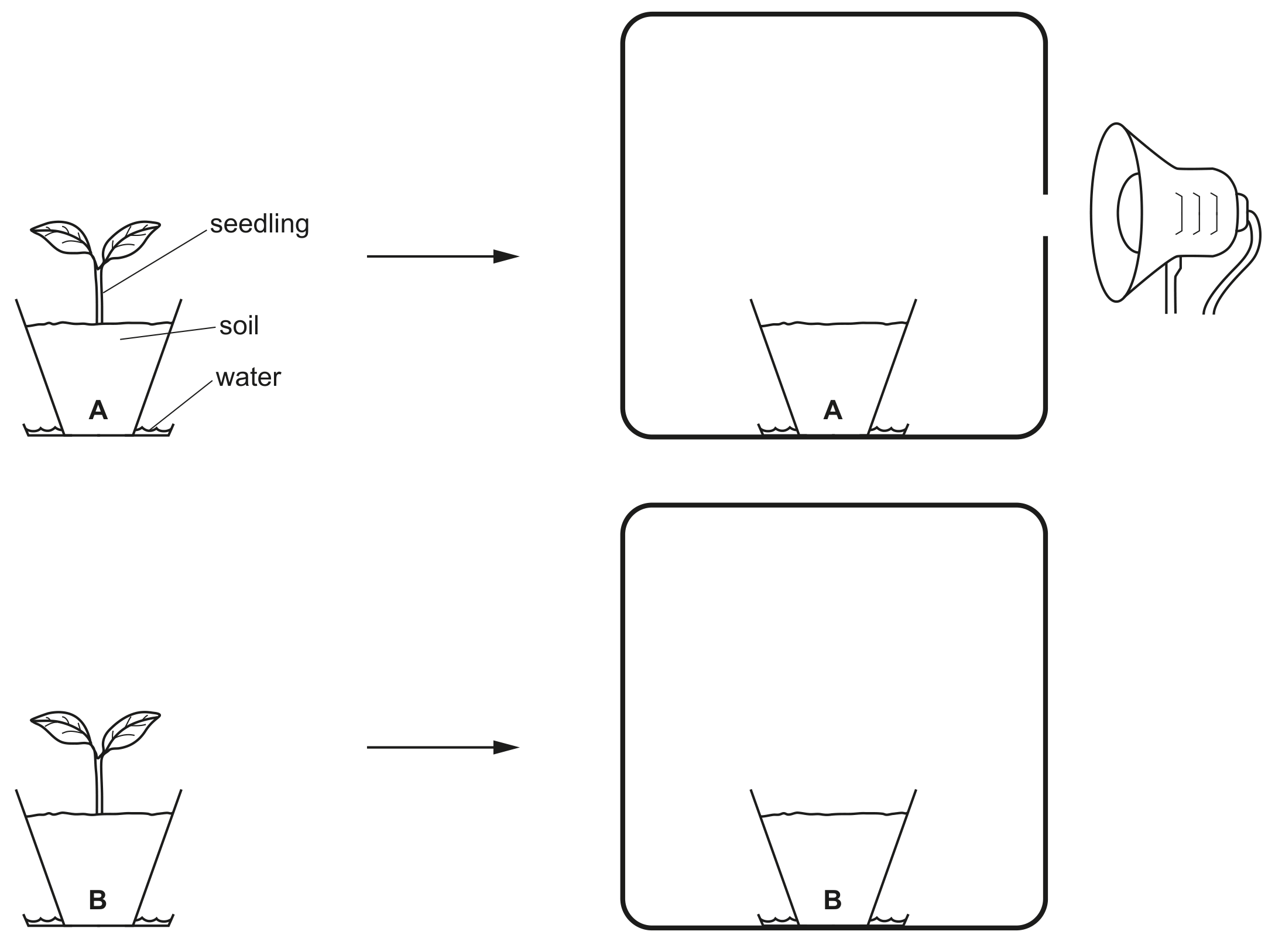
Fig. 1.1

Fig. 1.1

Complete Fig. 1.1 by drawing seedling A and seedling B, in the boxes, to show the expected direction of their growth after one week.

[ 2 ]

Question 1(b)

(b)

Plants are also sensitive to gravity.

[ 6 ]

Question 1(b)(ii)

(i)

Explain the role of plant hormones in gravitropism.

[ 4 ]

Question 1(b)(iii)

(ii)

Gravitropism enables plants to survive in their environment.

Explain how gravitropism enables a plant to survive.

[ 2 ]
Question 2

[Maximum number: 9]

The nervous system coordinates the responses of animals to changes in their environment.

Question 2(c)

(a)

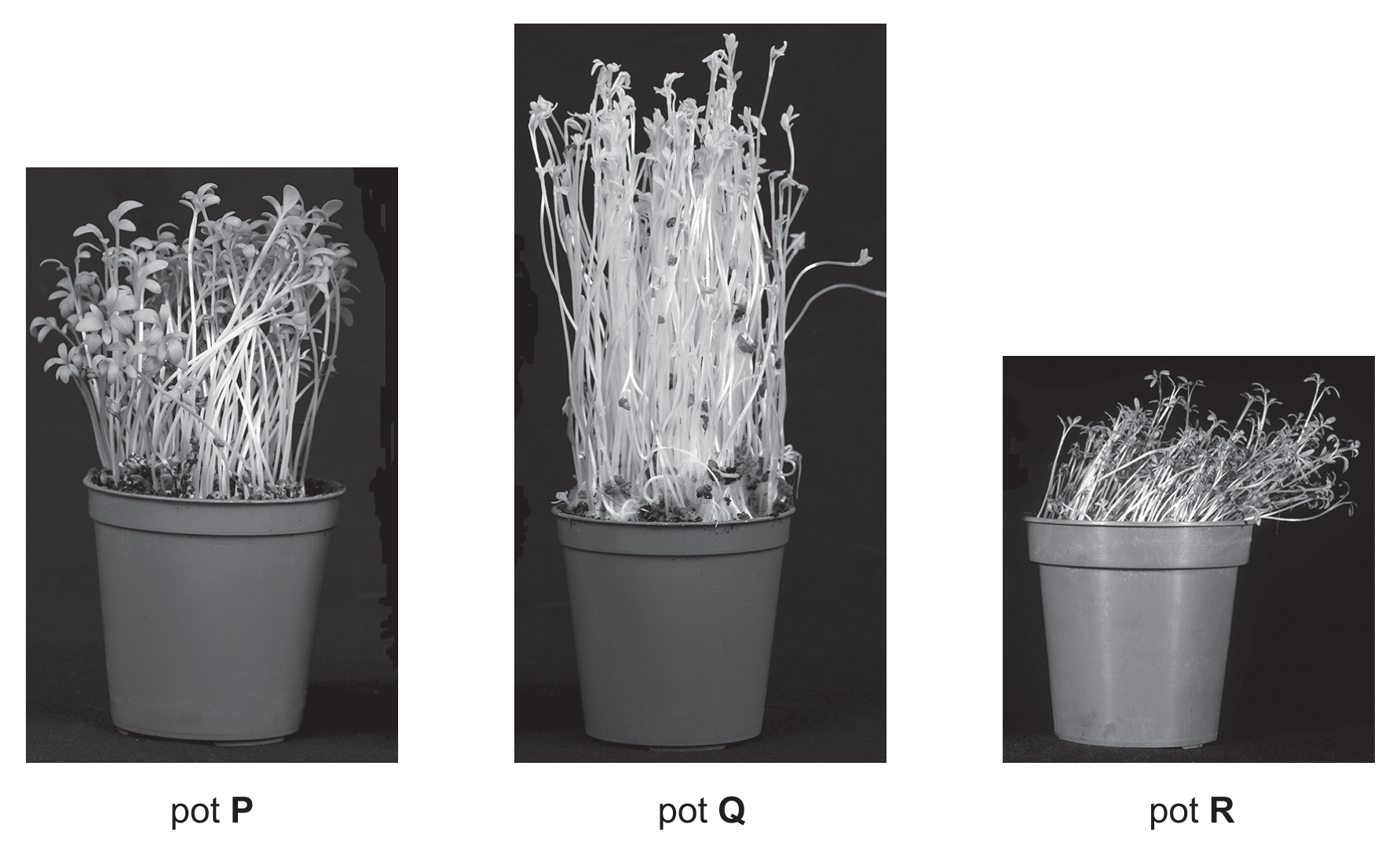
Fig. 2.3 shows three pots of seedlings that have been kept in different conditions.

Fig. 2.3

Fig. 2.3

[ 9 ]

Question 2(c)(i)

(i)

State the conditions in which pots P and Q were kept.

P
Q

[ 1 ]

Question 2(c)(ii)

(ii)

State the name of the growth response shown by the seedlings in pot R.

[ 2 ]

Question 2(c)(iii)

(iii)

Explain the advantage to the seedlings of this growth response.

[ 2 ]

Question 2(c)(iv)

(iv)

Auxins control the growth responses of seedlings.

Explain how auxins control the growth response of the seedlings in pot R.

[ 4 ]

Question 2

[Maximum number: 9]

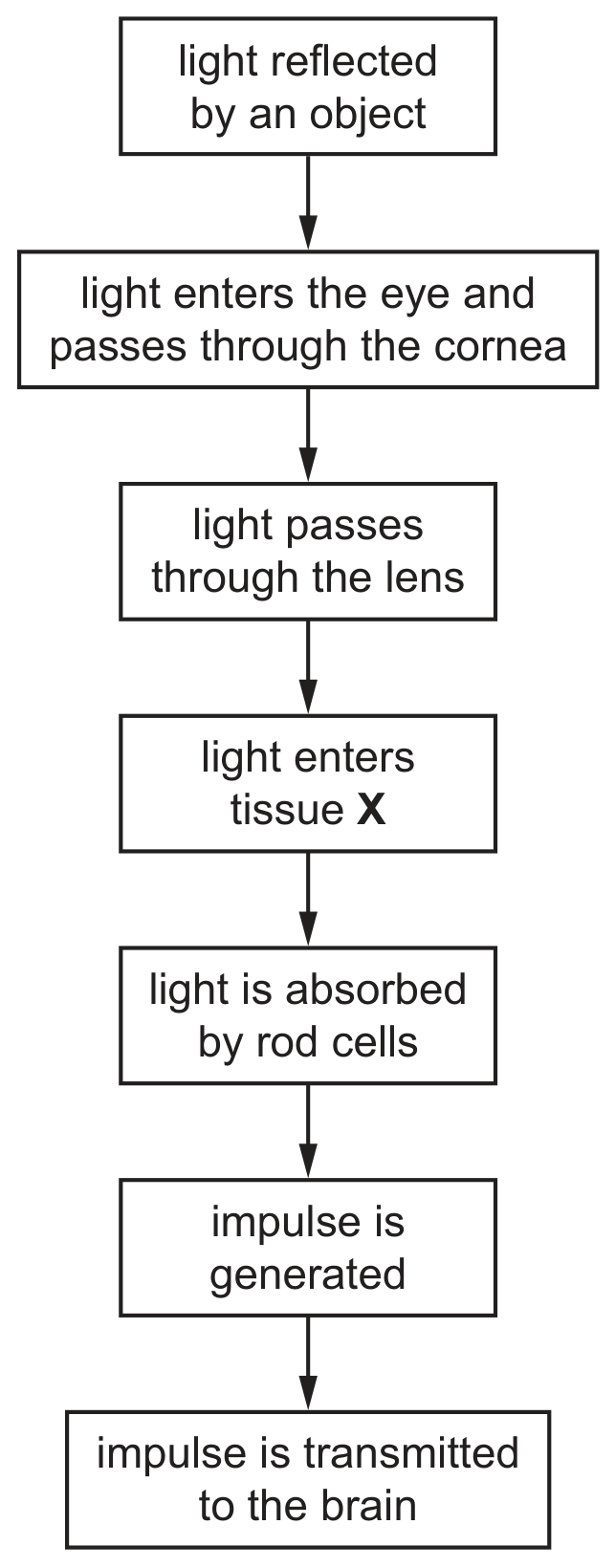
Fig. 2.1 is a flow chart that shows the events that occur as light travels through the eye.

Fig. 2.1

Fig. 2.1

Question 2(b)

(a)

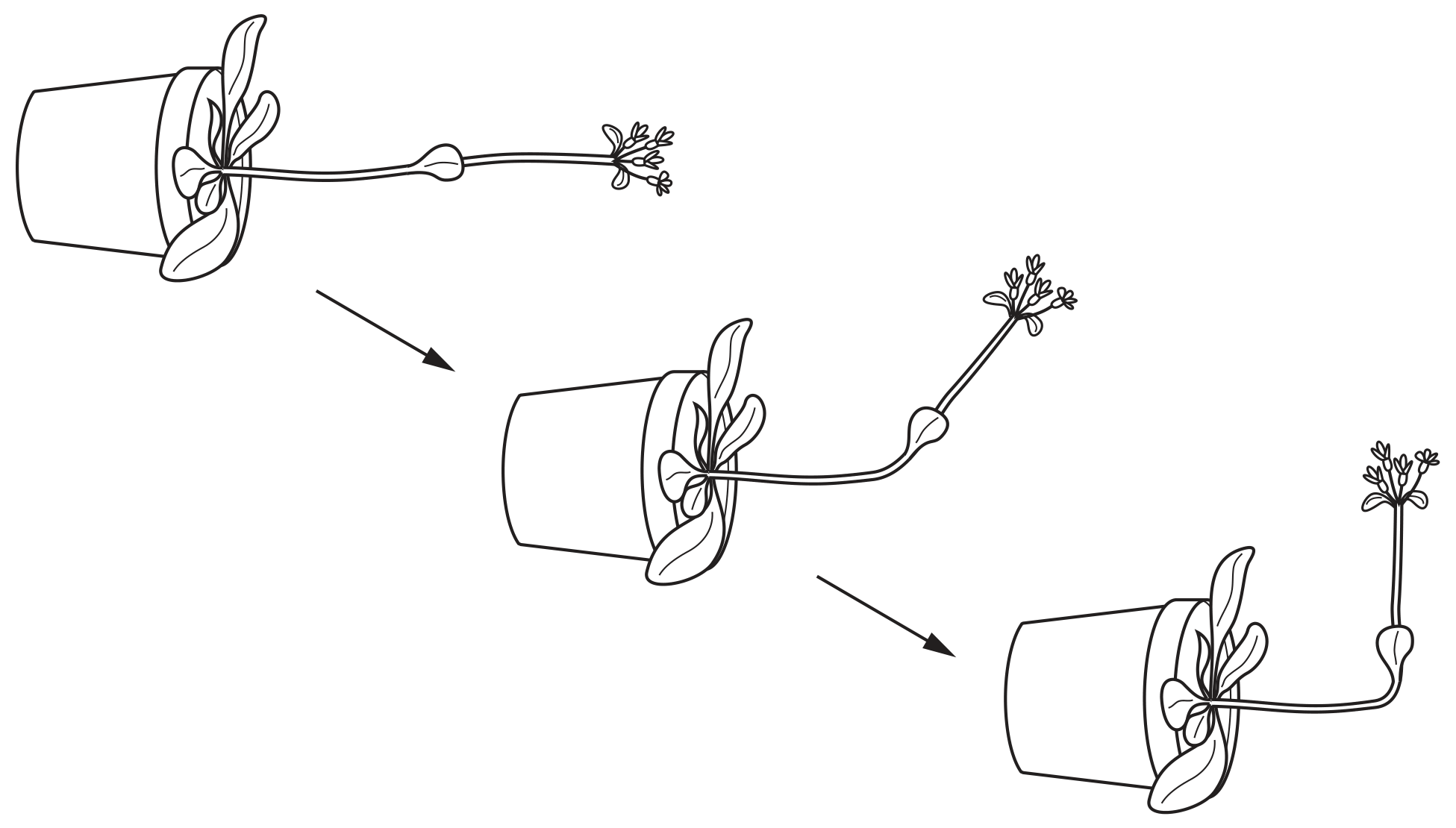
A plant, Arabidopsis thaliana, was placed on its side in the dark. Fig. 2.2 is a series of drawings made of the plant, over seven days, as it responded to a change in its surroundings.

Fig. 2.2

Fig. 2.2

[ 9 ]

Question 2(b)(i)

(i)

State the stimulus to which the plant responded.

[ 1 ]

Question 2(b)(ii)

(ii)

Name the growth response shown by the plant.

[ 2 ]

Question 2(b)(iii)

(iii)

Explain the advantage to plants of the growth response shown in Fig. 2.2.

[ 2 ]

Question 2(b)(iv)

(iv)

Auxins control the growth responses of seedlings.

Explain how auxins control the growth response of A. thaliana, shown in Fig. 2.2.

[ 4 ]

Question 3

Question 3(a)

(a)

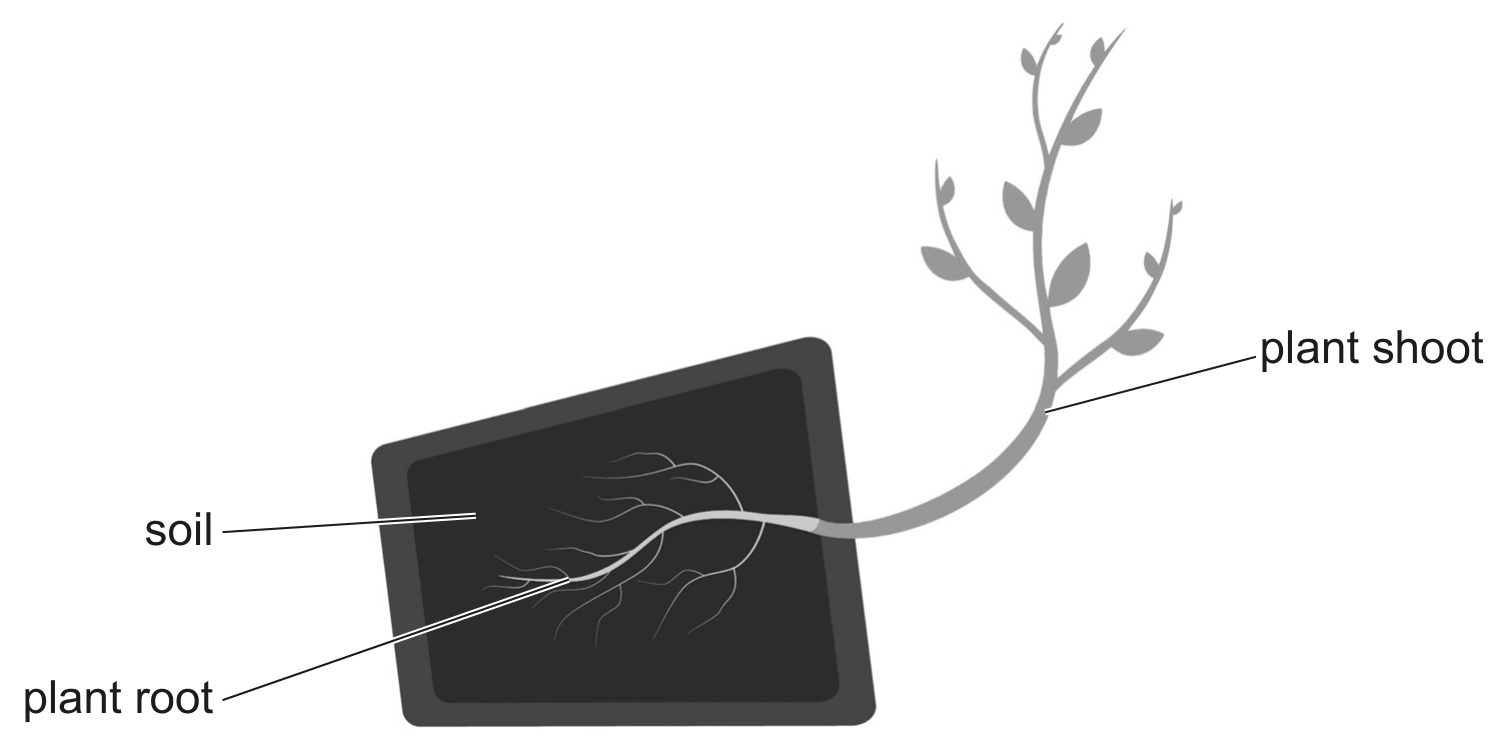
Fig. 3.1 shows a growing plant. The plant is growing in the dark.

Fig. 3.1

Fig. 3.1

[ 4 ]

Question 3(a)(i)

(i)

State the name of the growth response shown by the plant shoot in Fig. 3.1.

[ 1 ]

Question 3(a)(ii)

(ii)

Explain how the growth of the plant shoot in Fig. 3.1 is controlled.

[ 3 ]

Question 22

[Maximum number: 1]

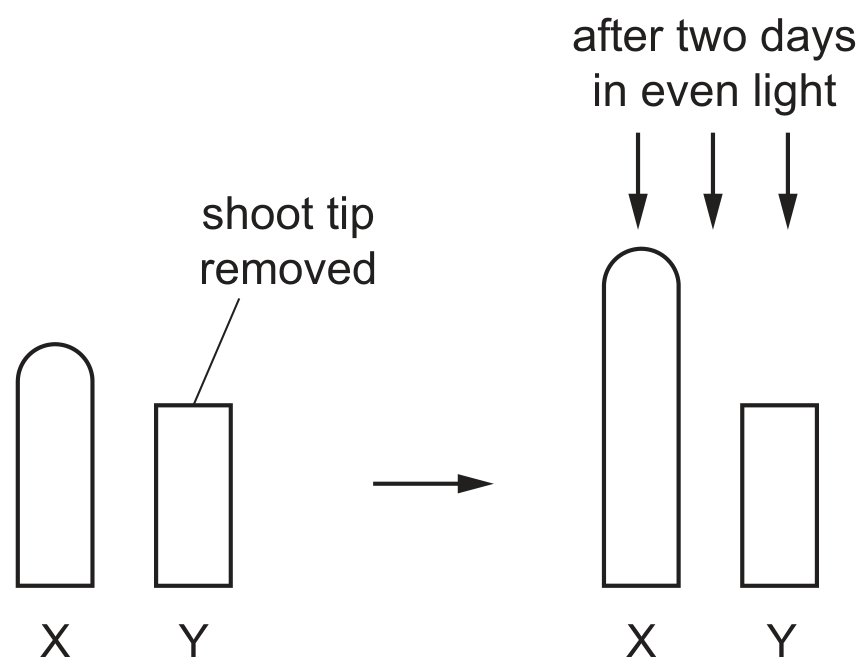
The diagram shows an experiment using wheat shoot tips to investigate plant growth.

Question image

Which statement is supported by the evidence provided by this experiment?

A

Auxin moves through the plant by osmosis.

B

Auxin is made in the shoot tip.

C

Auxin is unequally distributed in response to light.

D

Auxin inhibits cell elongation.

Question 23

[Maximum number: 1]

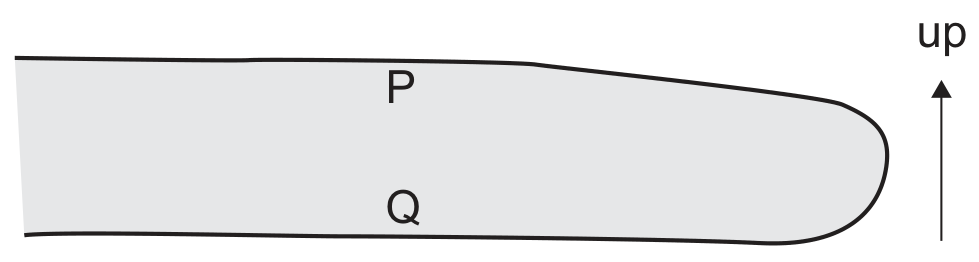
The diagram shows a shoot that has been placed on its side. The shoot begins to grow upwards.

Question image

What causes the shoot to grow upwards?

A

increased cell division by meiosis at P

B

increased cell division by mitosis at P

C

more cell elongation at P than Q

D

more cell elongation at Q than P

Question 4

Question 4(e)(i)

(a)

Plants also make hormones.

State the name of one hormone made by plants.

[ 1 ]

Question 4(e)(ii)

(b)

Some plant hormones are manufactured and applied to crops to alter aspects of plant growth.

Describe how the synthetic plant hormone 2,4-D is used in agriculture.

[ 2 ]

Question 24

[Maximum number: 1]

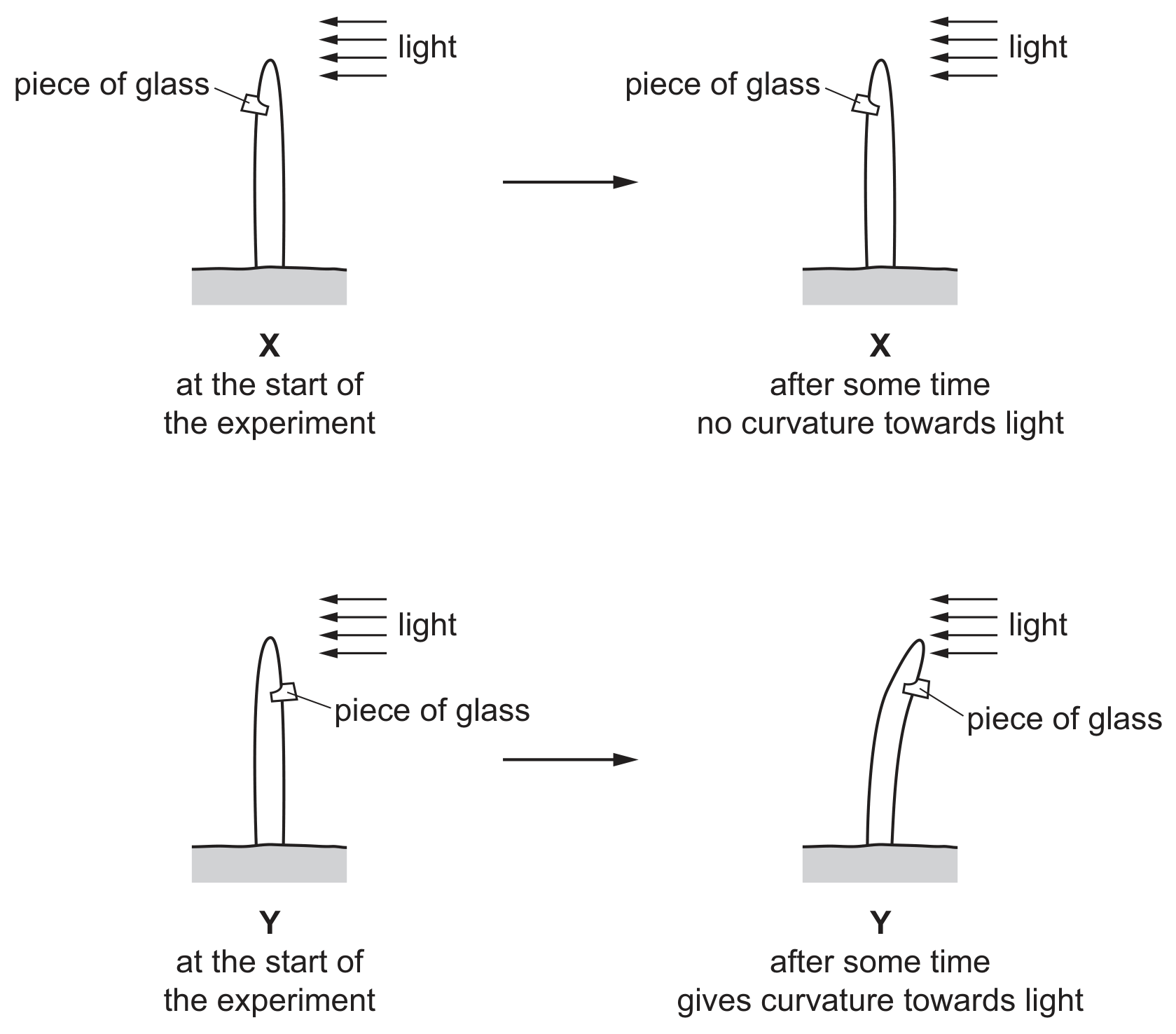
A student used two seedlings X and Y to investigate phototropism.
The diagram shows their investigation.

Question image

Which statement explains the difference in results between X and Y ?

A

The piece of glass destroyed the auxin on the shaded side of the seedling.

B

The piece of glass destroyed the auxin on the side of the seedling facing the light.

C

The piece of glass in X stopped the auxin travelling down the shaded side of the seedling.

D

The piece of glass in X stopped the auxin travelling down the side of the seedling facing the light.

Question 24

[Maximum number: 1]

In a plant shoot, where is auxin made and what is its effect?

where made

effect

leaves

promotes cell division

leaves

promotes cell elongation

shoot tip

promotes cell division

shoot tip

promotes cell elongation

Question 24

[Maximum number: 1]

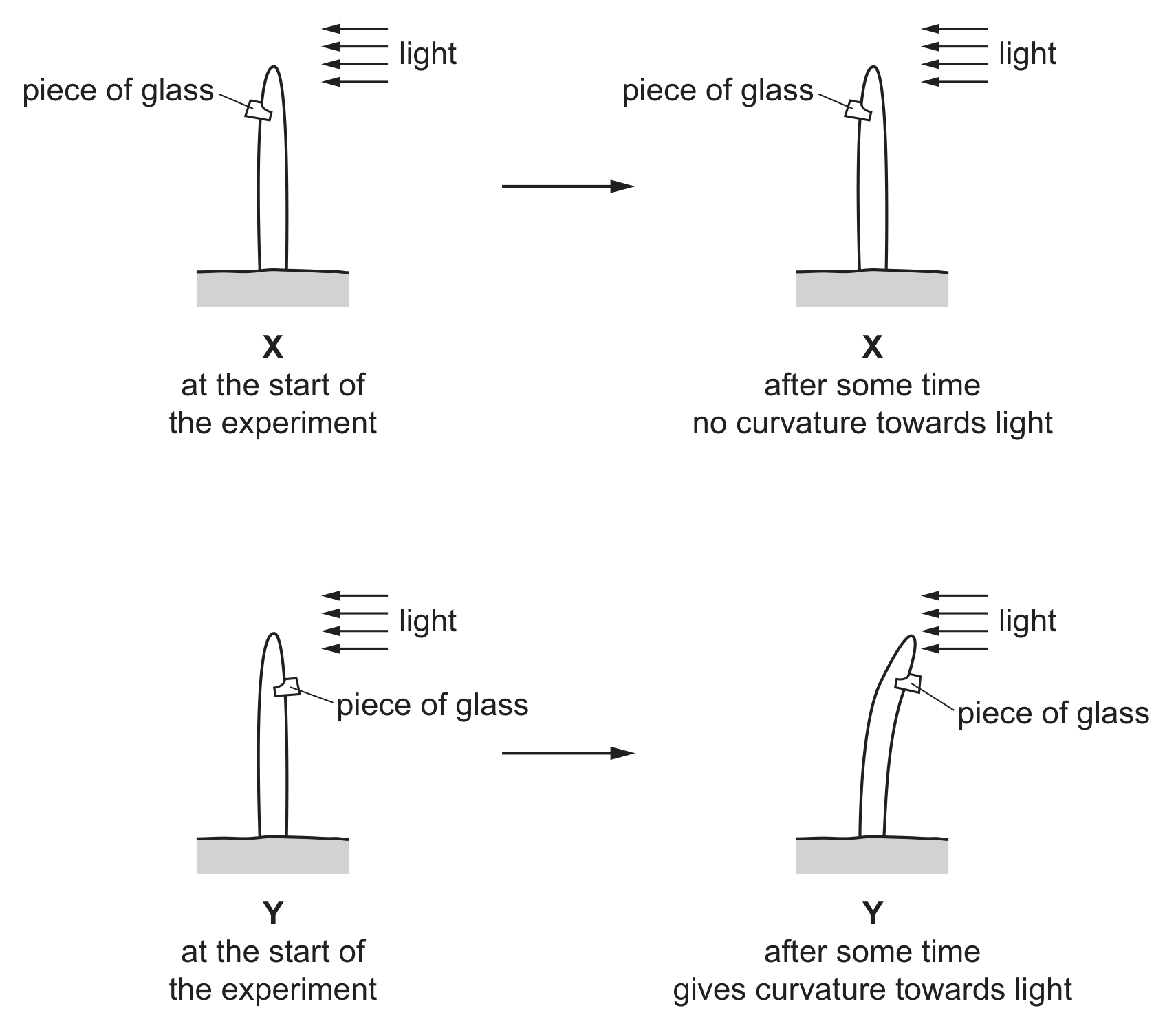
A student used two seedlings X and Y to investigate phototropism.
The diagram shows their investigation.

Question image

Which statement explains the difference in results between X and Y ?

A

The piece of glass destroyed the auxin on the shaded side of the seedling.

B

The piece of glass destroyed the auxin on the side of the seedling facing the light.

C

The piece of glass in X stopped the auxin travelling down the shaded side of the seedling.

D

The piece of glass in X stopped the auxin travelling down the side of the seedling facing the light.

0 selected