EduNinja

IGCSE Biology12.2 Aerobic respirationQuestion Bank

Question 1

[Maximum number: 1]

All living organisms are placed into groups according to their features. Myriapods are one of the main groups of arthropods.

Question 1(d)

(a)

Fig. 1.4 is a photograph of the myriapod, Apheloria virginiensis.
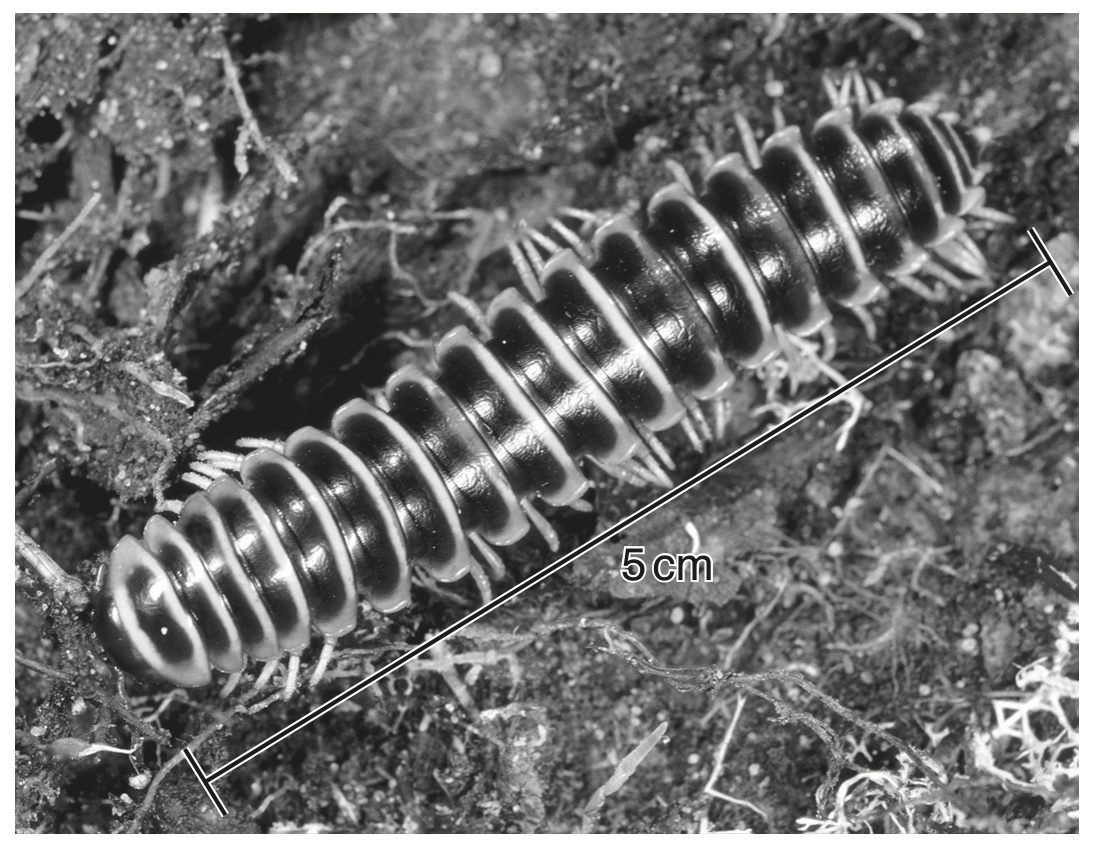
Fig. 1.4

Fig. 1.4

[ 1 ]

Question 1(d)(ii)

(i)

A. virginiensis releases the poison cyanide when it is attacked by predators. Cyanide stops enzymes in the mitochondria from functioning.

Suggest why cells die if the mitochondria do not function.

[ 1 ]
Question 1

Question 1(a)

(a)

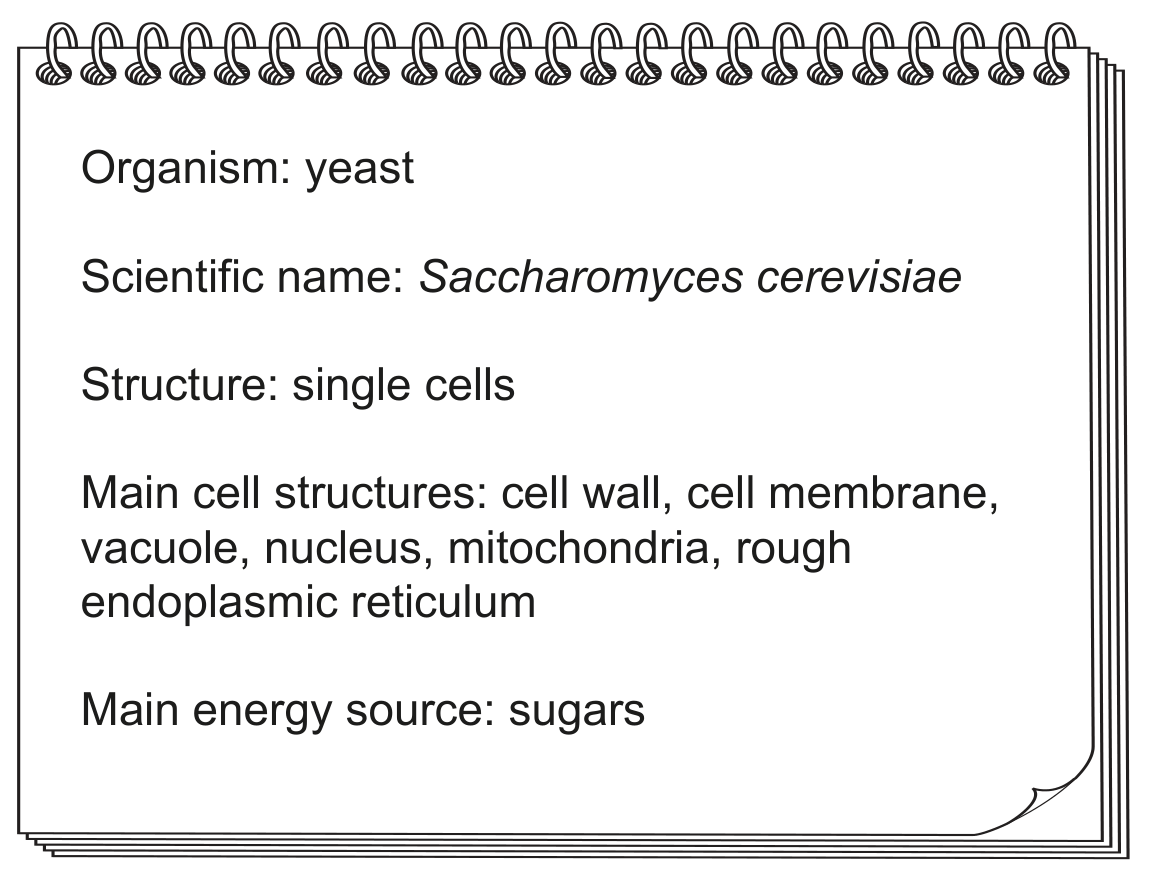
Some students were studying the activity of yeast. They made a fact file, as shown in Fig. 1.1.

Fig. 1.1

Fig. 1.1

[ 1 ]

Question 1(a)(ii)

(i)

State the process that occurs in mitochondria to provide energy for yeast cells.

[ 1 ]

Question 3

[Maximum number: 1]

In which part of the cell is oxygen used to release energy from nutrient molecules?

A

mitochondrion

B

ribosome

C

rough endoplasmic reticulum

D

vesicle

Question 2

[Maximum number: 2]

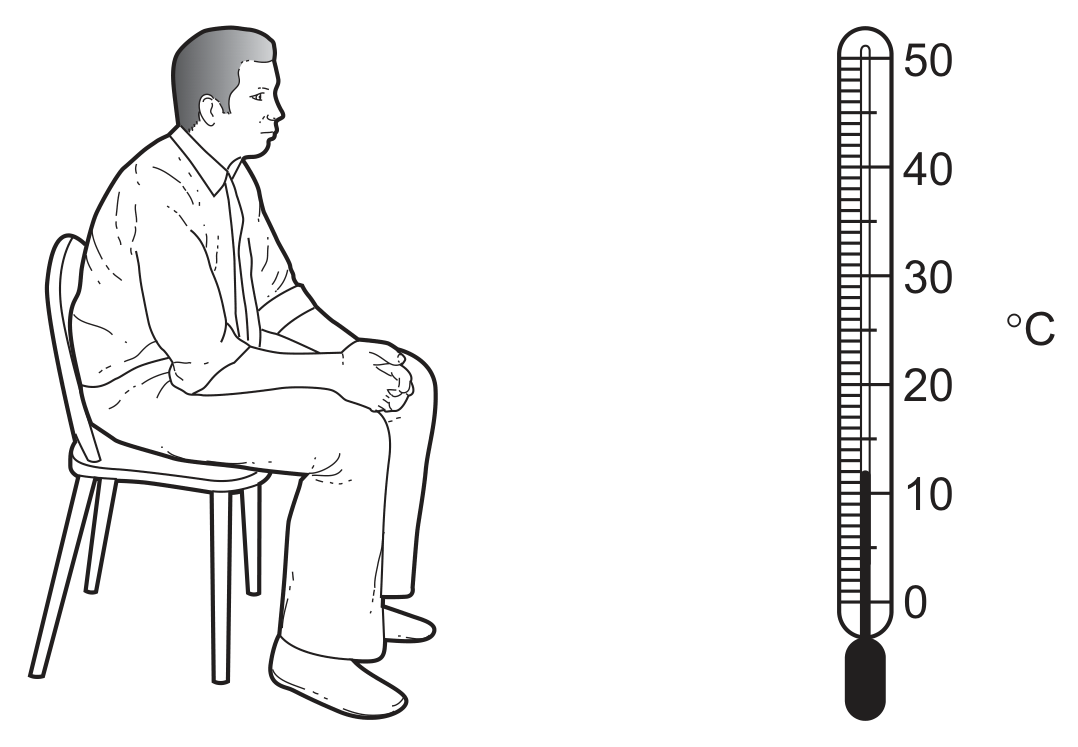
Fig. 2.1 shows a person sitting in a room. A thermometer shows the temperature of the room.

Fig. 2.1

Fig. 2.1

Question 2(b)

Question 2(b)(i)

(a)
(i)

Name the process carried out by the person in Fig. 2.1 that releases energy.

[ 1 ]

Question 2(b)(ii)

(ii)

State the balanced chemical equation that describes this process.

[ 1 ]

Question 2

Question 2(a)

(a)

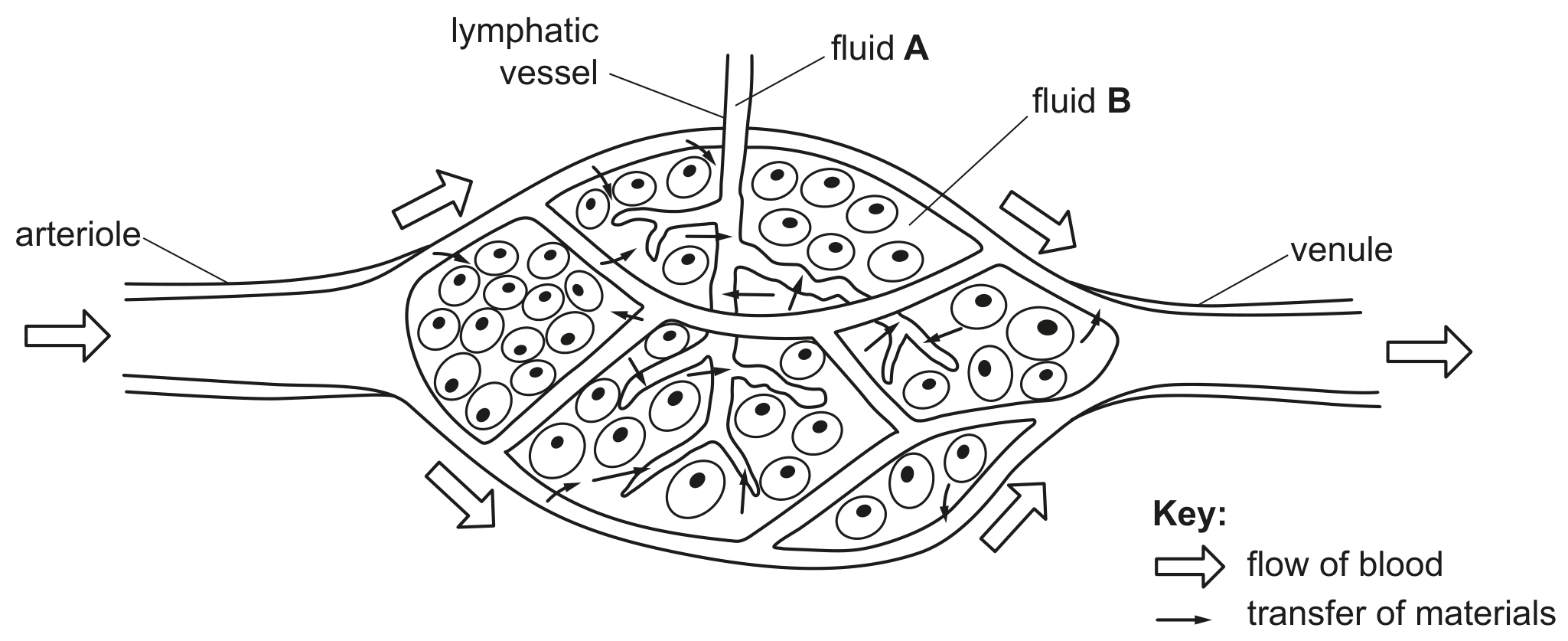
Fig. 2.1 shows the transfer of materials between blood and tissues.

Fig. 2.1

Fig. 2.1

[ 2 ]

Question 2(a)(iii)

(i)

Explain why cells need oxygen.

[ 2 ]

Question 2

[Maximum number: 6]

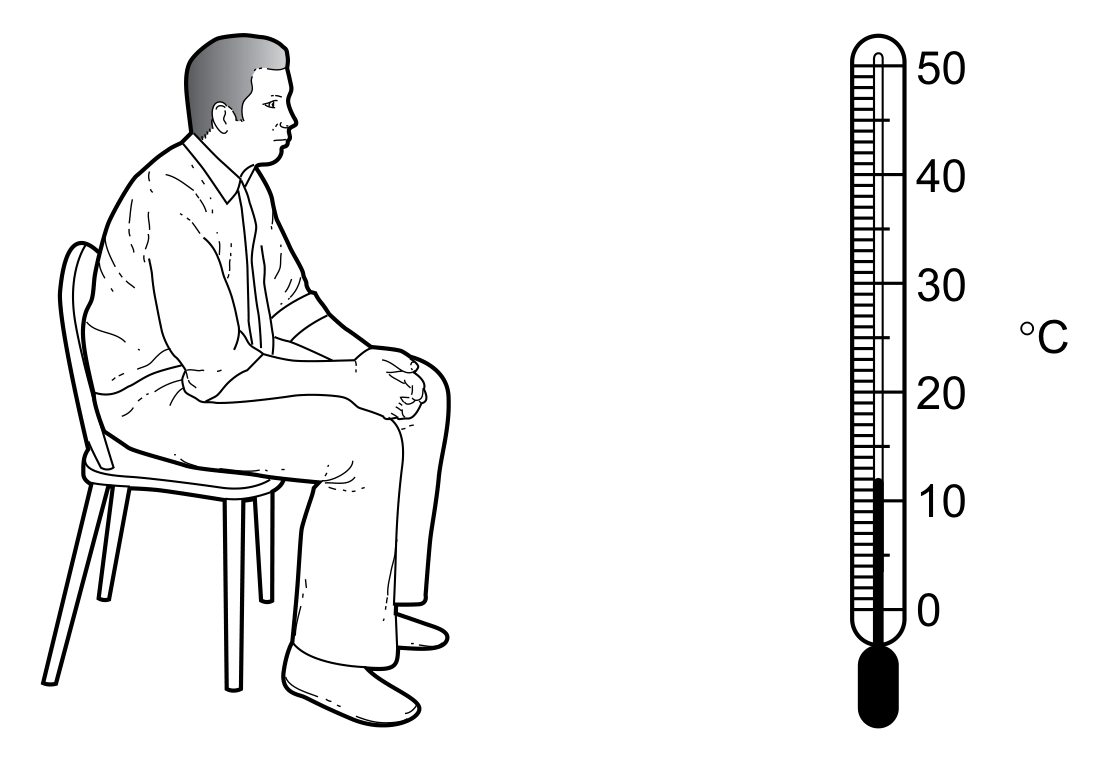
Fig. 2.1 shows a person sitting in a room. A thermometer shows the temperature of the room.

Fig. 2.1

Fig. 2.1

Question 2(b)

Question 2(b)(i)

(a)
(i)

Name the process carried out by the person in Fig. 2.1 that releases energy.

[ 1 ]

Question 2(b)(ii)

(ii)

State the balanced chemical equation that describes this process.

[ 1 ]

Question 2(c)

(b)

The person leaves the room and runs very fast for 200 m . When the person stops running, his breathing rate and his heart rate remain high for several minutes.

Explain why the person's breathing rate and heart rate remain high.

[ 4 ]

Question 2

[Maximum number: 6]

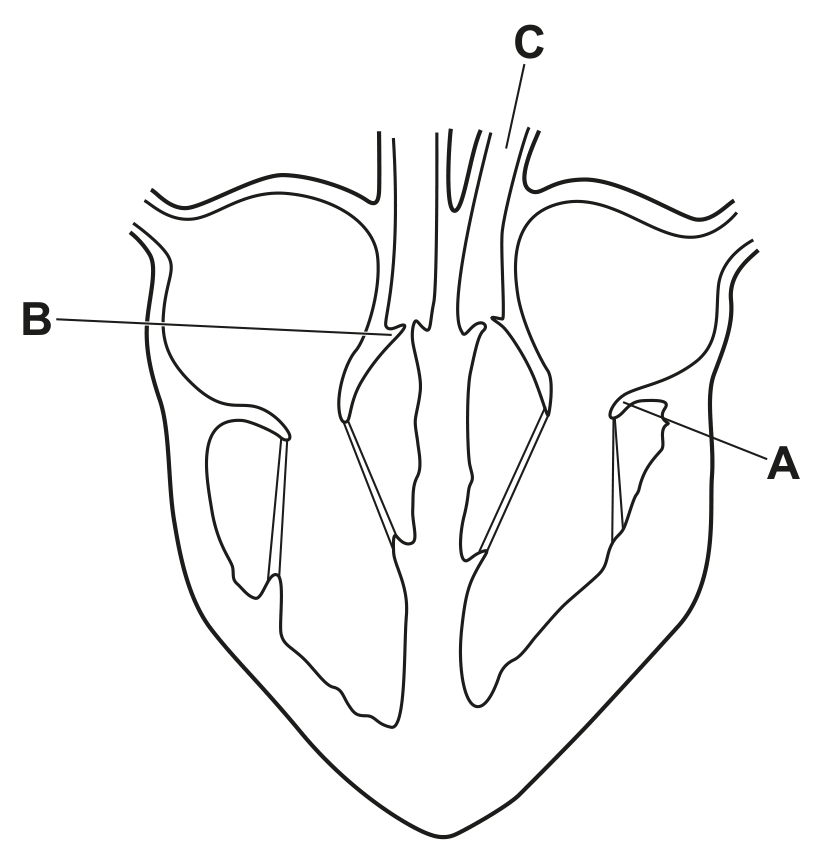
Fig. 2.1 shows a cross-section of a human heart.

Fig. 2.1

Fig. 2.1

Question 2(c)

(a)

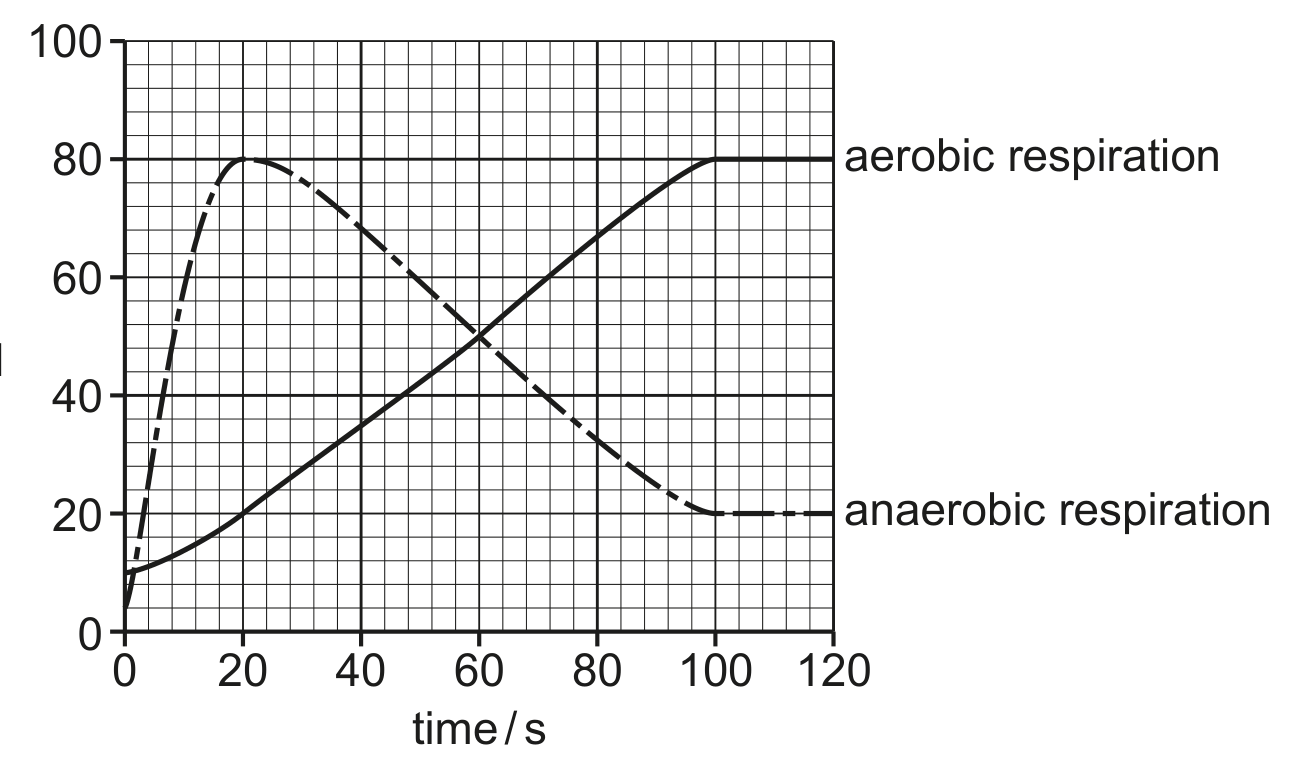
Fig. 2.3 shows how the body uses aerobic and anaerobic respiration during the first 120 seconds of vigorous physical activity. Between 0 and 20 seconds, the body also uses stored energy.
percentage of energy released

Fig. 2.3

Fig. 2.3

[ 6 ]

Question 2(c)(i)

(i)

Describe the data shown in Fig. 2.3.

[ 4 ]

Question 2(c)(ii)

(ii)

State the balanced chemical equation for aerobic respiration.

[ 2 ]

Question 20

[Maximum number: 1]

What is the correct equation for aerobic respiration?

A

6CO2+6H2OC6H12O6+6O26 \mathrm{CO}_{2}+6 \mathrm{H}_{2} \mathrm{O} \rightarrow \mathrm{C}_{6} \mathrm{H}_{12} \mathrm{O}_{6}+6 \mathrm{O}_{2}

B

C6H12O6+6CO26O2+6H2O\mathrm{C}_{6} \mathrm{H}_{12} \mathrm{O}_{6}+6 \mathrm{CO}_{2} \rightarrow 6 \mathrm{O}_{2}+6 \mathrm{H}_{2} \mathrm{O}

C

C6H12O6+O2CO2+H2O\mathrm{C}_{6} \mathrm{H}_{12} \mathrm{O}_{6}+\mathrm{O}_{2} \rightarrow \mathrm{CO}_{2}+\mathrm{H}_{2} \mathrm{O}

D

C6H12O6+6O26CO2+6H2O\mathrm{C}_{6} \mathrm{H}_{12} \mathrm{O}_{6}+6 \mathrm{O}_{2} \rightarrow 6 \mathrm{CO}_{2}+6 \mathrm{H}_{2} \mathrm{O}

Question 21

[Maximum number: 1]

The symbol equation for aerobic respiration is shown.

C6HxOy+6O26COz+6H2O\mathrm{C}_{6} \mathrm{H}_{\mathrm{x}} \mathrm{O}_{\mathrm{y}}+6 \mathrm{O}_{2} \rightarrow 6 \mathrm{CO}_{\mathrm{z}}+6 \mathrm{H}_{2} \mathrm{O}

Which numbers represent the letters shown in the equation as x, y and z ?

x

y

z

2

12

6

6

2

12

6

12

2

12

6

2

Question 21

[Maximum number: 1]

Germinating seeds respire aerobically to release energy that can be used for growth.
The balanced equation for aerobic respiration in seeds can be represented as shown.

Q+RS+TQ+R \rightarrow S+T

Which row gives the balanced equation for aerobic respiration in seeds?

Q

R

S

T

6CO26 \mathrm{CO}_{2}

6H2O6 \mathrm{H}_{2} \mathrm{O}

C6H12O6\mathrm{C}_{6} \mathrm{H}_{12} \mathrm{O}_{6}

6O26 \mathrm{O}_{2}

C6H12O6\mathrm{C}_{6} \mathrm{H}_{12} \mathrm{O}_{6}

6O26 \mathrm{O}_{2}

6CO26 \mathrm{CO}_{2}

6H2O6 \mathrm{H}_{2} \mathrm{O}

6CO26 \mathrm{CO}_{2}

6O26 \mathrm{O}_{2}

C6H12O6\mathrm{C}_{6} \mathrm{H}_{12} \mathrm{O}_{6}

6H2O6 \mathrm{H}_{2} \mathrm{O}

C6H12O6\mathrm{C}_{6} \mathrm{H}_{12} \mathrm{O}_{6}

6H2O6 \mathrm{H}_{2} \mathrm{O}

6CO26 \mathrm{CO}_{2}

6O26 \mathrm{O}_{2}

0 selected