Question 1
Question 1(a)
(a)
State three uses of energy in the human body.
1
2
3
[ 3 ]
 EduNinja
State three uses of energy in the human body.
1
2
3
Bacteria are classified in the Prokaryote kingdom.
Samples were taken from the fermenter at frequent intervals and the number of live bacteria was determined. The results are shown in Fig. 1.2.
number of live bacteria /million per
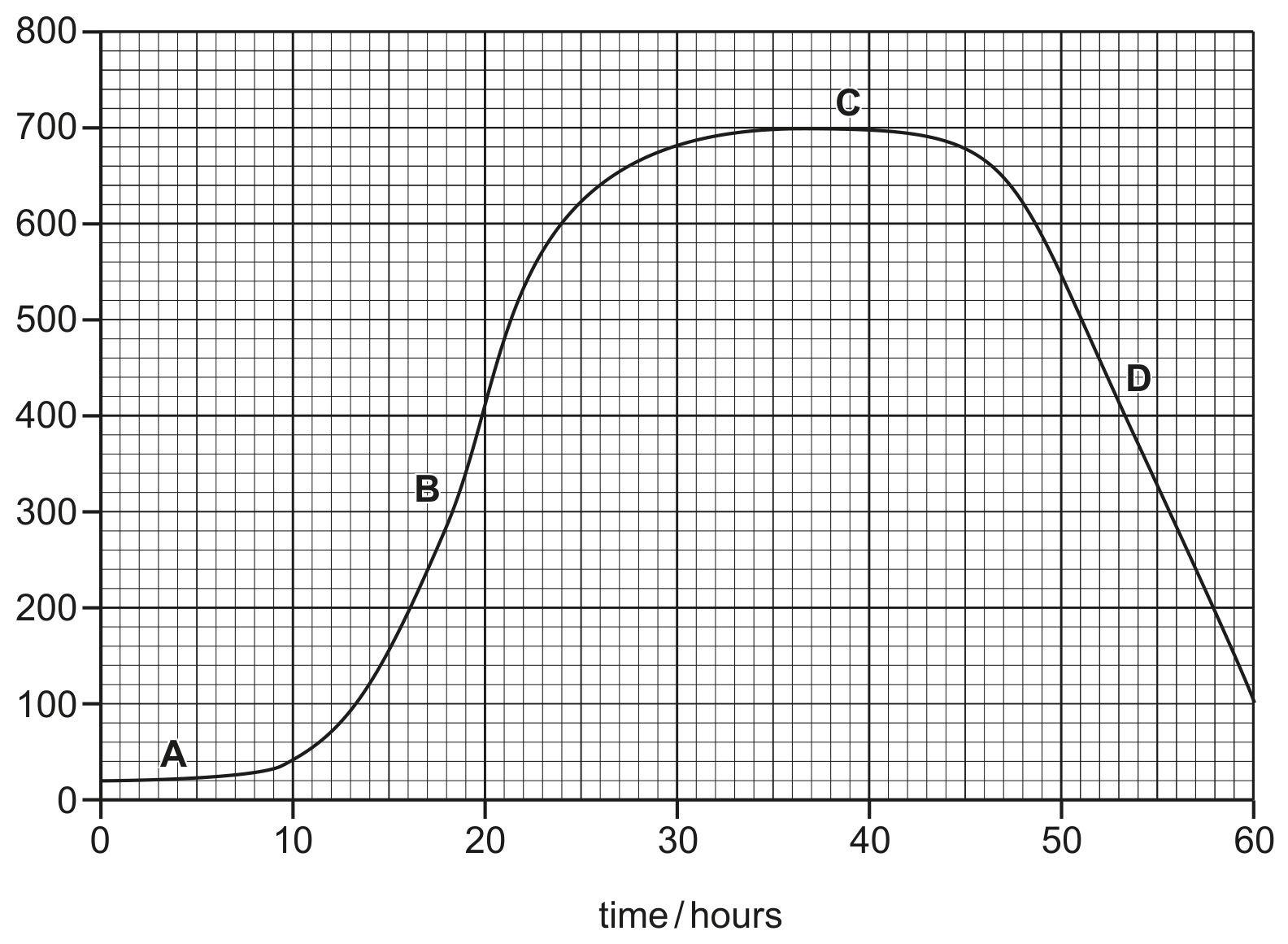
Fig. 1.2
Describe and explain what happens to the number of live bacteria shown in the stages labelled A, B, C and D in Fig. 1.2.
Soon after starting physical activity the concentration of carbon dioxide in the blood increases.
Name the process inside cells that produces carbon dioxide.
Homeostasis is the maintenance of a constant internal environment.
Energy is used to maintain body temperature.
State three other uses of energy in humans.
1
2
3
Fungal cells and plant cells contain mitochondria.
A scientist investigated the effect of sugar on respiration in yeast cells.
One flask contained of a sugar solution and another flask contained of water. Both flasks contained the same mass of yeast. The temperature was maintained at .
The scientist used the apparatus shown in Fig. 1.1.
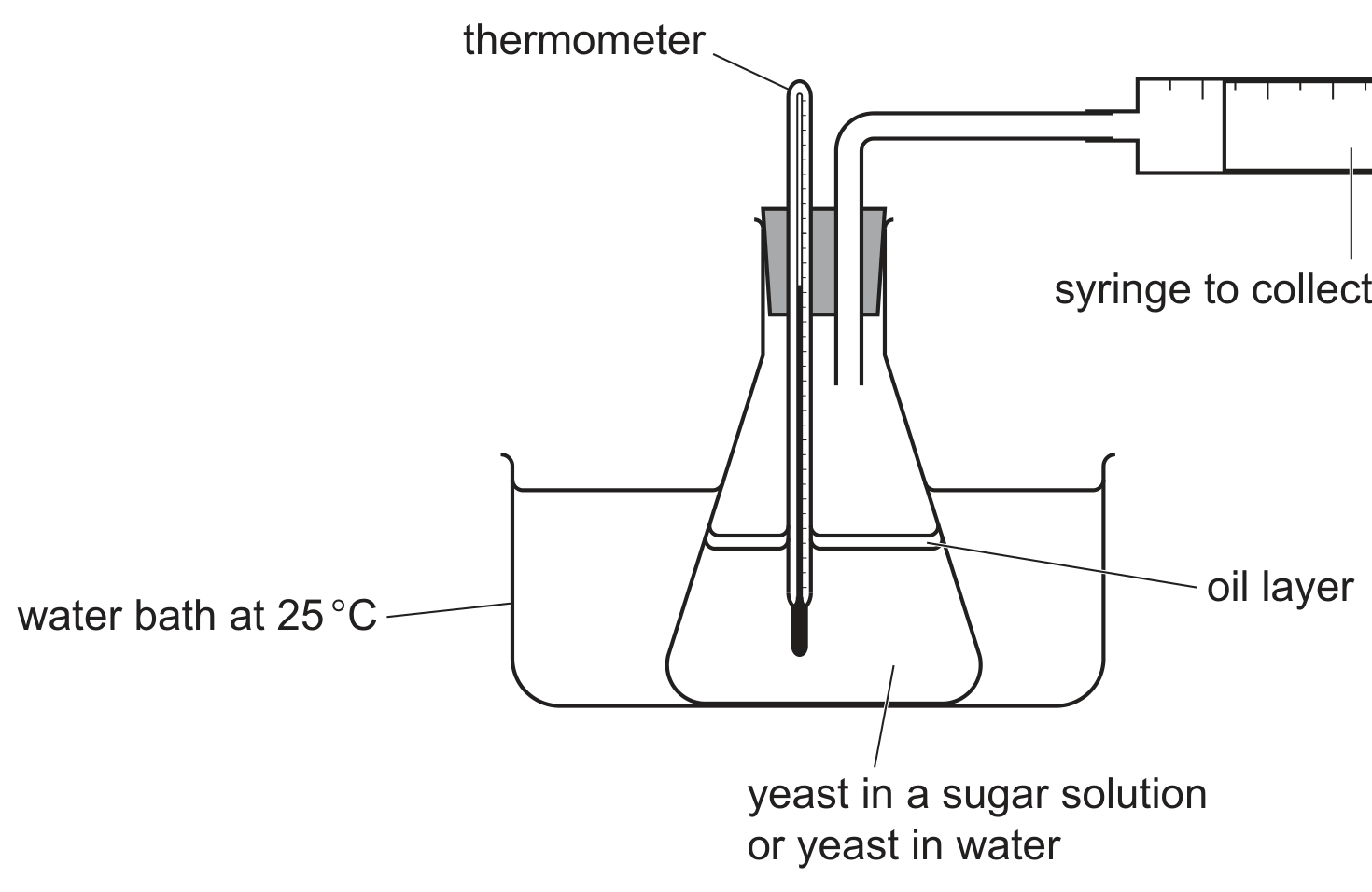
Fig. 1.1
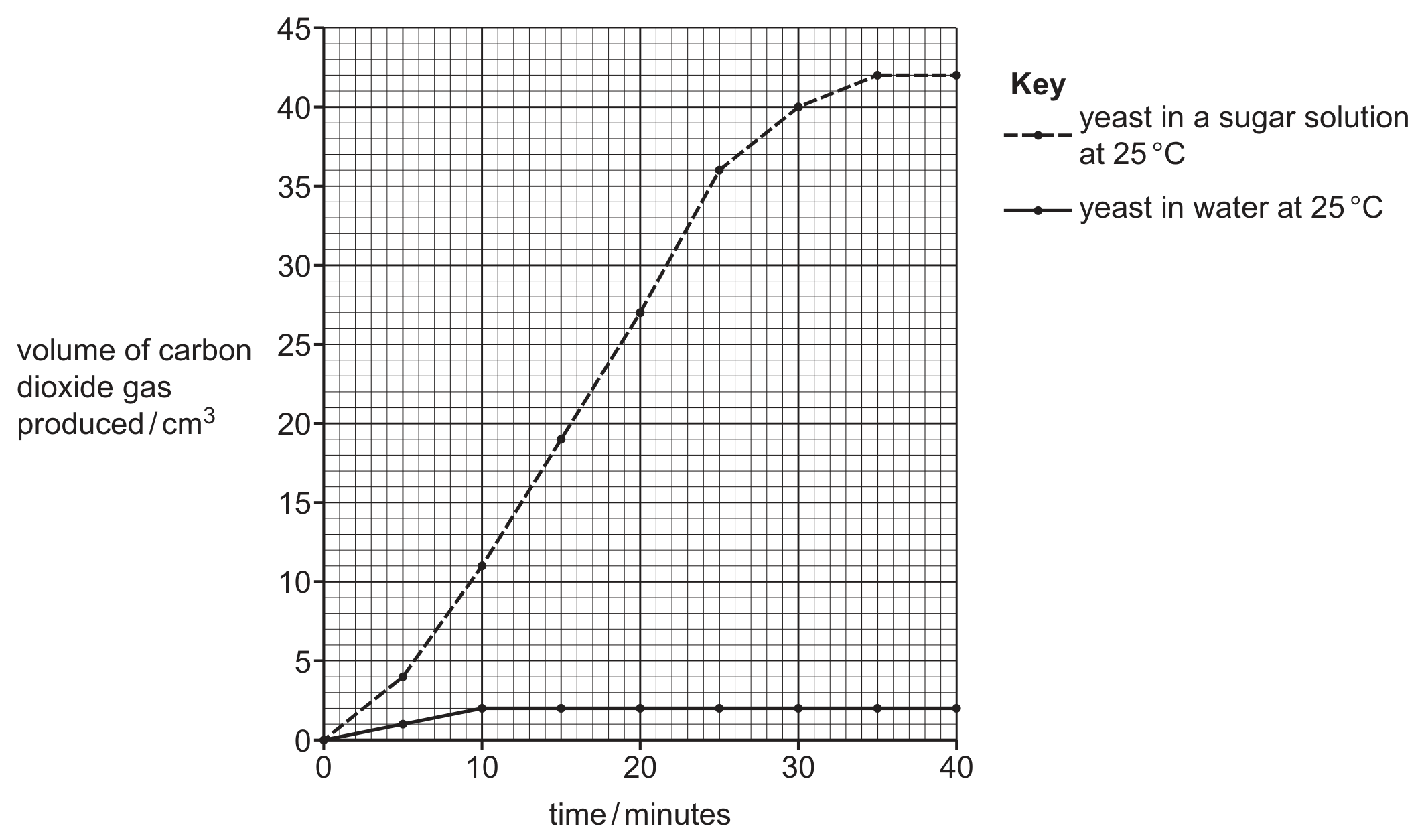
ig. 1.2 is a graph of the results of the investigation.
Using the gradient shown in Fig. 1.2, calculate the rate of carbon dioxide gas produced by the yeast in a sugar solution between 10 minutes and 15 minutes.
Include the unit.
.
(i) Using the gradient shown in Fig. 1.2, calculate the rate of carbon dioxide gas produced by the yeast in a sugar solution between 10 minutes and 15 minutes.
Include the unit.
.
Commercial fishermen use ice to store the fish that they catch.
How does the ice keep the fish fresh?
Cells denature.
Decomposer activity decreases.
Decomposer activity increases.
Proteins denature.
Fig. 2.1 shows a person sitting in a room. A thermometer shows the temperature of the room.
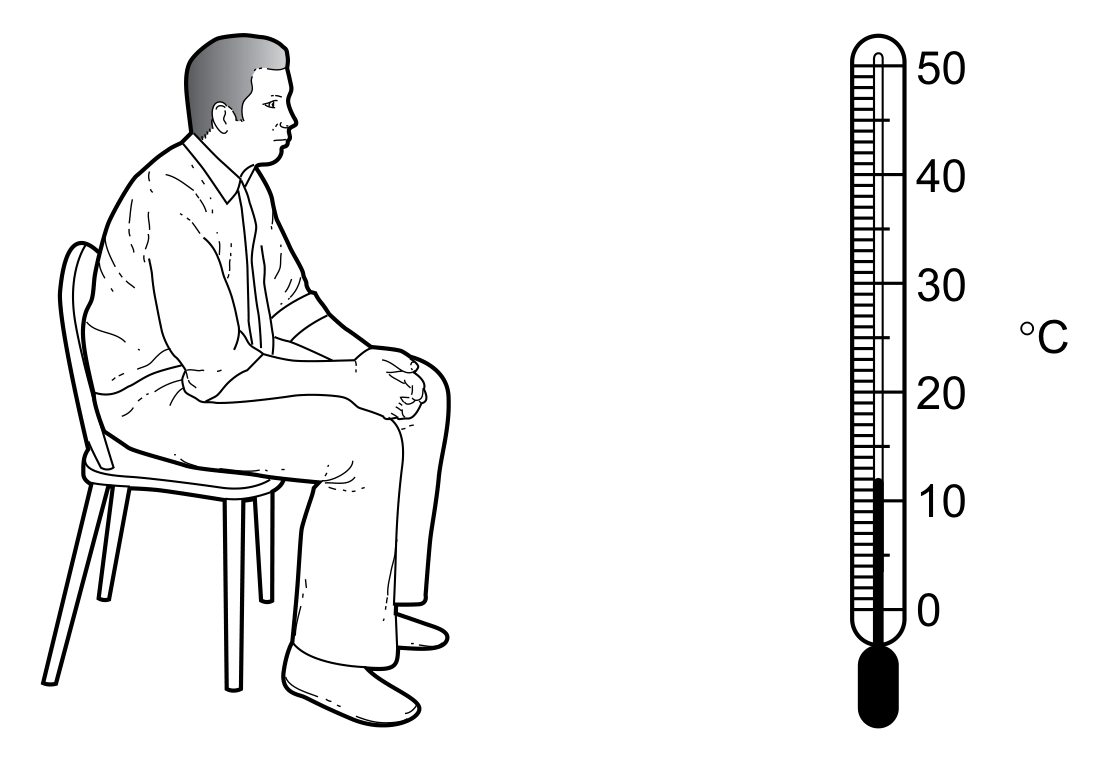
Fig. 2.1
Give three uses of energy in the body of the person in Fig. 2.1.
1
2
3
Fig. 2.1 shows a person sitting in a room. A thermometer shows the temperature of the room.
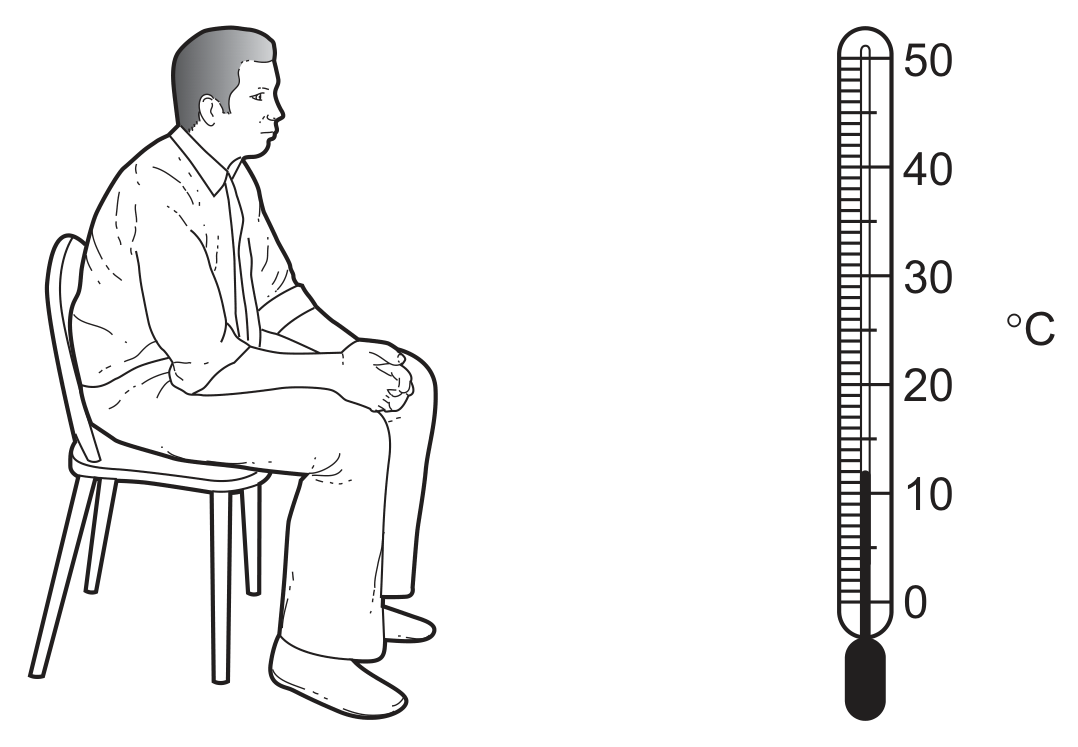
Fig. 2.1
Give three uses of energy in the body of the person in Fig. 2.1.
1
2
3
The person leaves the room and runs very fast for 200 m . When the person stops running, his breathing rate and his heart rate remain high for several minutes.
Explain why the person's breathing rate and heart rate remain high.
The diagram shows the apparatus at the beginning of an investigation into temperature change during the germination of seeds. The temperature at the start of the investigation was in both flasks.
After two days the temperature in flask 1 is . The temperature in flask 2 is .
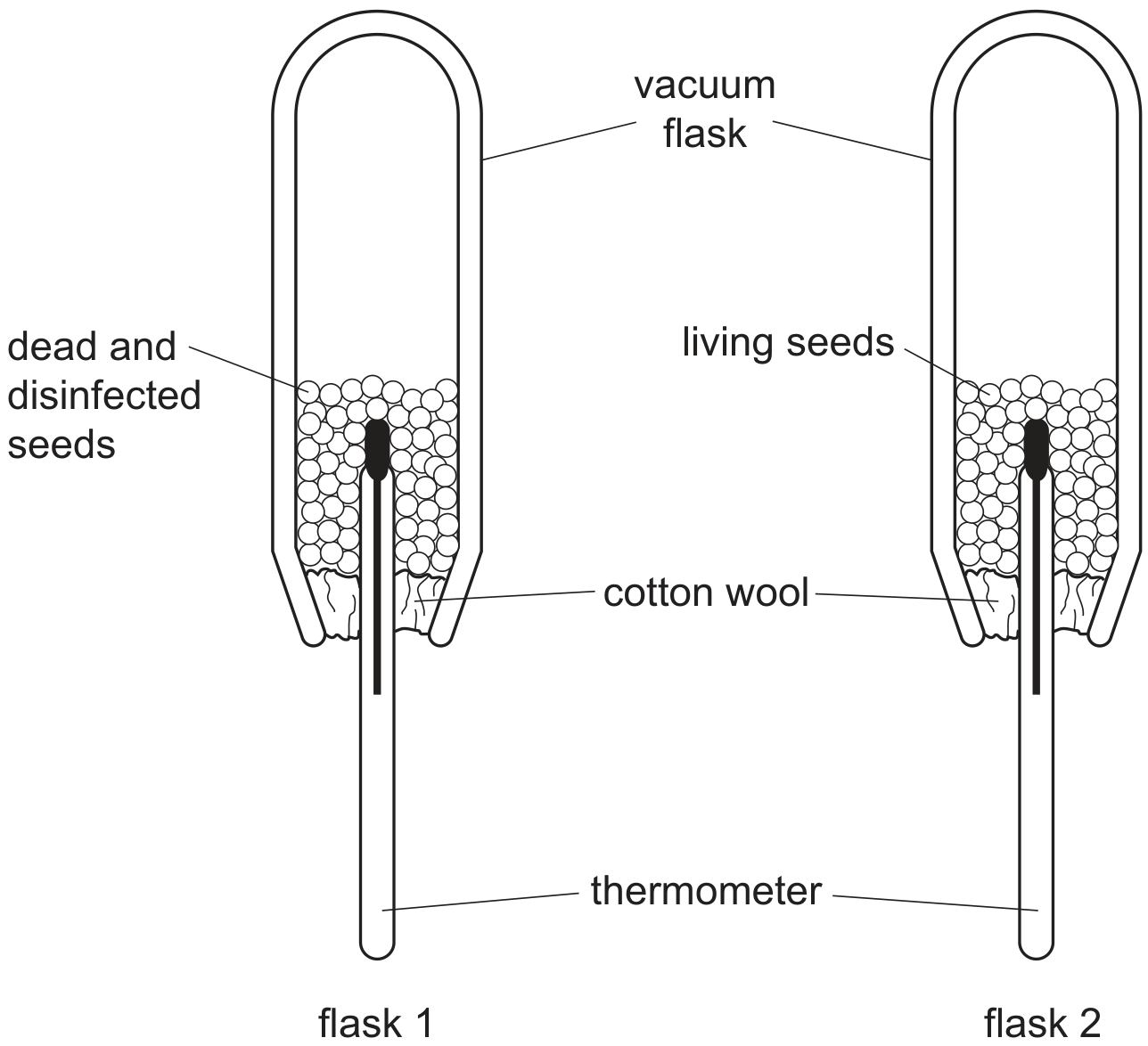
Which characteristic of living organisms is shown in this experiment?
excretion
growth
reproduction
respiration
An experiment is set up to investigate the uptake of oxygen by germinating seeds.
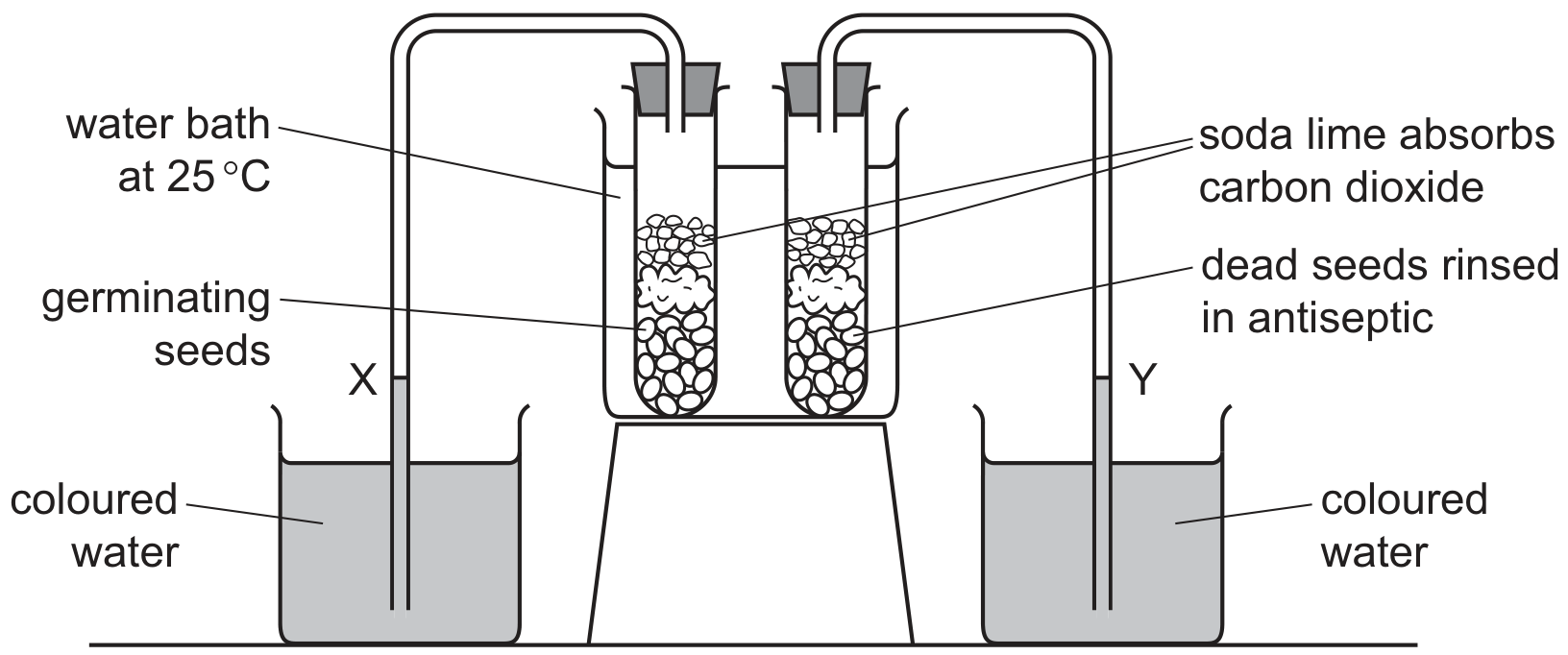
What happens to the levels of the coloured water at X and Y ?
X
Y
falls
rises
falls
unchanged
rises
falls
rises
unchanged