EduNinja

IGCSE Biology1.3 Features of organismsQuestion Bank

Question 1

[Maximum number: 1]

To which group do both the organisms shown in the diagram belong?
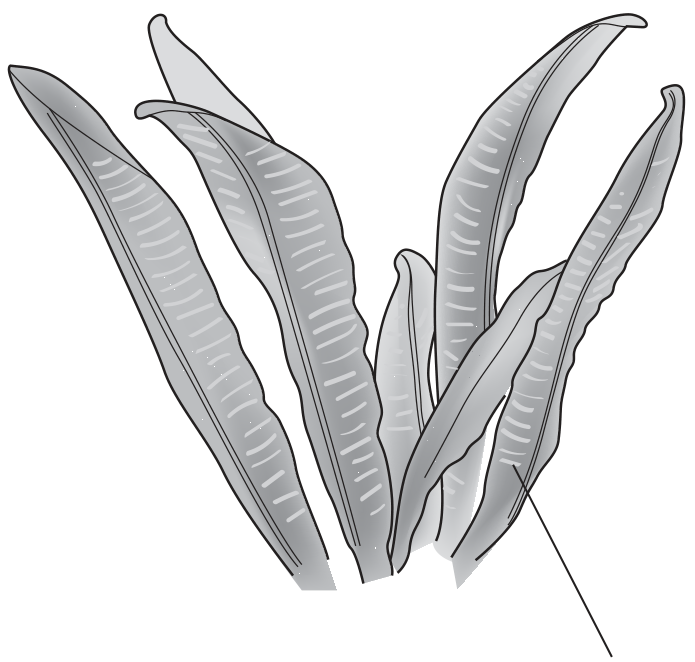
leaf-like fronds which have structures containing spores on their lower surface
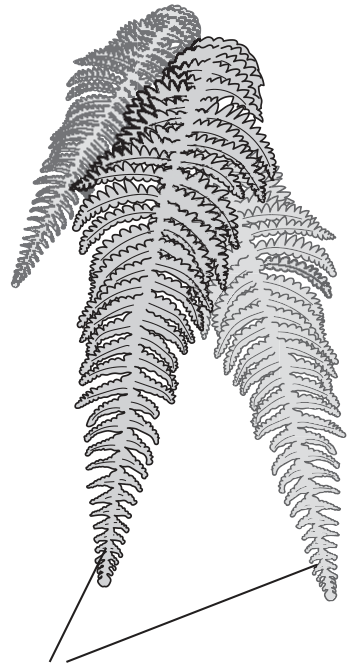
leaf-like fronds which have structures containing spores on their lower surface

leaf-like fronds which have structures containing spores on their lower surface

leaf-like fronds which have structures containing spores on their lower surface

A

dicotyledons

B

ferns

C

fungi

D

monocotyledons
Question 1

Question 1(a)

(a)

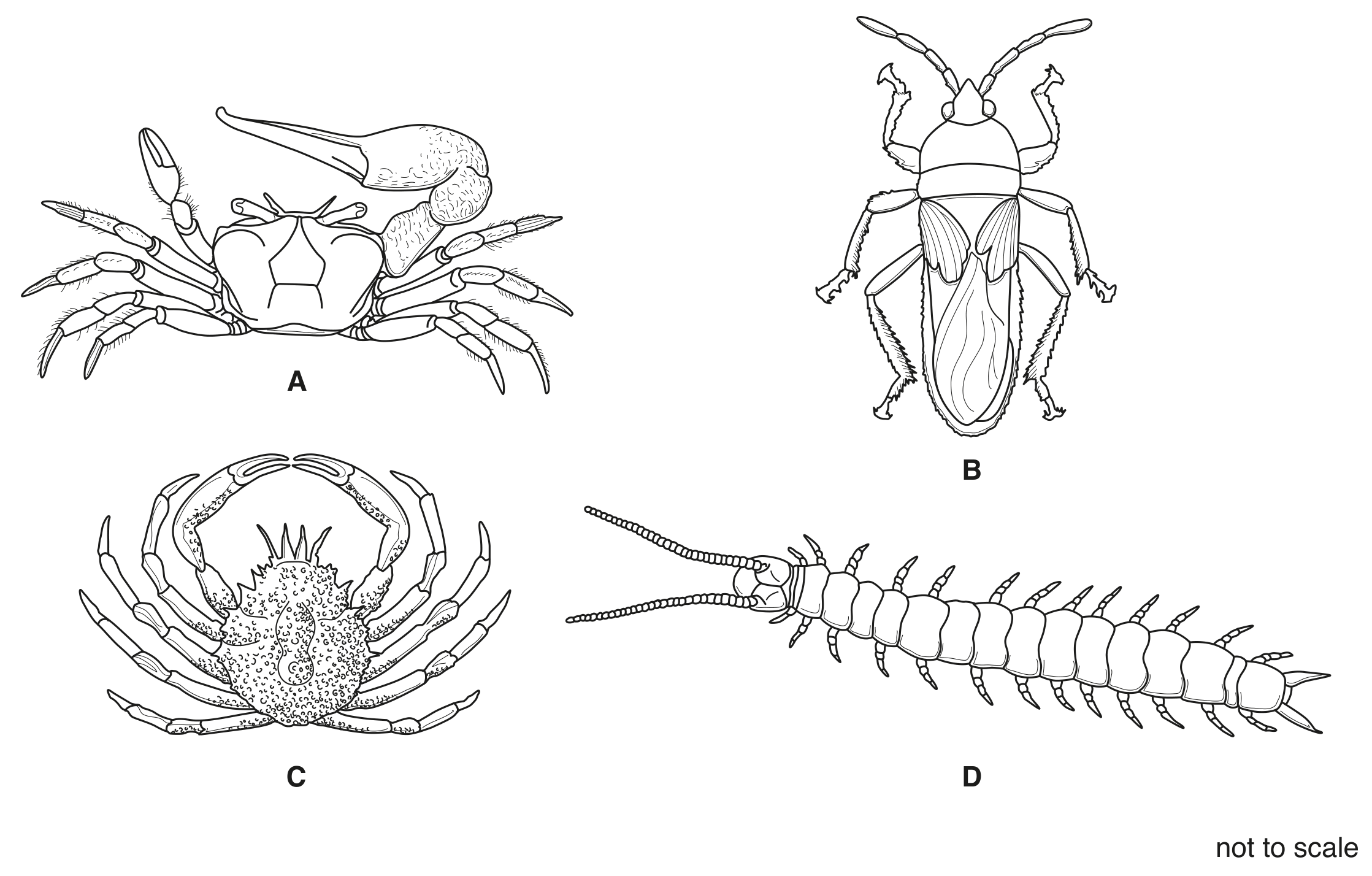
Fig. 1.1 shows four arthropods.

Fig. 1.1

Fig. 1.1

[ 2 ]

Question 1(a)(i)

(i)

State two features, visible in Fig. 1.1, that are common to all arthropods.

1

2

[ 2 ]

Question 1(b)

(b)

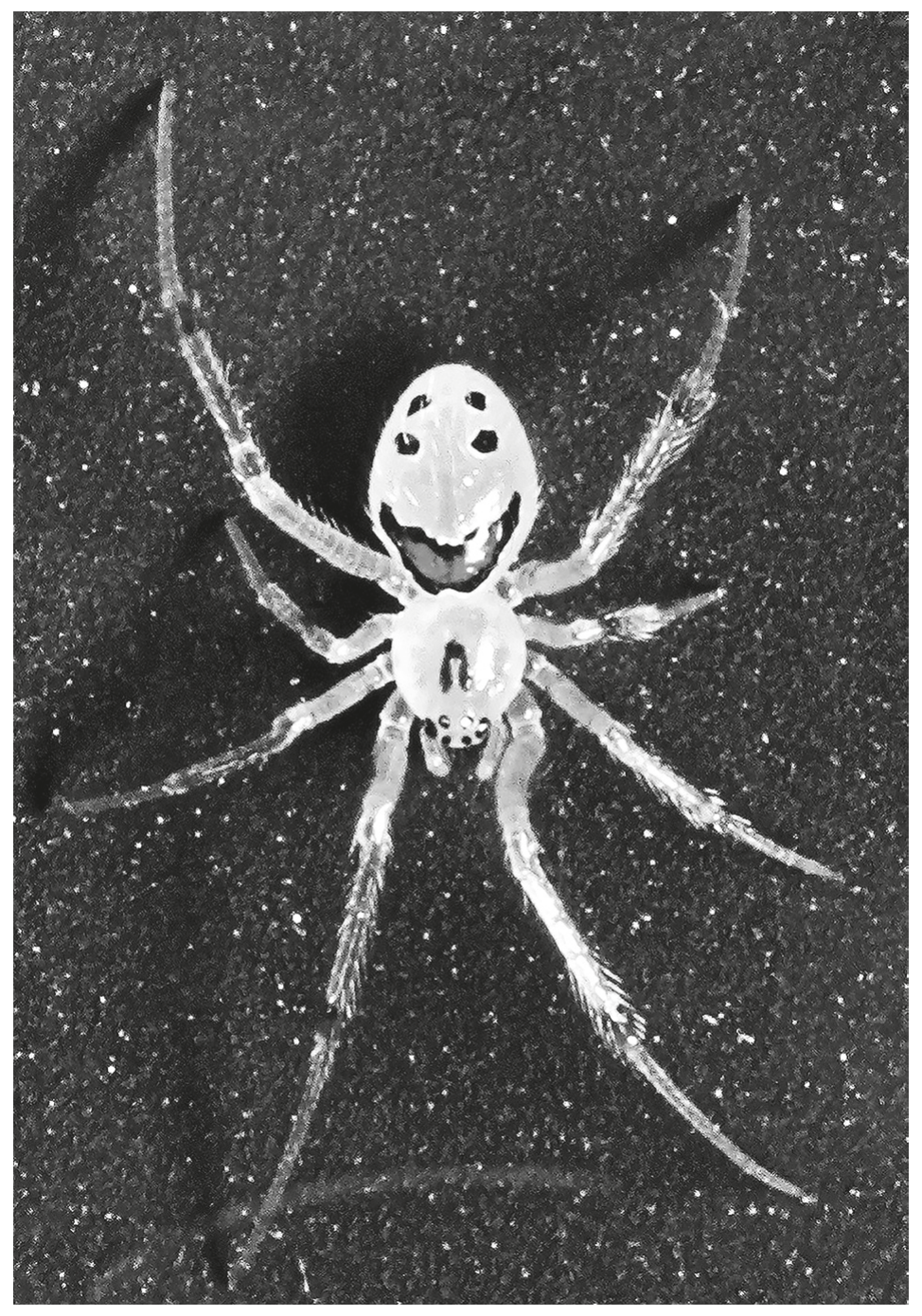
The Hawaiian happy-face spider, Theridion grallator, is found on several of the Hawaiian islands. Some of the spiders have a very distinctive pattern on their bodies as shown in Fig. 1.3.

Fig. 1.3

Fig. 1.3

[ 1 ]

Question 1(b)(i)

(i)

State one feature, visible in Fig. 1.3, that identifies T. grallator as an arachnid.

[ 1 ]

Question 1

Question 1(b)

(a)

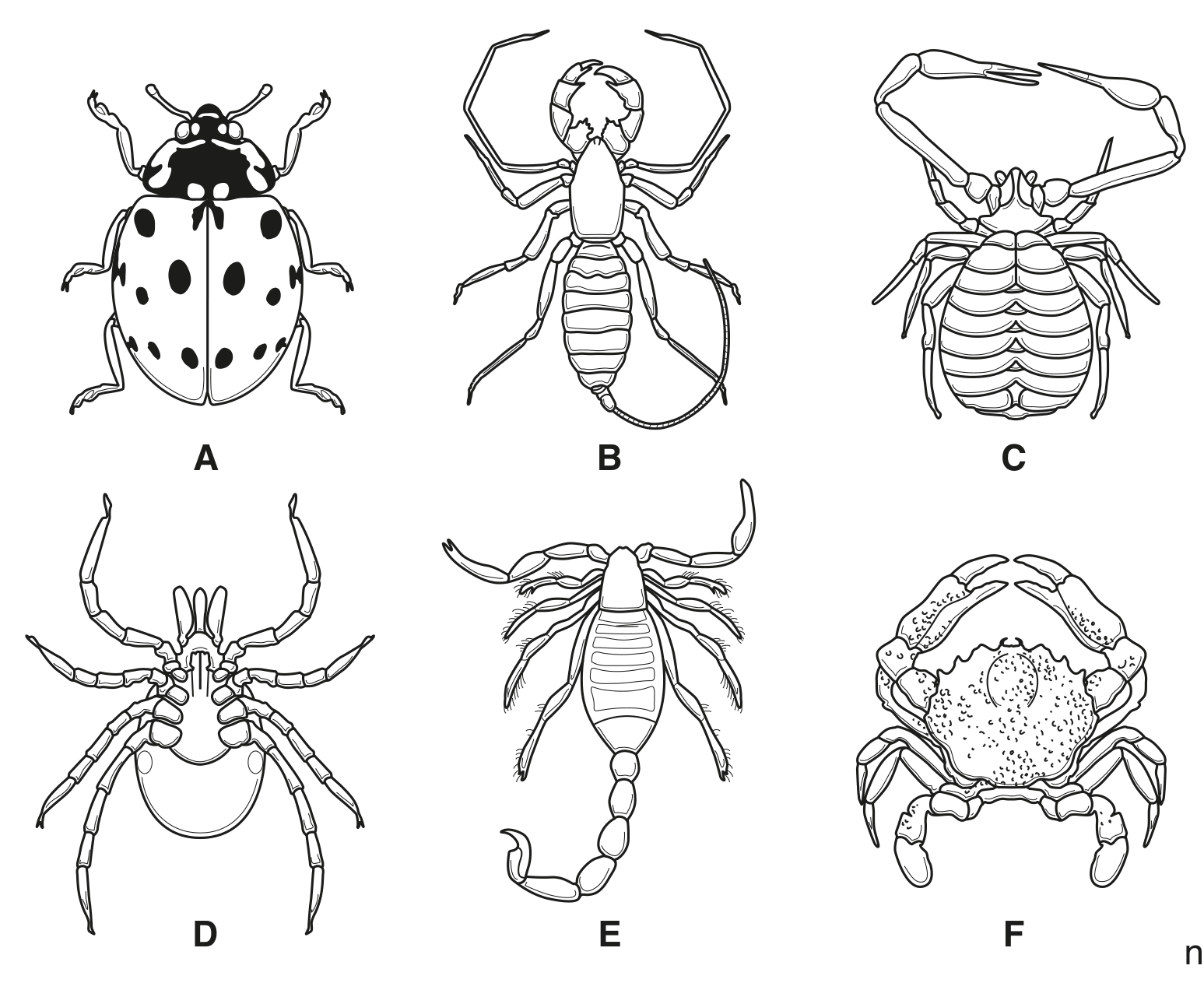
Spiders are classified as arachnids. Arachnids are one of the main groups of arthropods.

Fig. 1.2 shows diagrams of six arthropods, four of which are arachnids.

Fig. 1.2

Fig. 1.2

Fig. 1.2

Fig. 1.2

[ 6 ]

Question 1(b)(i)

(i)

State two common features of all the arthropods, visible in Fig. 1.2.

1
2

[ 2 ]

Question 1(b)(ii)

(ii)

State two common features of all arachnids that can be used to distinguish them from other arthropods.

1
2

[ 2 ]

Question 1(b)(iii)

(iii)

State the letters of the four arachnids shown in Fig. 1.2.

[ 2 ]

Question 1

[Maximum number: 1]

Enzymes are used in genetic engineering.

Question 1(c)

(a)

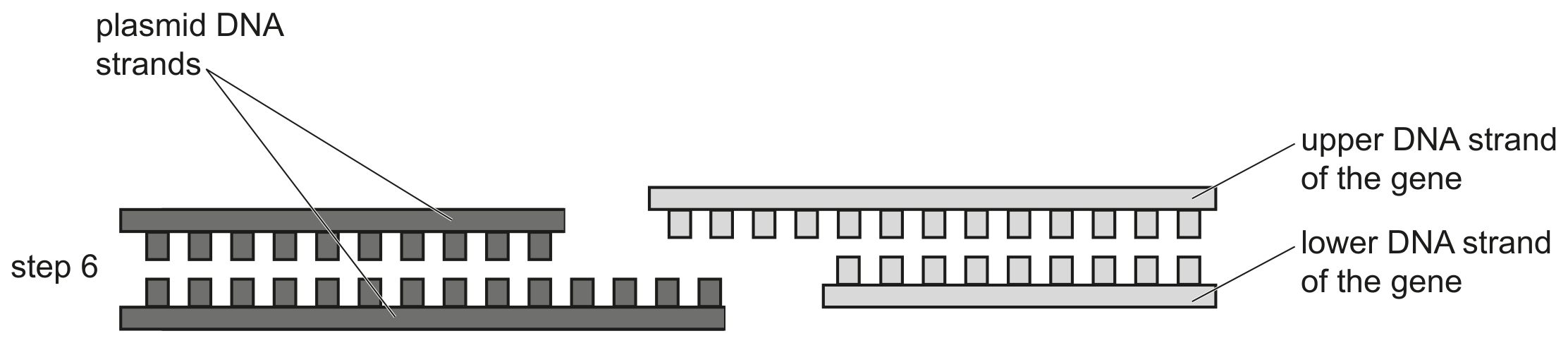
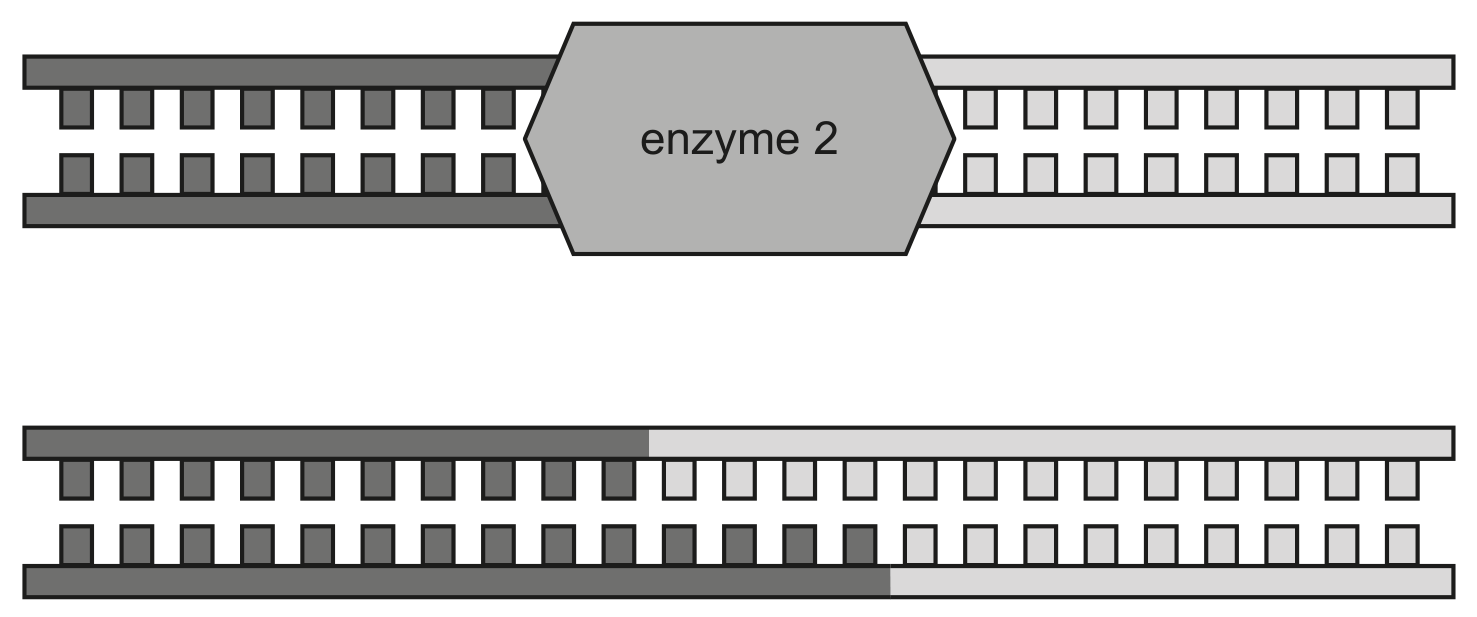
Another enzyme, enzyme 2, is used later in the process of genetic engineering.

Fig. 1.2 is a diagram showing the action of enzyme 2.

Fig. 1.2 is a diagram showing the action of enzyme 2.

step 7

Fig. 1.2

Fig. 1.2

step 8

[ 1 ]

Question 1(c)(i)

(i)

Some organisms naturally contain DNA in the form of a plasmid.

State the name of the type of organism that naturally contains plasmids.

[ 1 ]

Question 1

Question 1(a)

(a)

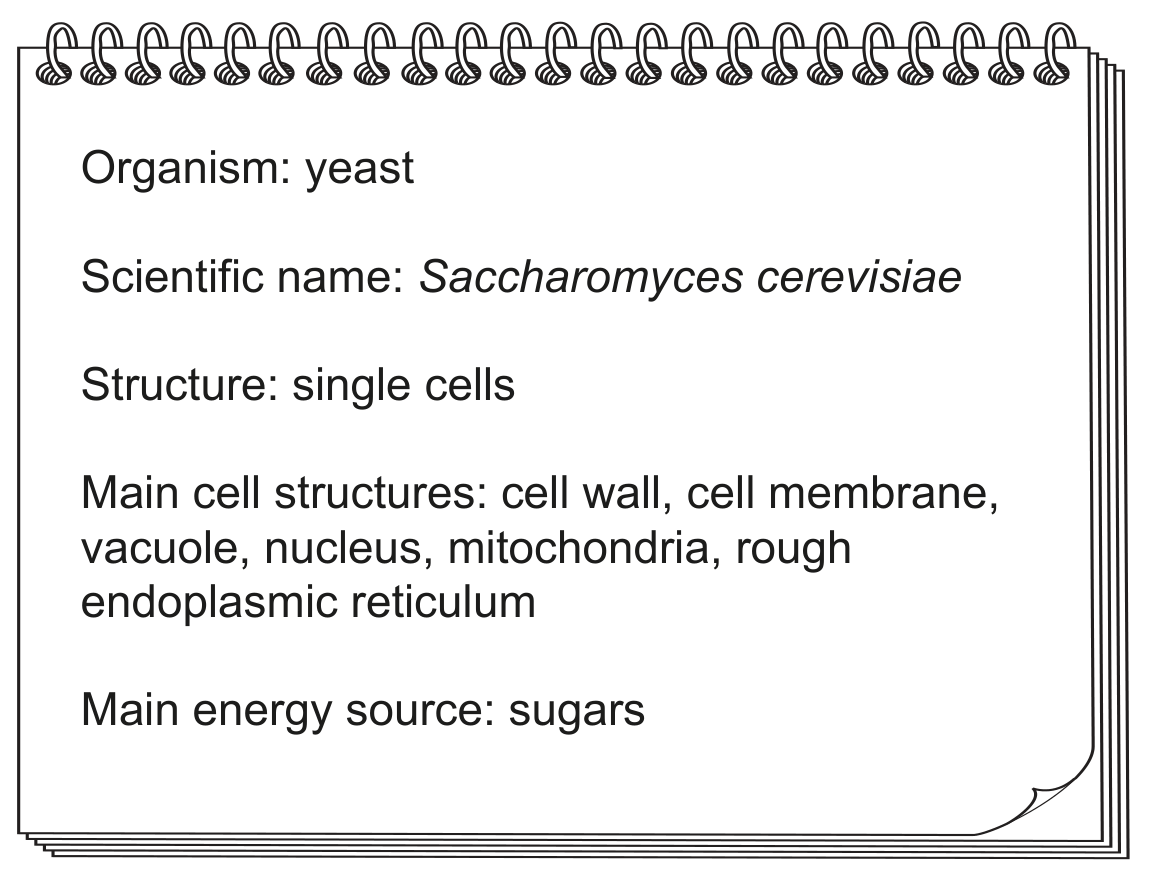
Some students were studying the activity of yeast. They made a fact file, as shown in Fig. 1.1.

Fig. 1.1

Fig. 1.1

[ 1 ]

Question 1(a)(i)

(i)

State the kingdom in which yeast is classified.

[ 1 ]

Question 1

[Maximum number: 2]

Penicillin is produced by biotechnology industries.

Question 1(b)

(a)

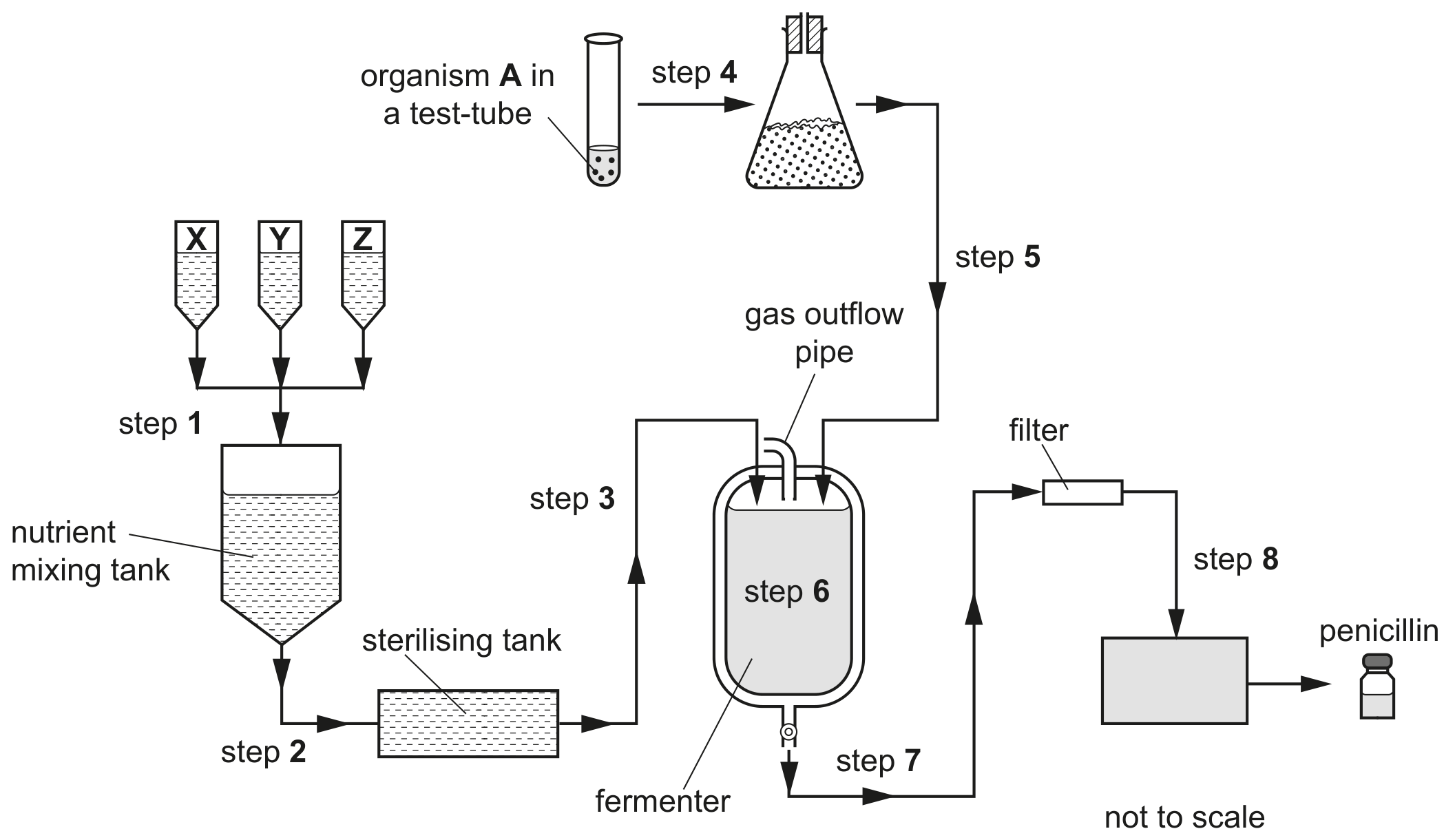
Fig. 1.1 is a flow diagram of some of the steps in the production of penicillin.

Fig. 1.1

Fig. 1.1

[ 2 ]

Question 1(b)(i)

(i)

Organism A belongs to the fungus kingdom.

State two main features of fungal cells that are used to distinguish them from the cells of prokaryotes.

1

2

[ 2 ]

Question 1

[Maximum number: 1]

Fungal cells and plant cells contain mitochondria.

Question 1(a)

Question 1(a)(ii)

(a)
(i)

State one feature of plants that is used to distinguish them from fungi.

[ 1 ]

Question 1

Question 1(a)

(a)

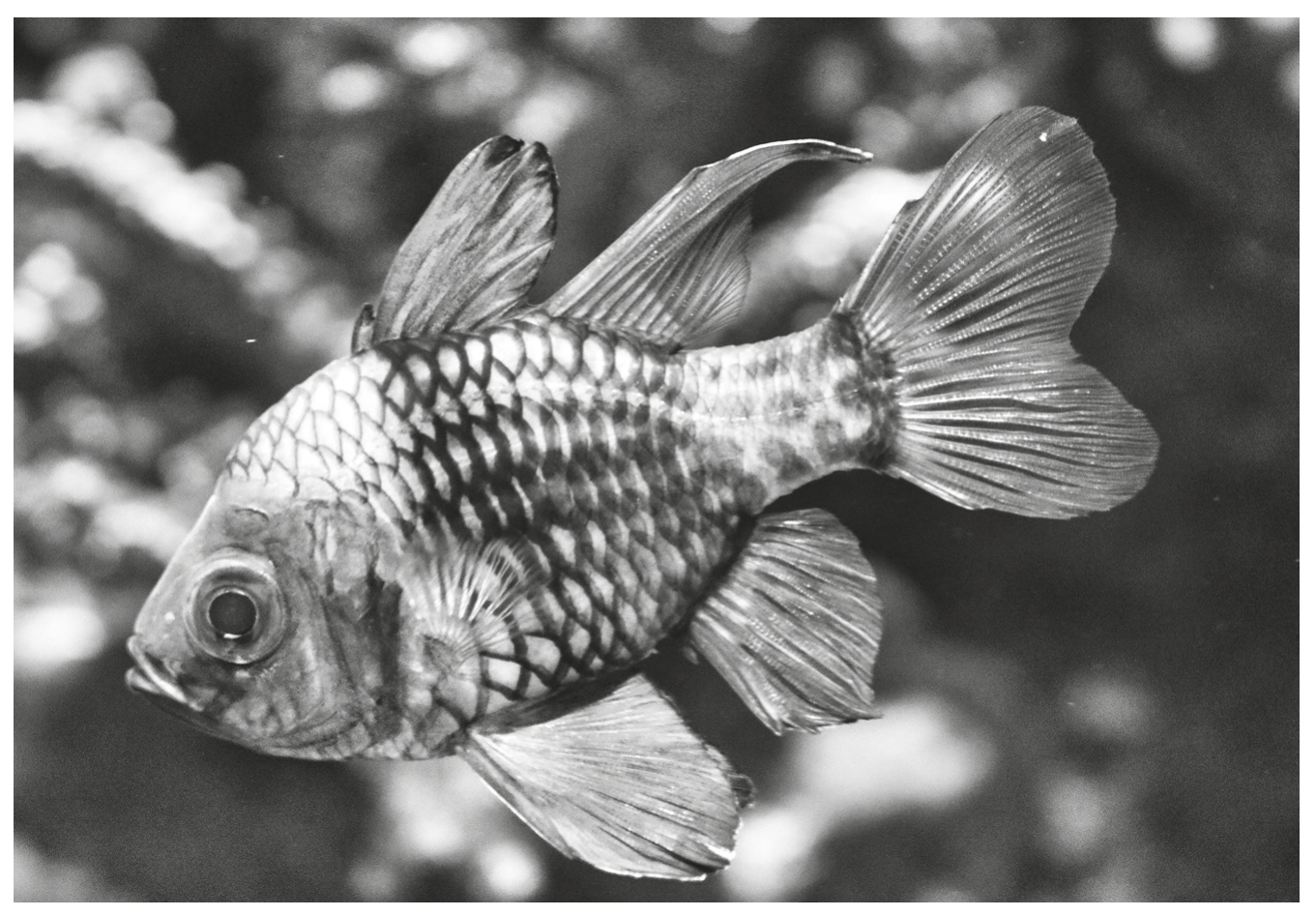
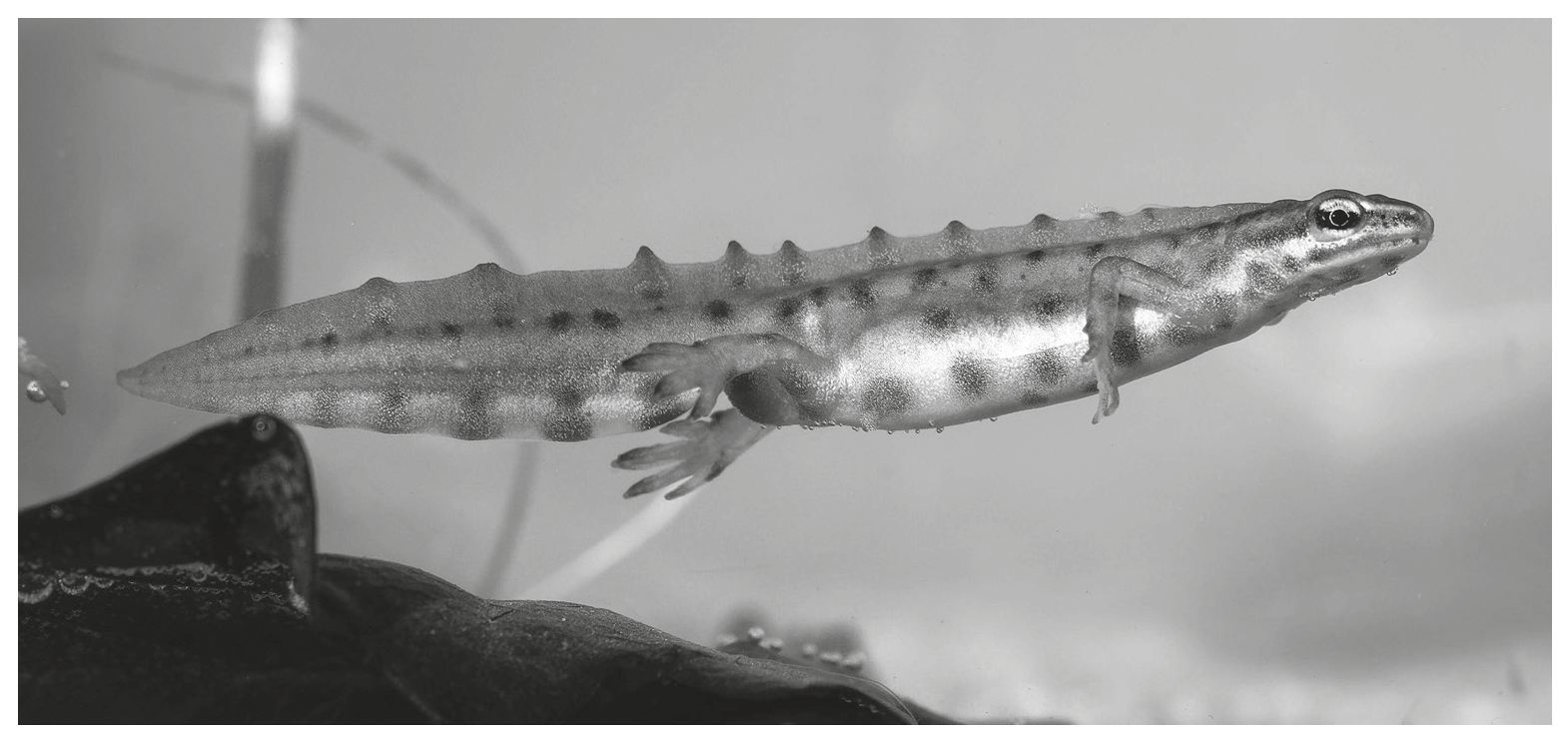
Fig. 1.1 is a photograph of a fish. Fig. 1.2 is a photograph of an amphibian.

Fig. 1.1

Fig. 1.1

Fig. 1.2

Fig. 1.2

State two visible features that distinguish the fish in Fig. 1.1 from the amphibian in Fig. 1.2.
1

2

[ 2 ]

Question 1(b)

(b)

Fish, amphibians and mammals are all vertebrate groups.

State the name of one other vertebrate group.

[ 1 ]

Question 1

[Maximum number: 1]

Phytoplankton consist of many species of single-celled and many-celled algae.

Question 1(a)

(a)

Algae are classified in the Protoctist kingdom. All algae contain one or more chloroplasts. State the name of another kingdom that contains organisms which have chloroplasts.

[ 1 ]

Question 1

Question 1(a)

(a)

Fish, mammals and birds are all groups of vertebrates.

[ 4 ]

Question 1(a)(i)

(i)

State the names of the two other main groups of vertebrates. and

[ 1 ]

Question 1(a)(ii)

(ii)

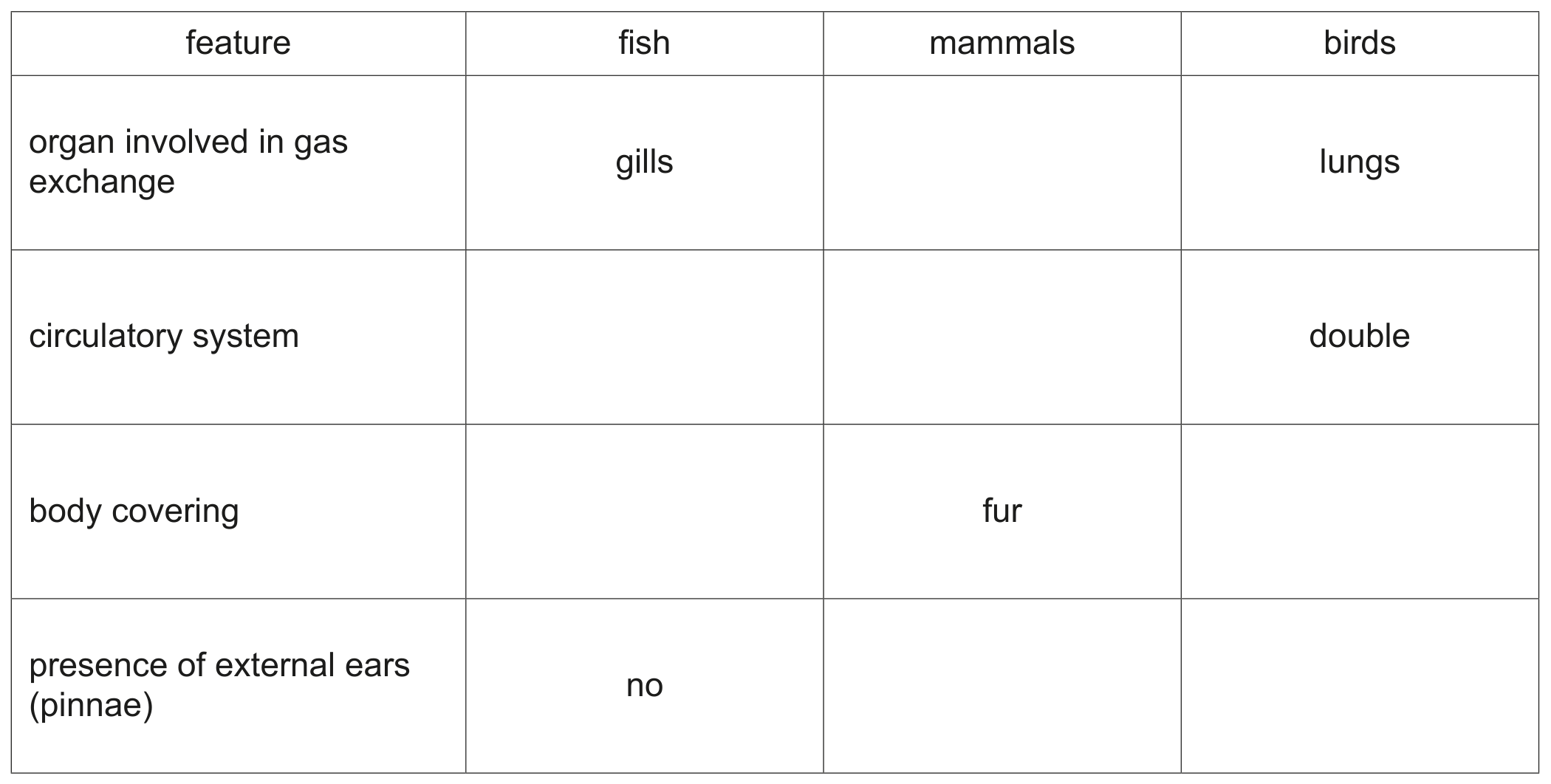
Complete Table 1.1 to compare the features of fish, mammals and birds.

Table 1.1

Table 1.1

[ 3 ]
0 selected