Question 1
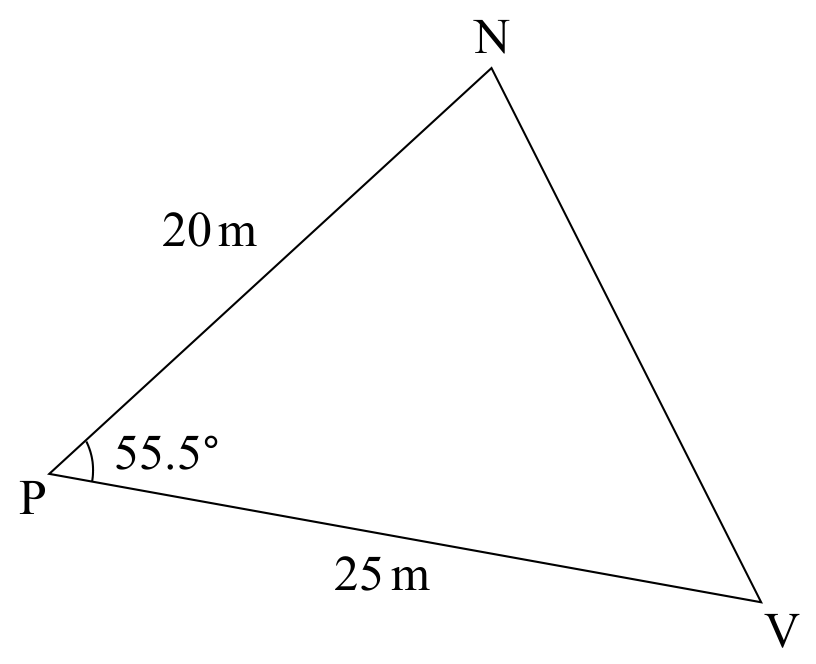
Three points N, P, and V are shown on the following diagram. NP is 20 metres, PV is 25 metres and VPN is .
Question 1(a)
Find NV.
Question 1(b)
Find PN̂V.
Question 1(c)
Hence or otherwise, find the shortest distance between P and [NV].
EduNinjaThree points N, P, and V are shown on the following diagram. NP is 20 metres, PV is 25 metres and VPN is 55.5∘.

Find NV.
Find PN̂V.
Hence or otherwise, find the shortest distance between P and [NV].
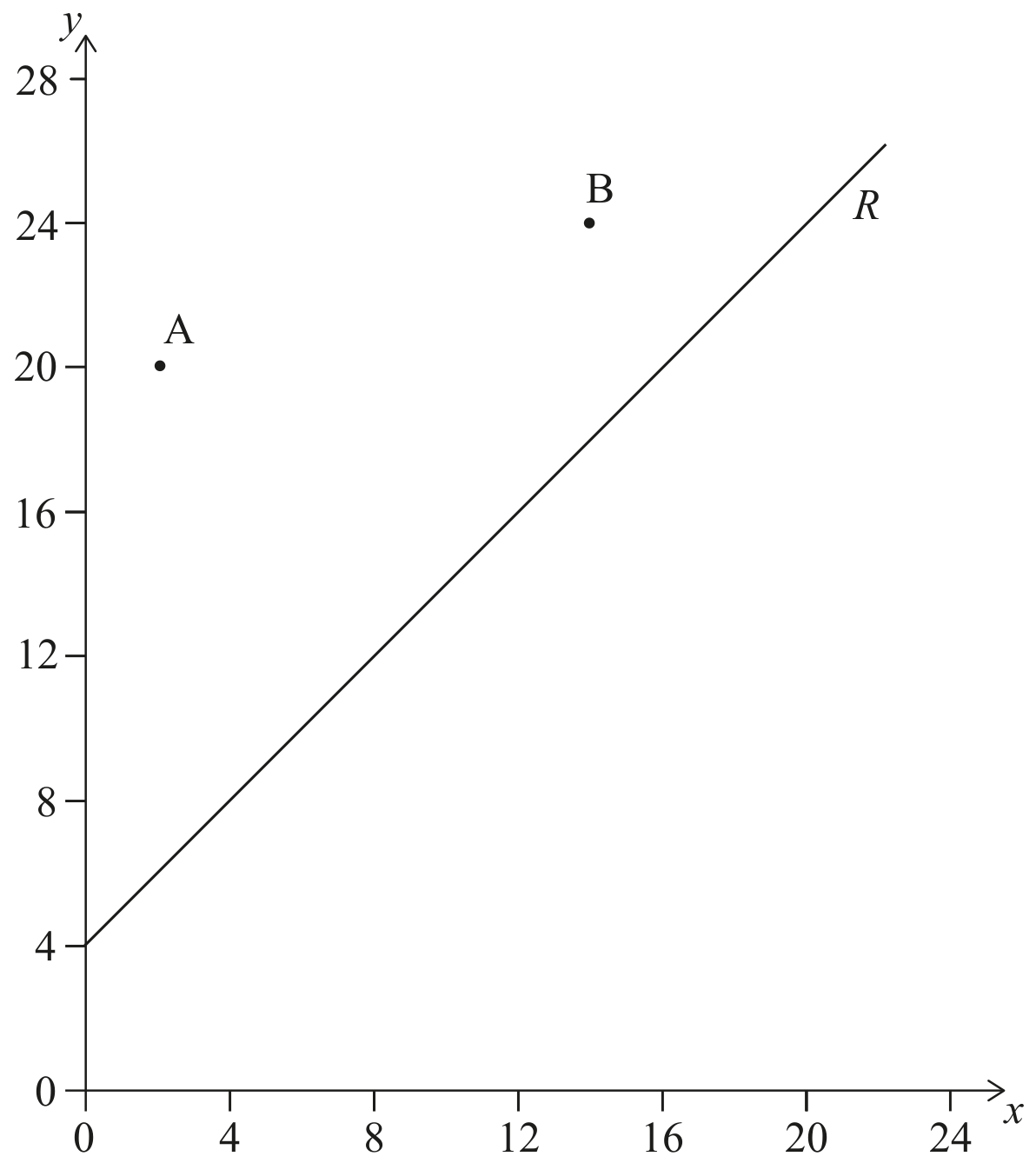
Two schools are represented by points A(2,20) and B(14,24) on the graph below. A road, represented by the line R with equation -x+y=4, passes near the schools. An architect is asked to determine the location of a new bus stop on the road such that it is the same distance from the two schools.

Find the equation of the perpendicular bisector of [AB]. Give your equation in the form y=m x+c.
Determine the coordinates of the point on R where the bus stop should be located.
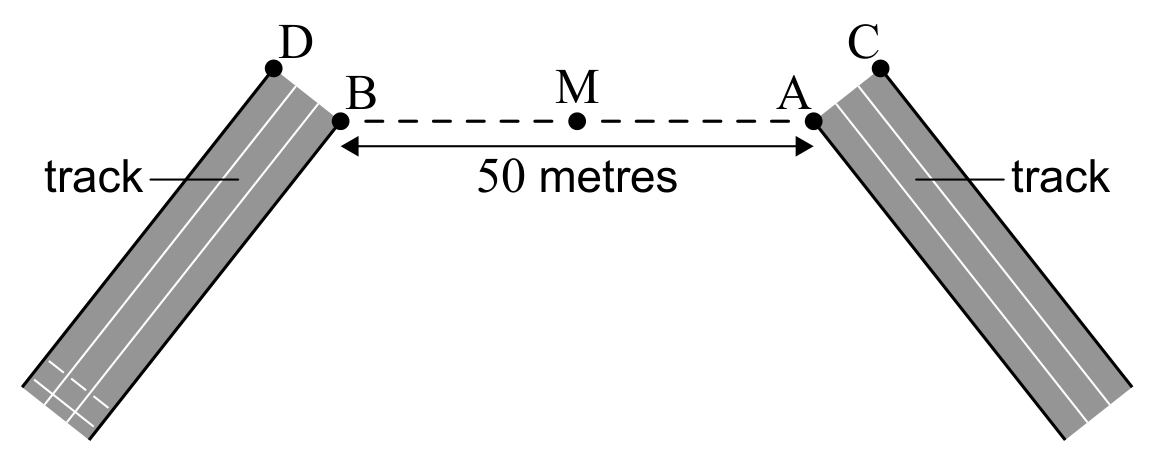
Madhu is designing a jogging track for the campus of her school. The following diagram shows an incomplete portion of the track.
Madhu wants to design the track such that the inner edge is a smooth curve from point A to point B , and the other edge is a smooth curve from point C to point D . The distance between points A and B is 50 metres.

To create a smooth curve, Madhu first walks to M , the midpoint of [AB].
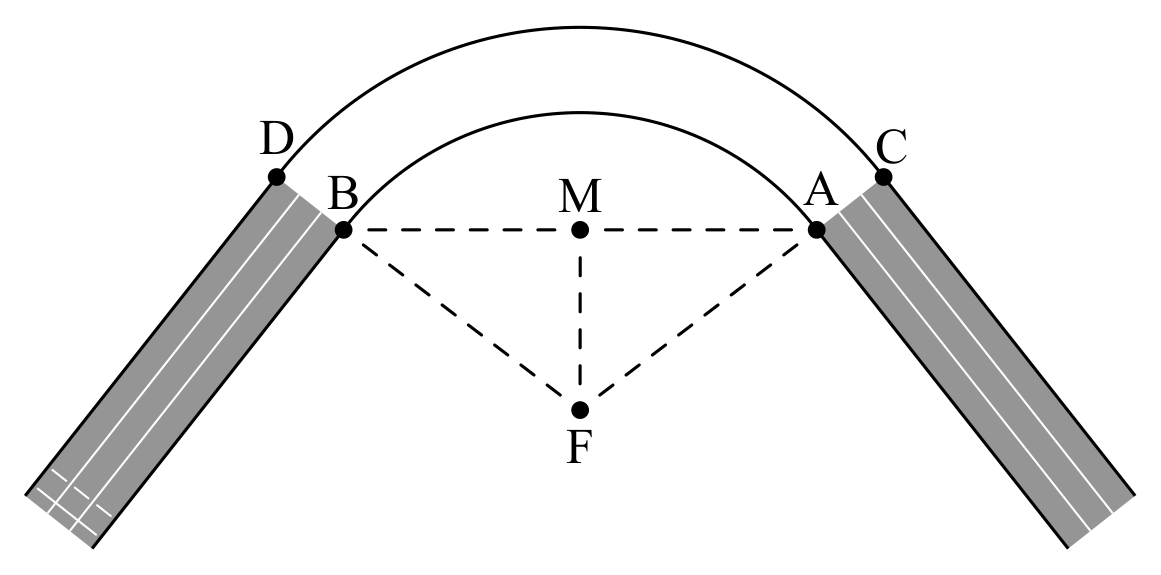
Madhu then walks 20 metres in a direction perpendicular to [A B] to get from point M to point F. Point F is the centre of a circle whose arc will form the smooth curve between points A and B on the track, as shown in the following diagram.

Find the length of [BF].
Find BFA .
Hence, find the length of arc AB .
The outer edge of the track, from C to D, is also a circular arc with centre F, such that the track is 2 metres wide.
Calculate the area of the curved portion of the track, ABDC .
The base of the track will be made of concrete that is 12 cm deep.
Calculate the volume of concrete needed to create the curved portion of the track.
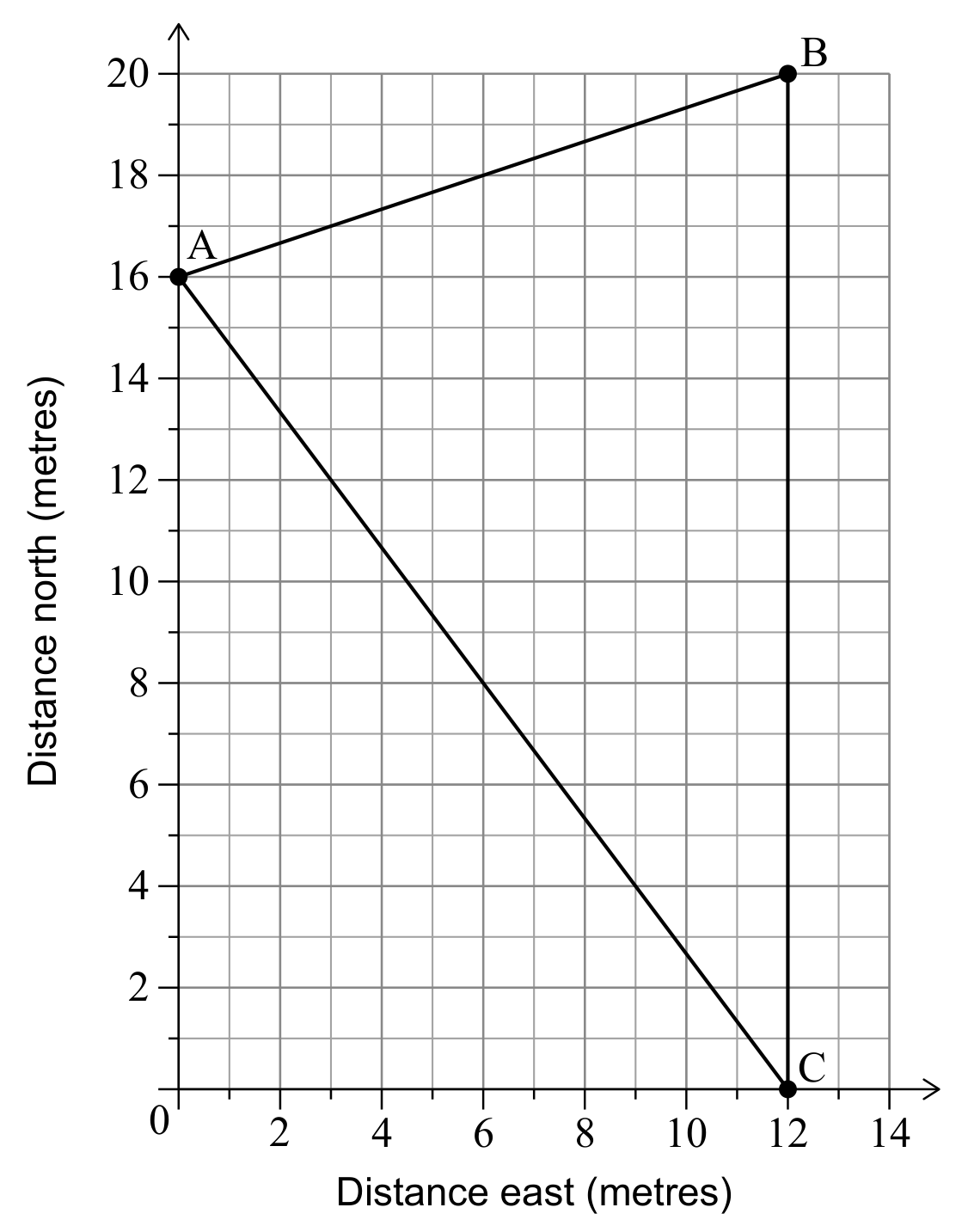
Mai is at an amusement park. A map of part of the amusement park is represented on the following coordinate axes.
Mai's favourite three attractions are positioned at A(0,16), B(12,20) and C(12,0). All measurements are in metres.

Write down the distance between B and C .
Calculate the distance between A and B .
Mai is standing at the attraction at B and wants to walk directly to the attraction at A .
Calculate the bearing of A from B .
A drinking fountain is to be installed at a point that is an equal distance from each of the attractions at A, B and C .
Write down the mid-point of [AC].
Hence calculate the coordinates of the drinking fountain.
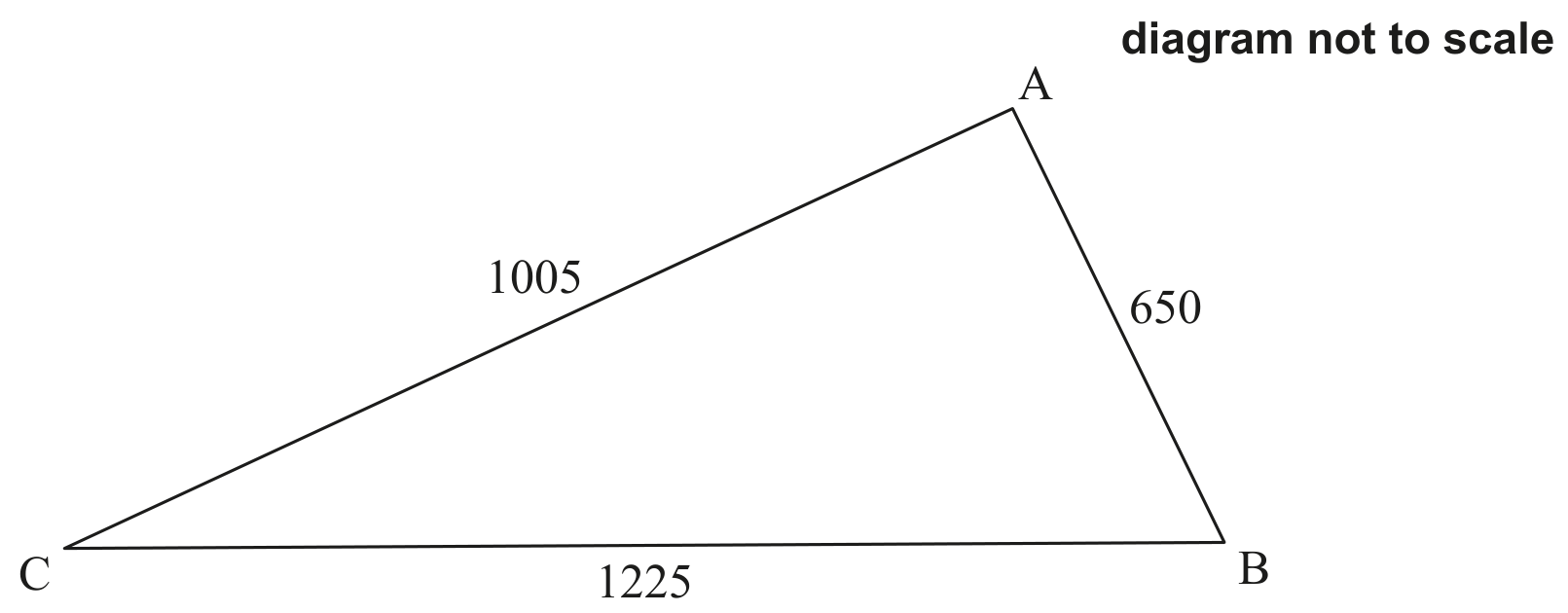
A farmer owns a field in the shape of a triangle ABC such that AB=650 m,AC=1005 m and BC=1225 m.

Find the size of AC^B.
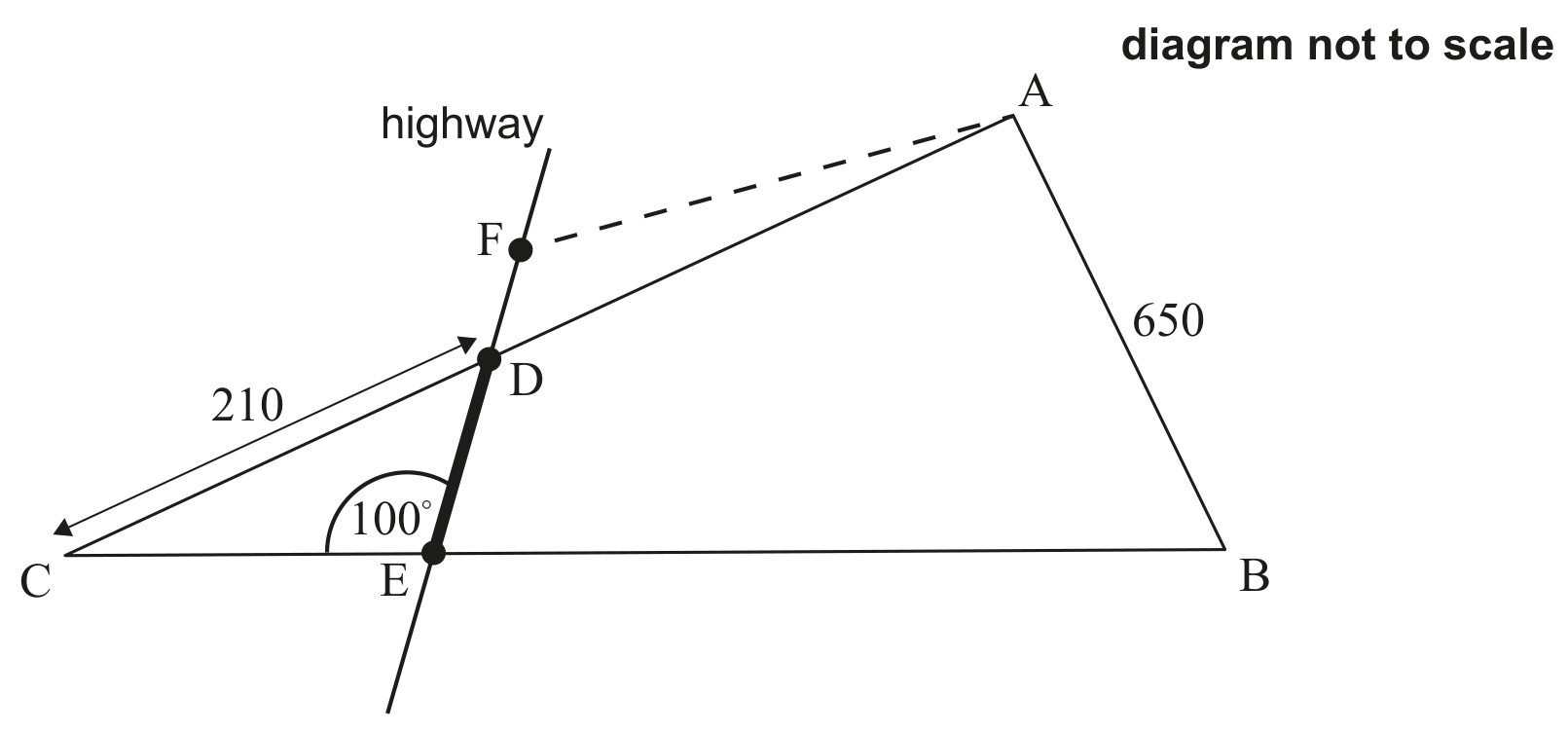
The local town is planning to build a highway that will intersect the borders of the field at points D and E , where DC=210 m and CED=100∘, as shown in the diagram below.

Find DE .
The town wishes to build a carpark here. They ask the farmer to exchange the part of the field represented by triangle DCE. In return the farmer will get a triangle of equal area ADF, where F lies on the same line as D and E, as shown in the diagram above.
Find the area of triangle DCE.
Estimate DF. You may assume the highway has a width of zero.
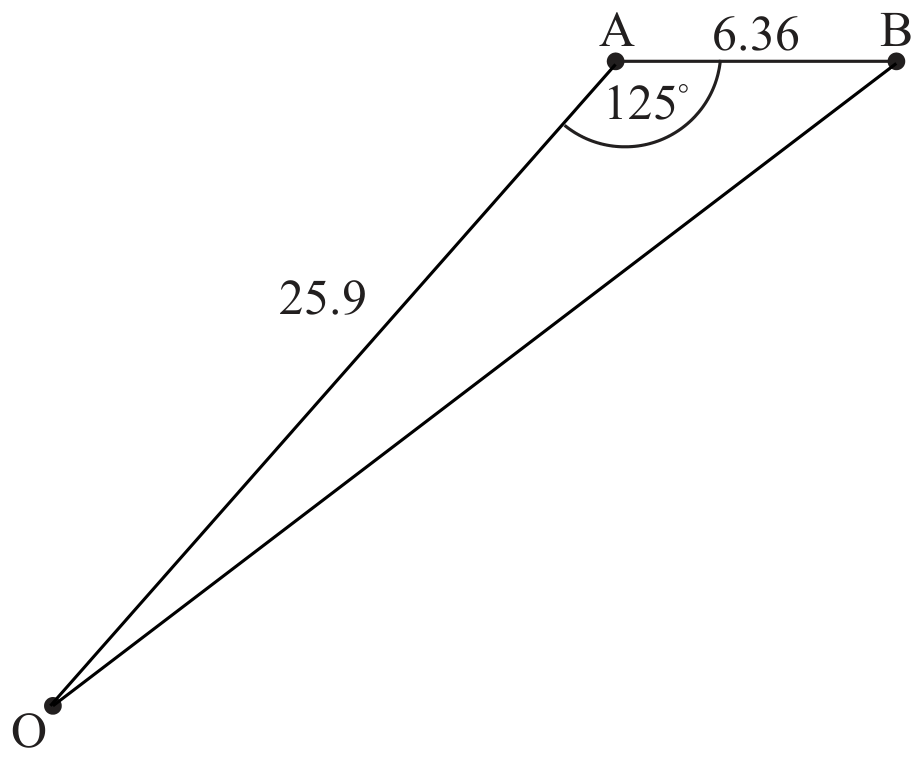
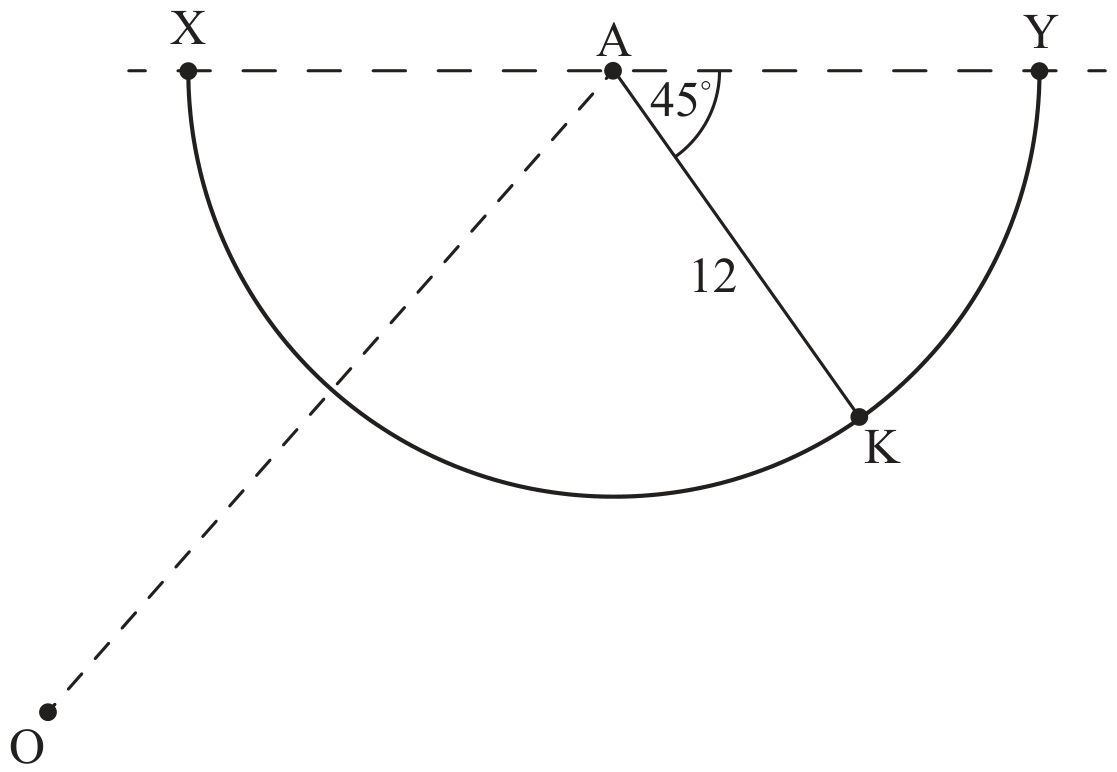
The diagram shows points in a park viewed from above, at a specific moment in time.
The distance between two trees, at points A and B , is 6.36 m .
Odette is playing football in the park and is standing at point O , such that OA=25.9 m and OAB=125∘.

Calculate the area of triangle AOB.
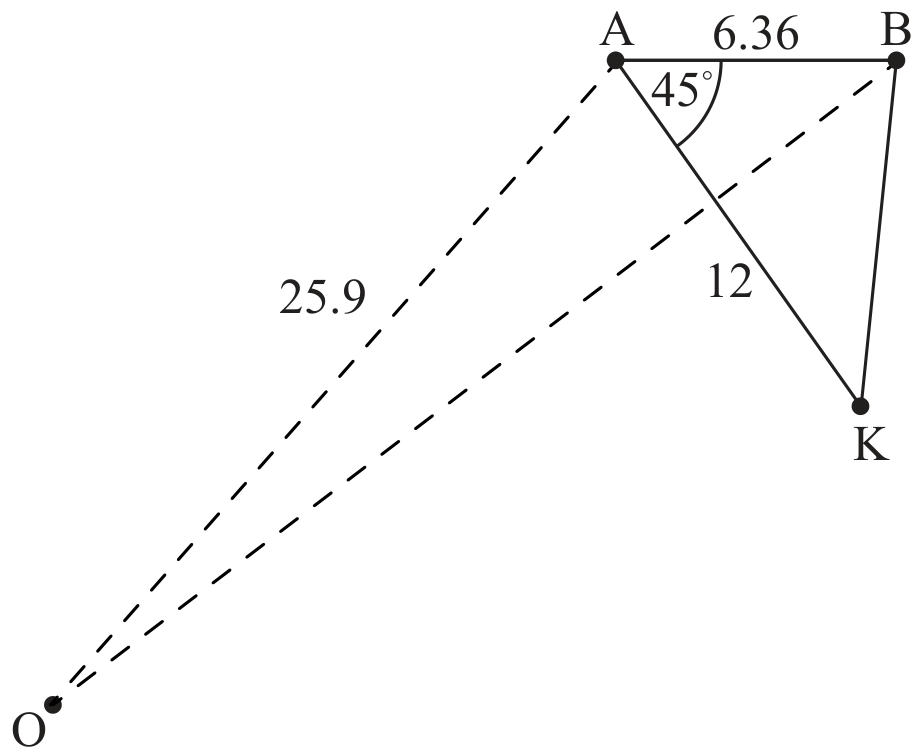
Odette's friend, Khemil, is standing at point K such that he is 12 m from A and KAB =45∘.

Calculate Khemil's distance from B.
XY is a semicircular path in the park with centre A , such that KAY=45∘. Khemil is standing on the path and Odette's football is at point X . This is shown in the diagram below.

The length KX=22.2 m,KOPX=53.8∘ and OK^X=51.1∘.
Find whether Odette or Khemil is closer to the football.
Khemil runs along the semicircular path to pick up the football.
Calculate the distance that Khemil runs.
This question considers how the assessment of the Air Quality Index (AQI) for a school depends on the method chosen by the person doing the assessing.
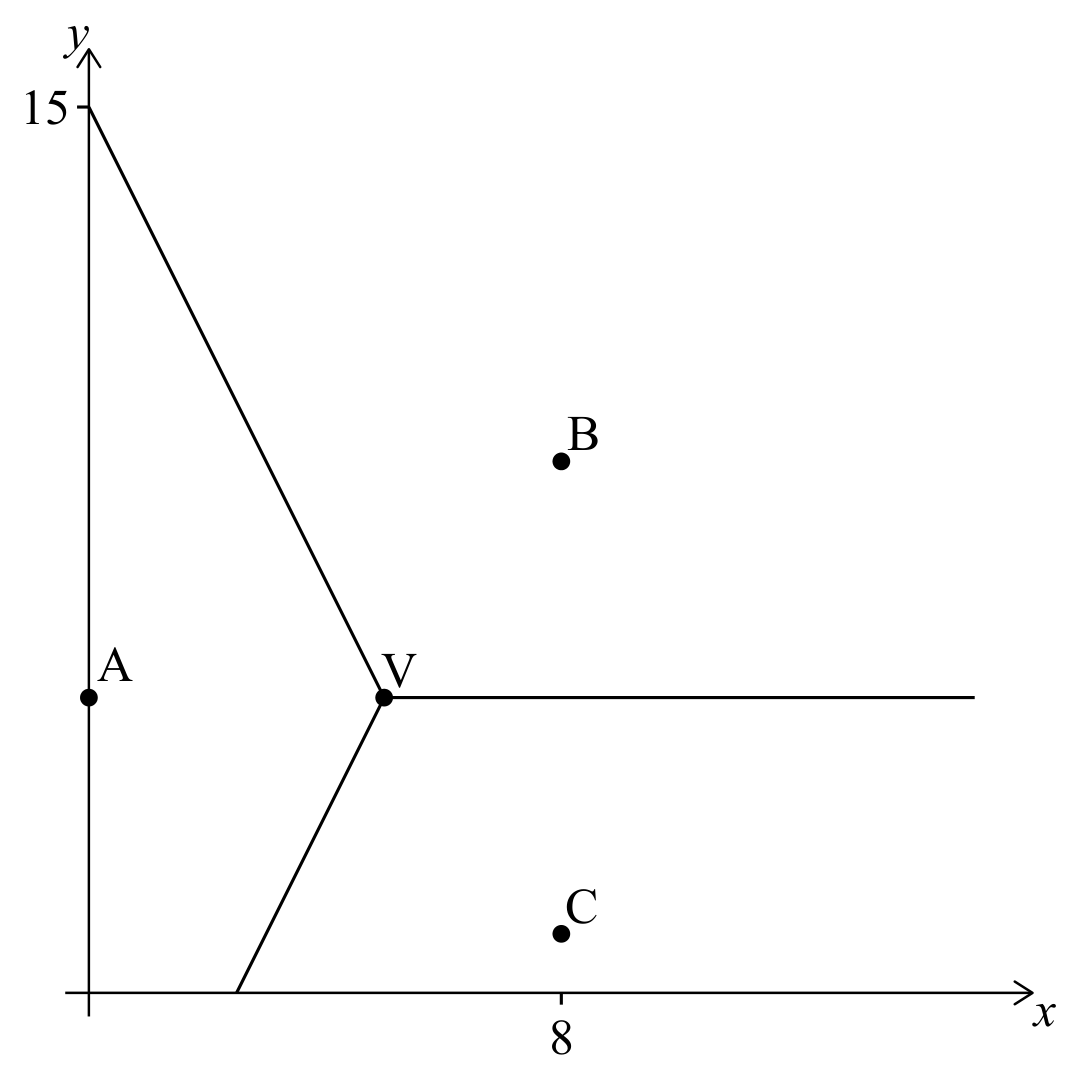
Air quality for a district is measured at three monitoring stations. The positions of these stations on a coordinate system with units in kilometres are A(0,5), B(8,9) and C(8,1).
A Voronoi diagram is constructed with the three stations as sites.

Find the equation of the perpendicular bisector of [BC].
Given that the equation of the perpendicular bisector of [AB] is y=15-2 x, find the coordinates of vertex V.
A school, S, is situated in the district at the point with coordinates (5,6).
State which station is closest to the school.
The principal of the school is concerned about the air quality in the area. Air quality is measured by the Air Quality Index (AQI). In this district, values less than 50 are taken to indicate good air quality.
The principal contacts the local environmental agency requesting an AQI value for her school. They tell her the mean AQI reading from the closest station to the school.
Write down the type of interpolation being used by the environmental agency.
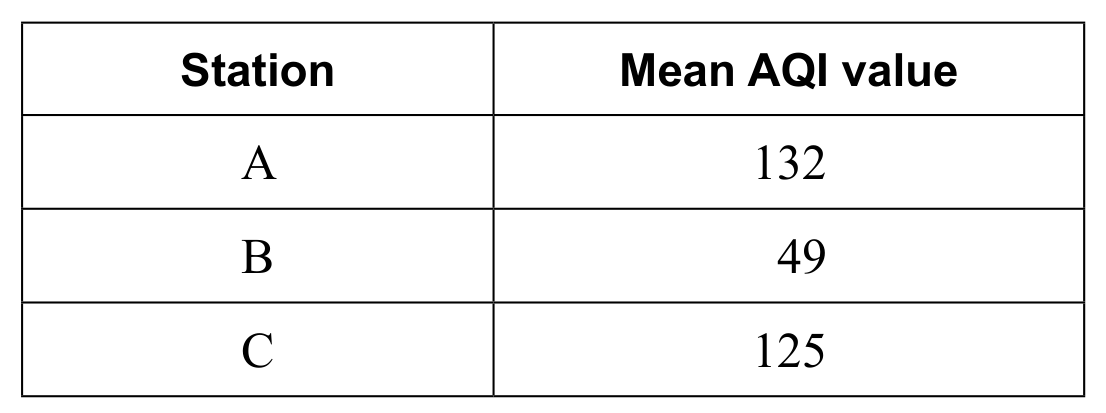
The principal obtains the mean AQI value from each of the three stations.

Find the mid-point of [SB].
Show that the equation of the perpendicular bisector of [SB] is y=14-x.
Hence find aB (the area of region Q on the diagram).
The areas of regions P and R are aA=13.7 km2 and aC=6.9 km2 respectively.
Use the natural neighbour algorithm to show that an estimate for the expected AQI value at the school, W, is 94.4.
The principal is still concerned that this method is underestimating the AQI value at the school, as the school is situated close to a busy traffic intersection. She decides to take her own readings ( x ) over a period of 60 days. Her results are summarized as
The principal assumes that the daily AQI values at the school can be modelled by a normal distribution and that each value is independent of any other value.
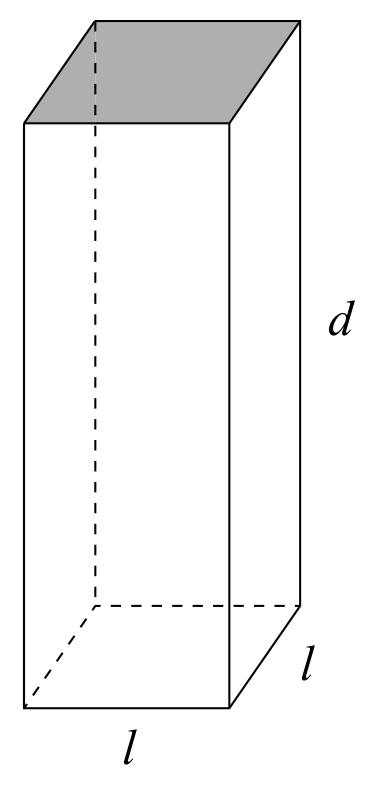
Kailash manufactures drink containers in the shape of a cuboid. The container has a square top and a square base of length, l cm. Its height, d cm, is three times the length of the base.

Calculate the total external surface area of the container.
To reduce environmental impact, Kailash is trying to minimize the amount of material needed for the production of the 375 cm3 container.
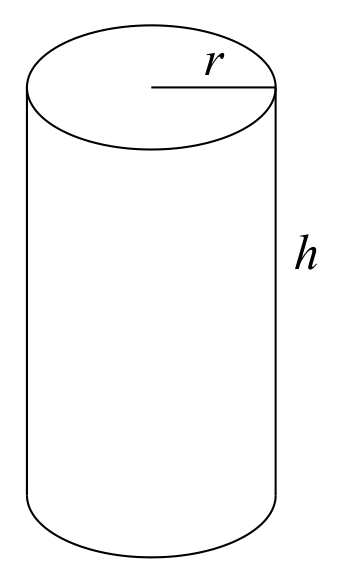
He is willing to change the shape to a cylinder with radius r cm, and height h cm, as shown below.

The cylindrical container of drink must also hold 375 cm3.
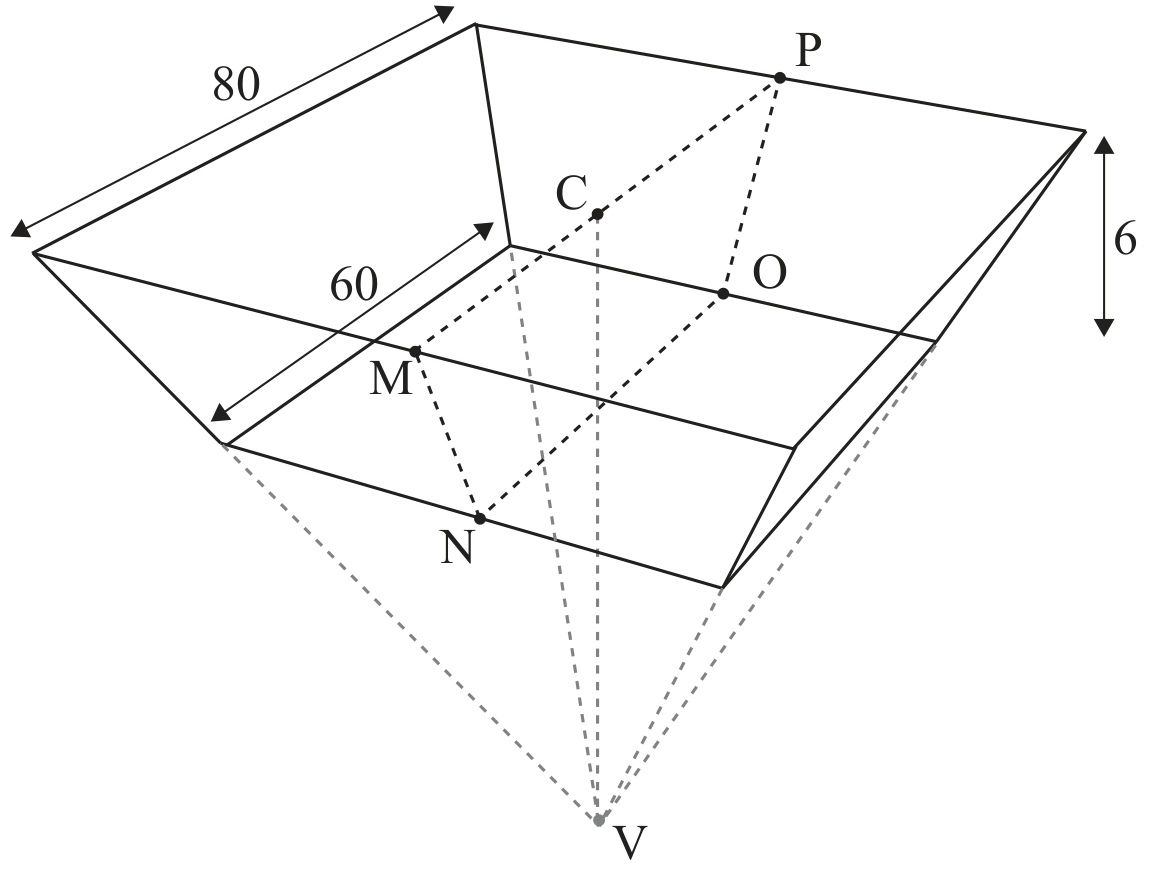
A large water reservoir is built in the form of part of an upside-down right pyramid with a horizontal square base of length 80 metres. The point C is the centre of the square base and point V is the vertex of the pyramid.

diagram not to scale
The bottom of the reservoir is a square of length 60 metres that is parallel to the base of the pyramid, such that the depth of the reservoir is 6 metres as shown in the diagram.
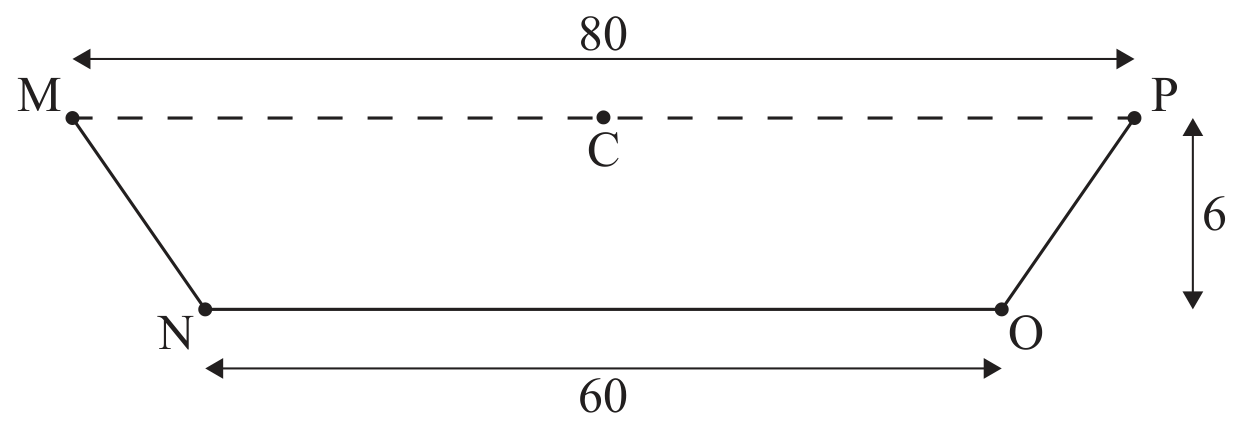
The second diagram shows a vertical cross section, MNOPC, of the reservoir.

Find the angle of depression from M to N .
Find CV.
Hence or otherwise, show that the volume of the reservoir is 29600 m3.
Every day 80 m3 of water from the reservoir is used for irrigation.
Joshua states that, if no other water enters or leaves the reservoir, then when it is full there is enough irrigation water for at least one year.
Find the area that was painted.
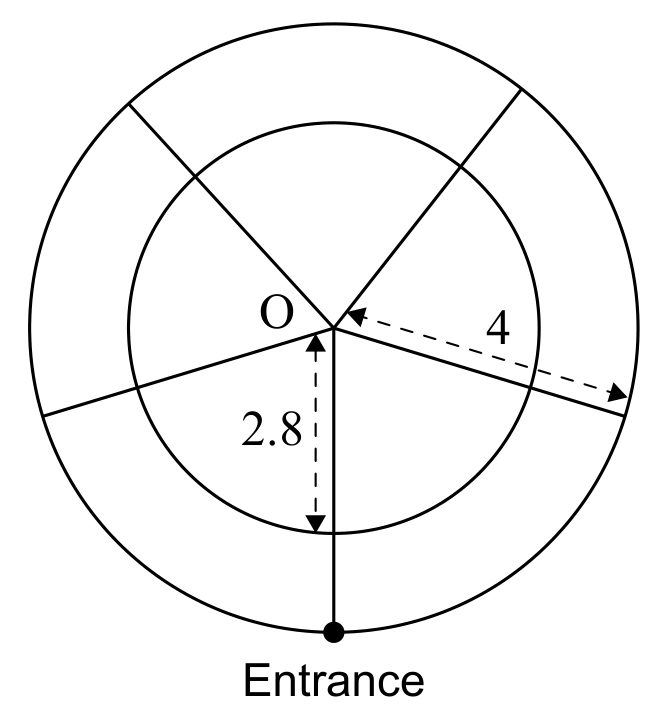
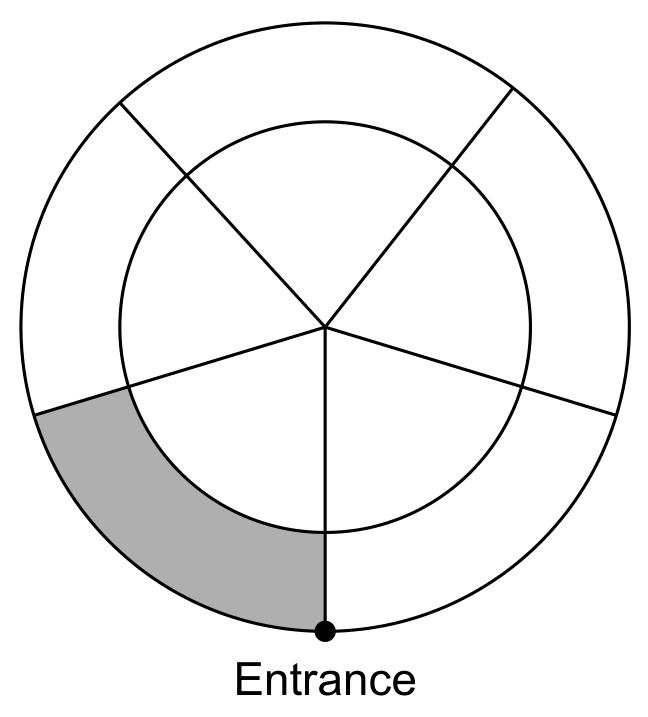
A child's game is played by making paths in the snow. First, two circular paths are made using the same centre, O . The radius of the smaller circle is 2.8 m , and the radius of the larger circle is 4 m . Additional paths are then made from O to the outer edge of the larger circle, dividing each circle into 5 equal sectors, as shown in the following diagram.
For your calculations, ignore the widths of the paths.


Each region between paths will be coloured with environmentally friendly dye. The shaded region below will be coloured orange.

Maureen has enough orange dye to cover an area of 6 m2.
Show that Maureen has enough orange dye to cover the shaded region.
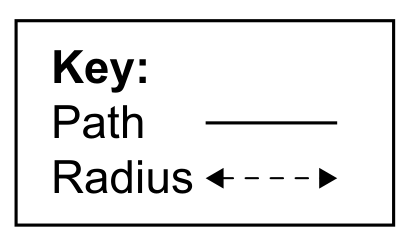
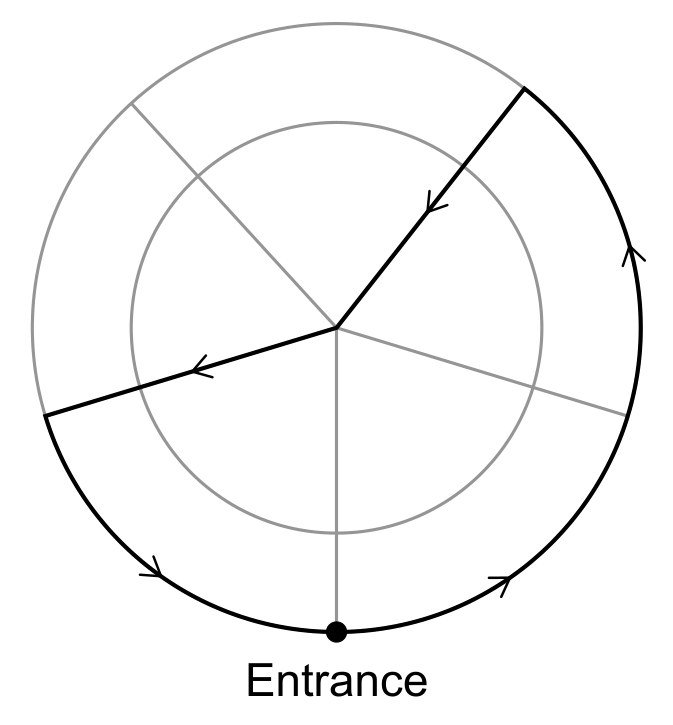
During the game, the players start at the entrance and must travel only along the paths made in the snow. Maureen travels from the entrance along the path shown in the following diagram.

Calculate the distance Maureen travels along this path, starting from the entrance and returning to the entrance.