EduNinja

IGCSE Math a3.1 SequencesTopic Practice

3.1 Sequences

Edexcel IGCSE Math a 3.1 Sequences question practice helps you revise this syllabus point with the course map in view. Use this page to focus on one topic, check the style of questions available, and connect each attempt back to the knowledge area it is testing.

EduNinja keeps Math a practice aligned to Edexcel, so you can move from topic review into exam-style question bank work without losing the syllabus structure. Start with a small set, mark the weak steps, then return to nearby topic links when a definition, graph, calculation, or explanation needs repair.

Question 1

[Maximum number: 1]

Here are the first four terms of an arithmetic sequence.

The nth term of a different arithmetic sequence is 5 n+17

Question 1(a)

(a)

(a)Find an expression,in terms of n ,for the nth term of this sequence.
1
f n ,
10
sequence.
1
(a)Find an expression,in terms of n ,for the nth term of this sequence. 17


踾 The nth term of a different arithmetic sequence is 5 n+17
(b)Find the 12th term of this sequence.

2450 students were asked how they travelled to school on Monday.
Each student walked or travelled by bus or travelled by car or travelled by bicycle.
Each student used just one method of travel.
One of these students is chosen at random.
The table shows information about the probability of each method of travel.

Table

Work out how many of the 450 students travelled by car.

Question 1(b)

(b)

(b)Find the 12th term of this sequence.
14710\begin{array}{llll} 1 & 4 & 7 & 10 \end{array}
[ 1 ]

Question 2

Here are the first 4 terms of an arithmetic sequence.

85797367\begin{array}{llll} 85 & 79 & 73 & 67 \end{array}

Find an expression, in terms of n, for the nth term of the sequence.

Question image

Question 2

Here are the first five terms of an arithmetic sequence.

711151923\begin{array}{lllll} 7 & 11 & 15 & 19 & 23 \end{array}

Write down an expression, in terms of n, for the nth term of this sequence.

Question 3

[Maximum number: 4]

Here are the first five terms of a number sequence S.

1016222834\begin{array}{lllll} 10 & 16 & 22 & 28 & 34 \end{array}

Question 3(a)

(a)

Find an expression, in terms of n, for the nth term of this sequence.

The nth term of a sequence T is given by n23n^{2}-3
There are numbers that are terms in both the sequence S and the sequence T.

[ 2 ]

Question 3(b)

(b)

Find one of these numbers.

[ 2 ]

Question 3

[Maximum number: 3]

A sequence of patterns is made from squares.

Question image

Question 3(a)

(a)

In the space below, draw Pattern number 4

Pattern number 4

[ 1 ]

Question 3(b)

(b)

Complete the table.

Table
[ 1 ]

Question 3(c)

(c)

Work out the number of squares in Pattern number 8

Angus says
"there are 42 squares in Pattern number 15"
Angus is incorrect.

[ 1 ]

Question 3(d)

(d)

Explain why.

Question 12(a)

[Maximum number: 2]

Here are the first four terms of a sequence of fractions.

11233547\frac{1}{1} \quad \frac{2}{3} \quad \frac{3}{5} \quad \frac{4}{7}

The numerators of the fractions form the sequence of whole numbers 12341234 \ldots The denominators of the fractions form the sequence of odd numbers 13571 \quad 3 \quad 5 \quad 7 \ldots

Write down an expression, in terms of n, for the nth term of this sequence of fractions.

Question 4

[Maximum number: 4]

Here are the first five terms of a number sequence.

10699928578\begin{array}{lllll} 106 & 99 & 92 & 85 & 78 \end{array}

Question 4(a)(i)

(a)

Write down the next term of the sequence.

[ 1 ]

Question 4(a)(ii)

(b)

Explain how you found your answer to part (a)(i)

The 9th term of the sequence is 50

[ 1 ]

Question 4(b)

(c)

Work out the 12th term of the sequence.

Umberto says 7 is a term in the sequence.
Umberto is wrong.

[ 1 ]

Question 4(c)

(d)

Explain why.

[ 1 ]

Question 4

[Maximum number: 3]

Here are the first five terms of a number sequence.

9690847872\begin{array}{lllll} 96 & 90 & 84 & 78 & 72 \end{array}

Question 4(a)

(a)

Write down the 6th term of the sequence.

[ 1 ]

Question 4(b)

(b)

Explain how you found your answer to part (a).

The 15th term of the sequence is 12

[ 1 ]

Question 4(c)

(c)

Work out the 14th term of the sequence.

[ 1 ]

Question 5

[Maximum number: 3]

Here are the first 4 terms of a number sequence.

7121722\begin{array}{llll} 7 & 12 & 17 & 22 \end{array}

Question 5(a)(i)

(a)

Write down the next term of the sequence.

[ 1 ]

Question 5(a)(ii)

(b)

Explain how you worked out your answer.

[ 1 ]

Question 5(b)

(c)

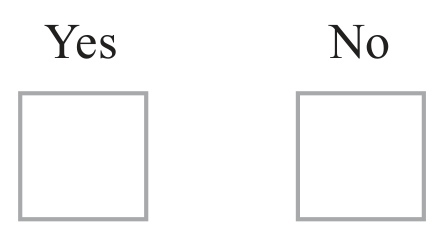
Is 256 a number in the sequence?

Tick one of the boxes below and give a reason for your answer.

Question image

Give a reason for your answer.

[ 1 ]

Question 6

[Maximum number: 4]

Here are the first five terms of a number sequence.

410162228\begin{array}{lllll} 4 & 10 & 16 & 22 & 28 \end{array}

Question 6(a)(i)

(a)

Write down the next term of the sequence.

[ 1 ]

Question 6(a)(ii)

(b)

Explain how you worked out your answer.

[ 1 ]

Question 6(b)

(c)

Work out the 13th term of the sequence.

[ 1 ]

Question 6(c)

(d)

Explain why 467 cannot be a number in the sequence.

[ 1 ]
0 selected