Question 1(b)
[Maximum number: 1]
A trade bloc is a group of countries that have
A
the same interest rate
B
common borders between members
C
the same currency
D
a reduction in trade barriers between members
 EduNinja
Modern trading blocs:
• impact of trading blocs on member and non-member countries
• examples of trading blocs.
A trade bloc is a group of countries that have
the same interest rate
common borders between members
the same currency
a reduction in trade barriers between members
In March 2023, the UK joined the Comprehensive and Progressive Agreement for Trans-Pacific Partnership (CPTPP), an 11-member Asia-Pacific trading bloc, after two years of negotiations. The current members of the CPTPP are Australia, Canada, Japan, Mexico, New Zealand, Singapore, Brunei, Chile, Malaysia, Peru and Vietnam.
With reference to the data above and your knowledge of economics, analyse the advantages for UK firms of the UK joining the CPTPP trading bloc.
The African Continental Free Trade Area (AfCFTA) is a free trade area that includes most of Africa. It connects 1.3bn people across 55 countries with a combined gross domestic product (GDP) of $ 3.4 trillion. South Africa is an important member of the AfCFTA.
With reference to the data above and your knowledge of economics, analyse the disadvantages to firms in South Africa of being a member of the AfCFTA.
What is meant by the term trading bloc?
The price of a basket of goods and services used to calculate the Consumer Price Index (CPI) in an economy, rose from € 1250 to € 1300 in one year.
The Association of South East Asian Nations (ASEAN) is a trade bloc. It was set up in 1967 by Indonesia, Malaysia, the Philippines, Singapore and Thailand. Later it was joined by Brunei, Laos, Vietnam, Myanmar and Cambodia and became a 10 member trading bloc in 2016.
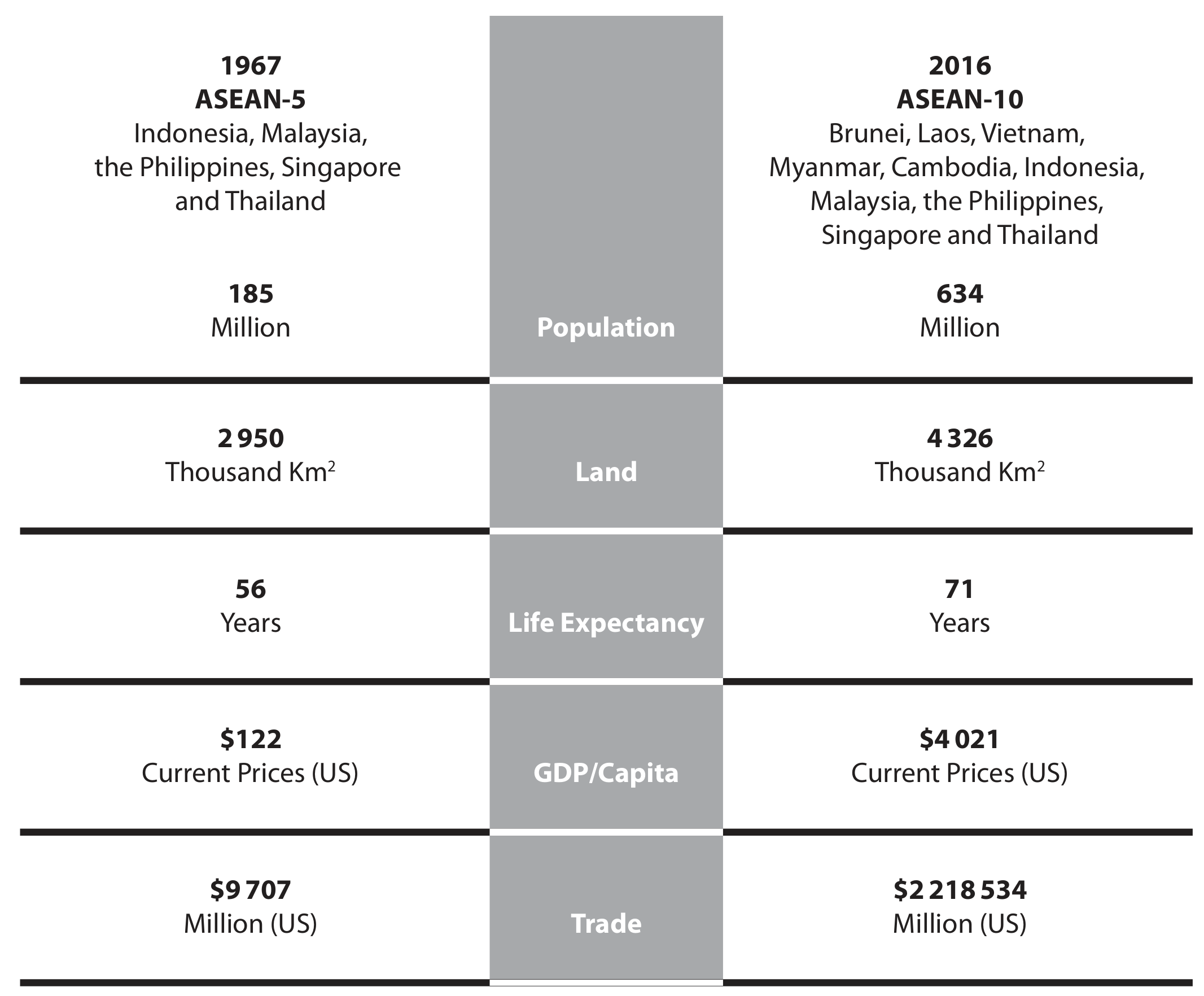
Figure 2
(Source: adapted from https://www.fwd.news/50-years-major-
regional-trading-bloc-looks-closer-cooperation/)
With reference to the data above and your knowledge of economics, assess the benefits for a country, such as Thailand, of being a trade bloc member.
Which one of the following describes a trade bloc?
A group of countries that use the same currency
A group of countries that have the same tax rates
A group of countries that have the same language
A group of countries that reduce trade barriers between themselves
Figure 3 shows selected UK Government receipts from taxation in 2019.
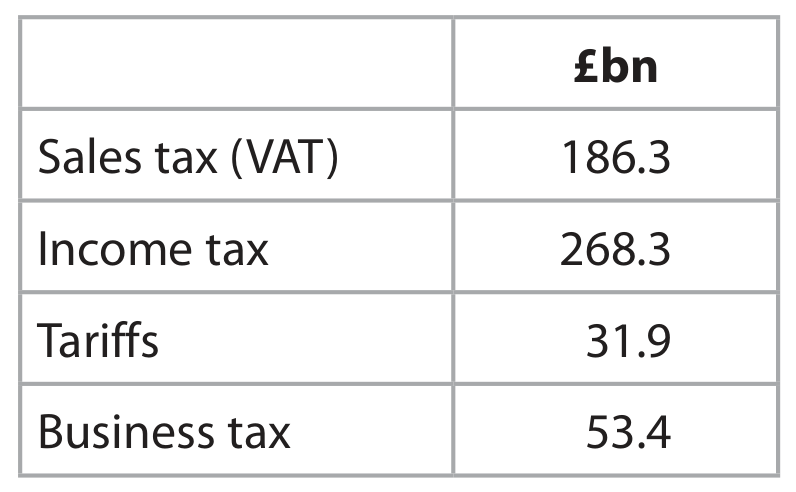
Figure 3
Member countries of a trading bloc agree to
trade together with low or no barriers
have the same rate of income tax
only trade with members within the bloc
have common borders between members
Brazil currently only allows a quota of 600 million litres of ethanol per year to be imported from the US.
Which one of the following is a feature of being a member of a trading bloc?
Higher tariffs on exports to other members within the bloc
Slower delivery times for goods within the bloc
Can only trade with members within the bloc
Access to a larger market within the bloc
Figure 3 shows imports and exports for a country in $ b n.
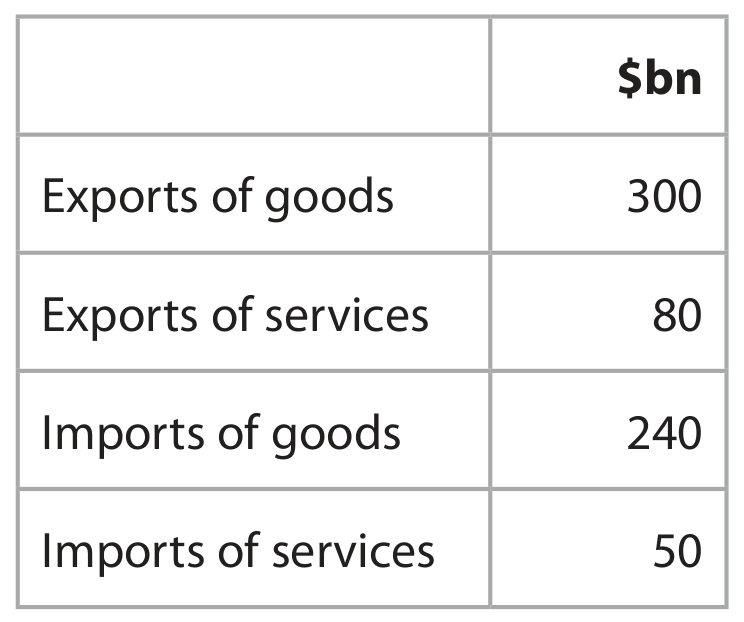
Figure 3
Figure 4 shows the amount of foreign direct investment (FDI) India received from 2016-2019.
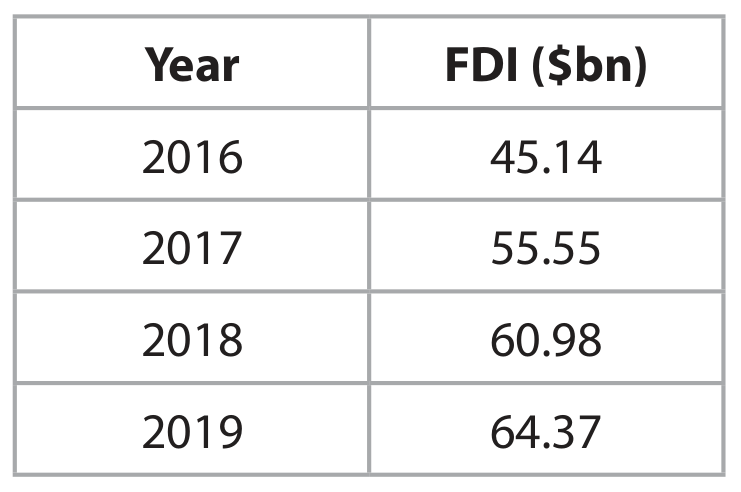
Figure 4
(Source adapted from: https://www.businesstoday.in/current/economy-politics/ india-has-received-highest-ever-fdi-of-6437-billion/story/369313.html)
With reference to the data above and your knowledge of economics, analyse the benefits for India from being a member of a trading bloc.
In January 2019, the Indian Government approved new legislation that improved and simplified its policy on foreign direct investment (FDI). This helped to attract more multinational corporations (MNCs) to the country.
In 2019, India ranked among the top 10 economies benefitting from FDI. The overall growth of FDI in India was due to its many resources. These include a high degree of specialisation in services and a skilled, English-speaking, low-cost labour force. India also has a potential market of over one billion people.
FDI in India has been focused on chemicals, computer software and hardware, telecommunications, the automobile industry, construction, power and pharmaceuticals.
(Source adapted from: https://www.nordeatrade.com/en/explore-new-market/india/investment)
Figure 5 shows the gross domestic product (GDP) for India in 2021 and 2022.
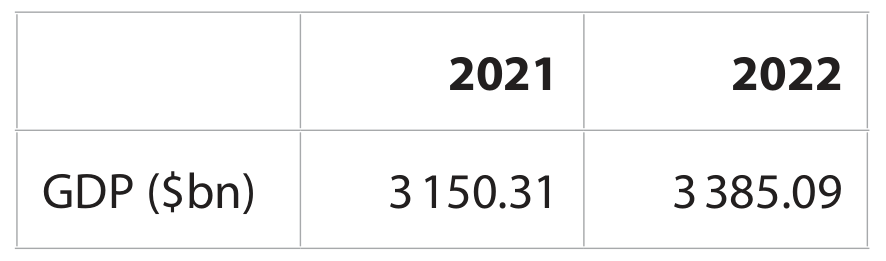
Figure 5
With reference to the data above and your knowledge of economics, evaluate the possible benefits for India of joining the RCEP trading bloc.
(Total for Question 4 = 20 marks)