Question 2(g)
[Maximum number: 9]
With reference to the data above and your knowledge of economics, assess the use of taxation to protect the environment in a country such as Germany.
 EduNinja
Advantages and disadvantages of each government policy.
With reference to the data above and your knowledge of economics, assess the use of taxation to protect the environment in a country such as Germany.
A country is able to produce agricultural and non-agricultural goods with a given amount of resources. Its production possibility curve (PPC) is shown in Figure 2.
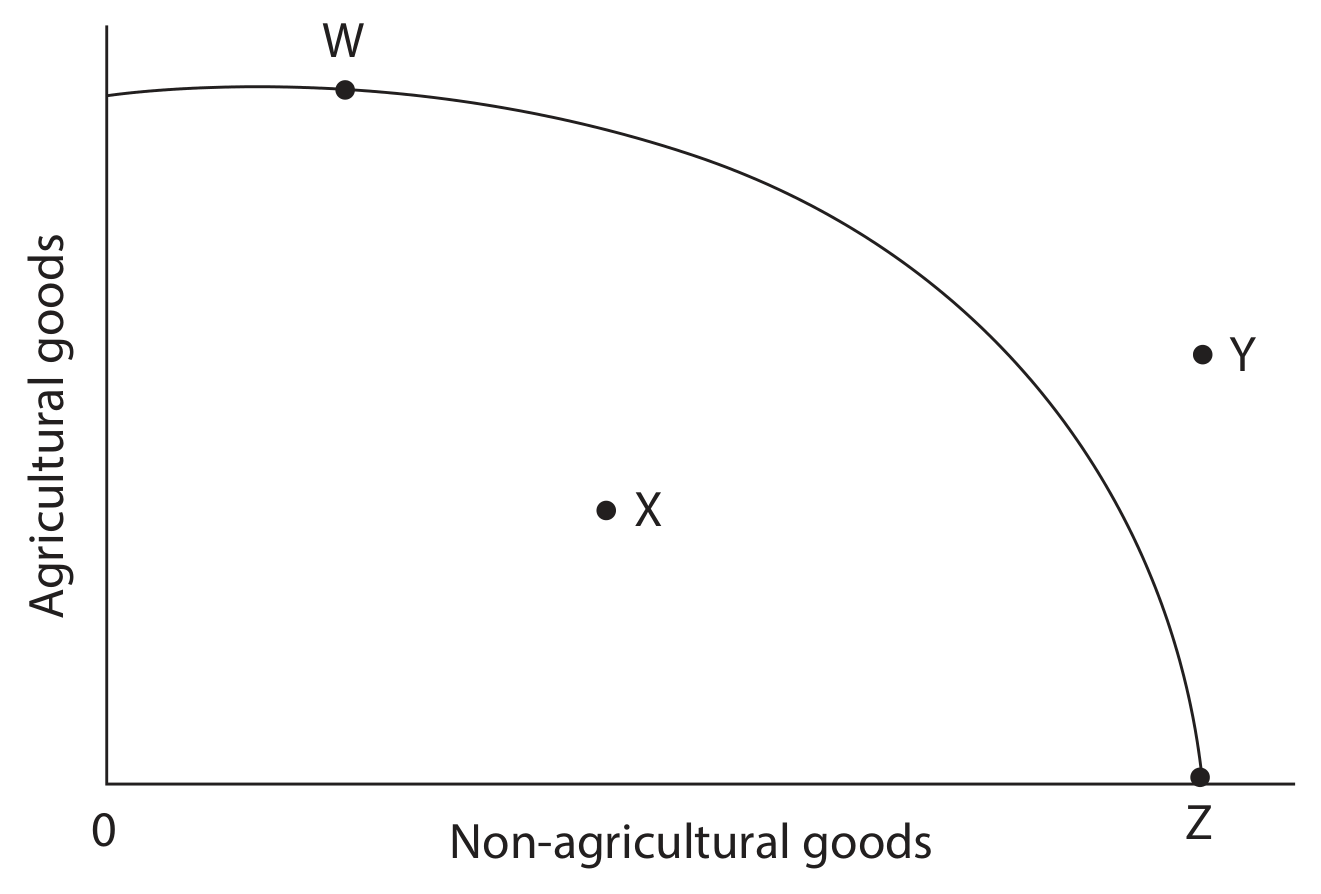
Figure 2
High pollution levels in the busy Indonesian city of Jakarta are mainly due to the large volume of traffic. There are over 17 million vehicles registered in the area, each emitting fumes into the environment. The number of vehicles is increasing.
In 2007, government regulations were introduced to reduce the volume of traffic in the city. For example, every Sunday morning, over 8 km of Jakarta's roads are traffic-free as vehicles are banned. In 2016, it was reported that air quality had improved by 65% compared to the levels before the regulations were introduced.
With reference to the data above and your knowledge of economics, assess the effectiveness of government regulations when dealing with externalities such as air pollution in Jakarta.
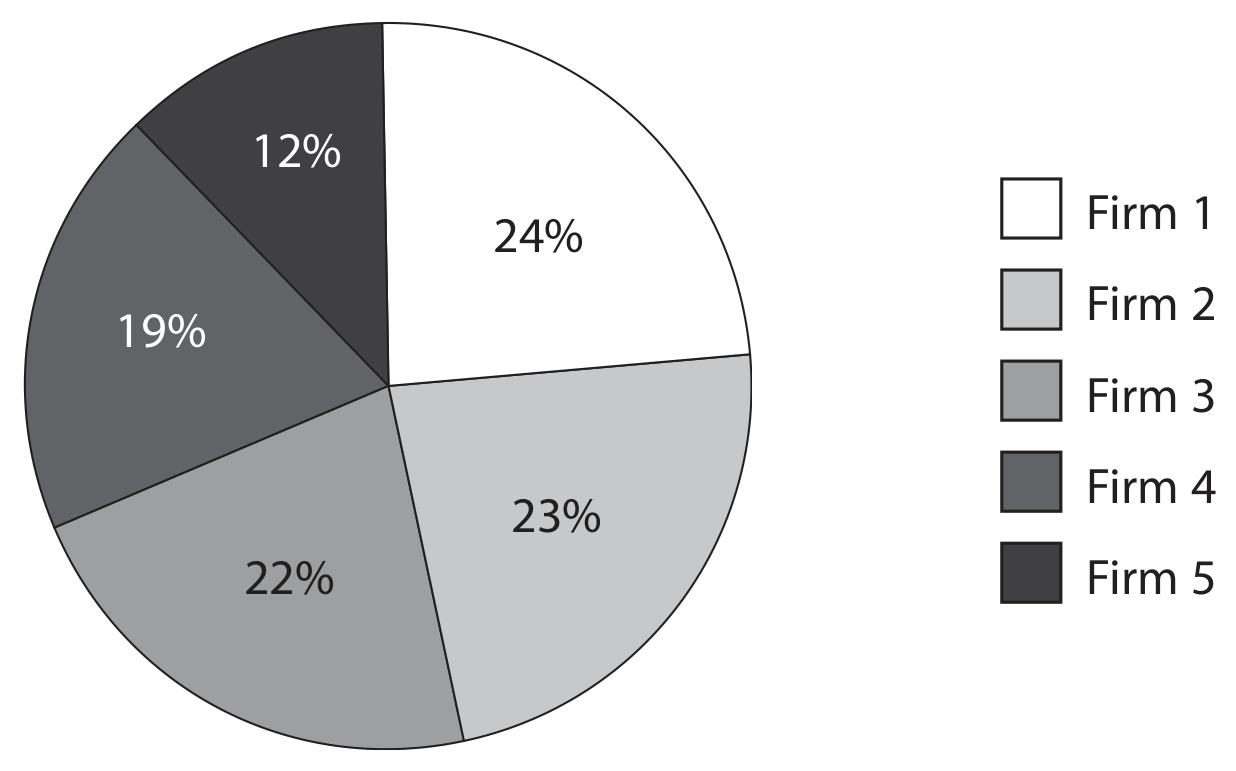
Chart to show market share held by firms within a market
Describe one disadvantage for a government of using subsidies.
Heather runs a successful restaurant in a small town in Portugal. When her friend asked whether she was going to expand by opening another restaurant, Heather said she was not.
A ban on single-use plastic bags has been in place in Kenya for more than five years. It has led to a cleaner environment, as plastic bags were causing visual pollution and endangering the lives of livestock that consumed them. However, the ban has not been effective in totally removing the problem.
With reference to the data above and your knowledge of economics, assess the effectiveness of government regulation when dealing with externalities such as pollution.
Figure 3 shows selected UK Government receipts from taxation in 2019.
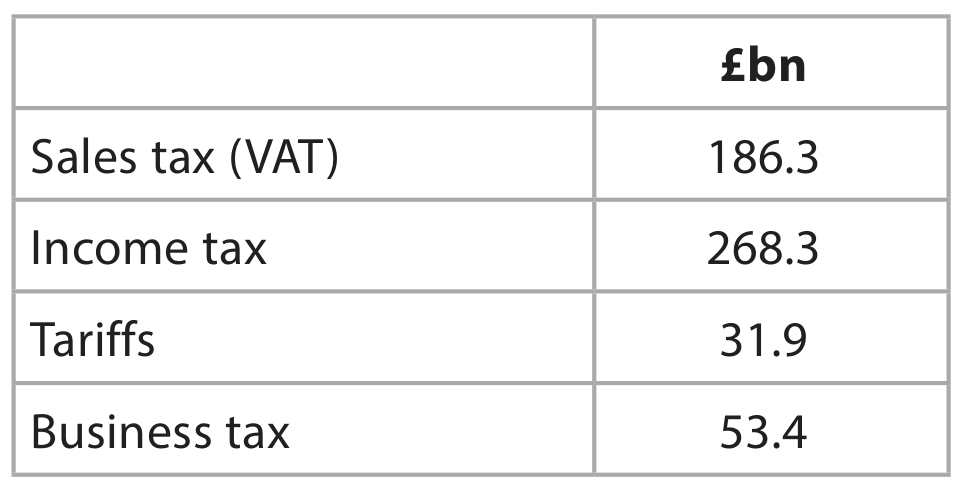
Figure 3
With reference to the data above and your knowledge of economics, analyse the advantages of using taxation to help protect the environment in a country such as the UK.
Just 30 years ago, Ghana was in crisis with high levels of poverty and on the edge of economic collapse. The West African nation has made a significant recovery and was predicted to be the world's fastest growing economy in 2019.
The International Monetary Fund (IMF) estimates Ghana's Gross Domestic Product (GDP) growth rate of 8.8% will be double that of emerging economies, and well ahead of world growth rates. Ghana is one of the world's largest cocoa producers. Its growth is now being maintained by a different commodity, the extraction of crude oil.
(Source adapted from: https://www.imf.org/external/datamapper/ NGDP_RPCH@WEO/OEMDC/ADVEC/WEOWORLD/GHA)
Sri Lanka Railways (SLR) has made a loss of Rs 331 bn over the last 10 years. The Sri Lankan Government provides a subsidy so that ticket prices can be reduced. This is to encourage passengers to use trains rather than further increase congestion on the roads.
A spokesperson for SLR said that it needs to upgrade existing railway tracks to make services more comfortable for passengers as well as increase the number of trains to reduce overcrowding. This will require a larger subsidy.
With reference to the data above and your knowledge of economics, assess the effectiveness of subsidies in dealing with externalities, such as road congestion.